Scapular Region
 Dr. Nripendra Tiwari
 Dept. of Anatomy,
 Kathmandu Medical College,
 28th June,2020
Muscles of scapular region
 Deltoid,
 Supraspinatus,
 Infraspinatus,
 Teres minor,
 Subscapularis and
 Teres major.
Deltoid
 Deltoid: thick ,powerful and forms round contour of
shoulder.
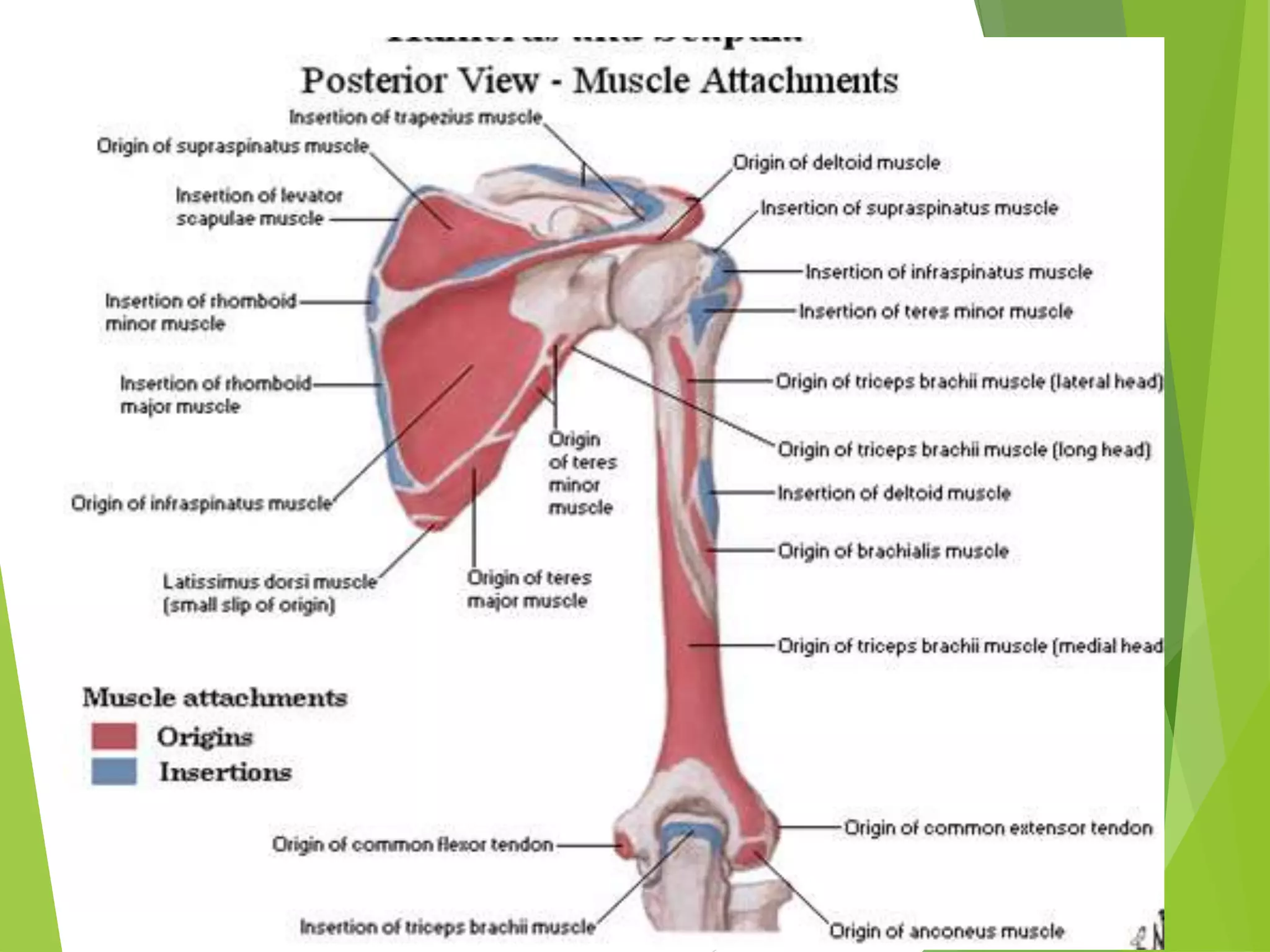
 Origin :anterior border of lateral one third of clavicle.
 Lateral border of acromion and lower lip of the crest of the
spine of the scapula.
 Insertion : deltoid tuberosity
 Nerve supply: axillary nerve
 Action :abductors, flexor, extensor, medial rotator and
lateral rotator of arm.
Applied anatomy of Deltoid:
 Intramuscular injection are given in the middle of
muscle to avoid injury to axillary nerve.(VIVA,
MCQ)
 Axillary nerve may be damaged by dislocation of
shoulder or by fracture of surgical neck of
humerus.(VIVA, MCQ)
 Effects produced are:
 Rounded contour of shoulder is lost.
 Deltoid is paralyzed with loss of power of abduction
up to 90 degree at the shoulder.
Supraspinatus
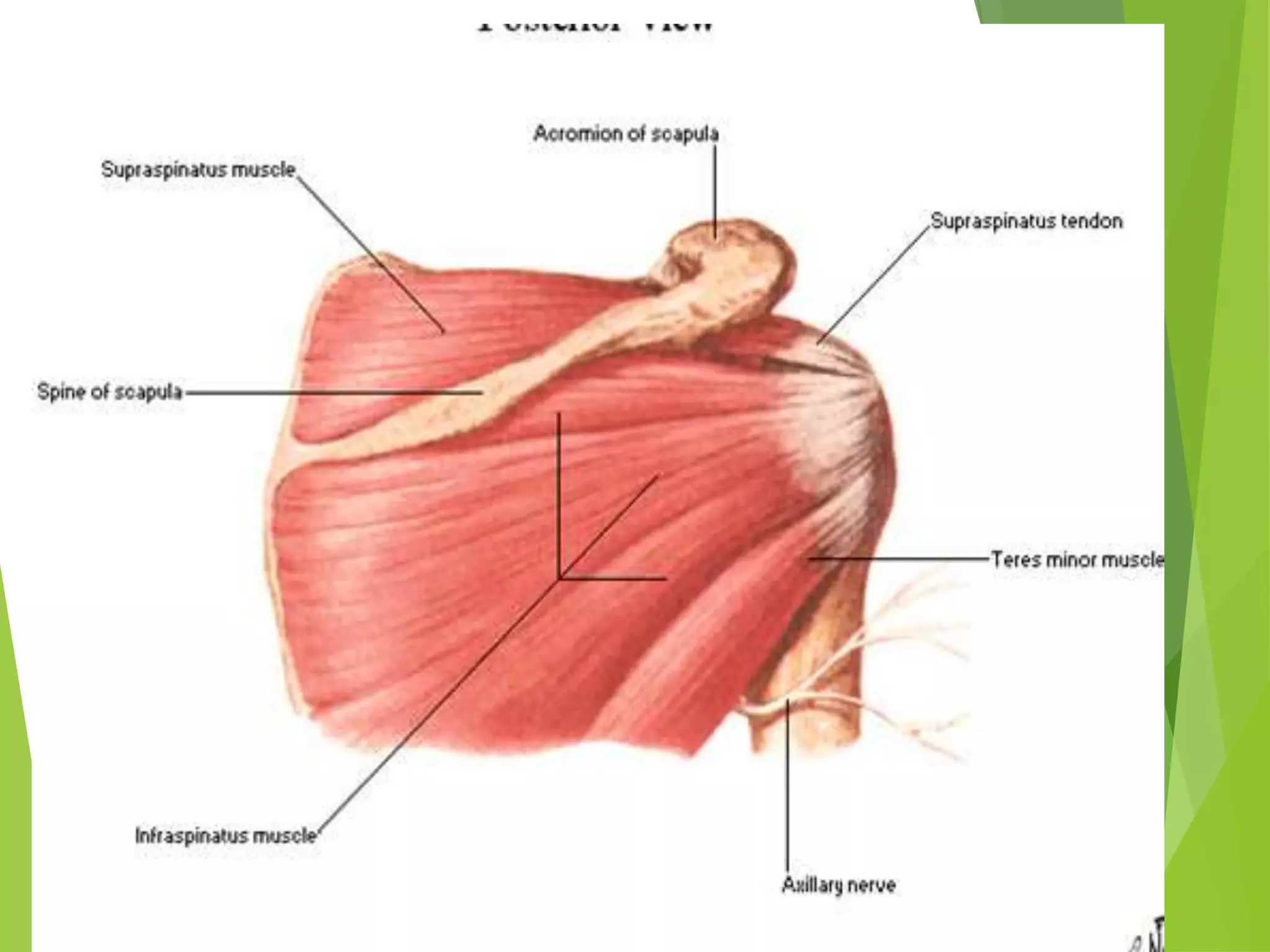
 Origin: Medial 2/3rd of supraspinous fossa of
scapula.
 Insertion: Upper impression of greater tubercle
of the humerus
 Nerve supply : Suprascapular nerve.
 Action: Abduction and steadies the head of
humerus.
Infraspinatus:
 Origin : Medial2/3rd of infraspinous fossa
 Insertion: Middle impression on greater tubercle.
 Nerve supply:Suprascapular nerve
 Action: Lateral rotator of arm.

Teres Minor :
 Teres Minor :
 Origin: Upper 2/3 rd of dorsal surface
of lateral border of scapula.
 Insertion :Lowest impression on
greater tubercle.
 Nerve supply: axillary nerve
 Action: lateral rotator of arm.
Subscapularis:
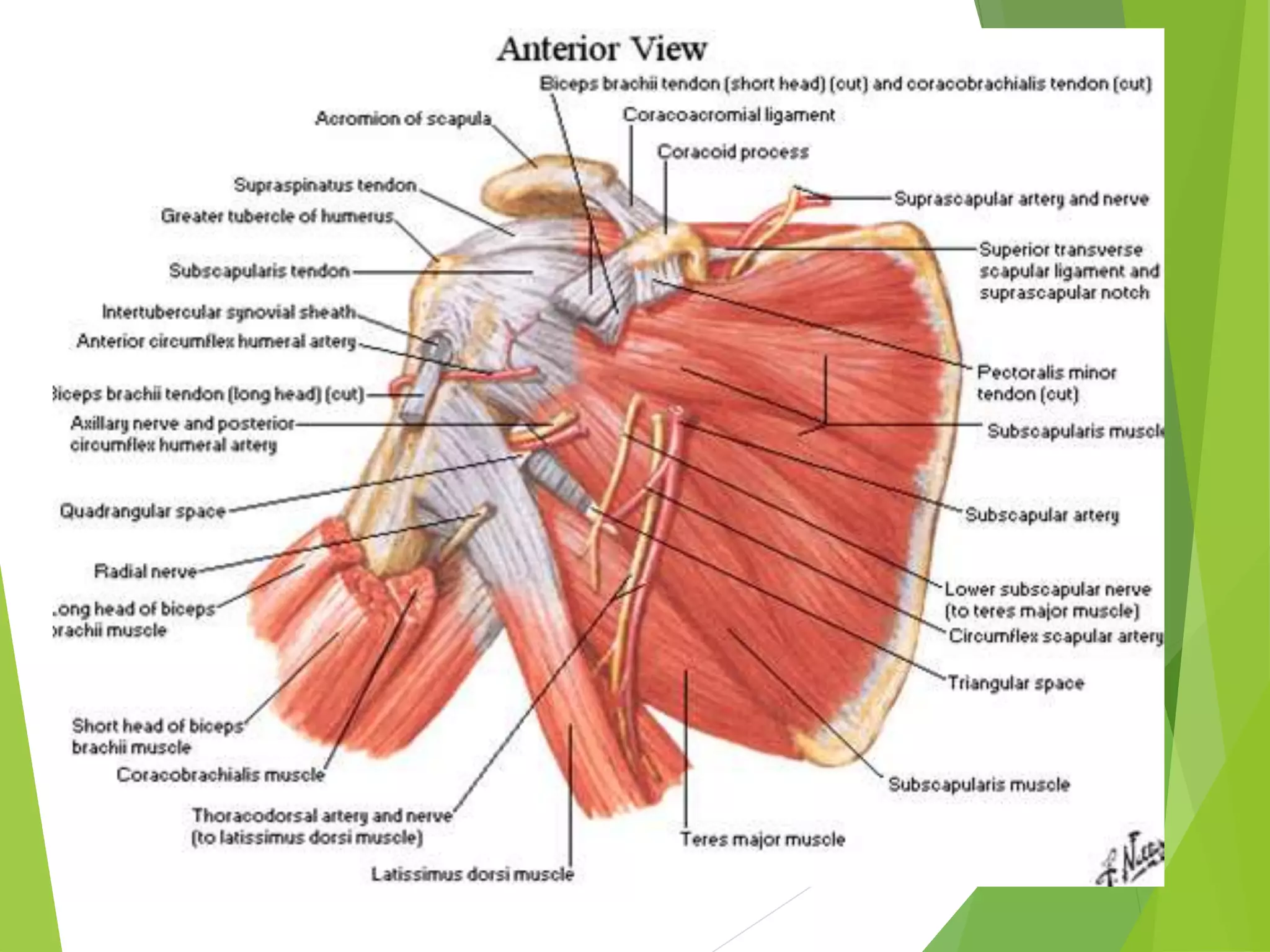
 Origin: Medial 2/3rd of subscpular fossa.
 Insertion: Lesser tubercle of humerus.
 Nerve supply upper and lower subscapular nerves.
 Action: adductor and medial rotator of arm.
Teres major:
 Origin : Lower 1/3 rd of dorsal surface of
lateral border & inferior angle of scapula.
 Insertion : Medial lip of the bicipital groove.
 Nerve supply: Lower subscapular nerve.
 Action: Medial rotator and adductor of arm
(same as subscapularis).
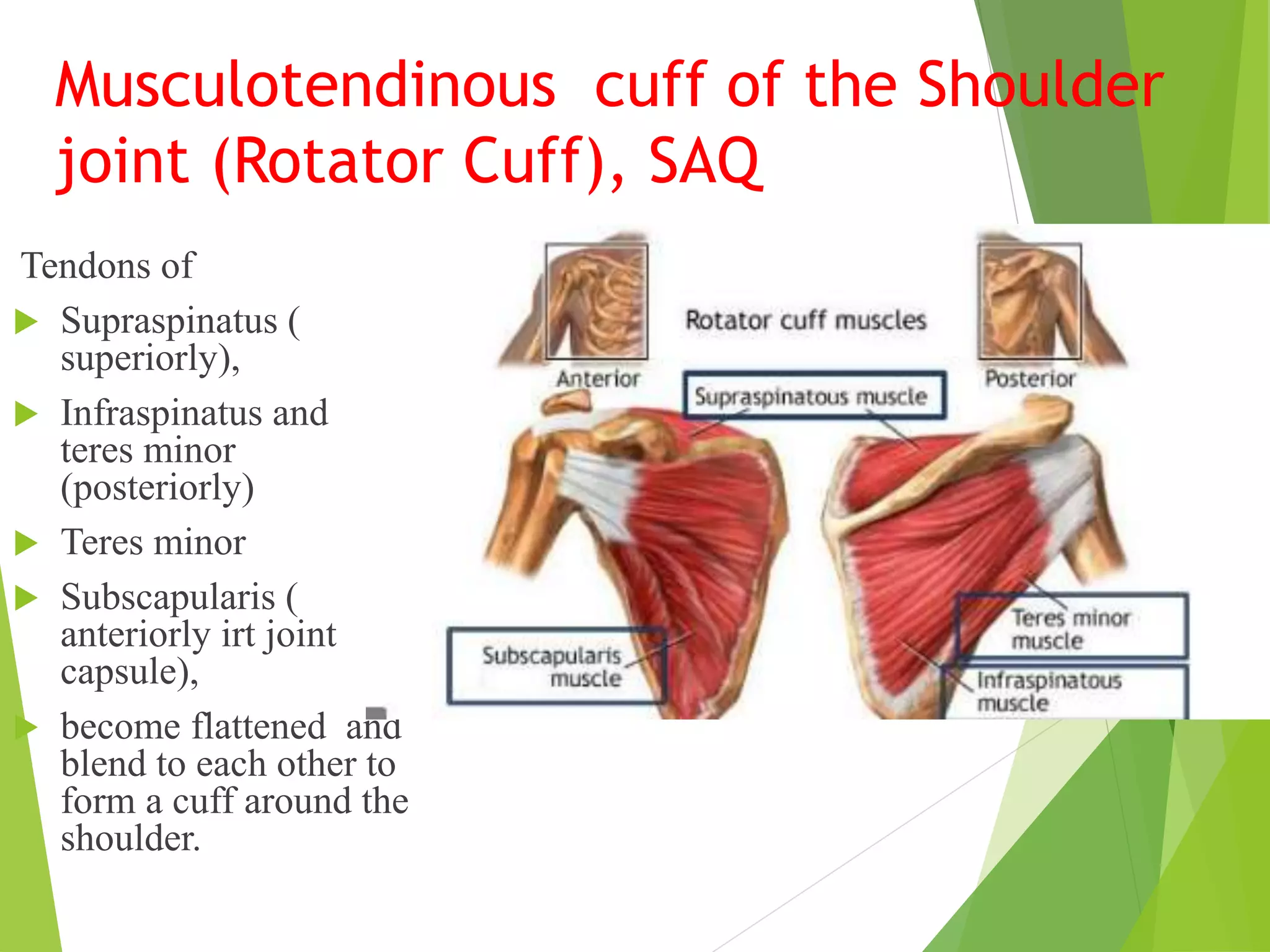
Musculotendinous cuff of the Shoulder
joint (Rotator Cuff), SAQ
Tendons of
 Supraspinatus (
superiorly),
 Infraspinatus and
teres minor
(posteriorly)
 Teres minor
 Subscapularis (
anteriorly irt joint
capsule),
 become flattened and
blend to each other to
form a cuff around the
shoulder.
Features of Rotator cuff:
 Sits on tuberosities.
 Sticks to capsule of shoulder joint.
 Steadies the head of humerus.
 Strengthens the capsule.
 The cuff provides strong support to shoulder
joint & maintain stability of shoulder joint.
 Inferiorly the capsule is loose & lax the joint is
least protected here as there is only one muscle
crossing the joint inferiorly i.e. long head of
triceps.(mcq)
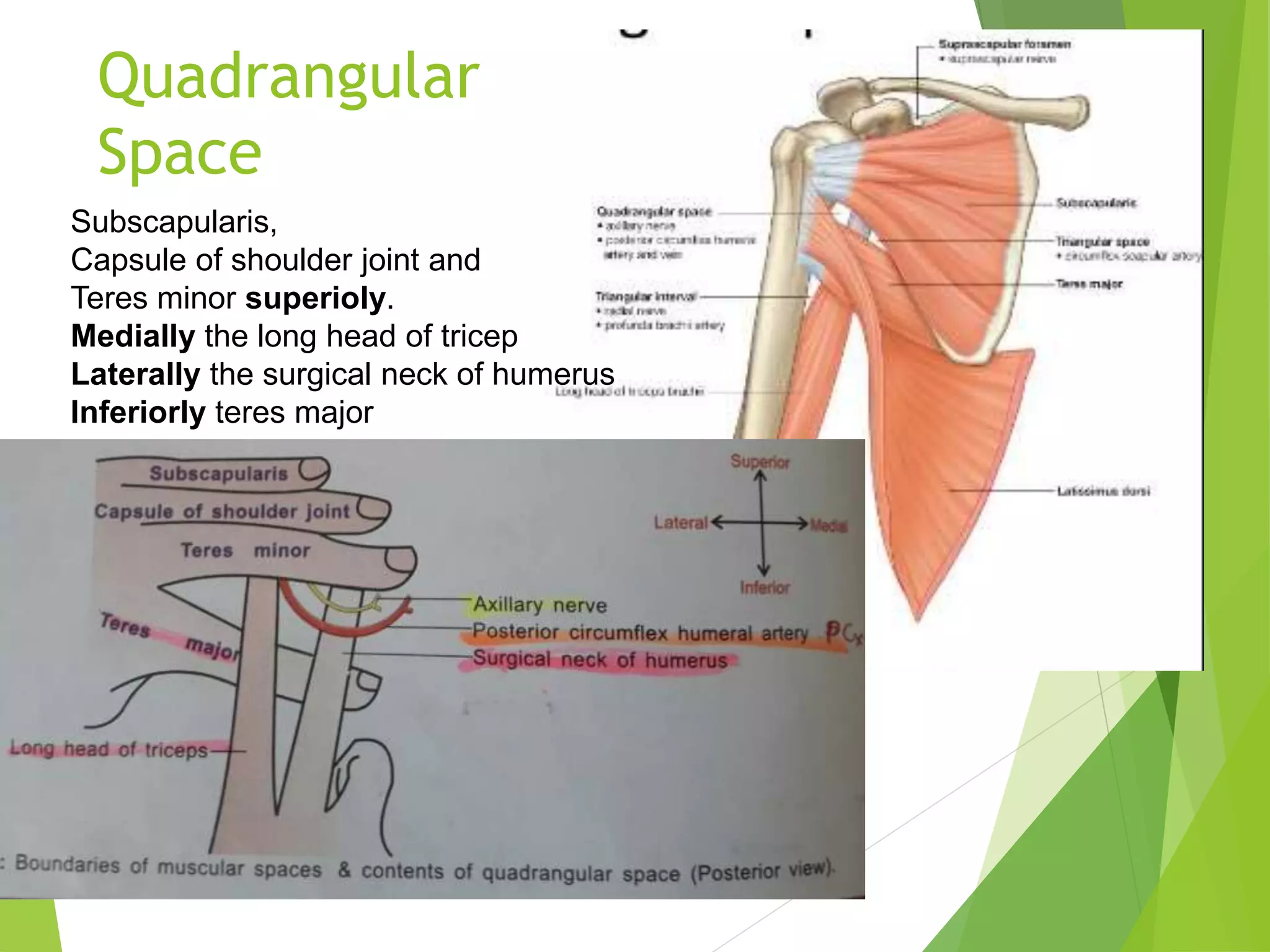
Quadrangular
Space
Subscapularis,
Capsule of shoulder joint and
Teres minor superioly.
Medially the long head of tricep
Laterally the surgical neck of humerus
Inferiorly teres major
Intermuscular spaces in the
scapular region
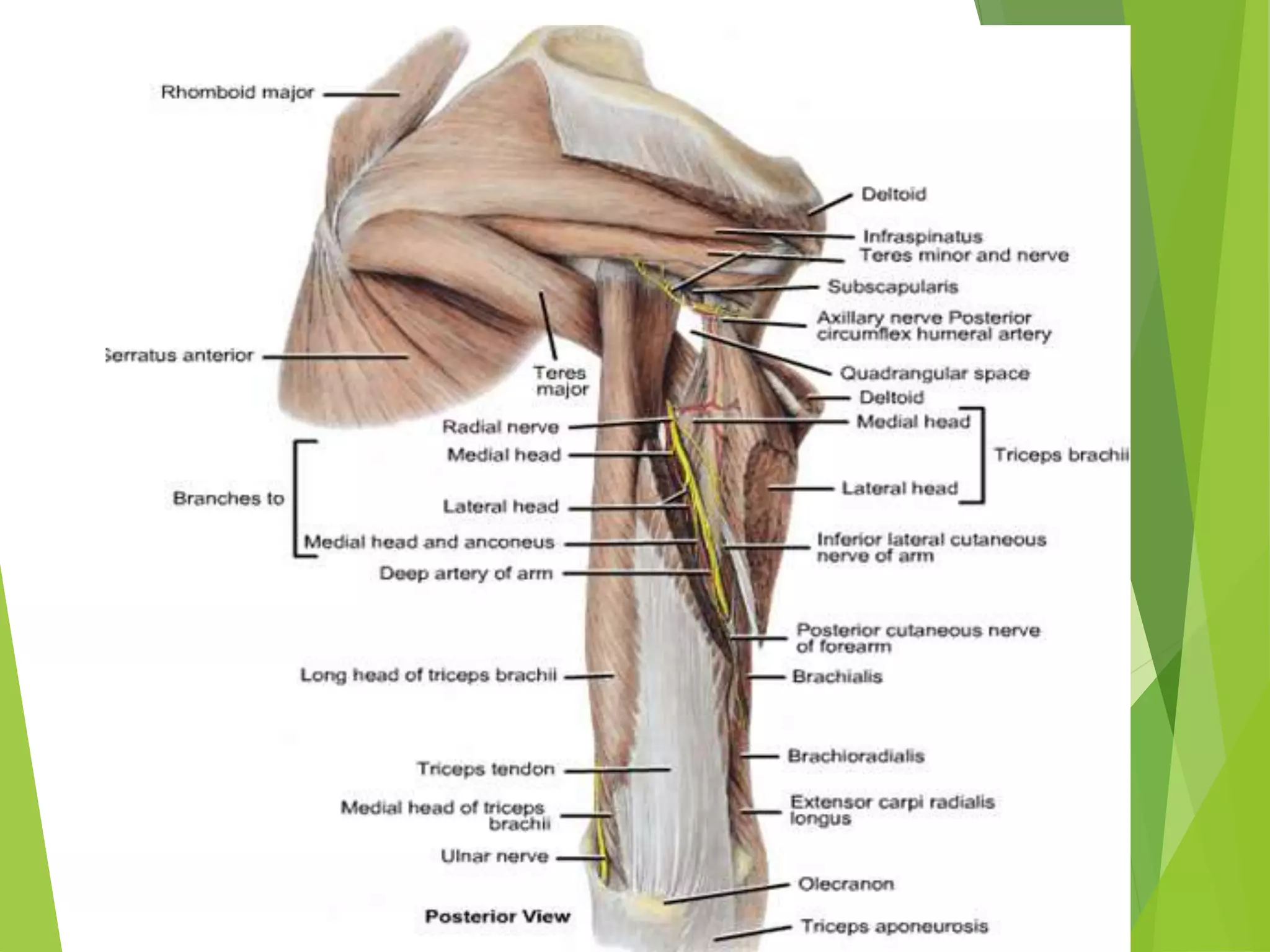
Quadrangular space;
Subscapularis,
Capsule of shoulder joint and
Teres minor superioly.
 Medially the long head of tricep
 Laterally the surgical neck of humerus
 Inferiorly teres major
 Contents; axillary nerve and the posterior Circumflex
humeral vessels.
 Applied: fracture of surgical neck of the humerus causes
paralysis of deltoid muscle.
Upper Triangular Space
Above: teres minor
Laterally : long head of the triceps
Inferiorly: teres major.
 Upper triangular space;
 Above: teres minor
 Laterally : long head of the triceps
 Inferiorly: teres major.
Apex: lateral border of scapula where Teres major &
minor muscle converge.
 Contents: Circumflex scapular artery
 It pierces origin of teres minor & reaches infraspinatus
fossa to anastomose with suprascapular artery.
 Applied: It anastomoses with descending branch of
transverse cervical artery & forms important
anastomosis around scapula.
Lower triangular space
 Superiorly : teres major
 Laterally: Shaft of humerus.
 Medially: long head of the triceps
 Contents; Radial or musculospiral nerve and
profunda brachii vessels.
 Applied: Fracture of middle third of humerus
causes injury to radial nerve & results in wrist
drop. (MCQ)
Lower Triangular Space
Superiorly : teres major
Laterally: Shaft of humerus.
Medially: long head of the triceps
Axillary Nerve:
Applied anatomy
 the axillary nerve may damage during
 dislocation of shoulder or
 surgical fracture
 that causes paralysis of deltoid muscle.
Anastomosis around the
scapula: SAQ
 Anastomosis round the body of scapula
Suprascapular artery, the deep branch of
transverse cervical artery and circumflex
scapular artery
 Anastomosis over the acromion process
The acromial branch of thoracoacromial artery
The acromial branch of suprascapular artery.
Acromial branch of posterior circumflex artery.
Thank You

Scapular region

  • 1.
    Scapular Region  Dr.Nripendra Tiwari  Dept. of Anatomy,  Kathmandu Medical College,  28th June,2020
  • 2.
    Muscles of scapularregion  Deltoid,  Supraspinatus,  Infraspinatus,  Teres minor,  Subscapularis and  Teres major.
  • 3.
    Deltoid  Deltoid: thick,powerful and forms round contour of shoulder.  Origin :anterior border of lateral one third of clavicle.  Lateral border of acromion and lower lip of the crest of the spine of the scapula.  Insertion : deltoid tuberosity  Nerve supply: axillary nerve  Action :abductors, flexor, extensor, medial rotator and lateral rotator of arm.
  • 4.
    Applied anatomy ofDeltoid:  Intramuscular injection are given in the middle of muscle to avoid injury to axillary nerve.(VIVA, MCQ)  Axillary nerve may be damaged by dislocation of shoulder or by fracture of surgical neck of humerus.(VIVA, MCQ)  Effects produced are:  Rounded contour of shoulder is lost.  Deltoid is paralyzed with loss of power of abduction up to 90 degree at the shoulder.
  • 8.
    Supraspinatus  Origin: Medial2/3rd of supraspinous fossa of scapula.  Insertion: Upper impression of greater tubercle of the humerus  Nerve supply : Suprascapular nerve.  Action: Abduction and steadies the head of humerus.
  • 9.
    Infraspinatus:  Origin :Medial2/3rd of infraspinous fossa  Insertion: Middle impression on greater tubercle.  Nerve supply:Suprascapular nerve  Action: Lateral rotator of arm. 
  • 10.
    Teres Minor : Teres Minor :  Origin: Upper 2/3 rd of dorsal surface of lateral border of scapula.  Insertion :Lowest impression on greater tubercle.  Nerve supply: axillary nerve  Action: lateral rotator of arm.
  • 12.
    Subscapularis:  Origin: Medial2/3rd of subscpular fossa.  Insertion: Lesser tubercle of humerus.  Nerve supply upper and lower subscapular nerves.  Action: adductor and medial rotator of arm.
  • 14.
    Teres major:  Origin: Lower 1/3 rd of dorsal surface of lateral border & inferior angle of scapula.  Insertion : Medial lip of the bicipital groove.  Nerve supply: Lower subscapular nerve.  Action: Medial rotator and adductor of arm (same as subscapularis).
  • 15.
    Musculotendinous cuff ofthe Shoulder joint (Rotator Cuff), SAQ Tendons of  Supraspinatus ( superiorly),  Infraspinatus and teres minor (posteriorly)  Teres minor  Subscapularis ( anteriorly irt joint capsule),  become flattened and blend to each other to form a cuff around the shoulder.
  • 17.
    Features of Rotatorcuff:  Sits on tuberosities.  Sticks to capsule of shoulder joint.  Steadies the head of humerus.  Strengthens the capsule.  The cuff provides strong support to shoulder joint & maintain stability of shoulder joint.  Inferiorly the capsule is loose & lax the joint is least protected here as there is only one muscle crossing the joint inferiorly i.e. long head of triceps.(mcq)
  • 19.
    Quadrangular Space Subscapularis, Capsule of shoulderjoint and Teres minor superioly. Medially the long head of tricep Laterally the surgical neck of humerus Inferiorly teres major
  • 20.
    Intermuscular spaces inthe scapular region Quadrangular space; Subscapularis, Capsule of shoulder joint and Teres minor superioly.  Medially the long head of tricep  Laterally the surgical neck of humerus  Inferiorly teres major  Contents; axillary nerve and the posterior Circumflex humeral vessels.  Applied: fracture of surgical neck of the humerus causes paralysis of deltoid muscle.
  • 22.
    Upper Triangular Space Above:teres minor Laterally : long head of the triceps Inferiorly: teres major.
  • 23.
     Upper triangularspace;  Above: teres minor  Laterally : long head of the triceps  Inferiorly: teres major. Apex: lateral border of scapula where Teres major & minor muscle converge.  Contents: Circumflex scapular artery  It pierces origin of teres minor & reaches infraspinatus fossa to anastomose with suprascapular artery.  Applied: It anastomoses with descending branch of transverse cervical artery & forms important anastomosis around scapula.
  • 24.
    Lower triangular space Superiorly : teres major  Laterally: Shaft of humerus.  Medially: long head of the triceps  Contents; Radial or musculospiral nerve and profunda brachii vessels.  Applied: Fracture of middle third of humerus causes injury to radial nerve & results in wrist drop. (MCQ)
  • 25.
    Lower Triangular Space Superiorly: teres major Laterally: Shaft of humerus. Medially: long head of the triceps
  • 26.
  • 27.
    Applied anatomy  theaxillary nerve may damage during  dislocation of shoulder or  surgical fracture  that causes paralysis of deltoid muscle.
  • 28.
    Anastomosis around the scapula:SAQ  Anastomosis round the body of scapula Suprascapular artery, the deep branch of transverse cervical artery and circumflex scapular artery  Anastomosis over the acromion process The acromial branch of thoracoacromial artery The acromial branch of suprascapular artery. Acromial branch of posterior circumflex artery.
  • 30.