TEAM 2
SHRADDHA DESAI- 306
RAJASHREE DHOLYE-307
ROSHAN D’SOUZA- 308
HELEN FRANCIS -309
AMIT JAISWAL - 310
AFFECT, EMOTIONS & MOODS
•

AFFECTS

It is generic term that covers a broad range of feelings that people
experience. It encompasses both emotions and moods.

•

EMOTIONS

Intense feelings that are directed at someone or something.

•

MOODS

Feelings that tend to be less intense than emotions and that lack a
contextual stimulus.
AFFECT, EMOTIONS & MOODS
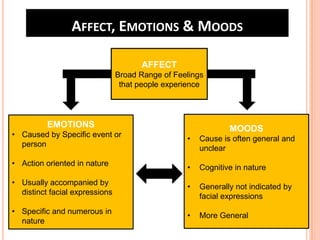
AFFECT
Broad Range of Feelings
that people experience

EMOTIONS
• Caused by Specific event or
person

MOODS
•

Cause is often general and
unclear

•

Cognitive in nature

• Usually accompanied by
distinct facial expressions

•

Generally not indicated by
facial expressions

• Specific and numerous in
nature

•

More General

• Action oriented in nature
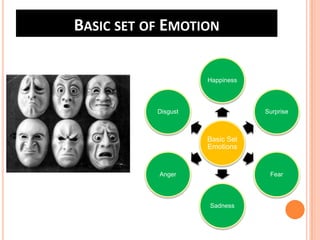
BASIC SET OF EMOTION
Happiness

Disgust

Surprise

Basic Set
Emotions

Anger

Fear

Sadness
BASIC MOODS
Positive & Negative affect
FUNCTIONS OF EMOTIONS
Do emotions make us Irrational?
What Functions do Emotions Serve ?
•

Disgust

•

Excitement

•

Jealousy

•

Anger

•

Fear
SOURCES OF EMOTIONS & MOODS
•

WEATHER

•

STRESS

•

SOCIAL ACTIVITIES

•

SLEEP

•

EXERCISE

•

AGE

•

GENDER

•

DAY OF THE WEEK
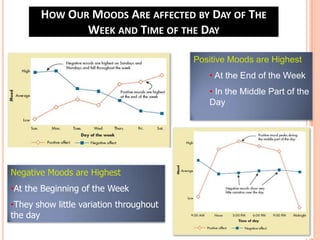
HOW OUR MOODS ARE AFFECTED BY DAY OF THE
WEEK AND TIME OF THE DAY
Positive Moods are Highest
• At the End of the Week
• In the Middle Part of the
Day

Negative Moods are Highest
•At the Beginning of the Week
•They show little variation throughout
the day
EMOTIONAL LABOR
•

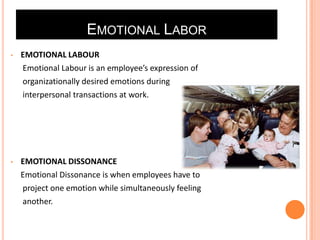
EMOTIONAL LABOUR
Emotional Labour is an employee’s expression of
organizationally desired emotions during
interpersonal transactions at work.

•

EMOTIONAL DISSONANCE
Emotional Dissonance is when employees have to
project one emotion while simultaneously feeling
another.
EMOTIONAL LABOR
•

Felt Emotions
Actual Emotion of Individual

•

Displayed Emotion
Emotions that the organization requires workers to show and
considers appropriate in a given job.

•

Surface Acting
Hiding ones inner feelings and forgoing emotional expressions in a
response to display rules

•

Deep Acting
It is trying to modify ones true inner feelings based on display rules
EMOTIONAL INTELLIGENCE (EI)
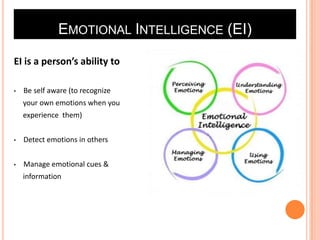
EI is a person’s ability to
•

Be self aware (to recognize
your own emotions when you
experience them)

•

Detect emotions in others

•

Manage emotional cues &
information
CASE FOR & AGAINST EI
For





Intuitive Appeal
EI predicts criteria that
matter
EI is biologically based

Against




EI is too vague concept
EI can’t be measured
The validity of EI is
suspect
OB APPLICATION OF EMOTIONS AND MOODS
•

Selection
Emotions can affect employee effectiveness

•

Decision Making
Positive emotion helps in better Decision making.

•

Creativity
Good mood increases creativity.

•

Motivation
Emotional commitment to work and high motivation are strongly linked

•

Leadership
Emotions are important to acceptance of messages from organizational leaders.
OB APPLICATION OF EMOTIONS AND MOODS
•

Negotiation
Negotiation is an emotional process

•

Job Attitudes
People who have good day at work are more relaxed when they go home than people
who have a tough day.

•

Customer Service:
Emotions influence customer service and the quality of customer service provided by a
worker.

•

Deviant workplace Behaviors:
Negative emotions leads to deviant workplace behaviors. Action that harms organization
norms is known as deviant workplace behaviors
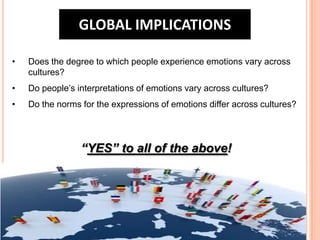
GLOBAL IMPLICATIONS
•

Does the degree to which people experience emotions vary across
cultures?

•

Do people’s interpretations of emotions vary across cultures?

•

Do the norms for the expressions of emotions differ across cultures?

“YES” to all of the above!
IMPLICATIONS FOR MANAGERS
•

Emotions and mood are intertwined and are both affective in
nature.

•

Emotions and moods are a natural part of an individual’s
makeup.

•

You can’t divorce emotions from workplace because
you can’t divorce emotions from people.
Emotion & Moods

Emotion & Moods

  • 2.
    TEAM 2 SHRADDHA DESAI-306 RAJASHREE DHOLYE-307 ROSHAN D’SOUZA- 308 HELEN FRANCIS -309 AMIT JAISWAL - 310
  • 3.
    AFFECT, EMOTIONS &MOODS • AFFECTS It is generic term that covers a broad range of feelings that people experience. It encompasses both emotions and moods. • EMOTIONS Intense feelings that are directed at someone or something. • MOODS Feelings that tend to be less intense than emotions and that lack a contextual stimulus.
  • 4.
    AFFECT, EMOTIONS &MOODS AFFECT Broad Range of Feelings that people experience EMOTIONS • Caused by Specific event or person MOODS • Cause is often general and unclear • Cognitive in nature • Usually accompanied by distinct facial expressions • Generally not indicated by facial expressions • Specific and numerous in nature • More General • Action oriented in nature
  • 5.
    BASIC SET OFEMOTION Happiness Disgust Surprise Basic Set Emotions Anger Fear Sadness
  • 6.
    BASIC MOODS Positive &Negative affect
  • 7.
    FUNCTIONS OF EMOTIONS Doemotions make us Irrational? What Functions do Emotions Serve ? • Disgust • Excitement • Jealousy • Anger • Fear
  • 8.
    SOURCES OF EMOTIONS& MOODS • WEATHER • STRESS • SOCIAL ACTIVITIES • SLEEP • EXERCISE • AGE • GENDER • DAY OF THE WEEK
  • 9.
    HOW OUR MOODSARE AFFECTED BY DAY OF THE WEEK AND TIME OF THE DAY Positive Moods are Highest • At the End of the Week • In the Middle Part of the Day Negative Moods are Highest •At the Beginning of the Week •They show little variation throughout the day
  • 10.
    EMOTIONAL LABOR • EMOTIONAL LABOUR EmotionalLabour is an employee’s expression of organizationally desired emotions during interpersonal transactions at work. • EMOTIONAL DISSONANCE Emotional Dissonance is when employees have to project one emotion while simultaneously feeling another.
  • 11.
    EMOTIONAL LABOR • Felt Emotions ActualEmotion of Individual • Displayed Emotion Emotions that the organization requires workers to show and considers appropriate in a given job. • Surface Acting Hiding ones inner feelings and forgoing emotional expressions in a response to display rules • Deep Acting It is trying to modify ones true inner feelings based on display rules
  • 12.
    EMOTIONAL INTELLIGENCE (EI) EIis a person’s ability to • Be self aware (to recognize your own emotions when you experience them) • Detect emotions in others • Manage emotional cues & information
  • 13.
    CASE FOR &AGAINST EI For    Intuitive Appeal EI predicts criteria that matter EI is biologically based Against    EI is too vague concept EI can’t be measured The validity of EI is suspect
  • 14.
    OB APPLICATION OFEMOTIONS AND MOODS • Selection Emotions can affect employee effectiveness • Decision Making Positive emotion helps in better Decision making. • Creativity Good mood increases creativity. • Motivation Emotional commitment to work and high motivation are strongly linked • Leadership Emotions are important to acceptance of messages from organizational leaders.
  • 15.
    OB APPLICATION OFEMOTIONS AND MOODS • Negotiation Negotiation is an emotional process • Job Attitudes People who have good day at work are more relaxed when they go home than people who have a tough day. • Customer Service: Emotions influence customer service and the quality of customer service provided by a worker. • Deviant workplace Behaviors: Negative emotions leads to deviant workplace behaviors. Action that harms organization norms is known as deviant workplace behaviors
  • 16.
    GLOBAL IMPLICATIONS • Does thedegree to which people experience emotions vary across cultures? • Do people’s interpretations of emotions vary across cultures? • Do the norms for the expressions of emotions differ across cultures? “YES” to all of the above!
  • 17.
    IMPLICATIONS FOR MANAGERS • Emotionsand mood are intertwined and are both affective in nature. • Emotions and moods are a natural part of an individual’s makeup. • You can’t divorce emotions from workplace because you can’t divorce emotions from people.