7-1 
Essentials of Organizational Behavior, 9/e 
Stephen P. Robbins/Timothy A. Judge 
Chapter 7 
Emotions and Moods
7-2 
After studying this chapter, you 
should be able to: 
1. Differentiate emotions from moods. 
2. Discuss the different aspects of emotions. 
3. Identify the sources of emotions and moods. 
4. Describe external constraints on emotions. 
5. Discuss the impact emotional labor has on 
employees. 
6. Discuss the case for and the case against 
emotional intelligence. 
7. Apply concepts on emotions and moods to OB 
issues.
7-3 
Why have emotions been 
excluded from OB study? 
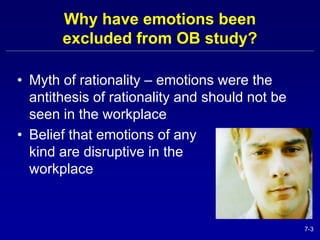
• Myth of rationality – emotions were the 
antithesis of rationality and should not be 
seen in the workplace 
• Belief that emotions of any 
kind are disruptive in the 
workplace
7-4 
What are Emotions and Moods 
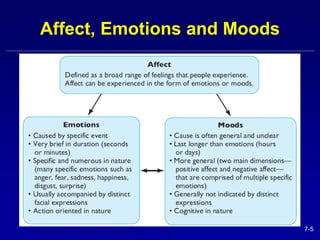
• Affect – a generic term that encompasses 
both emotions and moods 
• Emotions – intense feelings that are 
directed at someone or something 
• Moods – feelings that tend to be less 
intense than emotions and often lack a 
contextual stimulus
7-5 
Affect, Emotions and Moods
7-6 
Aspects of Emotions 
• Biology of Emotions – emotions originate in the 
brain’s limbic system, which is different for each 
person 
• Intensity – different people give different 
responses to identical emotion-provoking stimuli 
• Frequency and Duration – some emotions occur 
more frequently and emotions differ in how long 
they last
7-7 
Aspects of Emotions (cont.) 
• Emotions and Rationality – Our emotions 
provide important information about how 
we understand the world around us. 
• Evolutionary Psychology – states that we 
must experience emotions because they 
serve a purpose; hard to know if this is 
valid all the time
7-8 
Sources of Emotions and Moods 
• Personality – predisposes people to 
experience certain moods and emotions. 
Affect intensity affects the strength of the 
emotion 
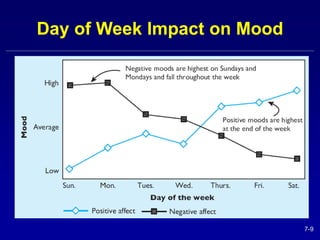
• Day of week and Time of day – more 
positive interactions will likely occur from 
mid-morning onwards and also later in the 
week
7-9 
Day of Week Impact on Mood
7-10 
More Sources 
• Weather – not an impact according to 
research 
• Stress – increased stress worsens moods 
• Social Activities – usually increase positive 
mood and have little effect on negative 
mood 
• Sleep – less sleep or poor quality sleep 
increases negative emotions
7-11 
More Sources 
• Exercise – enhances positive mood 
• Age – older people experience negative 
emotions less frequently 
• Gender – women show greater emotional 
expression, experience emotions more 
intensely and display more frequent 
expressions of emotions
7-12 
External Constraints on Emotions 
• Organizational Influences – most 
American organizations strive to 
be emotion-free 
• Cultural Influences – cultures 
vary in: 
ď‚§ Degree to which people experience 
emotions 
ď‚§ Interpretation of emotions 
ď‚§ Norms for the expression of 
emotions
7-13 
Emotional Labor 
• An employee’s expression 
of organizationally desired 
emotions during 
interpersonal transactions 
at work 
• Emotional dissonance is 
when an employee has to 
project one emotion while 
feeling another one
7-14 
Felt vs. Displayed Emotions 
• Felt emotions are the individual’s actual 
emotions 
• Displayed emotions are those that the 
organization requires workers to show 
• Surface acting is hiding our true emotions 
• Deep acting is trying to change one’s 
feelings based on display rules
7-15 
Emotional Intelligence 
• One’s ability to detect and manage 
emotional cues and information 
• Five dimensions: 
ď‚§ Self-awareness 
ď‚§ Self-management 
ď‚§ Self-motivation 
ď‚§ Empathy 
ď‚§ Social skills
7-16 
The case for EI 
• Intuitive appeal – it makes sense 
• Evidence suggests that a high level of EI 
predicts high job performance 
• Study suggests that EI is 
neurologically based
7-17 
The case against EI 
• EI is too vague a concept 
• EI can’t be measured 
• EI is so closely related to intelligence and 
personality that it is not unique when those 
factors are controlled
7-18 
OB Applications of 
Emotions and Moods 
• Selection – employers should consider EI a 
factor in hiring for jobs that demand a high 
degree of social interaction 
• Decision Making – Positive emotions can 
increase problem-solving skills and help us 
understand and analyze new information
7-19 
OB Applications of 
Emotions and Moods 
• Creativity – Positive moods increase 
creativity 
• Motivation – Organizations that promote 
positive moods are likely to have a more 
motivated workforce 
• Leadership – Emotions help 
convey messages more 
effectively
7-20 
OB Applications of 
Emotions and Moods 
• Interpersonal Conflict – it is critical to 
identify and work through the emotional 
elements in any conflict 
• Negotiation – emotions may impair 
negotiator performance 
• Customer Service – customers “catch” 
emotions from employees, called emotional 
contagion
7-21 
OB Applications of 
Emotions and Moods 
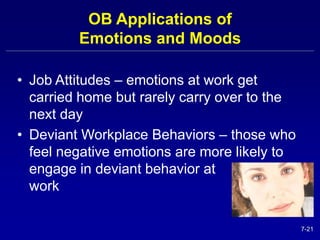
• Job Attitudes – emotions at work get 
carried home but rarely carry over to the 
next day 
• Deviant Workplace Behaviors – those who 
feel negative emotions are more likely to 
engage in deviant behavior at 
work
7-22 
Implications for Managers 
• Understand the role of emotions and 
moods to explain and predict behavior 
• Emotions and moods can increase 
motivation 
• Emotional labor recognizes that certain 
feelings can be part of a job’s requirements 
• Intense emotions can interfere with 
performance of complex jobs
7-23 
Summary 
1. Differentiated emotions from moods. 
2. Discussed the different aspects of emotions. 
3. Identified the sources of emotions and moods. 
4. Described external constraints on emotions. 
5. Discussed the impact emotional labor has on 
employees. 
6. Discussed the case for and the case against 
emotional intelligence. 
7. Applied concepts on emotions and moods to 
OB issues.

Robbins eob9 inst_ppt_07

  • 1.
    7-1 Essentials ofOrganizational Behavior, 9/e Stephen P. Robbins/Timothy A. Judge Chapter 7 Emotions and Moods
  • 2.
    7-2 After studyingthis chapter, you should be able to: 1. Differentiate emotions from moods. 2. Discuss the different aspects of emotions. 3. Identify the sources of emotions and moods. 4. Describe external constraints on emotions. 5. Discuss the impact emotional labor has on employees. 6. Discuss the case for and the case against emotional intelligence. 7. Apply concepts on emotions and moods to OB issues.
  • 3.
    7-3 Why haveemotions been excluded from OB study? • Myth of rationality – emotions were the antithesis of rationality and should not be seen in the workplace • Belief that emotions of any kind are disruptive in the workplace
  • 4.
    7-4 What areEmotions and Moods • Affect – a generic term that encompasses both emotions and moods • Emotions – intense feelings that are directed at someone or something • Moods – feelings that tend to be less intense than emotions and often lack a contextual stimulus
  • 5.
  • 6.
    7-6 Aspects ofEmotions • Biology of Emotions – emotions originate in the brain’s limbic system, which is different for each person • Intensity – different people give different responses to identical emotion-provoking stimuli • Frequency and Duration – some emotions occur more frequently and emotions differ in how long they last
  • 7.
    7-7 Aspects ofEmotions (cont.) • Emotions and Rationality – Our emotions provide important information about how we understand the world around us. • Evolutionary Psychology – states that we must experience emotions because they serve a purpose; hard to know if this is valid all the time
  • 8.
    7-8 Sources ofEmotions and Moods • Personality – predisposes people to experience certain moods and emotions. Affect intensity affects the strength of the emotion • Day of week and Time of day – more positive interactions will likely occur from mid-morning onwards and also later in the week
  • 9.
    7-9 Day ofWeek Impact on Mood
  • 10.
    7-10 More Sources • Weather – not an impact according to research • Stress – increased stress worsens moods • Social Activities – usually increase positive mood and have little effect on negative mood • Sleep – less sleep or poor quality sleep increases negative emotions
  • 11.
    7-11 More Sources • Exercise – enhances positive mood • Age – older people experience negative emotions less frequently • Gender – women show greater emotional expression, experience emotions more intensely and display more frequent expressions of emotions
  • 12.
    7-12 External Constraintson Emotions • Organizational Influences – most American organizations strive to be emotion-free • Cultural Influences – cultures vary in:  Degree to which people experience emotions  Interpretation of emotions  Norms for the expression of emotions
  • 13.
    7-13 Emotional Labor • An employee’s expression of organizationally desired emotions during interpersonal transactions at work • Emotional dissonance is when an employee has to project one emotion while feeling another one
  • 14.
    7-14 Felt vs.Displayed Emotions • Felt emotions are the individual’s actual emotions • Displayed emotions are those that the organization requires workers to show • Surface acting is hiding our true emotions • Deep acting is trying to change one’s feelings based on display rules
  • 15.
    7-15 Emotional Intelligence • One’s ability to detect and manage emotional cues and information • Five dimensions:  Self-awareness  Self-management  Self-motivation  Empathy  Social skills
  • 16.
    7-16 The casefor EI • Intuitive appeal – it makes sense • Evidence suggests that a high level of EI predicts high job performance • Study suggests that EI is neurologically based
  • 17.
    7-17 The caseagainst EI • EI is too vague a concept • EI can’t be measured • EI is so closely related to intelligence and personality that it is not unique when those factors are controlled
  • 18.
    7-18 OB Applicationsof Emotions and Moods • Selection – employers should consider EI a factor in hiring for jobs that demand a high degree of social interaction • Decision Making – Positive emotions can increase problem-solving skills and help us understand and analyze new information
  • 19.
    7-19 OB Applicationsof Emotions and Moods • Creativity – Positive moods increase creativity • Motivation – Organizations that promote positive moods are likely to have a more motivated workforce • Leadership – Emotions help convey messages more effectively
  • 20.
    7-20 OB Applicationsof Emotions and Moods • Interpersonal Conflict – it is critical to identify and work through the emotional elements in any conflict • Negotiation – emotions may impair negotiator performance • Customer Service – customers “catch” emotions from employees, called emotional contagion
  • 21.
    7-21 OB Applicationsof Emotions and Moods • Job Attitudes – emotions at work get carried home but rarely carry over to the next day • Deviant Workplace Behaviors – those who feel negative emotions are more likely to engage in deviant behavior at work
  • 22.
    7-22 Implications forManagers • Understand the role of emotions and moods to explain and predict behavior • Emotions and moods can increase motivation • Emotional labor recognizes that certain feelings can be part of a job’s requirements • Intense emotions can interfere with performance of complex jobs
  • 23.
    7-23 Summary 1.Differentiated emotions from moods. 2. Discussed the different aspects of emotions. 3. Identified the sources of emotions and moods. 4. Described external constraints on emotions. 5. Discussed the impact emotional labor has on employees. 6. Discussed the case for and the case against emotional intelligence. 7. Applied concepts on emotions and moods to OB issues.