CH4 Emotions & MoodsEditor:黃士玶
Why Emotions Were Ignored  in OB?The “myth of rationality”Emotions of any kind are disruptive to organizations.Original OB focus was solely on the effects of strong negative emotions that interfered with individual and organizational efficiency.
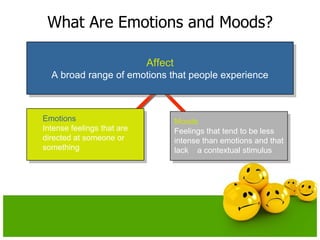
What Are Emotions and Moods?AffectA broad range of emotions that people experienceEmotionsIntense feelings that are directed at someone or somethingMoodsFeelings that tend to be less intense than emotions and that lack    a contextual stimulus
Aspects of EmotionsBiology of EmotionsOriginate in brain’s limbic systemIntensity of EmotionsPersonality and Job requirementsFrequency and Duration of EmotionsHow often emotions are exhibitedHow long emotions are displayedFunctions of EmotionsCritical for rational thinkingMotivate people
Sources of Emotions and MoodsPersonalityDay and Time of the WeekWeatherIllusory correlation StressSocial ActivitiesSleep ExerciseAgeGender
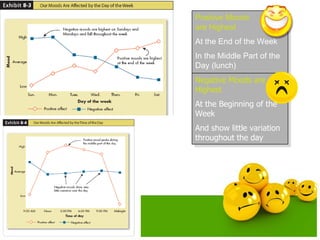
Positive Moods           are HighestAt the End of the WeekIn the Middle Part of the Day (lunch)Negative Moods are HighestAt the Beginning of the WeekAnd show little variation throughout the day
Gender and EmotionsWomenCan show greater emotional expressionExperience emotions more intenselyDisplay emotions more frequentlyAre more comfortable in expressing emotionsAre better at reading others’ emotionsMenShowing emotions is inconsistent with the male imageAre less able to read and to identify with                      others’ emotionsHave less need to seek social approval by                   showing positive emotions
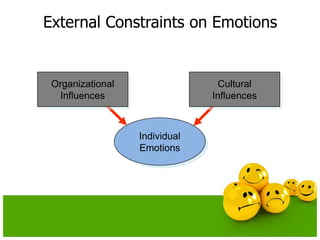
External Constraints on EmotionsOrganizationalInfluencesCulturalInfluencesIndividualEmotions
Emotional LaborA situation in which an employee expresses organizationally desired emotions during interpersonal transactions.Emotional dissonance—Inconsistencies between the emotions we feel and the emotions we project.
Felt vs. Displayed EmotionsFelt EmotionsAn individual’s actual emotionsDisplayed EmotionsEmotions that are organizationally required and considered appropriate in a given jobSurface actingDeep acting
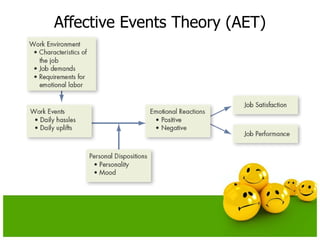
Affective Events Theory (AET)Work events trigger positive and negative emotional reactionsPersonality and mood determine the intensity of the emotional response.Emotions can influence a broad range of work performance and job satisfaction variables.Implications of the theory ACTIndividual response reflects emotions and mood cycles.Current and past emotions affect job satisfaction.Emotional fluctuations create variations in job                          satisfaction and performance.Both negative and positive emotions can distract                           workers and reduce job performance.
Affective Events Theory (AET)
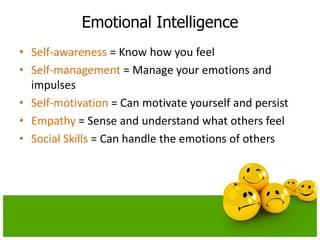
Emotional IntelligenceSelf-awareness = Know how you feel
Self-management = Manage your emotions and impulses
Self-motivation = Can motivate yourself and persist
Empathy = Sense and understand what others feel
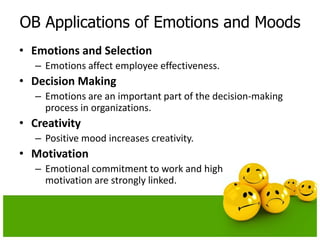
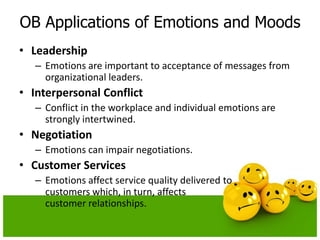
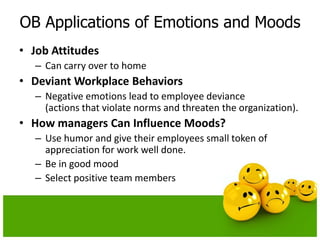
Social Skills = Can handle the emotions of othersOB Applications of Emotions and MoodsEmotions and SelectionEmotions affect employee effectiveness.Decision MakingEmotions are an important part of the decision-making process in organizations.CreativityPositive mood increases creativity.MotivationEmotional commitment to work and high              motivation are strongly linked.

Ch4 emotions & moods

  • 1.
    CH4 Emotions &MoodsEditor:黃士玶
  • 2.
    Why Emotions WereIgnored in OB?The “myth of rationality”Emotions of any kind are disruptive to organizations.Original OB focus was solely on the effects of strong negative emotions that interfered with individual and organizational efficiency.
  • 3.
    What Are Emotionsand Moods?AffectA broad range of emotions that people experienceEmotionsIntense feelings that are directed at someone or somethingMoodsFeelings that tend to be less intense than emotions and that lack a contextual stimulus
  • 4.
    Aspects of EmotionsBiologyof EmotionsOriginate in brain’s limbic systemIntensity of EmotionsPersonality and Job requirementsFrequency and Duration of EmotionsHow often emotions are exhibitedHow long emotions are displayedFunctions of EmotionsCritical for rational thinkingMotivate people
  • 5.
    Sources of Emotionsand MoodsPersonalityDay and Time of the WeekWeatherIllusory correlation StressSocial ActivitiesSleep ExerciseAgeGender
  • 6.
    Positive Moods are HighestAt the End of the WeekIn the Middle Part of the Day (lunch)Negative Moods are HighestAt the Beginning of the WeekAnd show little variation throughout the day
  • 7.
    Gender and EmotionsWomenCanshow greater emotional expressionExperience emotions more intenselyDisplay emotions more frequentlyAre more comfortable in expressing emotionsAre better at reading others’ emotionsMenShowing emotions is inconsistent with the male imageAre less able to read and to identify with others’ emotionsHave less need to seek social approval by showing positive emotions
  • 8.
    External Constraints onEmotionsOrganizationalInfluencesCulturalInfluencesIndividualEmotions
  • 9.
    Emotional LaborA situationin which an employee expresses organizationally desired emotions during interpersonal transactions.Emotional dissonance—Inconsistencies between the emotions we feel and the emotions we project.
  • 10.
    Felt vs. DisplayedEmotionsFelt EmotionsAn individual’s actual emotionsDisplayed EmotionsEmotions that are organizationally required and considered appropriate in a given jobSurface actingDeep acting
  • 11.
    Affective Events Theory(AET)Work events trigger positive and negative emotional reactionsPersonality and mood determine the intensity of the emotional response.Emotions can influence a broad range of work performance and job satisfaction variables.Implications of the theory ACTIndividual response reflects emotions and mood cycles.Current and past emotions affect job satisfaction.Emotional fluctuations create variations in job satisfaction and performance.Both negative and positive emotions can distract workers and reduce job performance.
  • 12.
  • 13.
  • 14.
    Self-management = Manageyour emotions and impulses
  • 15.
    Self-motivation = Canmotivate yourself and persist
  • 16.
    Empathy = Senseand understand what others feel
  • 17.
    Social Skills =Can handle the emotions of othersOB Applications of Emotions and MoodsEmotions and SelectionEmotions affect employee effectiveness.Decision MakingEmotions are an important part of the decision-making process in organizations.CreativityPositive mood increases creativity.MotivationEmotional commitment to work and high motivation are strongly linked.