EMBnet a short presentation 
PR&PC 
2003
What is EMBnet? 
• Founded in 1988 by representatives of 
EMBL, FR, NL, UK, and Hoffmann-La 
Roche, EMBnet is a collaborative effort to 
– increase the availability and 
accessibility of data resources and 
computing tools 
– increase knowledge and proficiency in 
bioinformatics through education and 
training
What is EMBnet? 
• An expanding group of collaborating 
nodes providing support to the Life 
Sciences 
• 32 national nodes provide bioinformatics 
support to local scientists 
• 9 specialist nodes provide expertise in 
highly specialised areas
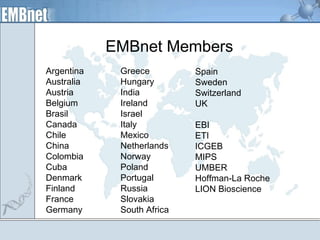
EMBnet Members 
Argentina 
Australia 
Austria 
Belgium 
Brasil 
Canada 
Chile 
China 
Colombia 
Cuba 
Denmark 
Finland 
France 
Germany 
Greece 
Hungary 
India 
Ireland 
Israel 
Italy 
Mexico 
Netherlands 
Norway 
Poland 
Portugal 
Russia 
Slovakia 
South Africa 
Spain 
Sweden 
Switzerland 
UK 
EBI 
ETI 
ICGEB 
MIPS 
UMBER 
Hoffman-La Roche 
LION Bioscience
EMBnet’s Mission 
• Assist in biotechnological and 
bioinformatics related research 
• Provide training and education 
• Exploit network infrastructures 
• Investigate and develop new technologies 
• Bridge between commercial and 
academic sectors
What does EMBnet do? 
• Education and training 
• Software development 
• Computing resources 
• Technical support 
• Help desk in local languages 
• Publications
Who are EMBnet’s Users? 
• EMBnet nodes reach more than 40,000 
registered users from all over the world as 
well as a larger number of Internet users 
• All scientists working in Life Sciences, 
from undergraduate students to top level 
scientists, in academia as well as 
industry, can get support from EMBnet
For more information: 
Visit us at: 
www.embnet.org

Em bnet

  • 1.
    EMBnet a shortpresentation PR&PC 2003
  • 2.
    What is EMBnet? • Founded in 1988 by representatives of EMBL, FR, NL, UK, and Hoffmann-La Roche, EMBnet is a collaborative effort to – increase the availability and accessibility of data resources and computing tools – increase knowledge and proficiency in bioinformatics through education and training
  • 3.
    What is EMBnet? • An expanding group of collaborating nodes providing support to the Life Sciences • 32 national nodes provide bioinformatics support to local scientists • 9 specialist nodes provide expertise in highly specialised areas
  • 4.
    EMBnet Members Argentina Australia Austria Belgium Brasil Canada Chile China Colombia Cuba Denmark Finland France Germany Greece Hungary India Ireland Israel Italy Mexico Netherlands Norway Poland Portugal Russia Slovakia South Africa Spain Sweden Switzerland UK EBI ETI ICGEB MIPS UMBER Hoffman-La Roche LION Bioscience
  • 5.
    EMBnet’s Mission •Assist in biotechnological and bioinformatics related research • Provide training and education • Exploit network infrastructures • Investigate and develop new technologies • Bridge between commercial and academic sectors
  • 6.
    What does EMBnetdo? • Education and training • Software development • Computing resources • Technical support • Help desk in local languages • Publications
  • 7.
    Who are EMBnet’sUsers? • EMBnet nodes reach more than 40,000 registered users from all over the world as well as a larger number of Internet users • All scientists working in Life Sciences, from undergraduate students to top level scientists, in academia as well as industry, can get support from EMBnet
  • 8.
    For more information: Visit us at: www.embnet.org