 The CATH database provides hierarchical classification
of protein.
 Domains are obtained from protein structures deposited
in the Protein Data Bank.
 Both domain identification and subsequent classification
use manual as well as automated procedures.
CATH may be seen as more than a
resource for acquiring information about
single domains only
 The data in CATH are obtained from PDB files
deposited in the Protein Data Bank.
 The structures can be determined only with a
resolution of 4Ǻ or better are included.
 Further more CATH requires the domains with
minimum 40 residues of length with 70% or more
side chains.
 Submitted protein chains are chopped to obtain
the domains.
 Classification are assigned to the resulting
domains.
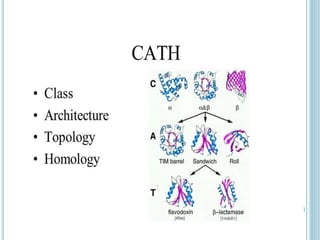
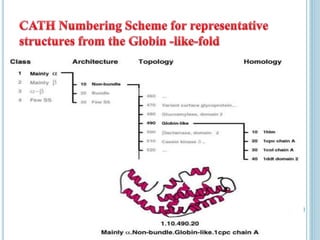
highest level-placed the selected protein
into 1 of 4 categories of secondary structure.
description of the cross
arrangement of secondary structure, independent
of topology.
indication of over all shape and
connectivity of protein’s secondary structures.
proteins of known
structure that are homologous (share a common
ancester) to a selected protein.
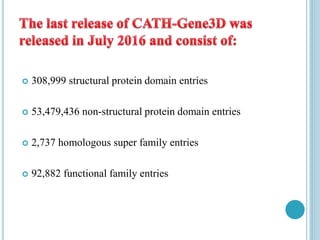
 308,999 structural protein domain entries
 53,479,436 non-structural protein domain entries
 2,737 homologous super family entries
 92,882 functional family entries
Cath

Cath

  • 3.
     The CATHdatabase provides hierarchical classification of protein.  Domains are obtained from protein structures deposited in the Protein Data Bank.  Both domain identification and subsequent classification use manual as well as automated procedures.
  • 4.
    CATH may beseen as more than a resource for acquiring information about single domains only
  • 5.
     The datain CATH are obtained from PDB files deposited in the Protein Data Bank.  The structures can be determined only with a resolution of 4Ǻ or better are included.  Further more CATH requires the domains with minimum 40 residues of length with 70% or more side chains.
  • 6.
     Submitted proteinchains are chopped to obtain the domains.  Classification are assigned to the resulting domains.
  • 9.
    highest level-placed theselected protein into 1 of 4 categories of secondary structure. description of the cross arrangement of secondary structure, independent of topology. indication of over all shape and connectivity of protein’s secondary structures. proteins of known structure that are homologous (share a common ancester) to a selected protein.
  • 12.
     308,999 structuralprotein domain entries  53,479,436 non-structural protein domain entries  2,737 homologous super family entries  92,882 functional family entries