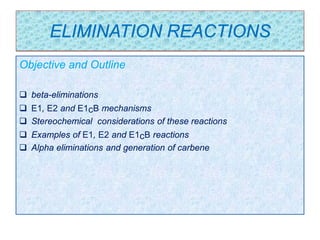
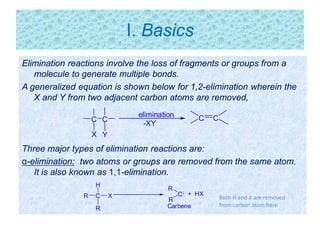
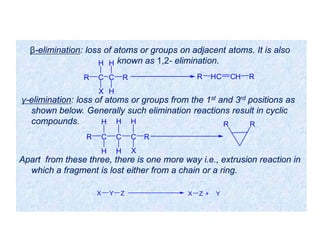
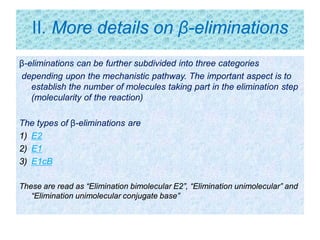
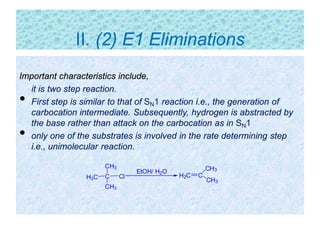
1) The document discusses different types of elimination reactions, including E1, E2, and E1cB mechanisms.
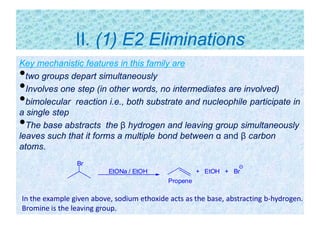
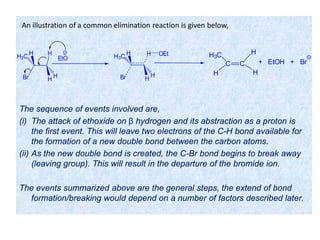
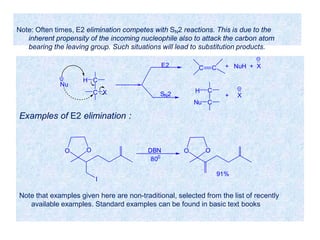
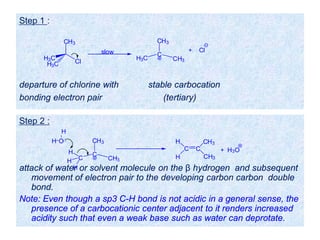
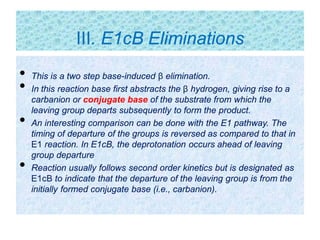
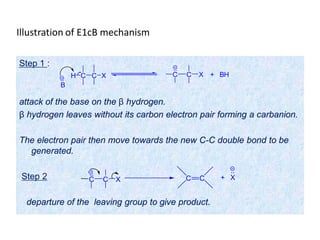
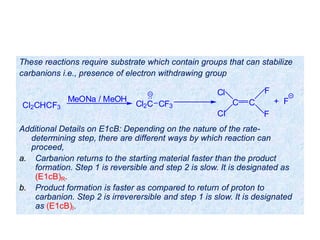
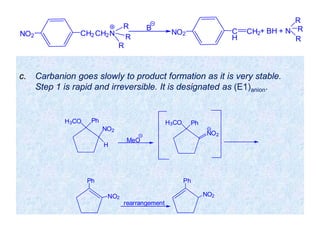
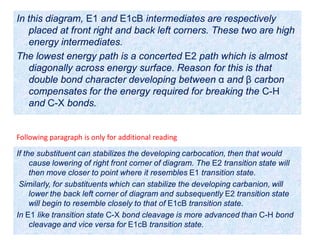
2) E1 reactions involve the generation of a carbocation intermediate, while E2 reactions occur in one step without intermediates. E1cB reactions first form a carbanion intermediate before the leaving group departs.
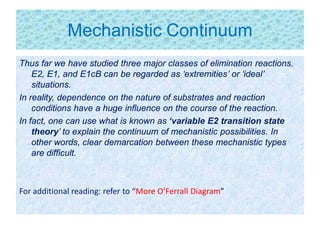
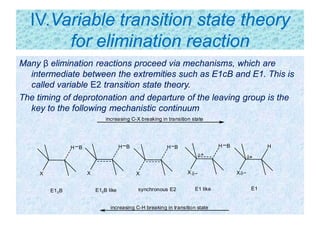
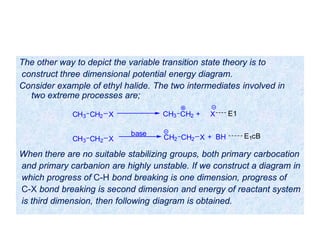
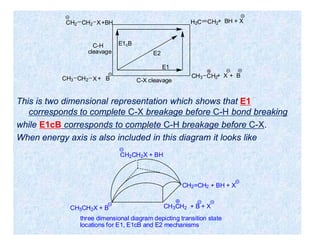
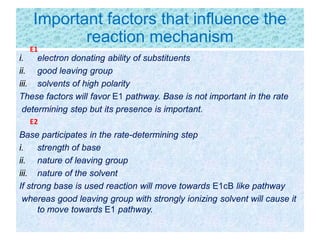
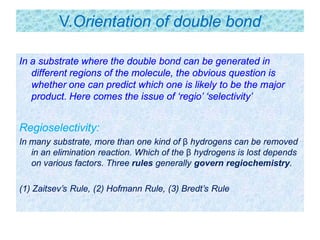
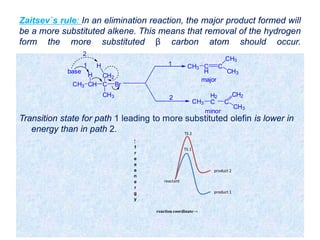
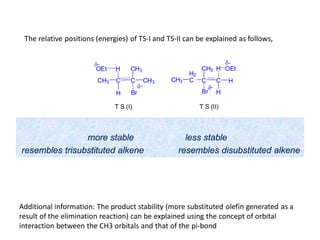
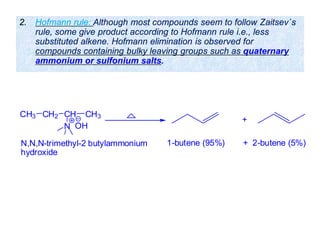
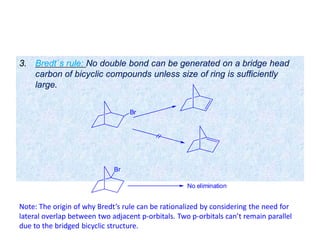
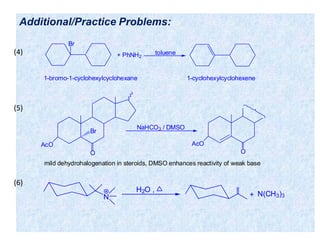
3) The mechanism depends on factors like the substrate, leaving group, solvent, and strength of the base used. Zaitsev's, Hofmann, and Bredt's rules also influence the regiochemistry of double bond formation.
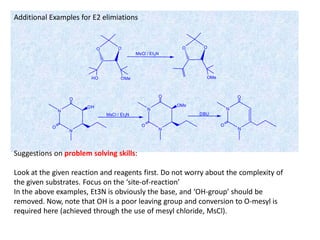
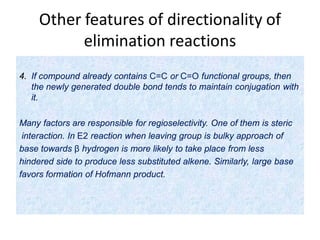
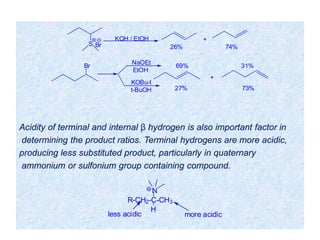
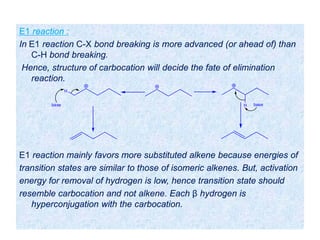
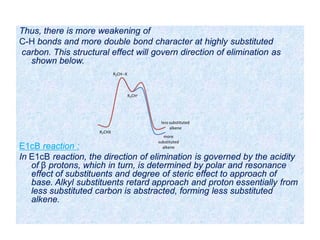
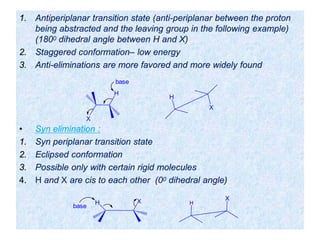
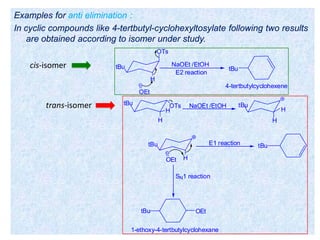
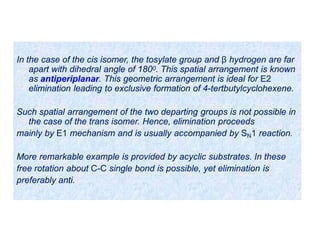
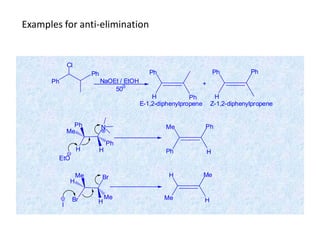
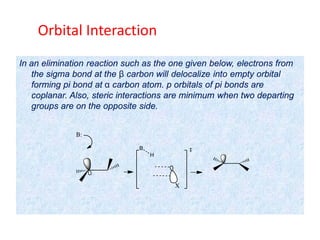
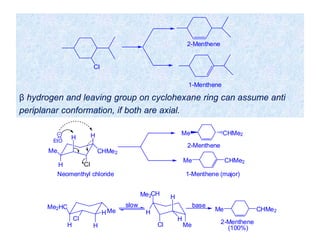
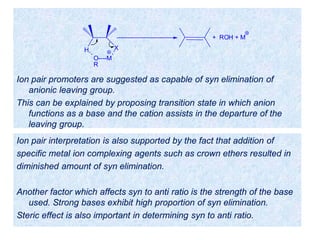
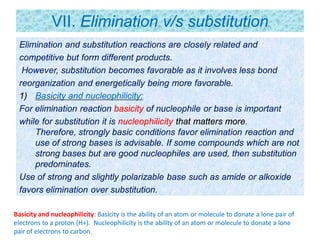
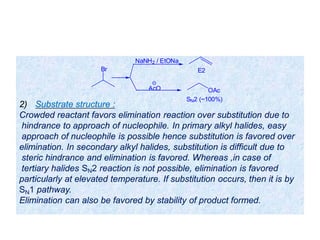
![Syn elimination :
In certain rigid molecules, antiperiplanar arrangement of the departing
groups can not be attained. In such molecules, departing groups may
be on the same side i.e., syn periplanar and process is called syn
elimination.
In the example below deuterium is coplanar with the leaving group
while hydrogen is not. Hence, though deuterium is syn to ammonium
group, it is lost to give elimination product.
N
H
H
D
+ HOD + N(CH3)3
N,N,N-trimethyl-3-deuteriobicyclo Bicyclo[2.2.1]-2-heptene
[2.2.1]-2-heptylammonium hydroxide (94%)
OH](https://image.slidesharecdn.com/eliminationreaction-200416120909/85/Elimination-reaction-42-320.jpg)


![SMILES REARRANGEMENT [REACTION AND MECHANISM]](https://cdn.slidesharecdn.com/ss_thumbnails/58-191219140707-thumbnail.jpg?width=640&height=640&fit=bounds)


