AL-AMIN
Department of Electrical & Electronic Engineering Jatiya Kab
Kazi Nazrul Islam University, Trishal, Mymensingh, Banglade
Elements of Digital Communication
Source
The source can be an analog signal.
Example: A Sound signal
Input Transducer
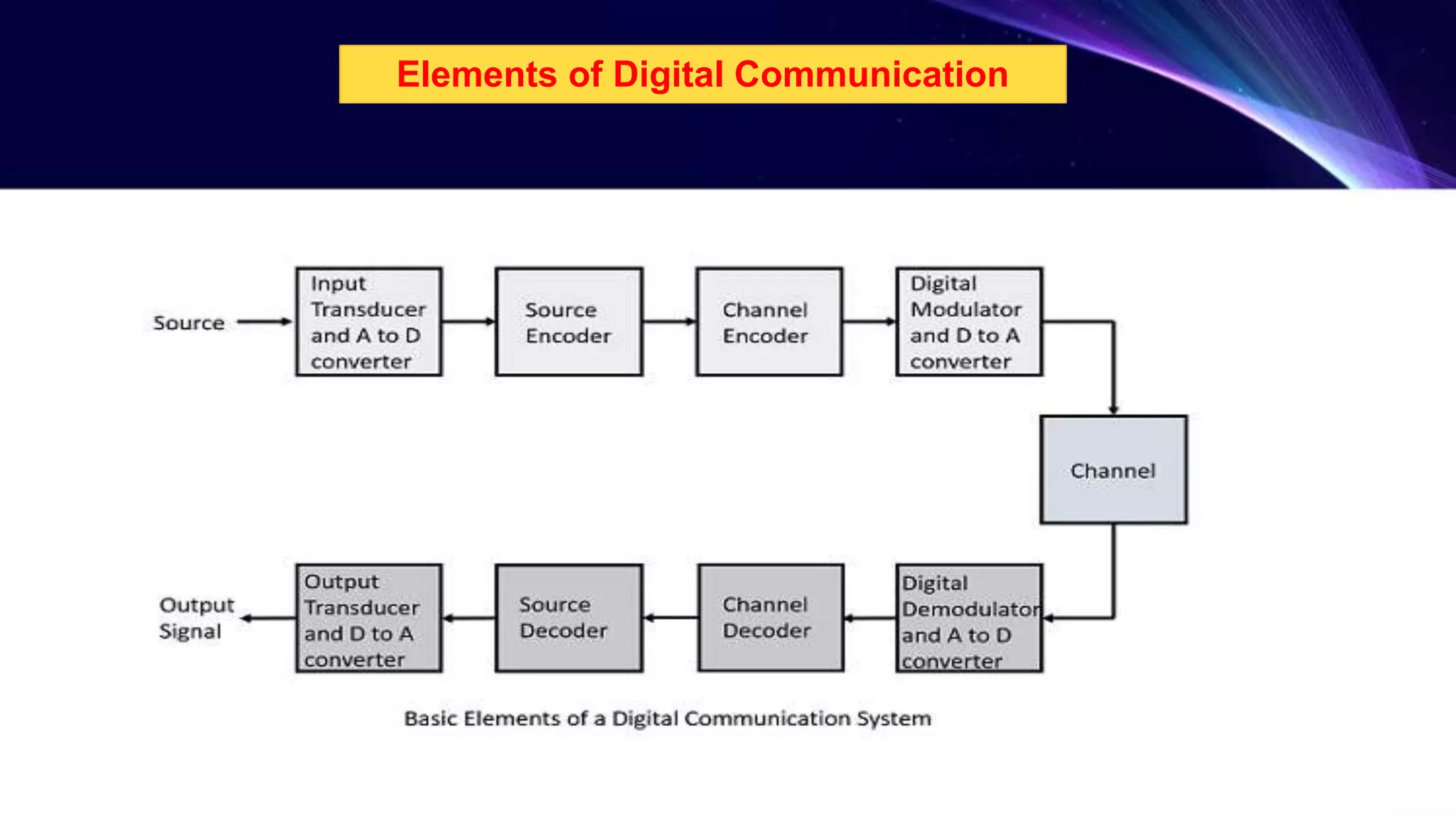
This is a transducer which takes a physical input and converts it to an electrical signal
(Example: microphone).
This block also consists of an analog to digital converter where a digital signal is
needed for further processes.
A digital signal is generally represented by a binary sequence.
Source Encoder
The source encoder compresses the data into minimum number of bits. This process helps in
effective utilization of the bandwidth.
It removes the redundant bits unnecessaryexcessbits,i.e.,zeroes.
Elements of Digital Communication
Channel Encoder
The channel encoder, does the coding for error correction. During the transmission of
the signal, due to the noise in the channel, the signal may get altered and hence to avoid
this, the channel encoder adds some redundant bits to the transmitted data. These are
the error correcting bits.
Digital Modulator
The signal to be transmitted is modulated here by a carrier. The signal is also converted
to analog from the digital sequence, in order to make it travel through the channel or
medium
Channel
The channel or a medium, allows the analog signal to transmit from the transmitter end
to the receiver end.
Digital Demodulator
This is the first step at the receiver end. The received signal is demodulated as well as
converted again from analog to digital. The signal gets reconstructed here.
Channel Decoder
The channel decoder, after detecting the sequence, does some error corrections. The
distortions which might occur during the transmission, are corrected by adding some
redundant bits. This addition of bits helps in the complete recovery of the original signal
Source Decoder
The resultant signal is once again digitized by sampling and quantizing so that the pure
digital output is obtained without the loss of information. The source decoder recreates
the source output
Output Transducer
This is the last block which converts the signal into the original physical form, which was
at the input of the transmitter. It converts the electrical signal into physical output
(Example: loud speaker).
Output Signal
This is the output which is produced after the whole process. Example − The sound
signal received.
Elements of digital communication

Elements of digital communication

  • 1.
    AL-AMIN Department of Electrical& Electronic Engineering Jatiya Kab Kazi Nazrul Islam University, Trishal, Mymensingh, Banglade Elements of Digital Communication
  • 2.
    Elements of DigitalCommunication
  • 3.
    Source The source canbe an analog signal. Example: A Sound signal Input Transducer This is a transducer which takes a physical input and converts it to an electrical signal (Example: microphone). This block also consists of an analog to digital converter where a digital signal is needed for further processes. A digital signal is generally represented by a binary sequence. Source Encoder The source encoder compresses the data into minimum number of bits. This process helps in effective utilization of the bandwidth. It removes the redundant bits unnecessaryexcessbits,i.e.,zeroes. Elements of Digital Communication
  • 4.
    Channel Encoder The channelencoder, does the coding for error correction. During the transmission of the signal, due to the noise in the channel, the signal may get altered and hence to avoid this, the channel encoder adds some redundant bits to the transmitted data. These are the error correcting bits. Digital Modulator The signal to be transmitted is modulated here by a carrier. The signal is also converted to analog from the digital sequence, in order to make it travel through the channel or medium Channel The channel or a medium, allows the analog signal to transmit from the transmitter end to the receiver end.
  • 5.
    Digital Demodulator This isthe first step at the receiver end. The received signal is demodulated as well as converted again from analog to digital. The signal gets reconstructed here. Channel Decoder The channel decoder, after detecting the sequence, does some error corrections. The distortions which might occur during the transmission, are corrected by adding some redundant bits. This addition of bits helps in the complete recovery of the original signal Source Decoder The resultant signal is once again digitized by sampling and quantizing so that the pure digital output is obtained without the loss of information. The source decoder recreates the source output
  • 6.
    Output Transducer This isthe last block which converts the signal into the original physical form, which was at the input of the transmitter. It converts the electrical signal into physical output (Example: loud speaker). Output Signal This is the output which is produced after the whole process. Example − The sound signal received.