What makes a
Good Advertisement


                     COM335
Attention Grabbing
•   Catchy Music
•   A Beautiful Woman
•   Repetition
•   Loud Sounds
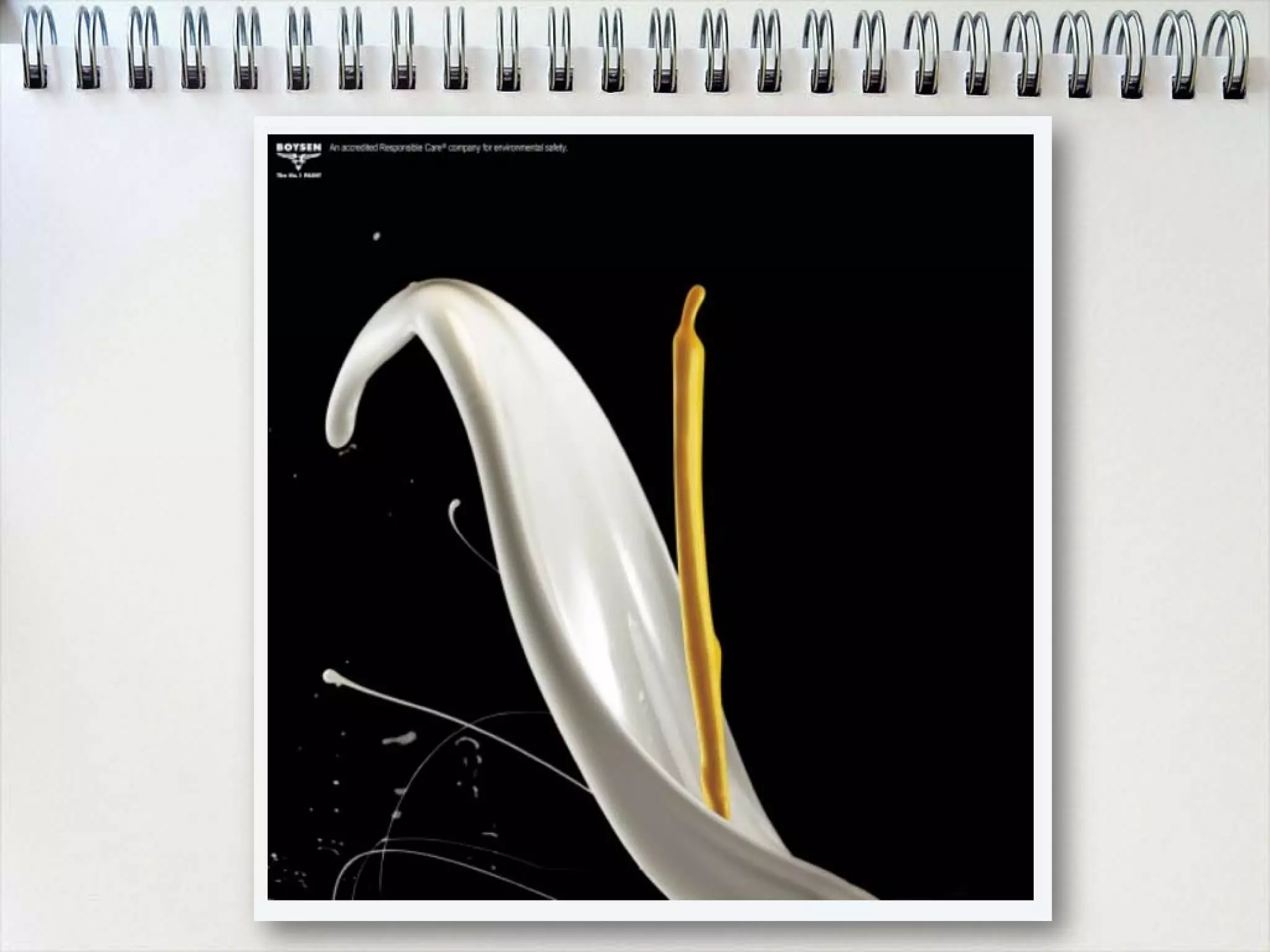
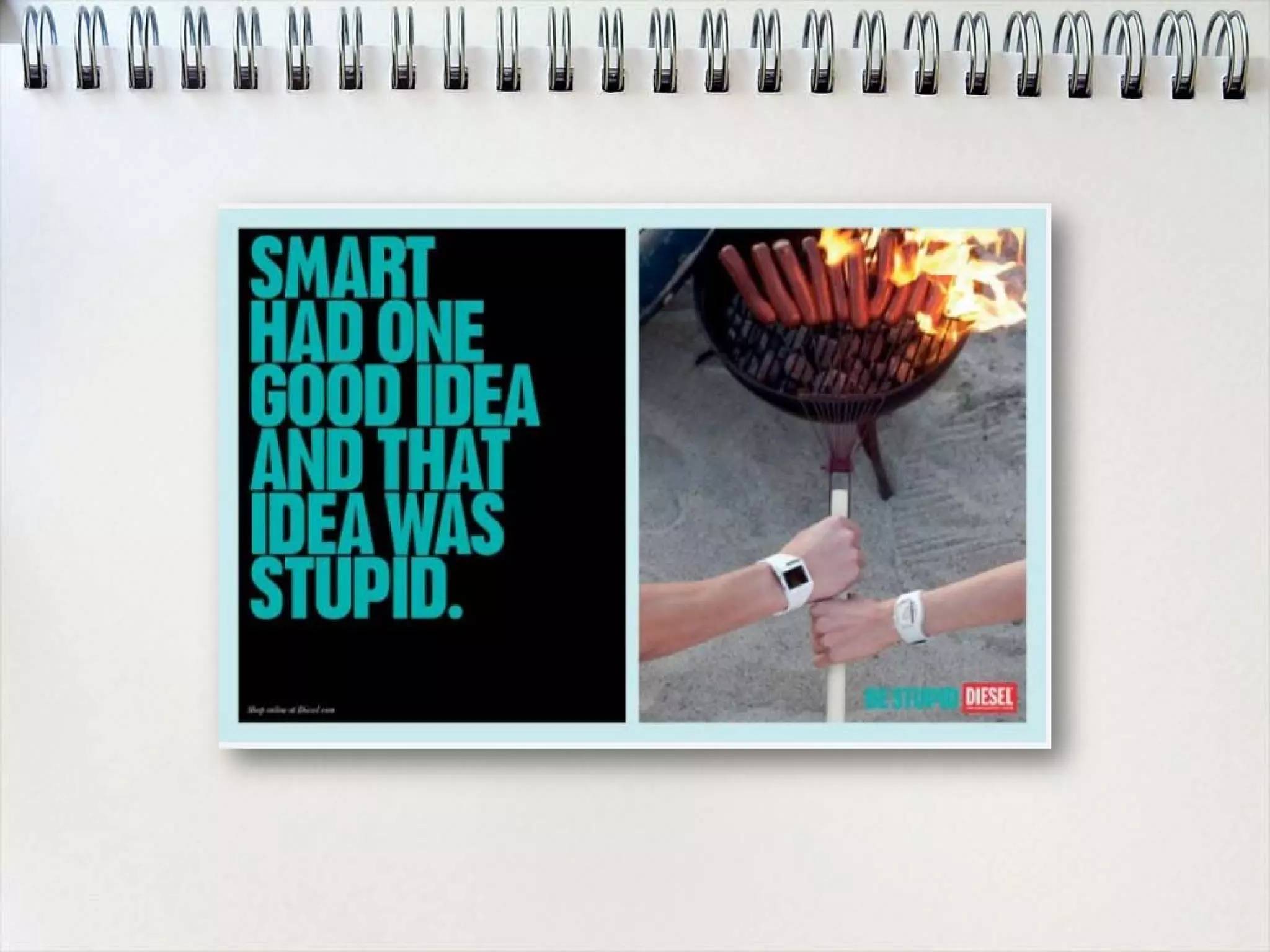
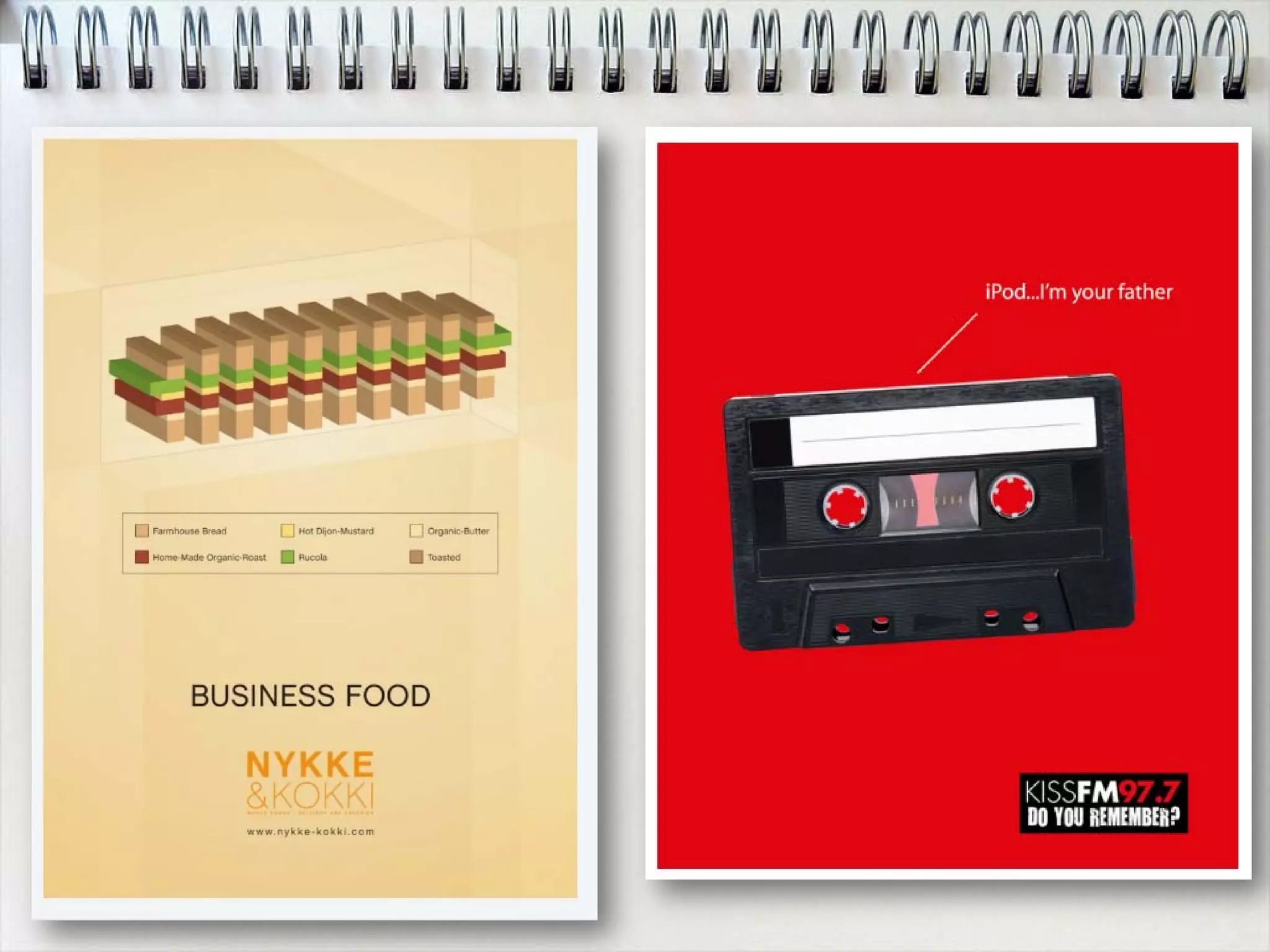
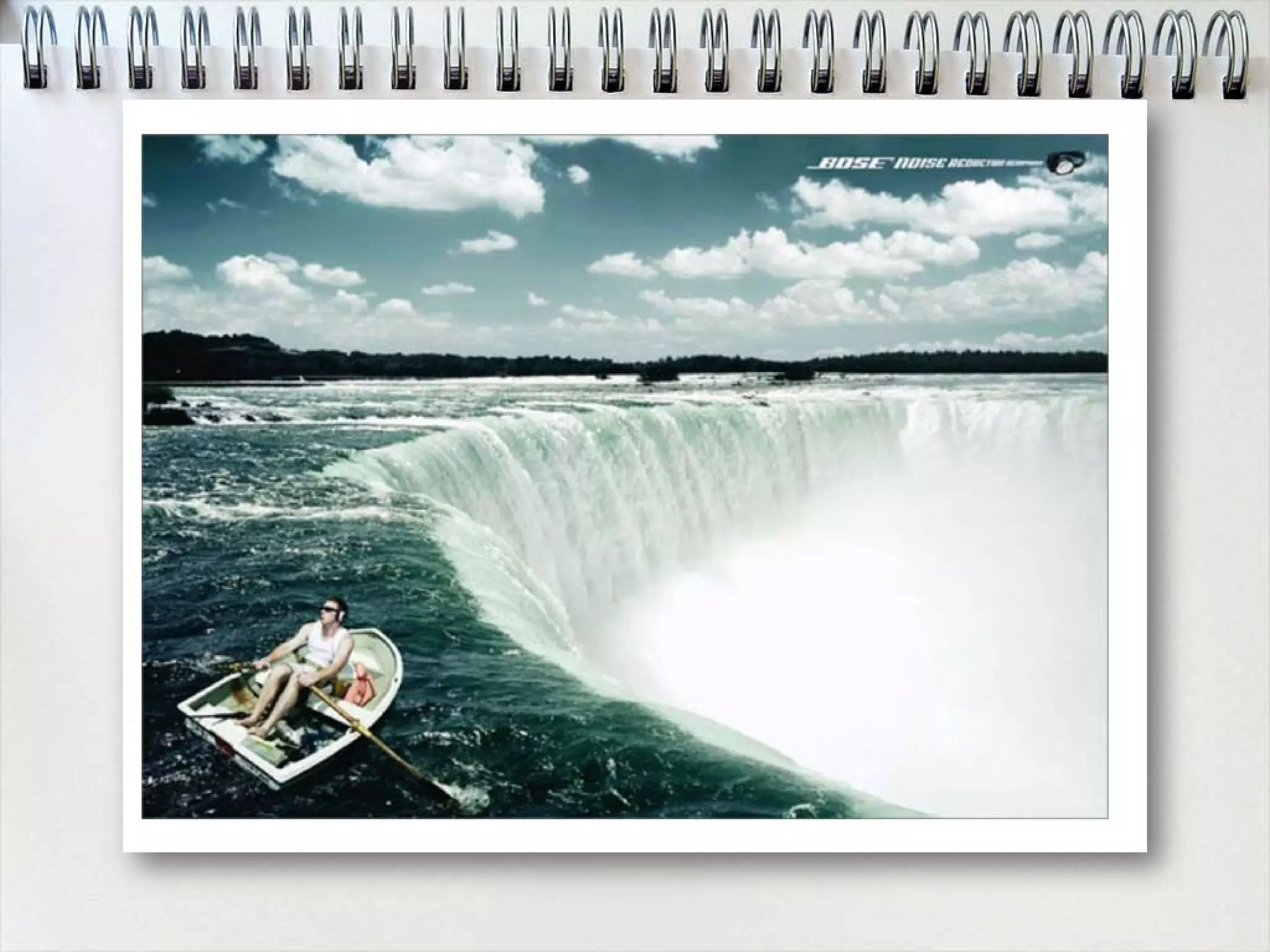
•   Visual Humor
•   Appeal to basic sensory perceptions and if
    done right, they work simply because we’re
    human.
Trust Development
• Is the company offering the product
  trustworthy?
• Or are they just a bunch of greasy car
  salesmen trying to sell a product?
• An ad should establish the company offering
  the product as deserving of trust.
• This can often be accomplished simply by
  making a well produced ad with likable
  characters.
Positive Associations
• Have you ever wondered why little babies,
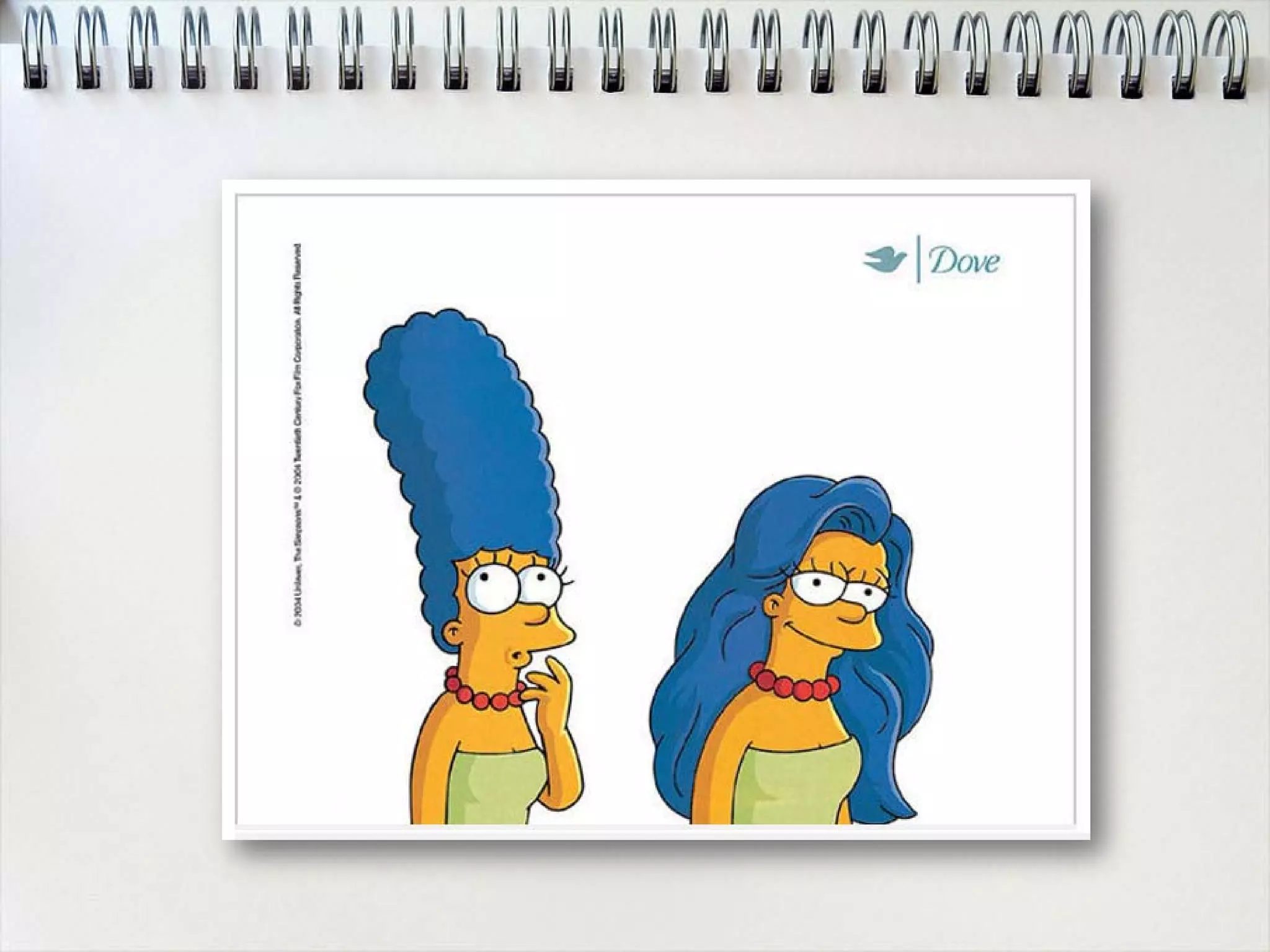
  cute animals, beautiful women, comedy,
  celebrities and nostalgia are often found in
  commercials?
• Because they create positive feelings in
  people and are the easiest ways to establish
  positive associations with products.
The Desire Hook
• All good advertisements tell a story about a
  product and why the consumer would be
  better off with the product.
• Diamonds? They are signs of good marriages
  and loving husbands.
• The Nissan GT-R gives you unprecedented
  driving power.
• Cars.com is the best place to save money by
  doing research about cars online.
Action Motivator
• Once the story has been told, it’s now time for the ad to top things off by
  taking the established “desire” and turning it into action.
• With many products, creating the desire is sufficient to motivate action.
  The product is desirable enough to sell itself.
• But for other products, the customer will probably need a little prodding.
  Simply ending a commercial with a call to action will often suffice.
• Calls to action don’t need to be verbal. They can simply be in the form of
  a behavior.
• Humans often act based on how they see others acting. So if someone
  they respect in the advertisement does an action, the viewer ads this
  behavior to his repertoire of suitable behaviors and is relatively likely to
  follow suite.
• If you want a very specific action that’s not easily translatable through
  behavior, you can resort to an explicit verbal call to action: “Visit Credit
  Card Pundit dot com today for the very best card offers available …
  anywhere.”
Copy Elements
• The copy or text must communicate in clear, concise
  and focused language.
• Start with a headline that grabs the reader's attention,
  sparks interest in your product and conveys your
  message succinctly.
• Potential customers have only seconds to read your
  billboard. Even in brochures or catalogs, keep body
  copy brief and on point.
• Include the company signature --- your identifying
  slogan and/or logo.
• Use fonts (typefaces) that complement your message
  and are easy to read.
Graphic Elements
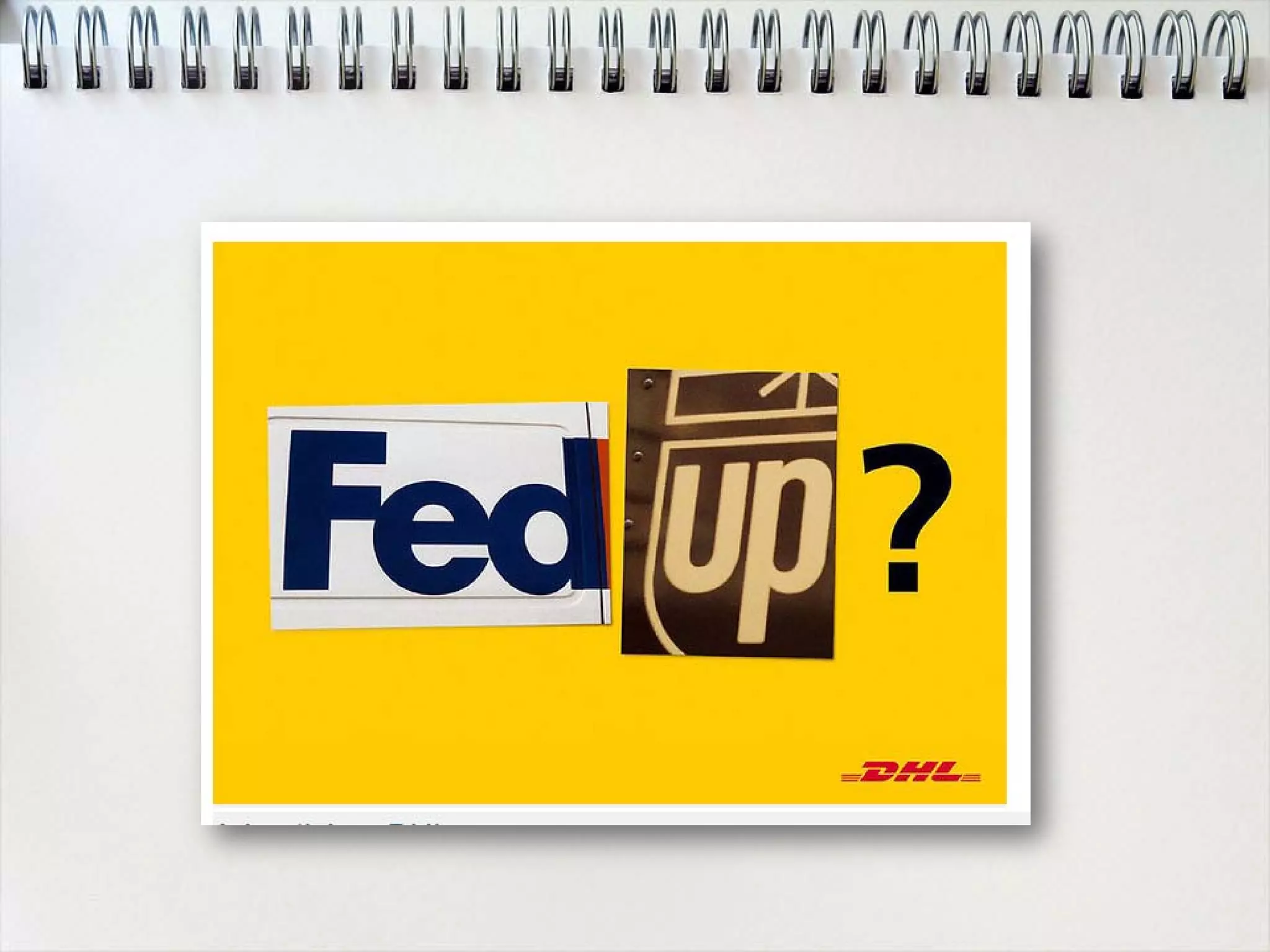
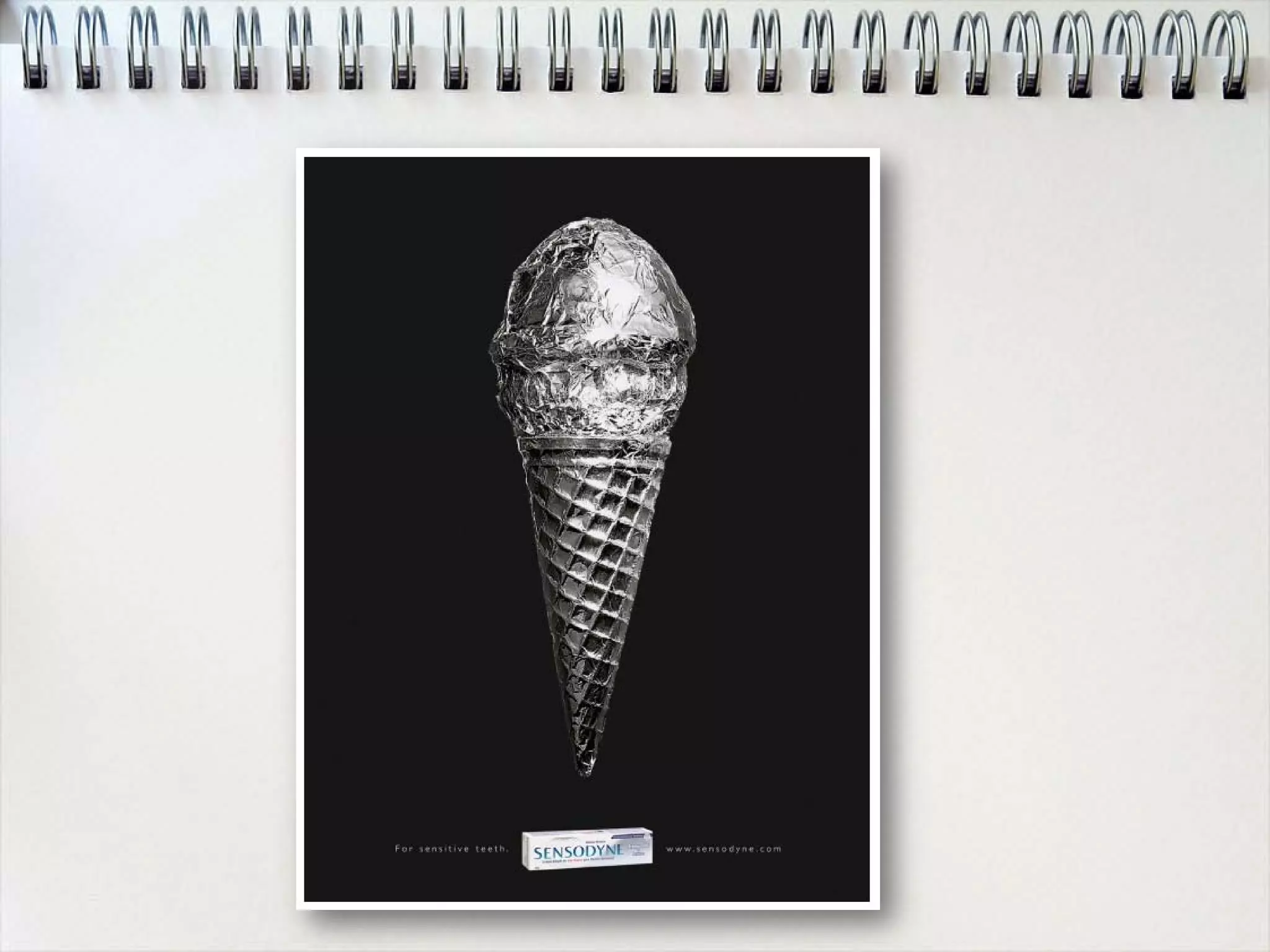
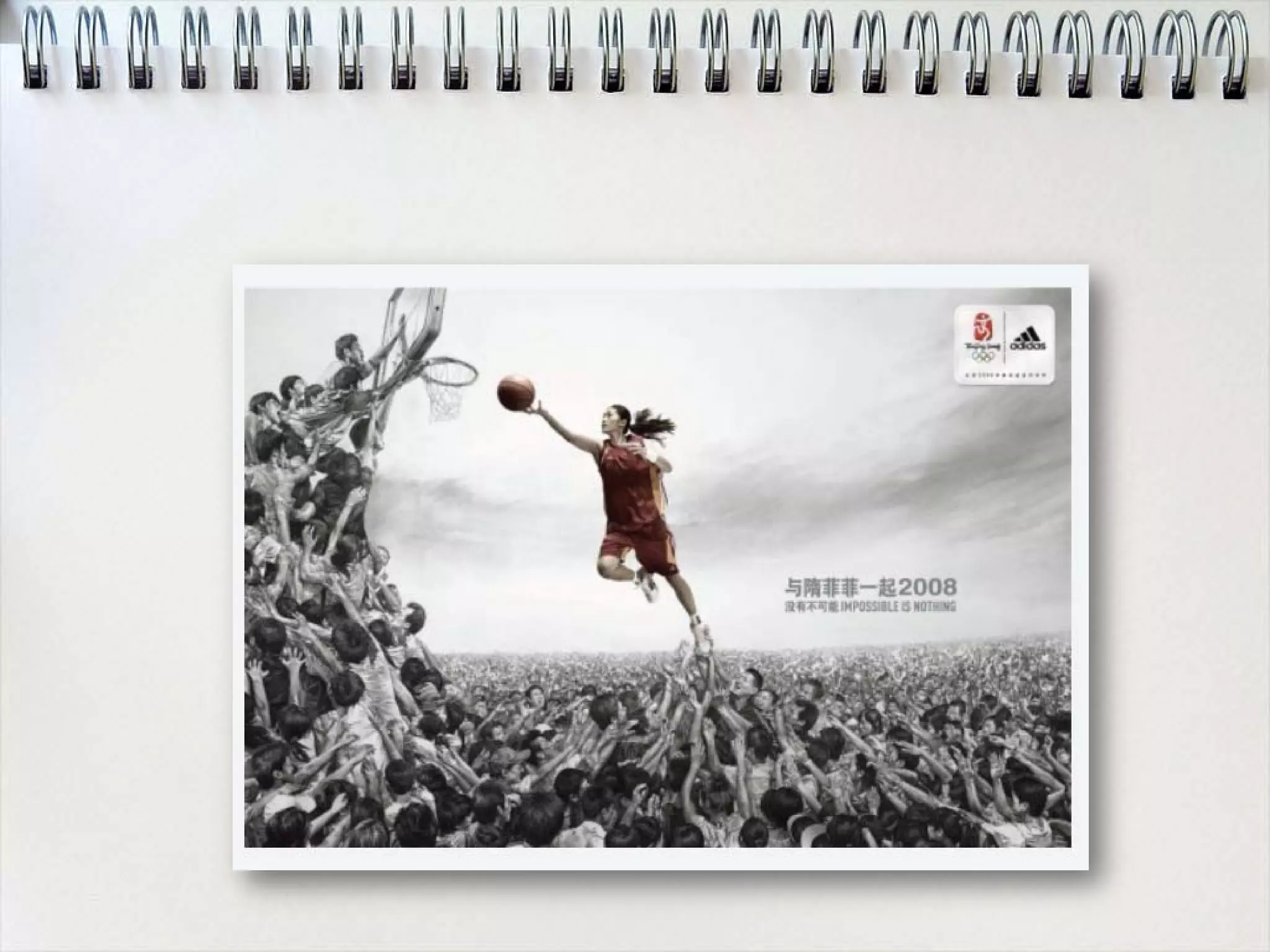
• Photography, illustration and logo symbols like Nike's
  swoosh raise interest in any ad.
• Integrate these graphic elements with your headline and
  copy for maximum effect.
• A study by Texas State University showed that more
  attention goes to pictures than words and human models
  get the most attention in magazine ads.
• This indicates the value of using models that match or
  appeal to your target audience to forge an immediate
  connection between your product/service and your
  potential customer.
• Inconsistency between your headline and your illustration
  will confuse the viewer and reduce the ad's impact.
Color vs. Black & White Elements
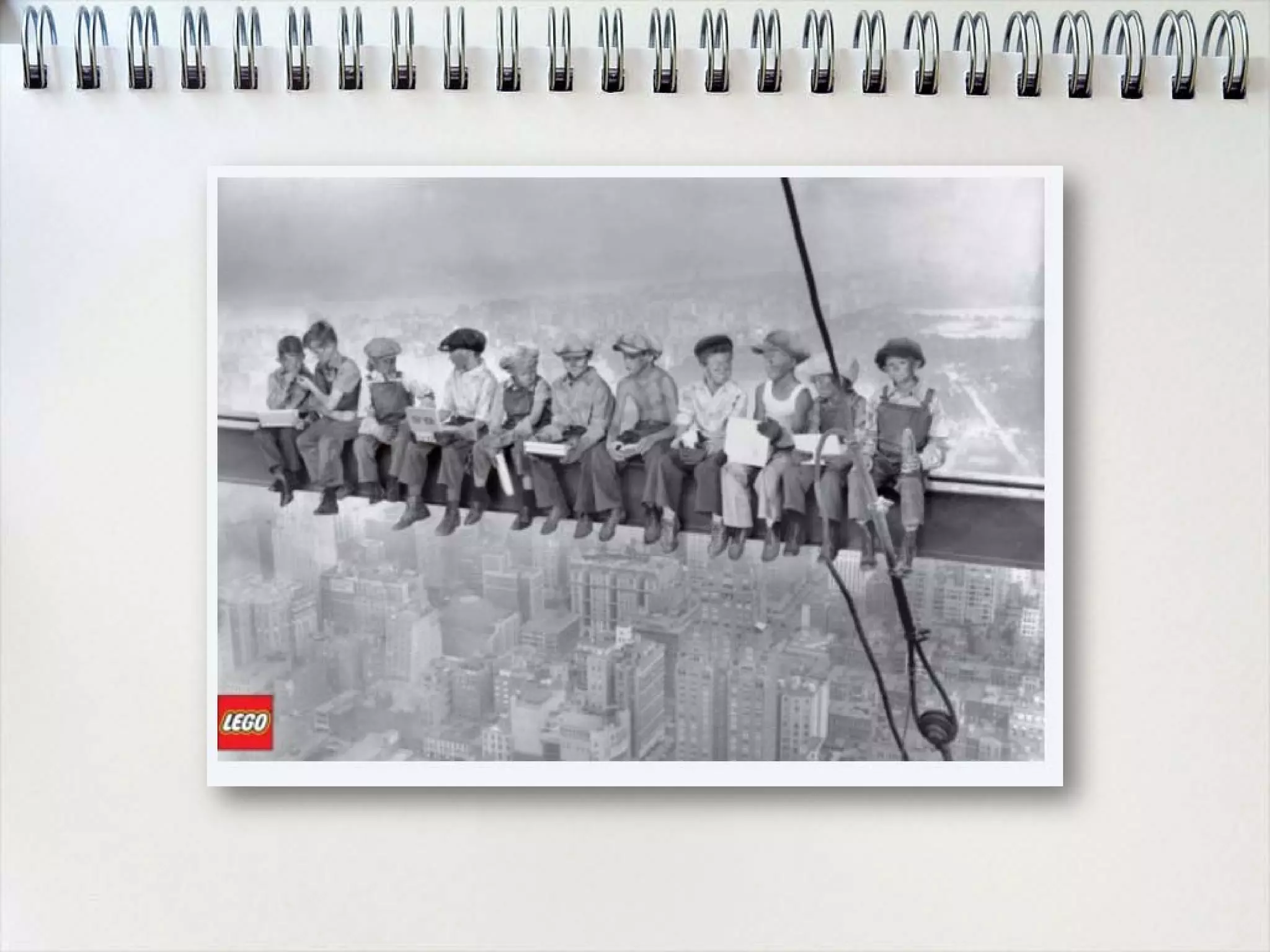
• Color printing costs more than black and
  white. Full-color printing uses four inks and
  four runs through the press for each page.
• Two-color printing is a cheaper color option,
  appropriate for some applications.
Layout Elements
• The layout is the way you put all the elements
  together to create the final ad.
• Your layout needs a focal point --- usually the
  picture or headline --- for readers' eyes to land
  on, then the white space, graphic and text
  elements should lead them through the copy
  to the company signature.
• Make the final layout match the ad's ultimate
  printed appearance in every detail.
Size & Shape Elements
• Newspaper and magazine placement fees are
  based on ad size.
• The exact dimensions may vary by publication,
  but are priced as fractions of a page.
• Special locations, like the back cover, cost more.
• Use appropriate size and shape, linked to
  purpose and corporate image, for non-
  publication print advertising.
Placement Elements
• Where you place your print advertising
  affects its success. An auto parts dealer will
  get more response running his ad in an
  automotive magazine or classified section
  than in a fashion magazine.
• Direct mail solicitations generate leads more
  effectively than magazine ads do.
Titles
• The main headline may be the strongest
  element of the ad or it may be secondary to a
  strong visual.
• Some ads may have subheads and other title
  elements as well. Just making it larger isn't
  enough, headlines should be well-written to
  get the readers' attention.
Artwork
• Photographs, drawings, and graphic embellishments
  are a key visual element of many types of ads.
• Some ads may have only a single visual while others
  might have several pictures. Even text-only ads might
  have some graphics in the form of decorative bullets
  or borders.
• When included with visuals the caption is one of the
  first things most readers look at after the visual.
• It's not in all ads but it is an option that gives the
  advertiser one more chance to grab the reader.
Body
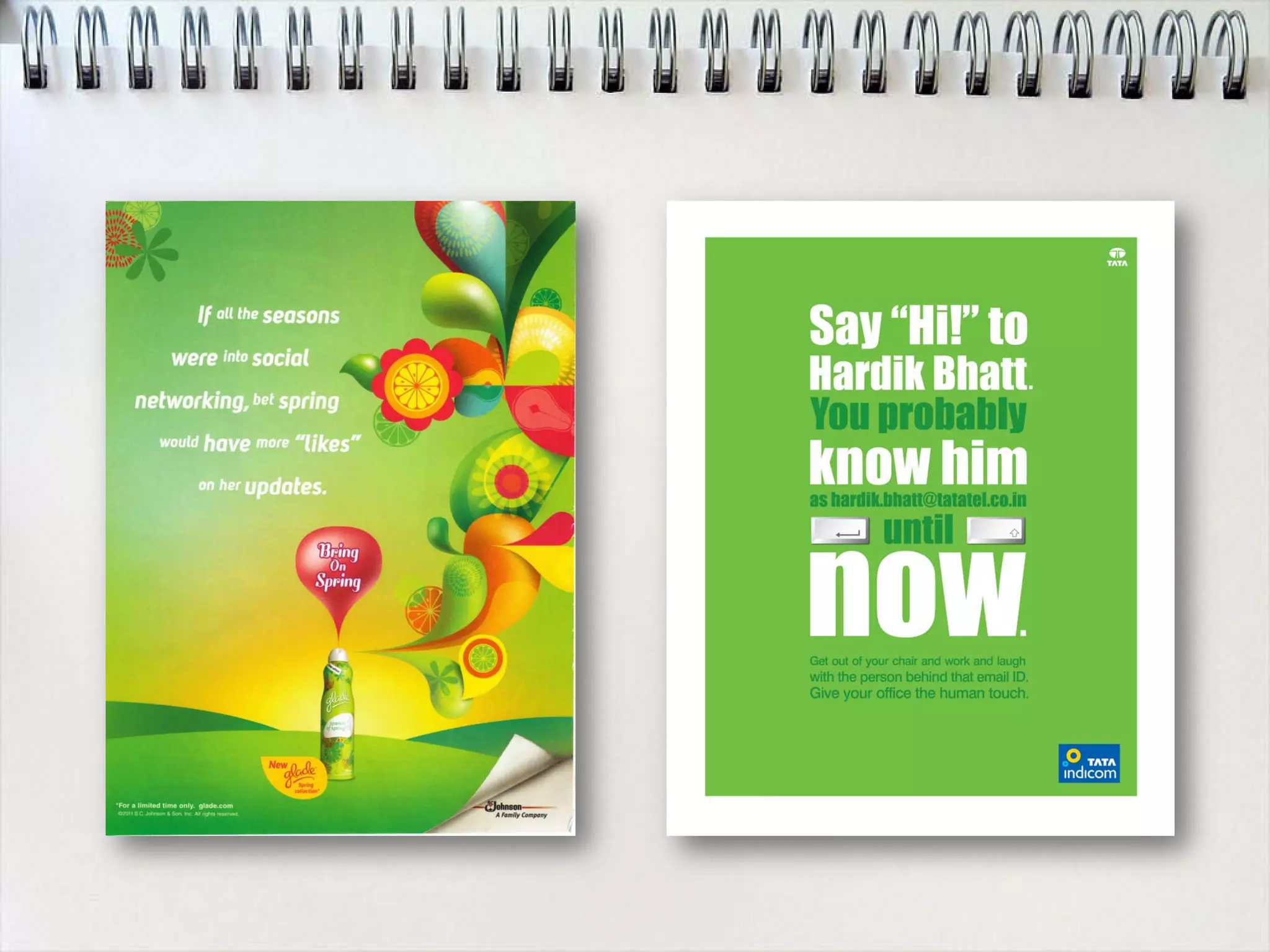
• The copy is the main text of the ad. Some ads
  may take a minimalist approach, a line or two or
  a single paragraph.
• Other ads may be quite text-heavy with
  paragraphs of information, possibly arranged in
  columns newspaper style.
• While the words are the most important part of
  the copy, visual elements such as indentation,
  pull-quotes, bullet lists, and creative kerning and
  tracking can help to organize and emphasize
  the message of the body of the ad.
Contact
• The contact or signature of an ad may appear
  anywhere in the ad although it is usually near
  the bottom. It consists of one or more of:
  –   Logo
  –   Advertiser Name
  –   Address
  –   Phone Number
  –   Map or Driving Directions
  –   Web Site Address
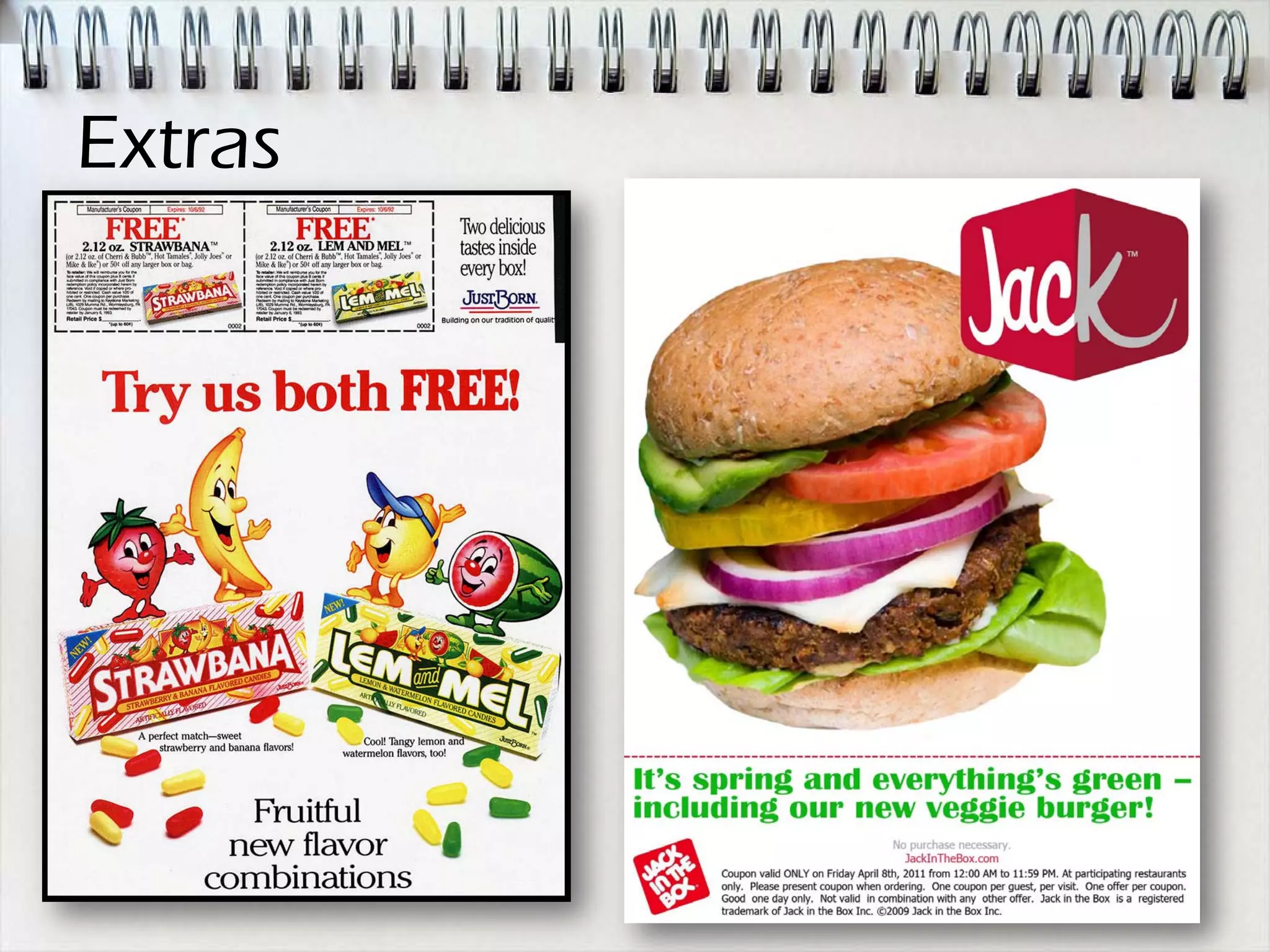
Extras
• Some print ads may have additional special
  elements such as an attached business reply
  envelope, tear-out portion with a coupon, tip
  sheet, product sample.
Extras

Elements of Advertisements

  • 1.
    What makes a GoodAdvertisement COM335
  • 2.
    Attention Grabbing • Catchy Music • A Beautiful Woman • Repetition • Loud Sounds • Visual Humor • Appeal to basic sensory perceptions and if done right, they work simply because we’re human.
  • 4.
    Trust Development • Isthe company offering the product trustworthy? • Or are they just a bunch of greasy car salesmen trying to sell a product? • An ad should establish the company offering the product as deserving of trust. • This can often be accomplished simply by making a well produced ad with likable characters.
  • 6.
    Positive Associations • Haveyou ever wondered why little babies, cute animals, beautiful women, comedy, celebrities and nostalgia are often found in commercials? • Because they create positive feelings in people and are the easiest ways to establish positive associations with products.
  • 8.
    The Desire Hook •All good advertisements tell a story about a product and why the consumer would be better off with the product. • Diamonds? They are signs of good marriages and loving husbands. • The Nissan GT-R gives you unprecedented driving power. • Cars.com is the best place to save money by doing research about cars online.
  • 10.
    Action Motivator • Oncethe story has been told, it’s now time for the ad to top things off by taking the established “desire” and turning it into action. • With many products, creating the desire is sufficient to motivate action. The product is desirable enough to sell itself. • But for other products, the customer will probably need a little prodding. Simply ending a commercial with a call to action will often suffice. • Calls to action don’t need to be verbal. They can simply be in the form of a behavior. • Humans often act based on how they see others acting. So if someone they respect in the advertisement does an action, the viewer ads this behavior to his repertoire of suitable behaviors and is relatively likely to follow suite. • If you want a very specific action that’s not easily translatable through behavior, you can resort to an explicit verbal call to action: “Visit Credit Card Pundit dot com today for the very best card offers available … anywhere.”
  • 12.
    Copy Elements • Thecopy or text must communicate in clear, concise and focused language. • Start with a headline that grabs the reader's attention, sparks interest in your product and conveys your message succinctly. • Potential customers have only seconds to read your billboard. Even in brochures or catalogs, keep body copy brief and on point. • Include the company signature --- your identifying slogan and/or logo. • Use fonts (typefaces) that complement your message and are easy to read.
  • 14.
    Graphic Elements • Photography,illustration and logo symbols like Nike's swoosh raise interest in any ad. • Integrate these graphic elements with your headline and copy for maximum effect. • A study by Texas State University showed that more attention goes to pictures than words and human models get the most attention in magazine ads. • This indicates the value of using models that match or appeal to your target audience to forge an immediate connection between your product/service and your potential customer. • Inconsistency between your headline and your illustration will confuse the viewer and reduce the ad's impact.
  • 16.
    Color vs. Black& White Elements • Color printing costs more than black and white. Full-color printing uses four inks and four runs through the press for each page. • Two-color printing is a cheaper color option, appropriate for some applications.
  • 18.
    Layout Elements • Thelayout is the way you put all the elements together to create the final ad. • Your layout needs a focal point --- usually the picture or headline --- for readers' eyes to land on, then the white space, graphic and text elements should lead them through the copy to the company signature. • Make the final layout match the ad's ultimate printed appearance in every detail.
  • 20.
    Size & ShapeElements • Newspaper and magazine placement fees are based on ad size. • The exact dimensions may vary by publication, but are priced as fractions of a page. • Special locations, like the back cover, cost more. • Use appropriate size and shape, linked to purpose and corporate image, for non- publication print advertising.
  • 22.
    Placement Elements • Whereyou place your print advertising affects its success. An auto parts dealer will get more response running his ad in an automotive magazine or classified section than in a fashion magazine. • Direct mail solicitations generate leads more effectively than magazine ads do.
  • 24.
    Titles • The mainheadline may be the strongest element of the ad or it may be secondary to a strong visual. • Some ads may have subheads and other title elements as well. Just making it larger isn't enough, headlines should be well-written to get the readers' attention.
  • 26.
    Artwork • Photographs, drawings,and graphic embellishments are a key visual element of many types of ads. • Some ads may have only a single visual while others might have several pictures. Even text-only ads might have some graphics in the form of decorative bullets or borders. • When included with visuals the caption is one of the first things most readers look at after the visual. • It's not in all ads but it is an option that gives the advertiser one more chance to grab the reader.
  • 28.
    Body • The copyis the main text of the ad. Some ads may take a minimalist approach, a line or two or a single paragraph. • Other ads may be quite text-heavy with paragraphs of information, possibly arranged in columns newspaper style. • While the words are the most important part of the copy, visual elements such as indentation, pull-quotes, bullet lists, and creative kerning and tracking can help to organize and emphasize the message of the body of the ad.
  • 30.
    Contact • The contactor signature of an ad may appear anywhere in the ad although it is usually near the bottom. It consists of one or more of: – Logo – Advertiser Name – Address – Phone Number – Map or Driving Directions – Web Site Address
  • 32.
    Extras • Some printads may have additional special elements such as an attached business reply envelope, tear-out portion with a coupon, tip sheet, product sample.
  • 33.