

INVITATION PHASE
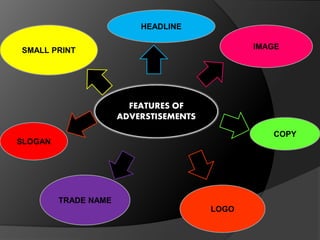
FEATURES OF
ADVERSTISEMENTS
LOGO
SMALL PRINT
SLOGAN
TRADE NAME
COPY
HEADLINE
IMAGE
HEADLINE
 Headline is one of the main components used
to attract the audience to the advertisement.
 Headlines are usually larger in size or may be
written in a different font.
 They may include puns, repetition or alliteration
as well as other language devices.
 Headlines may include rhetorical questions to
get the viewer thinking.
 The font design must complement the
advertisement’s image as well as the age group
the advertisement is aimed at.
IMAGE
 Images that are colourful and attractive are
more eye catching then dull images.
 The image should complement the headline of
an advert.
 Objects in the picture are laid out in an
attractive manner for the target market.
 Pictures often present idealised situations.
 Camera work as well as visual aspects of a
picture are chosen carefully to attract attention
and enhance the image of an advertisement.
COPY
 The copy is the main body of text in an advert.
 The aim is to persuade the target audience to
want the product being advertised, hence it
usually appeals to certain basic desires of the
audience.
 The copy is usually presented in an attractive
way by using emotive words and words of
positive connotation.
 Jargon is often used to impress the reader.
 A colloquial style of language is also used to
impress the reader.
COPY
 Repetition of the most important selling points is
often used.
 Clichés in the text and even the entire
advertisement are used frequently to elicit the
target audience’s feelings of comfort and
familiarity.
 Limited offers or other subtle approaches are
used to encourage urgent action and convincing.
 Some advertisements deliberately keep the copy
to a minimum and instead place focus on the
image/s used.
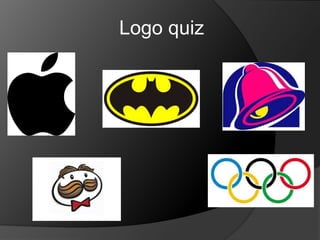
LOGO
 The logo is the emblem or symbol of a
company or product that is instantly
recognisable to the target audience.
 The logo is symbolic of what the company
wants to achieve or how it wants to be
perceived.
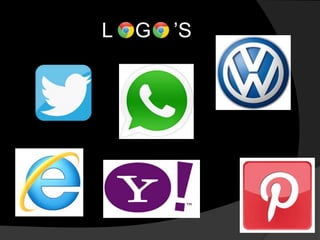
L G ’S
TRADE NAME
 Trade names are carefully chosen to suit
the general impression of the company or
product.
 Often advertising language is used.
 The trade name itself may come to
symbolise something.
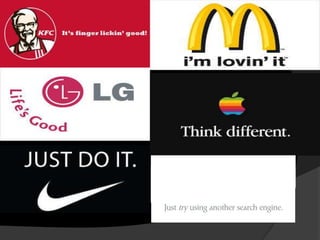
SLOGAN
 The slogan is the short, catchy saying
that one associates with a product.
 It is often repeated in TV or radio
adverts of the product and may contain
alliteration or assonance to make it stay
on our minds.
SMALL PRINT
 Small print is the tiny printed disclaimer
that is sometimes printed at the bottom in
tiny font.
 Small print is included for the following
reasons:
- To prevent legal consequences for the
company.
- To add terms and conditions that apply to
the offer.
- To indicate conditional factors that
influence the advertisers claim.
Logo quiz
ACTIVITY

Lesson on advertisement

  • 2.
  • 3.
  • 4.
    HEADLINE  Headline isone of the main components used to attract the audience to the advertisement.  Headlines are usually larger in size or may be written in a different font.  They may include puns, repetition or alliteration as well as other language devices.  Headlines may include rhetorical questions to get the viewer thinking.  The font design must complement the advertisement’s image as well as the age group the advertisement is aimed at.
  • 5.
    IMAGE  Images thatare colourful and attractive are more eye catching then dull images.  The image should complement the headline of an advert.  Objects in the picture are laid out in an attractive manner for the target market.  Pictures often present idealised situations.  Camera work as well as visual aspects of a picture are chosen carefully to attract attention and enhance the image of an advertisement.
  • 6.
    COPY  The copyis the main body of text in an advert.  The aim is to persuade the target audience to want the product being advertised, hence it usually appeals to certain basic desires of the audience.  The copy is usually presented in an attractive way by using emotive words and words of positive connotation.  Jargon is often used to impress the reader.  A colloquial style of language is also used to impress the reader.
  • 7.
    COPY  Repetition ofthe most important selling points is often used.  Clichés in the text and even the entire advertisement are used frequently to elicit the target audience’s feelings of comfort and familiarity.  Limited offers or other subtle approaches are used to encourage urgent action and convincing.  Some advertisements deliberately keep the copy to a minimum and instead place focus on the image/s used.
  • 8.
    LOGO  The logois the emblem or symbol of a company or product that is instantly recognisable to the target audience.  The logo is symbolic of what the company wants to achieve or how it wants to be perceived.
  • 9.
  • 10.
    TRADE NAME  Tradenames are carefully chosen to suit the general impression of the company or product.  Often advertising language is used.  The trade name itself may come to symbolise something.
  • 11.
    SLOGAN  The sloganis the short, catchy saying that one associates with a product.  It is often repeated in TV or radio adverts of the product and may contain alliteration or assonance to make it stay on our minds.
  • 13.
    SMALL PRINT  Smallprint is the tiny printed disclaimer that is sometimes printed at the bottom in tiny font.  Small print is included for the following reasons: - To prevent legal consequences for the company. - To add terms and conditions that apply to the offer. - To indicate conditional factors that influence the advertisers claim.
  • 14.
  • 15.