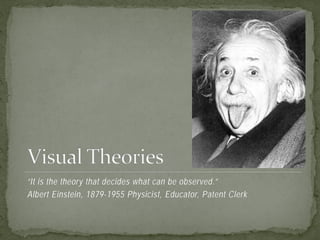
“It is the theory that decides what can be observed.”
Albert Einstein, 1879-1955 Physicist, Educator, Patent Clerk
Prepared by Danielle Oser, APR
Concerned with what the brain sees – visual cues
Too many images to process and remember
Cells note the stimulation and passes it on to your mind without
considering it
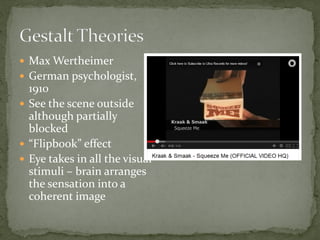
 Max Wertheimer
 German psychologist,
1910
 See the scene outside
although partially
blocked
 “Flipbook” effect
 Eye takes in all the visual
stimuli – brain arranges
the sensation into a
coherent image
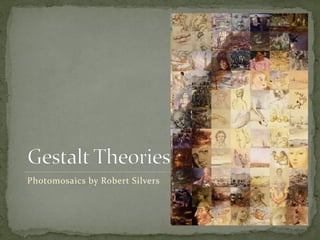
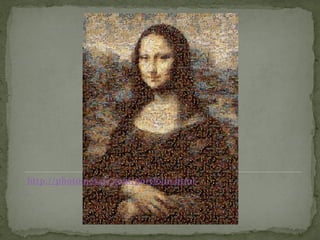
Photomosaics by Robert Silvers
http://photomosaic.com/portfolio.html
Max Weterhimer
•
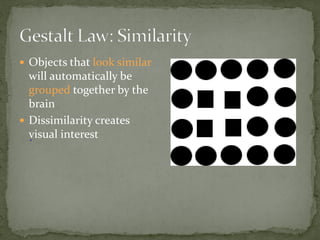
 Objects that look similar
will automatically be
grouped together by the
brain
 Dissimilarity creates
visual interest
Christoph Niemann
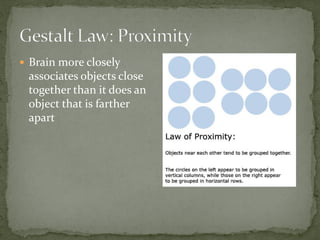
 Brain more closely
associates objects close
together than it does an
object that is farther
apart
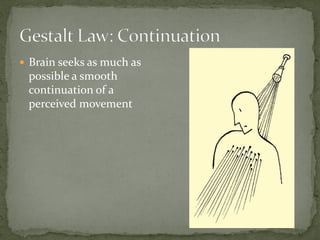
 Brain seeks as much as
possible a smooth
continuation of a
perceived movement
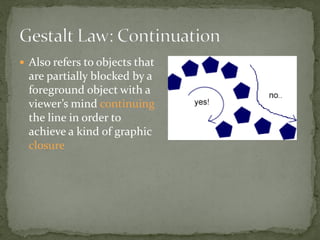
 Also refers to objects that
are partially blocked by a
foreground object with a
viewer’s mind continuing
the line in order to
achieve a kind of graphic
closure
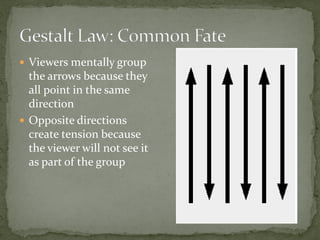
 Viewers mentally group
the arrows because they
all point in the same
direction
 Opposite directions
create tension because
the viewer will not see it
as part of the group
Create more noticeable print and screen media designs
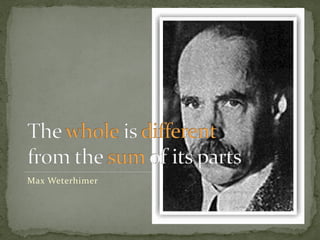
• “The Whole is Different from the Sum of its Parts”
Insights can be learned when attention is turned to the entire image
Diane Arbus, 1971
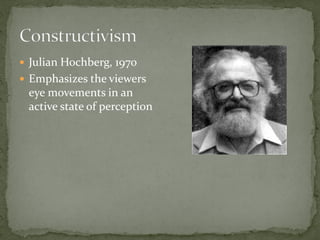
 Julian Hochberg, 1970
 Emphasizes the viewers
eye movements in an
active state of perception
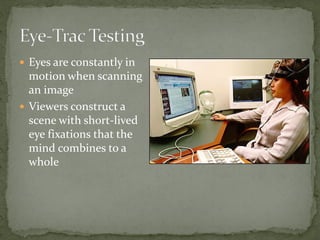
 Eyes are constantly in
motion when scanning
an image
 Viewers construct a
scene with short-lived
eye fixations that the
mind combines to a
whole
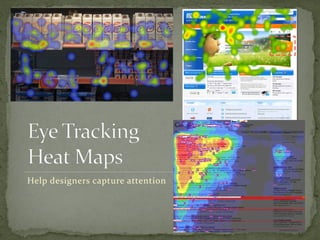
Help designers capture attention
Content Driven
A sign is something that stands for something else
The meaning behind any sign must be learned, understood
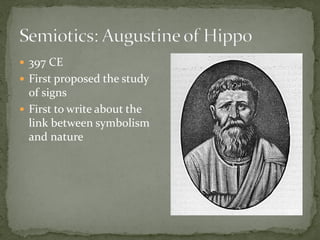
 397 CE
 First proposed the study
of signs
 First to write about the
link between symbolism
and nature
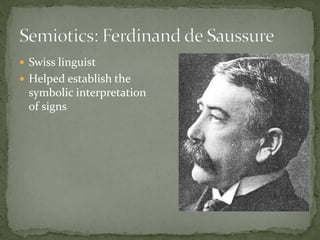
 Swiss linguist
 Helped establish the
symbolic interpretation
of signs
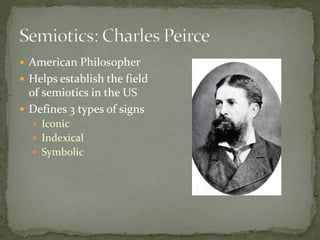
 American Philosopher
 Helps establish the field
of semiotics in the US
 Defines 3 types of signs
 Iconic
 Indexical
 Symbolic
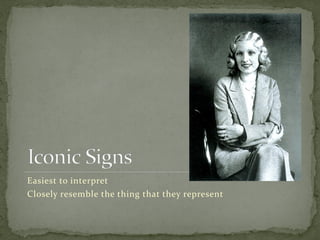
Easiest to interpret
Closely resemble the thing that they represent
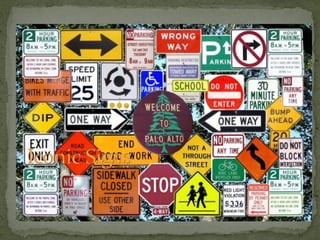
 What is the iconic sign
here?
 Iconic signs have the
strongest one-on-one
connection between the
image and what it
represents
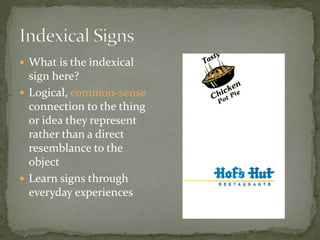
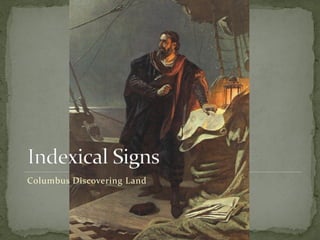
 What is the indexical
sign here?
 Logical, common-sense
connection to the thing
or idea they represent
rather than a direct
resemblance to the
object
 Learn signs through
everyday experiences
 No logical or
representational
connection
 Must be taught
 Social, Cultural
considerations influence
symbolic signs
• Symbolic
• Symbolic
Symbols tied to religious faith often evoke the strongest
emotional response
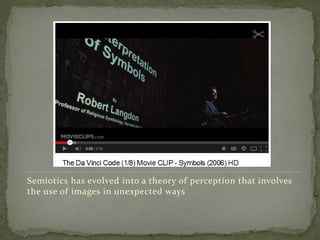
Semiotics has evolved into a theory of perception that involves
the use of images in unexpected ways
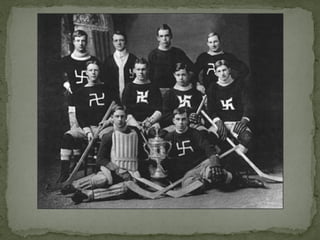
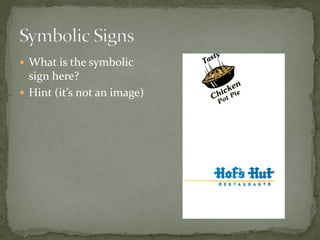
 What is the symbolic
sign here?
 Hint (it’s not an image)
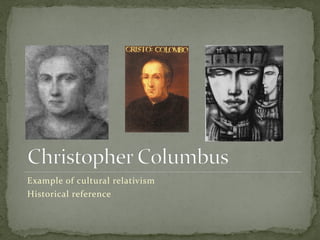
Example of cultural relativism
Historical reference
Columbus Discovering Land
Codes: An amalgamation of hundreds of ideas and/or elements
into one convenient concept
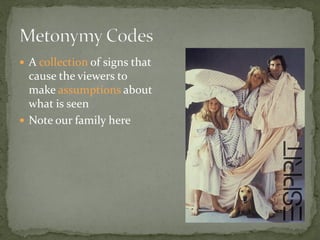
 A collection of signs that
cause the viewers to
make assumptions about
what is seen
 Note our family here
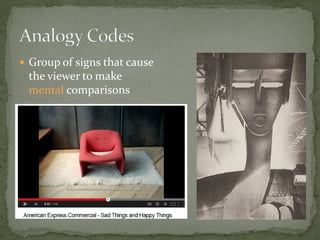
 Group of signs that cause
the viewer to make
mental comparisons
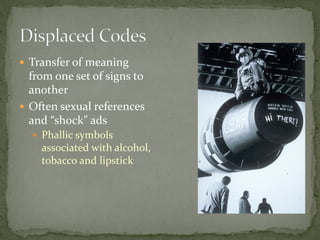
 Transfer of meaning
from one set of signs to
another
 Often sexual references
and “shock” ads
 Phallic symbols
associated with alcohol,
tobacco and lipstick
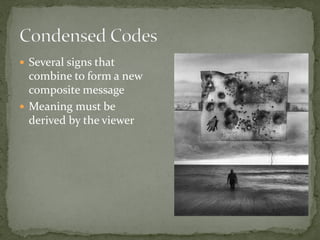
 Several signs that
combine to form a new
composite message
 Meaning must be
derived by the viewer
 Music often uses several
signs to create a new
complex message
Signs can enhance the visual experience, educate, entertain and
persuade a viewer
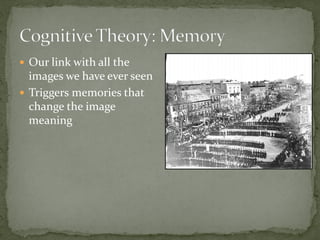
 Our link with all the
images we have ever seen
 Triggers memories that
change the image
meaning
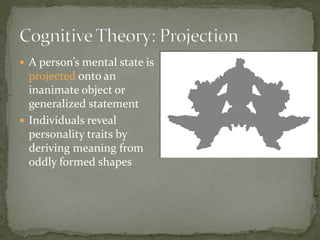
 A person’s mental state is
projected onto an
inanimate object or
generalized statement
 Individuals reveal
personality traits by
deriving meaning from
oddly formed shapes
Seeing a face or other figure in an inanimate object
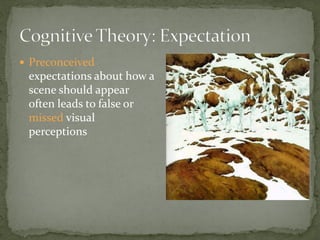
 Preconceived
expectations about how a
scene should appear
often leads to false or
missed visual
perceptions
• Expectation
Guido Daniele
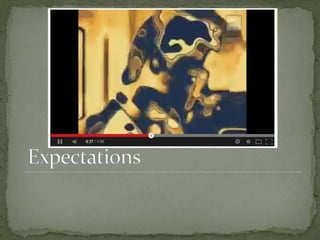
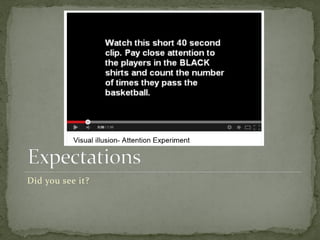
Did you see it?
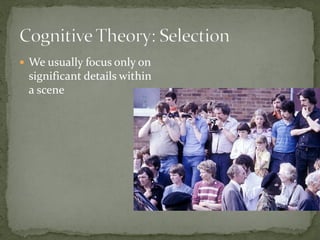
 We usually focus only on
significant details within
a scene
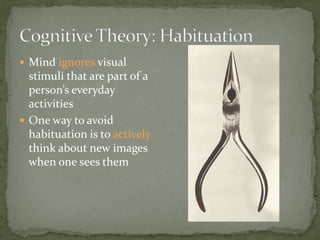
 Mind ignores visual
stimuli that are part of a
person’s everyday
activities
 One way to avoid
habituation is to actively
think about new images
when one sees them
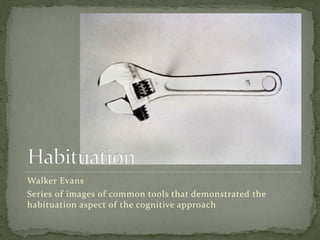
Walker Evans
Series of images of common tools that demonstrated the
habituation aspect of the cognitive approach
Edward Weston
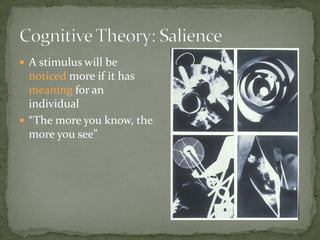
 A stimulus will be
noticed more if it has
meaning for an
individual
 “The more you know, the
more you see”
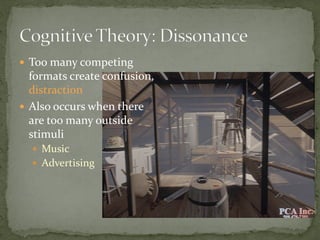
 Too many competing
formats create confusion,
distraction
 Also occurs when there
are too many outside
stimuli
 Music
 Advertising
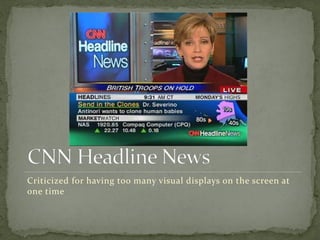
Criticized for having too many visual displays on the screen at
one time
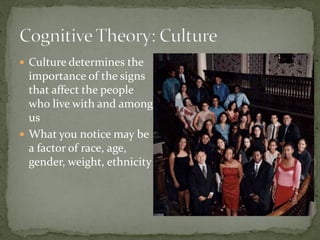
 Culture determines the
importance of the signs
that affect the people
who live with and among
us
 What you notice may be
a factor of race, age,
gender, weight, ethnicity
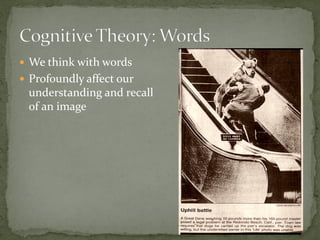
 We think with words
 Profoundly affect our
understanding and recall
of an image
We must look at the world closely to create designs that attract
attention and be mindful of the varied messages that come
from images

Visual communication and Visual communication theories

  • 1.
    “It is thetheory that decides what can be observed.” Albert Einstein, 1879-1955 Physicist, Educator, Patent Clerk
  • 2.
  • 5.
    Concerned with whatthe brain sees – visual cues
  • 9.
    Too many imagesto process and remember Cells note the stimulation and passes it on to your mind without considering it
  • 10.
     Max Wertheimer German psychologist, 1910  See the scene outside although partially blocked  “Flipbook” effect  Eye takes in all the visual stimuli – brain arranges the sensation into a coherent image
  • 14.
  • 15.
  • 16.
  • 21.
    •  Objects thatlook similar will automatically be grouped together by the brain  Dissimilarity creates visual interest
  • 22.
  • 23.
     Brain moreclosely associates objects close together than it does an object that is farther apart
  • 24.
     Brain seeksas much as possible a smooth continuation of a perceived movement
  • 25.
     Also refersto objects that are partially blocked by a foreground object with a viewer’s mind continuing the line in order to achieve a kind of graphic closure
  • 26.
     Viewers mentallygroup the arrows because they all point in the same direction  Opposite directions create tension because the viewer will not see it as part of the group
  • 31.
    Create more noticeableprint and screen media designs
  • 32.
    • “The Wholeis Different from the Sum of its Parts” Insights can be learned when attention is turned to the entire image
  • 33.
  • 34.
     Julian Hochberg,1970  Emphasizes the viewers eye movements in an active state of perception
  • 35.
     Eyes areconstantly in motion when scanning an image  Viewers construct a scene with short-lived eye fixations that the mind combines to a whole
  • 36.
  • 37.
  • 38.
    A sign issomething that stands for something else The meaning behind any sign must be learned, understood
  • 39.
     397 CE First proposed the study of signs  First to write about the link between symbolism and nature
  • 40.
     Swiss linguist Helped establish the symbolic interpretation of signs
  • 41.
     American Philosopher Helps establish the field of semiotics in the US  Defines 3 types of signs  Iconic  Indexical  Symbolic
  • 42.
    Easiest to interpret Closelyresemble the thing that they represent
  • 44.
     What isthe iconic sign here?  Iconic signs have the strongest one-on-one connection between the image and what it represents
  • 46.
     What isthe indexical sign here?  Logical, common-sense connection to the thing or idea they represent rather than a direct resemblance to the object  Learn signs through everyday experiences
  • 47.
     No logicalor representational connection  Must be taught  Social, Cultural considerations influence symbolic signs
  • 48.
  • 49.
  • 50.
    Symbols tied toreligious faith often evoke the strongest emotional response
  • 51.
    Semiotics has evolvedinto a theory of perception that involves the use of images in unexpected ways
  • 56.
     What isthe symbolic sign here?  Hint (it’s not an image)
  • 57.
    Example of culturalrelativism Historical reference
  • 58.
  • 59.
    Codes: An amalgamationof hundreds of ideas and/or elements into one convenient concept
  • 60.
     A collectionof signs that cause the viewers to make assumptions about what is seen  Note our family here
  • 61.
     Group ofsigns that cause the viewer to make mental comparisons
  • 62.
     Transfer ofmeaning from one set of signs to another  Often sexual references and “shock” ads  Phallic symbols associated with alcohol, tobacco and lipstick
  • 64.
     Several signsthat combine to form a new composite message  Meaning must be derived by the viewer
  • 65.
     Music oftenuses several signs to create a new complex message
  • 66.
    Signs can enhancethe visual experience, educate, entertain and persuade a viewer
  • 69.
     Our linkwith all the images we have ever seen  Triggers memories that change the image meaning
  • 70.
     A person’smental state is projected onto an inanimate object or generalized statement  Individuals reveal personality traits by deriving meaning from oddly formed shapes
  • 71.
    Seeing a faceor other figure in an inanimate object
  • 72.
     Preconceived expectations abouthow a scene should appear often leads to false or missed visual perceptions
  • 73.
  • 75.
  • 76.
     We usuallyfocus only on significant details within a scene
  • 77.
     Mind ignoresvisual stimuli that are part of a person’s everyday activities  One way to avoid habituation is to actively think about new images when one sees them
  • 78.
    Walker Evans Series ofimages of common tools that demonstrated the habituation aspect of the cognitive approach
  • 79.
  • 80.
     A stimuluswill be noticed more if it has meaning for an individual  “The more you know, the more you see”
  • 81.
     Too manycompeting formats create confusion, distraction  Also occurs when there are too many outside stimuli  Music  Advertising
  • 82.
    Criticized for havingtoo many visual displays on the screen at one time
  • 83.
     Culture determinesthe importance of the signs that affect the people who live with and among us  What you notice may be a factor of race, age, gender, weight, ethnicity
  • 84.
     We thinkwith words  Profoundly affect our understanding and recall of an image
  • 85.
    We must lookat the world closely to create designs that attract attention and be mindful of the varied messages that come from images