Electromagnetic 
Induction 
The interaction between current and 
magnetic field
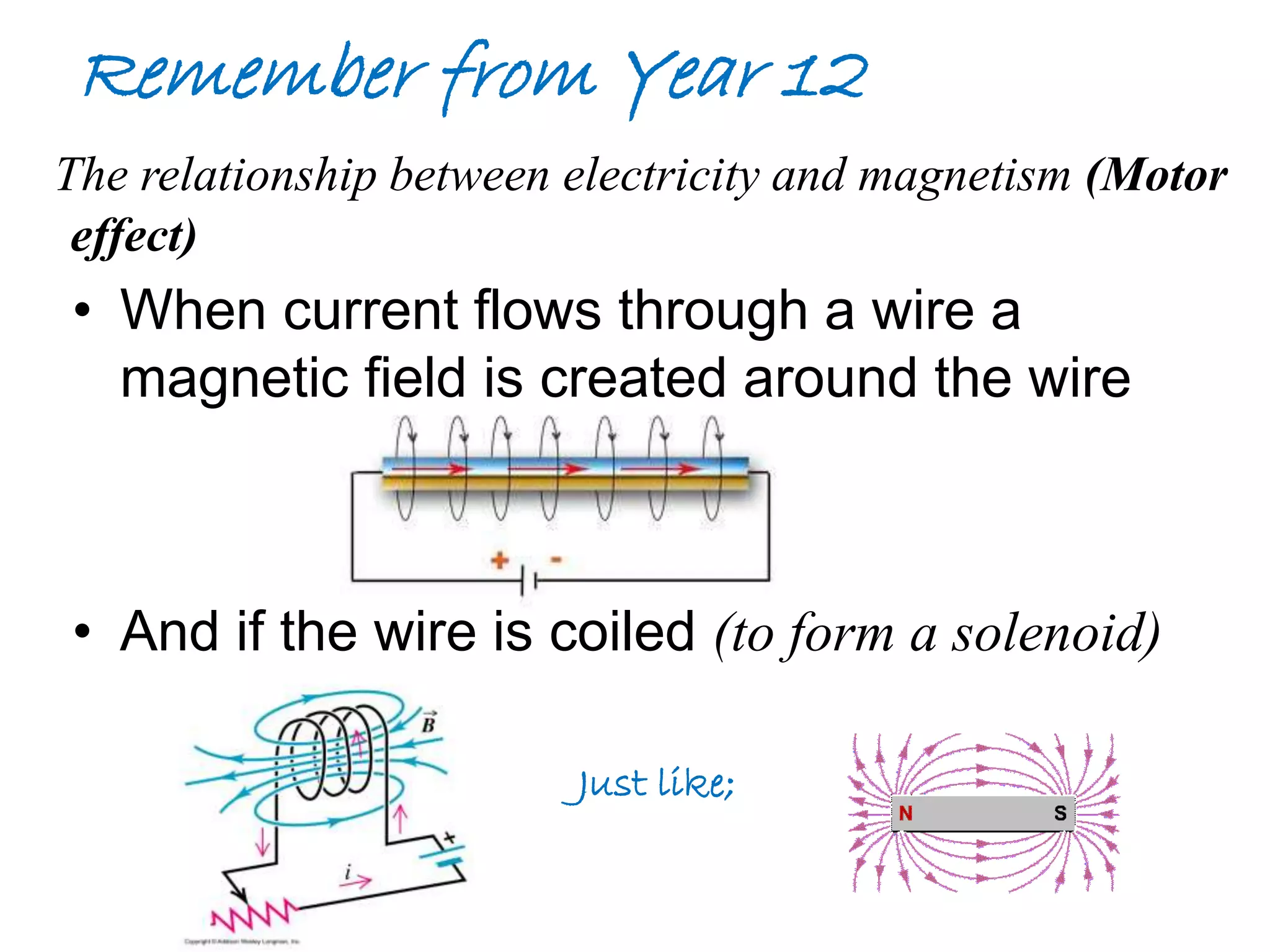
Remember from Year 12 
The relationship between electricity and magnetism (Motor 
effect) 
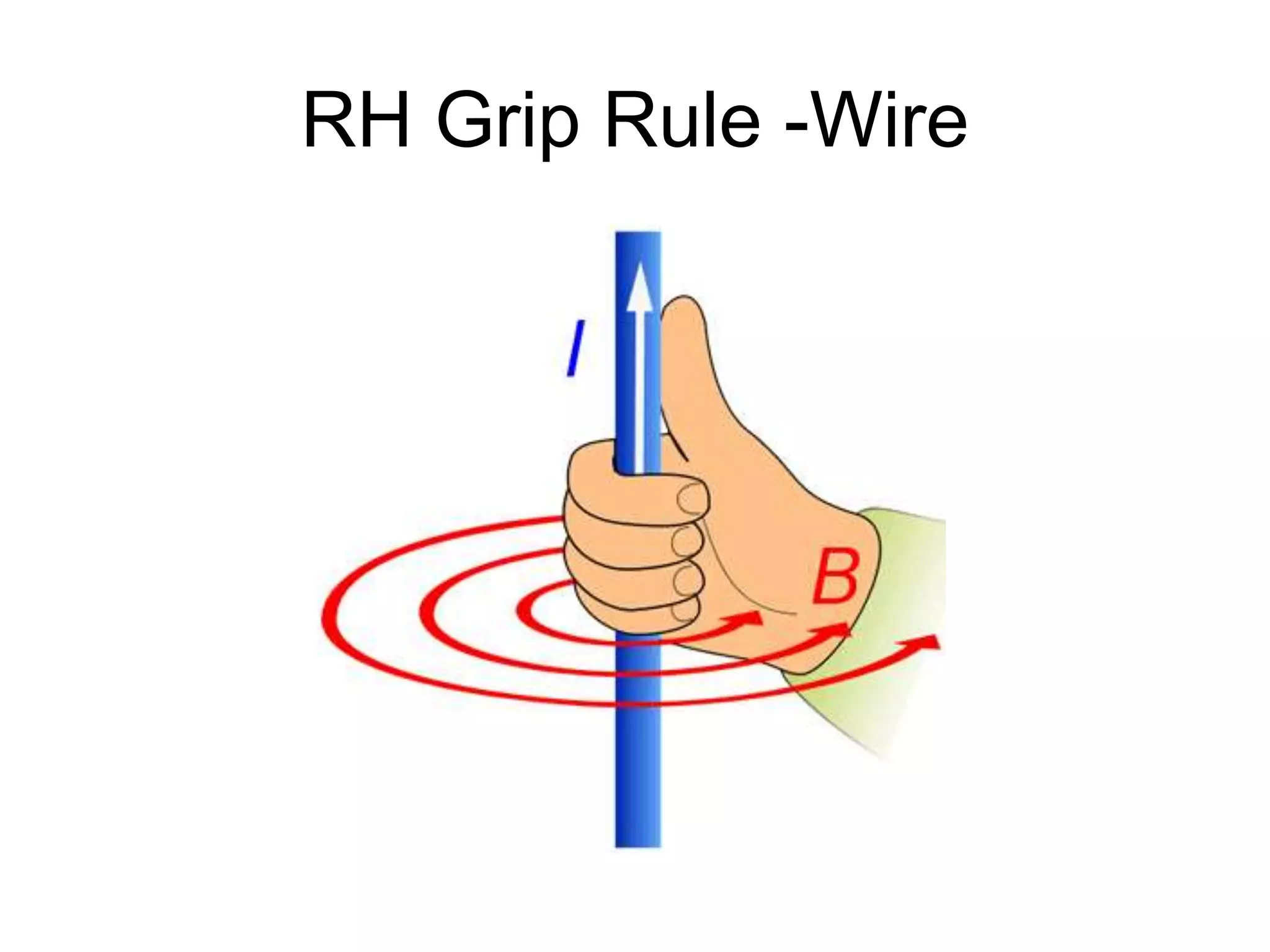
• When current flows through a wire a 
magnetic field is created around the wire 
• And if the wire is coiled (to form a solenoid) 
Just like;
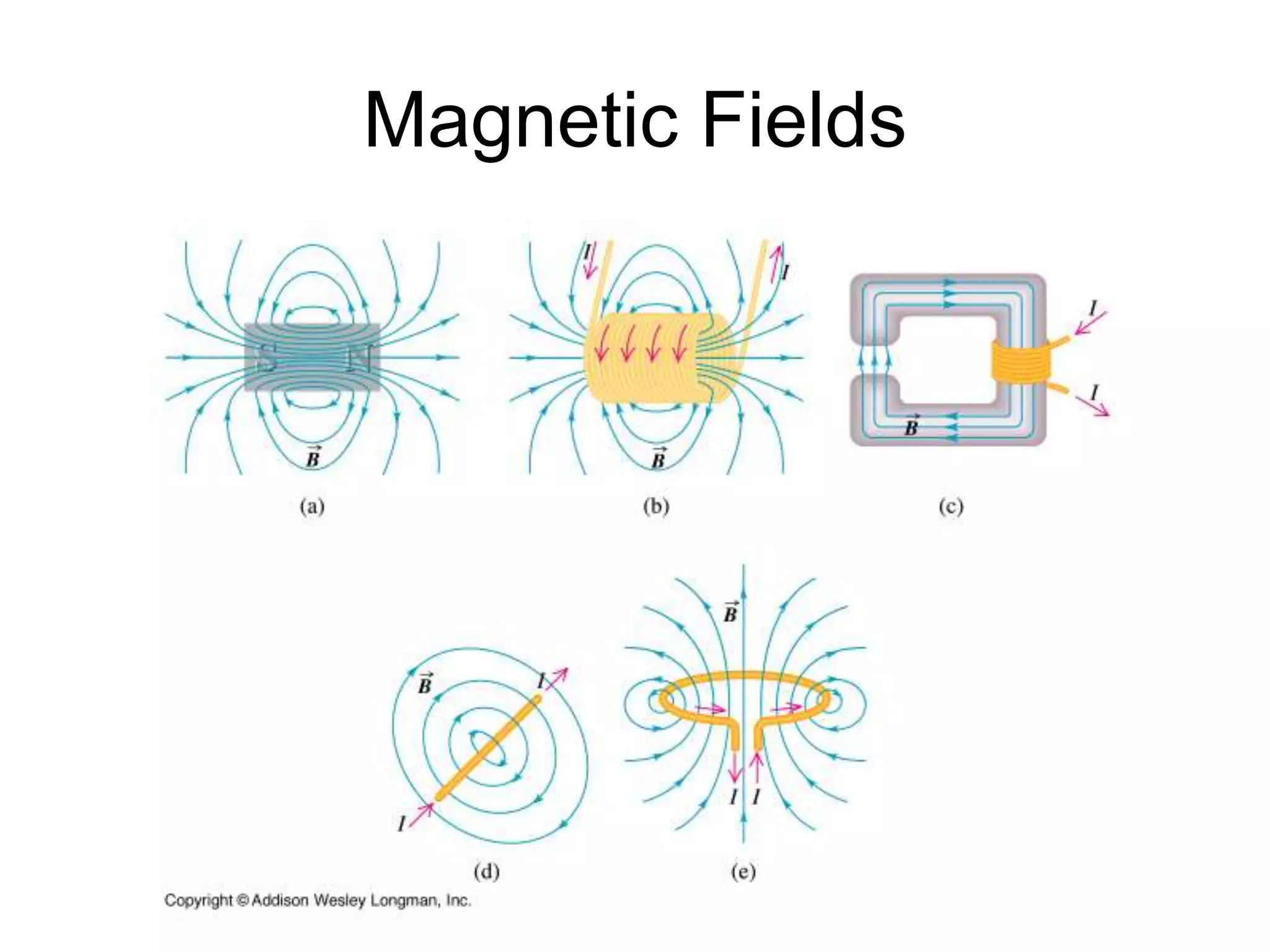
Magnetic Fields
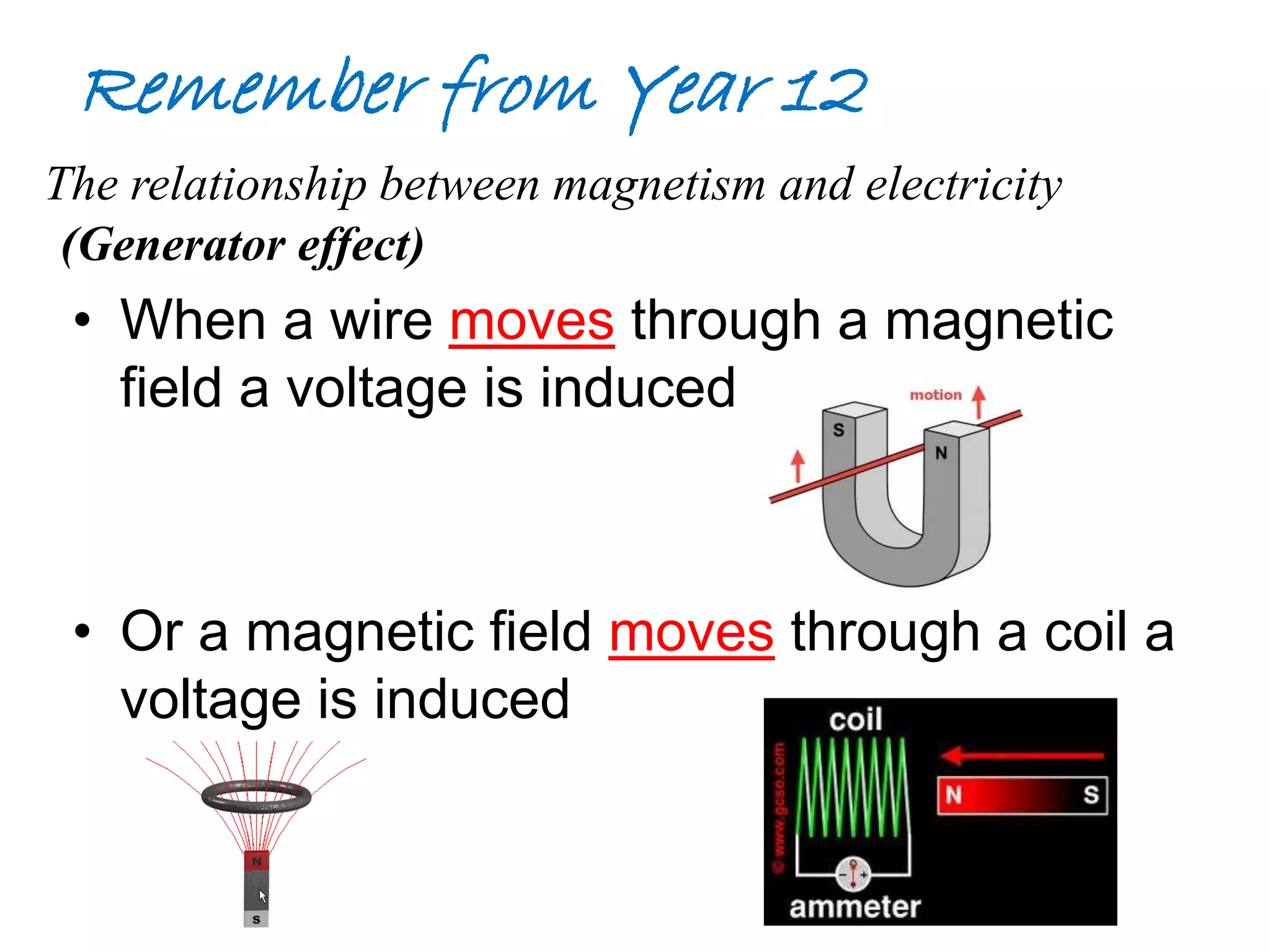
Remember from Year 12 
The relationship between magnetism and electricity 
(Generator effect) 
• When a wire moves through a magnetic 
field a voltage is induced 
• Or a magnetic field moves through a coil a 
voltage is induced
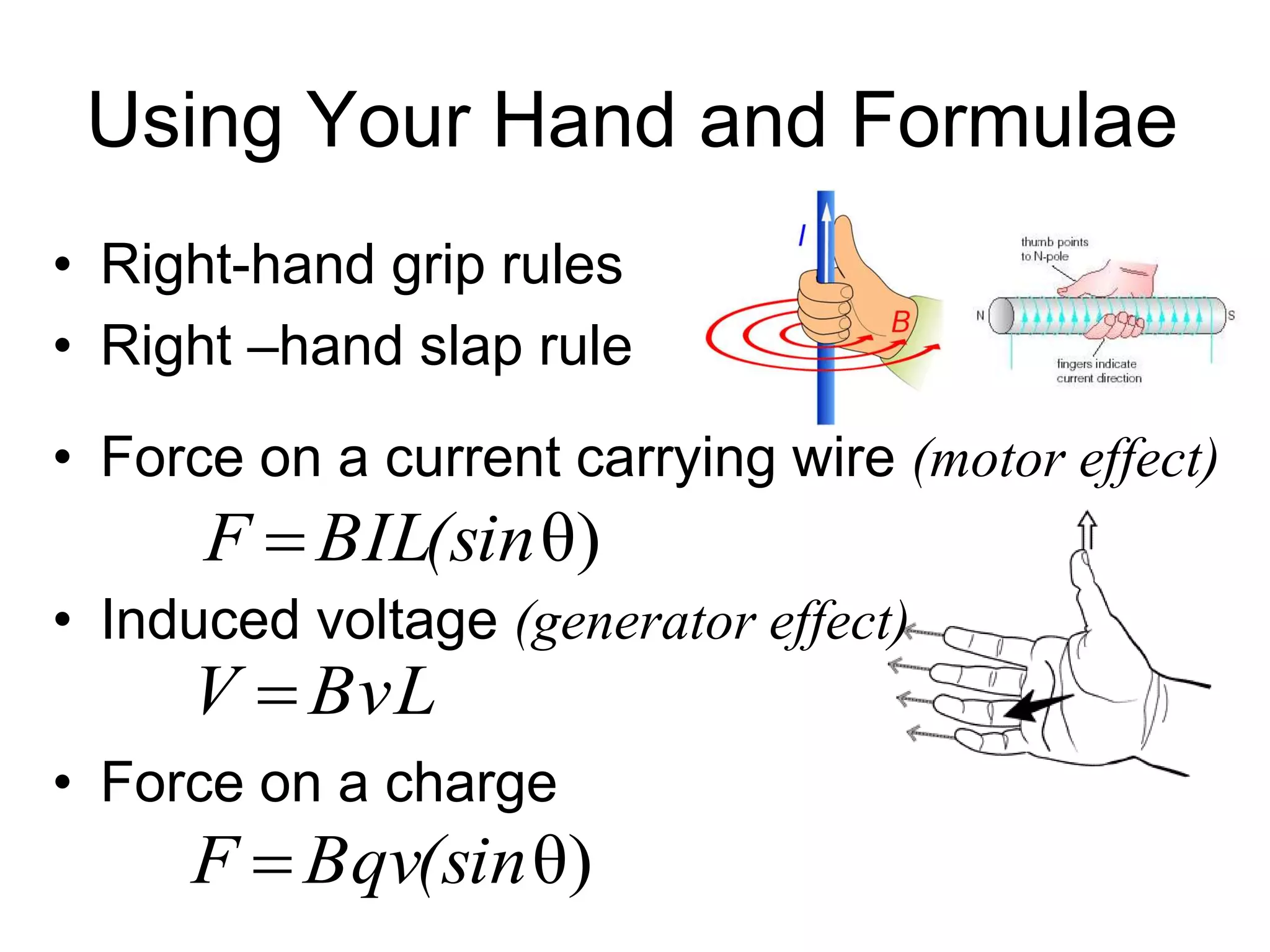
Using Your Hand and Formulae 
• Right-hand grip rules 
• Right –hand slap rule 
• Force on a current carrying wire (motor effect) 
F BIL(sinθ) 
• Induced voltage (generator effect) 
V BvL 
• Force on a charge 
F Bqv(sinθ)
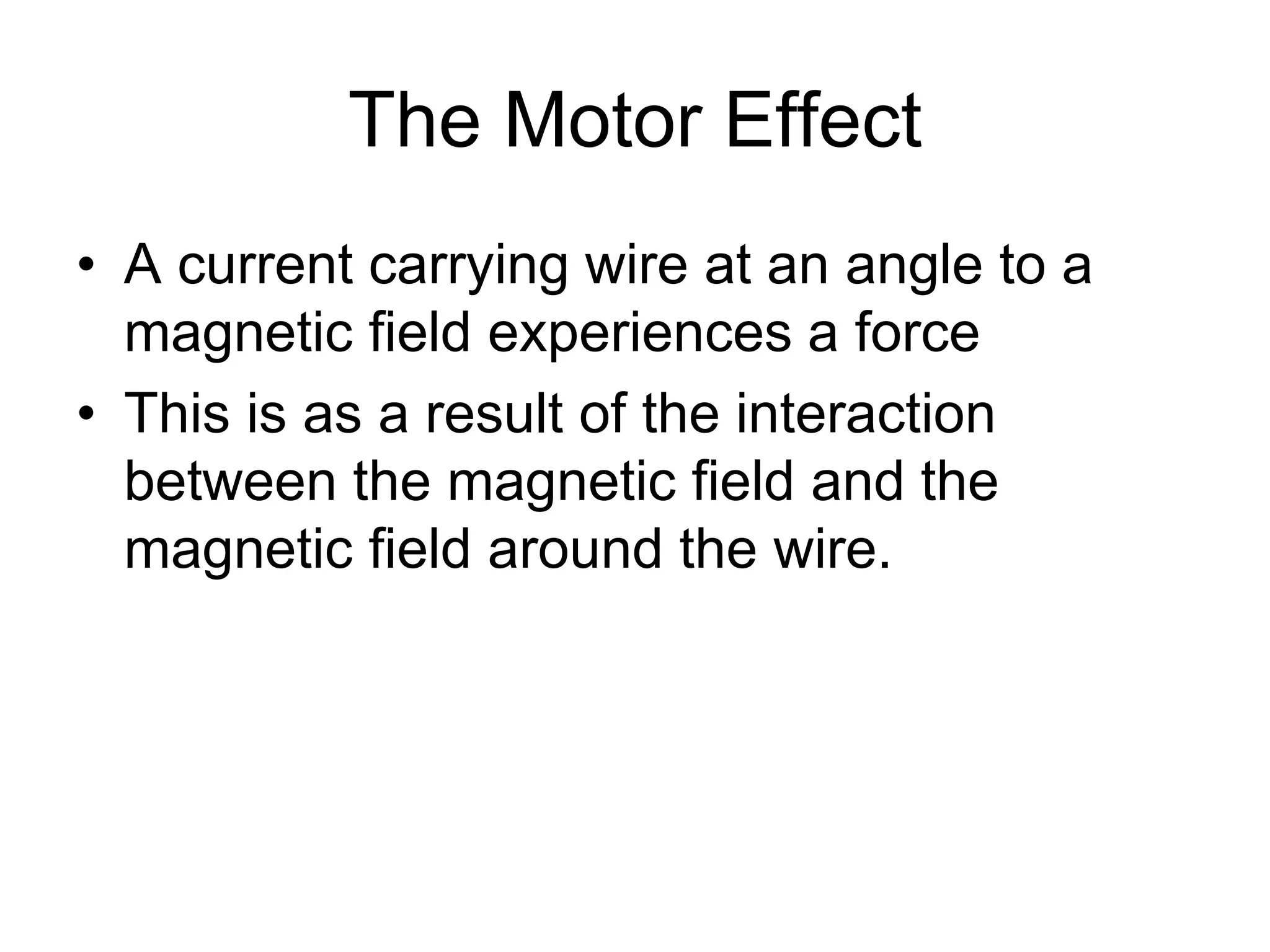
The Motor Effect 
• A current carrying wire at an angle to a 
magnetic field experiences a force 
• This is as a result of the interaction 
between the magnetic field and the 
magnetic field around the wire.
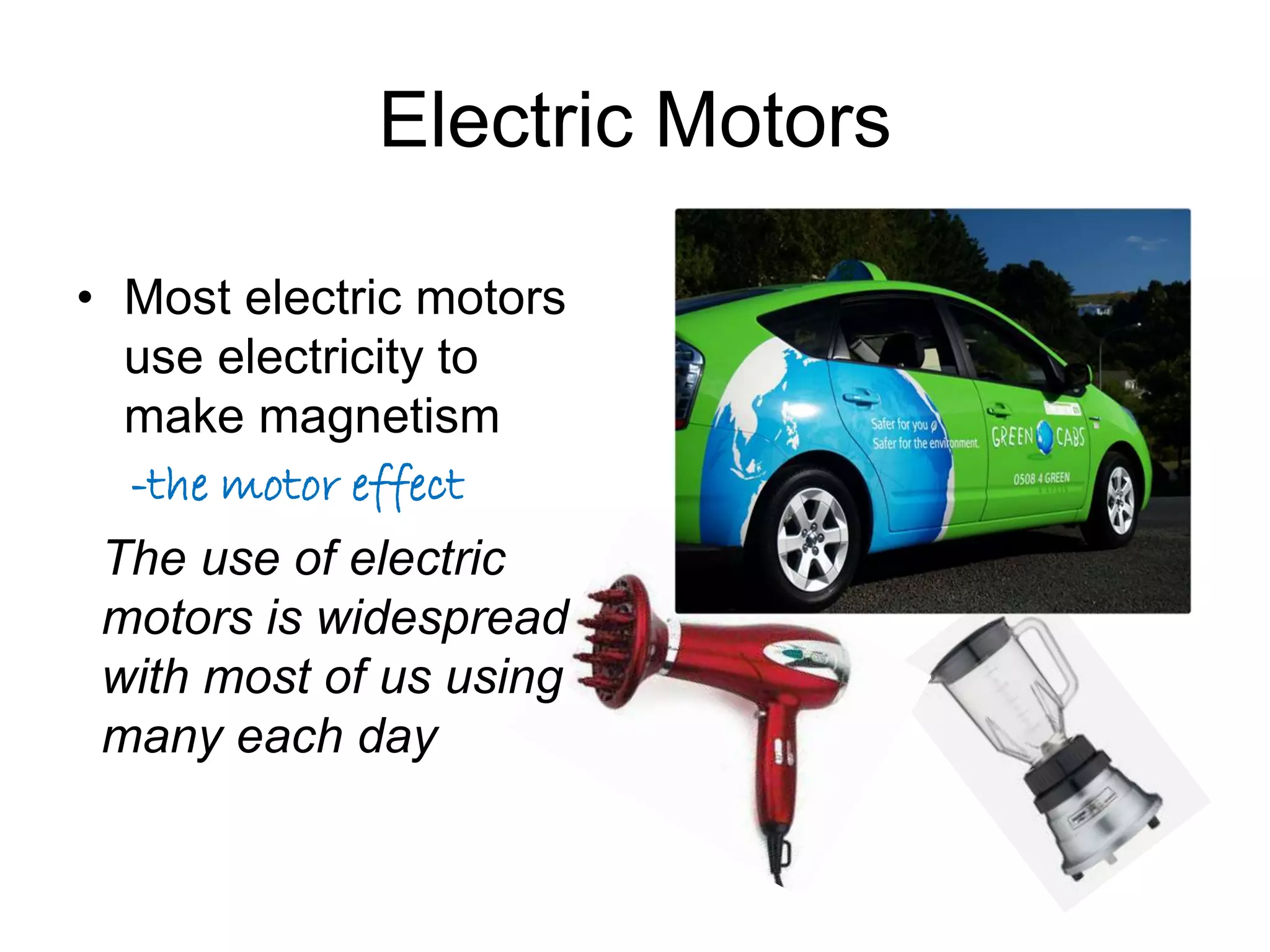
Electric Motors 
• Most electric motors 
use electricity to 
make magnetism 
-the motor effect 
The use of electric 
motors is widespread 
with most of us using 
many each day
RH Grip Rule -Wire
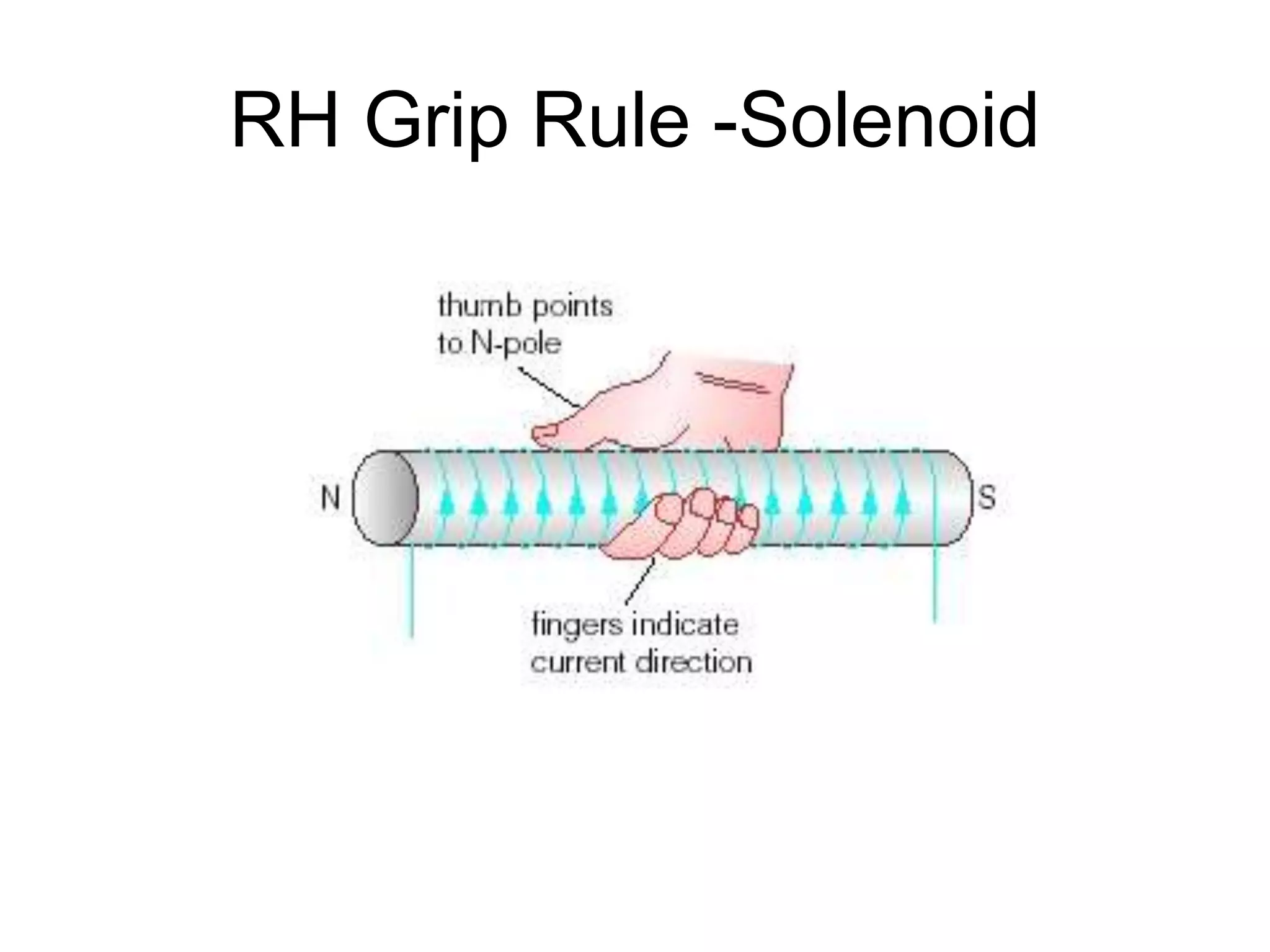
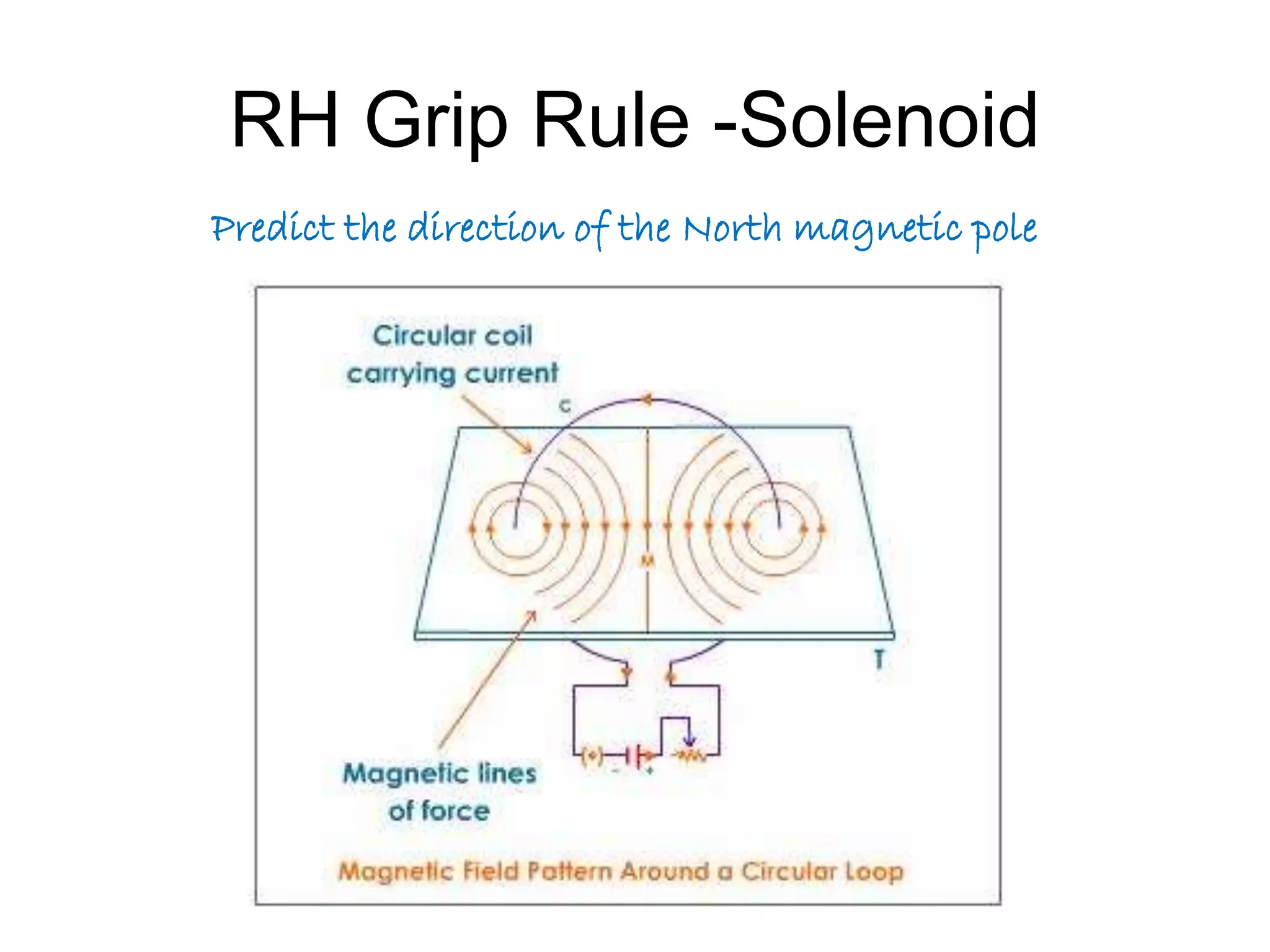
RH Grip Rule -Solenoid
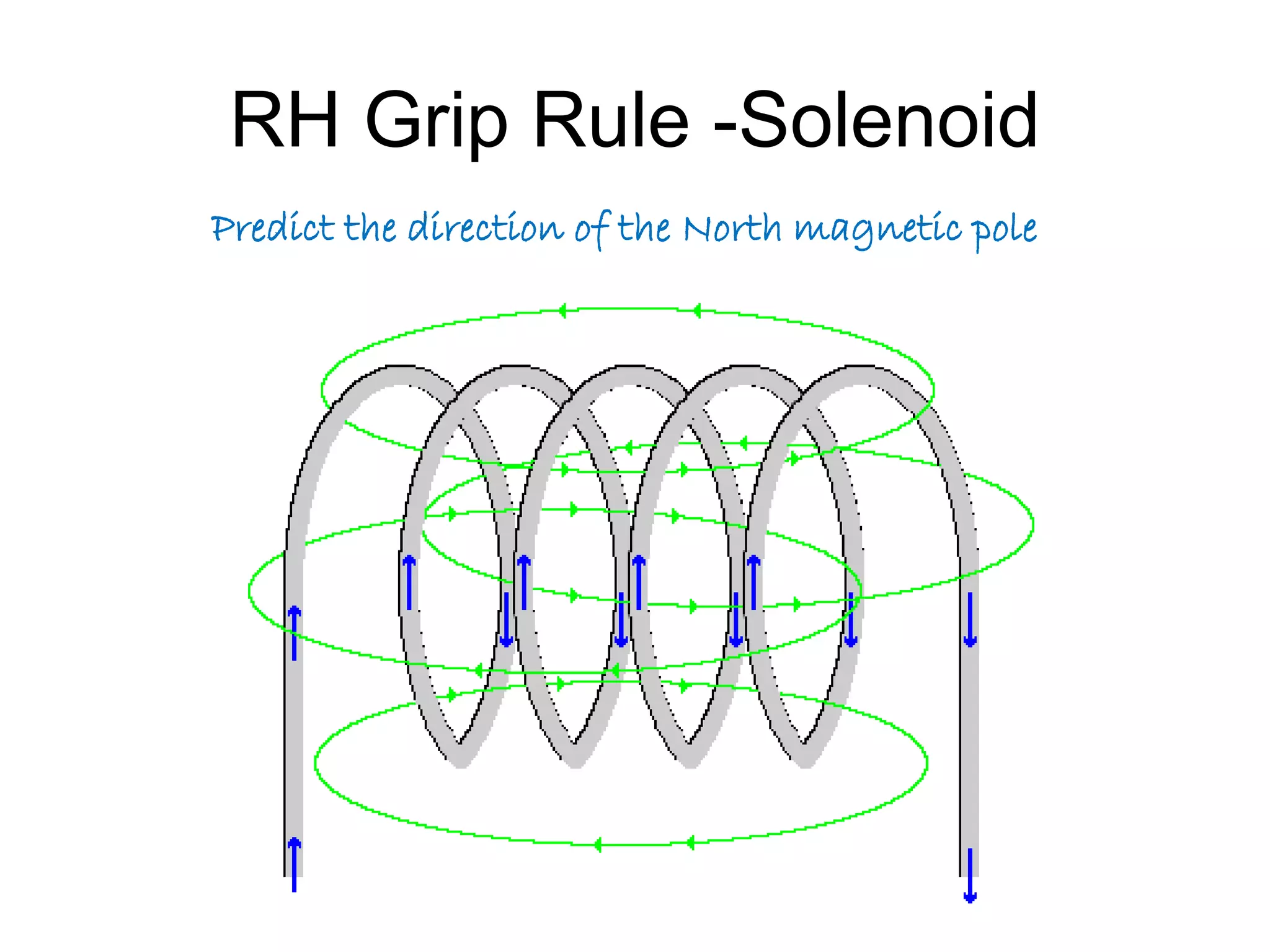
RH Grip Rule -Solenoid 
Predict the direction of the North magnetic pole
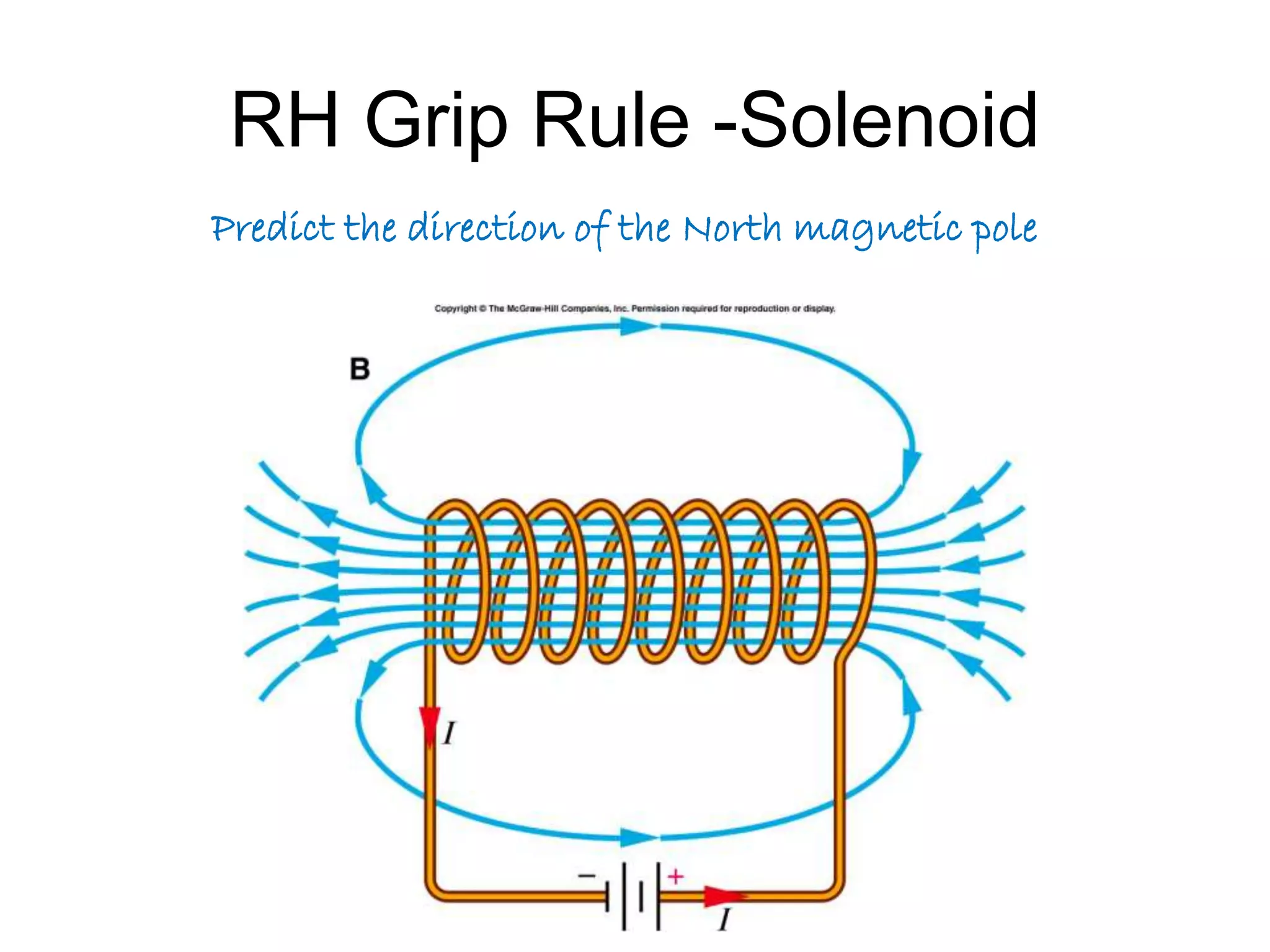
RH Grip Rule -Solenoid 
Predict the direction of the North magnetic pole
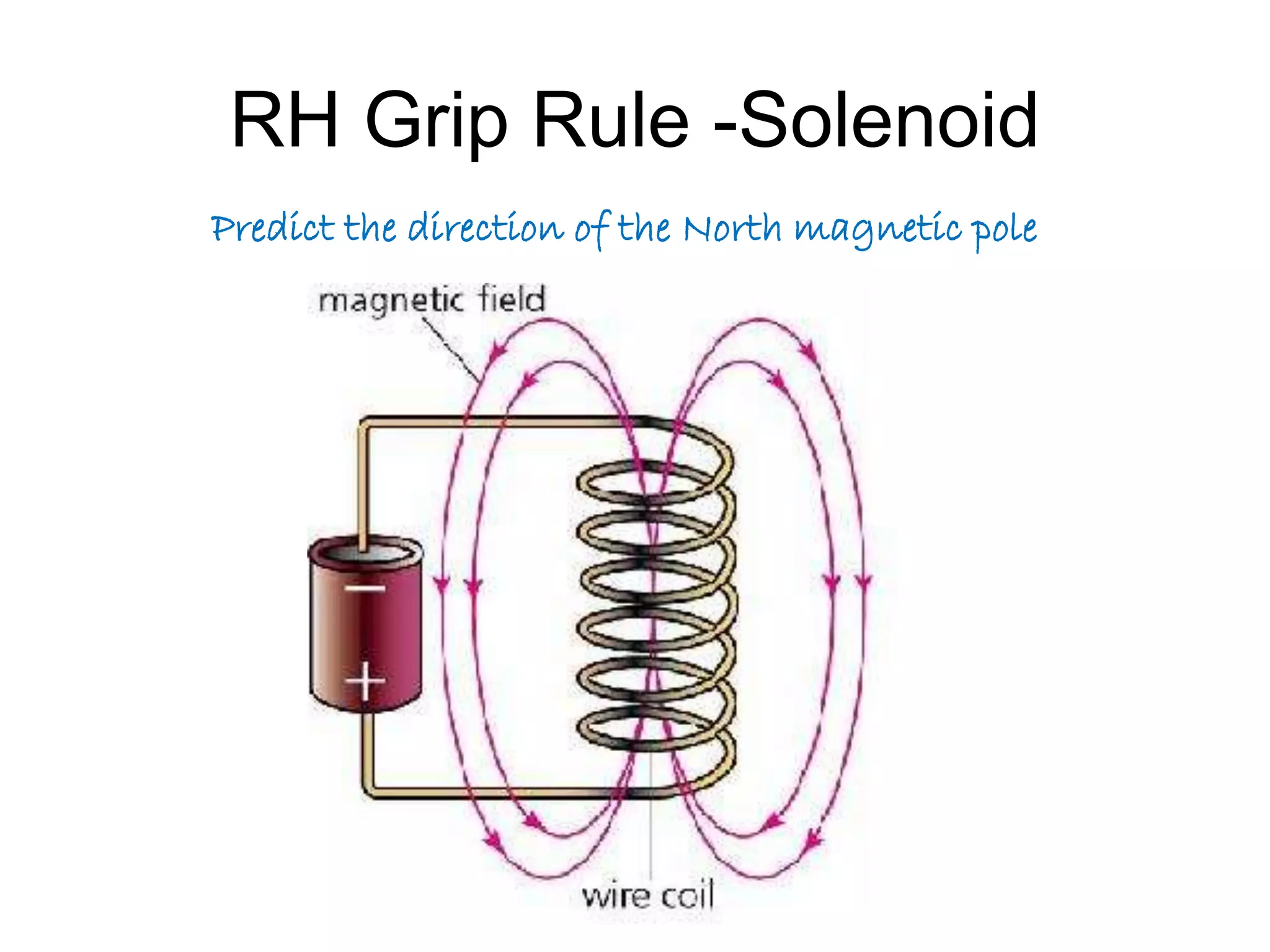
RH Grip Rule -Solenoid 
Predict the direction of the North magnetic pole
RH Grip Rule -Solenoid 
Predict the direction of the North magnetic pole
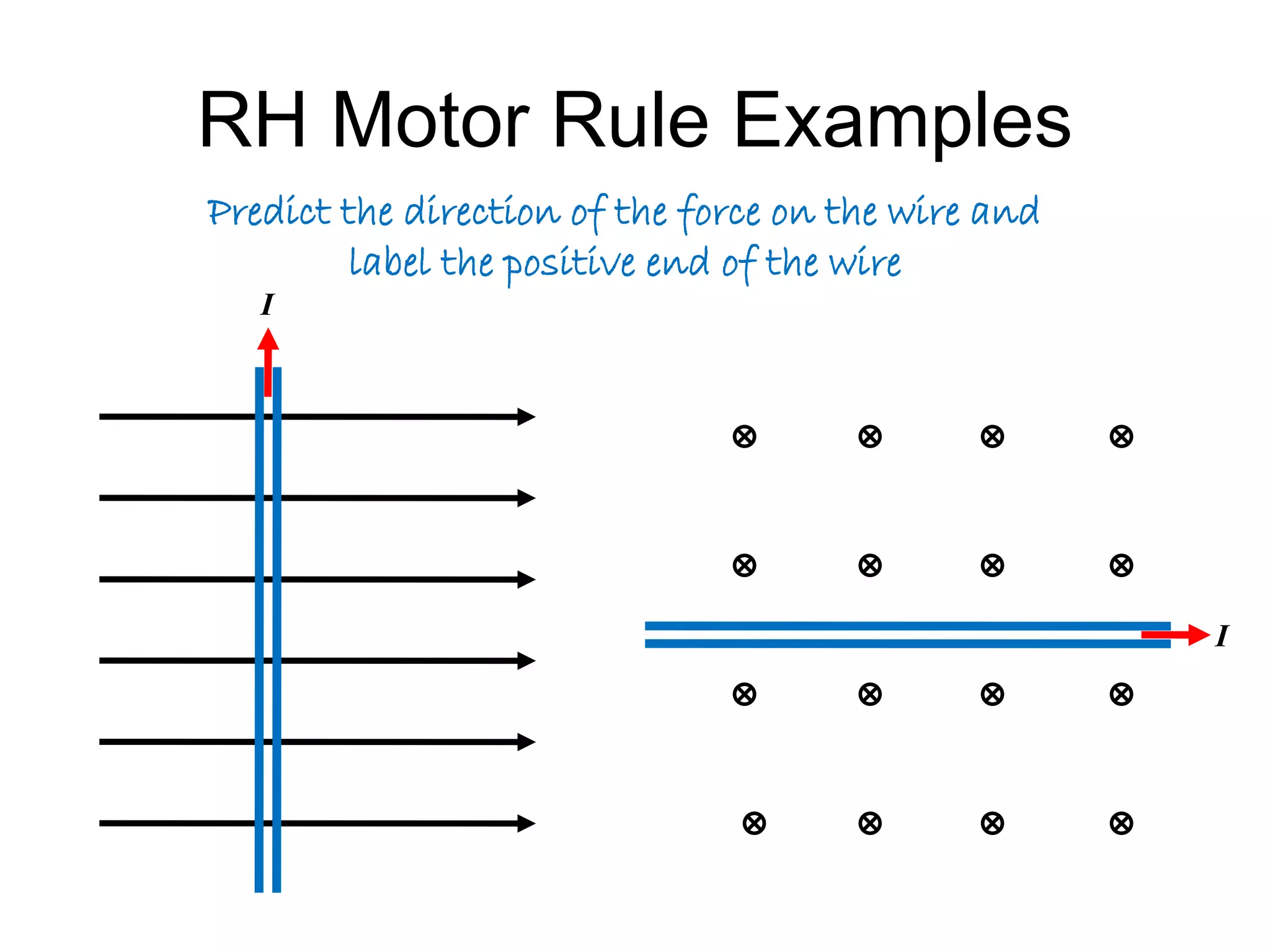
RH Motor Rule Examples 
I 
I 
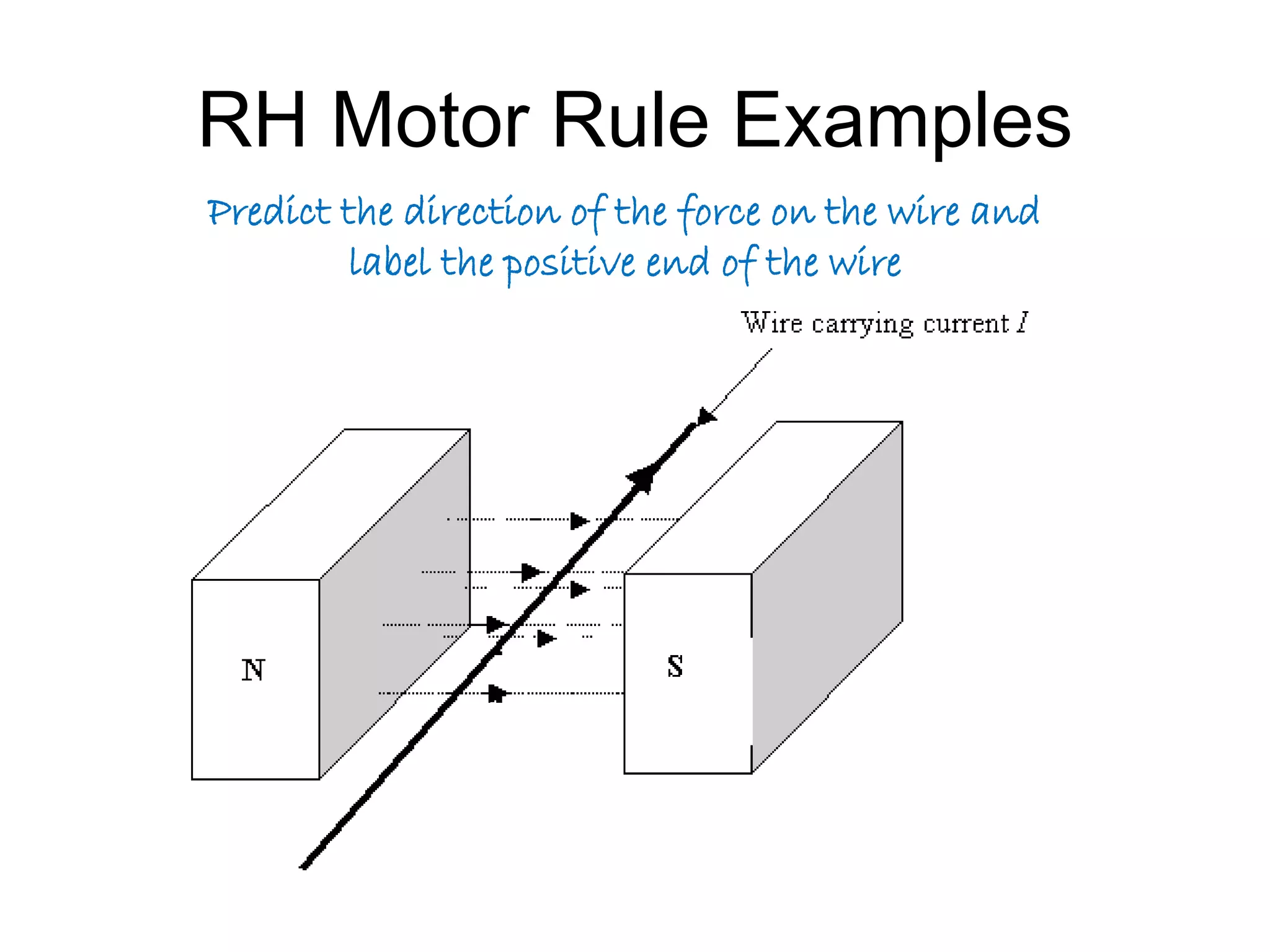
Predict the direction of the force on the wire and 
label the positive end of the wire
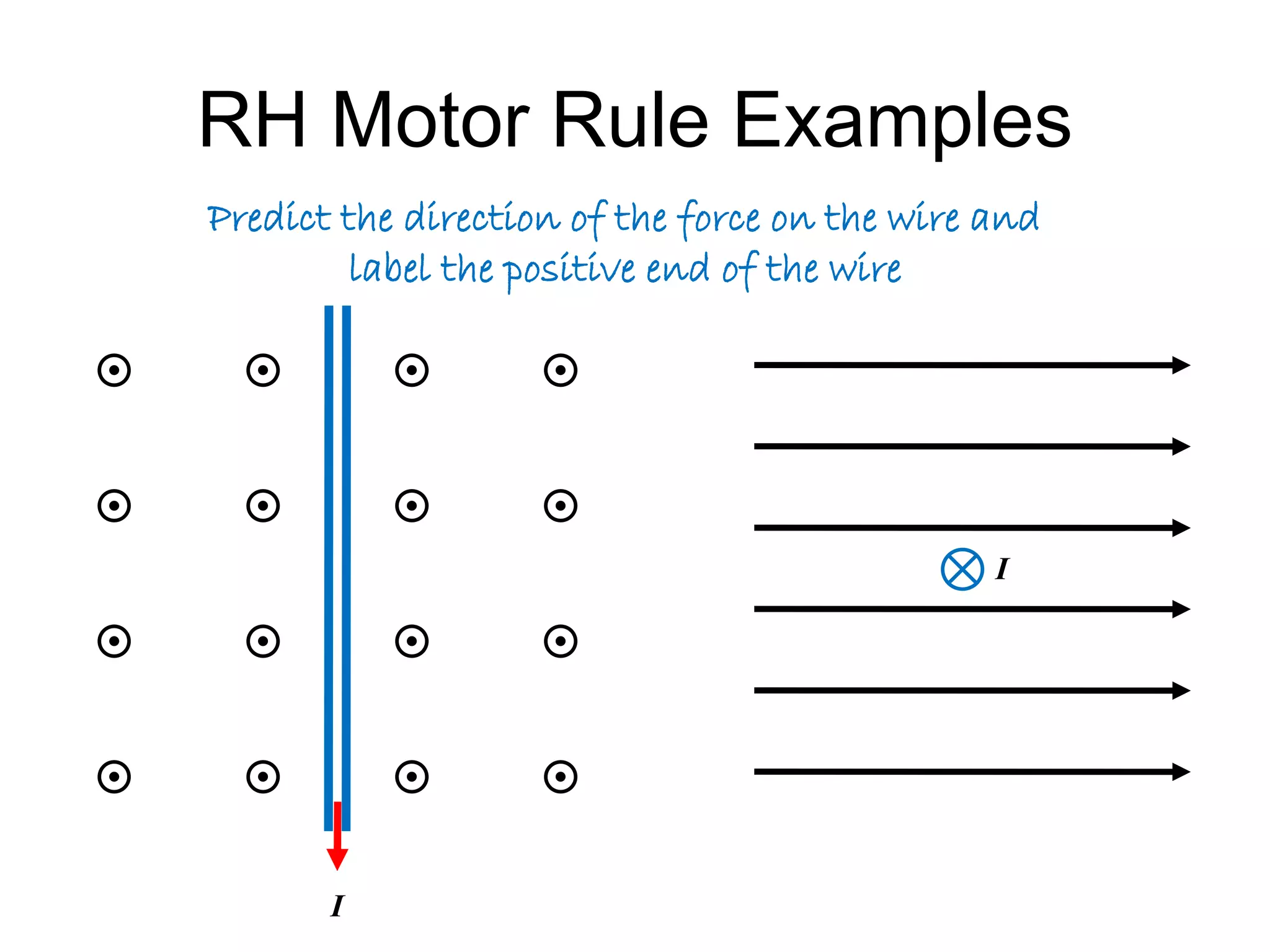
RH Motor Rule Examples 
Predict the direction of the force on the wire and 
I 
I 
label the positive end of the wire
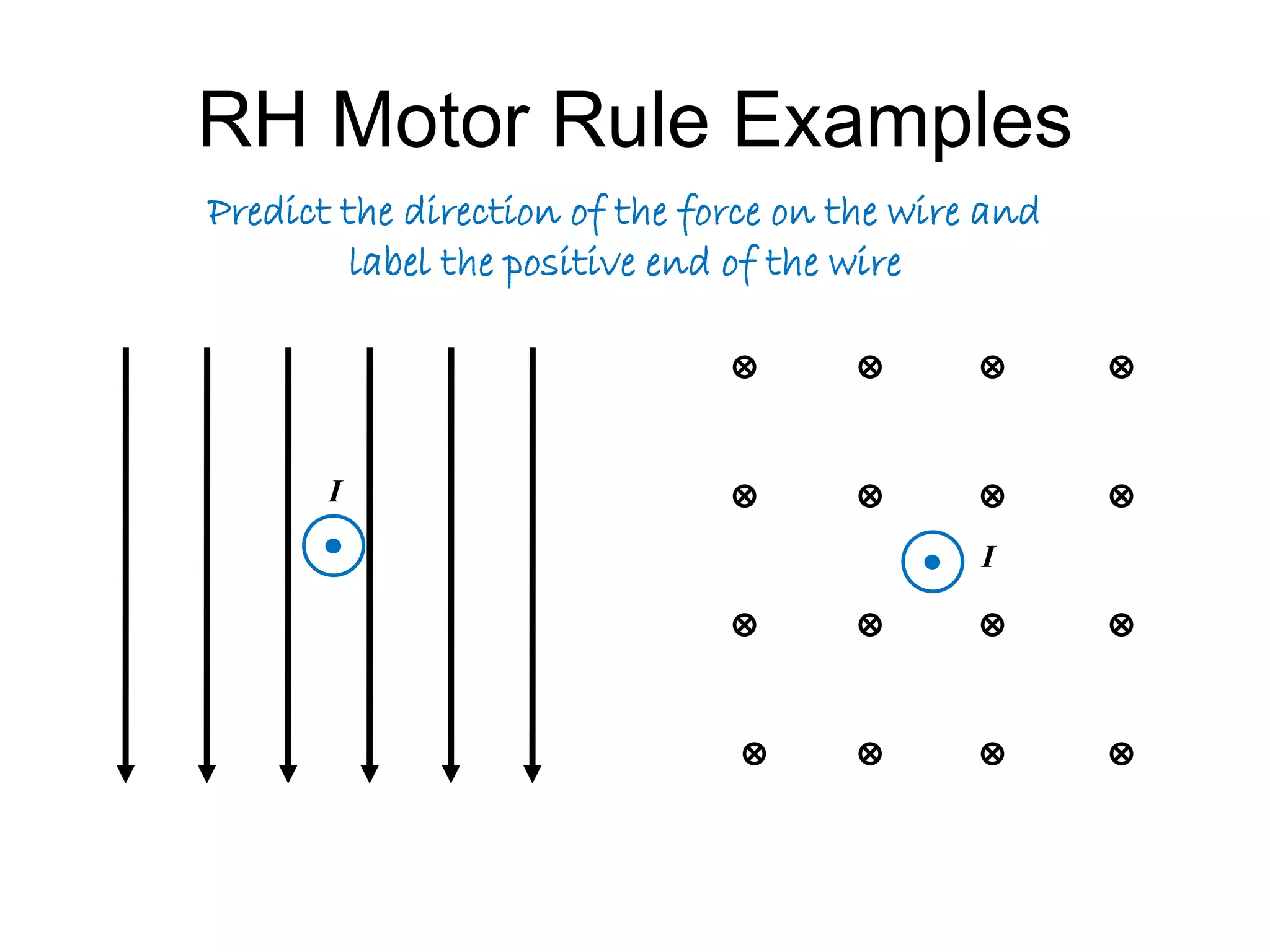
RH Motor Rule Examples 
Predict the direction of the force on the wire and 
I 
I 
label the positive end of the wire
RH Motor Rule Examples 
Predict the direction of the force on the wire and 
label the positive end of the wire
RH Motor Rule Examples 
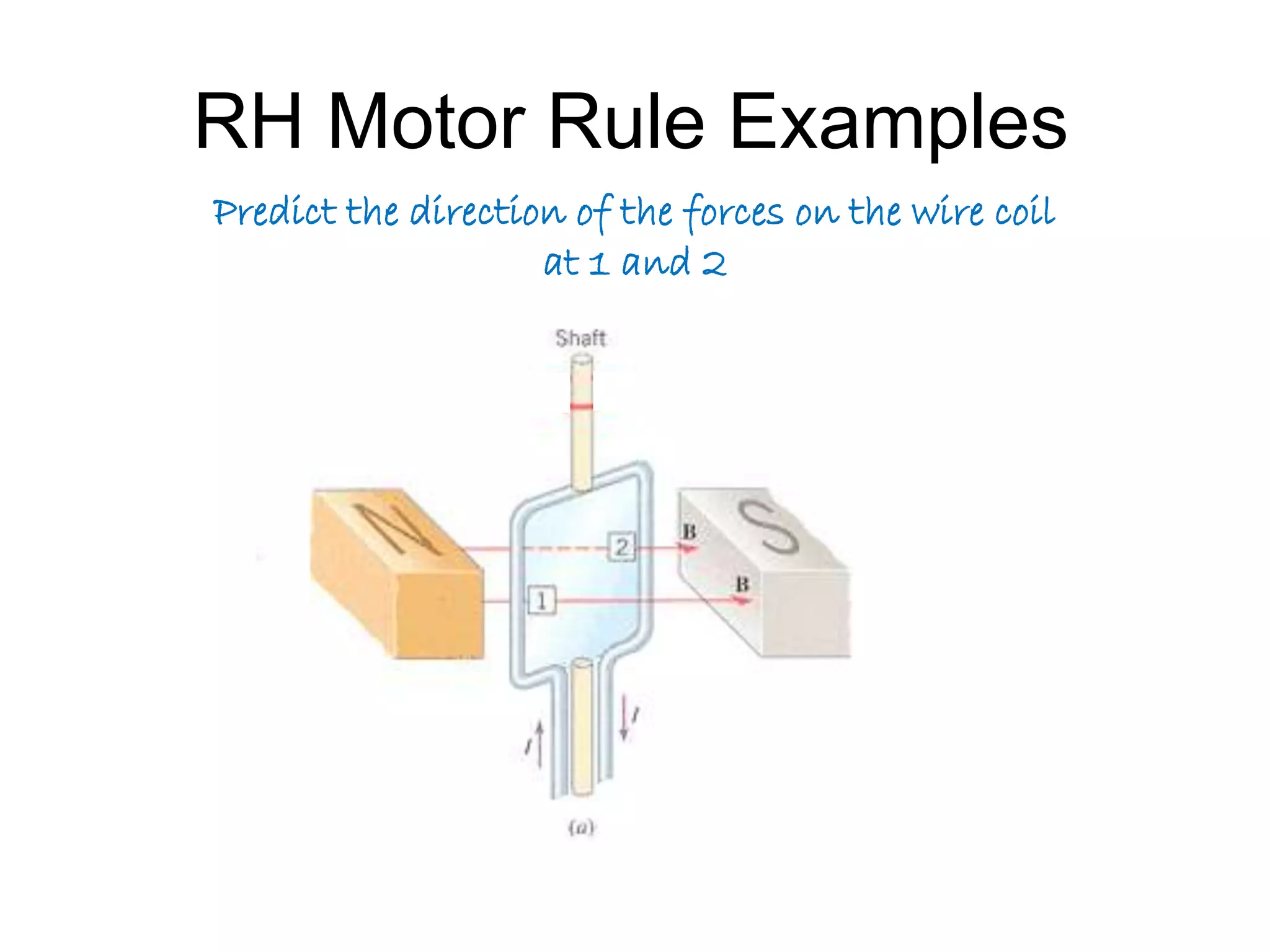
Predict the direction of the forces on the wire coil 
at 1 and 2
Force on a Charge 
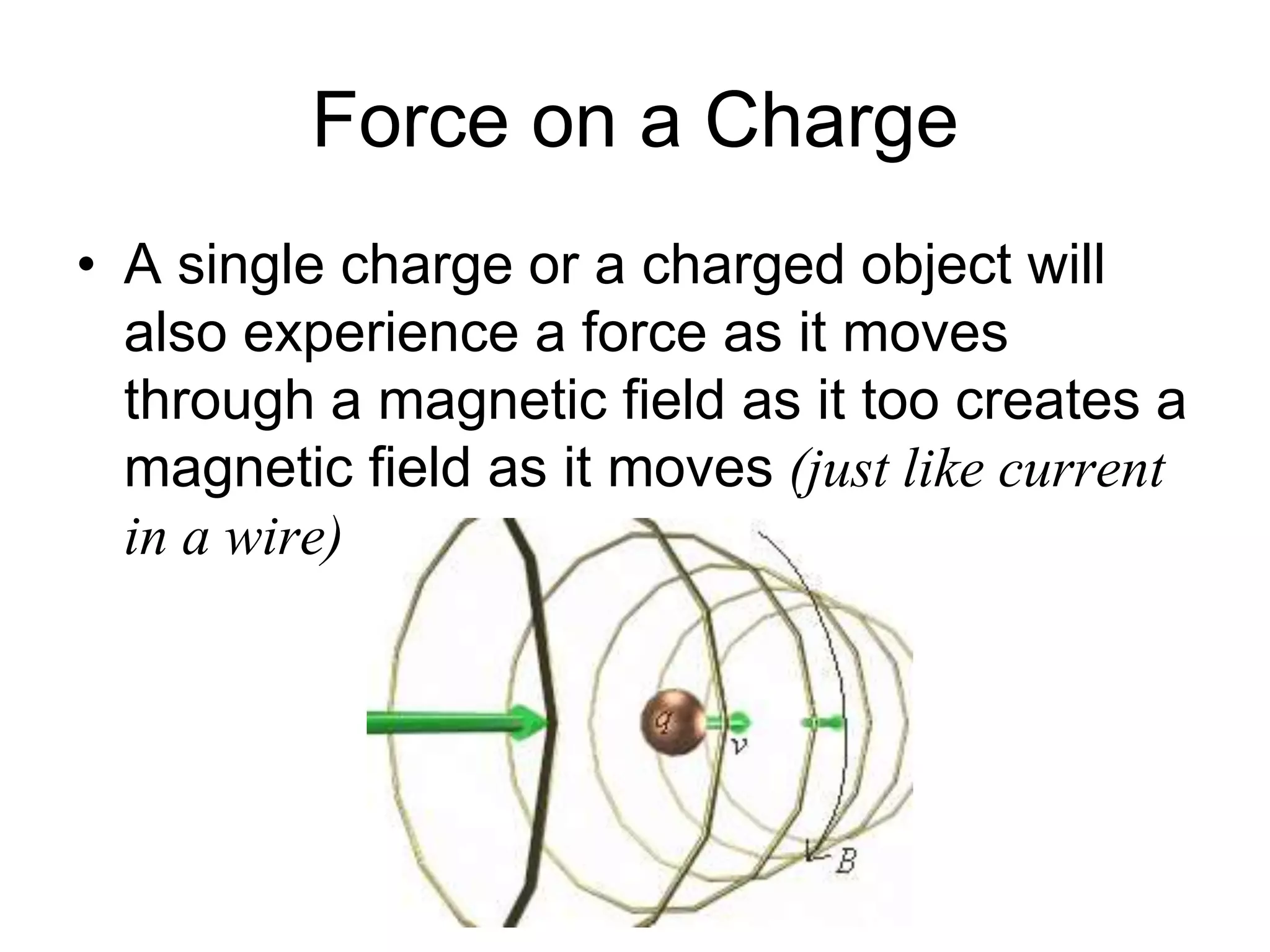
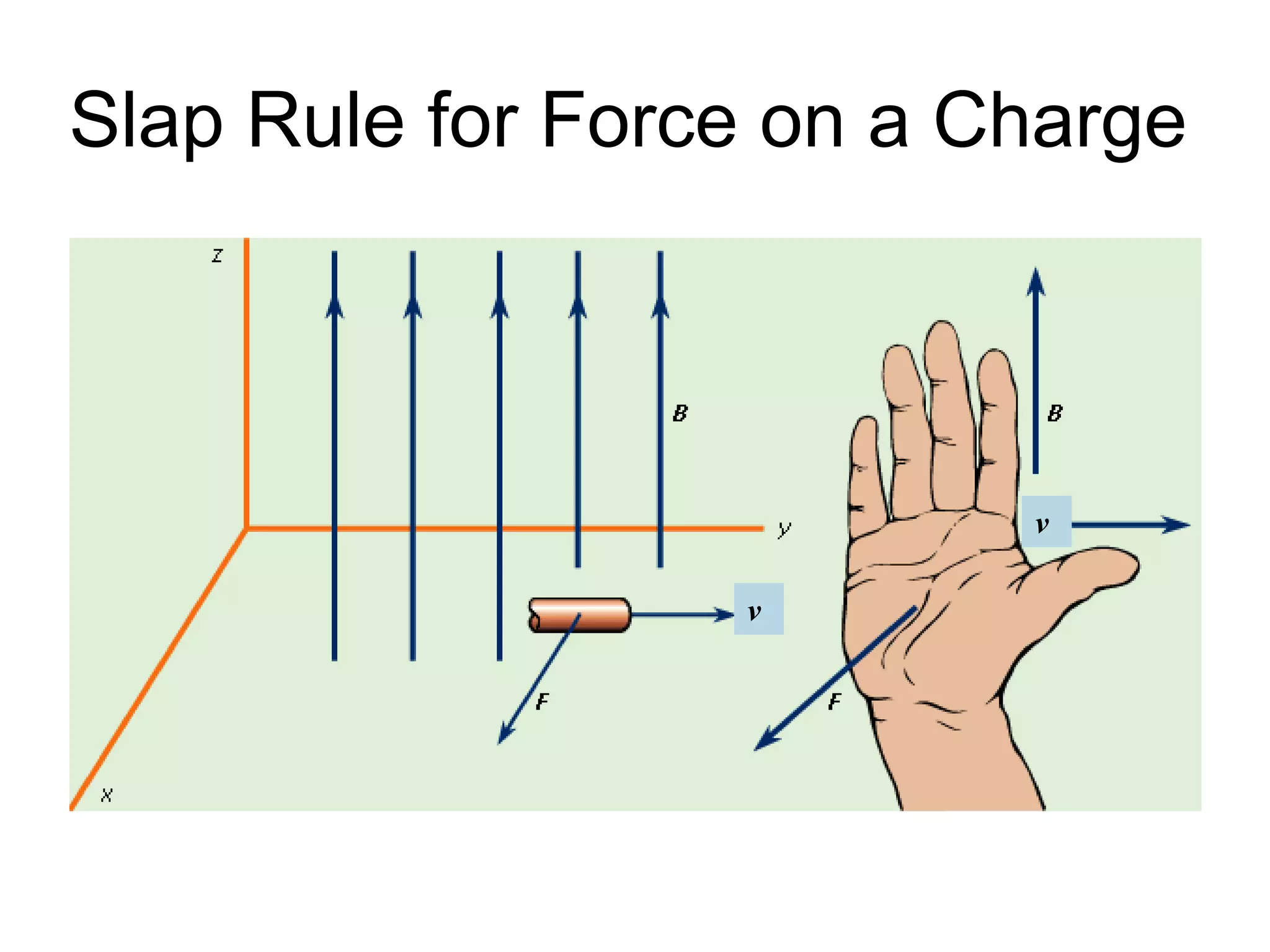
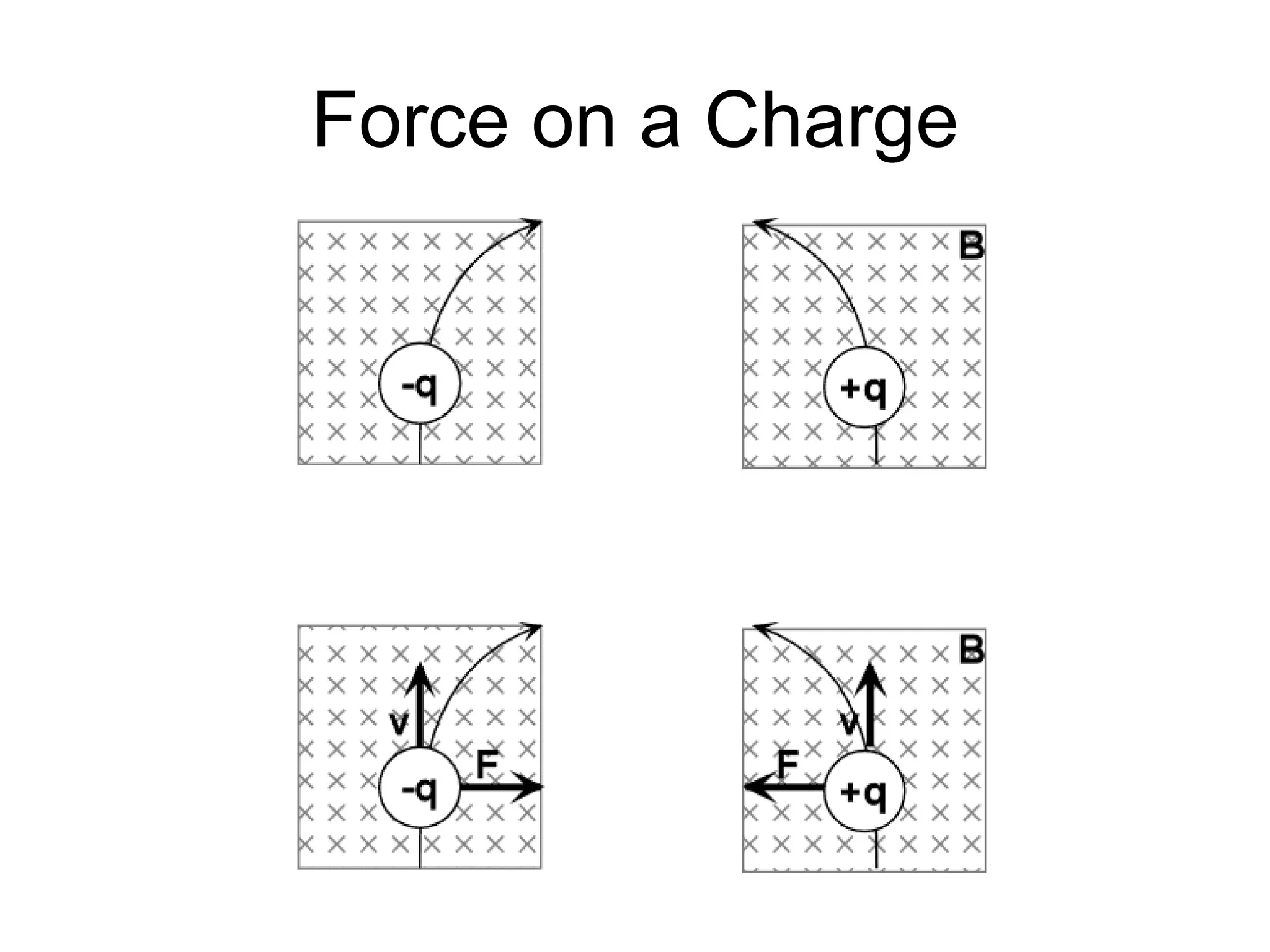
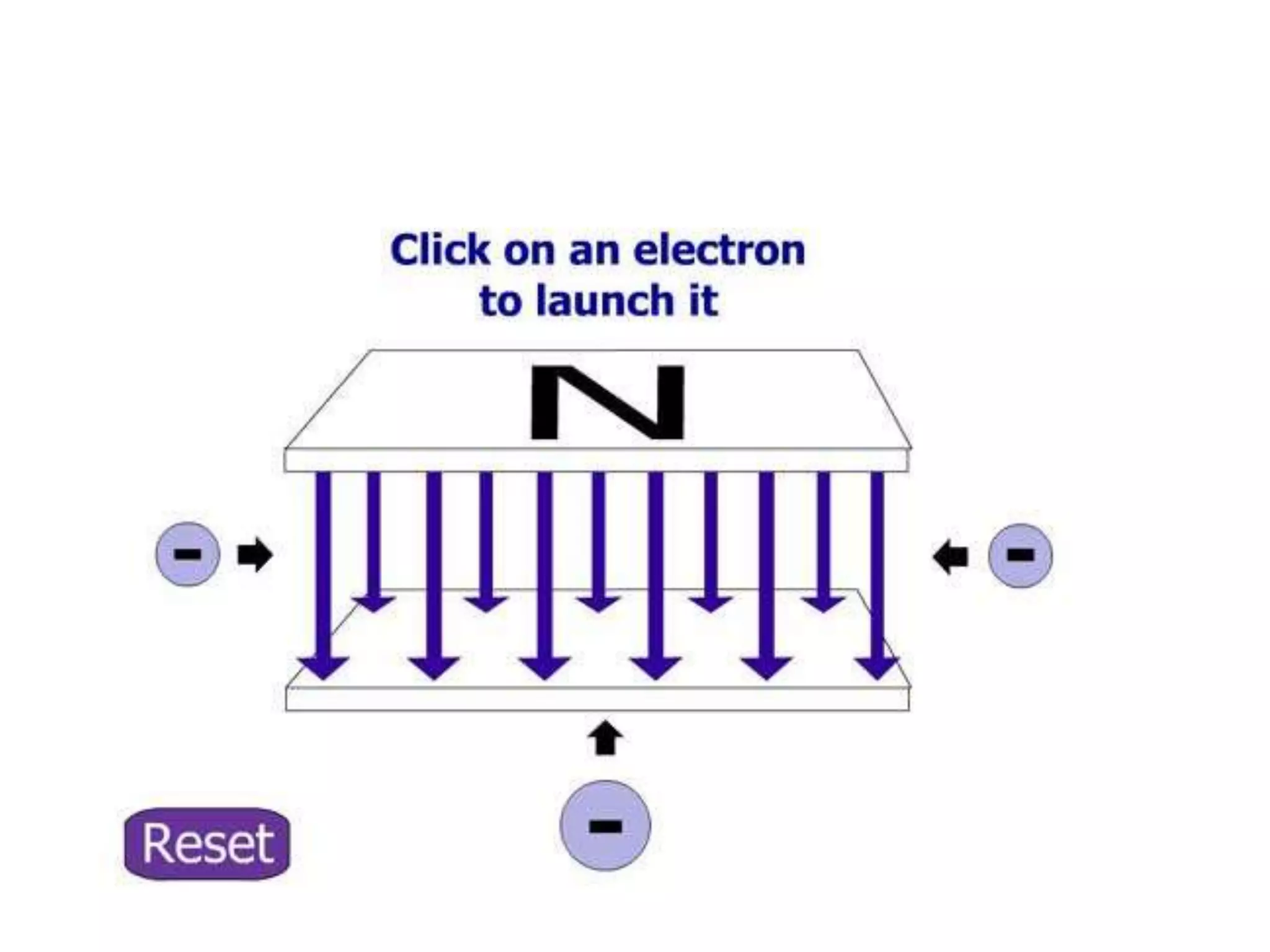
• A single charge or a charged object will 
also experience a force as it moves 
through a magnetic field as it too creates a 
magnetic field as it moves (just like current 
in a wire)
Force on a Charge
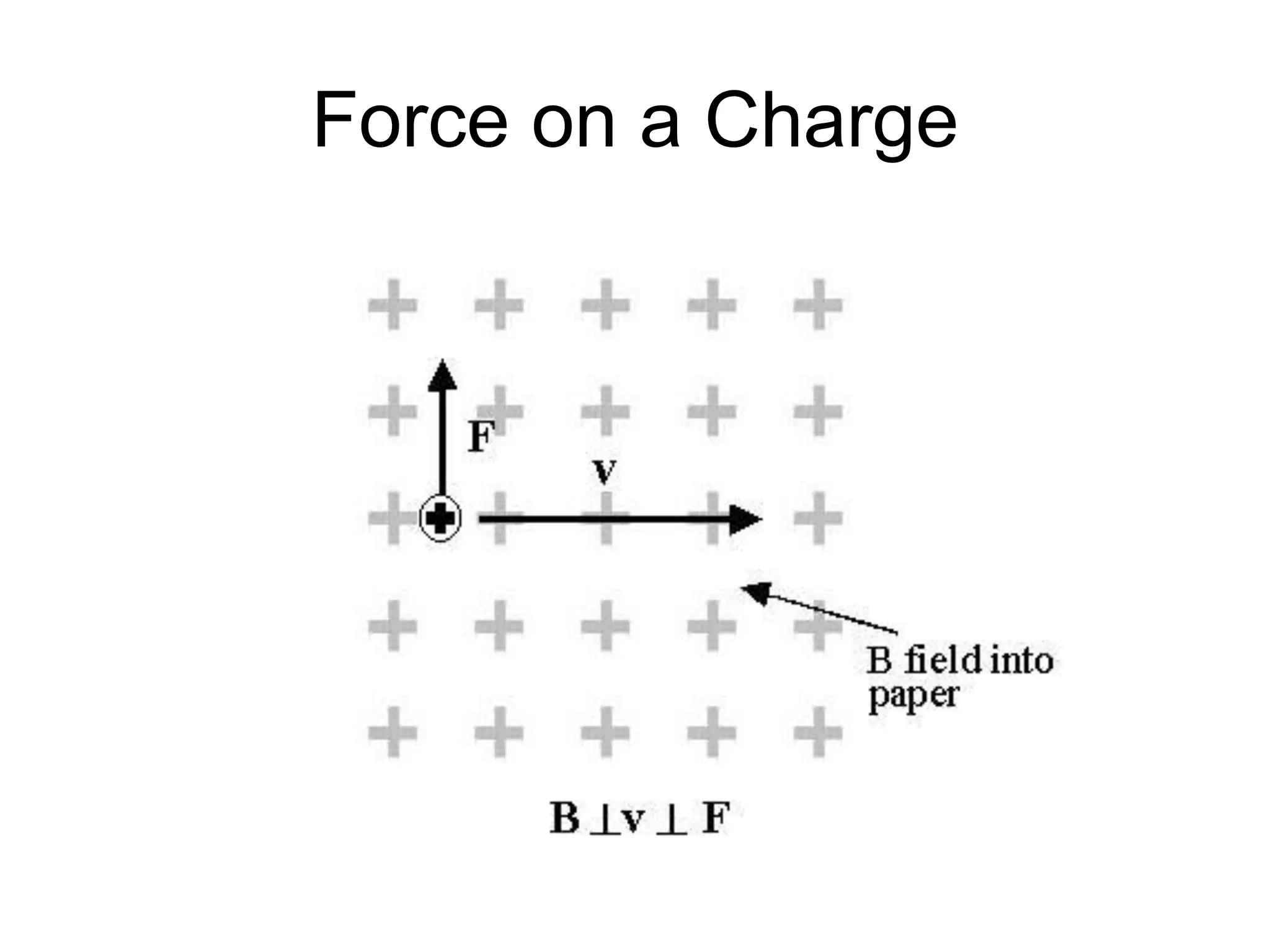
Slap Rule for Force on a Charge 
v 
v
Force on a Charge
Force on a Charge 
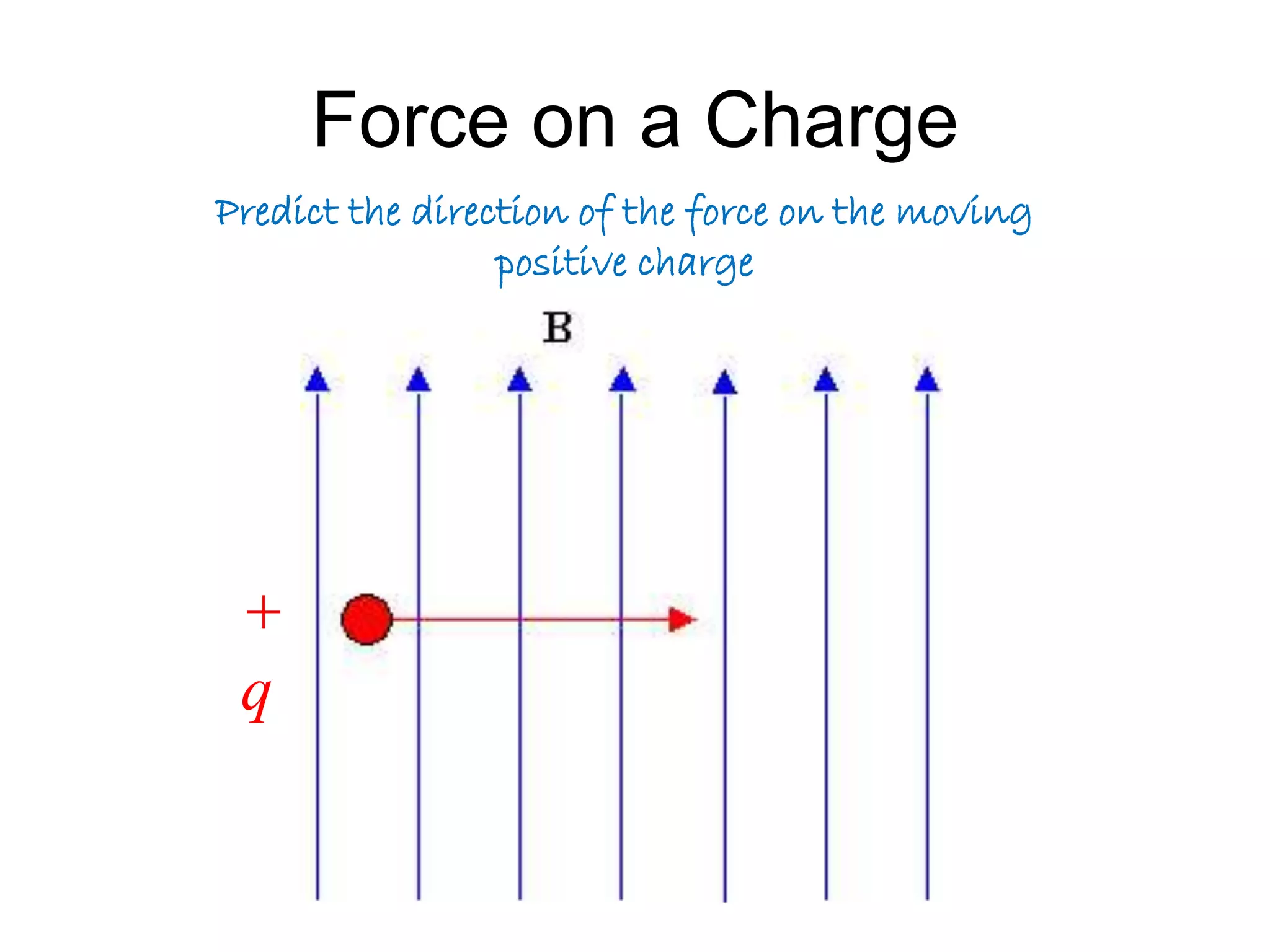
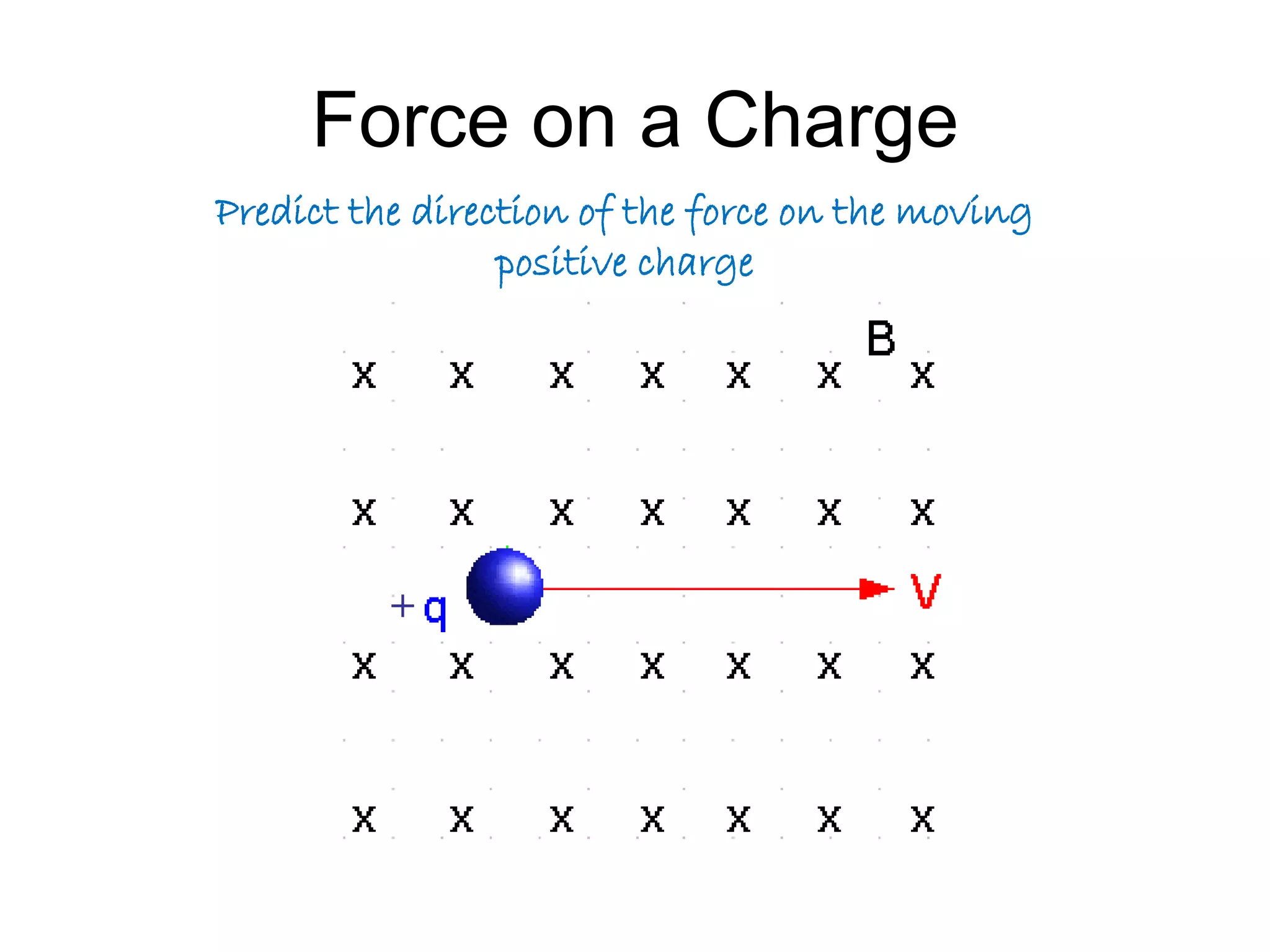
Predict the direction of the force on the moving 
positive charge 
+ 
q
Force on a Charge 
Predict the direction of the force on the moving 
positive charge 
+
Force on a Charge 
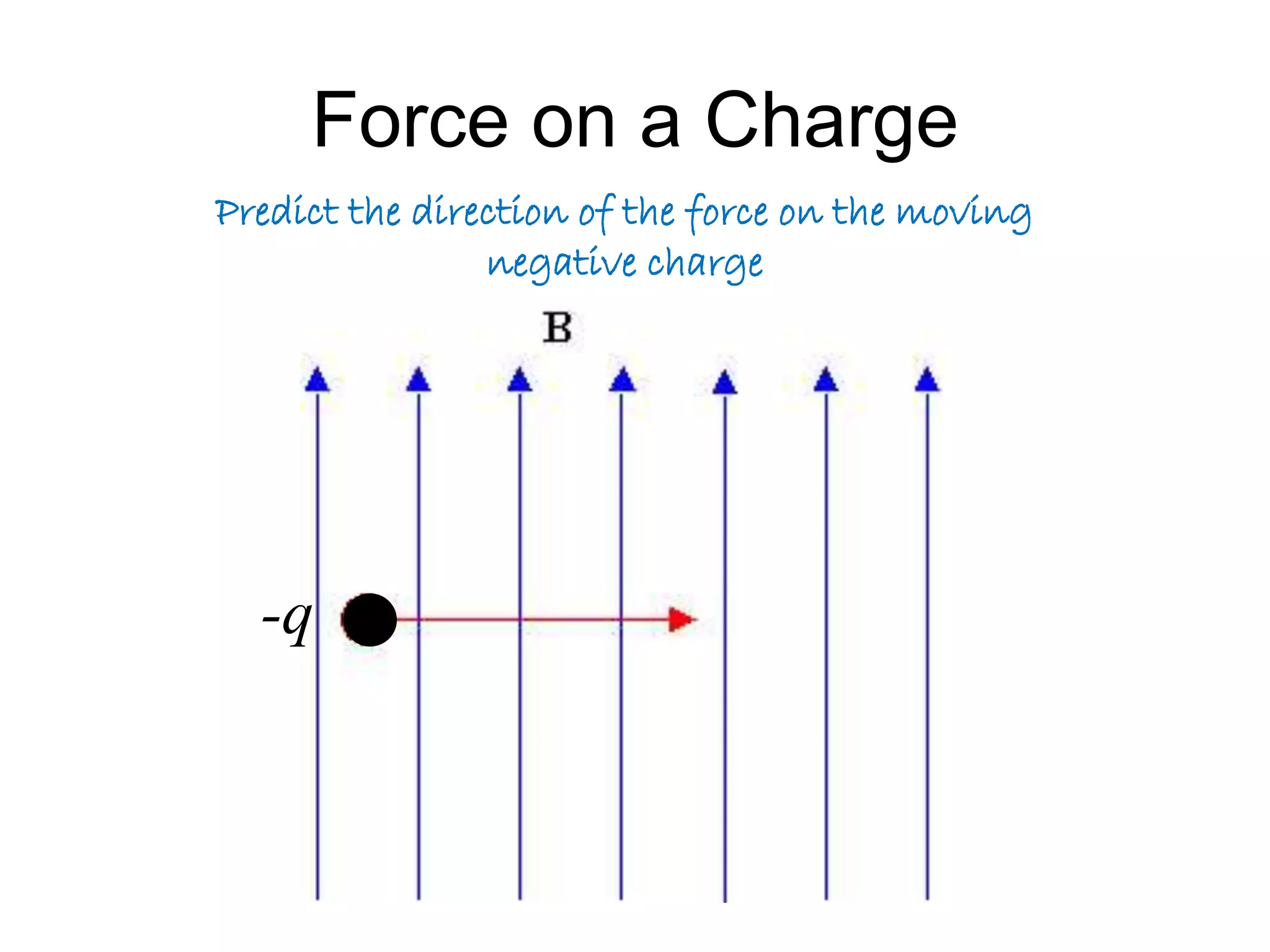
Predict the direction of the force on the moving 
negative charge 
-q
Force on a Charge 
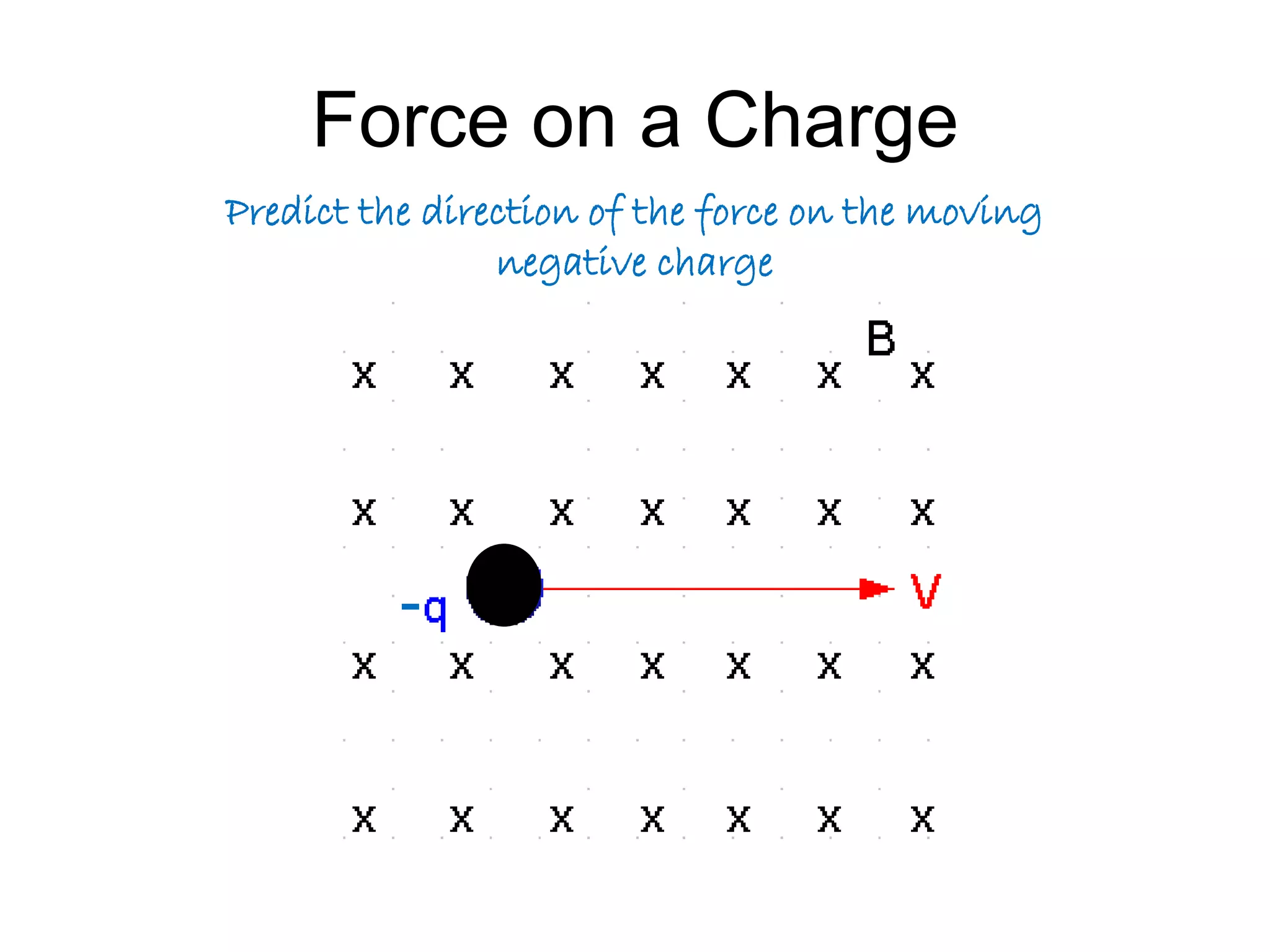
Predict the direction of the force on the moving 
negative charge 
-
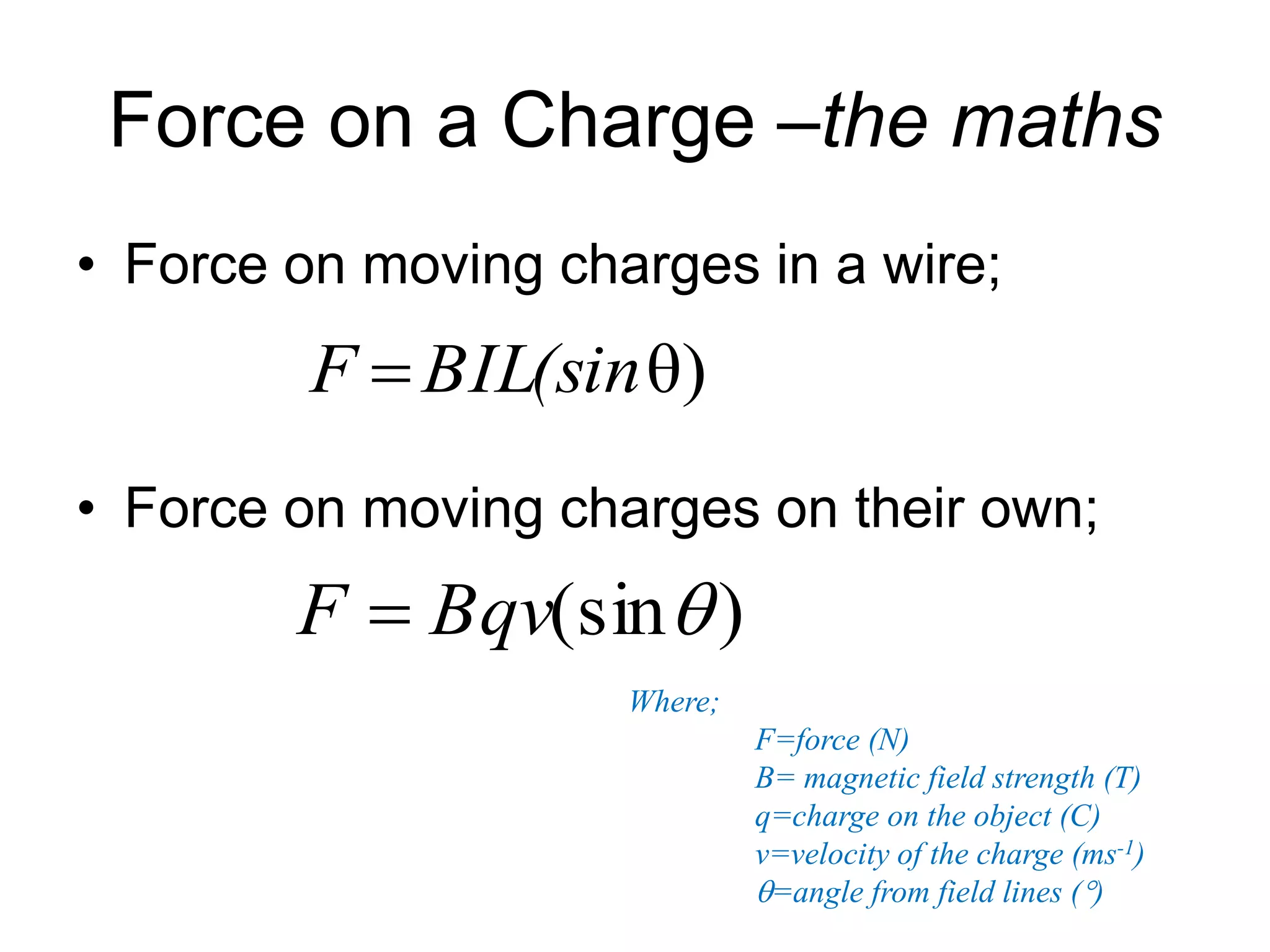
Force on a Charge –the maths 
• Force on moving charges in a wire; 
F BIL(sinθ) 
• Force on moving charges on their own; 
F  Bqv(sin ) 
Where; 
F=force (N) 
B= magnetic field strength (T) 
q=charge on the object (C) 
v=velocity of the charge (ms-1) 
=angle from field lines ()
Exercises 
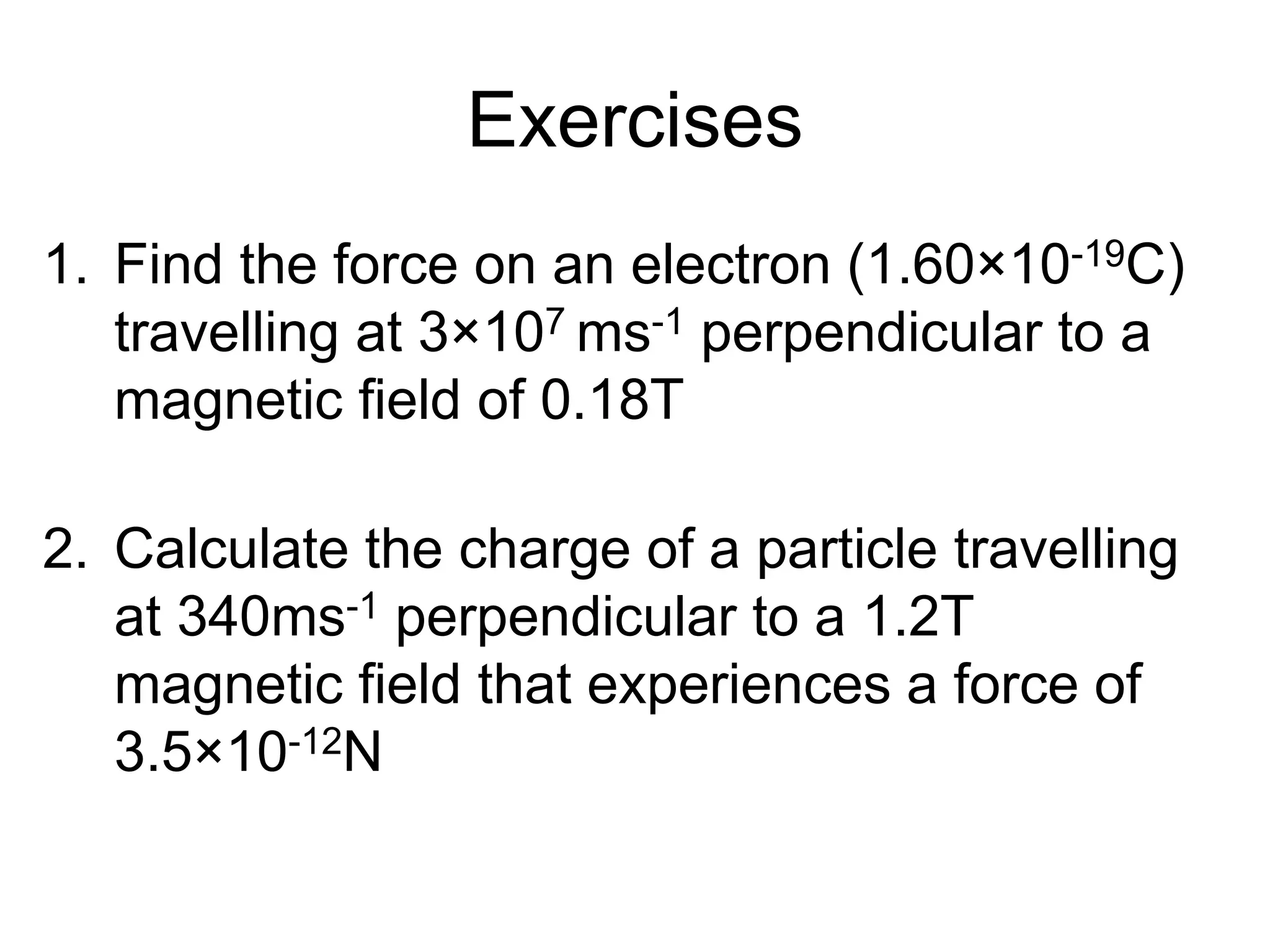
1. Find the force on an electron (1.60×10⁻¹⁹C) 
travelling at 3×10⁷ ms-1 perpendicular to a 
magnetic field of 0.18T 
9×10-13N 
2. Calculate the charge of a particle travelling 
at 340ms-1 perpendicular to a 1.2T 
magnetic field that experiences a force of 
3.5×10⁻¹²N 
8.6×10⁻¹⁵C
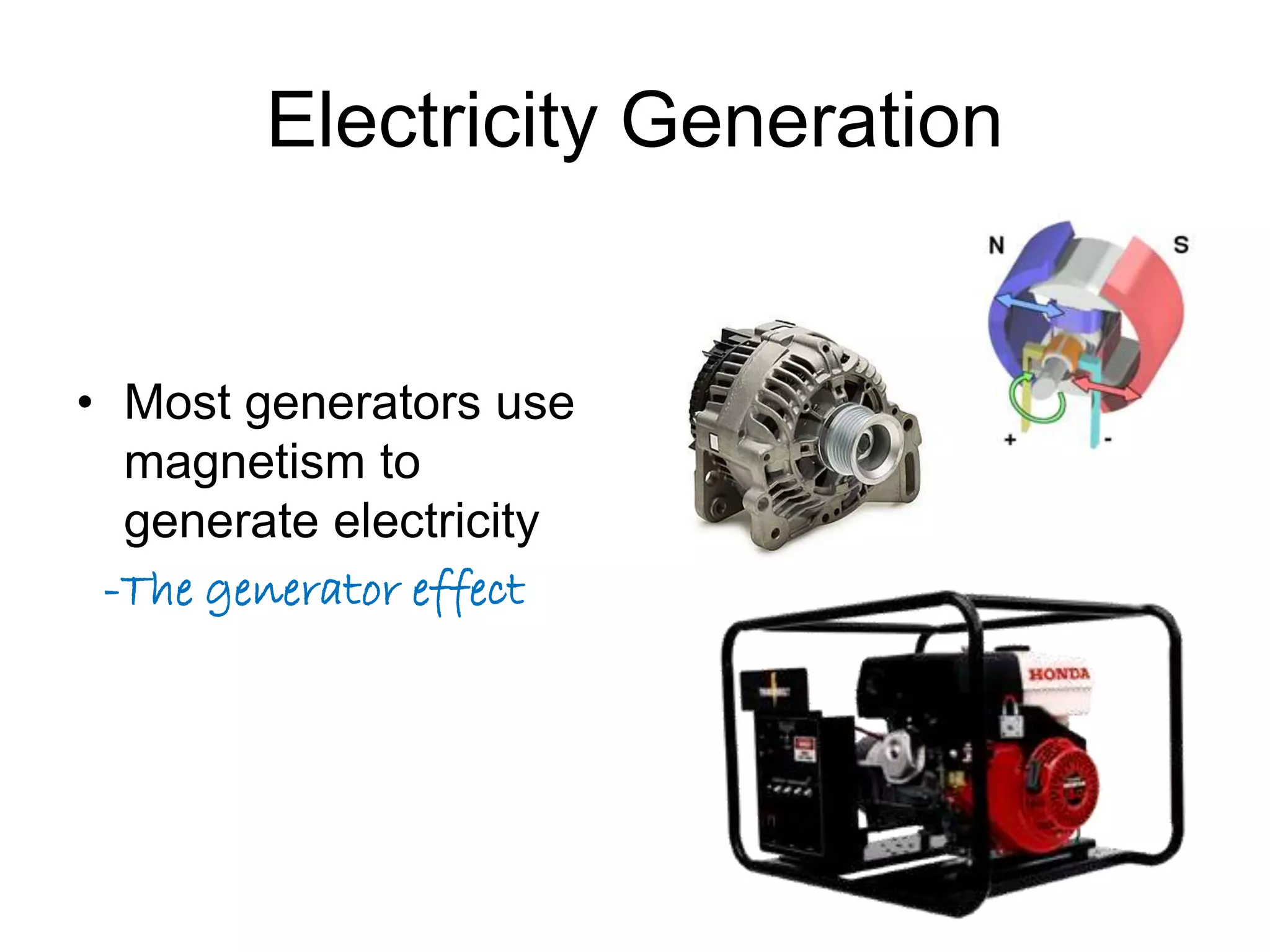
Electricity Generation 
• Most generators use 
magnetism to 
generate electricity 
-The generator effect
Induction -the Generator Effect 
• A wire that moves through a magnetic field 
has a voltage induced across it and 
therefore a current is induced 
• Of course the magnetic field can move past 
the wire and cause induction also 
• Induction is the result of the interaction 
between the magnetic field and the 
negatively charged electrons in the wire
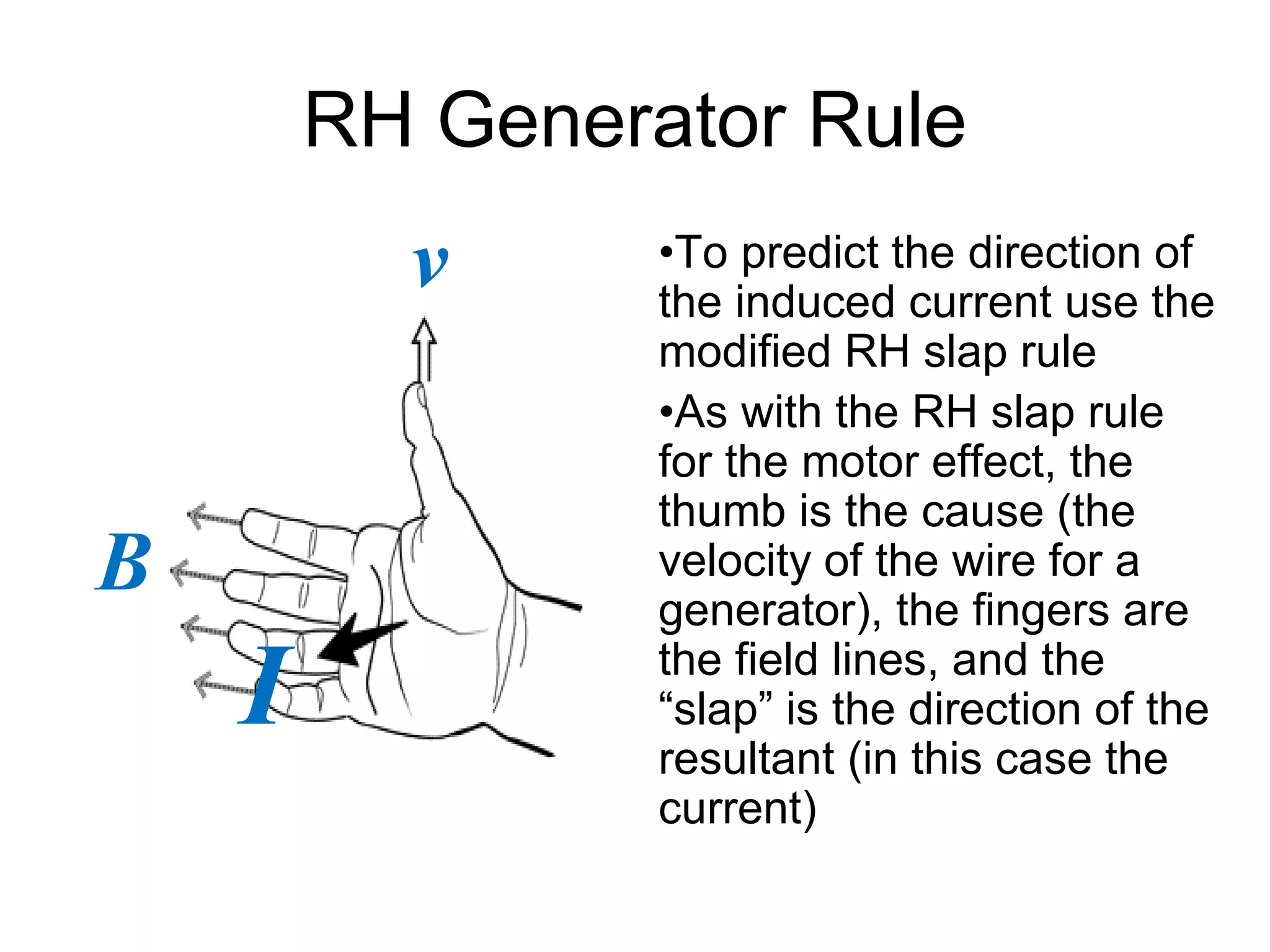
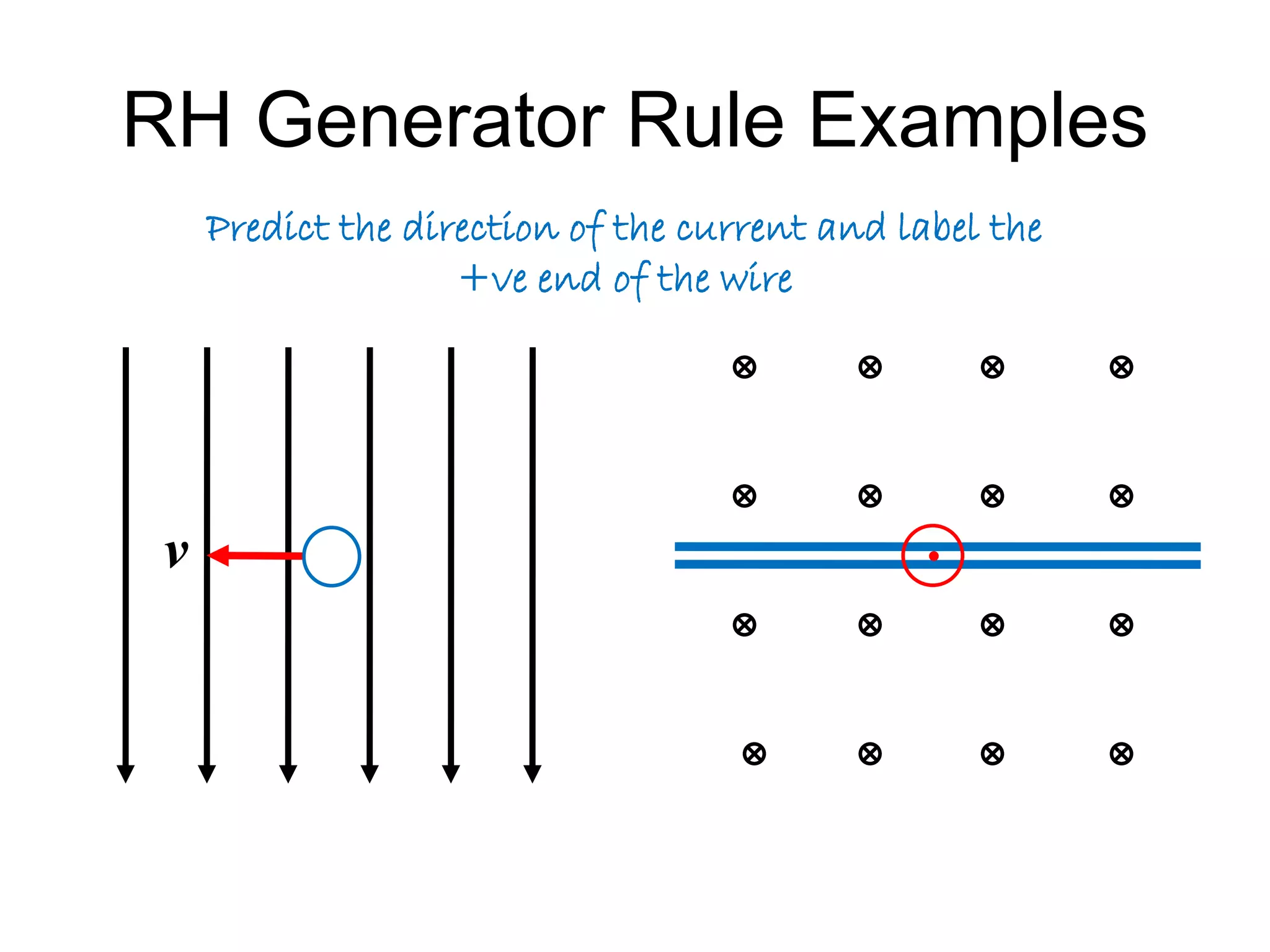
RH Generator Rule 
•To predict the direction of 
the induced current use the 
modified RH slap rule 
•As with the RH slap rule 
for the motor effect, the 
thumb is the cause (the 
velocity of the wire for a 
generator), the fingers are 
the field lines, and the 
“slap” is the direction of the 
resultant (in this case the 
current) 
v 
B 
I
RH Generator Rule Examples 
v 
Predict the direction of the current and label the 
+ve end of the wire
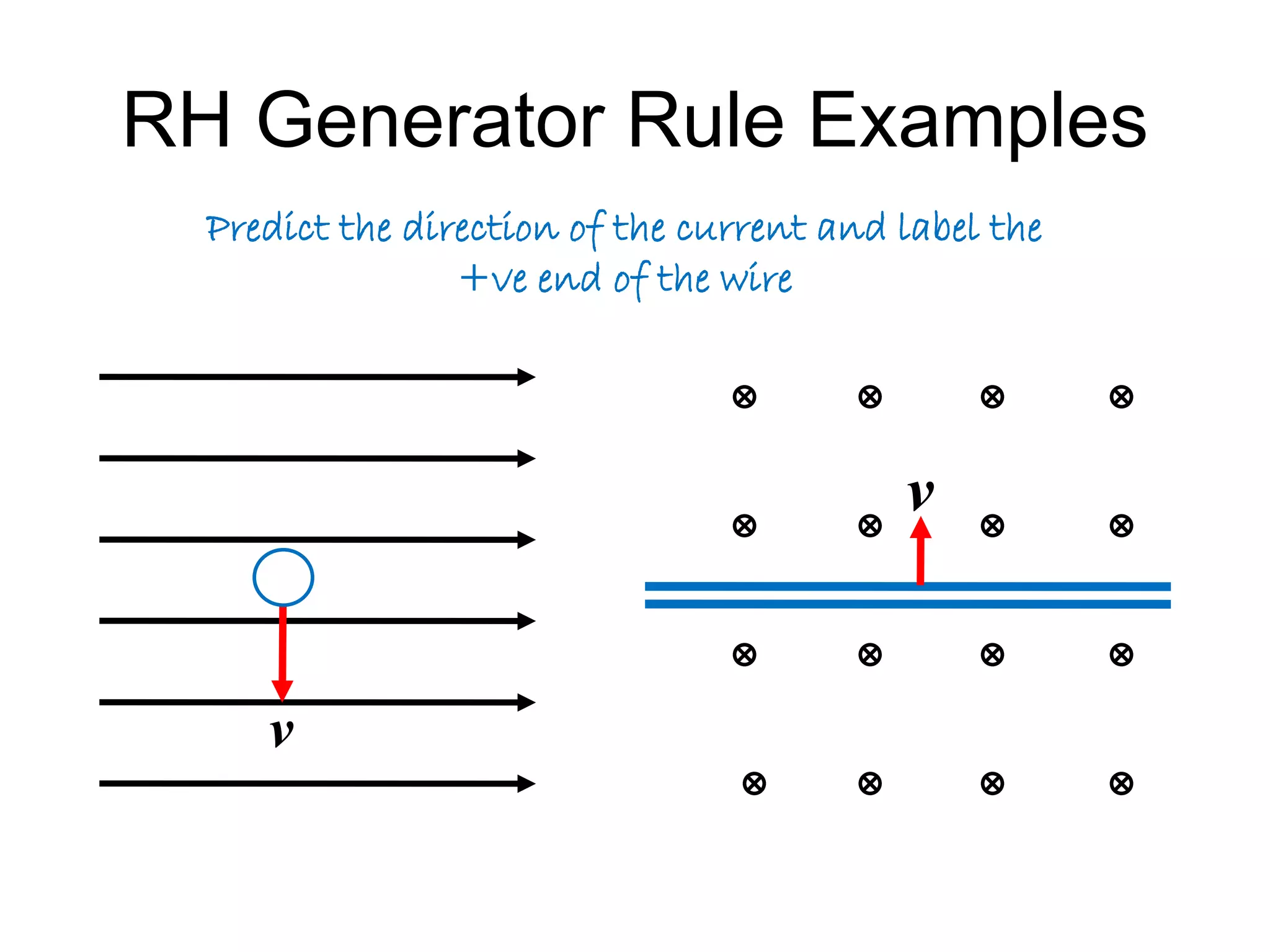
RH Generator Rule Examples 
Predict the direction of the current and label the 
v 
v 
+ve end of the wire
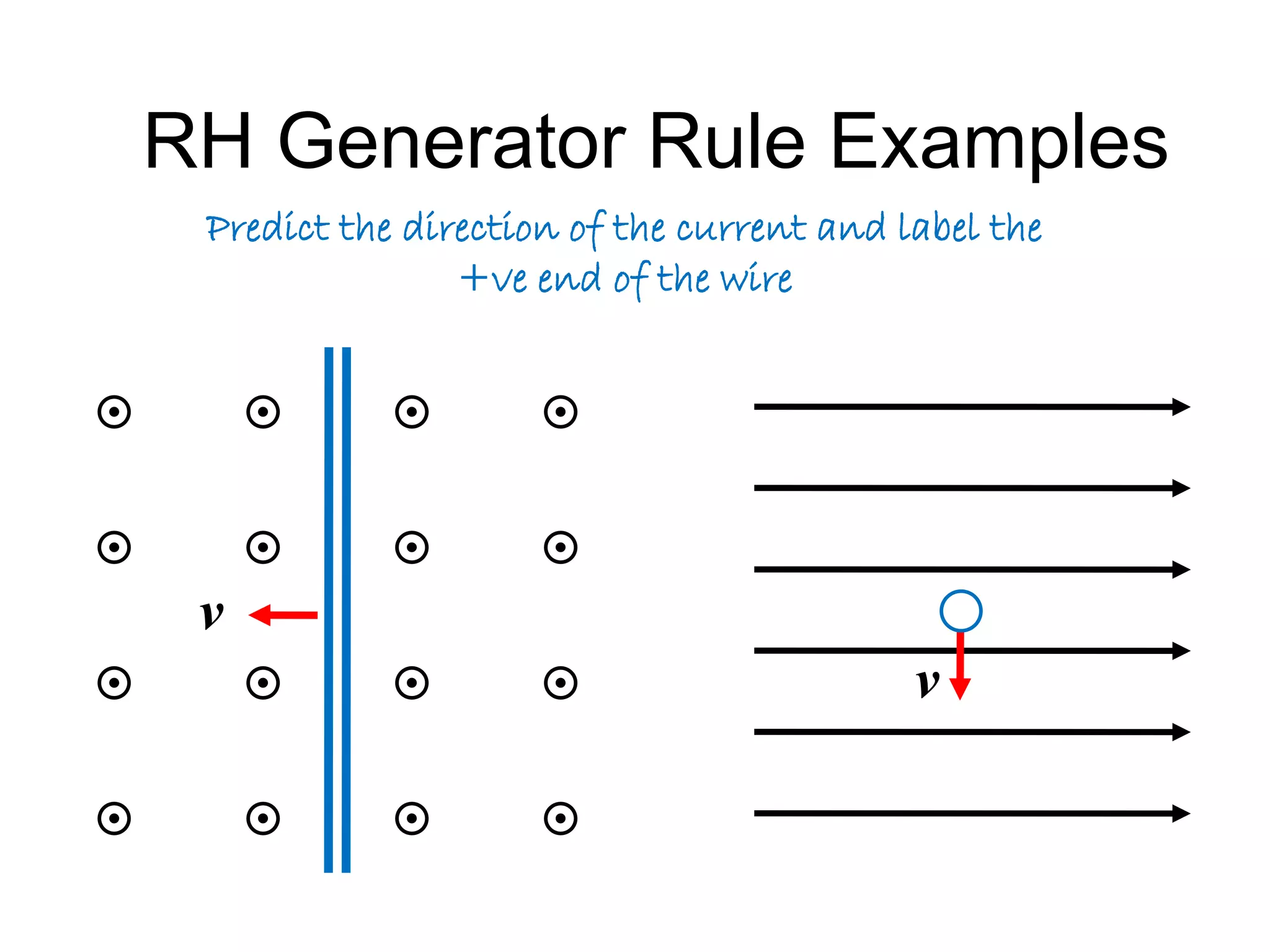
RH Generator Rule Examples 
Predict the direction of the current and label the 
v 
v 
+ve end of the wire

Electromagnetic induction

  • 1.
    Electromagnetic Induction Theinteraction between current and magnetic field
  • 2.
    Remember from Year12 The relationship between electricity and magnetism (Motor effect) • When current flows through a wire a magnetic field is created around the wire • And if the wire is coiled (to form a solenoid) Just like;
  • 3.
  • 4.
    Remember from Year12 The relationship between magnetism and electricity (Generator effect) • When a wire moves through a magnetic field a voltage is induced • Or a magnetic field moves through a coil a voltage is induced
  • 5.
    Using Your Handand Formulae • Right-hand grip rules • Right –hand slap rule • Force on a current carrying wire (motor effect) F BIL(sinθ) • Induced voltage (generator effect) V BvL • Force on a charge F Bqv(sinθ)
  • 6.
    The Motor Effect • A current carrying wire at an angle to a magnetic field experiences a force • This is as a result of the interaction between the magnetic field and the magnetic field around the wire.
  • 7.
    Electric Motors •Most electric motors use electricity to make magnetism -the motor effect The use of electric motors is widespread with most of us using many each day
  • 8.
  • 9.
    RH Grip Rule-Solenoid
  • 10.
    RH Grip Rule-Solenoid Predict the direction of the North magnetic pole
  • 11.
    RH Grip Rule-Solenoid Predict the direction of the North magnetic pole
  • 12.
    RH Grip Rule-Solenoid Predict the direction of the North magnetic pole
  • 13.
    RH Grip Rule-Solenoid Predict the direction of the North magnetic pole
  • 14.
    RH Motor RuleExamples I I Predict the direction of the force on the wire and label the positive end of the wire
  • 15.
    RH Motor RuleExamples Predict the direction of the force on the wire and I I label the positive end of the wire
  • 16.
    RH Motor RuleExamples Predict the direction of the force on the wire and I I label the positive end of the wire
  • 17.
    RH Motor RuleExamples Predict the direction of the force on the wire and label the positive end of the wire
  • 18.
    RH Motor RuleExamples Predict the direction of the forces on the wire coil at 1 and 2
  • 19.
    Force on aCharge • A single charge or a charged object will also experience a force as it moves through a magnetic field as it too creates a magnetic field as it moves (just like current in a wire)
  • 20.
    Force on aCharge
  • 21.
    Slap Rule forForce on a Charge v v
  • 22.
    Force on aCharge
  • 24.
    Force on aCharge Predict the direction of the force on the moving positive charge + q
  • 25.
    Force on aCharge Predict the direction of the force on the moving positive charge +
  • 26.
    Force on aCharge Predict the direction of the force on the moving negative charge -q
  • 27.
    Force on aCharge Predict the direction of the force on the moving negative charge -
  • 28.
    Force on aCharge –the maths • Force on moving charges in a wire; F BIL(sinθ) • Force on moving charges on their own; F  Bqv(sin ) Where; F=force (N) B= magnetic field strength (T) q=charge on the object (C) v=velocity of the charge (ms-1) =angle from field lines ()
  • 29.
    Exercises 1. Findthe force on an electron (1.60×10⁻¹⁹C) travelling at 3×10⁷ ms-1 perpendicular to a magnetic field of 0.18T 9×10-13N 2. Calculate the charge of a particle travelling at 340ms-1 perpendicular to a 1.2T magnetic field that experiences a force of 3.5×10⁻¹²N 8.6×10⁻¹⁵C
  • 30.
    Electricity Generation •Most generators use magnetism to generate electricity -The generator effect
  • 31.
    Induction -the GeneratorEffect • A wire that moves through a magnetic field has a voltage induced across it and therefore a current is induced • Of course the magnetic field can move past the wire and cause induction also • Induction is the result of the interaction between the magnetic field and the negatively charged electrons in the wire
  • 32.
    RH Generator Rule •To predict the direction of the induced current use the modified RH slap rule •As with the RH slap rule for the motor effect, the thumb is the cause (the velocity of the wire for a generator), the fingers are the field lines, and the “slap” is the direction of the resultant (in this case the current) v B I
  • 33.
    RH Generator RuleExamples v Predict the direction of the current and label the +ve end of the wire
  • 34.
    RH Generator RuleExamples Predict the direction of the current and label the v v +ve end of the wire
  • 35.
    RH Generator RuleExamples Predict the direction of the current and label the v v +ve end of the wire