 Educational leadership
A leader is one who is capable of
exerting his influence on others to a
greater extent than others can
influence him.
School leadership is the process of
enlisting and guiding the talents and
energies of teachers, pupils, and
parents toward achieving common
educational aims.
Barkty considers that an educational
leader is always trying to get others
to accept his decisions or
encouraging them to join him in
some common purpose.
 He identified three types of educational
leaders:
The Educational statesman
The teacher
The administrator
 The educational statesman is
concerned with presenting the facts
objectively and persuades others to
join his point of view, by clear
expression of his opinion and by
appealing to their rationality.
 This method is often adopt in the
beginning and change according to
 An educational administrator has to provide democratic
leadership.
 Observe the educational leader working with other
educators and co-ordinators to observe, support
and extend children’s learning
 Discuss what strategies and processes the
educational leader uses to lead the development of
the curriculum and set goals for teaching and
learning
 Sight evidence of a curriculum at the service and
the designation of the educational leader in the staff
record
 Find creative ways to bring everyone together
 Encourage the pursuit of excellence in teaching and
learning.
 Promote collaboration with other schools.
 Represent the interests and needs of the School to the
external community; and
 Recognising the learning opportunities in routine
experiences
 know and understand policies and procedures
 Be the conduit for new information and contemporary
practice
 Find and share resources
 Support educators to reflect on practice
 Establish and maintain a suitable
organisational and committee
structure;
 Consult with relevant committees and
staff;
 Develop and maintain the strategic and
academic planning functions
 There is no doubt in that the success of
educational programme depends upon
the quality of educational leaders
Role of head of an educational institution
As organizer
Systematically organize routine works
Distribution of work
Preparation of time table
Conduct of examination
PTA meeting
As a supervisor
Supervision of teaching work
Supervision and maintenance of register
and records
As a teacher
Have a fair amount of teaching
Presence in all the class room and
establish a relationship with pupils
Help him to update with present syllabus
and text book
As a leader
 Find creative ways to bring everyone
together
 Encourage the pursuit of excellence in
teaching and learning.
 Promote collaboration with other
schools.
 Represent the interests and needs of
the School to the external community;
and
 Recognising the learning opportunities
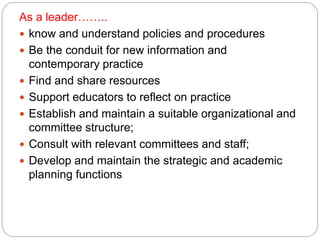
As a leader……..
 know and understand policies and procedures
 Be the conduit for new information and
contemporary practice
 Find and share resources
 Support educators to reflect on practice
 Establish and maintain a suitable organizational and
committee structure;
 Consult with relevant committees and staff;
 Develop and maintain the strategic and academic
planning functions
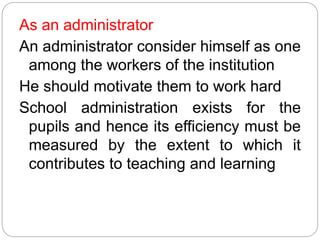
As an administrator
An administrator consider himself as one
among the workers of the institution
He should motivate them to work hard
School administration exists for the
pupils and hence its efficiency must be
measured by the extent to which it
contributes to teaching and learning
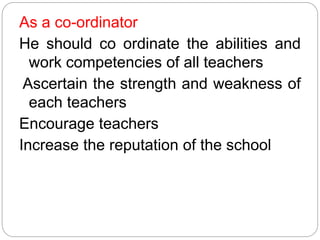
As a co-ordinator
He should co ordinate the abilities and
work competencies of all teachers
Ascertain the strength and weakness of
each teachers
Encourage teachers
Increase the reputation of the school

Educational administration

  • 1.
     Educational leadership Aleader is one who is capable of exerting his influence on others to a greater extent than others can influence him. School leadership is the process of enlisting and guiding the talents and energies of teachers, pupils, and parents toward achieving common educational aims.
  • 2.
    Barkty considers thatan educational leader is always trying to get others to accept his decisions or encouraging them to join him in some common purpose.  He identified three types of educational leaders: The Educational statesman The teacher The administrator
  • 3.
     The educationalstatesman is concerned with presenting the facts objectively and persuades others to join his point of view, by clear expression of his opinion and by appealing to their rationality.  This method is often adopt in the beginning and change according to
  • 4.
     An educationaladministrator has to provide democratic leadership.  Observe the educational leader working with other educators and co-ordinators to observe, support and extend children’s learning  Discuss what strategies and processes the educational leader uses to lead the development of the curriculum and set goals for teaching and learning  Sight evidence of a curriculum at the service and the designation of the educational leader in the staff record
  • 5.
     Find creativeways to bring everyone together  Encourage the pursuit of excellence in teaching and learning.  Promote collaboration with other schools.  Represent the interests and needs of the School to the external community; and  Recognising the learning opportunities in routine experiences  know and understand policies and procedures  Be the conduit for new information and contemporary practice  Find and share resources
  • 6.
     Support educatorsto reflect on practice  Establish and maintain a suitable organisational and committee structure;  Consult with relevant committees and staff;  Develop and maintain the strategic and academic planning functions  There is no doubt in that the success of educational programme depends upon the quality of educational leaders
  • 7.
    Role of headof an educational institution As organizer Systematically organize routine works Distribution of work Preparation of time table Conduct of examination PTA meeting
  • 8.
    As a supervisor Supervisionof teaching work Supervision and maintenance of register and records As a teacher Have a fair amount of teaching Presence in all the class room and establish a relationship with pupils Help him to update with present syllabus and text book
  • 9.
    As a leader Find creative ways to bring everyone together  Encourage the pursuit of excellence in teaching and learning.  Promote collaboration with other schools.  Represent the interests and needs of the School to the external community; and  Recognising the learning opportunities
  • 10.
    As a leader…….. know and understand policies and procedures  Be the conduit for new information and contemporary practice  Find and share resources  Support educators to reflect on practice  Establish and maintain a suitable organizational and committee structure;  Consult with relevant committees and staff;  Develop and maintain the strategic and academic planning functions
  • 11.
    As an administrator Anadministrator consider himself as one among the workers of the institution He should motivate them to work hard School administration exists for the pupils and hence its efficiency must be measured by the extent to which it contributes to teaching and learning
  • 12.
    As a co-ordinator Heshould co ordinate the abilities and work competencies of all teachers Ascertain the strength and weakness of each teachers Encourage teachers Increase the reputation of the school