POLYMORPHISM AND VARIABILITY
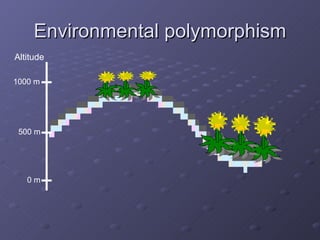
Polymorphism Environmental (induced by changes of environmental factors) Genetic (refers to differences in the DNA sequence)
Environmental polymorphism 1000 m 500 m 0 m Altitude
Genetic polymorphism Occurrence of two ore more different genetically conditioned phenotypes in the population. POLYMORPHISM  x  MUTATION Frequency of rare allele is  higher then 0,01  (i.e. 1%). 1% MUTATION POLYMORPHISM
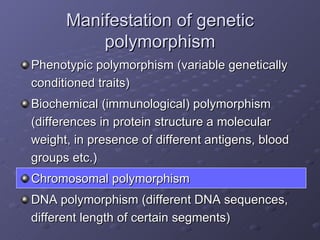
Manifestation of genetic polymorphism Phenotypic polymorphism (variable genetically conditioned traits) Biochemical (immunological) polymorphism (differences in protein structure and molecular weight, in presence of different antigens or blood groups etc.) Chromosomal polymorphism DNA polymorphism (different DNA sequences, different length of certain segments)
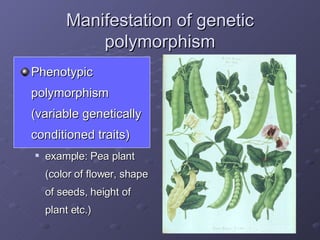
Manifestation of genetic polymorphism Phenotypic polymorphism (variable genetically conditioned traits) example: Pea plant (color of flower, shape of seeds, height of plant etc.)
Manifestation of genetic polymorphism Phenotypic polymorphism (variable genetically conditioned traits) Biochemical (immunological) polymorphism (differences in protein structure a molecular weight, in presence of different antigens, different blood groups etc.) Chromosomal polymorphism DNA polymorphism (different DNA sequences, different length of certain segments)
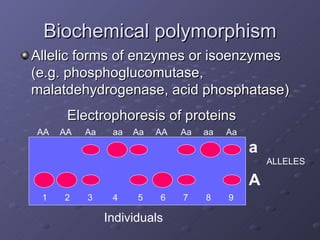
Biochemical polymorphism Allelic forms of enzymes or i soenzymes (e.g. phosphoglucomutase, malatdehydrogenase, acid phosphatase) Electrophoresis of proteins Individuals 1 2 3 4 5 6 7 8 9 a A AA AA Aa aa Aa AA Aa aa Aa ALLELES
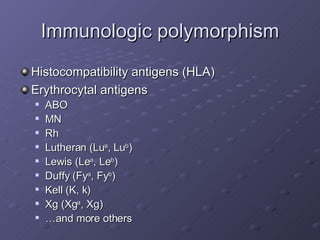
Immunologic polymorphism Histocompatibility antigens (HLA) Erythrocytal antigens ABO MN Rh Lutheran (Lu a , Lu b ) Lewis (Le a , Le b ) Duffy (Fy a , Fy b ) Kell (K, k) Xg (Xg a , Xg) … and more others
Manifestation of genetic polymorphism Phenotypic polymorphism (variable genetically conditioned traits) Biochemical (immunological) polymorphism (differences in protein structure a molecular weight, in presence of different antigens, blood groups etc.) Chromosomal polymorphism DNA polymorphism (different DNA sequences, different length of certain segments)
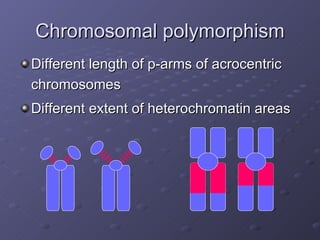
Chromosomal polymorphism Different length of p-arms of acrocentric chromosomes Different extent of heterochromatin areas
Manifestation of genetic polymorphism Phenotypic polymorphism (variable genetically conditioned traits) Biochemical (immunological) polymorphism (differences in protein structure a molecular weight, in presence of different antigens, blood groups etc.) Chromosomal polymorphism DNA polymorphism (different DNA sequences, different length of certain segments)
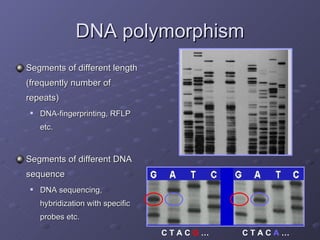
DNA polymorphism Segments of different length (frequently number of repeats) DNA-fingerprinting, RFLP etc. Segments of different DNA sequence  DNA sequencing, hybridization with specific probes etc. C T A C  G  … C T A C  A  …
Importance of polymorphism studies Phorensic genetics (paternity tests, identification of persons) Transplantation (polymorphism of histocompatibility antigens) Molecular epidemiology (identification of different pathogenic strains) importance in medical microbiology and parasitology (identification of sibling species) Molecular taxonomy studies of evolution – „molecular clock“ Some polymorphisms can express certain disorder under specific conditions (e.g. after ingestion of certain food or application of certain drug) ECOGENETICS  PH ARMA C OGENETICS Each person has different (genetically conditioned) susceptibility to certain environmental factor or chemical compound, drug, physical or biological factor.
Ecogenetically important polymorfisms in human population I. Hemoglobine variants (HbS – homozygotes are affected with sickle cell anemia, heterozygotes are resistant to malaria infection) Glucoso-6-dehydrogenase deficiency (hemolytic crisis after application of certain drugs or ingestion of beans) Different lactase activity (lactose intolerance after ingestion of milk) Different acetaldehyddehydrogenase (ALDH) activity (intolerance to ethanol – increased in some Asiatic populations and in South American Indians)
Alfa 1-antitrypsine (ATT) – protease inhibitor, decreased level leads to severe inflammations of respiratory tract, pancreas and liver) Cytochrome P450-monooxygenase – oxidizes xenobiotics including severe carcinogens and mutagens (a lot of isoenzyme forms with different inducibility had been described) Arylhydrocarbon hydroxylase (AHH) – converts aromatic hydrocarbons to epoxides (most of them have carcinogenic effect) Ecogenetically important polymorphisms in human population II.
Next practical Topic: Genotoxicity and carcinogenicity screening Test in ecology I. (lecture), ecology II. ( =  today's practical)

Ecology2 Complete

  • 1.
  • 2.
    Polymorphism Environmental (inducedby changes of environmental factors) Genetic (refers to differences in the DNA sequence)
  • 3.
    Environmental polymorphism 1000m 500 m 0 m Altitude
  • 4.
    Genetic polymorphism Occurrenceof two ore more different genetically conditioned phenotypes in the population. POLYMORPHISM x MUTATION Frequency of rare allele is higher then 0,01 (i.e. 1%). 1% MUTATION POLYMORPHISM
  • 5.
    Manifestation of geneticpolymorphism Phenotypic polymorphism (variable genetically conditioned traits) Biochemical (immunological) polymorphism (differences in protein structure and molecular weight, in presence of different antigens or blood groups etc.) Chromosomal polymorphism DNA polymorphism (different DNA sequences, different length of certain segments)
  • 6.
    Manifestation of geneticpolymorphism Phenotypic polymorphism (variable genetically conditioned traits) example: Pea plant (color of flower, shape of seeds, height of plant etc.)
  • 7.
    Manifestation of geneticpolymorphism Phenotypic polymorphism (variable genetically conditioned traits) Biochemical (immunological) polymorphism (differences in protein structure a molecular weight, in presence of different antigens, different blood groups etc.) Chromosomal polymorphism DNA polymorphism (different DNA sequences, different length of certain segments)
  • 8.
    Biochemical polymorphism Allelicforms of enzymes or i soenzymes (e.g. phosphoglucomutase, malatdehydrogenase, acid phosphatase) Electrophoresis of proteins Individuals 1 2 3 4 5 6 7 8 9 a A AA AA Aa aa Aa AA Aa aa Aa ALLELES
  • 9.
    Immunologic polymorphism Histocompatibilityantigens (HLA) Erythrocytal antigens ABO MN Rh Lutheran (Lu a , Lu b ) Lewis (Le a , Le b ) Duffy (Fy a , Fy b ) Kell (K, k) Xg (Xg a , Xg) … and more others
  • 10.
    Manifestation of geneticpolymorphism Phenotypic polymorphism (variable genetically conditioned traits) Biochemical (immunological) polymorphism (differences in protein structure a molecular weight, in presence of different antigens, blood groups etc.) Chromosomal polymorphism DNA polymorphism (different DNA sequences, different length of certain segments)
  • 11.
    Chromosomal polymorphism Differentlength of p-arms of acrocentric chromosomes Different extent of heterochromatin areas
  • 12.
    Manifestation of geneticpolymorphism Phenotypic polymorphism (variable genetically conditioned traits) Biochemical (immunological) polymorphism (differences in protein structure a molecular weight, in presence of different antigens, blood groups etc.) Chromosomal polymorphism DNA polymorphism (different DNA sequences, different length of certain segments)
  • 13.
    DNA polymorphism Segmentsof different length (frequently number of repeats) DNA-fingerprinting, RFLP etc. Segments of different DNA sequence DNA sequencing, hybridization with specific probes etc. C T A C G … C T A C A …
  • 14.
    Importance of polymorphismstudies Phorensic genetics (paternity tests, identification of persons) Transplantation (polymorphism of histocompatibility antigens) Molecular epidemiology (identification of different pathogenic strains) importance in medical microbiology and parasitology (identification of sibling species) Molecular taxonomy studies of evolution – „molecular clock“ Some polymorphisms can express certain disorder under specific conditions (e.g. after ingestion of certain food or application of certain drug) ECOGENETICS PH ARMA C OGENETICS Each person has different (genetically conditioned) susceptibility to certain environmental factor or chemical compound, drug, physical or biological factor.
  • 15.
    Ecogenetically important polymorfismsin human population I. Hemoglobine variants (HbS – homozygotes are affected with sickle cell anemia, heterozygotes are resistant to malaria infection) Glucoso-6-dehydrogenase deficiency (hemolytic crisis after application of certain drugs or ingestion of beans) Different lactase activity (lactose intolerance after ingestion of milk) Different acetaldehyddehydrogenase (ALDH) activity (intolerance to ethanol – increased in some Asiatic populations and in South American Indians)
  • 16.
    Alfa 1-antitrypsine (ATT)– protease inhibitor, decreased level leads to severe inflammations of respiratory tract, pancreas and liver) Cytochrome P450-monooxygenase – oxidizes xenobiotics including severe carcinogens and mutagens (a lot of isoenzyme forms with different inducibility had been described) Arylhydrocarbon hydroxylase (AHH) – converts aromatic hydrocarbons to epoxides (most of them have carcinogenic effect) Ecogenetically important polymorphisms in human population II.
  • 17.
    Next practical Topic:Genotoxicity and carcinogenicity screening Test in ecology I. (lecture), ecology II. ( = today's practical)