Section 24.1
    LECTURE
     SLIDES

                   Prepared by
            Ashish Murthy
Raritan Valley Community College
   To run the animations you must be in
   Slideshow View. Use the buttons on the
   animation to play, pause, and turn audio/text
   on or off. Please note: once you have used
   any of the animation functions (such as Play or
   Pause), you must first click in the white
   background before you advance the next slide.


                      Copyright © The McGraw-Hill Companies, Inc. Permission required for reproduction or display.
SECTION 24.1 OUTLINE
   Population Genetics

   Gene Pools

   Polymorphic/Monomorphic/SNP

   Allele/Genotype Frequency*

   Hardy Weinberg Principle*

   Micro-Evolution*
POPULATION GENETICS
   The Study of Genes and Genotypes in a
    population

   Population - a group of individuals of the same
    species that occupy the same environment (that
    can interbreed)

   Genetic Variation

   Genetic Variation related to Phenotypic Variation
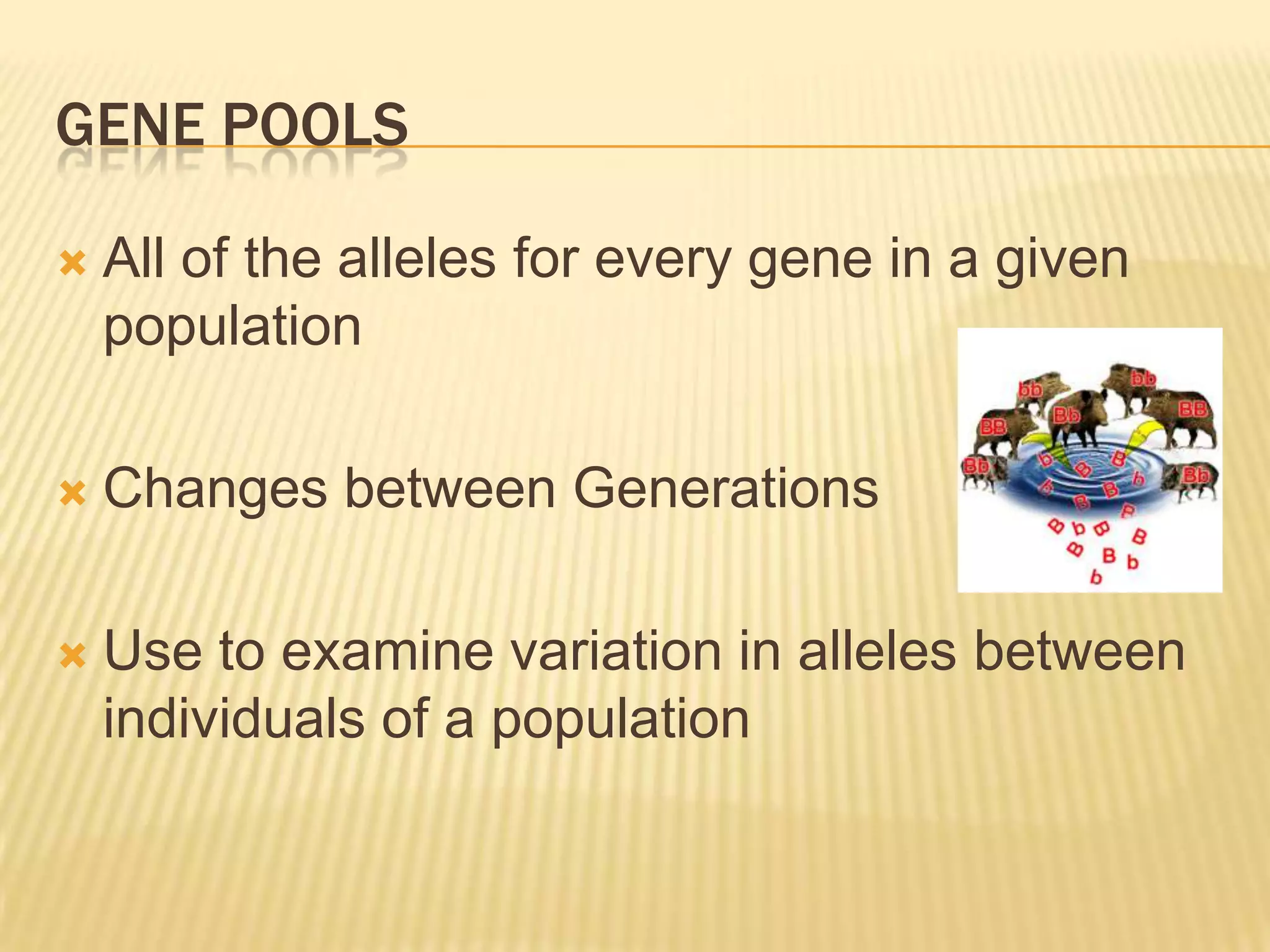
GENE POOLS

   All of the alleles for every gene in a given
    population

   Changes between Generations

   Use to examine variation in alleles between
    individuals of a population
DIFFERENT TYPES OF GENES

   Polymorphic – 2 or more alleles for a single
    gene that occur at greater than 1% frequency

   Monomorphic – 1 allele for a single gene
    occurs at greater than 99% frequency
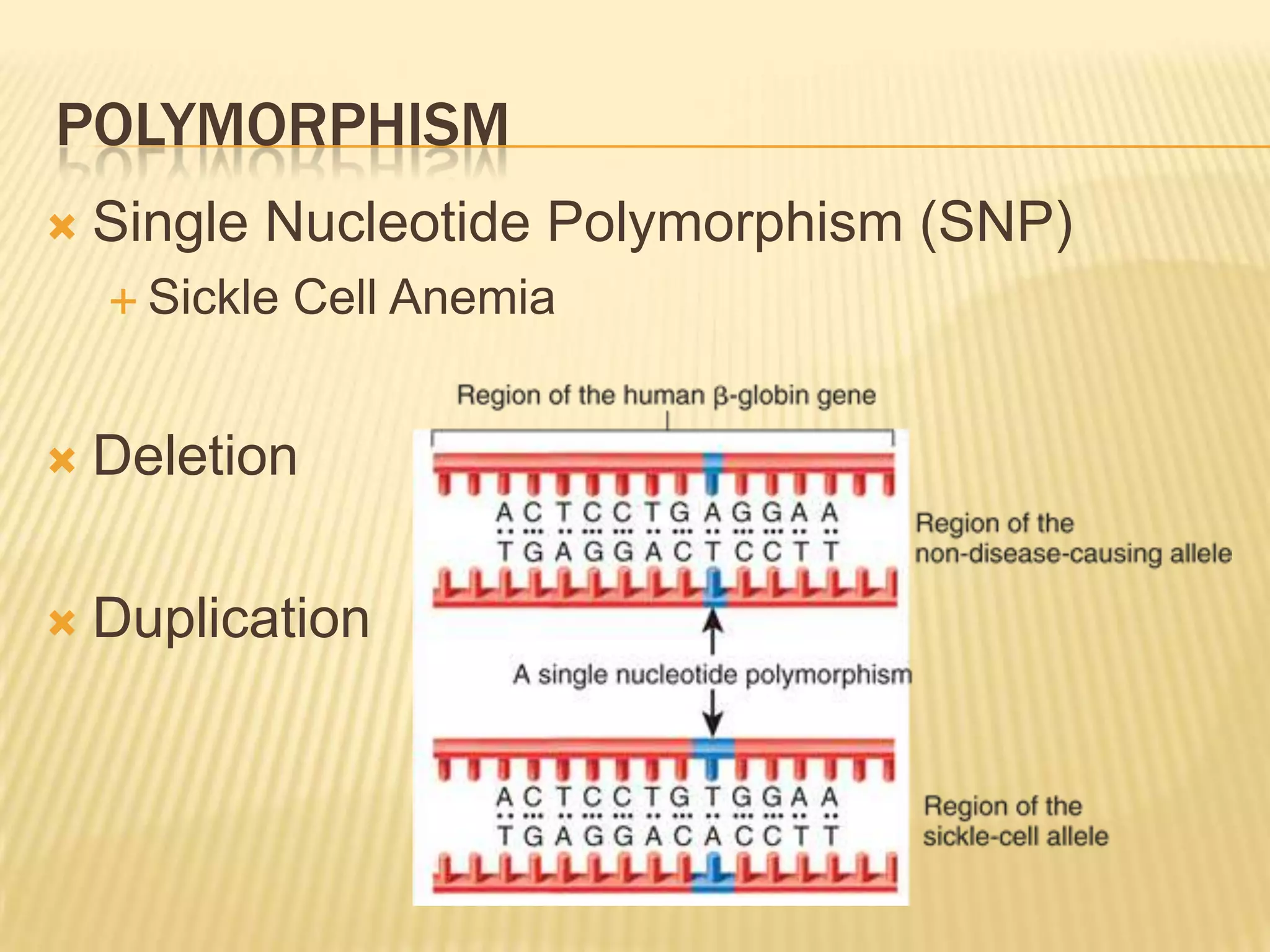
POLYMORPHISM
   Single Nucleotide Polymorphism (SNP)
     Sickle   Cell Anemia


   Deletion

   Duplication
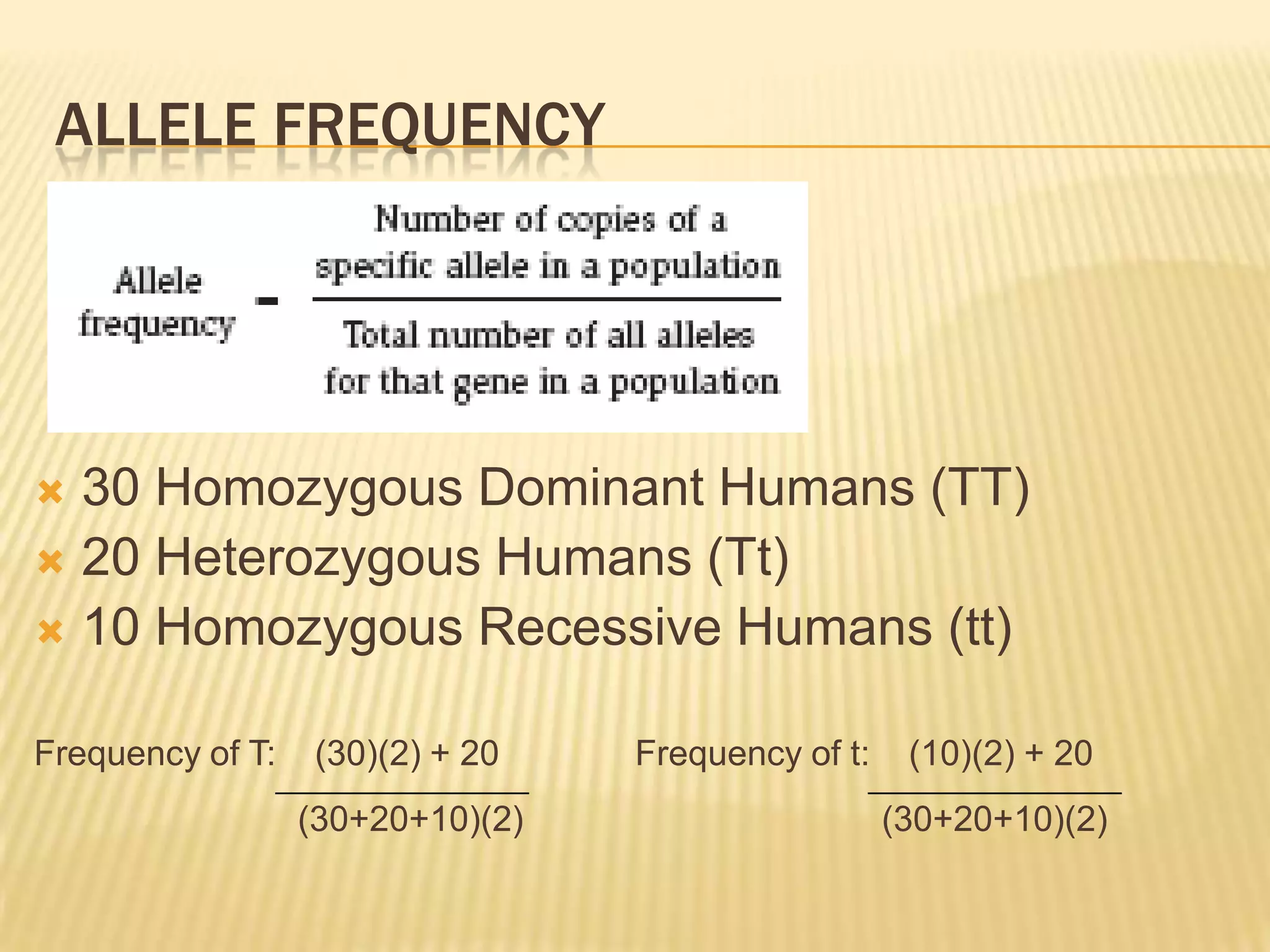
ALLELE FREQUENCY


 30 Homozygous Dominant Humans (TT)
 20 Heterozygous Humans (Tt)
 10 Homozygous Recessive Humans (tt)


Frequency of T:   (30)(2) + 20    Frequency of t:    (10)(2) + 20
                  (30+20+10)(2)                     (30+20+10)(2)
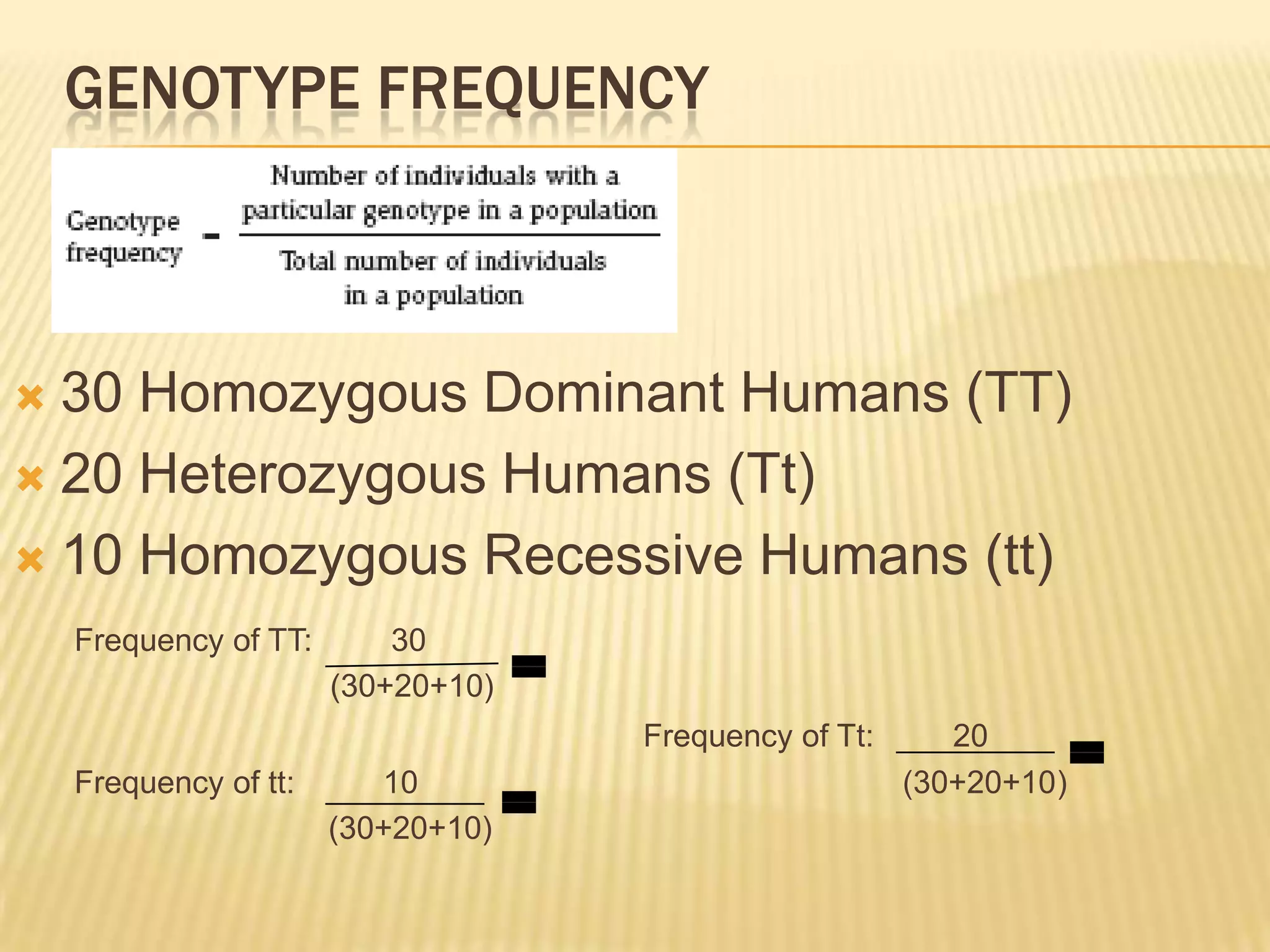
GENOTYPE FREQUENCY


 30 Homozygous Dominant Humans (TT)
 20 Heterozygous Humans (Tt)

 10 Homozygous Recessive Humans (tt)
    Frequency of TT:       30
                       (30+20+10)
                                    Frequency of Tt:      20
    Frequency of tt:      10                           (30+20+10)
                       (30+20+10)
HARDY-WEINBERG PRINCIPLE

   Relates Allele Frequency and Genotype
    Frequency

   Developed in 1908

   Godfrey Harold Hardy and Wilhelm Weinberg
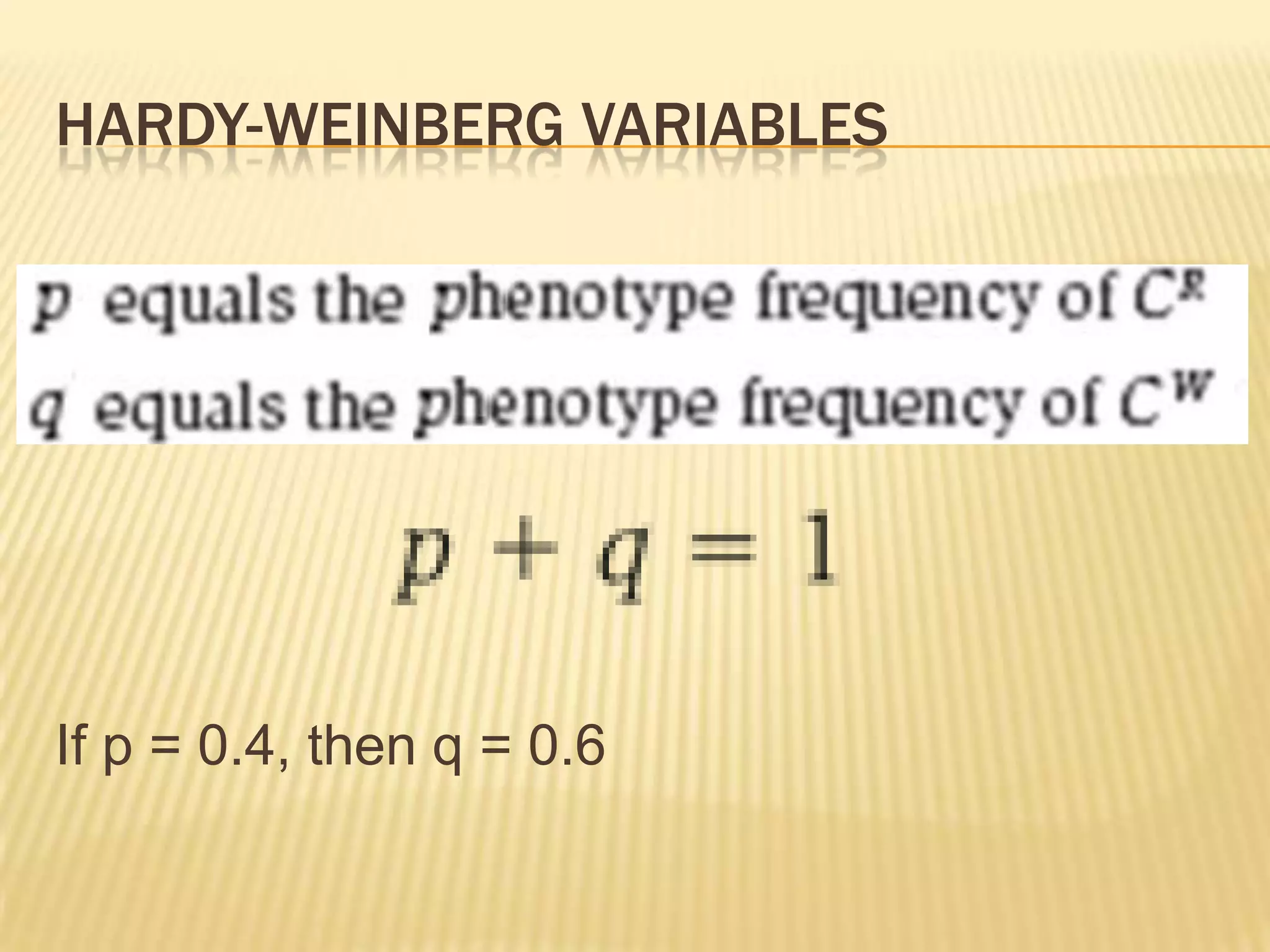
HARDY-WEINBERG VARIABLES


If p = 0.4, then q = 0.6
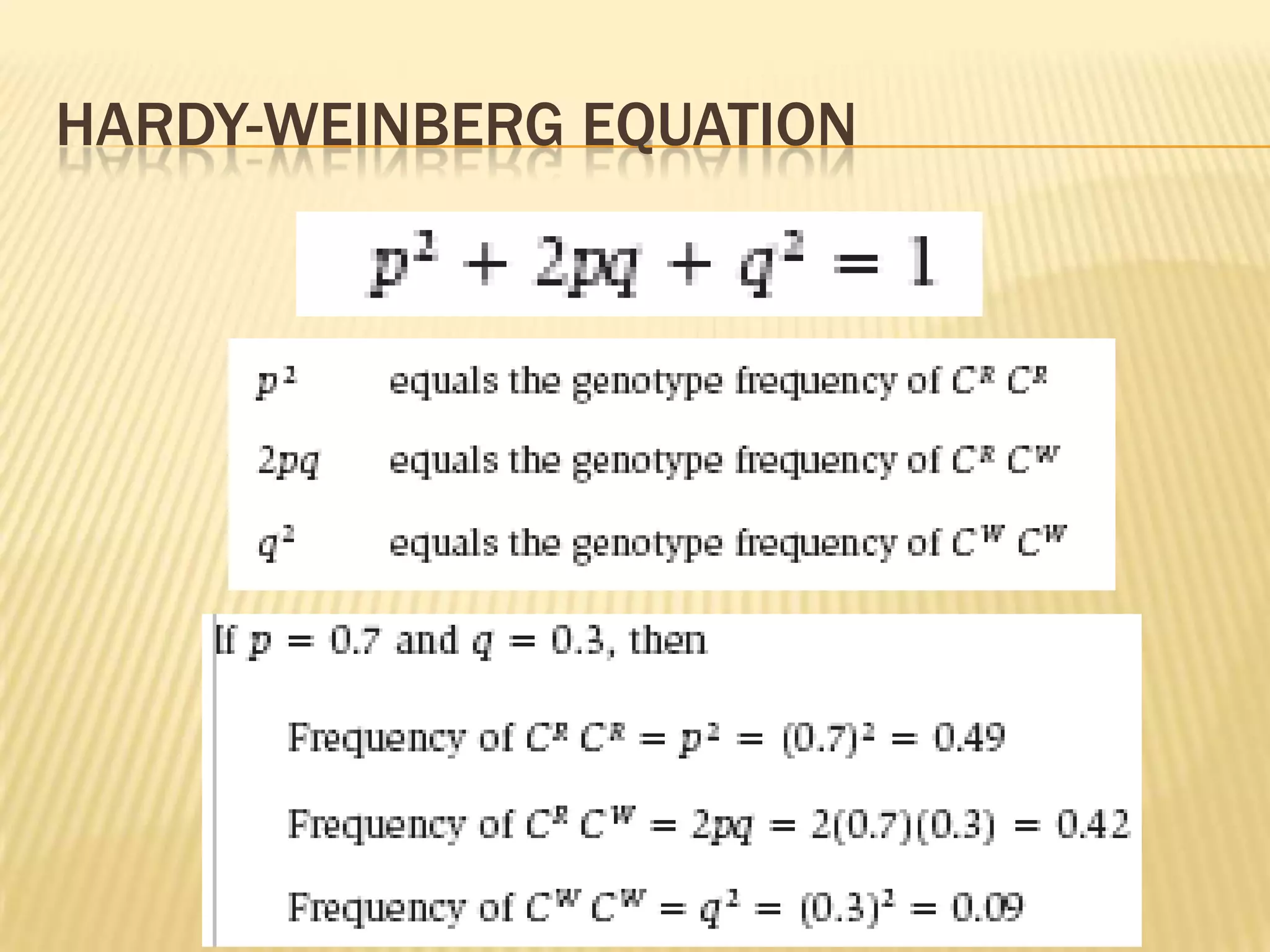
HARDY-WEINBERG EQUATION
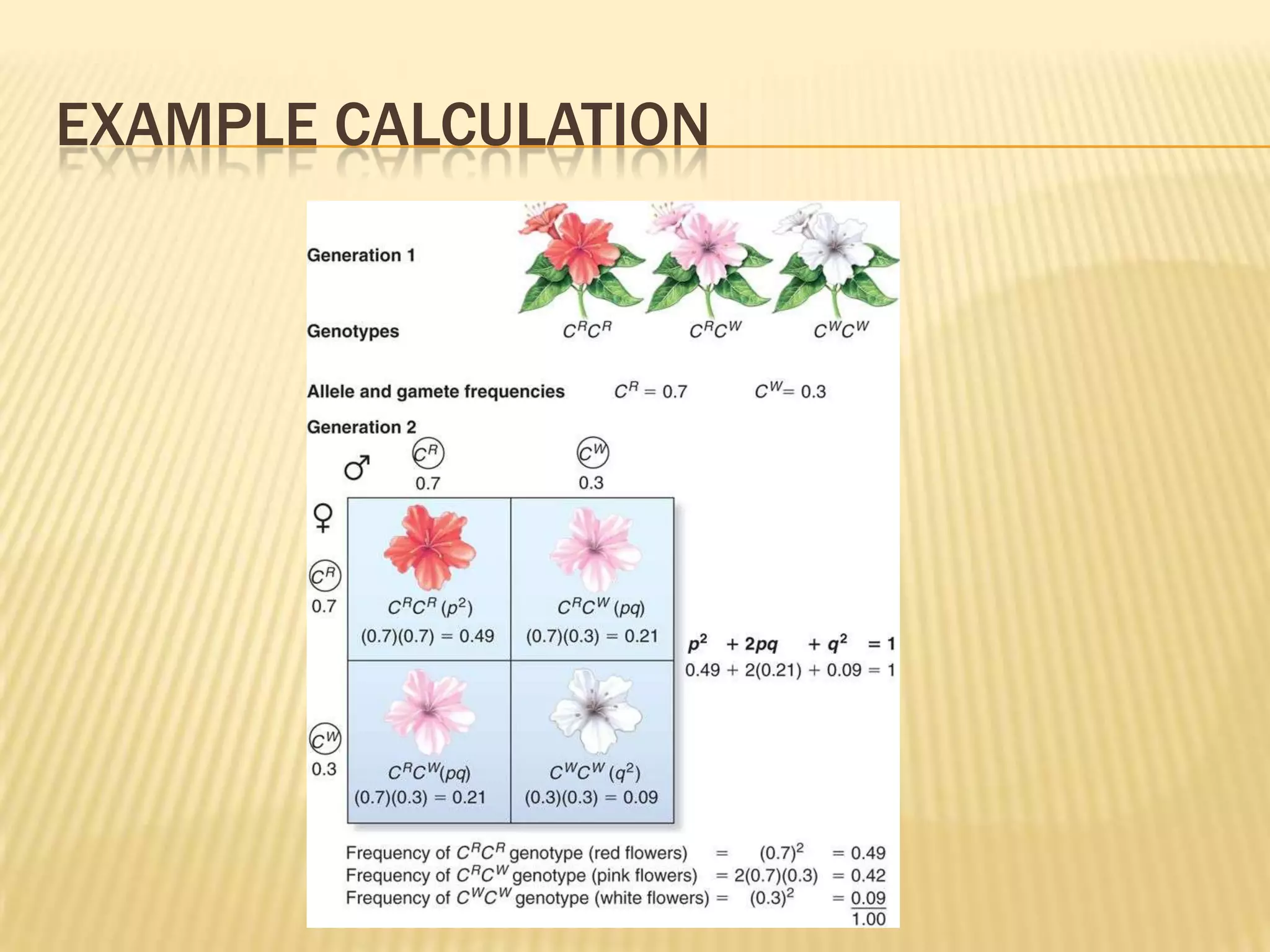
EXAMPLE CALCULATION
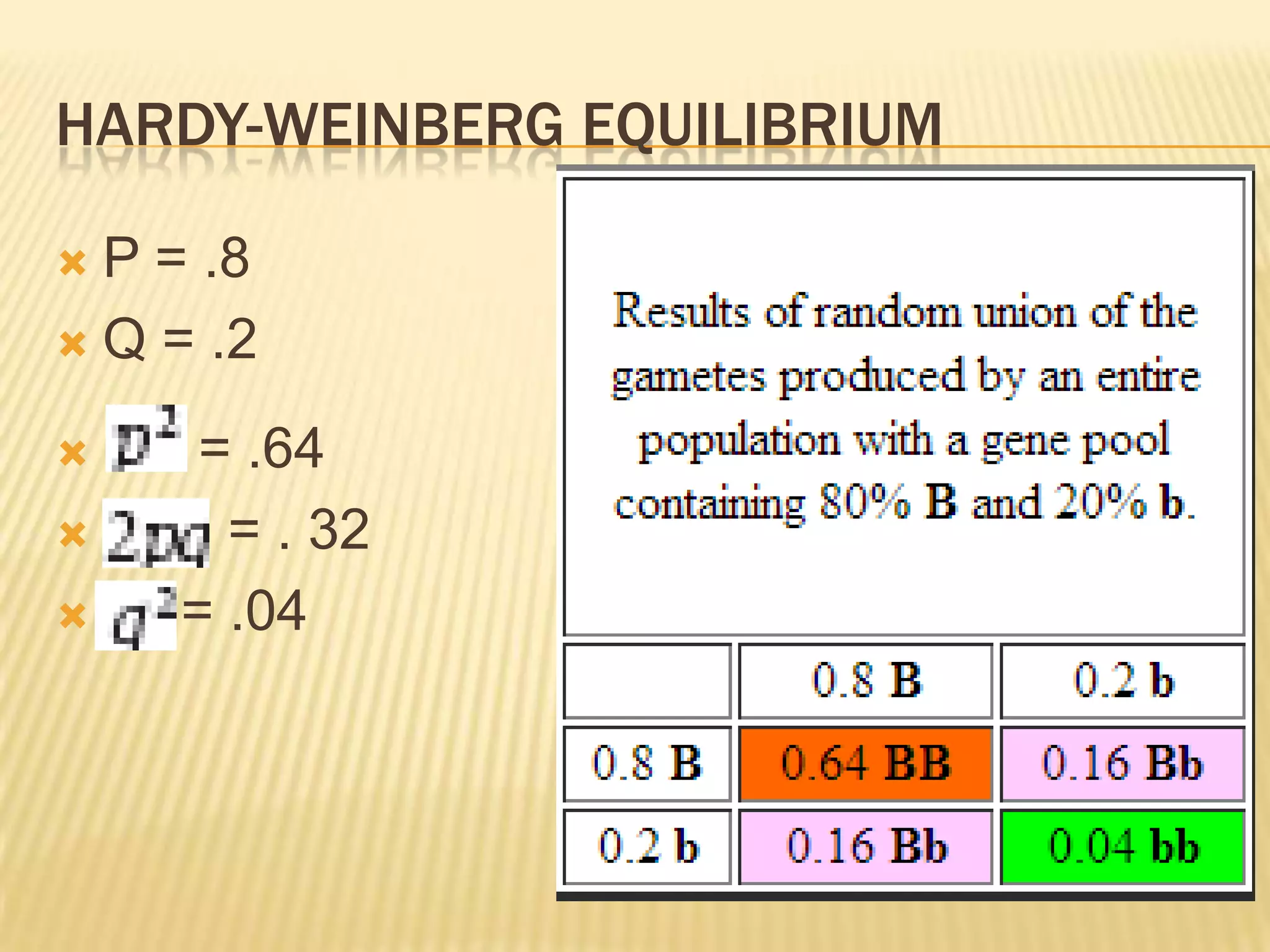
HARDY-WEINBERG EQUILIBRIUM

 P = .8
 Q = .2

   =    = .64
         = . 32
       = .04
HARDY-WEINBERG ASSUMPTIONS
   No new mutations

   No natural selection

   No random change in allele frequencies
    (large population)

   No Migration

   Random mating
MICRO-EVOLUTION

   Changes in a population’s gene pool

   Allele Frequency changes

   New Genetic Variation

   Evolutionary Mechanisms
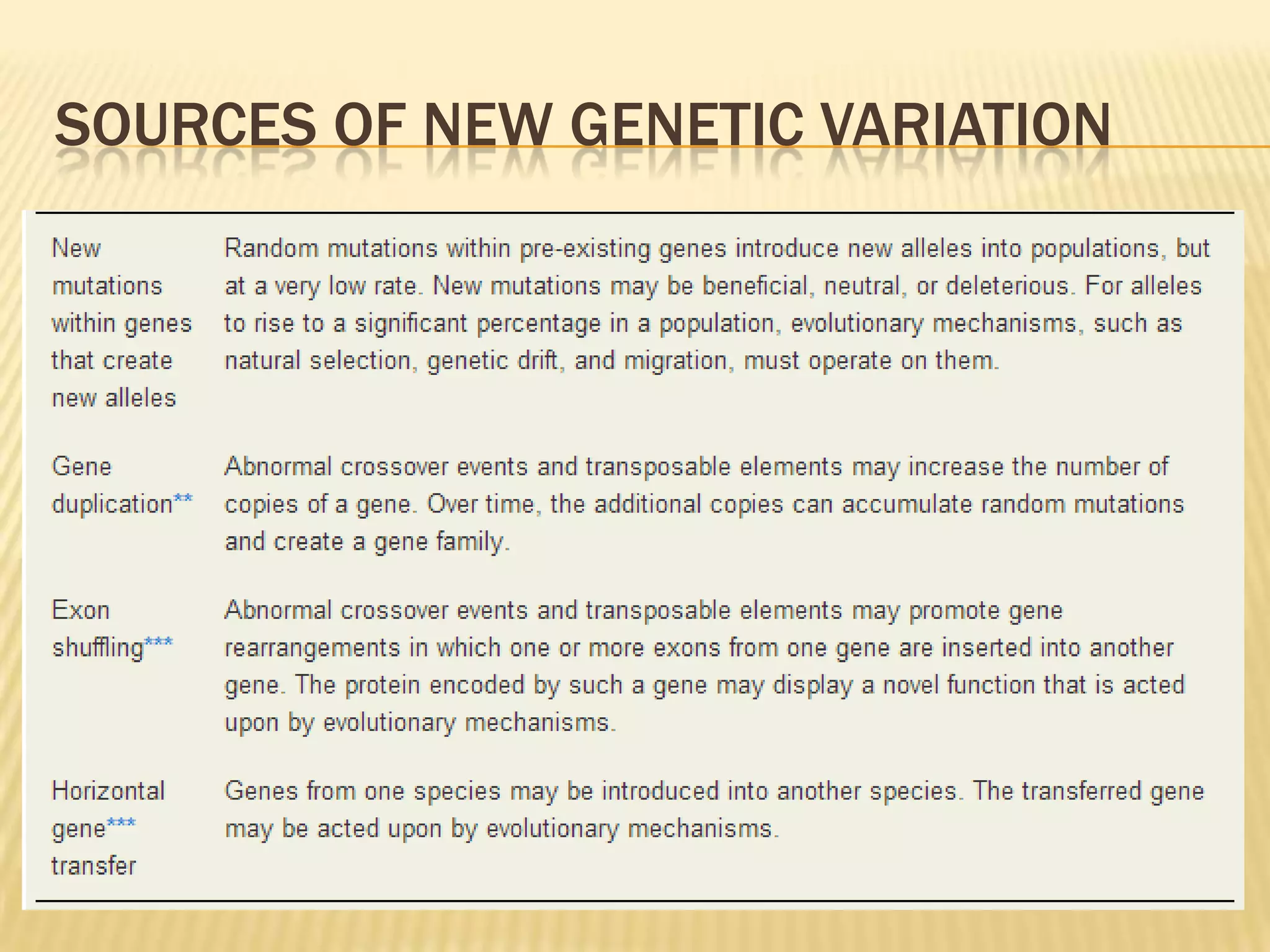
SOURCES OF NEW GENETIC VARIATION
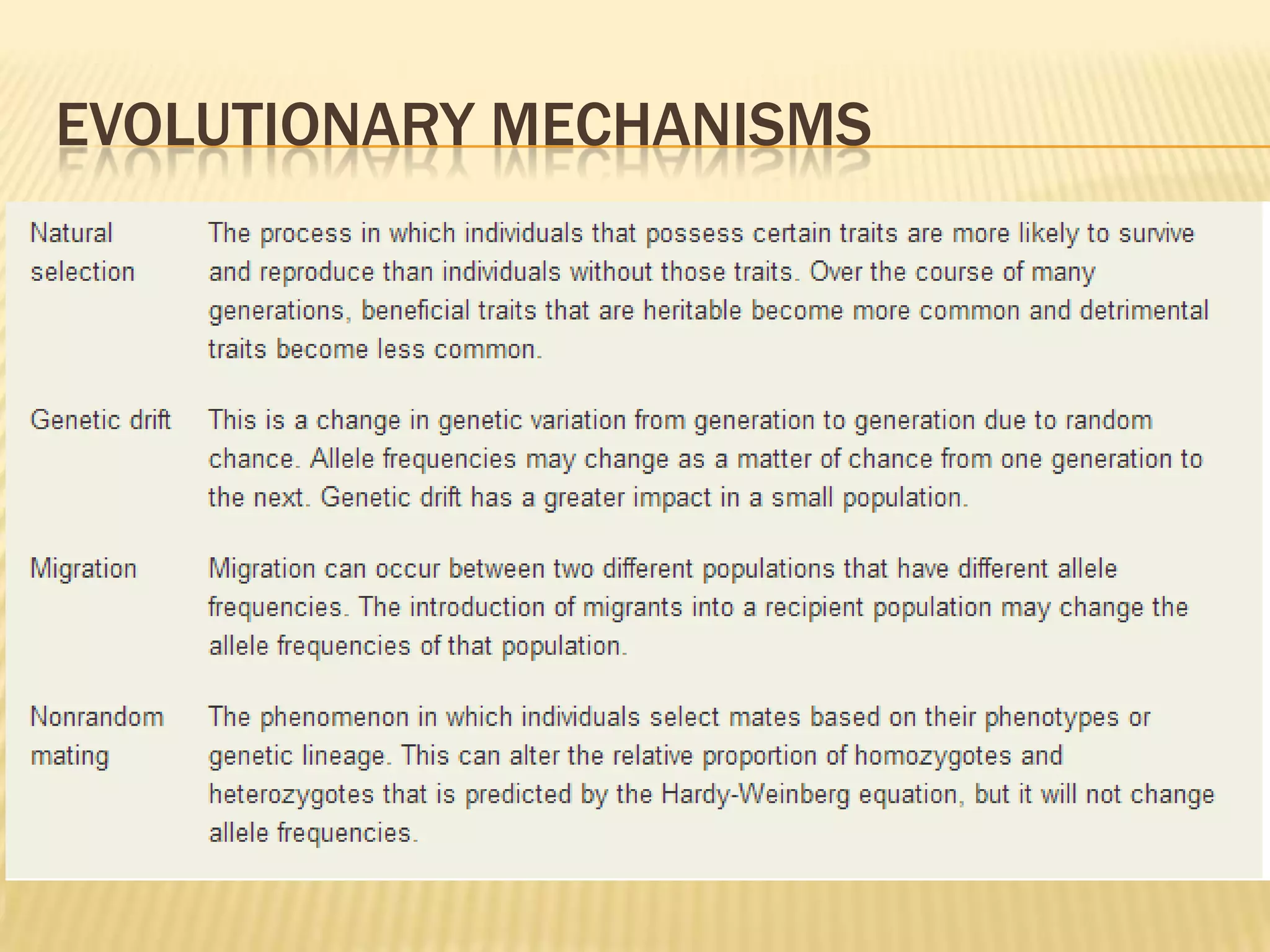
EVOLUTIONARY MECHANISMS

Section 24.1 Genes in Populations

  • 1.
    Section 24.1 LECTURE SLIDES Prepared by Ashish Murthy Raritan Valley Community College To run the animations you must be in Slideshow View. Use the buttons on the animation to play, pause, and turn audio/text on or off. Please note: once you have used any of the animation functions (such as Play or Pause), you must first click in the white background before you advance the next slide. Copyright © The McGraw-Hill Companies, Inc. Permission required for reproduction or display.
  • 2.
    SECTION 24.1 OUTLINE  Population Genetics  Gene Pools  Polymorphic/Monomorphic/SNP  Allele/Genotype Frequency*  Hardy Weinberg Principle*  Micro-Evolution*
  • 3.
    POPULATION GENETICS  The Study of Genes and Genotypes in a population  Population - a group of individuals of the same species that occupy the same environment (that can interbreed)  Genetic Variation  Genetic Variation related to Phenotypic Variation
  • 4.
    GENE POOLS  All of the alleles for every gene in a given population  Changes between Generations  Use to examine variation in alleles between individuals of a population
  • 5.
    DIFFERENT TYPES OFGENES  Polymorphic – 2 or more alleles for a single gene that occur at greater than 1% frequency  Monomorphic – 1 allele for a single gene occurs at greater than 99% frequency
  • 6.
    POLYMORPHISM  Single Nucleotide Polymorphism (SNP)  Sickle Cell Anemia  Deletion  Duplication
  • 7.
    ALLELE FREQUENCY  30Homozygous Dominant Humans (TT)  20 Heterozygous Humans (Tt)  10 Homozygous Recessive Humans (tt) Frequency of T: (30)(2) + 20 Frequency of t: (10)(2) + 20 (30+20+10)(2) (30+20+10)(2)
  • 8.
    GENOTYPE FREQUENCY  30Homozygous Dominant Humans (TT)  20 Heterozygous Humans (Tt)  10 Homozygous Recessive Humans (tt) Frequency of TT: 30 (30+20+10) Frequency of Tt: 20 Frequency of tt: 10 (30+20+10) (30+20+10)
  • 9.
    HARDY-WEINBERG PRINCIPLE  Relates Allele Frequency and Genotype Frequency  Developed in 1908  Godfrey Harold Hardy and Wilhelm Weinberg
  • 10.
    HARDY-WEINBERG VARIABLES If p= 0.4, then q = 0.6
  • 11.
  • 12.
  • 13.
    HARDY-WEINBERG EQUILIBRIUM  P= .8  Q = .2  = = .64  = . 32  = .04
  • 14.
    HARDY-WEINBERG ASSUMPTIONS  No new mutations  No natural selection  No random change in allele frequencies (large population)  No Migration  Random mating
  • 15.
    MICRO-EVOLUTION  Changes in a population’s gene pool  Allele Frequency changes  New Genetic Variation  Evolutionary Mechanisms
  • 16.
    SOURCES OF NEWGENETIC VARIATION
  • 17.