Ecology I. Introduction to ecology
Ecology The science of the study of the relationships between living things and their environment The environment could be : Biotic = other species Nonbiological (abiotic) = physical, chemical, geographical, geological factors
Ecological sciences General ecology Plant ecology, animal ecology, microbial ecology Environmental science Environmental protection and management Hydrobiology (water ecosystems) Limnology (freshwater ecosystems) Environmental geology and geography
Applications of ecology in medicine Medical ecology Preventive medicine (hygiene) Social medicine Epidemiology Toxicology Genotoxicology – deals with mutagenic effects of environmental factors Medical parasitology Medical microbiology Alergology Geographic medicine Medical geology
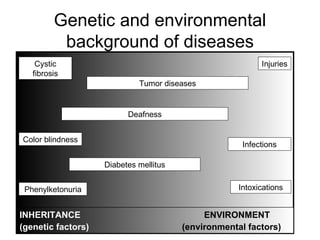
Genetic and environmental background of diseases INHERITANCE   ENVIRONMENT (genetic factors)   (environmental factors) Diabetes mellitus Tumor diseases Phenylketonuria Injuries Infections Cystic fibrosis Intoxications Color blindness Deafness
Basic ecological terms
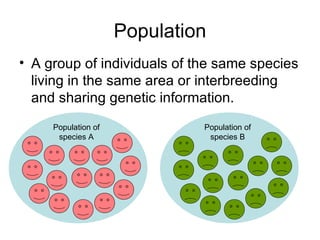
Population A group of individuals of the same species living in the same area or interbreeding and sharing genetic information. Population of species A Population of species  B
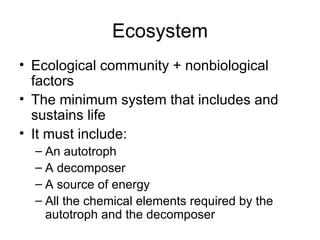
Ecosystem Ecological community + nonbiological factors The minimum system that includes and sustains life It must include: An autotroph A decomposer A source of energy All the chemical elements required by the autotroph and the decomposer
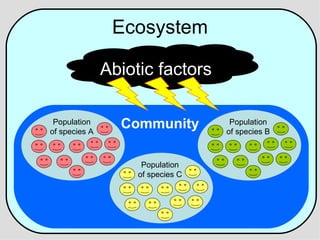
Ecosystem Abiotic factors Community  Population of species A Population of species B Population of species  C
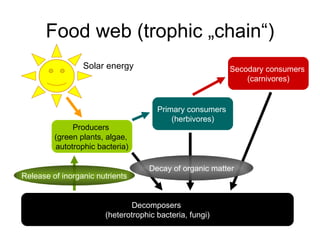
Food web (trophic „chain“) Producers  (green plants, algae,  autotrophic bacteria) Primary consumers  (herbivores) Secodary consumers  (carnivores) Decomposers  (heterotrophic bacteria, fungi) Decay of organic matter Release of inorganic nutrients Solar energy
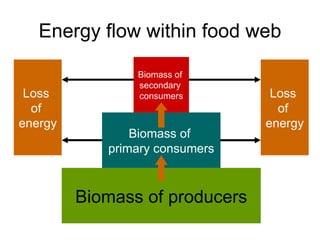
Energy flow within food web Biomass of producers Biomass of  primary consumers Loss  of  energy Loss  of  energy Biomass of  secondary  consumers
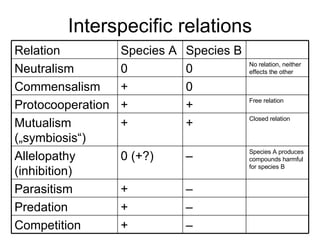
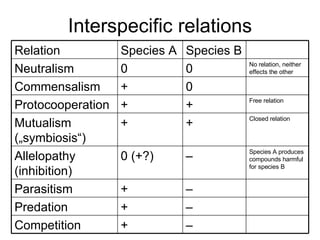
Interspecific relations – + Competition – + Predation – + Parasitism Species A produces compounds harmful for species B – 0 (+?) Allelopathy (inhibition) Closed relation + + Mutualism („symbiosis“) Free relation + + Protocooperation 0 + Commensalism  No relation, neither effects the other 0 0 Neutralism Species B Species A Relation
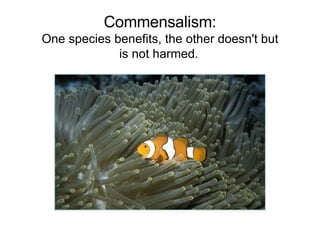
Commensalism: One species benefits, the other doesn't but is not harmed .
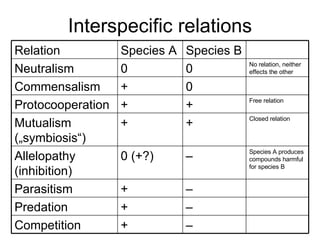
Interspecific relations – + Competition – + Predation – + Parasitism Species A produces compounds harmful for species B – 0 (+?) Allelopathy (inhibition) Closed relation + + Mutualism („symbiosis“) Free relation + + Protocooperation 0 + Commensalism  No relation, neither effects the other 0 0 Neutralism Species B Species A Relation
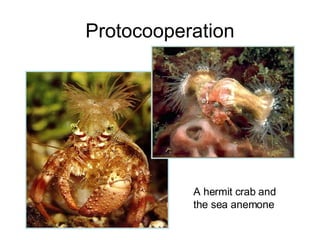
Protocooperation A hermit crab and the sea anemone
Interspecific relations – + Competition – + Predation – + Parasitism Species A produces compounds harmful for species B – 0 (+?) Allelopathy (inhibition) Closed relation + + Mutualism („symbiosis“) Free relation + + Protocooperation 0 + Commensalism  No relation, neither effects the other 0 0 Neutralism Species B Species A Relation
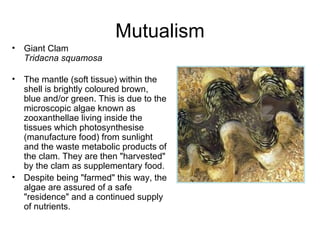
Mutualism Giant Clam Tridacna squamosa The mantle (soft tissue) within the shell is brightly coloured brown, blue and/or green. This is due to the microscopic algae known as zooxanthellae living inside the tissues which photosynthesise (manufacture food) from sunlight and the waste metabolic products of the clam. They are then "harvested" by the clam as supplementary food.  Despite being "farmed" this way, the algae are assured of a safe "residence" and a continued supply of nutrients.
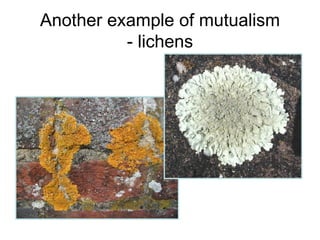
Another example of mutualism - lichens
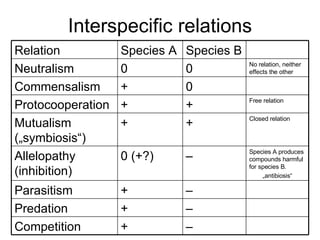
Interspecific relations – + Competition – + Predation – + Parasitism Species A produces compounds harmful for species B . „ antibiosis“ – 0 (+?) Allelopathy (inhibition) Closed relation + + Mutualism („symbiosis“) Free relation + + Protocooperation 0 + Commensalism  No relation, neither effects the other 0 0 Neutralism Species B Species A Relation
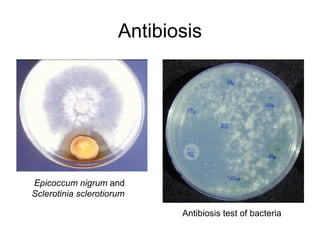
Antibiosis Epicoccum nigrum  and  Sclerotinia sclerotiorum   Antibiosis test of bacteria
Interspecific relations – + Competition – + Predation – + Parasitism Species A produces compounds harmful for species B . „ antibiosis“ – 0 (+?) Allelopathy (inhibition) Closed relation + + Mutualism („symbiosis“) Free relation + + Protocooperation 0 + Commensalism  No relation, neither effects the other 0 0 Neutralism Species B Species A Relation
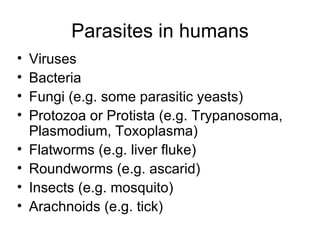
Parasites in humans Viruses Bacteria Fungi (e.g. some parasitic yeasts) Protozoa or Protista (e.g. Trypanosoma, Plasmodium, Toxoplasma) Flatworms (e.g. liver fluke) Roundworms (e.g. ascarid) Insects (e.g. mosquito) Arachnoids (e.g. tick)
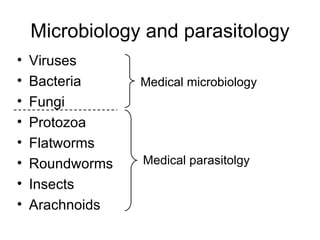
Microbiology and parasitology Viruses Bacteria Fungi Protozoa Flatworms Roundworms Insects Arachnoids Medical microbiology Medical parasitolgy
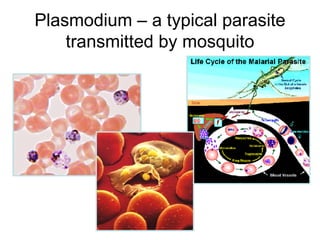
Plasmodium – a typical parasite transmitted by mosquito
See you next week! Practicals – a short test in basic ecology is not excluded!

Ecology1 Complete

  • 1.
  • 2.
    Ecology The scienceof the study of the relationships between living things and their environment The environment could be : Biotic = other species Nonbiological (abiotic) = physical, chemical, geographical, geological factors
  • 3.
    Ecological sciences Generalecology Plant ecology, animal ecology, microbial ecology Environmental science Environmental protection and management Hydrobiology (water ecosystems) Limnology (freshwater ecosystems) Environmental geology and geography
  • 4.
    Applications of ecologyin medicine Medical ecology Preventive medicine (hygiene) Social medicine Epidemiology Toxicology Genotoxicology – deals with mutagenic effects of environmental factors Medical parasitology Medical microbiology Alergology Geographic medicine Medical geology
  • 5.
    Genetic and environmentalbackground of diseases INHERITANCE ENVIRONMENT (genetic factors) (environmental factors) Diabetes mellitus Tumor diseases Phenylketonuria Injuries Infections Cystic fibrosis Intoxications Color blindness Deafness
  • 6.
  • 7.
    Population A groupof individuals of the same species living in the same area or interbreeding and sharing genetic information. Population of species A Population of species B
  • 8.
    Ecosystem Ecological community+ nonbiological factors The minimum system that includes and sustains life It must include: An autotroph A decomposer A source of energy All the chemical elements required by the autotroph and the decomposer
  • 9.
    Ecosystem Abiotic factorsCommunity Population of species A Population of species B Population of species C
  • 10.
    Food web (trophic„chain“) Producers (green plants, algae, autotrophic bacteria) Primary consumers (herbivores) Secodary consumers (carnivores) Decomposers (heterotrophic bacteria, fungi) Decay of organic matter Release of inorganic nutrients Solar energy
  • 11.
    Energy flow withinfood web Biomass of producers Biomass of primary consumers Loss of energy Loss of energy Biomass of secondary consumers
  • 12.
    Interspecific relations –+ Competition – + Predation – + Parasitism Species A produces compounds harmful for species B – 0 (+?) Allelopathy (inhibition) Closed relation + + Mutualism („symbiosis“) Free relation + + Protocooperation 0 + Commensalism No relation, neither effects the other 0 0 Neutralism Species B Species A Relation
  • 13.
    Commensalism: One speciesbenefits, the other doesn't but is not harmed .
  • 14.
    Interspecific relations –+ Competition – + Predation – + Parasitism Species A produces compounds harmful for species B – 0 (+?) Allelopathy (inhibition) Closed relation + + Mutualism („symbiosis“) Free relation + + Protocooperation 0 + Commensalism No relation, neither effects the other 0 0 Neutralism Species B Species A Relation
  • 15.
    Protocooperation A hermitcrab and the sea anemone
  • 16.
    Interspecific relations –+ Competition – + Predation – + Parasitism Species A produces compounds harmful for species B – 0 (+?) Allelopathy (inhibition) Closed relation + + Mutualism („symbiosis“) Free relation + + Protocooperation 0 + Commensalism No relation, neither effects the other 0 0 Neutralism Species B Species A Relation
  • 17.
    Mutualism Giant ClamTridacna squamosa The mantle (soft tissue) within the shell is brightly coloured brown, blue and/or green. This is due to the microscopic algae known as zooxanthellae living inside the tissues which photosynthesise (manufacture food) from sunlight and the waste metabolic products of the clam. They are then "harvested" by the clam as supplementary food. Despite being "farmed" this way, the algae are assured of a safe "residence" and a continued supply of nutrients.
  • 18.
    Another example ofmutualism - lichens
  • 19.
    Interspecific relations –+ Competition – + Predation – + Parasitism Species A produces compounds harmful for species B . „ antibiosis“ – 0 (+?) Allelopathy (inhibition) Closed relation + + Mutualism („symbiosis“) Free relation + + Protocooperation 0 + Commensalism No relation, neither effects the other 0 0 Neutralism Species B Species A Relation
  • 20.
    Antibiosis Epicoccum nigrum and Sclerotinia sclerotiorum Antibiosis test of bacteria
  • 21.
    Interspecific relations –+ Competition – + Predation – + Parasitism Species A produces compounds harmful for species B . „ antibiosis“ – 0 (+?) Allelopathy (inhibition) Closed relation + + Mutualism („symbiosis“) Free relation + + Protocooperation 0 + Commensalism No relation, neither effects the other 0 0 Neutralism Species B Species A Relation
  • 22.
    Parasites in humansViruses Bacteria Fungi (e.g. some parasitic yeasts) Protozoa or Protista (e.g. Trypanosoma, Plasmodium, Toxoplasma) Flatworms (e.g. liver fluke) Roundworms (e.g. ascarid) Insects (e.g. mosquito) Arachnoids (e.g. tick)
  • 23.
    Microbiology and parasitologyViruses Bacteria Fungi Protozoa Flatworms Roundworms Insects Arachnoids Medical microbiology Medical parasitolgy
  • 24.
    Plasmodium – atypical parasite transmitted by mosquito
  • 25.
    See you nextweek! Practicals – a short test in basic ecology is not excluded!