GENOMIC VARIATION
,PHYLOGENY AND
SYNTENY (GRASS
GENOME COMPARISON)
Presented by
Ashish sharma
Genomic variation
 “Variation”-a change or slight difference in condition, amount, or
level, typically within certain limits.
 “Genome”-the genome is the genetic material of an organism. It
consists of DNA (or RNA in RNA viruses). The genome includes
both the genes and the non-coding sequences of the DNA/RNA.
 Hence,
 genomic variation will defined as the slight difference in the whole
 Set of the sequence of the genetic material between two individual
beings
 Of whether same class of organism or in different class respectively
..
Example –
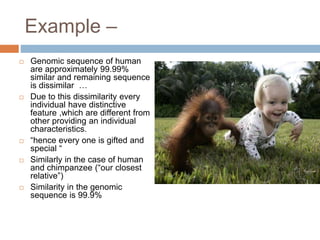
 Genomic sequence of human
are approximately 99.99%
similar and remaining sequence
is dissimilar …
 Due to this dissimilarity every
individual have distinctive
feature ,which are different from
other providing an individual
characteristics.
 “hence every one is gifted and
special “
 Similarly in the case of human
and chimpanzee (“our closest
relative”)
 Similarity in the genomic
sequence is 99.9%
Genomic variation includes
mutation and polymorphism.
 “Mutation ”-the mistakes which occurs occasionally during the
copying of the genomic sequence .which passes from one
generation of organism to another during the reproduction.
 When a mutation occurs in a sex cell—a sperm or an egg—it can
be passed along to the next generation of people. Your genome
contains about 100 "new" mutations
 “not every mutation is bad ”,but yes this is what makes you different
from other.
 “polymorphism”-the simultaneous occurring of in the population of
alleles showing variation at given position
 Polymorphism can occur in the single nucleotide base causing the
formation of the SNP(single nucleotide polymorphism) .
 The human genome contains more than 2 million SNPs.
Sites of variations
 Variations are found throughout the genome ,on
everyone of the 46 chromosome .
 Variation are not distributed evenly .
 Some parts of genome are the hotspot of
variability ,with 100s of possible variations.
 Some part of genome remains same , they are
said to be stable .
 Major variety found outside the genes ,that does
not effect the persons characteristics
say they are useless .
Why should we study genome
variation?
 genome variation consist many practical
application.
 These application include genome mapping ,
screening of genetic disease .
 Forensic technologies such as DNA
fingerprinting .
Phylogeny
 Phylogeny is the evolutionary history of a
species or group of related species
 The discipline classifies organisms and
determines their evolutionary relationships
 fossil, molecular, and genetic data are used to
infer evolutionary relationships
history
 In the 18th century, Carolus Linnaeus
published a system of taxonomy based upon
the similarity of the organism
 features of this system were: two-part names
for species and hierarchical classification
 Taxonomy is the ordered division and naming
of organisms
Phylogenetic tree
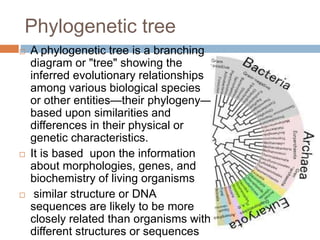
 A phylogenetic tree is a branching
diagram or "tree" showing the
inferred evolutionary relationships
among various biological species
or other entities—their phylogeny—
based upon similarities and
differences in their physical or
genetic characteristics.
 It is based upon the information
about morphologies, genes, and
biochemistry of living organisms
 similar structure or DNA
sequences are likely to be more
closely related than organisms with
different structures or sequences
Use of phylogeny
 We can find out the evolutionary relation
among organisms ,which are not slightly
visible from their physical appearance . For
example phylogentic relation of whale .
 Study in medical biology was able to be
modified by the help of phylogeny .example
considering the impact of HIV on the ancestral
species coming out to be that it was not
ancient .
Synteny
 The relationship between chromosomal region of
different species where homologous gene occur in same
order .
 We can say that the gene sequence present in a one
chromosome is matching with the gene location of other
chromsome .
 Sometimes, duplications of chromosomal segments
leads to syntenic regions within the genome of the same
species
 it has been found that closely related species have fairly
similar gene order on their chromosomes, leading to
large syntenic regions
Example
 Comparison in the mouse and human genome
sequence shows that more than 90% of the
genome lies under the syntenic block .
 Containing 342 syntenic segments .
 Syntenic relationship between mouse
chromosome and human chromosomal set ,21
segments in the mouse chromosome have
there syntenic counterparts in the human
chromosomal sets .
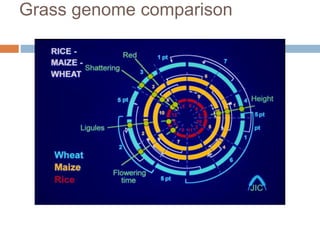
Grass genome comparison
 Genomes of the following crops are
represented according to their colour
respectively .
 Rice have the smallest genome size hence it
is place inside the circle .and wheat does have
the largest .
 Green dots are representing the syntenic
region lying in there specific position of the
chromosome of each species.

Genomic variation

  • 1.
    GENOMIC VARIATION ,PHYLOGENY AND SYNTENY(GRASS GENOME COMPARISON) Presented by Ashish sharma
  • 2.
    Genomic variation  “Variation”-achange or slight difference in condition, amount, or level, typically within certain limits.  “Genome”-the genome is the genetic material of an organism. It consists of DNA (or RNA in RNA viruses). The genome includes both the genes and the non-coding sequences of the DNA/RNA.  Hence,  genomic variation will defined as the slight difference in the whole  Set of the sequence of the genetic material between two individual beings  Of whether same class of organism or in different class respectively ..
  • 3.
    Example –  Genomicsequence of human are approximately 99.99% similar and remaining sequence is dissimilar …  Due to this dissimilarity every individual have distinctive feature ,which are different from other providing an individual characteristics.  “hence every one is gifted and special “  Similarly in the case of human and chimpanzee (“our closest relative”)  Similarity in the genomic sequence is 99.9%
  • 4.
    Genomic variation includes mutationand polymorphism.  “Mutation ”-the mistakes which occurs occasionally during the copying of the genomic sequence .which passes from one generation of organism to another during the reproduction.  When a mutation occurs in a sex cell—a sperm or an egg—it can be passed along to the next generation of people. Your genome contains about 100 "new" mutations  “not every mutation is bad ”,but yes this is what makes you different from other.  “polymorphism”-the simultaneous occurring of in the population of alleles showing variation at given position  Polymorphism can occur in the single nucleotide base causing the formation of the SNP(single nucleotide polymorphism) .  The human genome contains more than 2 million SNPs.
  • 5.
    Sites of variations Variations are found throughout the genome ,on everyone of the 46 chromosome .  Variation are not distributed evenly .  Some parts of genome are the hotspot of variability ,with 100s of possible variations.  Some part of genome remains same , they are said to be stable .  Major variety found outside the genes ,that does not effect the persons characteristics say they are useless .
  • 6.
    Why should westudy genome variation?  genome variation consist many practical application.  These application include genome mapping , screening of genetic disease .  Forensic technologies such as DNA fingerprinting .
  • 7.
    Phylogeny  Phylogeny isthe evolutionary history of a species or group of related species  The discipline classifies organisms and determines their evolutionary relationships  fossil, molecular, and genetic data are used to infer evolutionary relationships
  • 8.
    history  In the18th century, Carolus Linnaeus published a system of taxonomy based upon the similarity of the organism  features of this system were: two-part names for species and hierarchical classification  Taxonomy is the ordered division and naming of organisms
  • 9.
    Phylogenetic tree  Aphylogenetic tree is a branching diagram or "tree" showing the inferred evolutionary relationships among various biological species or other entities—their phylogeny— based upon similarities and differences in their physical or genetic characteristics.  It is based upon the information about morphologies, genes, and biochemistry of living organisms  similar structure or DNA sequences are likely to be more closely related than organisms with different structures or sequences
  • 10.
    Use of phylogeny We can find out the evolutionary relation among organisms ,which are not slightly visible from their physical appearance . For example phylogentic relation of whale .  Study in medical biology was able to be modified by the help of phylogeny .example considering the impact of HIV on the ancestral species coming out to be that it was not ancient .
  • 11.
    Synteny  The relationshipbetween chromosomal region of different species where homologous gene occur in same order .  We can say that the gene sequence present in a one chromosome is matching with the gene location of other chromsome .  Sometimes, duplications of chromosomal segments leads to syntenic regions within the genome of the same species  it has been found that closely related species have fairly similar gene order on their chromosomes, leading to large syntenic regions
  • 12.
    Example  Comparison inthe mouse and human genome sequence shows that more than 90% of the genome lies under the syntenic block .  Containing 342 syntenic segments .  Syntenic relationship between mouse chromosome and human chromosomal set ,21 segments in the mouse chromosome have there syntenic counterparts in the human chromosomal sets .
  • 13.
  • 14.
     Genomes ofthe following crops are represented according to their colour respectively .  Rice have the smallest genome size hence it is place inside the circle .and wheat does have the largest .  Green dots are representing the syntenic region lying in there specific position of the chromosome of each species.