INTRODUCTION ECOLOGY
KEYWORDS Ecology ecosystem pioneer species Biosphere biotic factor climax community Species abiotic factor biome Population niche autotroph Community ecological succession heterotroph
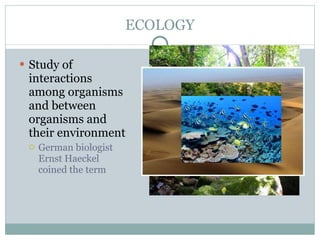
ECOLOGY Study of interactions among organisms and between organisms and their environment German biologist Ernst Haeckel coined the term
RECALL HBO What are levels under the HBO? How does energy flow from one level to another?
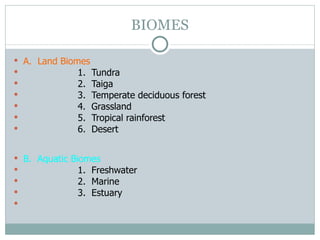
BIOMES A.  Land Biomes 1.  Tundra 2.  Taiga 3.  Temperate deciduous forest 4.  Grassland 5.  Tropical rainforest 6.  Desert B.  Aquatic Biomes 1.  Freshwater  2.  Marine 3.  Estuary
BIOMES Have the same climate and similar dominant community Interplay between the abiotic and biotic factors
Ecological niche The role or job of an organism in its environment As simple as producer or consumer Keystone species or sentinel species
Ecological succession -  the sequence of communities that develops in an area from the initial stages of colonization until a stable  climax   community   is achieved
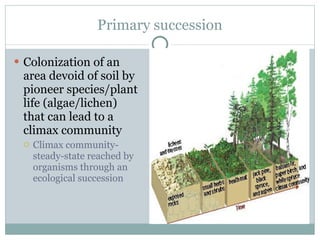
Primary succession Colonization of an area devoid of soil by pioneer species/plant life (algae/lichen) that can lead to a climax community  Climax community- steady-state reached by organisms through an ecological succession
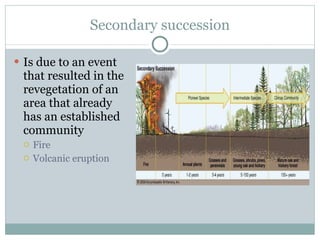
Secondary succession Is due to an event that resulted in the revegetation of an area that already has an established community Fire Volcanic eruption
Ecological Succession  Is present in terrestrial and aquatic environment
Flow of energy Recall: trophic levels- producers, consumers Feeding relationships: food chains, food webs Ecological pyramids Energy Biomass numbers
Energy pyramid No limit in the trophic level in a food chain BUT, energy decreases once it is passed from one level to another due to life processes 10% is transferred from level to another
Biomass pyramid Biomass- the amount of living tissue within a given trophic level  Biomass pyramid- amount of potential food available for each trophic level in an ecosystem  Can be an inverted pyramid such as in the case of the rain forest
Pyramid of numbers Amount or number of organisms at each trophic level not always represent a pyramid such as in a rainforest
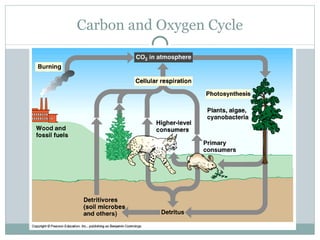
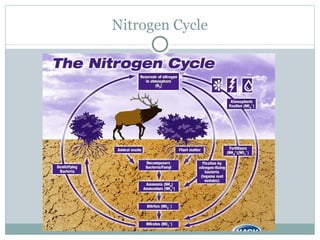
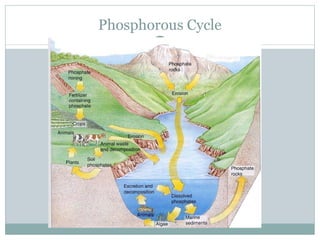
Cycles of Matter  Energy has a one-way flow, matter is recycled Recycling happens through the biogeochemical cycles Water Carbon Nitrogen Phosphorous
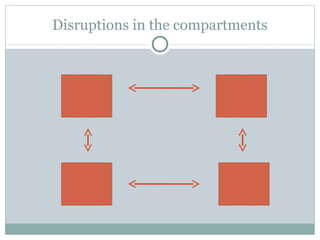
Disruptions in the compartments
Nutrient limitation Primary productivity- rate at which organic matter is created by producers Limiting nutrient- a nutrient that limits the productivity of an ecosystem NPK An  aquatic environment  is considered a  nutrient poor  ecosystem compared to  land
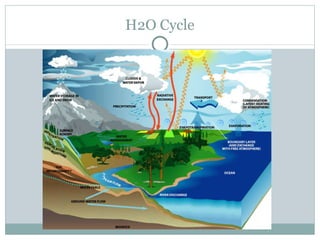
H2O Cycle
Carbon and Oxygen Cycle
Nitrogen Cycle
Phosphorous Cycle
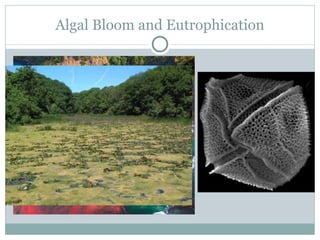
Algal Bloom and Eutrophication
Niche  Full range of physical and biological conditions an organism lives and the way the organism uses these conditions Biotic- place in the food chain Abiotic- temperature, moisture range for survival
Community interactions Competition Competitive exclusion principle Predation Symbiosis- any relationship in which two species live closely together Mutualism Commensalism Parasitism – sometimes considered as predation
Competitive exclusion principle

Ecology intro

  • 1.
  • 2.
    KEYWORDS Ecology ecosystempioneer species Biosphere biotic factor climax community Species abiotic factor biome Population niche autotroph Community ecological succession heterotroph
  • 3.
    ECOLOGY Study ofinteractions among organisms and between organisms and their environment German biologist Ernst Haeckel coined the term
  • 4.
    RECALL HBO Whatare levels under the HBO? How does energy flow from one level to another?
  • 5.
    BIOMES A. Land Biomes 1. Tundra 2. Taiga 3. Temperate deciduous forest 4. Grassland 5. Tropical rainforest 6. Desert B. Aquatic Biomes 1. Freshwater 2. Marine 3. Estuary
  • 6.
    BIOMES Have thesame climate and similar dominant community Interplay between the abiotic and biotic factors
  • 7.
    Ecological niche Therole or job of an organism in its environment As simple as producer or consumer Keystone species or sentinel species
  • 8.
    Ecological succession - the sequence of communities that develops in an area from the initial stages of colonization until a stable climax community is achieved
  • 9.
    Primary succession Colonizationof an area devoid of soil by pioneer species/plant life (algae/lichen) that can lead to a climax community Climax community- steady-state reached by organisms through an ecological succession
  • 10.
    Secondary succession Isdue to an event that resulted in the revegetation of an area that already has an established community Fire Volcanic eruption
  • 11.
    Ecological Succession Is present in terrestrial and aquatic environment
  • 12.
    Flow of energyRecall: trophic levels- producers, consumers Feeding relationships: food chains, food webs Ecological pyramids Energy Biomass numbers
  • 13.
    Energy pyramid Nolimit in the trophic level in a food chain BUT, energy decreases once it is passed from one level to another due to life processes 10% is transferred from level to another
  • 14.
    Biomass pyramid Biomass-the amount of living tissue within a given trophic level Biomass pyramid- amount of potential food available for each trophic level in an ecosystem Can be an inverted pyramid such as in the case of the rain forest
  • 15.
    Pyramid of numbersAmount or number of organisms at each trophic level not always represent a pyramid such as in a rainforest
  • 16.
    Cycles of Matter Energy has a one-way flow, matter is recycled Recycling happens through the biogeochemical cycles Water Carbon Nitrogen Phosphorous
  • 17.
    Disruptions in thecompartments
  • 18.
    Nutrient limitation Primaryproductivity- rate at which organic matter is created by producers Limiting nutrient- a nutrient that limits the productivity of an ecosystem NPK An aquatic environment is considered a nutrient poor ecosystem compared to land
  • 19.
  • 20.
  • 21.
  • 22.
  • 23.
    Algal Bloom andEutrophication
  • 24.
    Niche Fullrange of physical and biological conditions an organism lives and the way the organism uses these conditions Biotic- place in the food chain Abiotic- temperature, moisture range for survival
  • 25.
    Community interactions CompetitionCompetitive exclusion principle Predation Symbiosis- any relationship in which two species live closely together Mutualism Commensalism Parasitism – sometimes considered as predation
  • 26.