What factors
affect
ecosystems?
Do plants and animals
need each other to survive?
Yes
Plants and animals
Living parts of the ecosystem
The living parts are called
BIOTIC FACTORS
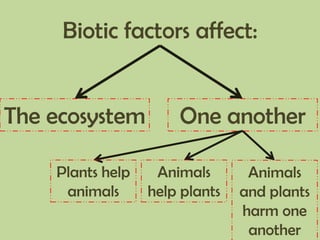
Biotic factors affect:
The ecosystem One another
Plants help
animals
Animals
help plants
Animals
and plants
harm one
another
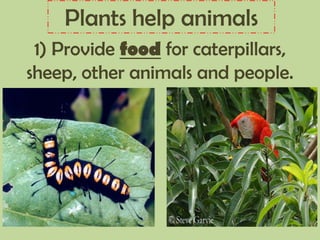
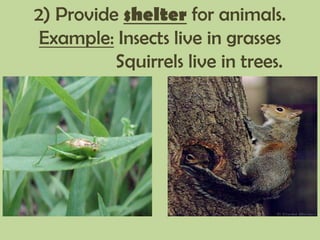
Plants help animals
1) Provide food for caterpillars,
sheep, other animals and people.
2) Provide shelter for animals.
Example: Insects live in grasses
Squirrels live in trees.
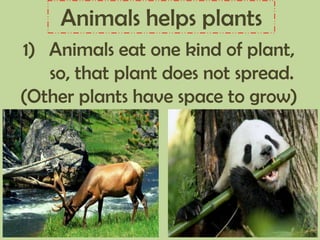
Animals helps plants
1) Animals eat one kind of plant,
so, that plant does not spread.
(Other plants have space to grow)
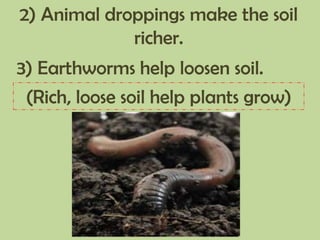
2) Animal droppings make the soil
richer.
3) Earthworms help loosen soil.
(Rich, loose soil help plants grow)
Animals and plants harm
one another.
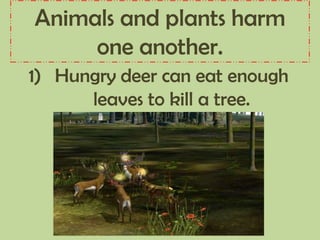
1) Hungry deer can eat enough
leaves to kill a tree.
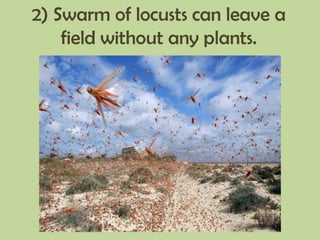
2) Swarm of locusts can leave a
field without any plants.
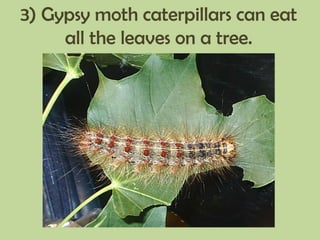
3) Gypsy moth caterpillars can eat
all the leaves on a tree.
1) Wolves eat rabbits.
If the wolf population becomes too
large what would happen to the
rabbits?
They can eat all the rabbits.
Animals affect one another
What would happen to the wolves
if there were no more rabbits?
The wolves would go hungry and
might even die.
What would happen to the grass in
that area without the rabbits to
eat them?
The grass would spread.
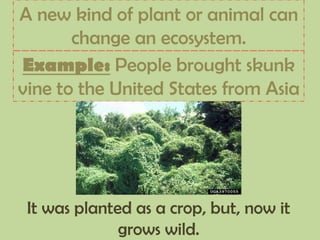
A new kind of plant or animal can
change an ecosystem.
Example: People brought skunk
vine to the United States from Asia
It was planted as a crop, but, now it
grows wild.
Sunlight, air, water, soil and
climate
Non-Living parts of the
ecosystem
The non- living parts are
called ABIOTIC FACTORS
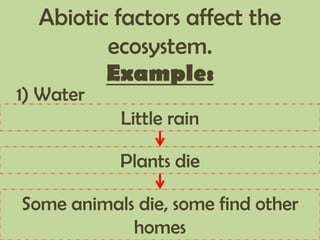
Abiotic factors affect the
ecosystem.
Example:
1) Water
Little rain
Plants die
Some animals die, some find other
homes
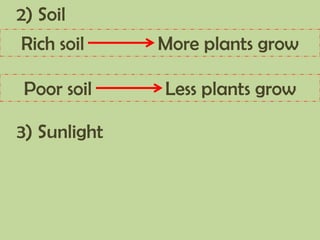
2) Soil
Rich soil More plants grow
Poor soil Less plants grow
3) Sunlight
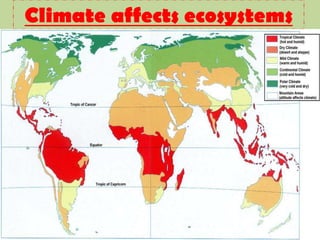
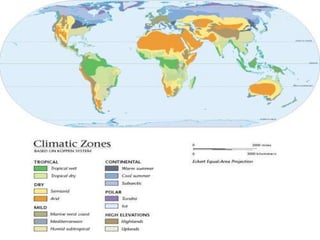
Climate affects ecosystems
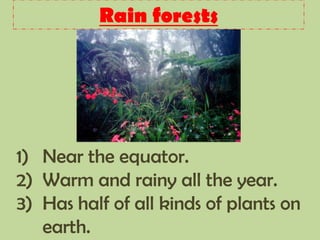
Rain forests
1) Near the equator.
2) Warm and rainy all the year.
3) Has half of all kinds of plants on
earth.
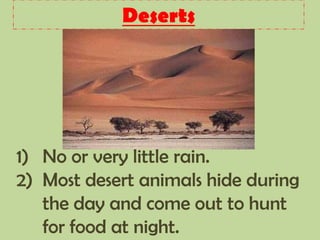
Deserts
1) No or very little rain.
2) Most desert animals hide during
the day and come out to hunt
for food at night.
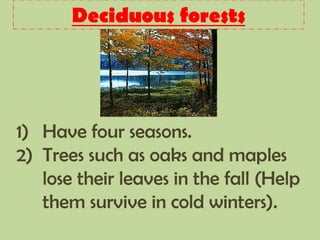
Deciduous forests
1) Have four seasons.
2) Trees such as oaks and maples
lose their leaves in the fall (Help
them survive in cold winters).
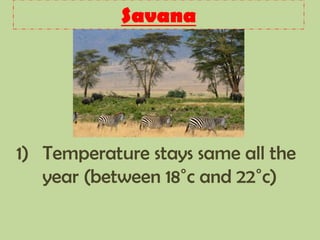
Savana
1) Temperature stays same all the
year (between 18˚c and 22˚c)
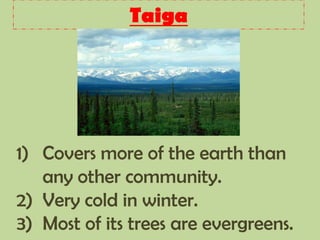
Taiga
1) Covers more of the earth than
any other community.
2) Very cold in winter.
3) Most of its trees are evergreens.
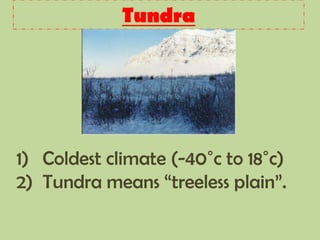
Tundra
1) Coldest climate (-40˚c to 18˚c)
2) Tundra means “treeless plain”.
Diversity
The number of different
kinds of living things.
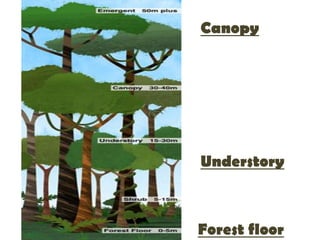
Forest floor
Understory
Canopy

What factors influence ecosystems