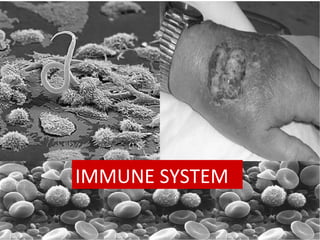
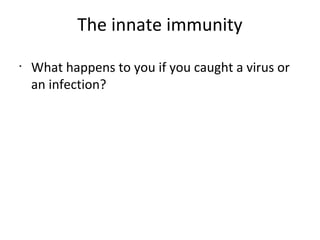
IMMUNE SYSTEM
The immune system
•
What is the main function of the immune
system?
•
What is a pathogen?
The defense mechanisms
•
1st line vs 2nd line vs 3rd line of defenses
Give the function of these cells
•
Monocytes APC coelomocytes
•
Macrophages Basophil
•
Neutrophil Eosinophil
•
Mast cell NK cell
•
Cytokine cytotoxic T cell
•
effector cell helper T cell
•
memory cell suppressor T cell
The chemicals and others
•
Perforin Chemokine
•
Interferon antibody
•
Antigen antigen receptor
•
Cd4 Cd8
•
Histamine Interleukin
•
Lysozyme prostaglandins
•
Pyrogens Rh factor
The innate immunity
•
What happens to you if you caught a virus or
an infection?
Inflammation and Sepsis
•
Release of histamines (pathogen/self cell)
•
Dilation and inc permeability of BV
(prostaglandin)
•
Increased blood flow
•
Inflammation (redness and swelling)
Phagocytic cells
•
Neutrophils are first to arrive
•
Macrophages will also arrive
Chemokines
•
Messenger chemical
•
Attracts phagocytic cells
•
Activation of lysozyme action
Severe infection
•
Fever is an immune response to severe
infection
–
Can be caused by the pathogens
–
May be due to pyrogens released by some
leukocytes
–
Can facilitate phagocytosis
Septic shock- high fever, hypotension
Antimicrobial proteins
•
Proteins that attack microbes or stall
reproduction of microbes
•
Lysozyme is an example
•
Also, presence of the complement system
–
Made up of 20 serum proteins
–
Action: lysis or attraction of phagocytic cells
–
Is also part of specific immune response
Interferons
–
Secreted by virus-infected cells
–
Neighboring cells are stimulated to produce
chemicals that can inhibit viral infection
–
Not virus-specific
–
A specific type of interferon activates phagocytes
Self vs Non-self
•
Have you asked yourselves the question who
am I?
Self vs Non-self
•
Lymphocytes react on special surface
glycoproteins encoded by genes called Major
Histocompatibilty Complex (MHC)
•
In Humans, Human Leukocyte Antigens (HLA)
•
Class I MHC- Almost all nucleated cells
•
Class II MHC- macrophages, B cells, activated T
cells, cell in the interior of the thymus
Varies from one person to another
Specific immunity: the third line of
defense
•
Lymphocytes- cells responsible for the specific
immune response
•
There are two types: B cells and T cells (NK cells
another type)
•
Antigen- molecules that elicit specific response
from lymphocyte
–
E.g. Molecules from bacteria, fungi, virus, parasitic
worms
•
Antigens activate B cell in producing antibodies
Recognition of antigens by B cells
and T cells
•
Specificity is possible because of membrane-
bound antigen receptor
•
B cell antigen receptor- transmembrane version
of antibodies
–
Also called membrane antibodies
•
T cell antigen receptor- called T cell receptor
–
Structurally related to membrane antibodies
–
T cell receptor never released in secreted form
Clonal selection
Clonal selection
•
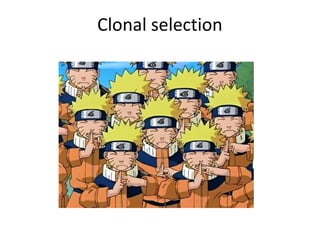
Antigen binds to a specific antigen receptor (B
cell)
•
B cell produces its clone
•
Some B cells become plasma cells (short-lived)
that can secrete antibodies to the specific
antigen
–
Plasma cells- also called effector cells
•
Some B cells become memory cells (long-lived)
for re-exposure to the antigen
Immunological memory
•
Primary immune response- selective
proliferation and differentiation of lymphocytes
upon first exposure
–
10-17 days to develop maximum effector cells
–
Selected B cells and T cells produce their respective
effector cells
Immunological memory
•
Secondary immune response- re-exposure to
the same antigen
–
response is faster, greater magnitude, more
prolonged
–
Also, more antibodies are produced
–
Antibodies have greater affinity to the antigens
–
Secondary response is called immunological
memory
Graph showing immunological
memory
Lymphocyte development
•
All blood cells develop from pluripotent cells
•
Lymphocytes also develop from pluripotent
cells
•
T cells- mature in the thymus
•
B cells- mature in the bone marrow
Immune tolerance for self
•
Maturing lymphocytes’ antigen receptors are
rendered non-functional
•
If antigen receptors cannot be switched off,
lymphocytes undergo apoptosis
The other cells....
•
Cytotoxic T cells- kill cells through lysis
•
Helper T cells- bind to antigen cell and secretes
cytokine
•
Antigen-presenting cells (APCs)- engulf bacteria
(virus) and present fragment of these
pathogens to other lymphocytes
Humoral response and cell-mediated
response
•
Humoral immunity- involves B cell activation,
production of antibodies in blood plasma and
lymph called humor
•
Cell-mediated immunity- action of T cells
Overview of humoral response
•
Macrophage engulfs the pathogen
•
Class II MHC binds to fragment of pathogen
•
MHC-antigen complex is presented by the
phagocytic cell
•
A helper T cell with specific receptor for the
antigen makes contact with the macrophage
and releases cytokines
Overview of humoral response
•
Activated T cell presents the antigen to a B cell
•
Cytokines activates the B cell
•
Activated B cells differentiate into plasma and
memory cells
•
Plasma cells will produce the specific antibodies
Cell-mediated immune response
•
Occurs when antigen displayed by APC activates
Cytotoxic T cell
•
Cytotoxic cell can differentiate to Memory T
cells or active cytotoxic T cells
•
Active against cancer cells and pathogens
•
Kills these cell through lysis
Antibodies
•
Do not destroy antigens directly
•
Rather, neutralizes it or present it as a target for
opsonization, agglutination, precipitation, or
complement fixation, neutralization
Antibodies
•
Opsonization- coating of antigens by antibodies
to facilitate phagocytos
•
Neutralization- binds to the antigen and
inactivates it
•
Agglutination- clumping of bacteria or virus to
effectively neutralize or opsonize it
•
Complement fixation or precipitation- immune
adherence occurs
–
Microbes coated with antibodies and complement
The ABO blood type
•
A and B are the antigens
•
Type A has antigen A and antibody B
•
Type B has antigen B and antibody A
•
Type AB has both antigen but no antibody
•
Type O has no antigen but has both antibody

IgM not IgG
Rh Factor

IgG can cross the placenta

++ = +

+- = +

- - = -
Passive vs Active

Passive

short-lived

Active

Natural vs artificial
Immunodeficiency vs Autoimmune
disease

Immune 20132014 (1)

  • 1.
  • 2.
    The immune system • Whatis the main function of the immune system? • What is a pathogen?
  • 3.
    The defense mechanisms • 1stline vs 2nd line vs 3rd line of defenses
  • 4.
    Give the functionof these cells • Monocytes APC coelomocytes • Macrophages Basophil • Neutrophil Eosinophil • Mast cell NK cell • Cytokine cytotoxic T cell • effector cell helper T cell • memory cell suppressor T cell
  • 5.
    The chemicals andothers • Perforin Chemokine • Interferon antibody • Antigen antigen receptor • Cd4 Cd8 • Histamine Interleukin • Lysozyme prostaglandins • Pyrogens Rh factor
  • 6.
    The innate immunity • Whathappens to you if you caught a virus or an infection?
  • 7.
    Inflammation and Sepsis • Releaseof histamines (pathogen/self cell) • Dilation and inc permeability of BV (prostaglandin) • Increased blood flow • Inflammation (redness and swelling)
  • 8.
    Phagocytic cells • Neutrophils arefirst to arrive • Macrophages will also arrive
  • 9.
    Chemokines • Messenger chemical • Attracts phagocyticcells • Activation of lysozyme action
  • 10.
    Severe infection • Fever isan immune response to severe infection – Can be caused by the pathogens – May be due to pyrogens released by some leukocytes – Can facilitate phagocytosis Septic shock- high fever, hypotension
  • 11.
    Antimicrobial proteins • Proteins thatattack microbes or stall reproduction of microbes • Lysozyme is an example • Also, presence of the complement system – Made up of 20 serum proteins – Action: lysis or attraction of phagocytic cells – Is also part of specific immune response
  • 12.
    Interferons – Secreted by virus-infectedcells – Neighboring cells are stimulated to produce chemicals that can inhibit viral infection – Not virus-specific – A specific type of interferon activates phagocytes
  • 13.
    Self vs Non-self • Haveyou asked yourselves the question who am I?
  • 14.
    Self vs Non-self • Lymphocytesreact on special surface glycoproteins encoded by genes called Major Histocompatibilty Complex (MHC) • In Humans, Human Leukocyte Antigens (HLA) • Class I MHC- Almost all nucleated cells • Class II MHC- macrophages, B cells, activated T cells, cell in the interior of the thymus Varies from one person to another
  • 15.
    Specific immunity: thethird line of defense • Lymphocytes- cells responsible for the specific immune response • There are two types: B cells and T cells (NK cells another type) • Antigen- molecules that elicit specific response from lymphocyte – E.g. Molecules from bacteria, fungi, virus, parasitic worms • Antigens activate B cell in producing antibodies
  • 17.
    Recognition of antigensby B cells and T cells • Specificity is possible because of membrane- bound antigen receptor • B cell antigen receptor- transmembrane version of antibodies – Also called membrane antibodies • T cell antigen receptor- called T cell receptor – Structurally related to membrane antibodies – T cell receptor never released in secreted form
  • 18.
  • 19.
    Clonal selection • Antigen bindsto a specific antigen receptor (B cell) • B cell produces its clone • Some B cells become plasma cells (short-lived) that can secrete antibodies to the specific antigen – Plasma cells- also called effector cells • Some B cells become memory cells (long-lived) for re-exposure to the antigen
  • 20.
    Immunological memory • Primary immuneresponse- selective proliferation and differentiation of lymphocytes upon first exposure – 10-17 days to develop maximum effector cells – Selected B cells and T cells produce their respective effector cells
  • 21.
    Immunological memory • Secondary immuneresponse- re-exposure to the same antigen – response is faster, greater magnitude, more prolonged – Also, more antibodies are produced – Antibodies have greater affinity to the antigens – Secondary response is called immunological memory
  • 22.
  • 23.
    Lymphocyte development • All bloodcells develop from pluripotent cells • Lymphocytes also develop from pluripotent cells • T cells- mature in the thymus • B cells- mature in the bone marrow
  • 24.
    Immune tolerance forself • Maturing lymphocytes’ antigen receptors are rendered non-functional • If antigen receptors cannot be switched off, lymphocytes undergo apoptosis
  • 25.
    The other cells.... • CytotoxicT cells- kill cells through lysis • Helper T cells- bind to antigen cell and secretes cytokine • Antigen-presenting cells (APCs)- engulf bacteria (virus) and present fragment of these pathogens to other lymphocytes
  • 26.
    Humoral response andcell-mediated response • Humoral immunity- involves B cell activation, production of antibodies in blood plasma and lymph called humor • Cell-mediated immunity- action of T cells
  • 27.
    Overview of humoralresponse • Macrophage engulfs the pathogen • Class II MHC binds to fragment of pathogen • MHC-antigen complex is presented by the phagocytic cell • A helper T cell with specific receptor for the antigen makes contact with the macrophage and releases cytokines
  • 28.
    Overview of humoralresponse • Activated T cell presents the antigen to a B cell • Cytokines activates the B cell • Activated B cells differentiate into plasma and memory cells • Plasma cells will produce the specific antibodies
  • 29.
    Cell-mediated immune response • Occurswhen antigen displayed by APC activates Cytotoxic T cell • Cytotoxic cell can differentiate to Memory T cells or active cytotoxic T cells • Active against cancer cells and pathogens • Kills these cell through lysis
  • 30.
    Antibodies • Do not destroyantigens directly • Rather, neutralizes it or present it as a target for opsonization, agglutination, precipitation, or complement fixation, neutralization
  • 31.
    Antibodies • Opsonization- coating ofantigens by antibodies to facilitate phagocytos • Neutralization- binds to the antigen and inactivates it • Agglutination- clumping of bacteria or virus to effectively neutralize or opsonize it • Complement fixation or precipitation- immune adherence occurs – Microbes coated with antibodies and complement
  • 32.
    The ABO bloodtype • A and B are the antigens • Type A has antigen A and antibody B • Type B has antigen B and antibody A • Type AB has both antigen but no antibody • Type O has no antigen but has both antibody  IgM not IgG
  • 33.
    Rh Factor  IgG cancross the placenta  ++ = +  +- = +  - - = -
  • 34.
  • 35.

Editor's Notes

  • #14 Self recognition is important in an immune response Presence of receptors/markers in pathogens that enter the body Very efficient, even undigested proteins are considered as antigens
  • #18 Single lymphocyte has ~100,000 receptors for antigen Differentiation of unspecialized lymphocytes gives rise to diversity of the antibody or receptor Makes it possible to respond to different pathogens
  • #21 Re-exposure- response is faster, greater magnitude and more prolonged