
ECOSYSTEMS
CATEGORIES
OF
ECOSYSTEM
The ecosystem which is found only on
landforms
 The main factor which differentiates the
terrestrial ecosystems from the aquatic
ecosystems is the relative shortage of water in
the terrestrial ecosystems and as a result the
importance that water attains in these
ecosystems due to its limited availability.
The main types of terrestrial
ecosystems are:
 the forest ecosystems
the desert ecosystems
the grassland ecosystems
and the mountain ecosystems.
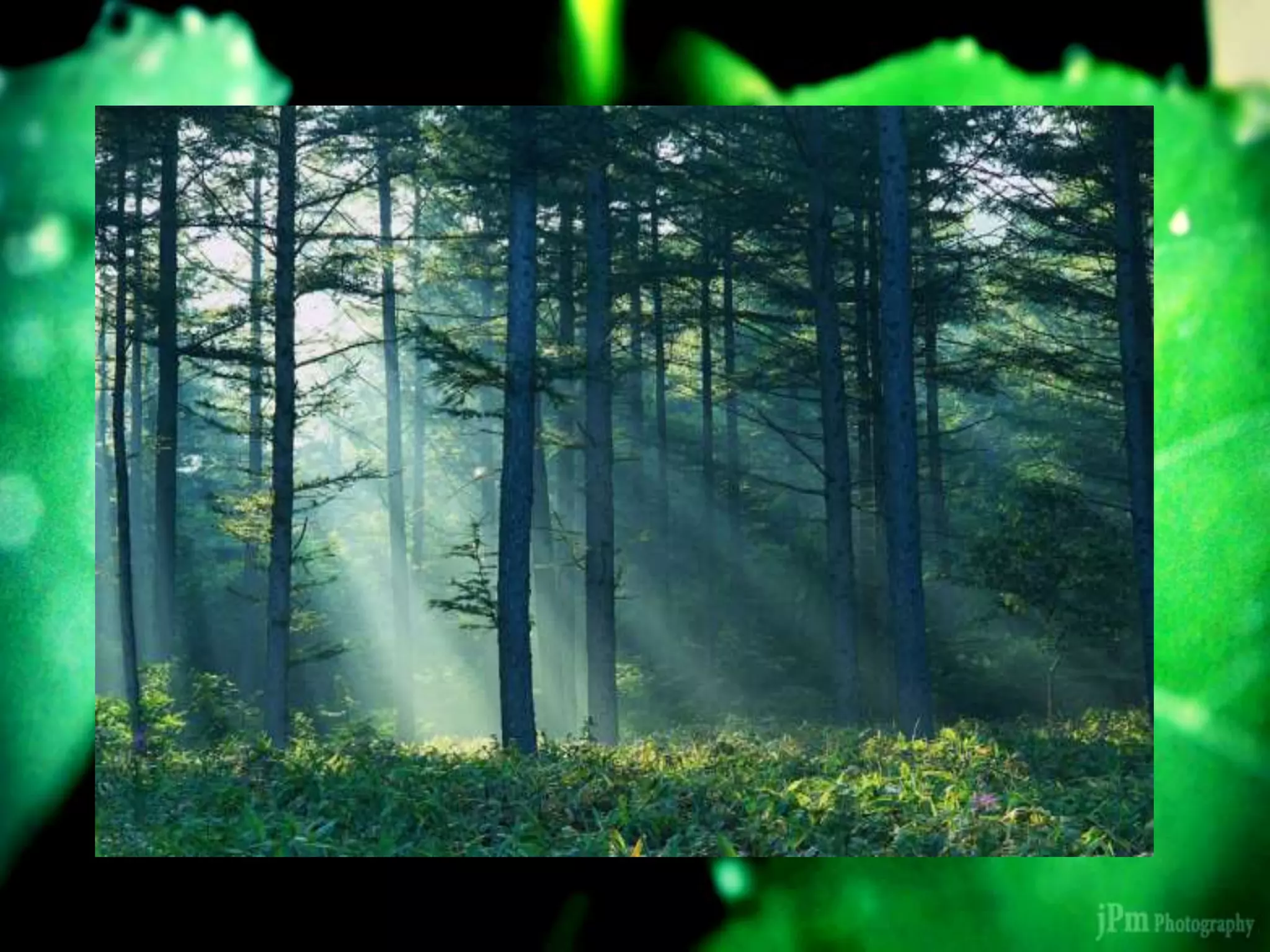
FOREST ECOSYSTEM
have an abundance of flora or plants and
hence in these ecosystems a large
number of organisms live in a small space.
have a high density of living organisms.
A small change in this ecosystem could
affect the whole balance, effectively
bringing down the whole ecosystem.
They are further
divided into…….
Tropical evergreen forest
Receive a mean rainfall of 80 for
every 400 inches annually.
Dense vegetation which
comprises tall trees at different
heights. Each level is shelter to
different types of animals.
Tropical deciduous forest
There, shrubs and dense bushes rule
along with a broad selection of trees.
Found in quite a few parts of the
world while a large variety of fauna
and flora are found there.
These forests grow in moderately
warm places where there is a lot of
rain.
Temperate evergreen forest
 Those have quite a few number of
trees as mosses and ferns make up
for them.
Trees have developed spiked leaves
in order to minimize transpiration.
Temperate deciduous forest
 The forest is located in the moist
temperate places that have sufficient
rainfall.
Summers and winters are clearly
defined and the trees shed the leaves
during the winter months.
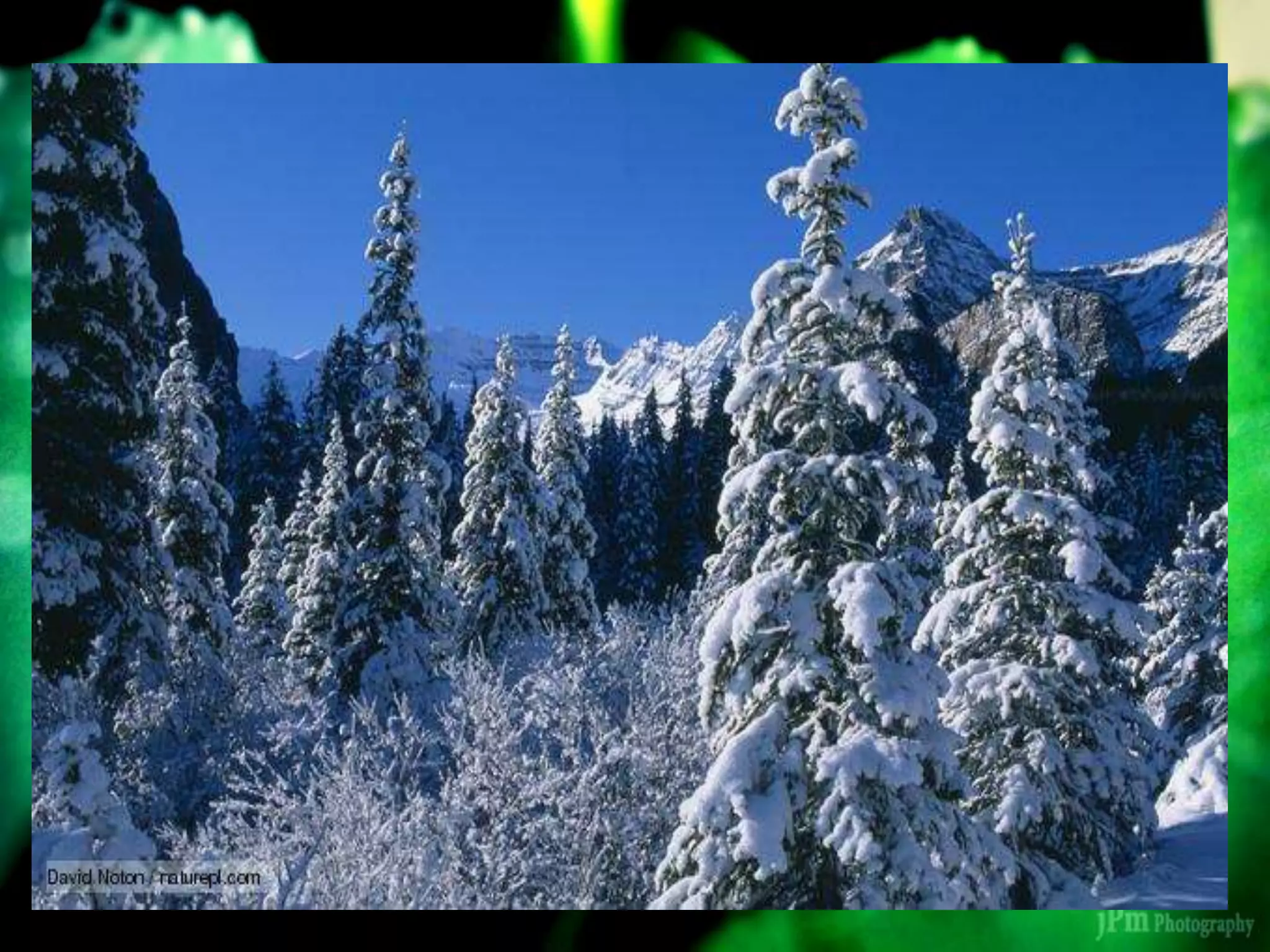
Taiga
The taiga is defined by evergreen
conifers. As the temperature is below
zero for almost half a year, the
remainder of the months, it buzzes
with migratory birds and insects.
gdf
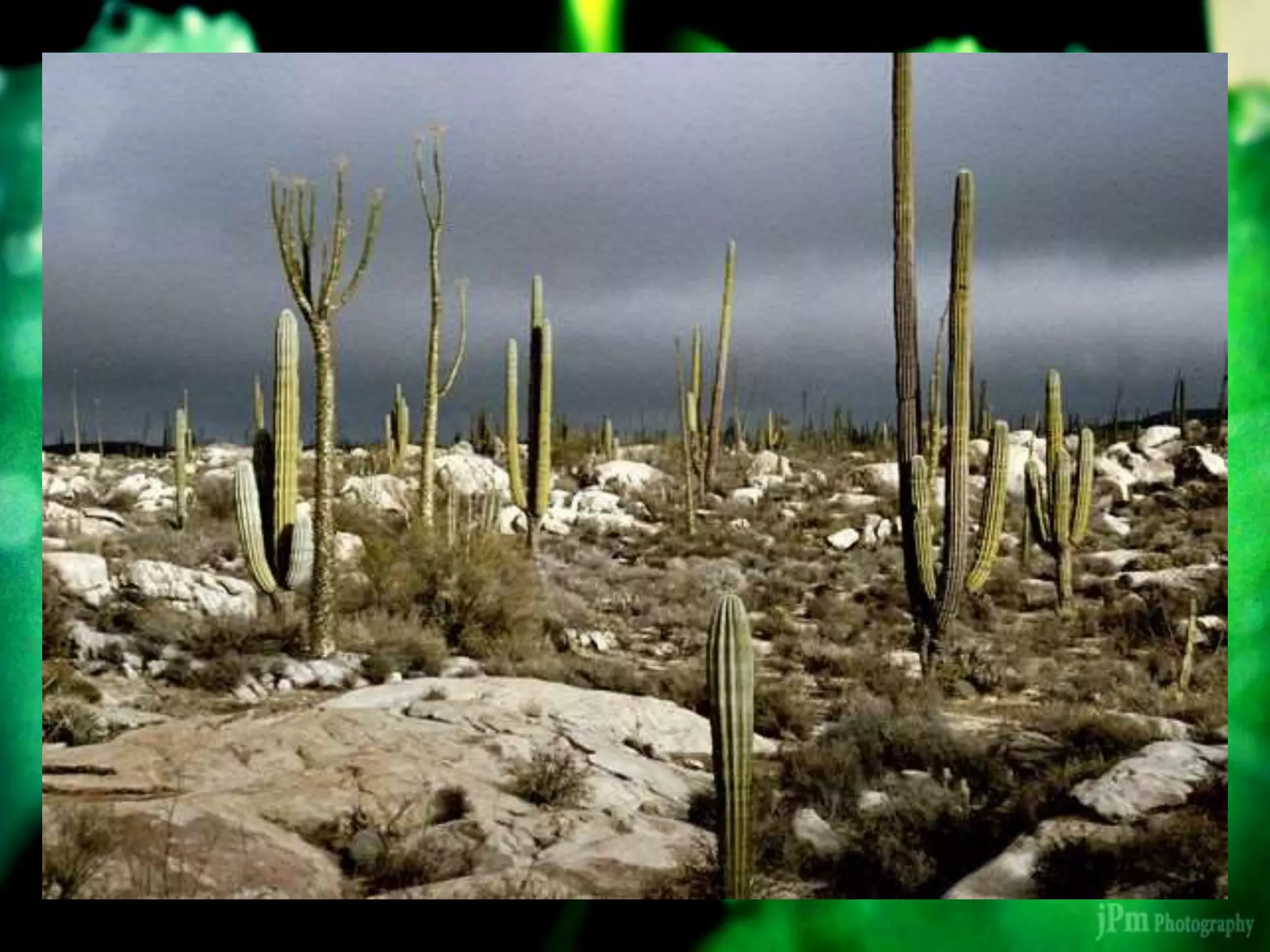
Desert Ecosystem
Located in regions that receive an
annual rainfall less than 25.
17 percent of all the land on our
planet.
 insects, birds, camels, reptiles all of
which are adapted to the desert
(xeric) conditions.
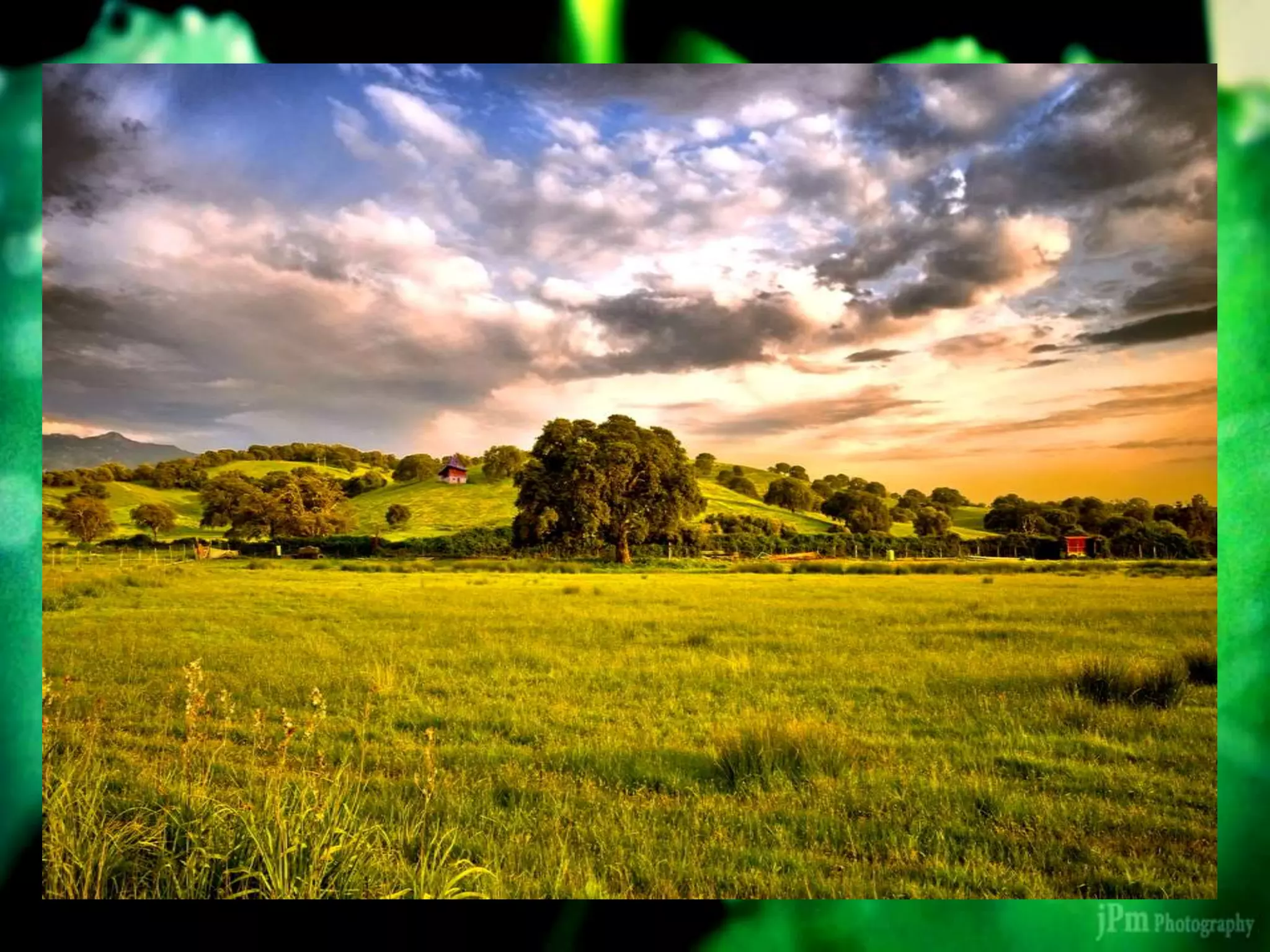
Grassland Ecosystem
both the tropical and temperate
regions of the world though the
ecosystems vary slightly.
little number of trees and shrubs.
The main vegetation includes
grasses, plants and legumes that
belong to the composite family.
The two main kinds of grasslands
ecosystems are:
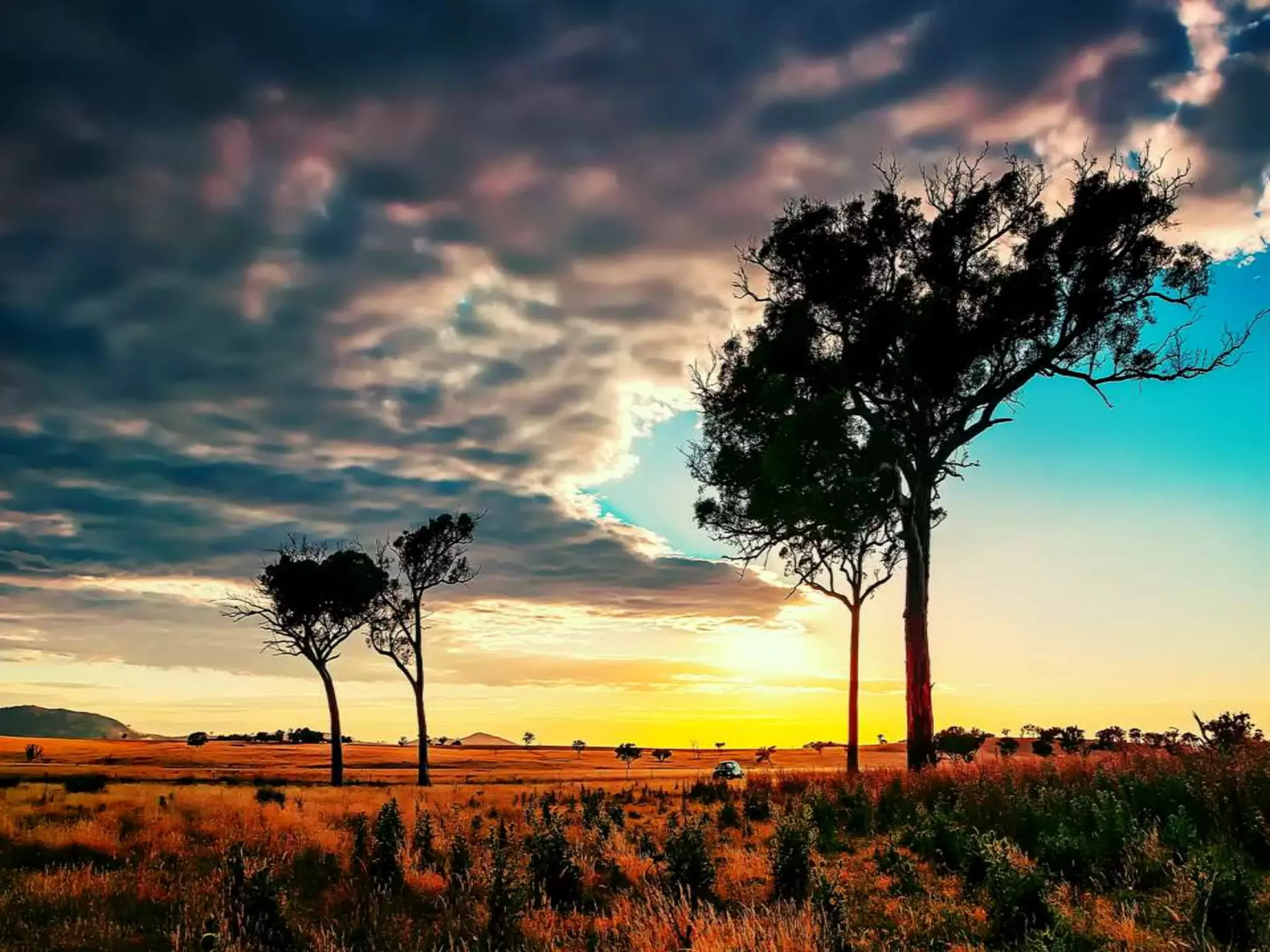
Savanna:
The tropical grasslands are dry
seasonally and have few individual
trees. They support a large
number of predators and grazers.
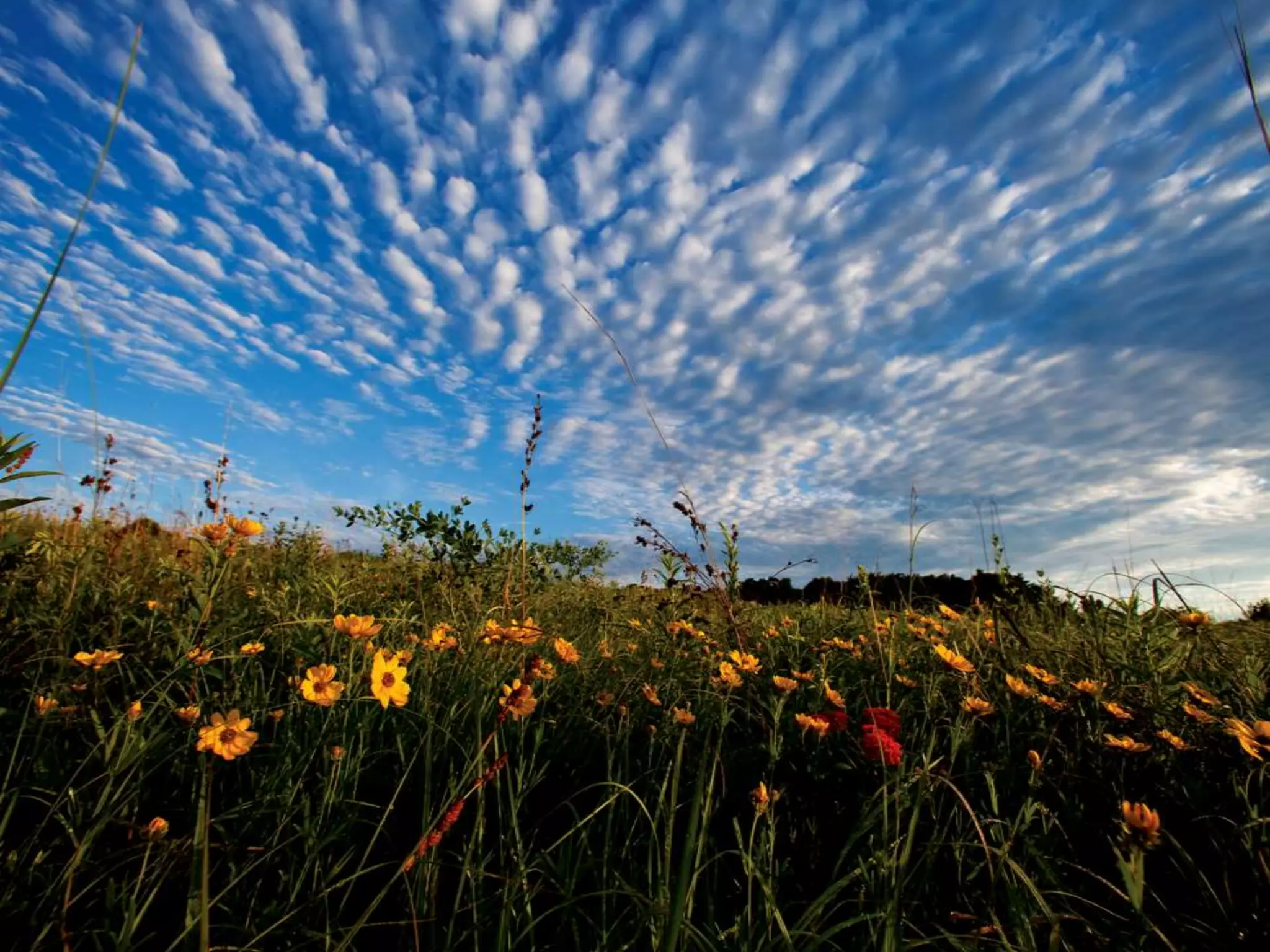
1.Prairies: It is temperate grassland, completely devoid of large shrubs and trees. Prairies could be categorized as mixed grass, tall grass and short g
Prairies
It is temperate grassland,
completely devoid of large
shrubs and trees. Prairies
could be categorized as mixed
grass, tall grass and short
grass prairies.
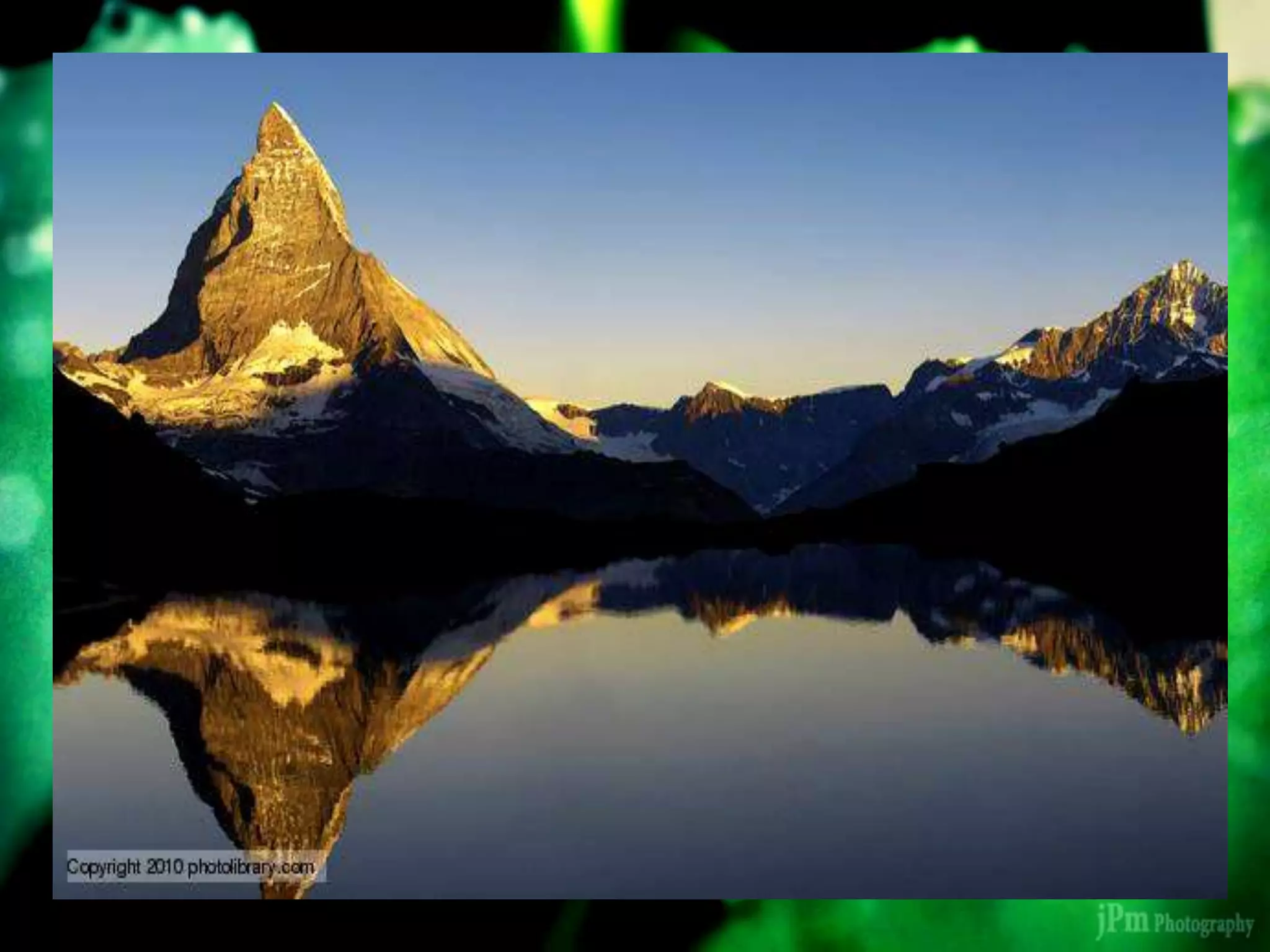
Mountain Ecosystem
Provides a scattered and diverse
array of habitats where a large
number of animals and plants can be
found.
At the higher altitudes, the harsh
environmental conditions normally
prevail, and only the treeless alpine
vegetation can survive.
Aquatic Ecosystems
The ecosystem found in a body of
water. It encompasses aquatic flora,
fauna and water properties, as well.
 There are two main types of aquatic
ecosystem - Marine and Freshwater.
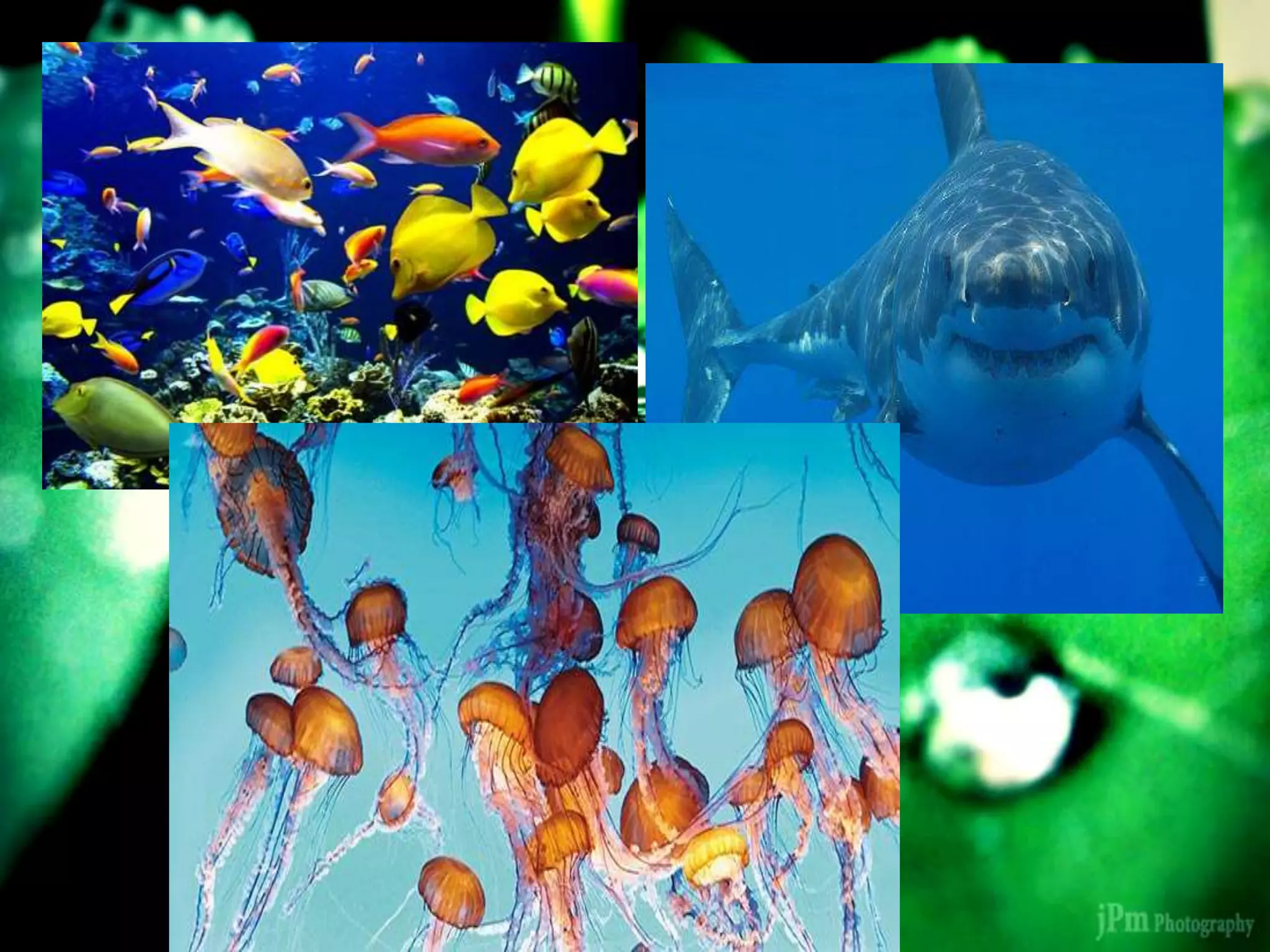
Marine Ecosystem
The biggest ecosystems, which cover
around 71% of Earth's surface and
contain 97% of out planet's water.
Water in Marine ecosystems features
in high amounts minerals and salts
dissolved in them.

Freshwater Ecosystem
The freshwater ecosystem covers
only 0.8% of Earth's surface and
contains 0.009% of the total water.
Most lakes and ponds are freshwater
ecosystems. The water in each of
these ecosystems does not move
much.
Three basic kinds of freshwater
ecosystems exist:
Lentic: Slow-moving or till water like
pools, lakes or ponds.
Lotic: Fast-moving water such as
streams and rivers.
Wetlands: Places in which the soil is
inundated or saturated for some lenghty
period of time.
Relationships between organisms
Ecological Relationships
the effects organisms in a
community have on one another.
All living things on the earth are
connected in some way.
Mimicry
a similarity of one species to another
which protects one or both.
This similarity can be in appearance,
behaviour, sound, scent or location.
 Mimics are found in the same areas
as their models.
Is related to camouflage, in which a
species resembles its surroundings or
is otherwise difficult to detect.
an animal will MIMIC another to
avoid predators. If it can trick its
enemy into thinking it is something
less tasty or more dangerous, it will
survive.
Classification
Batesian mimicry, where a harmless
mimic poses as harmful
Müllerian mimicry, where two or
more harmful species mutually advertise
themselves as harmful
Mertensian mimicry, where a deadly
mimic resembles a less harmful but
lesson-teaching model.
Vavilovian mimicry, where weeds
resemble crops, is important for several
reasons; and humans are the agent of
selection.
Aggressive mimicry describes preda
-tors which share the same characte -
ristics as a harmless species, allowing
them to avoid detection by their prey
Reproductive mimicry occurs when
the actions of the dupe directly aid in the
mimic's reproduction.
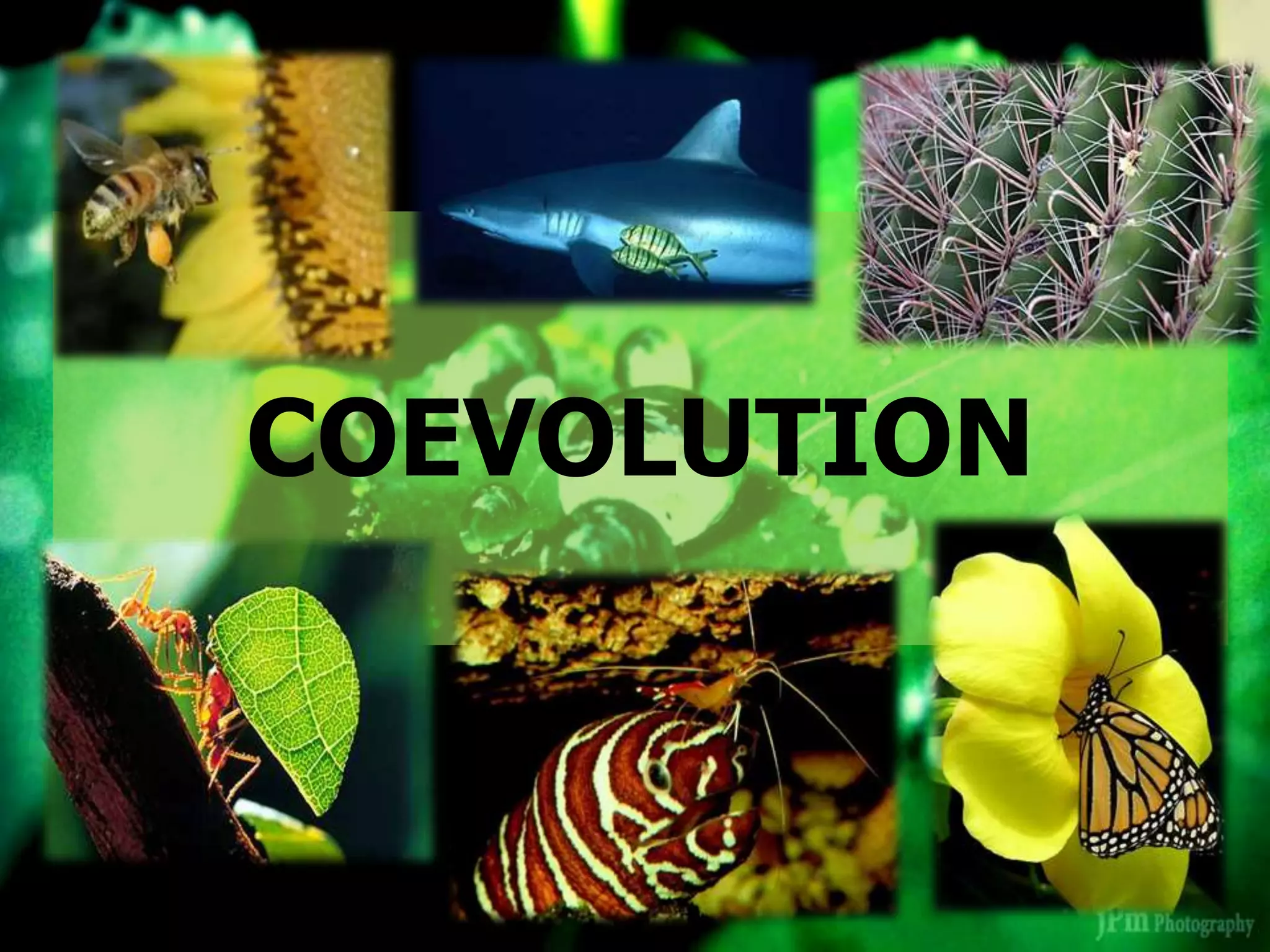
COEVOLUTION
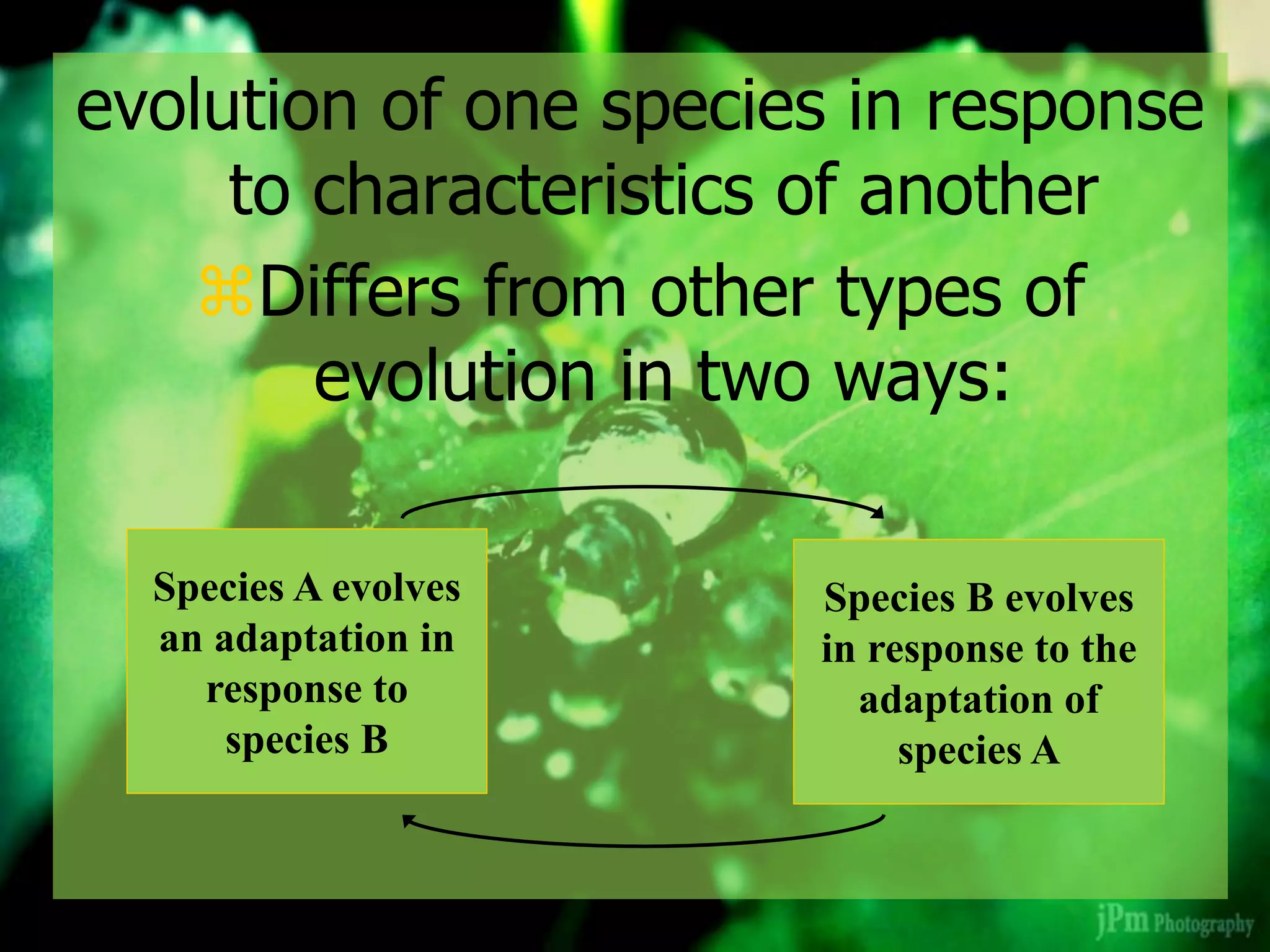
evolution of one species in response
to characteristics of another
Differs from other types of
evolution in two ways:
Species A evolves
an adaptation in
response to
species B
Species B evolves
in response to the
adaptation of
species A
Coevolution involves mutual
responses in the two species
predator species evolves to be
faster, allowing it to catch more
results in greater selection on speed
in the prey
for “regular” evolution, there isn’t any
response by the environment
Coevolution promotes diversity
of adaptations
evolution often converges on the
same solution for the same
problems
coevolution involves specific,
unique responses to specific
challenges
Interactions categorized by
effect
Neutralism
relationship between two species
that interact but do not affect
each other.
It describes interactions where
the health of one species has
absolutely no effect whatsoever
on that of the other.
Amensalism
An interaction where an
organism inflicts harm to another
organism without any costs or
benefits received by the other.
Antagonism
antagonistic interactions, one
species benefits at the expense of
another.
COMMENSALISM
One organism and the other
organism is neither benefited nor
harmed.
 It occurs when one organism
takes benefits by interacting with
another organism by which the
host organism is not affected.
Interactions classified by
mechanism……..
Symbiosis
 The term symbiosis (Greek: living
together) can be used to describe various
degrees of close relationship between
organisms of different species.
an intimate relationship between different
species in which at least one species
depends upon the relationship to survive.
PARASITISM
 In parasitism, one organism
benefits and the other is harmed.
The organism that benefits
is called the parasite
The organism that is
harmed is called the host
COMPETITION
occurs when two or more individuals
seek to utilize the same resource.
defined as an interaction between
organisms or species, in which the
fitness of one is lowered by the
presence of another.
Competition between species at
the same trophic level of an
ecosystem, who have common
predators, increases drastically if
the frequency of the common
predator in the community is
decreased by a large margin.
COOPERATION
the act of working or acting
together
Mutualism
both organisms benefit from
one another.
Mutualism is an interaction
between two or more species,
where species derive a mutual
benefit
For example: A clownfish and a
sea anemone have a
mutualistic relationship.
 The fish is protected by the
anemone and the anemone
receives scraps of food from the
clownfish.
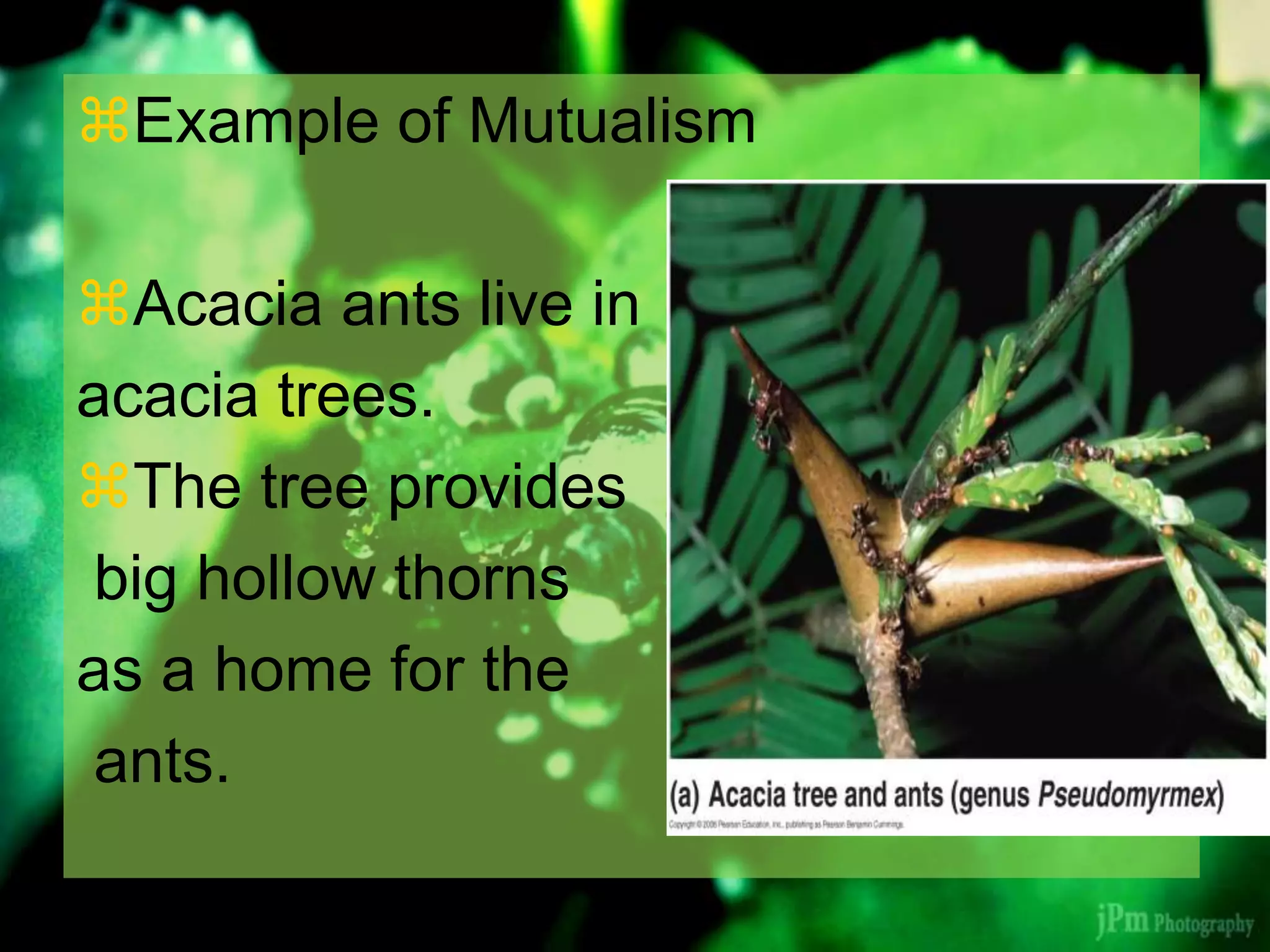
Example of Mutualism
Acacia ants live in
acacia trees.
The tree provides
big hollow thorns
as a home for the
ants.
THE END

Ecosystems

  • 1.
  • 2.
  • 3.
    The ecosystem whichis found only on landforms  The main factor which differentiates the terrestrial ecosystems from the aquatic ecosystems is the relative shortage of water in the terrestrial ecosystems and as a result the importance that water attains in these ecosystems due to its limited availability.
  • 4.
    The main typesof terrestrial ecosystems are:  the forest ecosystems the desert ecosystems the grassland ecosystems and the mountain ecosystems.
  • 9.
    FOREST ECOSYSTEM have anabundance of flora or plants and hence in these ecosystems a large number of organisms live in a small space. have a high density of living organisms. A small change in this ecosystem could affect the whole balance, effectively bringing down the whole ecosystem.
  • 10.
  • 11.
    Tropical evergreen forest Receivea mean rainfall of 80 for every 400 inches annually. Dense vegetation which comprises tall trees at different heights. Each level is shelter to different types of animals.
  • 12.
    Tropical deciduous forest There,shrubs and dense bushes rule along with a broad selection of trees. Found in quite a few parts of the world while a large variety of fauna and flora are found there. These forests grow in moderately warm places where there is a lot of rain.
  • 13.
    Temperate evergreen forest Those have quite a few number of trees as mosses and ferns make up for them. Trees have developed spiked leaves in order to minimize transpiration.
  • 14.
    Temperate deciduous forest The forest is located in the moist temperate places that have sufficient rainfall. Summers and winters are clearly defined and the trees shed the leaves during the winter months.
  • 15.
    Taiga The taiga isdefined by evergreen conifers. As the temperature is below zero for almost half a year, the remainder of the months, it buzzes with migratory birds and insects.
  • 16.
  • 17.
    Desert Ecosystem Located inregions that receive an annual rainfall less than 25. 17 percent of all the land on our planet.  insects, birds, camels, reptiles all of which are adapted to the desert (xeric) conditions.
  • 18.
    Grassland Ecosystem both thetropical and temperate regions of the world though the ecosystems vary slightly. little number of trees and shrubs. The main vegetation includes grasses, plants and legumes that belong to the composite family.
  • 19.
    The two mainkinds of grasslands ecosystems are: Savanna: The tropical grasslands are dry seasonally and have few individual trees. They support a large number of predators and grazers. 1.Prairies: It is temperate grassland, completely devoid of large shrubs and trees. Prairies could be categorized as mixed grass, tall grass and short g
  • 21.
    Prairies It is temperategrassland, completely devoid of large shrubs and trees. Prairies could be categorized as mixed grass, tall grass and short grass prairies.
  • 23.
    Mountain Ecosystem Provides ascattered and diverse array of habitats where a large number of animals and plants can be found. At the higher altitudes, the harsh environmental conditions normally prevail, and only the treeless alpine vegetation can survive.
  • 24.
    Aquatic Ecosystems The ecosystemfound in a body of water. It encompasses aquatic flora, fauna and water properties, as well.  There are two main types of aquatic ecosystem - Marine and Freshwater.
  • 26.
    Marine Ecosystem The biggestecosystems, which cover around 71% of Earth's surface and contain 97% of out planet's water. Water in Marine ecosystems features in high amounts minerals and salts dissolved in them. 
  • 28.
    Freshwater Ecosystem The freshwaterecosystem covers only 0.8% of Earth's surface and contains 0.009% of the total water. Most lakes and ponds are freshwater ecosystems. The water in each of these ecosystems does not move much.
  • 30.
    Three basic kindsof freshwater ecosystems exist: Lentic: Slow-moving or till water like pools, lakes or ponds. Lotic: Fast-moving water such as streams and rivers. Wetlands: Places in which the soil is inundated or saturated for some lenghty period of time.
  • 31.
  • 32.
    Ecological Relationships the effectsorganisms in a community have on one another. All living things on the earth are connected in some way.
  • 33.
    Mimicry a similarity ofone species to another which protects one or both. This similarity can be in appearance, behaviour, sound, scent or location.  Mimics are found in the same areas as their models.
  • 34.
    Is related tocamouflage, in which a species resembles its surroundings or is otherwise difficult to detect. an animal will MIMIC another to avoid predators. If it can trick its enemy into thinking it is something less tasty or more dangerous, it will survive.
  • 35.
    Classification Batesian mimicry, wherea harmless mimic poses as harmful Müllerian mimicry, where two or more harmful species mutually advertise themselves as harmful Mertensian mimicry, where a deadly mimic resembles a less harmful but lesson-teaching model.
  • 36.
    Vavilovian mimicry, whereweeds resemble crops, is important for several reasons; and humans are the agent of selection. Aggressive mimicry describes preda -tors which share the same characte - ristics as a harmless species, allowing them to avoid detection by their prey Reproductive mimicry occurs when the actions of the dupe directly aid in the mimic's reproduction.
  • 37.
  • 38.
    evolution of onespecies in response to characteristics of another Differs from other types of evolution in two ways: Species A evolves an adaptation in response to species B Species B evolves in response to the adaptation of species A
  • 39.
    Coevolution involves mutual responsesin the two species predator species evolves to be faster, allowing it to catch more results in greater selection on speed in the prey for “regular” evolution, there isn’t any response by the environment
  • 40.
    Coevolution promotes diversity ofadaptations evolution often converges on the same solution for the same problems coevolution involves specific, unique responses to specific challenges
  • 41.
  • 42.
    Neutralism relationship between twospecies that interact but do not affect each other. It describes interactions where the health of one species has absolutely no effect whatsoever on that of the other.
  • 43.
    Amensalism An interaction wherean organism inflicts harm to another organism without any costs or benefits received by the other.
  • 44.
    Antagonism antagonistic interactions, one speciesbenefits at the expense of another.
  • 45.
    COMMENSALISM One organism andthe other organism is neither benefited nor harmed.  It occurs when one organism takes benefits by interacting with another organism by which the host organism is not affected.
  • 46.
  • 47.
    Symbiosis  The termsymbiosis (Greek: living together) can be used to describe various degrees of close relationship between organisms of different species. an intimate relationship between different species in which at least one species depends upon the relationship to survive.
  • 48.
    PARASITISM  In parasitism,one organism benefits and the other is harmed. The organism that benefits is called the parasite The organism that is harmed is called the host
  • 49.
    COMPETITION occurs when twoor more individuals seek to utilize the same resource. defined as an interaction between organisms or species, in which the fitness of one is lowered by the presence of another.
  • 50.
    Competition between speciesat the same trophic level of an ecosystem, who have common predators, increases drastically if the frequency of the common predator in the community is decreased by a large margin.
  • 51.
    COOPERATION the act ofworking or acting together
  • 52.
    Mutualism both organisms benefitfrom one another. Mutualism is an interaction between two or more species, where species derive a mutual benefit
  • 53.
    For example: Aclownfish and a sea anemone have a mutualistic relationship.  The fish is protected by the anemone and the anemone receives scraps of food from the clownfish.
  • 54.
    Example of Mutualism Acaciaants live in acacia trees. The tree provides big hollow thorns as a home for the ants.
  • 55.