Walk Thru The Biomes
and Ecology Part 2
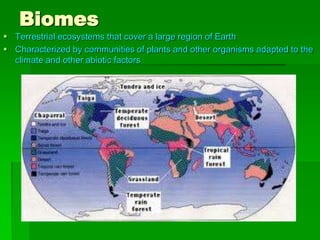
Biomes
 Terrestrial ecosystems that cover a large region of Earth
 Characterized by communities of plants and other organisms adapted to the
  climate and other abiotic factors
Major Terrestrial Biomes
                                      Temperate Woodland/shrubland
 Tropical Rainforest                  (Chaparral)
 Tropical Dry Forest                 Temperate forest
 Tropical Savannah                   Northwestern Coniferous
 Desert                              Boreal Forest/Taiga
 Temperate Grasslands (Prairie)      Tundra

What You Need To Find For Each Biome:
Temp:
Precipitation:
Soil:
Plants:
Animals:
Human Impact/degradation:
Other Facts:
What You Need To Find For Each Biome:
Temp:
Precipitation:
Soil:
Plants:
Animals:
Human Impact/degradation:
Other Facts:
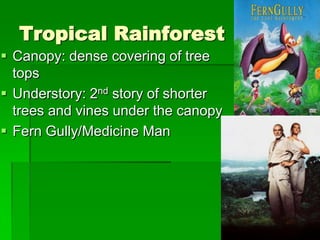
Tropical Rainforest
 Canopy: dense covering of tree
  tops
 Understory: 2nd story of shorter
  trees and vines under the canopy
 Fern Gully/Medicine Man
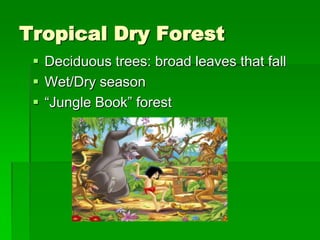
Tropical Dry Forest
  Deciduous trees: broad leaves that fall
  Wet/Dry season
  “Jungle Book” forest
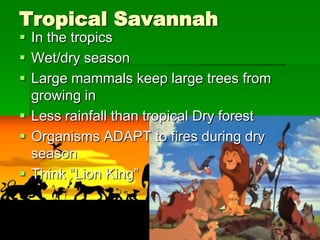
Tropical Savannah
 In the tropics
 Wet/dry season
 Large mammals keep large trees from
  growing in
 Less rainfall than tropical Dry forest
 Organisms ADAPT to fires during dry
  season
 Think “Lion King”
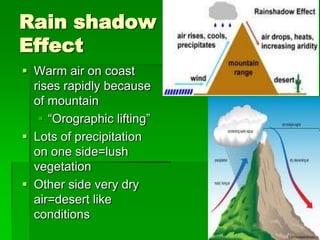
Desert
 Around 25-35o Latitude N and S
 Hot Days and Cold Nights
 Plants and animal adaptations
   Spines, waxy cuticles, scales
 Think “The Mummy” and “The Sahara”
 Rain shadow effect
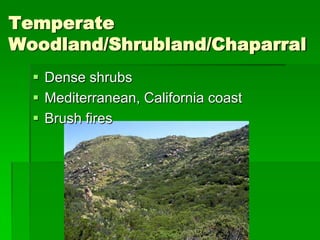
Rain shadow
Effect
 Warm air on coast
  rises rapidly because
  of mountain
    “Orographic lifting”
 Lots of precipitation
  on one side=lush
  vegetation
 Other side very dry
  air=desert like
  conditions
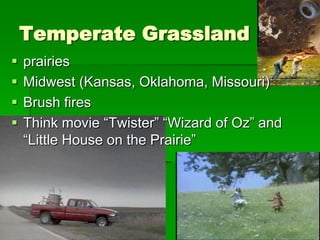
Temperate
Woodland/Shrubland/Chaparral
   Dense shrubs
   Mediterranean, California coast
   Brush fires
Temperate Grassland
   prairies
   Midwest (Kansas, Oklahoma, Missouri)
   Brush fires
   Think movie “Twister” “Wizard of Oz” and
    “Little House on the Prairie”
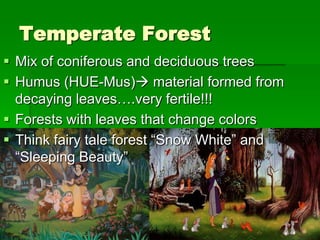
Temperate Forest
 Mix of coniferous and deciduous trees
 Humus (HUE-Mus) material formed from
  decaying leaves….very fertile!!!
 Forests with leaves that change colors
 Think fairy tale forest “Snow White” and
  “Sleeping Beauty”
Northwestern Coniferous
 “Rainforest” of the temperate climate
  zone…very DIVERSE vegetation
 Mild, moist temperatures
 Think “Twilight” “New Moon” “Eclipse”
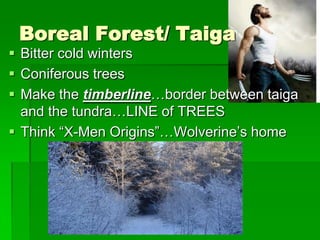
Boreal Forest/ Taiga
 Bitter cold winters
 Coniferous trees
 Make the timberline…border between taiga
  and the tundra…LINE of TREES
 Think “X-Men Origins”…Wolverine’s home
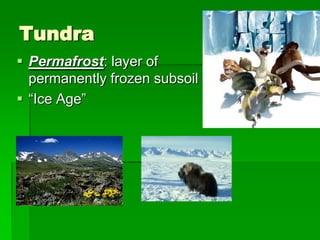
Tundra
 Permafrost: layer of
  permanently frozen subsoil
 “Ice Age”
Other interesting
ecosystems…
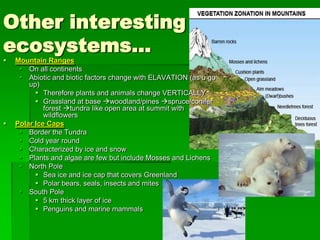
   Mountain Ranges
      On all continents
      Abiotic and biotic factors change with ELAVATION (as u go
        up)
           Therefore plants and animals change VERTICALLY
           Grassland at base woodland/pines spruce/conifer
             forest tundra like open area at summit with
             wildflowers
   Polar Ice Caps
      Border the Tundra
      Cold year round
      Characterized by ice and snow
      Plants and algae are few but include Mosses and Lichens
      North Pole
           Sea ice and ice cap that covers Greenland
           Polar bears, seals, insects and mites
      South Pole
           5 km thick layer of ice
           Penguins and marine mammals

Biomes ppt

  • 1.
    Walk Thru TheBiomes and Ecology Part 2
  • 2.
    Biomes  Terrestrial ecosystemsthat cover a large region of Earth  Characterized by communities of plants and other organisms adapted to the climate and other abiotic factors
  • 3.
    Major Terrestrial Biomes  Temperate Woodland/shrubland Tropical Rainforest (Chaparral) Tropical Dry Forest  Temperate forest Tropical Savannah  Northwestern Coniferous Desert  Boreal Forest/Taiga Temperate Grasslands (Prairie)  Tundra What You Need To Find For Each Biome: Temp: Precipitation: Soil: Plants: Animals: Human Impact/degradation: Other Facts:
  • 4.
    What You NeedTo Find For Each Biome: Temp: Precipitation: Soil: Plants: Animals: Human Impact/degradation: Other Facts:
  • 5.
    Tropical Rainforest  Canopy:dense covering of tree tops  Understory: 2nd story of shorter trees and vines under the canopy  Fern Gully/Medicine Man
  • 6.
    Tropical Dry Forest  Deciduous trees: broad leaves that fall  Wet/Dry season  “Jungle Book” forest
  • 7.
    Tropical Savannah  Inthe tropics  Wet/dry season  Large mammals keep large trees from growing in  Less rainfall than tropical Dry forest  Organisms ADAPT to fires during dry season  Think “Lion King”
  • 8.
    Desert  Around 25-35oLatitude N and S  Hot Days and Cold Nights  Plants and animal adaptations  Spines, waxy cuticles, scales  Think “The Mummy” and “The Sahara”  Rain shadow effect
  • 9.
    Rain shadow Effect  Warmair on coast rises rapidly because of mountain  “Orographic lifting”  Lots of precipitation on one side=lush vegetation  Other side very dry air=desert like conditions
  • 10.
    Temperate Woodland/Shrubland/Chaparral Dense shrubs  Mediterranean, California coast  Brush fires
  • 11.
    Temperate Grassland  prairies  Midwest (Kansas, Oklahoma, Missouri)  Brush fires  Think movie “Twister” “Wizard of Oz” and “Little House on the Prairie”
  • 12.
    Temperate Forest  Mixof coniferous and deciduous trees  Humus (HUE-Mus) material formed from decaying leaves….very fertile!!!  Forests with leaves that change colors  Think fairy tale forest “Snow White” and “Sleeping Beauty”
  • 13.
    Northwestern Coniferous  “Rainforest”of the temperate climate zone…very DIVERSE vegetation  Mild, moist temperatures  Think “Twilight” “New Moon” “Eclipse”
  • 14.
    Boreal Forest/ Taiga Bitter cold winters  Coniferous trees  Make the timberline…border between taiga and the tundra…LINE of TREES  Think “X-Men Origins”…Wolverine’s home
  • 15.
    Tundra  Permafrost: layerof permanently frozen subsoil  “Ice Age”
  • 16.
    Other interesting ecosystems…  Mountain Ranges  On all continents  Abiotic and biotic factors change with ELAVATION (as u go up)  Therefore plants and animals change VERTICALLY  Grassland at base woodland/pines spruce/conifer forest tundra like open area at summit with wildflowers  Polar Ice Caps  Border the Tundra  Cold year round  Characterized by ice and snow  Plants and algae are few but include Mosses and Lichens  North Pole  Sea ice and ice cap that covers Greenland  Polar bears, seals, insects and mites  South Pole  5 km thick layer of ice  Penguins and marine mammals