Ecology and Ecosystems
 Ecology is the scientific study of relations that living organisms
    have with respect to each other and their natural environment.

    Under ecology, we study various ecosystems which are a part
    of the biosphere.

 An ecosystem includes all the organisms and the nonliving
    environment that are found in a particular place.
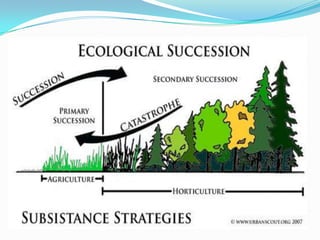
Ecological Succession
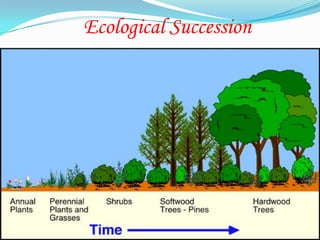
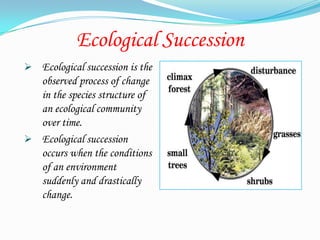
 Ecological succession is the
  observed process of change
  in the species structure of
  an ecological community
  over time.
 Ecological succession
  occurs when the conditions
  of an environment
  suddenly and drastically
  change.
Food Chain
 A food chain shows the feeding relationship between different
    living things in a particular habitat.

 Food chains show how energy is passed from the sun to
    producers, from producers to consumers, and from consumers to
    decomposers.

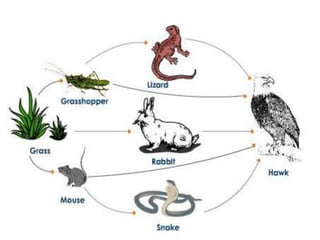
 In any ecosystem, many food chains overlap. When this
    happens, the food chain forms a food web.
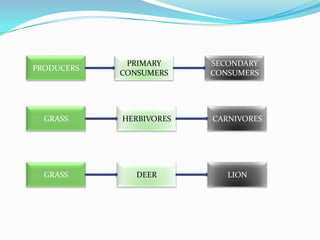
PRIMARY     SECONDARY
PRODUCERS
            CONSUMERS    CONSUMERS


  GRASS     HERBIVORES   CARNIVORES


  GRASS        DEER         LION
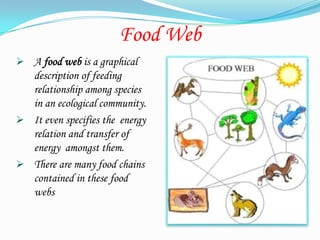
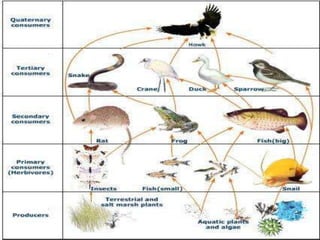
Food Web
 A food web is a graphical
  description of feeding
  relationship among species
  in an ecological community.
 It even specifies the energy
  relation and transfer of
  energy amongst them.
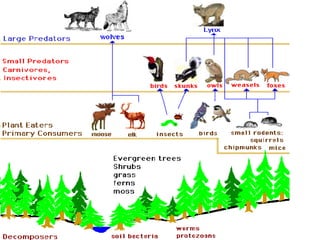
 There are many food chains
  contained in these food
  webs
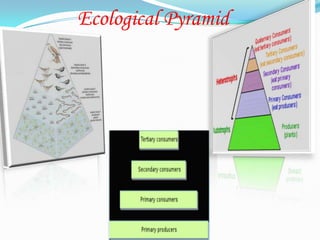
Ecological Pyramid
Types Of Ecosystems
Forest Ecosystem
Grassland Ecosystem
Desert Ecosystem
Aquatic Ecosystem
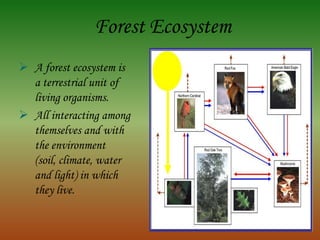
Forest Ecosystem
 A forest ecosystem is
  a terrestrial unit of
  living organisms.
 All interacting among
  themselves and with
  the environment
  (soil, climate, water
  and light) in which
  they live.
Types Of Forest Ecosystems
Tropical Rain Forest
Tropical Seasonal Forest
Temperate Evergreen and Deciduous Forest
Boreal Forest
Savanna and Woodland
Grassland Ecosystem
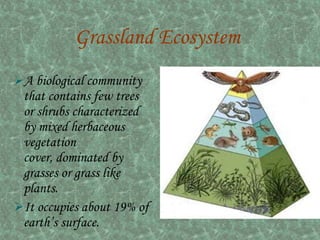
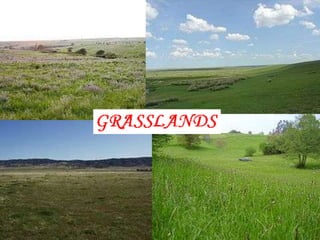
A biological community
 that contains few trees
 or shrubs characterized
 by mixed herbaceous
 vegetation
 cover, dominated by
 grasses or grass like
 plants.
It occupies about 19% of
 earth’s surface.
Types Of Grassland Ecosystem
Tropical and subtropical grasslands
Temperate grasslands
Flooded grasslands
Montane grasslands
Tundra grasslands
Desert and xeric grasslands
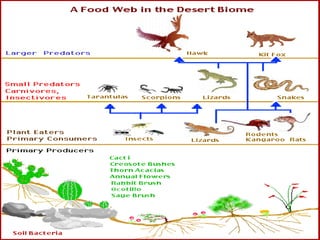
Desert Ecosystem
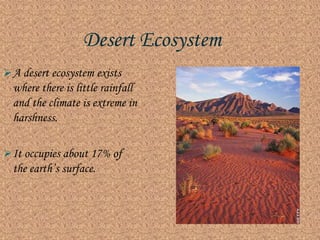
 A desert ecosystem exists
  where there is little rainfall
  and the climate is extreme in
  harshness.

 It occupies about 17% of
  the earth’s surface.
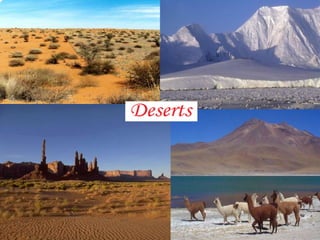
Types Of Desert Ecosystem
Hot and Dry Deserts
Cold Deserts
Semi-Arid Deserts
Coastal Deserts
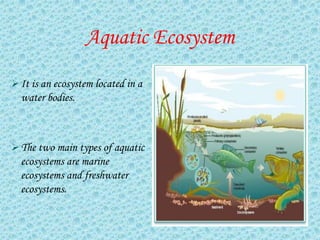
Aquatic Ecosystem
 It is an ecosystem located in a
  water bodies.


 The two main types of aquatic
  ecosystems are marine
  ecosystems and freshwater
  ecosystems.
Types Of Aquatic Ecosystem
Marine Ecosystem.

Freshwater Ecosystem
      1.Lentic
      2.Lotic
      3.Wetland
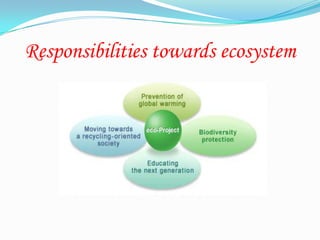
Responsibilities towards ecosystem
Inference
• After studying and analyzing the various ecosystems, their
  internal components, biotic factors; we can very well conclude
  that man is the part and parcel of these God gift.

• It’s the foremost responsibility to include the conservation
  and maintenance of these precious gift of nature as crucial
  priority in our life.
THANK YOU

Ecology and ecosystem

  • 2.
    Ecology and Ecosystems Ecology is the scientific study of relations that living organisms have with respect to each other and their natural environment.  Under ecology, we study various ecosystems which are a part of the biosphere.  An ecosystem includes all the organisms and the nonliving environment that are found in a particular place.
  • 3.
  • 4.
    Ecological Succession  Ecologicalsuccession is the observed process of change in the species structure of an ecological community over time.  Ecological succession occurs when the conditions of an environment suddenly and drastically change.
  • 6.
    Food Chain  Afood chain shows the feeding relationship between different living things in a particular habitat.  Food chains show how energy is passed from the sun to producers, from producers to consumers, and from consumers to decomposers.  In any ecosystem, many food chains overlap. When this happens, the food chain forms a food web.
  • 7.
    PRIMARY SECONDARY PRODUCERS CONSUMERS CONSUMERS GRASS HERBIVORES CARNIVORES GRASS DEER LION
  • 8.
    Food Web  Afood web is a graphical description of feeding relationship among species in an ecological community.  It even specifies the energy relation and transfer of energy amongst them.  There are many food chains contained in these food webs
  • 9.
  • 10.
    Types Of Ecosystems ForestEcosystem Grassland Ecosystem Desert Ecosystem Aquatic Ecosystem
  • 11.
    Forest Ecosystem  Aforest ecosystem is a terrestrial unit of living organisms.  All interacting among themselves and with the environment (soil, climate, water and light) in which they live.
  • 12.
    Types Of ForestEcosystems Tropical Rain Forest Tropical Seasonal Forest Temperate Evergreen and Deciduous Forest Boreal Forest Savanna and Woodland
  • 14.
    Grassland Ecosystem A biologicalcommunity that contains few trees or shrubs characterized by mixed herbaceous vegetation cover, dominated by grasses or grass like plants. It occupies about 19% of earth’s surface.
  • 16.
    Types Of GrasslandEcosystem Tropical and subtropical grasslands Temperate grasslands Flooded grasslands Montane grasslands Tundra grasslands Desert and xeric grasslands
  • 18.
    Desert Ecosystem  Adesert ecosystem exists where there is little rainfall and the climate is extreme in harshness.  It occupies about 17% of the earth’s surface.
  • 19.
    Types Of DesertEcosystem Hot and Dry Deserts Cold Deserts Semi-Arid Deserts Coastal Deserts
  • 22.
    Aquatic Ecosystem  Itis an ecosystem located in a water bodies.  The two main types of aquatic ecosystems are marine ecosystems and freshwater ecosystems.
  • 23.
    Types Of AquaticEcosystem Marine Ecosystem. Freshwater Ecosystem 1.Lentic 2.Lotic 3.Wetland
  • 25.
  • 26.
    Inference • After studyingand analyzing the various ecosystems, their internal components, biotic factors; we can very well conclude that man is the part and parcel of these God gift. • It’s the foremost responsibility to include the conservation and maintenance of these precious gift of nature as crucial priority in our life.
  • 27.