ECOSYSTEM
A presentation By-
Krishna Chaitanya.b(14AG1A0557)
An ecosystem is a community of living organisms in conjunction
with the nonliving components of their environment (things like
air, water and mineral soil), interacting as a system.[2] These
biotic and abiotic components are regarded as linked together
through nutrient cycles and energy flows.[3] The relationship
between the abiotic components and the biotic components of
the ecosystem is termed 'holocoenosis'. As ecosystems are
defined by the network of interactions among organisms, and
between organisms and their environment,[4] they can be of
any size but usually encompass specific, limited spaces[5]
(although some scientists say that the entire planet is an
ecosystem).[
Types of Ecosystem:-
There are very many types of
ecosystems out there, but the three
major classes of ecosystems,
sometimes referred to as ‘biomes’,
which are relatively contained, are the
following:
₪Freshwater Ecosystems
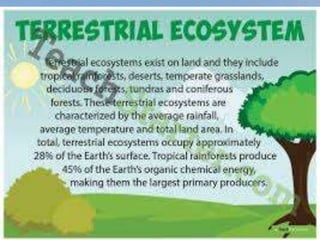
₪Terrestrial Ecosystems
₪Ocean Ecosystems
Freshwater Ecosystems:-
These can then be broken up into smaller ecosystems. For
instance, in the freshwater ecosystems we find:
₪Pond Ecosystems – These are usually relatively small and
contained. Most of the time they include various types of
plants, amphibians and insects. Sometimes they include fish,
but as these cannot move around as easily as amphibians and
insects, it is less likely, and most of the time fish are artificially
introduced to these environments by humans.
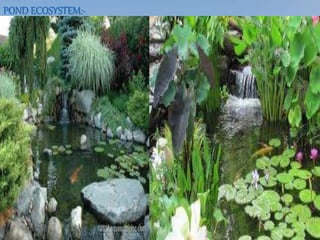
POND ECOSYSTEM:-
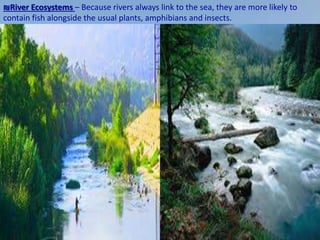
₪River Ecosystems – Because rivers always link to the sea, they are more likely to
contain fish alongside the usual plants, amphibians and insects.
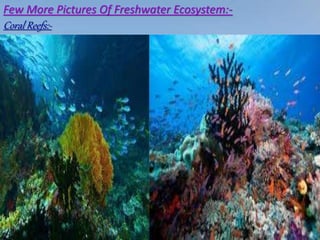
Few More Pictures Of Freshwater Ecosystem:-
Coral Reefs:-
Terrestrial Ecosystems:-
Terrestrial ecosystems are many because there are so many different sorts of places on
Earth. Some of the most common terrestrial ecosystems that are found are the
following:-
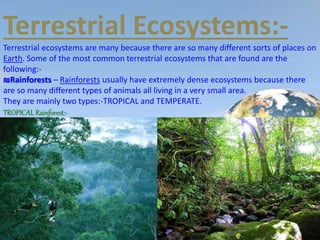
₪Rainforests – Rainforests usually have extremely dense ecosystems because there
are so many different types of animals all living in a very small area.
They are mainly two types:-TROPICAL and TEMPERATE.
TROPICAL Rainforest:-
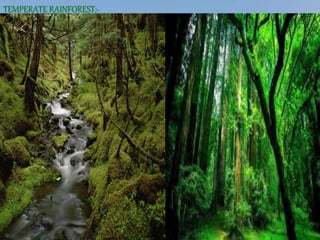
TEMPERATE RAINFOREST:-
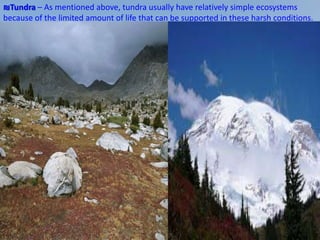
₪Tundra – As mentioned above, tundra usually have relatively simple ecosystems
because of the limited amount of life that can be supported in these harsh conditions.
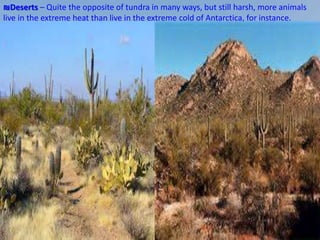
₪Deserts – Quite the opposite of tundra in many ways, but still harsh, more animals
live in the extreme heat than live in the extreme cold of Antarctica, for instance.
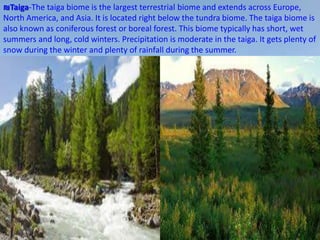
₪Taiga-The taiga biome is the largest terrestrial biome and extends across Europe,
North America, and Asia. It is located right below the tundra biome. The taiga biome is
also known as coniferous forest or boreal forest. This biome typically has short, wet
summers and long, cold winters. Precipitation is moderate in the taiga. It gets plenty of
snow during the winter and plenty of rainfall during the summer.
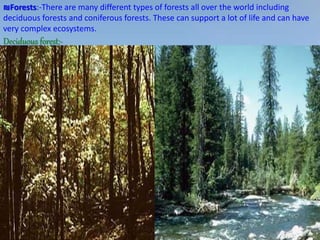
₪Forests:-There are many different types of forests all over the world including
deciduous forests and coniferous forests. These can support a lot of life and can have
very complex ecosystems.
Deciduous forest:-
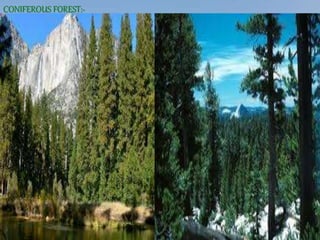
CONIFEROUS FOREST:-
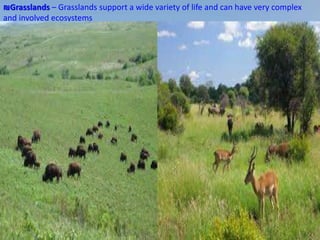
₪Grasslands – Grasslands support a wide variety of life and can have very complex
and involved ecosystems
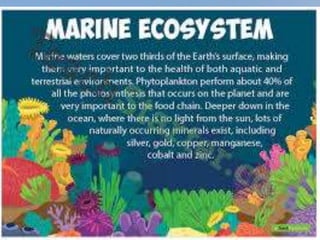
Ocean Ecosystems:-
Ocean ecosystems are relatively contained, although they, like freshwater ecosystems,
also include certain birds that hunt for fish and insects close to the ocean’s surface.
There are different sorts of ocean ecosystems:
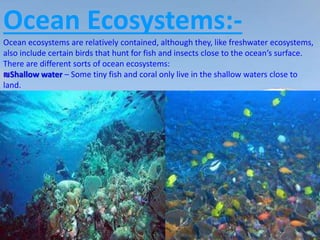
₪Shallow water – Some tiny fish and coral only live in the shallow waters close to
land.
Shallow Ocean Ecosystem
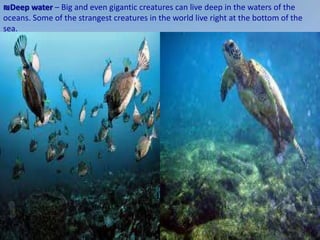
₪Deep water – Big and even gigantic creatures can live deep in the waters of the
oceans. Some of the strangest creatures in the world live right at the bottom of the
sea.
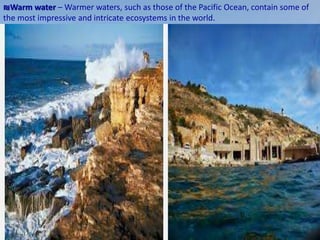
₪Warm water – Warmer waters, such as those of the Pacific Ocean, contain some of
the most impressive and intricate ecosystems in the world.
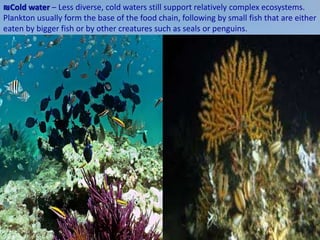
₪Cold water – Less diverse, cold waters still support relatively complex ecosystems.
Plankton usually form the base of the food chain, following by small fish that are either
eaten by bigger fish or by other creatures such as seals or penguins.
CONCLUSION
₪Tips to save ecosystem:-
◊save trees:-
#Teach others about the importance
of the environment and how they can
help save rainforests.
#Restore damaged ecosystems by
planting trees on land where forests
have been cut down.
#Encourage people to live in a way
that doesn't hurt the environment
#Establish parks to protect
rainforests and wildlife
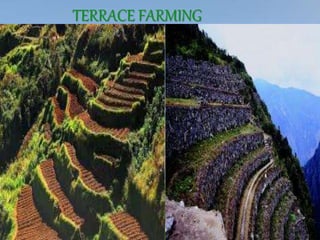
TERRACE FARMING
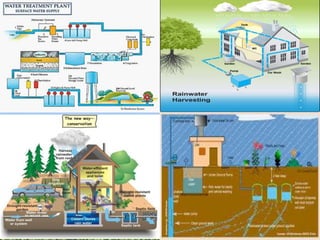
SAVE WATER:-
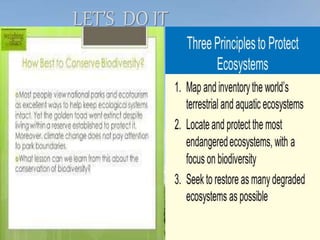
LET’S DO IT
Ecosystem
Ecosystem

Ecosystem

  • 1.
    ECOSYSTEM A presentation By- KrishnaChaitanya.b(14AG1A0557)
  • 2.
    An ecosystem isa community of living organisms in conjunction with the nonliving components of their environment (things like air, water and mineral soil), interacting as a system.[2] These biotic and abiotic components are regarded as linked together through nutrient cycles and energy flows.[3] The relationship between the abiotic components and the biotic components of the ecosystem is termed 'holocoenosis'. As ecosystems are defined by the network of interactions among organisms, and between organisms and their environment,[4] they can be of any size but usually encompass specific, limited spaces[5] (although some scientists say that the entire planet is an ecosystem).[
  • 3.
    Types of Ecosystem:- Thereare very many types of ecosystems out there, but the three major classes of ecosystems, sometimes referred to as ‘biomes’, which are relatively contained, are the following: ₪Freshwater Ecosystems ₪Terrestrial Ecosystems ₪Ocean Ecosystems
  • 4.
    Freshwater Ecosystems:- These canthen be broken up into smaller ecosystems. For instance, in the freshwater ecosystems we find: ₪Pond Ecosystems – These are usually relatively small and contained. Most of the time they include various types of plants, amphibians and insects. Sometimes they include fish, but as these cannot move around as easily as amphibians and insects, it is less likely, and most of the time fish are artificially introduced to these environments by humans.
  • 5.
  • 6.
    ₪River Ecosystems –Because rivers always link to the sea, they are more likely to contain fish alongside the usual plants, amphibians and insects.
  • 7.
    Few More PicturesOf Freshwater Ecosystem:- Coral Reefs:-
  • 9.
    Terrestrial Ecosystems:- Terrestrial ecosystemsare many because there are so many different sorts of places on Earth. Some of the most common terrestrial ecosystems that are found are the following:- ₪Rainforests – Rainforests usually have extremely dense ecosystems because there are so many different types of animals all living in a very small area. They are mainly two types:-TROPICAL and TEMPERATE. TROPICAL Rainforest:-
  • 10.
  • 11.
    ₪Tundra – Asmentioned above, tundra usually have relatively simple ecosystems because of the limited amount of life that can be supported in these harsh conditions.
  • 12.
    ₪Deserts – Quitethe opposite of tundra in many ways, but still harsh, more animals live in the extreme heat than live in the extreme cold of Antarctica, for instance.
  • 13.
    ₪Taiga-The taiga biomeis the largest terrestrial biome and extends across Europe, North America, and Asia. It is located right below the tundra biome. The taiga biome is also known as coniferous forest or boreal forest. This biome typically has short, wet summers and long, cold winters. Precipitation is moderate in the taiga. It gets plenty of snow during the winter and plenty of rainfall during the summer.
  • 14.
    ₪Forests:-There are manydifferent types of forests all over the world including deciduous forests and coniferous forests. These can support a lot of life and can have very complex ecosystems. Deciduous forest:-
  • 15.
  • 16.
    ₪Grasslands – Grasslandssupport a wide variety of life and can have very complex and involved ecosystems
  • 18.
    Ocean Ecosystems:- Ocean ecosystemsare relatively contained, although they, like freshwater ecosystems, also include certain birds that hunt for fish and insects close to the ocean’s surface. There are different sorts of ocean ecosystems: ₪Shallow water – Some tiny fish and coral only live in the shallow waters close to land. Shallow Ocean Ecosystem
  • 19.
    ₪Deep water –Big and even gigantic creatures can live deep in the waters of the oceans. Some of the strangest creatures in the world live right at the bottom of the sea.
  • 20.
    ₪Warm water –Warmer waters, such as those of the Pacific Ocean, contain some of the most impressive and intricate ecosystems in the world.
  • 21.
    ₪Cold water –Less diverse, cold waters still support relatively complex ecosystems. Plankton usually form the base of the food chain, following by small fish that are either eaten by bigger fish or by other creatures such as seals or penguins.
  • 23.
    CONCLUSION ₪Tips to saveecosystem:- ◊save trees:- #Teach others about the importance of the environment and how they can help save rainforests. #Restore damaged ecosystems by planting trees on land where forests have been cut down. #Encourage people to live in a way that doesn't hurt the environment #Establish parks to protect rainforests and wildlife
  • 25.
  • 26.
  • 28.