Systematic ECG
interpretation
SCGH CME
March 17 2016
Components of ECG
 Rate
 Rhythm
 Axis
 P
 PR
 QRS
 QT
 ST
 Other waves
 Delta
 Epsilon
 Osborne
 U
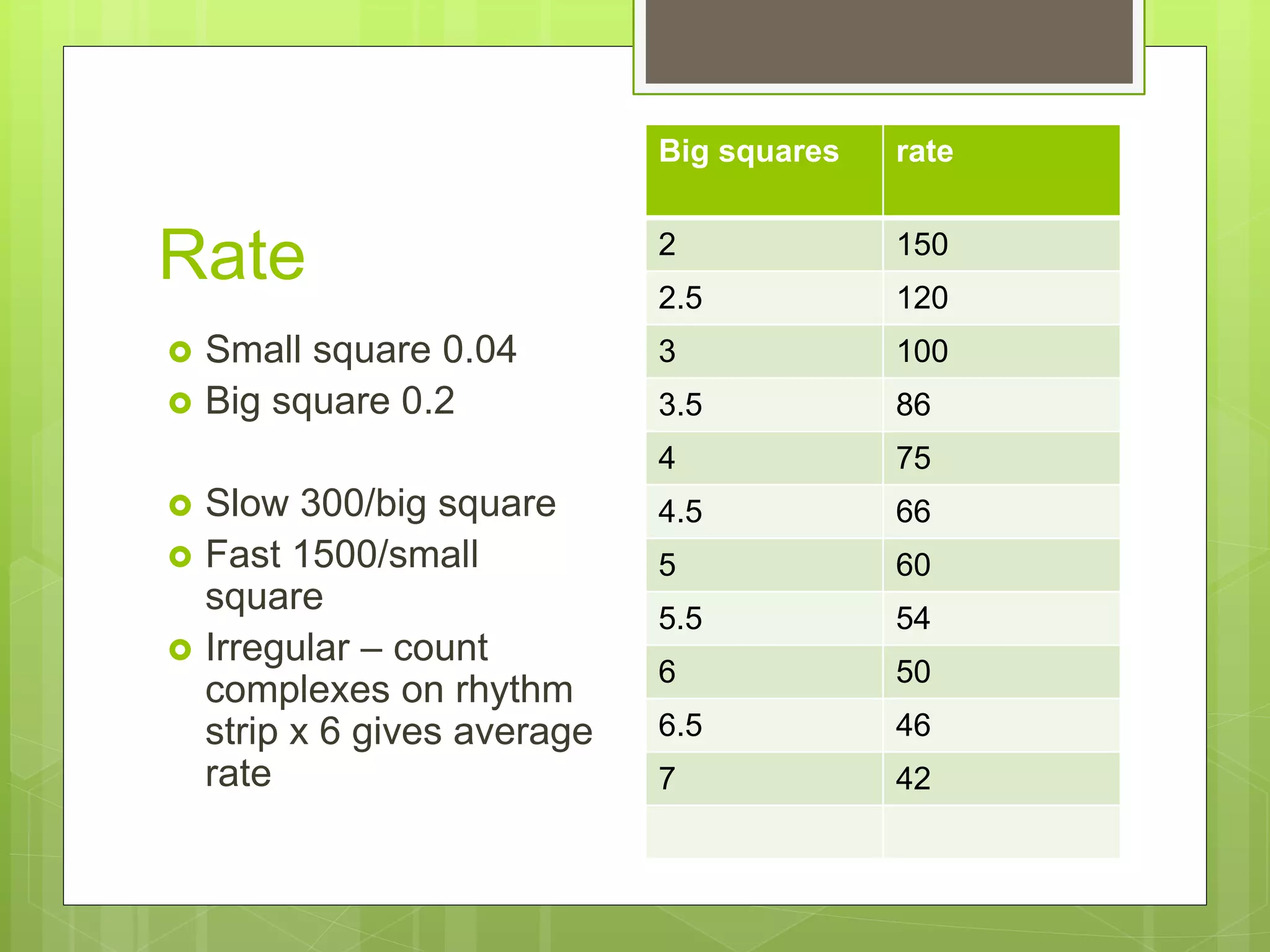
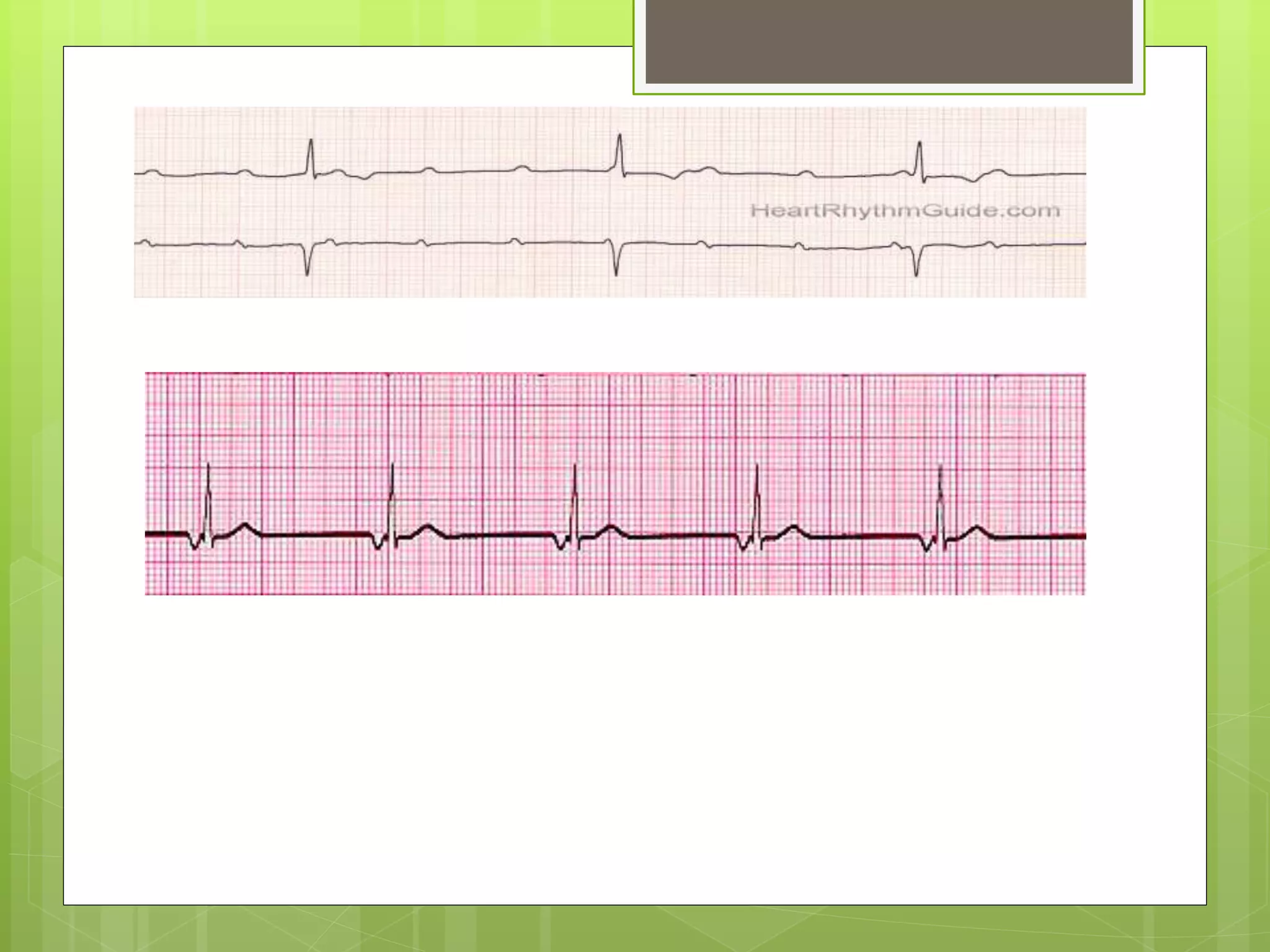
Rate
 Small square 0.04
 Big square 0.2
 Slow 300/big square
 Fast 1500/small
square
 Irregular – count
complexes on rhythm
strip x 6 gives average
rate
Big squares rate
2 150
2.5 120
3 100
3.5 86
4 75
4.5 66
5 60
5.5 54
6 50
6.5 46
7 42
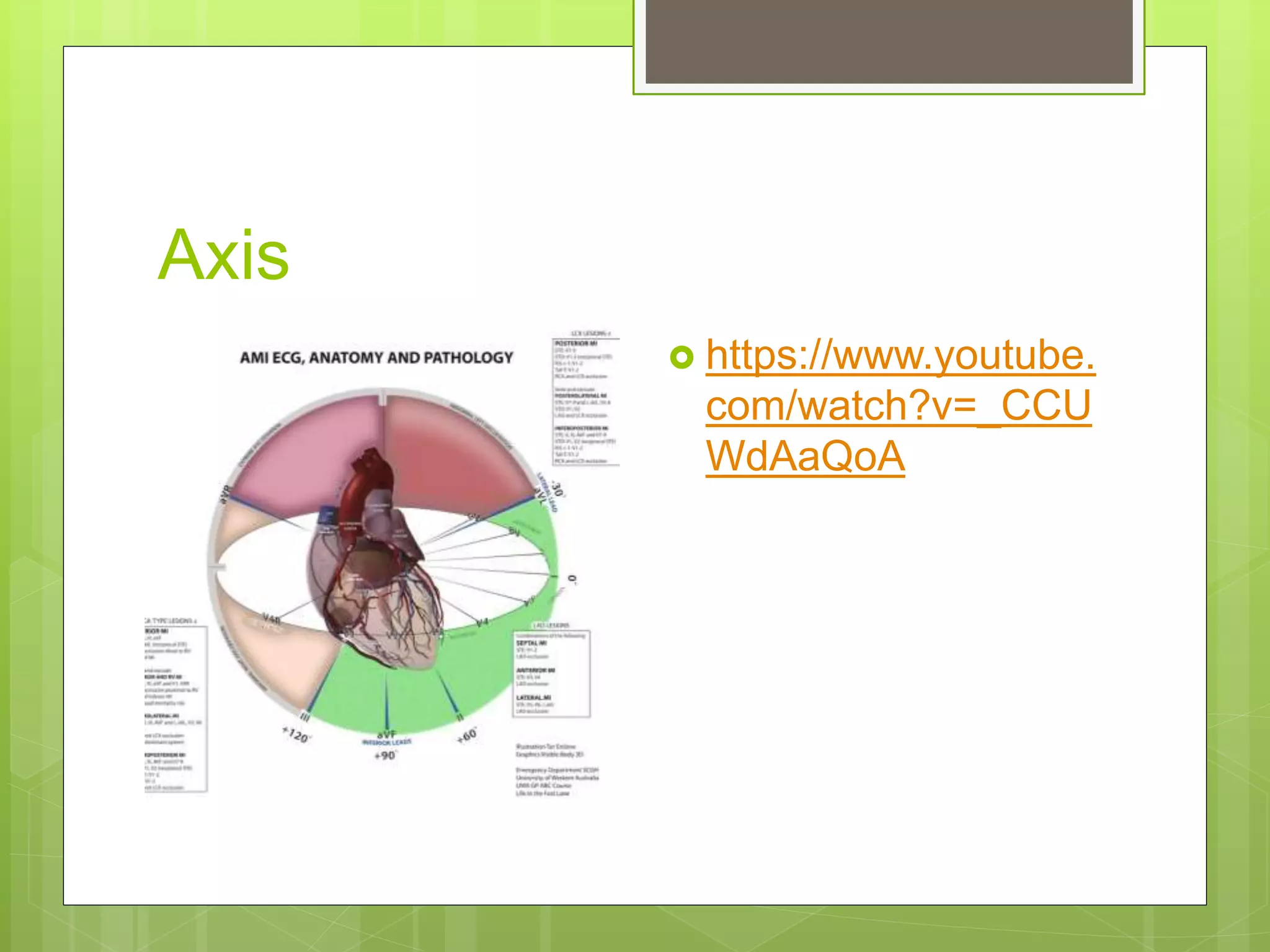
Axis
 https://www.youtube.
com/watch?v=_CCU
WdAaQoA
Axis differentials
 Left -30 to -90
 LBBB LAFB
 LVH
 Inferior MI
 Paced rhythm
 Right +90 to +180
 RVH
 LPFB
 Lateral MI
 Lung disease –
acute/chronic
 Hyperkalemia
 Na channel blockade
 Dextrocardia
 NORMAL IN INFANTS
and skinny adults
P WAVE PR interval
 120 – 200 msec
 Long – any heart
block
 Short – WPW, pre-
excitation
 Elevation/depression
- pericarditis
 Width < 120 msec
 Amplitude
 <2.5mm in limb leads
 <1.5mm in precordial
leads
 V1 biphasic
 Avf inverted
QRS
 Amplitude
 Duration
 Q wave
 R wave
 Hypertrophy
 Bundle branch block
 J point
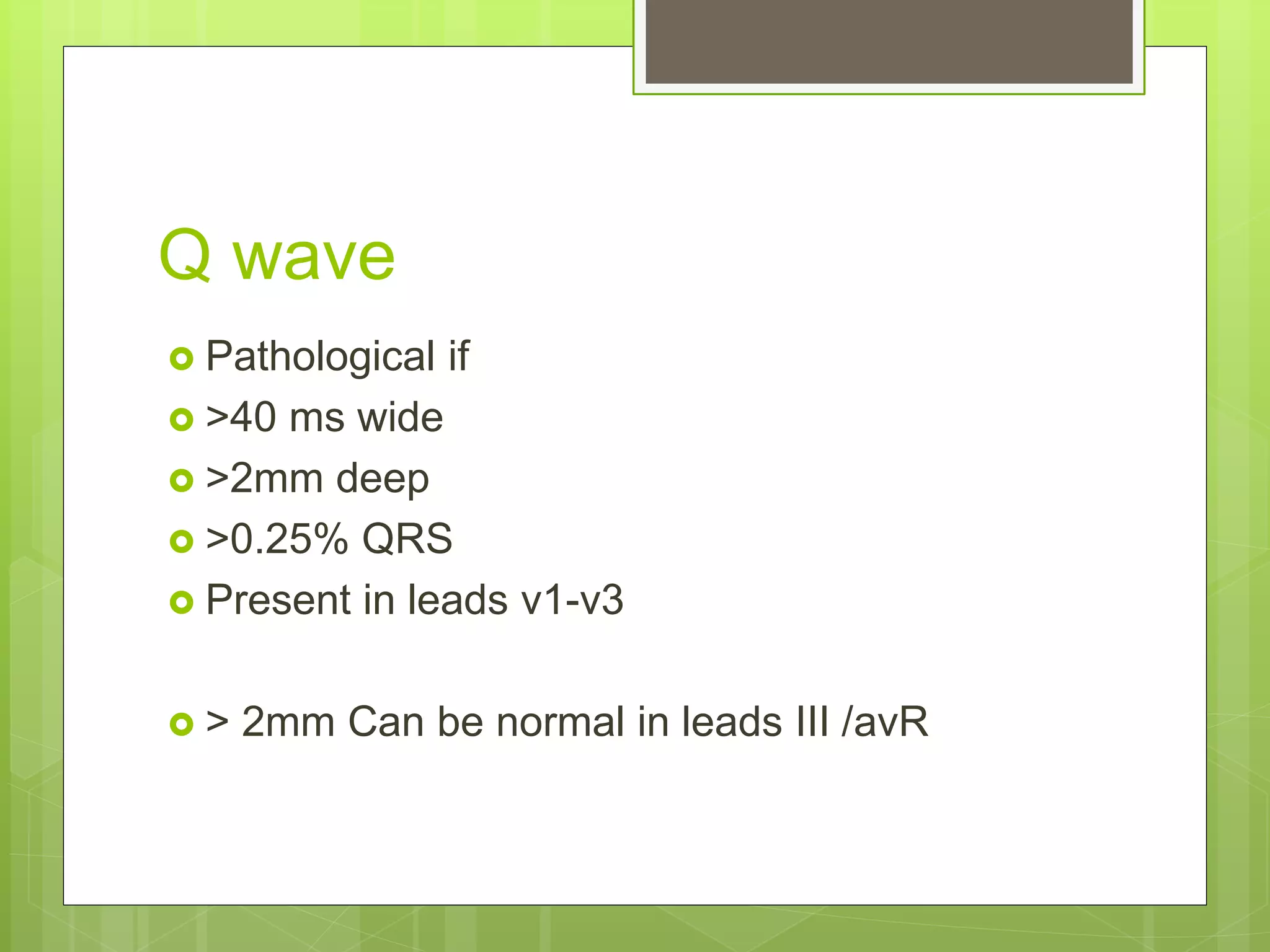
Q wave
 Pathological if
 >40 ms wide
 >2mm deep
 >0.25% QRS
 Present in leads v1-v3
 > 2mm Can be normal in leads III /avR
R wave in V1
 RVH - PE
 Posterior MI
 RBBB
 HOCM
 WPW
 Dextrocardia
 Normal in Kids
R Wave
R wave in AVR
 Na channel blockade
 VT
 Dextrocardia
 Limb lead reversal
R wave
progression
 R wave <3mm in V3
 Signifies
anteroseptal MI
 LVH
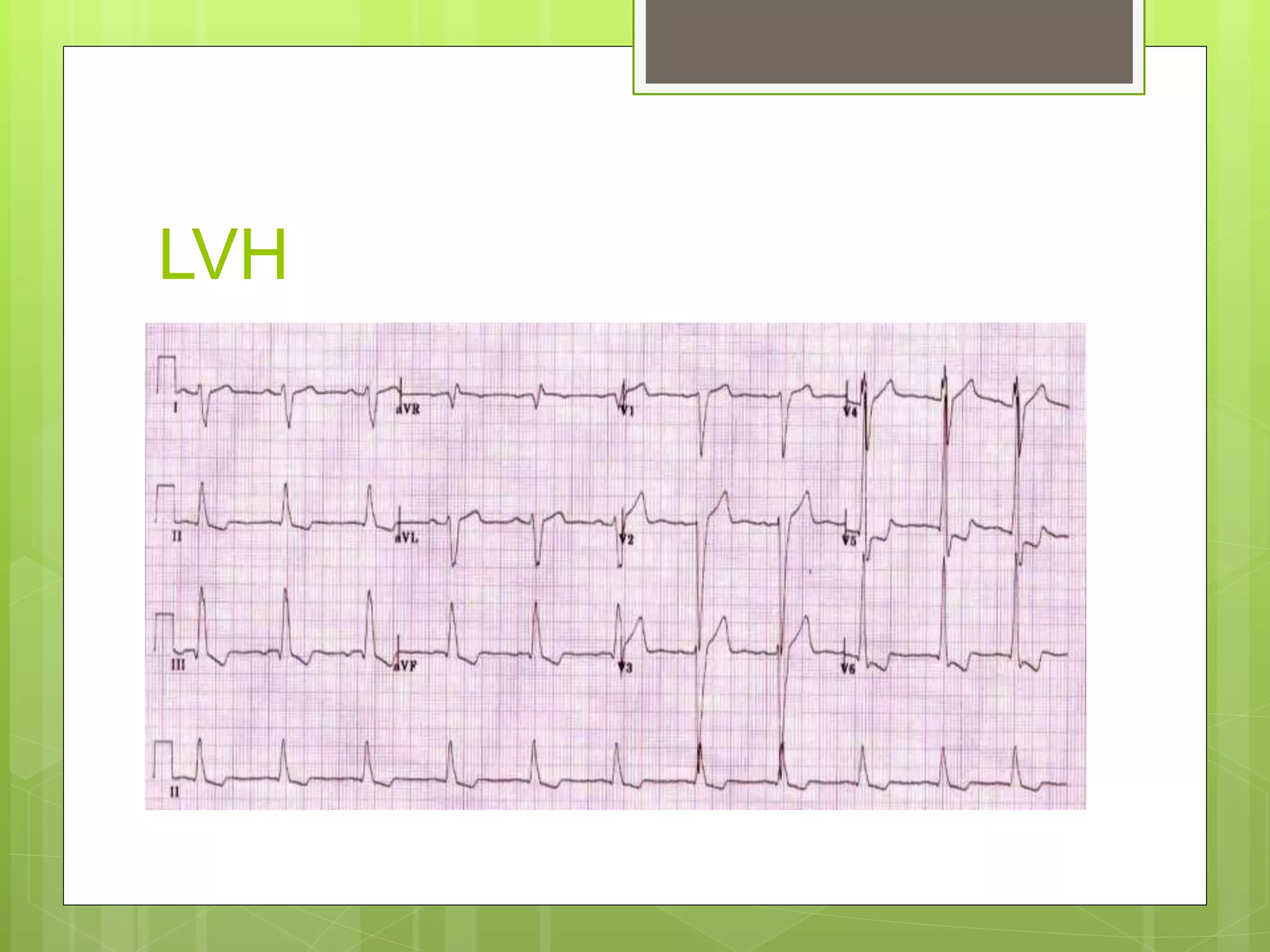
Left Ventricular hypertrophy
Voltage + non
voltage
 Muscle wall thickens
 Leading to increased S wave
amplitude in right sided leads
 Increased R wave amplitude
in left sided leads
 Prolonged depolarisation
 Repolarisation abnormalities
in lateral leads
Causes
 HTN
 AR/AS
 MR
 HOCM
LVH
voltage
 S in V1 + R in V5/V6
> 35mm
 AVL R wave 11mm
Non voltage
 ST depression/T
wave inversion in
lateral leads
 Increased R wave
peak time > 50msec
in V5 V6
LVH
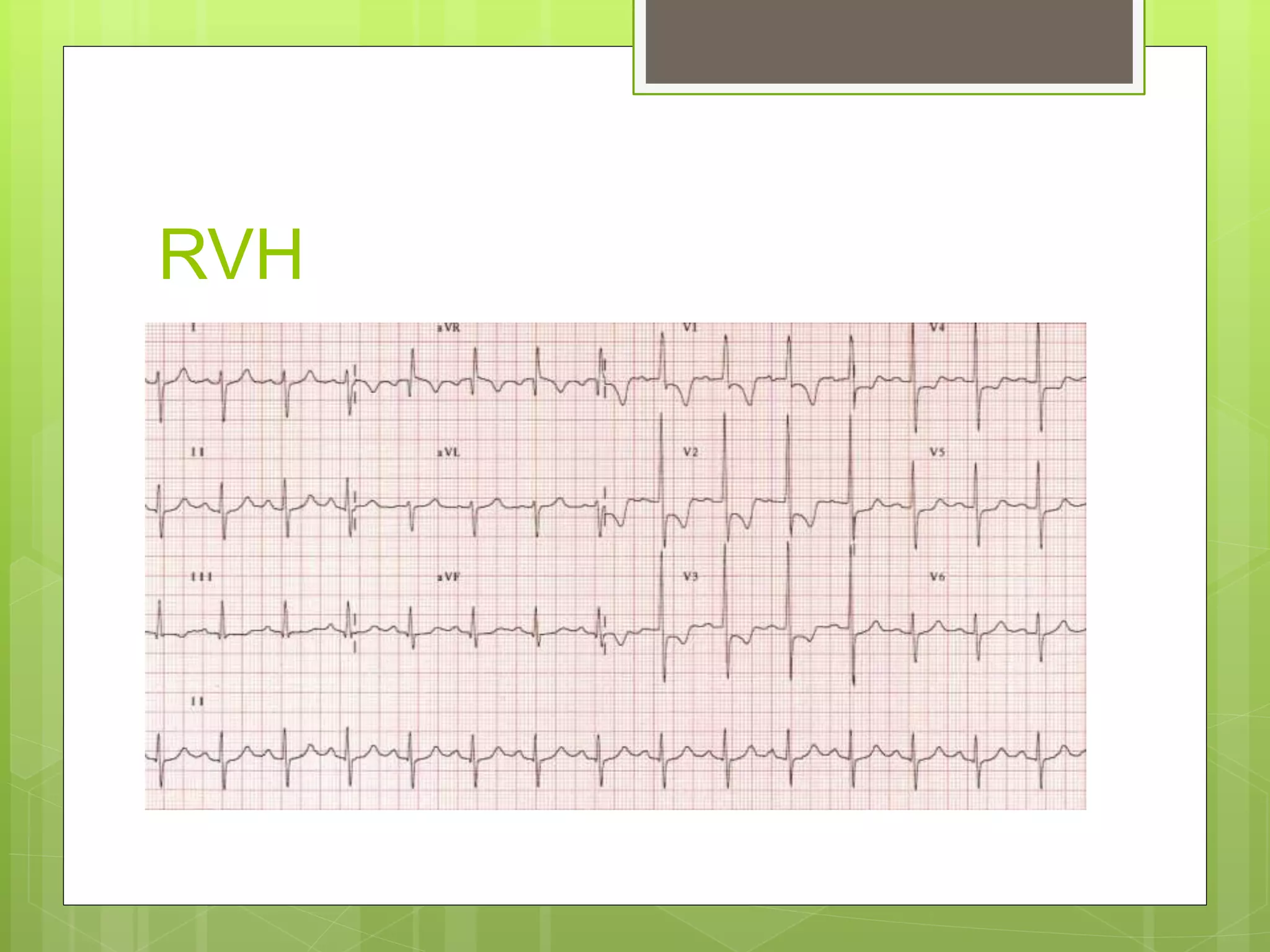
RVH
 Right axis
 Dominant R in V1 > 7mm or RS ratio >1
 Dominant S in V6 > 7mm or RS ratio <1
 RV strain – ST depression in V1-4 and
inferiorly
Causes
 PE
 Chronic lung disease
 Pulmonary HTN
 Mitral stenosis
 Congenital heart disease
 Arrythmogenic RV cardiomyopathy
RVH
BBB
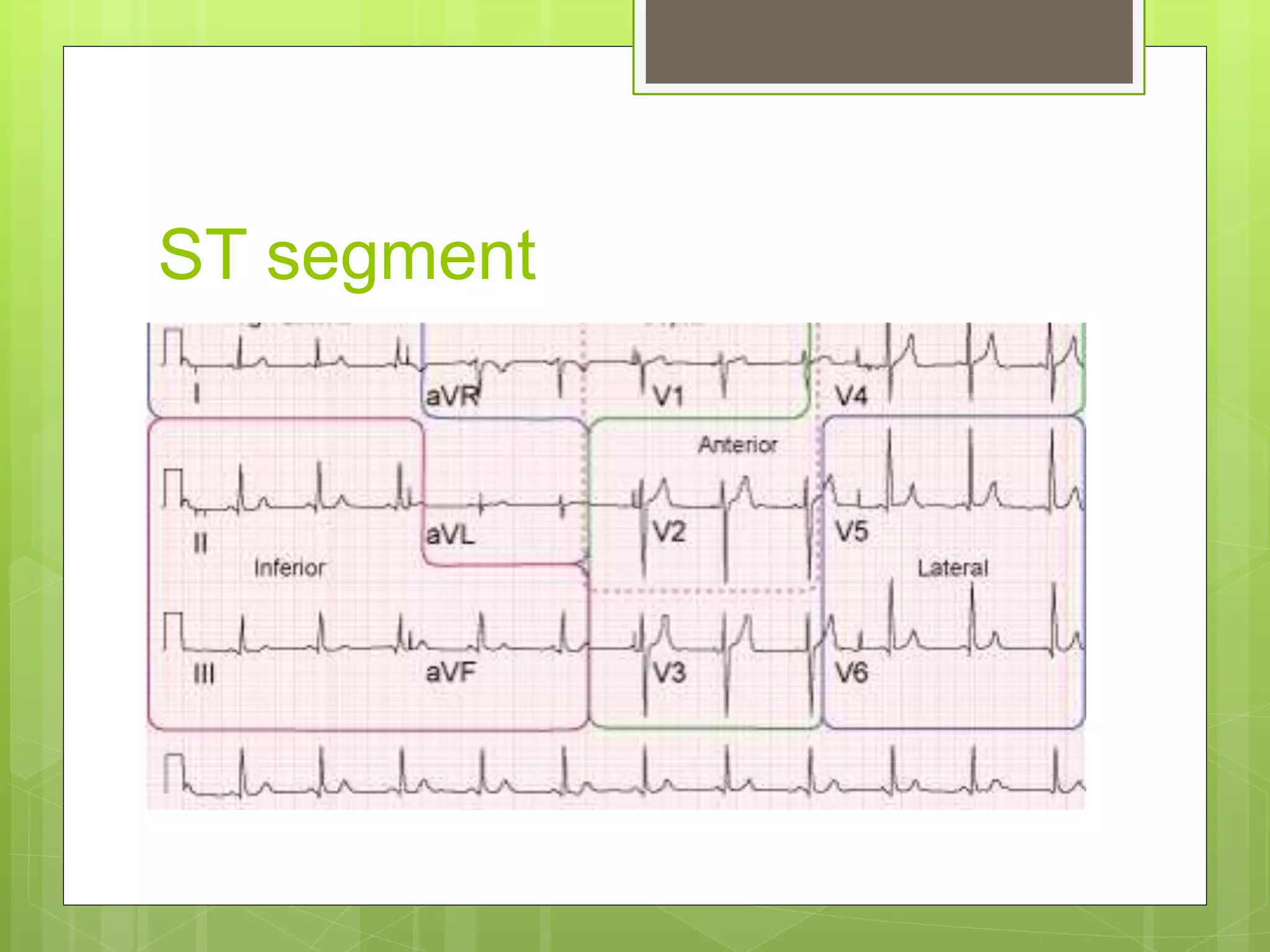
ST segment
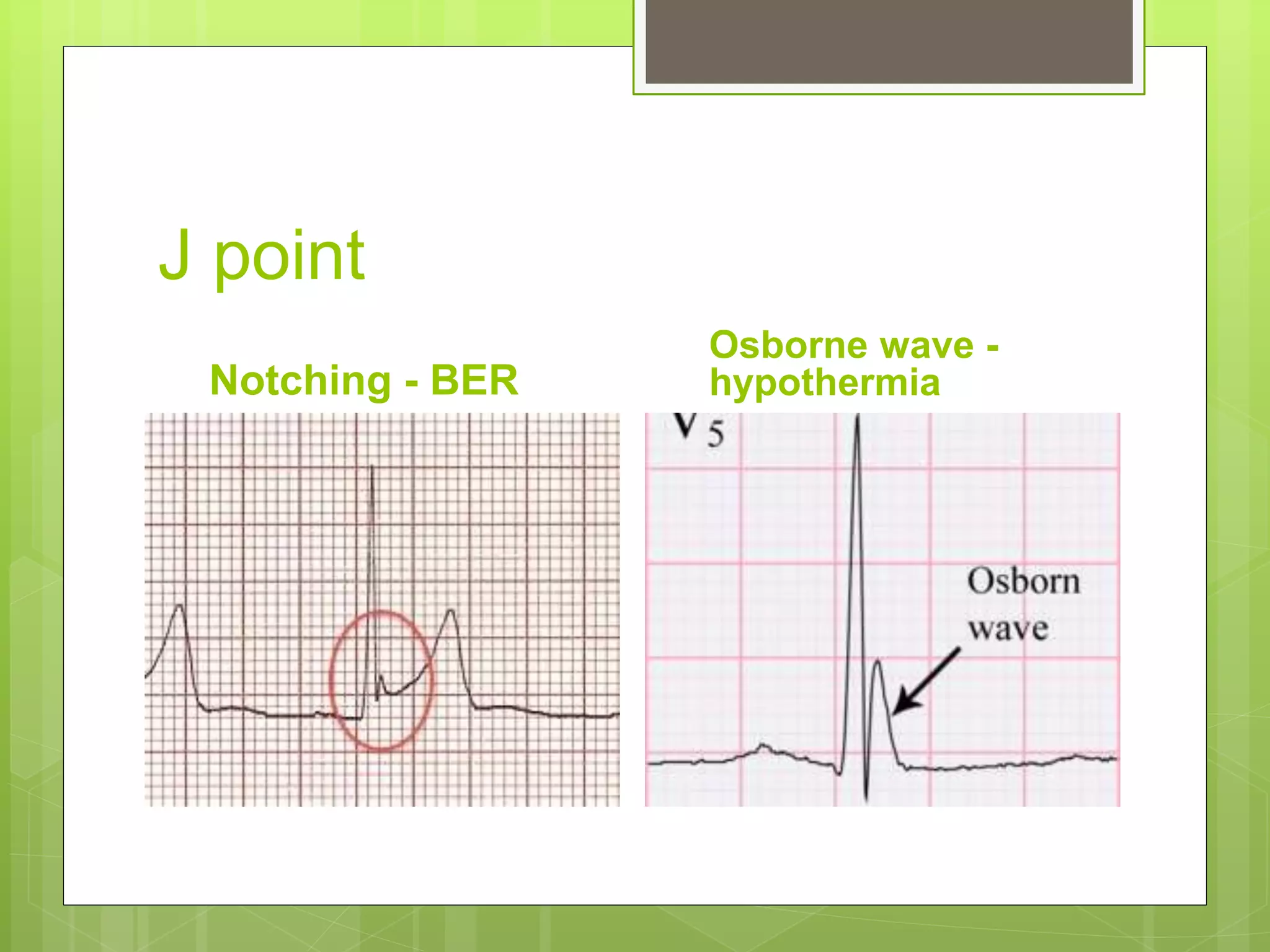
J point
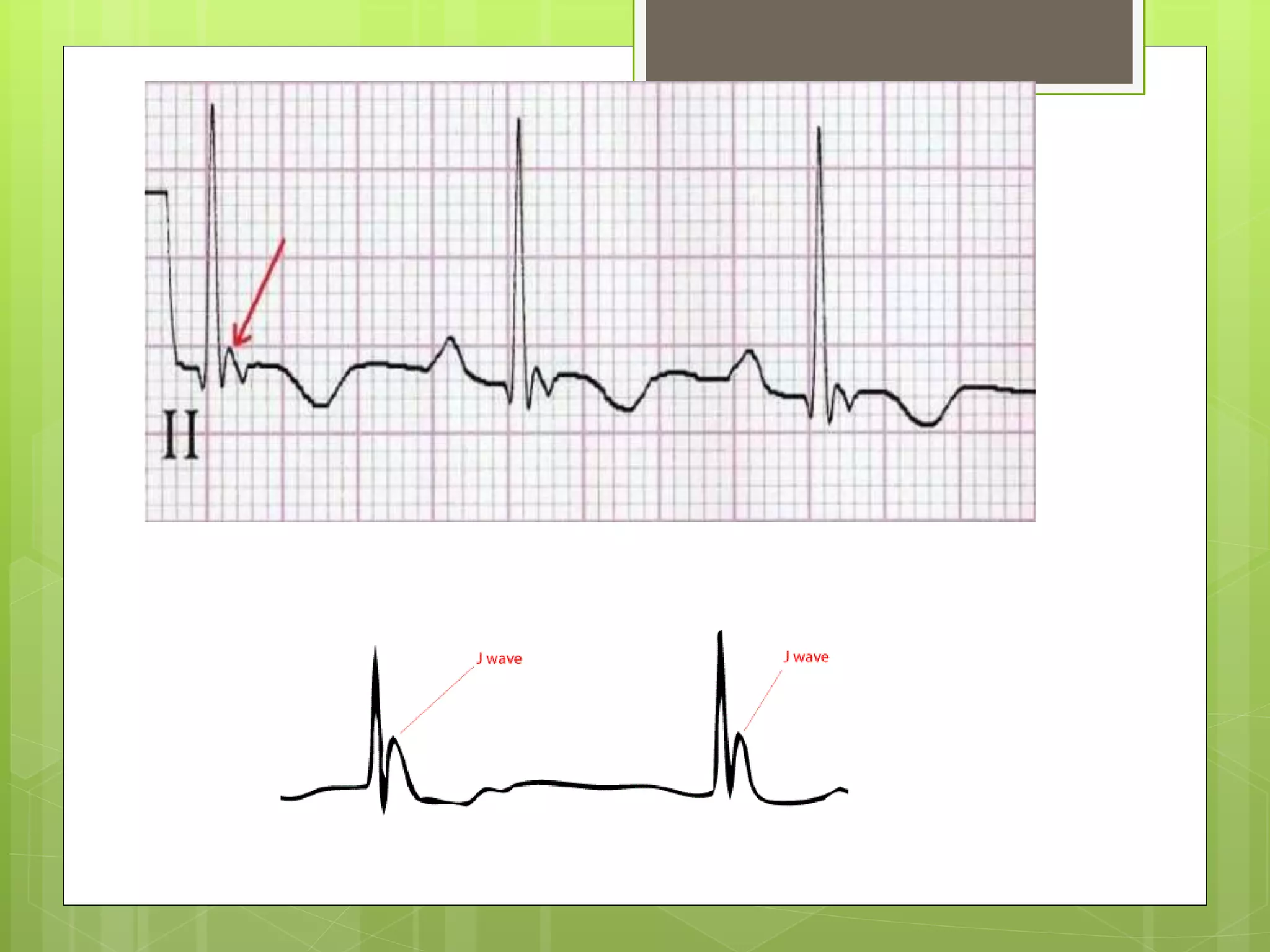
Notching - BER
Osborne wave -
hypothermia
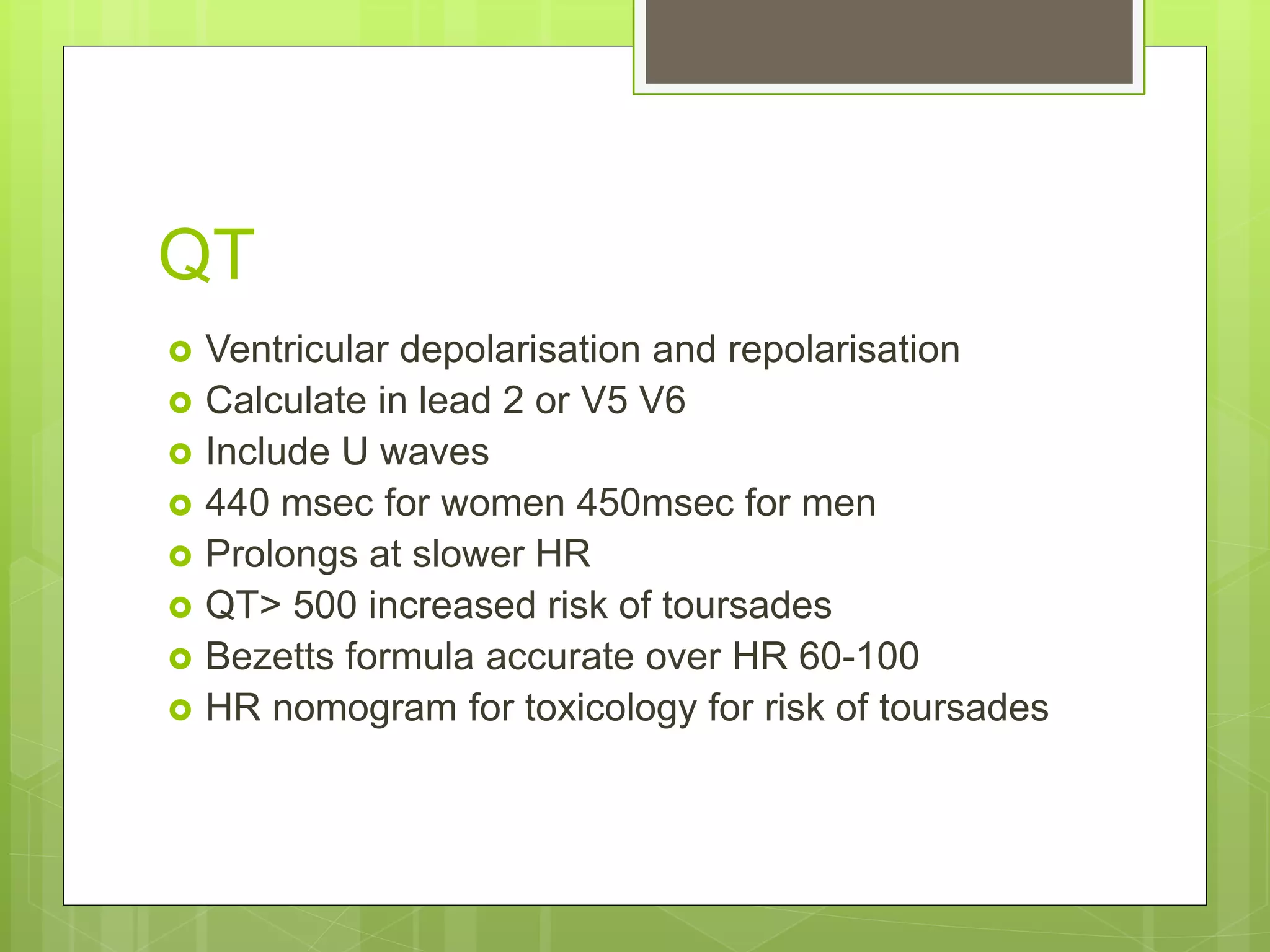
QT
 Ventricular depolarisation and repolarisation
 Calculate in lead 2 or V5 V6
 Include U waves
 440 msec for women 450msec for men
 Prolongs at slower HR
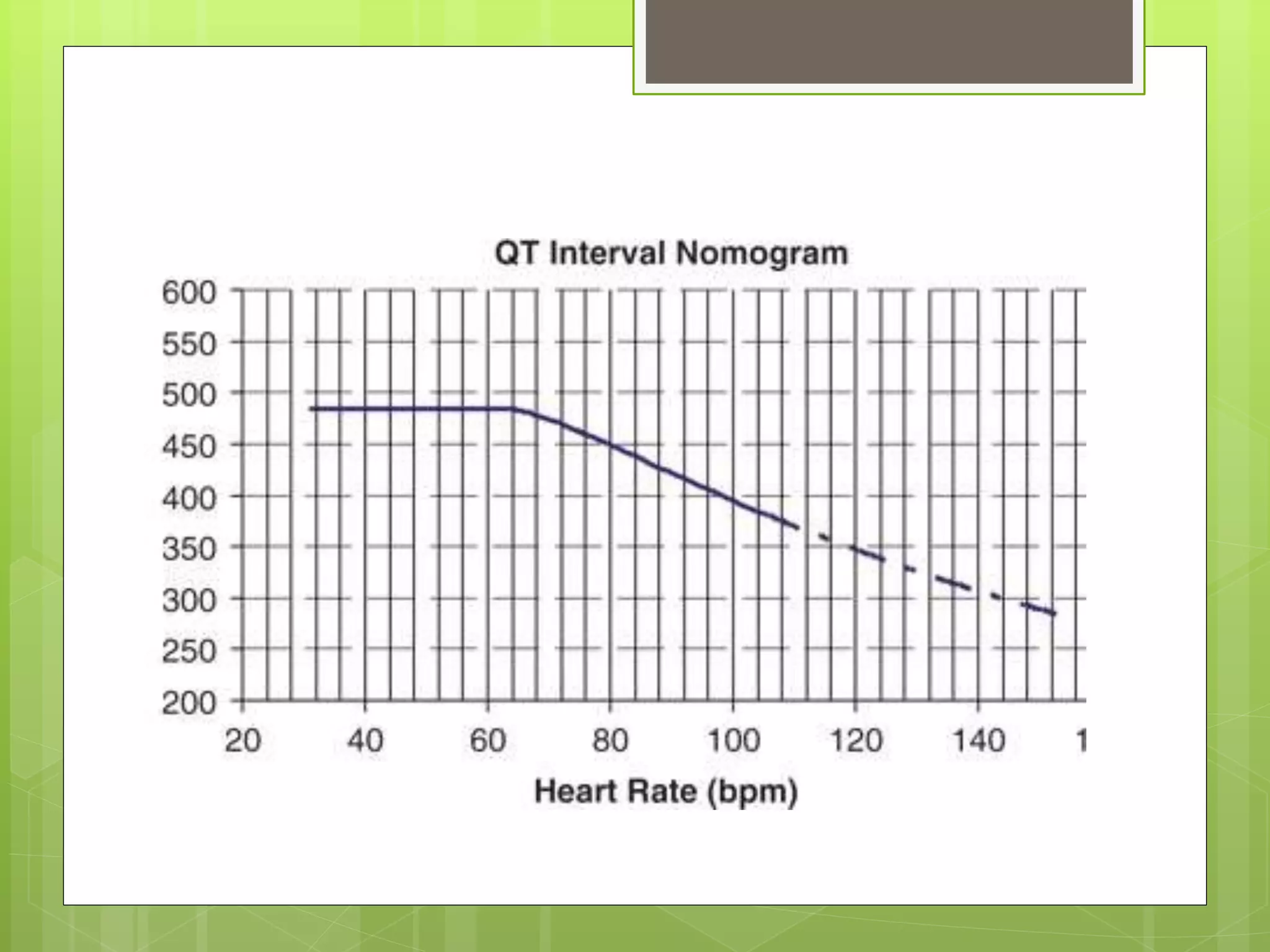
 QT> 500 increased risk of toursades
 Bezetts formula accurate over HR 60-100
 HR nomogram for toxicology for risk of toursades
Long QT
T waves
 Inverted in V1 and AVR
 Can be – flat, biphasic, inverted, camel
humped or hyperacute
 Dynamic change most important
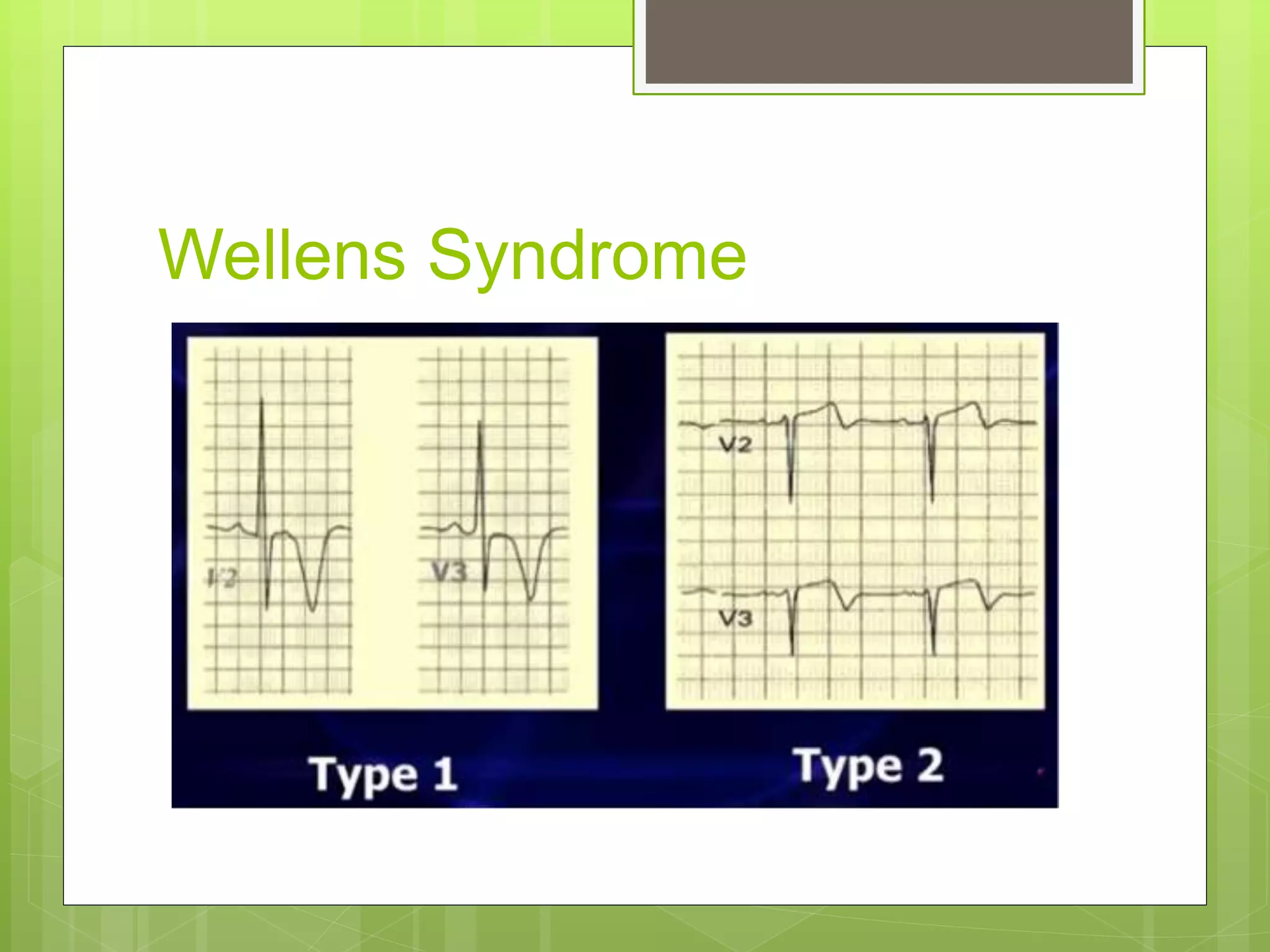
 Don’t miss Wellens syndrome
Wellens Syndrome
Other Waves
Rhythm
 Regular, irregular, regularly irregular
 Heart block
 Atrial , AVNRT, Accessory pathways
 Junctional rhythm
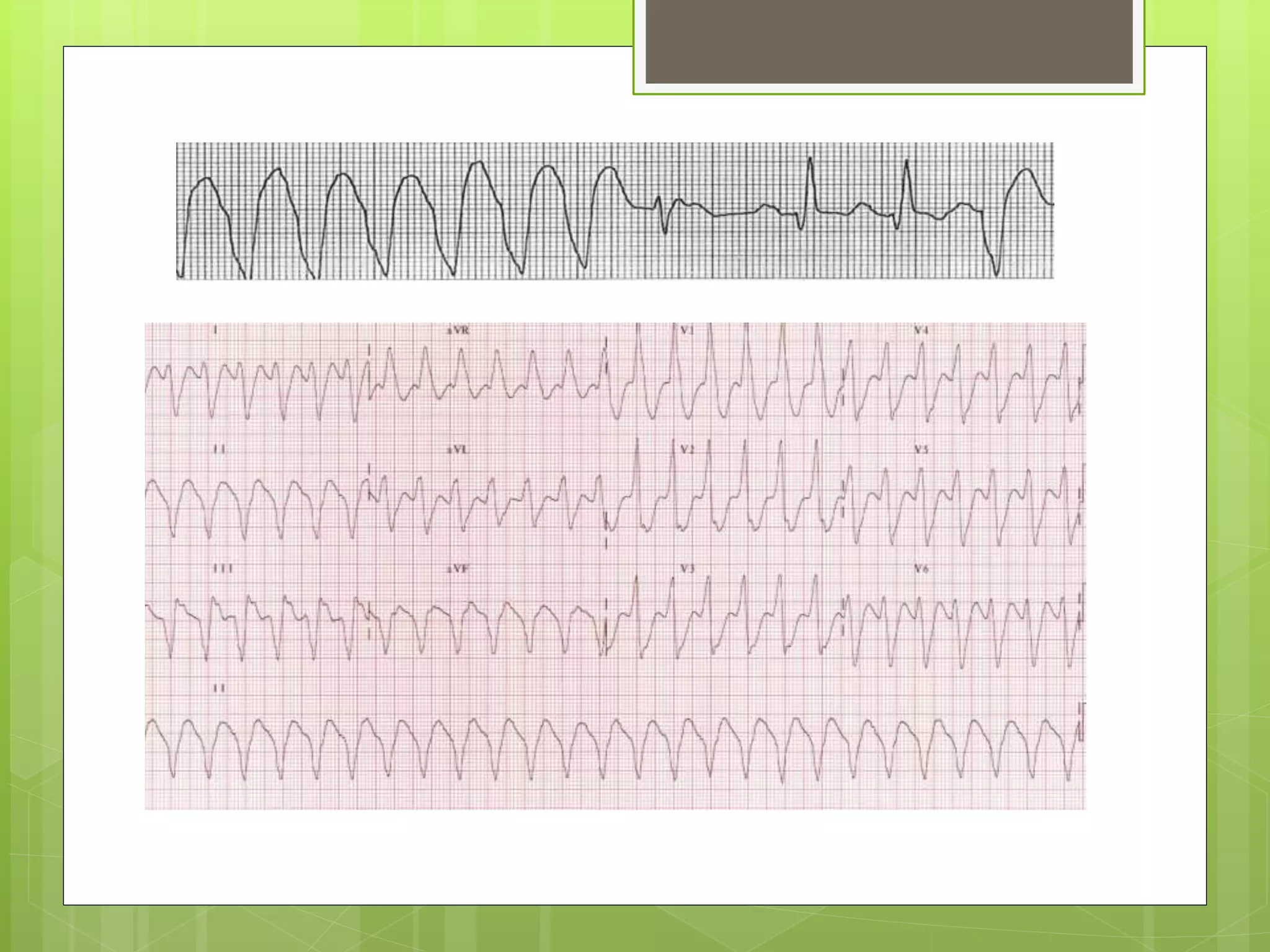
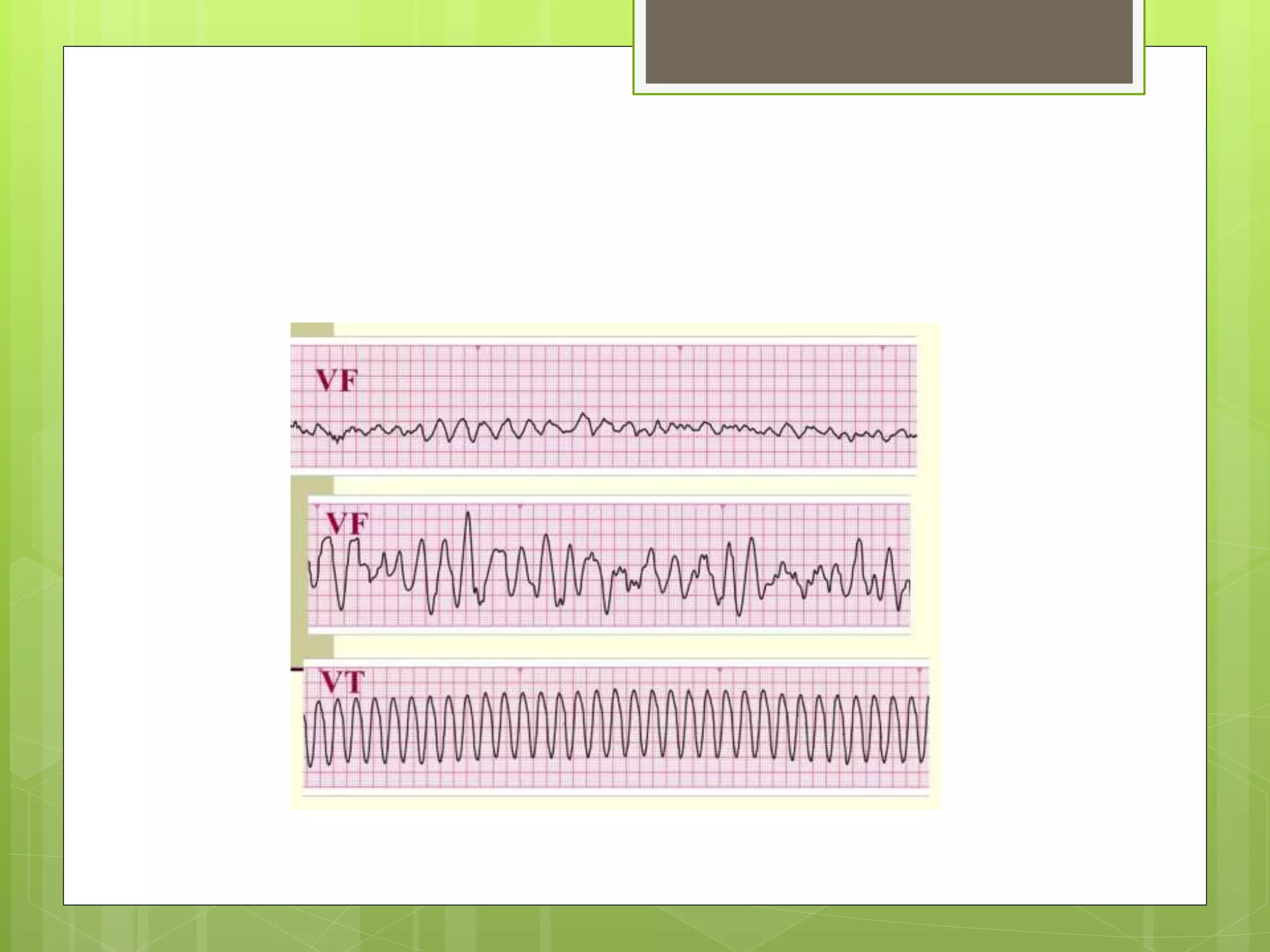
 Ventricular rhythms
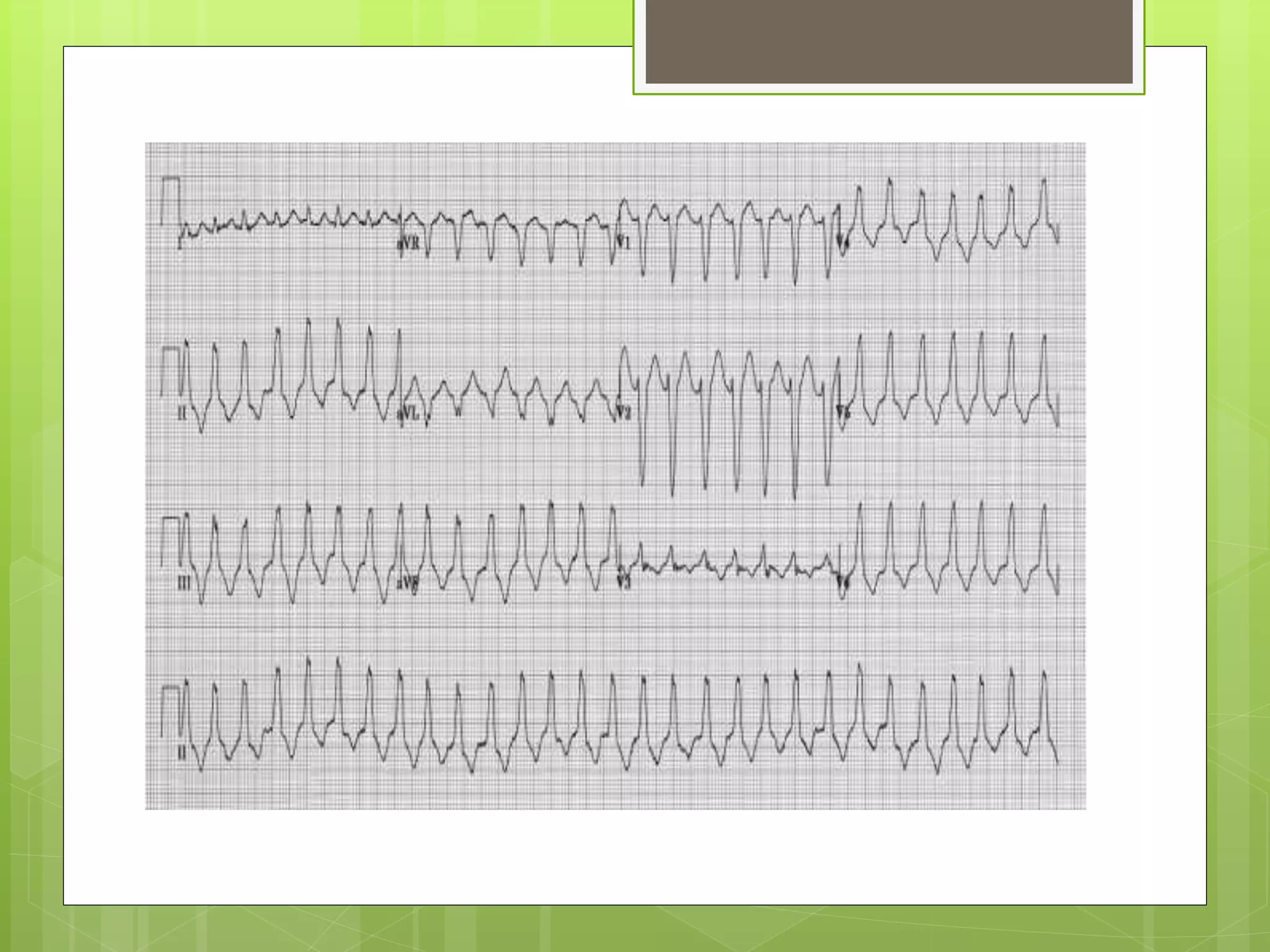
 Distinguish VT from SVT with BBB
AIVR
VT or SVT with abberancy
 If >35 or Hx of IHD – likely VT
 Look for
 Width > 160msec QRS VT likely
 Concordance
 Fusion beats
 Capture beats
 Right/left axis
 AV dissociation – p waves notching the QRS
 First rabbit ear taller RSR1
Children
 Right sided dominance as infants
 Should be normal by age 3-4
 Rate age dependent
 Inverted T waves V1-4 can be normal
 Infant QT 490
 https://www.starship.org.nz/for-health-
professionals/starship-clinical-
guidelines/e/electrocardiograph-ecg/
QUIZ TIME

Ecg interpretation

  • 1.
  • 2.
    Components of ECG Rate  Rhythm  Axis  P  PR  QRS  QT  ST  Other waves  Delta  Epsilon  Osborne  U
  • 4.
    Rate  Small square0.04  Big square 0.2  Slow 300/big square  Fast 1500/small square  Irregular – count complexes on rhythm strip x 6 gives average rate Big squares rate 2 150 2.5 120 3 100 3.5 86 4 75 4.5 66 5 60 5.5 54 6 50 6.5 46 7 42
  • 5.
  • 6.
    Axis differentials  Left-30 to -90  LBBB LAFB  LVH  Inferior MI  Paced rhythm  Right +90 to +180  RVH  LPFB  Lateral MI  Lung disease – acute/chronic  Hyperkalemia  Na channel blockade  Dextrocardia  NORMAL IN INFANTS and skinny adults
  • 7.
    P WAVE PRinterval  120 – 200 msec  Long – any heart block  Short – WPW, pre- excitation  Elevation/depression - pericarditis  Width < 120 msec  Amplitude  <2.5mm in limb leads  <1.5mm in precordial leads  V1 biphasic  Avf inverted
  • 9.
    QRS  Amplitude  Duration Q wave  R wave  Hypertrophy  Bundle branch block  J point
  • 11.
    Q wave  Pathologicalif  >40 ms wide  >2mm deep  >0.25% QRS  Present in leads v1-v3  > 2mm Can be normal in leads III /avR
  • 12.
    R wave inV1  RVH - PE  Posterior MI  RBBB  HOCM  WPW  Dextrocardia  Normal in Kids
  • 13.
    R Wave R wavein AVR  Na channel blockade  VT  Dextrocardia  Limb lead reversal R wave progression  R wave <3mm in V3  Signifies anteroseptal MI  LVH
  • 14.
    Left Ventricular hypertrophy Voltage+ non voltage  Muscle wall thickens  Leading to increased S wave amplitude in right sided leads  Increased R wave amplitude in left sided leads  Prolonged depolarisation  Repolarisation abnormalities in lateral leads Causes  HTN  AR/AS  MR  HOCM
  • 15.
    LVH voltage  S inV1 + R in V5/V6 > 35mm  AVL R wave 11mm Non voltage  ST depression/T wave inversion in lateral leads  Increased R wave peak time > 50msec in V5 V6
  • 16.
  • 17.
    RVH  Right axis Dominant R in V1 > 7mm or RS ratio >1  Dominant S in V6 > 7mm or RS ratio <1  RV strain – ST depression in V1-4 and inferiorly
  • 18.
    Causes  PE  Chroniclung disease  Pulmonary HTN  Mitral stenosis  Congenital heart disease  Arrythmogenic RV cardiomyopathy
  • 19.
  • 20.
  • 22.
  • 23.
    J point Notching -BER Osborne wave - hypothermia
  • 27.
    QT  Ventricular depolarisationand repolarisation  Calculate in lead 2 or V5 V6  Include U waves  440 msec for women 450msec for men  Prolongs at slower HR  QT> 500 increased risk of toursades  Bezetts formula accurate over HR 60-100  HR nomogram for toxicology for risk of toursades
  • 28.
  • 30.
    T waves  Invertedin V1 and AVR  Can be – flat, biphasic, inverted, camel humped or hyperacute  Dynamic change most important  Don’t miss Wellens syndrome
  • 31.
  • 32.
  • 34.
    Rhythm  Regular, irregular,regularly irregular  Heart block  Atrial , AVNRT, Accessory pathways  Junctional rhythm  Ventricular rhythms  Distinguish VT from SVT with BBB
  • 37.
  • 39.
    VT or SVTwith abberancy  If >35 or Hx of IHD – likely VT  Look for  Width > 160msec QRS VT likely  Concordance  Fusion beats  Capture beats  Right/left axis  AV dissociation – p waves notching the QRS  First rabbit ear taller RSR1
  • 43.
    Children  Right sideddominance as infants  Should be normal by age 3-4  Rate age dependent  Inverted T waves V1-4 can be normal  Infant QT 490  https://www.starship.org.nz/for-health- professionals/starship-clinical- guidelines/e/electrocardiograph-ecg/
  • 44.

Editor's Notes

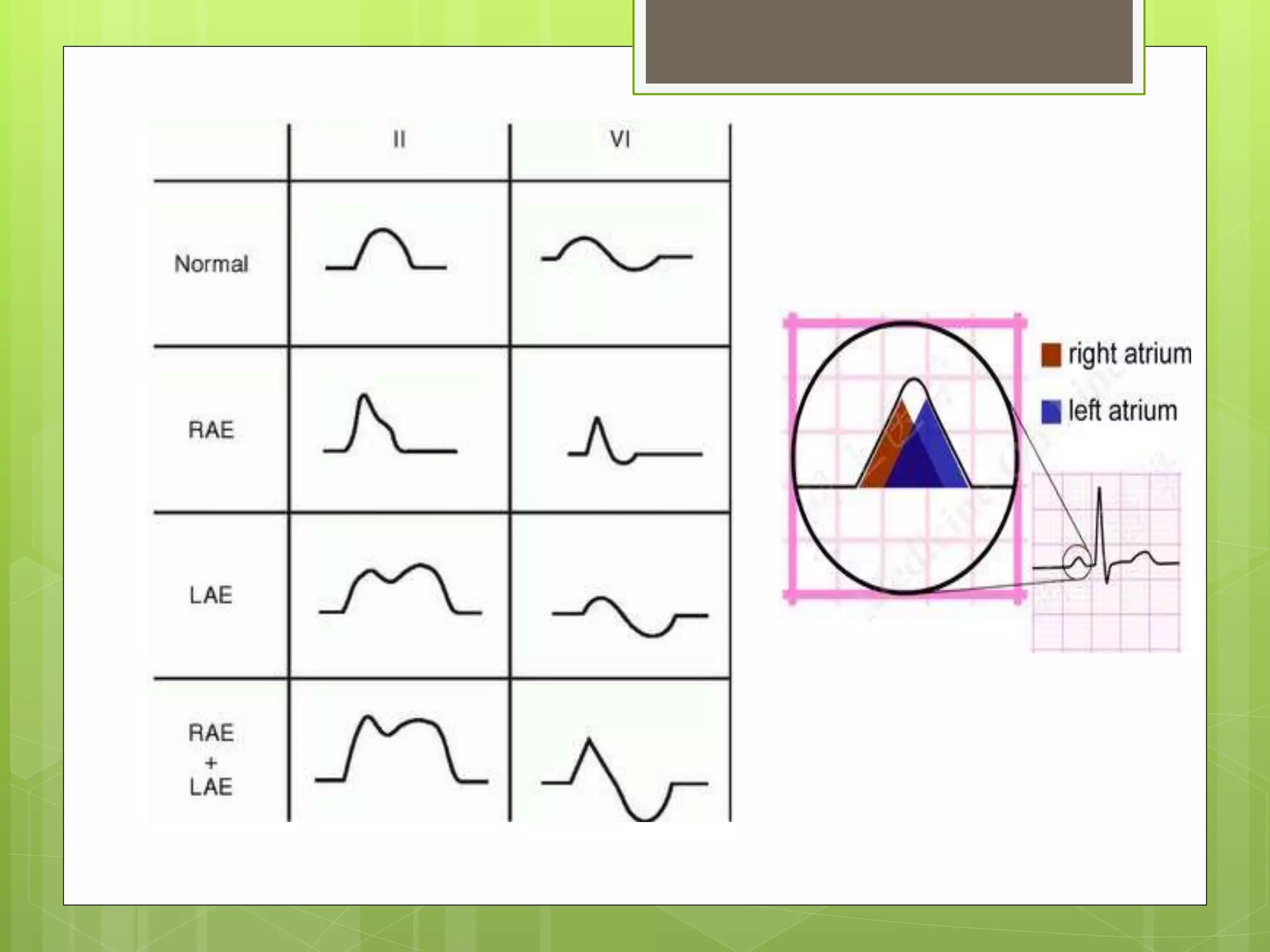
  • #9 P pulmonale – tricuspid stenosis, pulmonary htn, cor pulmonale P mitrale, or HTN, AS, HOCM
  • #26 Clinical use - validated
  • #27 Clinical use -