ECG Rhythm Interpretation
Normal Sinus Rhythm
Course Objectives
• To recognize the normal rhythm of the
heart - “Normal Sinus Rhythm.”
• To recognize the 13 most common
rhythm disturbances.
• To recognize an acute myocardial
infarction on a 12-lead ECG.
Learning Modules
• ECG Basics
• How to Analyze a Rhythm
• Normal Sinus Rhythm
• Heart Arrhythmias
• Diagnosing a Myocardial Infarction
• Advanced 12-Lead Interpretation
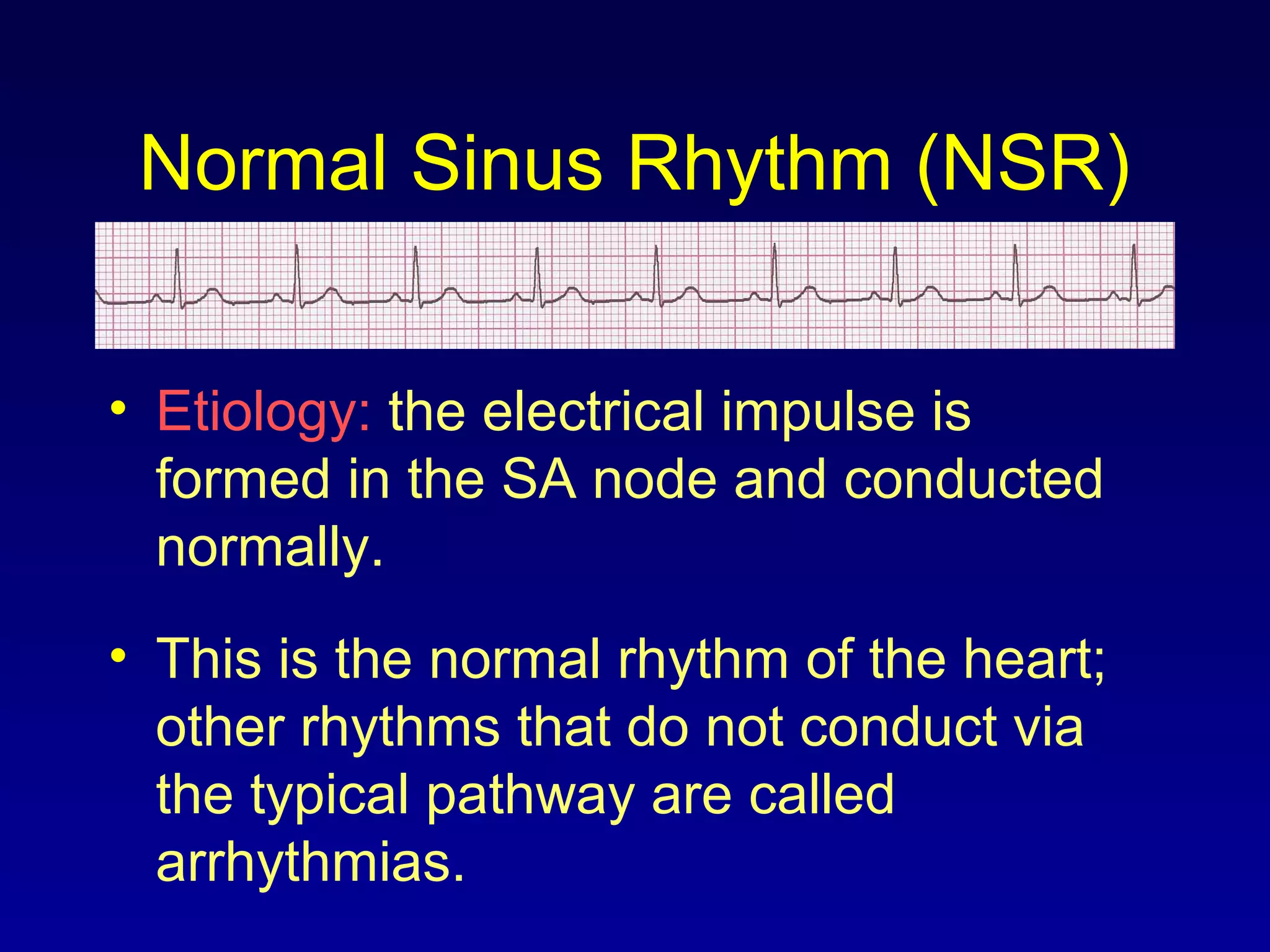
Normal Sinus Rhythm (NSR)
• Etiology: the electrical impulse is
formed in the SA node and conducted
normally.
• This is the normal rhythm of the heart;
other rhythms that do not conduct via
the typical pathway are called
arrhythmias.
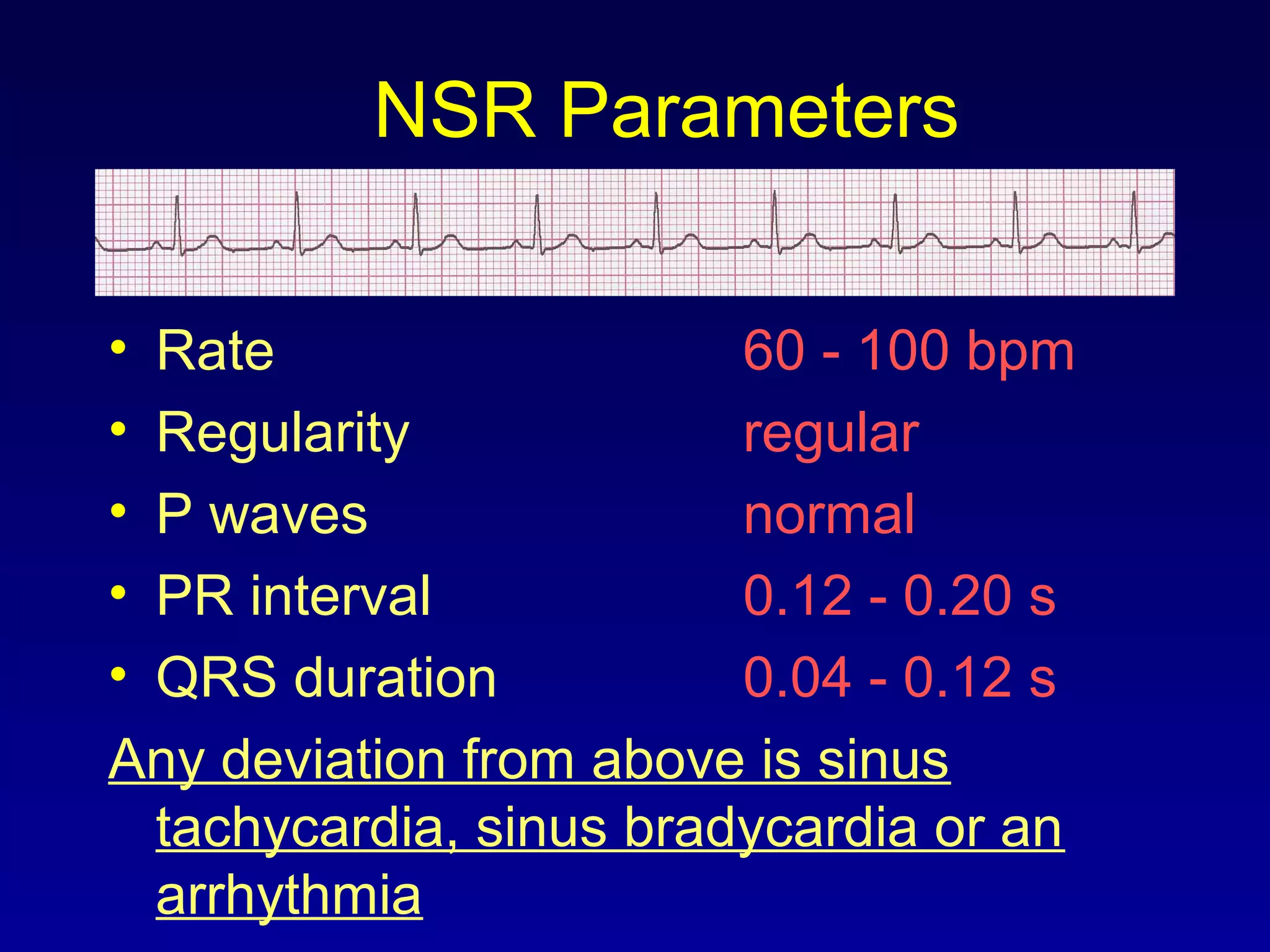
NSR Parameters
• Rate 60 - 100 bpm
• Regularity regular
• P waves normal
• PR interval 0.12 - 0.20 s
• QRS duration 0.04 - 0.12 s
Any deviation from above is sinus
tachycardia, sinus bradycardia or an
arrhythmia
Arrhythmia Formation
Arrhythmias can arise from problems in
the:
• Sinus node
• Atrial cells
• AV junction
• Ventricular cells
SA Node Problems
The SA Node can:
• fire too slow
• fire too fast
Sinus Bradycardia
Sinus Tachycardia
Sinus Tachycardia may be an appropriate
response to stress.
Atrial Cell Problems
Atrial cells can:
• fire occasionally
from a focus
• fire continuously
due to a looping
re-entrant circuit
Premature Atrial
Contractions (PACs)
Atrial Flutter
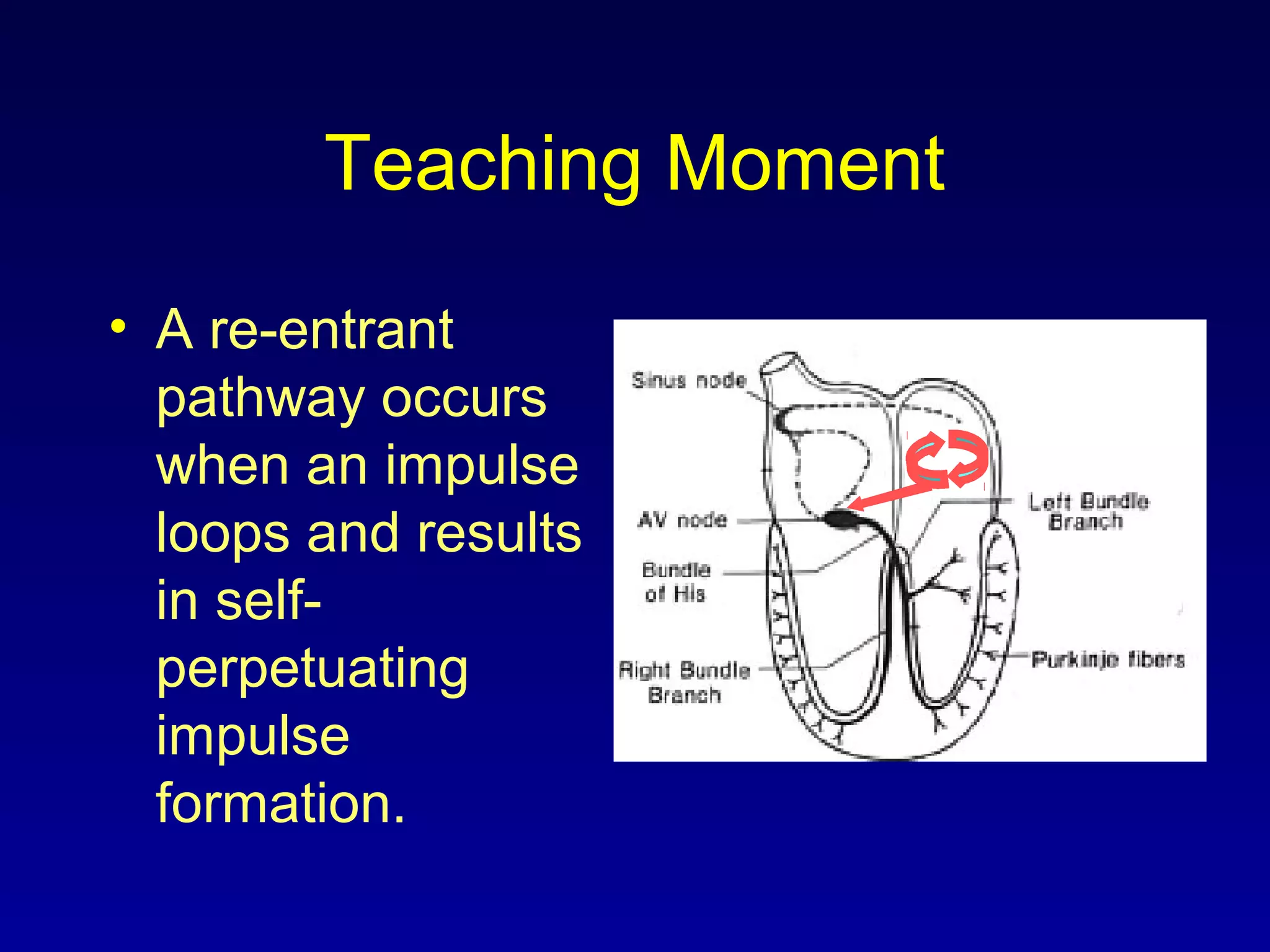
Teaching Moment
• A re-entrant
pathway occurs
when an impulse
loops and results
in self-
perpetuating
impulse
formation.
Atrial Cell Problems
Atrial cells can also:
• fire continuously
from multiple foci
or
fire continuously
due to multiple
micro re-entrant
“wavelets”
Atrial Fibrillation
Atrial Fibrillation
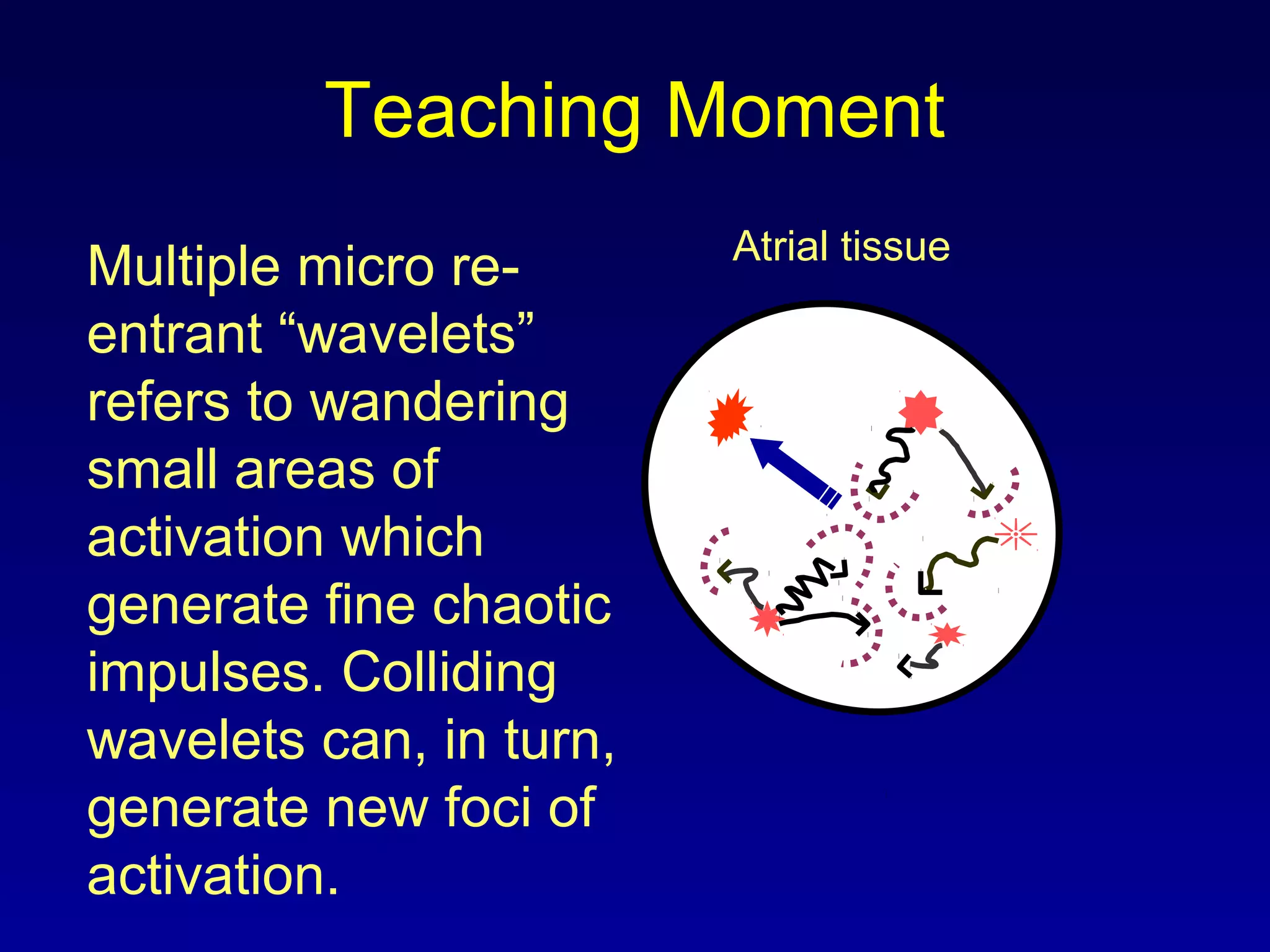
Teaching Moment
Multiple micro re-
entrant “wavelets”
refers to wandering
small areas of
activation which
generate fine chaotic
impulses. Colliding
wavelets can, in turn,
generate new foci of
activation.
Atrial tissue
AV Junctional Problems
The AV junction can:
• fire continuously
due to a looping
re-entrant circuit
• block impulses
coming from the
SA Node
Paroxysmal
Supraventricular
Tachycardia
AV Junctional Blocks
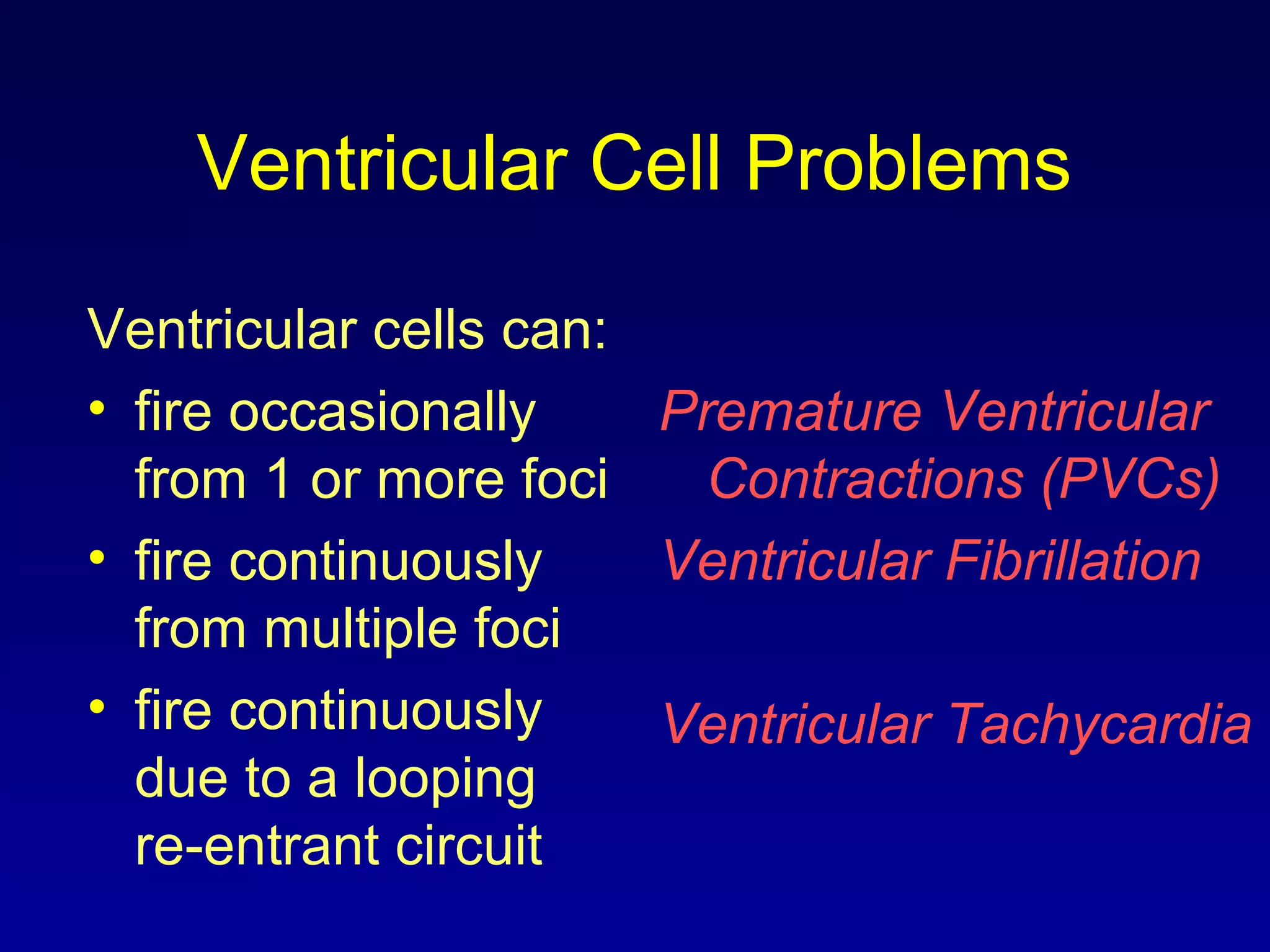
Ventricular Cell Problems
Ventricular cells can:
• fire occasionally
from 1 or more foci
• fire continuously
from multiple foci
• fire continuously
due to a looping
re-entrant circuit
Premature Ventricular
Contractions (PVCs)
Ventricular Fibrillation
Ventricular Tachycardia

ECG PART 3

  • 1.
  • 2.
    Course Objectives • Torecognize the normal rhythm of the heart - “Normal Sinus Rhythm.” • To recognize the 13 most common rhythm disturbances. • To recognize an acute myocardial infarction on a 12-lead ECG.
  • 3.
    Learning Modules • ECGBasics • How to Analyze a Rhythm • Normal Sinus Rhythm • Heart Arrhythmias • Diagnosing a Myocardial Infarction • Advanced 12-Lead Interpretation
  • 4.
    Normal Sinus Rhythm(NSR) • Etiology: the electrical impulse is formed in the SA node and conducted normally. • This is the normal rhythm of the heart; other rhythms that do not conduct via the typical pathway are called arrhythmias.
  • 5.
    NSR Parameters • Rate60 - 100 bpm • Regularity regular • P waves normal • PR interval 0.12 - 0.20 s • QRS duration 0.04 - 0.12 s Any deviation from above is sinus tachycardia, sinus bradycardia or an arrhythmia
  • 6.
    Arrhythmia Formation Arrhythmias canarise from problems in the: • Sinus node • Atrial cells • AV junction • Ventricular cells
  • 7.
    SA Node Problems TheSA Node can: • fire too slow • fire too fast Sinus Bradycardia Sinus Tachycardia Sinus Tachycardia may be an appropriate response to stress.
  • 8.
    Atrial Cell Problems Atrialcells can: • fire occasionally from a focus • fire continuously due to a looping re-entrant circuit Premature Atrial Contractions (PACs) Atrial Flutter
  • 9.
    Teaching Moment • Are-entrant pathway occurs when an impulse loops and results in self- perpetuating impulse formation.
  • 10.
    Atrial Cell Problems Atrialcells can also: • fire continuously from multiple foci or fire continuously due to multiple micro re-entrant “wavelets” Atrial Fibrillation Atrial Fibrillation
  • 11.
    Teaching Moment Multiple microre- entrant “wavelets” refers to wandering small areas of activation which generate fine chaotic impulses. Colliding wavelets can, in turn, generate new foci of activation. Atrial tissue
  • 12.
    AV Junctional Problems TheAV junction can: • fire continuously due to a looping re-entrant circuit • block impulses coming from the SA Node Paroxysmal Supraventricular Tachycardia AV Junctional Blocks
  • 13.
    Ventricular Cell Problems Ventricularcells can: • fire occasionally from 1 or more foci • fire continuously from multiple foci • fire continuously due to a looping re-entrant circuit Premature Ventricular Contractions (PVCs) Ventricular Fibrillation Ventricular Tachycardia