
ECG ConferenceECG Conference
Henry Tran, MDHenry Tran, MD
January 13, 2016January 13, 2016
Goals
 Review basic principles of EKG
 RHYTHM: Identify sinus vs atrial arrhythmias
 Recognize patterns of STEMI
 Recognize patterns of ischemia
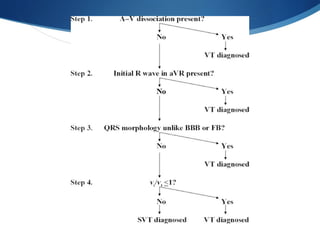
 Distinguish Wide Complex Tachycardia: Ventricular
Tachycardia vs. Aberrant Conduction
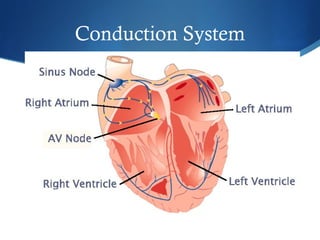
Conduction System
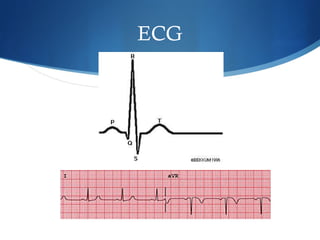
ECG
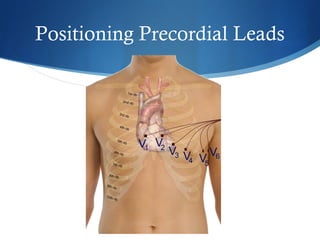
Positioning Precordial Leads
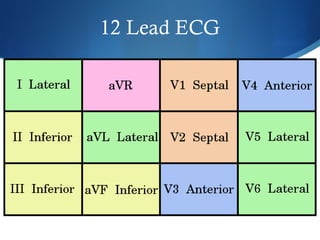
12 Lead ECG
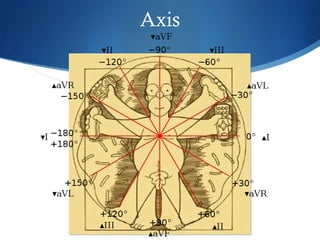
Axis
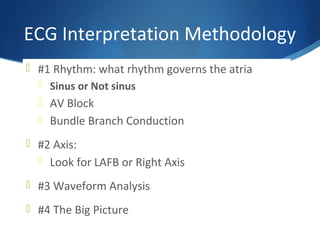
ECG Interpretation Methodology
 #1 Rhythm: what rhythm governs the atria
 Sinus or Not sinus
 AV Block
 Bundle Branch Conduction
 #2 Axis:
 Look for LAFB or Right Axis
 #3 Waveform Analysis
 #4 The Big Picture
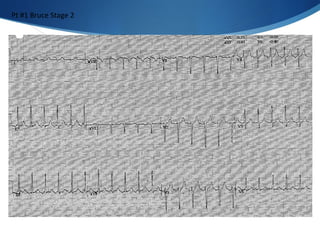
Pt #1 Bruce Stage 2
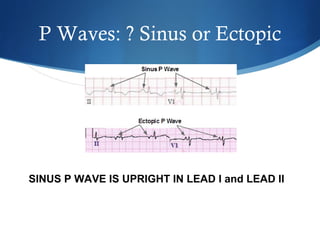
P Waves: ? Sinus or Ectopic
SINUS P WAVE IS UPRIGHT IN LEAD I and LEAD II
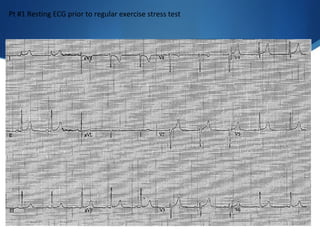
Pt #1 Resting ECG prior to regular exercise stress test
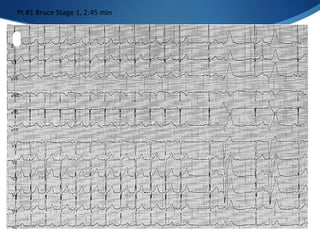
Pt #1 Bruce Stage 1, 2:45 min
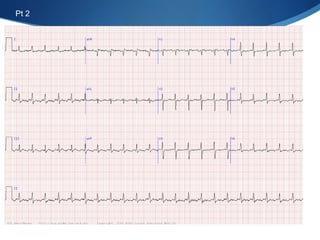
Pt 2
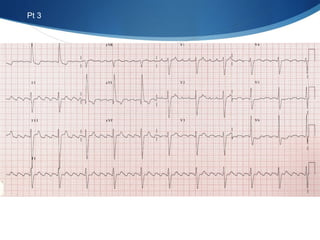
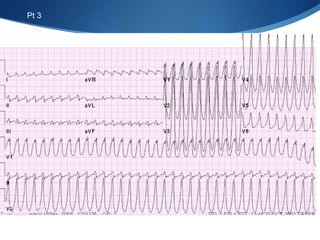
Pt 3
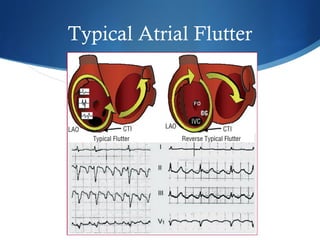
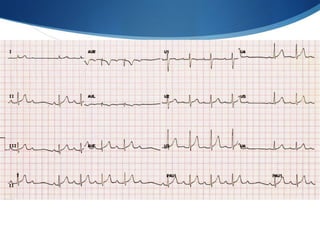
Typical Atrial Flutter
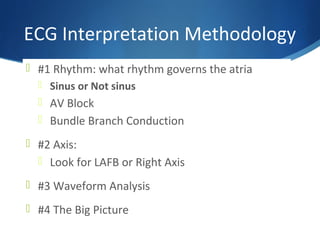
ECG Interpretation Methodology
 #1 Rhythm: what rhythm governs the atria
 Sinus or Not sinus
 AV Block
 Bundle Branch Conduction
 #2 Axis:
 Look for LAFB or Right Axis
 #3 Waveform Analysis
 #4 The Big Picture
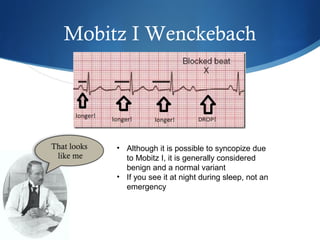
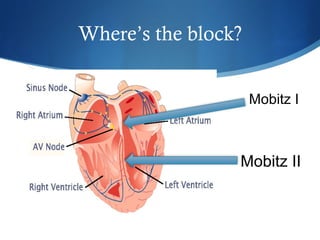
Mobitz I Wenckebach
• Although it is possible to syncopize due
to Mobitz I, it is generally considered
benign and a normal variant
• If you see it at night during sleep, not an
emergency
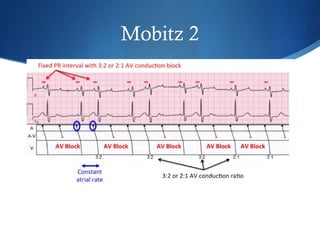
Mobitz 2
Where’s the block?
Mobitz I
Mobitz II
Pt 3
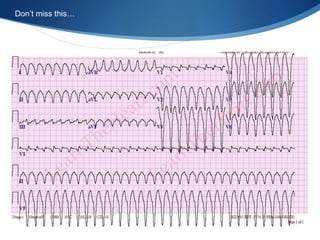
Don’t miss this…
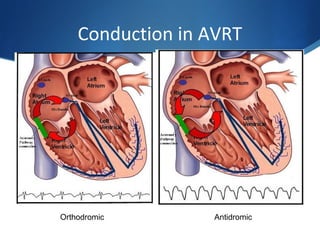
Conduction in AVRT
Orthodromic Antidromic
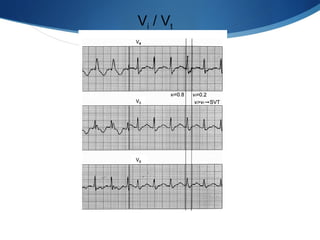
Vi / Vt
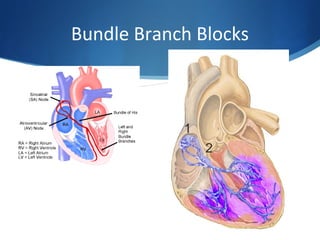
Bundle Branch Blocks
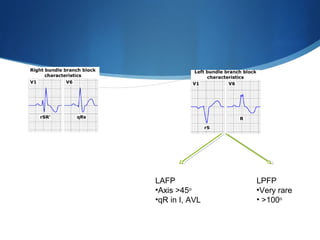
LAFP
•Axis >45o
•qR in I, AVL
LPFP
•Very rare
• >100o
V TACH!!!
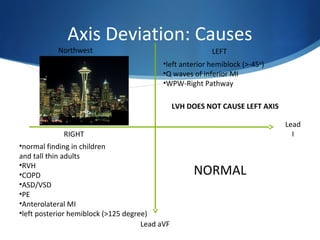
Axis Deviation: Causes
NORMAL
Northwest LEFT
RIGHT
Lead
I
Lead aVF
•normal finding in children
and tall thin adults
•RVH
•COPD
•ASD/VSD
•PE
•Anterolateral MI
•left posterior hemiblock (>125 degree)
•left anterior hemiblock (>-45o
)
•Q waves of inferior MI
•WPW-Right Pathway
LVH DOES NOT CAUSE LEFT AXIS
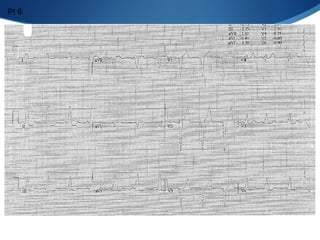
Pt 6
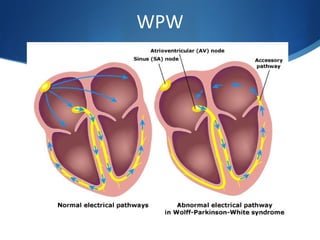
WPW
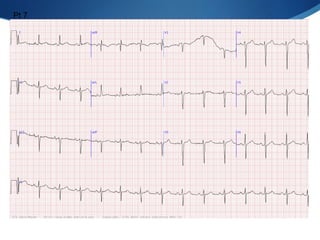
Pt 7
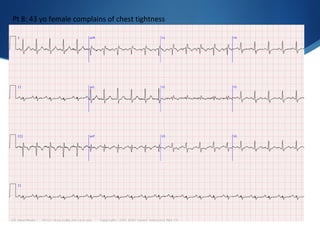
Pt 8: 43 yo female complains of chest tightness
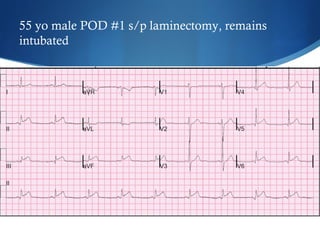
55 yo male POD #1 s/p laminectomy, remains
intubated
Don’t Miss This…
Don’t Miss These…
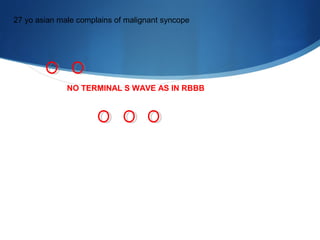
27 yo asian male complains of malignant syncope
NO TERMINAL S WAVE AS IN RBBB
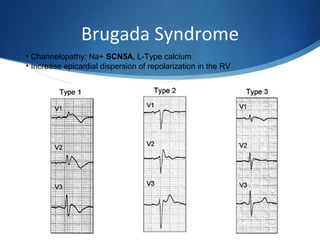
Brugada Syndrome
• Channelopathy: Na+ SCN5A, L-Type calcium
• Increase epicardial dispersion of repolarization in the RV
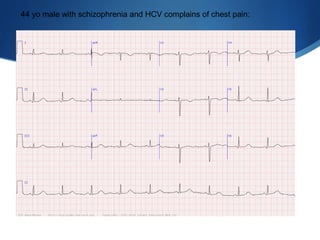
44 yo male with schizophrenia and HCV complains of chest pain:
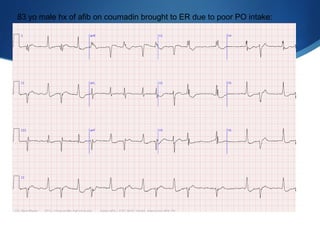
83 yo male hx of afib on coumadin brought to ER due to poor PO intake:
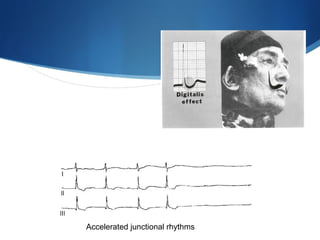
Accelerated junctional rhythms
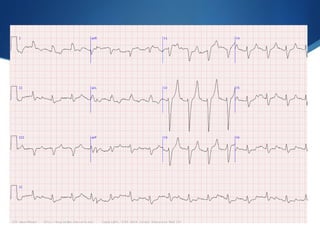
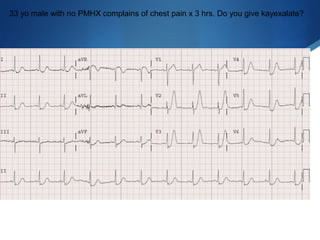
33 yo male with no PMHX complains of chest pain x 3 hrs. Do you give kayexalate?
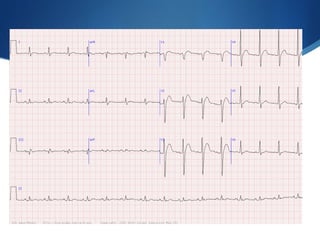
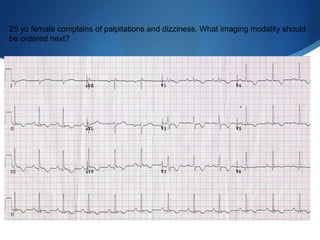
25 yo female complains of palpitations and dizziness. What imaging modality should
be ordered next?
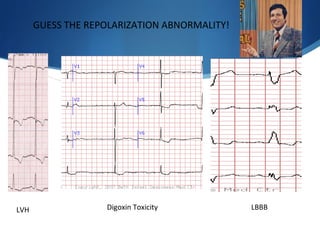
Digoxin Toxicity LBBBLVH
GUESS THE REPOLARIZATION ABNORMALITY!
Summary
 What’s the rhythm?????
Thanks!

Principles of ECG Interpretation

Editor's Notes

  • #14 Atrial Flutter
  • #15 Atrial Flutter
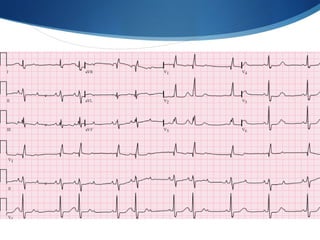
  • #18 Mobitz 1
  • #20 Mobitz II
  • #23 Antidromic AVRT Axis is normal, VI/VT is >1
  • #24 Ventricular Tachycardia
  • #31 Sinus with APCs, nl axis, LBBB
  • #32 WPW with LBBB, PVC is more narrow than sinus conducted beats!
  • #34 Left Anterior Fascicular block Note poor R wave progression,
  • #35 Incomplete RBBB, RV strain pattern Sinus tach PE!
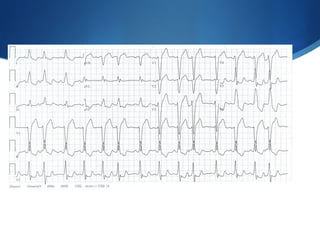
  • #36 Inferior STEMI
  • #38 Brugada Type I “Coved” Pattern
  • #39 USE FLECAINIDE CHALLENGE (NA+ 1C)
  • #40 Prolonged QT
  • #41 Dig toxicity: Not short QT, scooped ST, afib, ventricular ectopy
  • #42 The increase in intracellular sodium causes an augmentation of the exchange of intracellular sodium for extracellular calcium. This shift can cause an increase in permeability to potassium; an increase in the outward current during the plateau phase, with a reduction in the duration of the action potential; and a short QT interval
  • #43 Hyperkalemia
  • #44 Hypercalcemia: 1) Digoxin toxicity 2) Hypercalcemia 3) Congenital Short QT Short QT < 300
  • #45 Hyperacute T wave with ST depession ->>STEMI
  • #46 Arvd
  • #47 Dig Toxicity:scooped” ST segment depression, most prominent in the inferolateral precordial leads and usually absent in the rightward leads; flattened T waves; increased U wave; and shortening of th QT interval