Downloaded 35 times


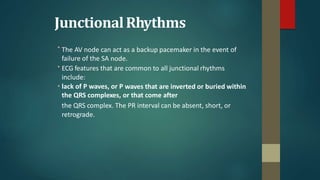
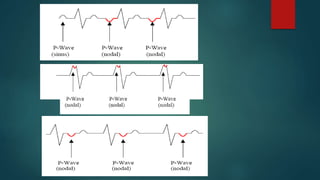
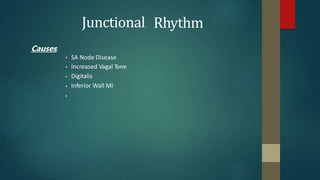
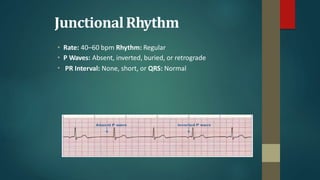
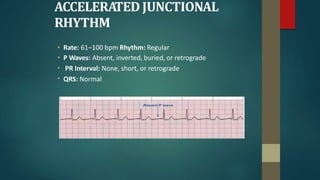
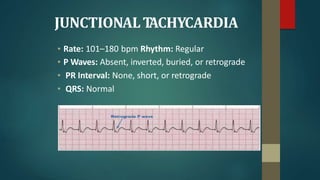


This document discusses junctional rhythms, which occur when the atrioventricular (AV) node acts as the backup pacemaker when the sinoatrial (SA) node fails. There are three types of junctional rhythm: junctional rhythm with a rate of 40-60 bpm; accelerated junctional rhythm with a rate of 61-100 bpm; and junctional tachycardia with a rate of 101-180 bpm. All junctional rhythms lack P waves or have inverted, buried, or retrograde P waves and a absent, short, or retrograde PR interval. Causes include SA node disease, increased vagal tone, digitalis use, and inferior wall myocardial infarction. Treatment options are


![Shadechapter10.ppt [read only]](https://cdn.slidesharecdn.com/ss_thumbnails/shadechapter10-150421103304-conversion-gate02-thumbnail.jpg?width=640&height=640&fit=bounds)


