Earthquakes
1. Magnitude of
Earthquake
2. Distance from
Epicenter
3. Population Density
4. Level of
Preparedness
5. Time of Occurrence
6. Type of Soil
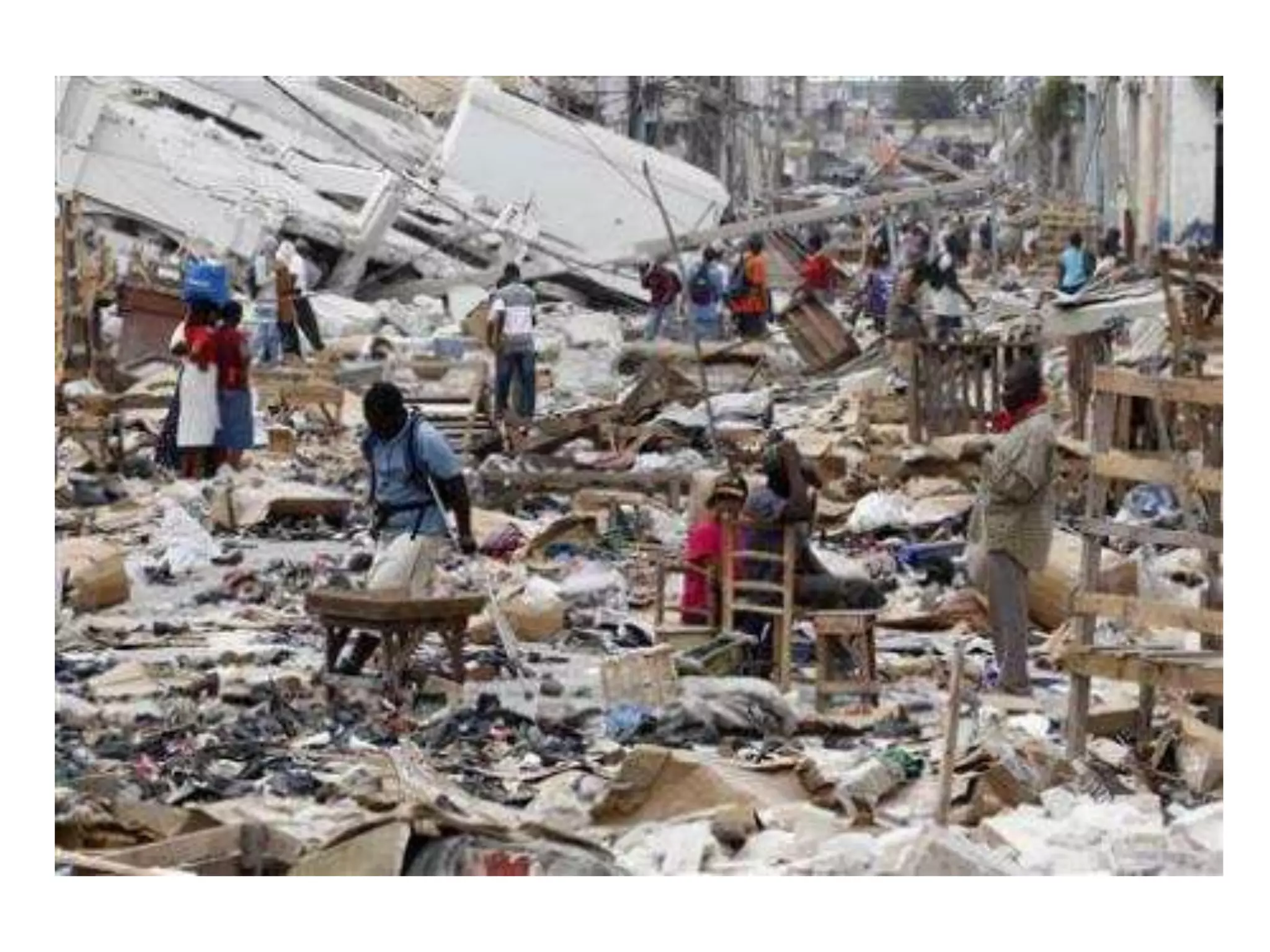
Not all Earthquakes cause destruction.
There are some factors that will influence
the extent in which an earthquake becomes
hazardous. What are they?
• Explanation: Magnitude is the amount of strength
released during an earthquake, the higher the
magnitude the stronger the earthquake with more
energy released, leading to more damage.
Magnitude of an
Earthquake.
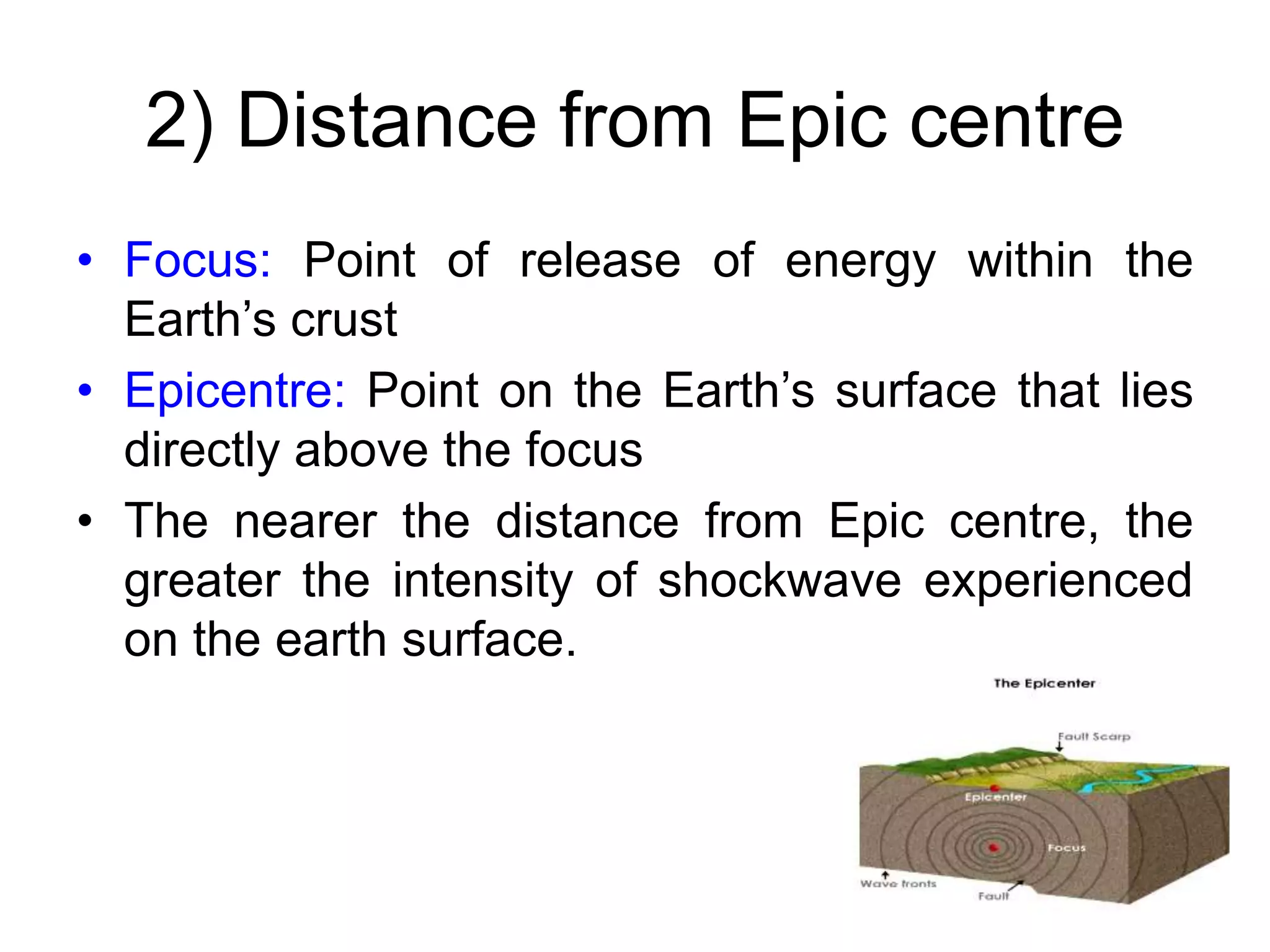
• Focus: Point of release of energy within the
Earth’s crust
• Epicentre: Point on the Earth’s surface that lies
directly above the focus
• The nearer the distance from Epic centre, the
greater the intensity of shockwave experienced
on the earth surface.
2) Distance from Epic centre
Population Density: The number of people per unit area
Explanation
• The higher the population density of an
Earthquake-prone area, the chances of many
people being killed or injured during an
Earthquake will be higher.
3) Population Density
• People living in Earthquake-prone areas usually
adopt a variety of measures to prepare
themselves in the event of an Earthquake.
• Damage is reduced when people are
prepared for an Earthquake.
4) Level of preparedness
• The time of the day which an earthquake
occurs determines how ready people are
to evacuate.
– If an earthquake happens at night when many
are sleeping, there is a higher chance that
most people will be trapped in their houses
5) Time of occurrence
• During an Earthquake, people who live in
areas with soft soil tend to be affected
more greatly
• The softer the soil is, it reduces the
resilience of the soil when the ground is
shaken, making it more likely for infrastructure
to collapse.
6) Type of soil
Hazards
• Tsunamis: Series of huge waves produced as a
result of undersea Earthquakes .
• These huge waves travel long distances (up
to thousands of kilometres) before crashing
onto the shores
• Example: 2004 Boxing Day Earthquake off the
coast of Sumatra brought about tsunami that
affected countries like Indonesia, India, Thailand
and Sri Lanka
– Led to the death of more than 250,000 people
Threat of Tsunamis
Hazards
• Vibrations in the ground can snap pipes and
break cables which may cause the outbreak of
fires
• Communication services may also be affected
• Example: 2004 Earthquake in Kobe, Japan
– Damaged pipes and transmission lines
– Disrupted electricity, gas and water supplies
to about a million of Kobe city’s 1.4 million
residents.
Disruption of
Services
Hazards
• Usually not a direct result of Earthquakes
• Caused by damaged electrical appliances, overturned
stoves or broken gas pipes when the ground shakes
• Results in the collapse of infrastructure, injuries, death
and homelessness
• Example: 1995 Earthquake in Kobe, Japan, caused
extensive fires that carried on for 2 days
– Hundreds of fires ignited by toppled gas cookers
and kerosene stoves as households were preparing
their breakfasts
– Strong winds encouraged fires to spread rapidly.
– Firemen unable to control fires as ruptured water
pipes meant that there was no water supply
Fires
Hazards
• Landslide: Sliding down of large amounts of rocks
and/or soil from a hill slope
• Soil on the hill slopes loosens when the ground
shakes
• Loosened soil slides down the hill slopes, burying
people and infrastructure beneath it
• Example: 1970, Earthquake off the coast of
Peru destabilised the slopes of Mount
Huascaran, triggering a massive landslide.
– Landslide travelled more than 160km/hr
– Death toll was more than 18,000 and only 200
survived the disaster
Landslides
http://video.nationalgeographic.com/video/101-videos/landslides
Hazards
• Common occurrence during an earthquake in
an urban area as infrastructure may not be
designed to withstand earthquakes
• Sometimes, despite the lack of visible
damages foundations of buildings may be
weakened
– Repair works need to be carried out to prevent the
infrastructure from collapsing in the future
• Example: 2011 Earthquake in Tohoku, Japan,
caused a Tsunami which travelled 10km inland
– Extensive structural damage resulted in hundreds of
thousands of people being forced from their homes.
Destruction of
Properties
Hazards
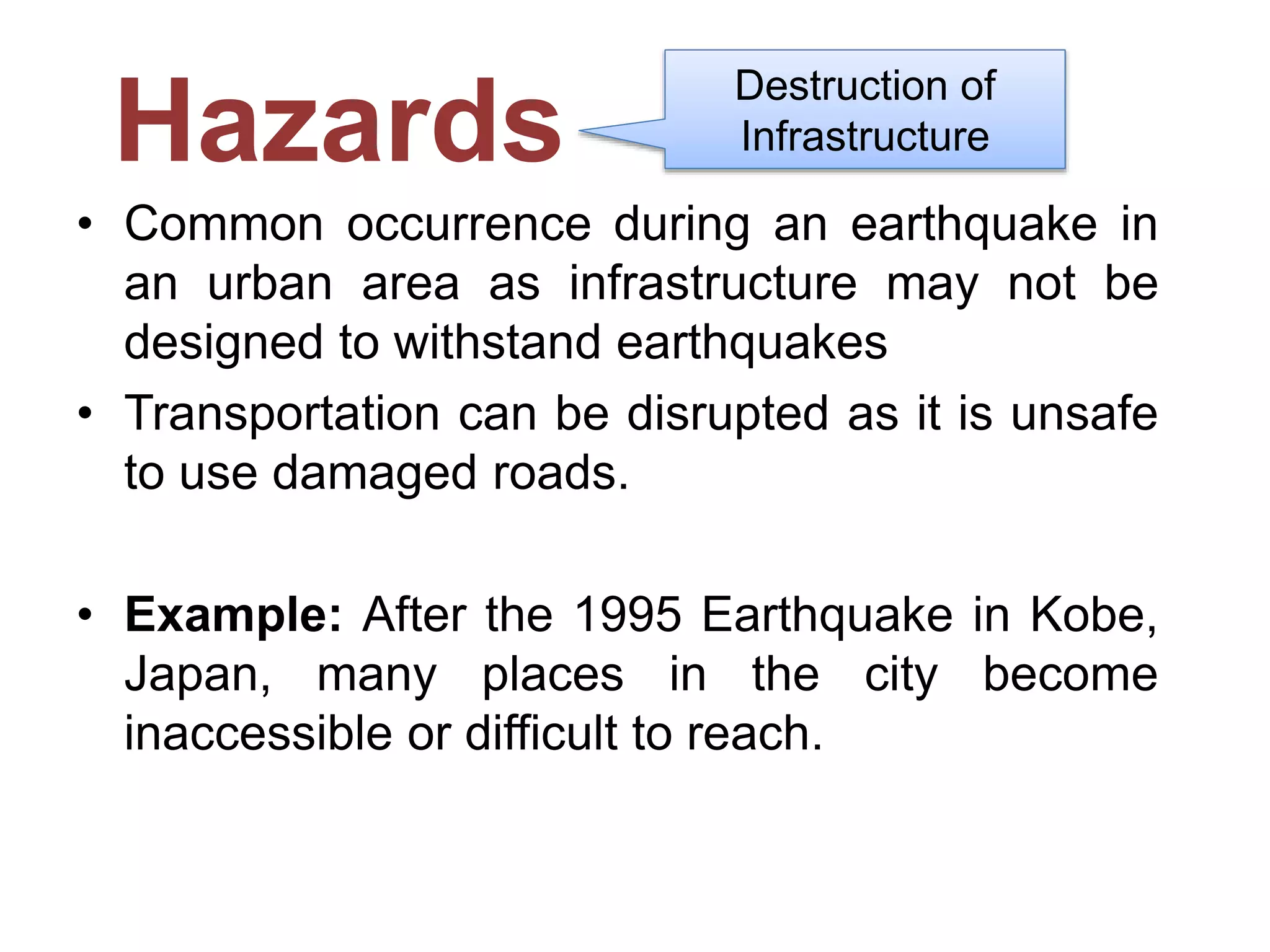
• Common occurrence during an earthquake in
an urban area as infrastructure may not be
designed to withstand earthquakes
• Transportation can be disrupted as it is unsafe
to use damaged roads.
• Example: After the 1995 Earthquake in Kobe,
Japan, many places in the city become
inaccessible or difficult to reach.
Destruction of
Infrastructure
Hazards
• Loss of lives could result both directly and
indirectly from Earthquakes
• Much of it depends on whether emergency
relief is available and if it is delivered in time
Loss of Lives
Direct Indirect
Collapse of
buildings
Starvation
Explosion/ Fire
Exposure to
inclement
weather
Landslides
Suffocation from
being buried
Hazards
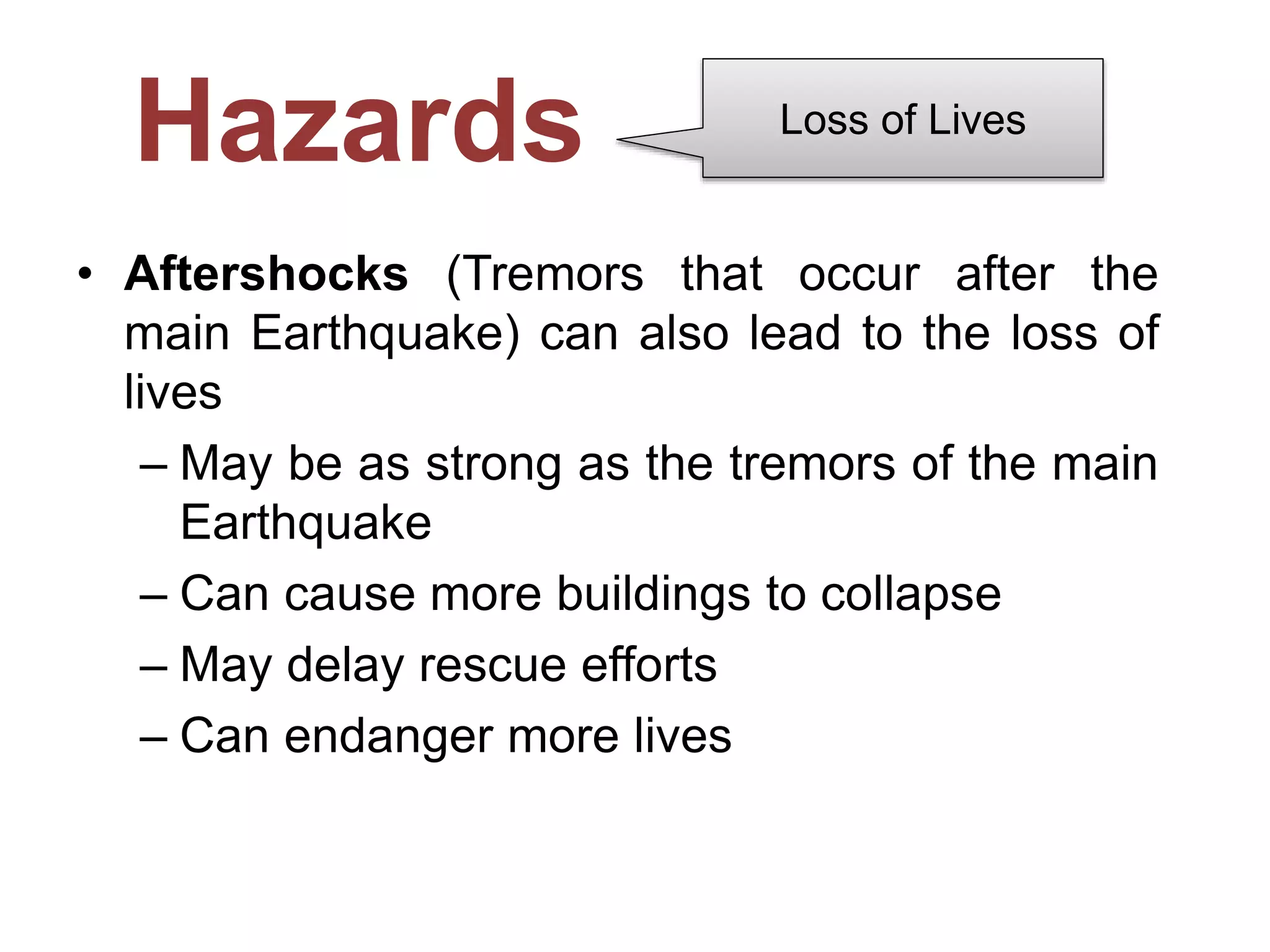
• Aftershocks (Tremors that occur after the
main Earthquake) can also lead to the loss of
lives
– May be as strong as the tremors of the main
Earthquake
– Can cause more buildings to collapse
– May delay rescue efforts
– Can endanger more lives
Loss of Lives
Hazards
Remember, HAZARDS are only
hazards when lives are at stake.
1. Threat of Tsunamis
2. Disruption of Services
3. Fires
4. Landslides
5. Destruction of Properties
6. Destruction of Infrastructure
7. Loss of Lives
Types of Volcanoes
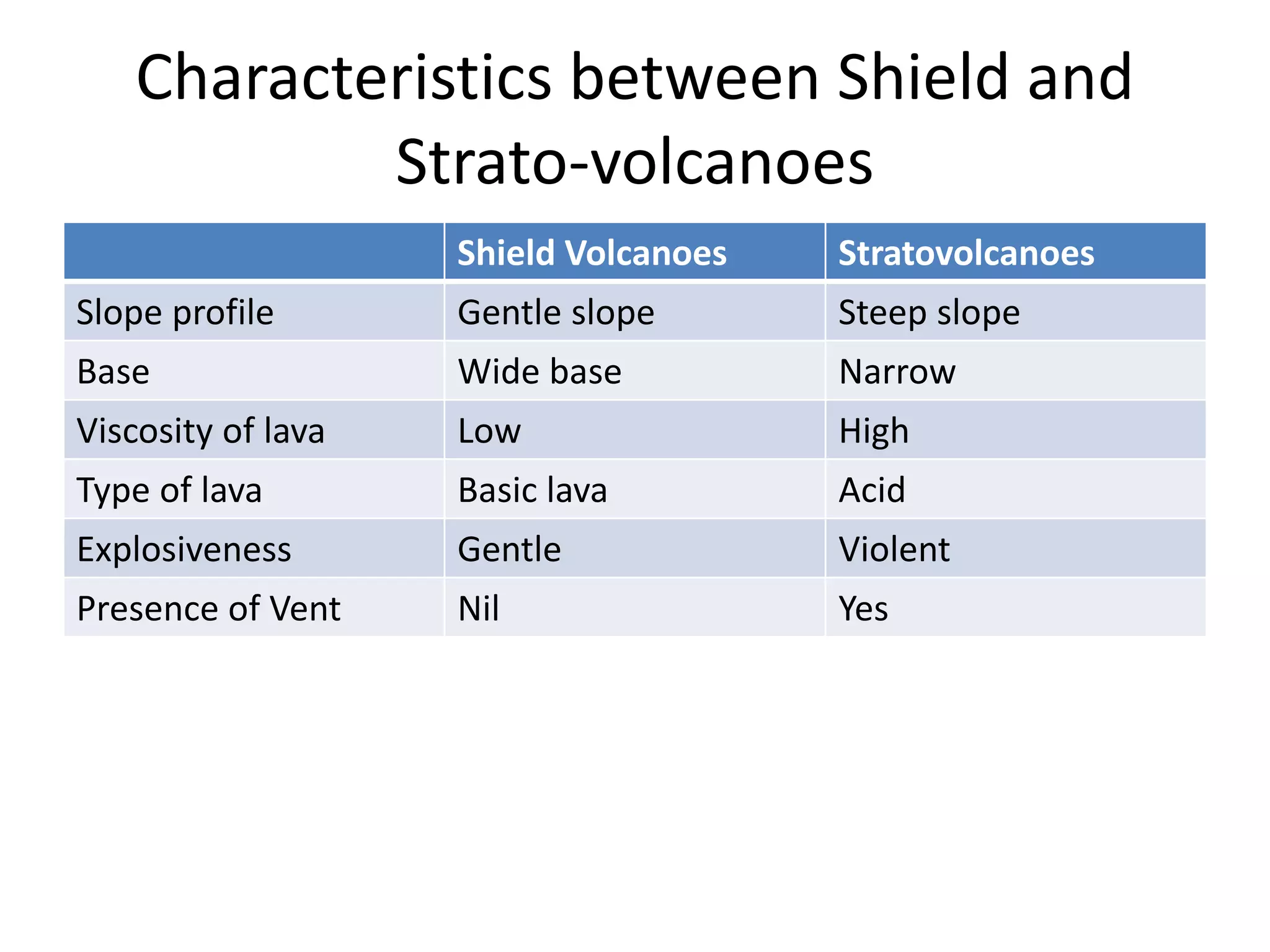
Characteristics between Shield and
Strato-volcanoes
Shield Volcanoes Stratovolcanoes
Slope profile Gentle slope Steep slope
Base Wide base Narrow
Viscosity of lava Low High
Type of lava Basic lava Acid
Explosiveness Gentle Violent
Presence of Vent Nil Yes

Earthquake and its impact

  • 1.
    Earthquakes 1. Magnitude of Earthquake 2.Distance from Epicenter 3. Population Density 4. Level of Preparedness 5. Time of Occurrence 6. Type of Soil Not all Earthquakes cause destruction. There are some factors that will influence the extent in which an earthquake becomes hazardous. What are they?
  • 2.
    • Explanation: Magnitudeis the amount of strength released during an earthquake, the higher the magnitude the stronger the earthquake with more energy released, leading to more damage. Magnitude of an Earthquake.
  • 3.
    • Focus: Pointof release of energy within the Earth’s crust • Epicentre: Point on the Earth’s surface that lies directly above the focus • The nearer the distance from Epic centre, the greater the intensity of shockwave experienced on the earth surface. 2) Distance from Epic centre
  • 4.
    Population Density: Thenumber of people per unit area Explanation • The higher the population density of an Earthquake-prone area, the chances of many people being killed or injured during an Earthquake will be higher. 3) Population Density
  • 5.
    • People livingin Earthquake-prone areas usually adopt a variety of measures to prepare themselves in the event of an Earthquake. • Damage is reduced when people are prepared for an Earthquake. 4) Level of preparedness
  • 6.
    • The timeof the day which an earthquake occurs determines how ready people are to evacuate. – If an earthquake happens at night when many are sleeping, there is a higher chance that most people will be trapped in their houses 5) Time of occurrence
  • 7.
    • During anEarthquake, people who live in areas with soft soil tend to be affected more greatly • The softer the soil is, it reduces the resilience of the soil when the ground is shaken, making it more likely for infrastructure to collapse. 6) Type of soil
  • 11.
    Hazards • Tsunamis: Seriesof huge waves produced as a result of undersea Earthquakes . • These huge waves travel long distances (up to thousands of kilometres) before crashing onto the shores • Example: 2004 Boxing Day Earthquake off the coast of Sumatra brought about tsunami that affected countries like Indonesia, India, Thailand and Sri Lanka – Led to the death of more than 250,000 people Threat of Tsunamis
  • 12.
    Hazards • Vibrations inthe ground can snap pipes and break cables which may cause the outbreak of fires • Communication services may also be affected • Example: 2004 Earthquake in Kobe, Japan – Damaged pipes and transmission lines – Disrupted electricity, gas and water supplies to about a million of Kobe city’s 1.4 million residents. Disruption of Services
  • 13.
    Hazards • Usually nota direct result of Earthquakes • Caused by damaged electrical appliances, overturned stoves or broken gas pipes when the ground shakes • Results in the collapse of infrastructure, injuries, death and homelessness • Example: 1995 Earthquake in Kobe, Japan, caused extensive fires that carried on for 2 days – Hundreds of fires ignited by toppled gas cookers and kerosene stoves as households were preparing their breakfasts – Strong winds encouraged fires to spread rapidly. – Firemen unable to control fires as ruptured water pipes meant that there was no water supply Fires
  • 14.
    Hazards • Landslide: Slidingdown of large amounts of rocks and/or soil from a hill slope • Soil on the hill slopes loosens when the ground shakes • Loosened soil slides down the hill slopes, burying people and infrastructure beneath it • Example: 1970, Earthquake off the coast of Peru destabilised the slopes of Mount Huascaran, triggering a massive landslide. – Landslide travelled more than 160km/hr – Death toll was more than 18,000 and only 200 survived the disaster Landslides http://video.nationalgeographic.com/video/101-videos/landslides
  • 15.
    Hazards • Common occurrenceduring an earthquake in an urban area as infrastructure may not be designed to withstand earthquakes • Sometimes, despite the lack of visible damages foundations of buildings may be weakened – Repair works need to be carried out to prevent the infrastructure from collapsing in the future • Example: 2011 Earthquake in Tohoku, Japan, caused a Tsunami which travelled 10km inland – Extensive structural damage resulted in hundreds of thousands of people being forced from their homes. Destruction of Properties
  • 16.
    Hazards • Common occurrenceduring an earthquake in an urban area as infrastructure may not be designed to withstand earthquakes • Transportation can be disrupted as it is unsafe to use damaged roads. • Example: After the 1995 Earthquake in Kobe, Japan, many places in the city become inaccessible or difficult to reach. Destruction of Infrastructure
  • 17.
    Hazards • Loss oflives could result both directly and indirectly from Earthquakes • Much of it depends on whether emergency relief is available and if it is delivered in time Loss of Lives Direct Indirect Collapse of buildings Starvation Explosion/ Fire Exposure to inclement weather Landslides Suffocation from being buried
  • 18.
    Hazards • Aftershocks (Tremorsthat occur after the main Earthquake) can also lead to the loss of lives – May be as strong as the tremors of the main Earthquake – Can cause more buildings to collapse – May delay rescue efforts – Can endanger more lives Loss of Lives
  • 19.
    Hazards Remember, HAZARDS areonly hazards when lives are at stake. 1. Threat of Tsunamis 2. Disruption of Services 3. Fires 4. Landslides 5. Destruction of Properties 6. Destruction of Infrastructure 7. Loss of Lives
  • 20.
  • 21.
    Characteristics between Shieldand Strato-volcanoes Shield Volcanoes Stratovolcanoes Slope profile Gentle slope Steep slope Base Wide base Narrow Viscosity of lava Low High Type of lava Basic lava Acid Explosiveness Gentle Violent Presence of Vent Nil Yes