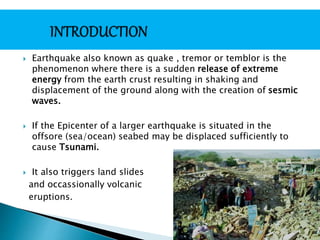
 Earthquake also known as quake , tremor or temblor is the
phenomenon where there is a sudden release of extreme
energy from the earth crust resulting in shaking and
displacement of the ground along with the creation of sesmic
waves.
 If the Epicenter of a larger earthquake is situated in the
offsore (sea/ocean) seabed may be displaced sufficiently to
cause Tsunami.
 It also triggers land slides
and occassionally volcanic
eruptions.
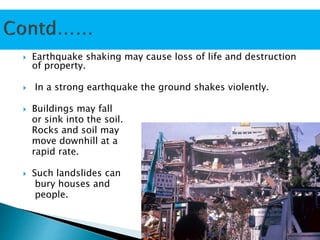
 Earthquake shaking may cause loss of life and destruction
of property.
 In a strong earthquake the ground shakes violently.
 Buildings may fall
or sink into the soil.
Rocks and soil may
move downhill at a
rapid rate.
 Such landslides can
bury houses and
people.
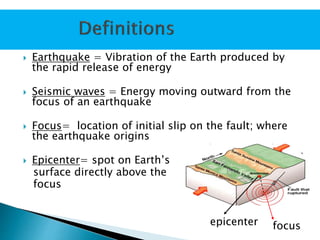
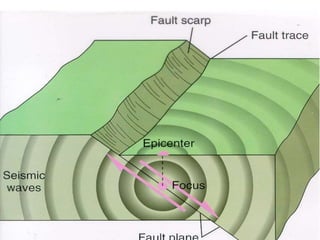
 Earthquake = Vibration of the Earth produced by
the rapid release of energy
 Seismic waves = Energy moving outward from the
focus of an earthquake
 Focus= location of initial slip on the fault; where
the earthquake origins
 Epicenter= spot on Earth’s
surface directly above the
focus
focusepicenter
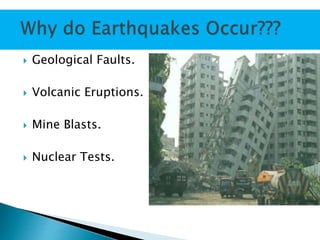
 Geological Faults.
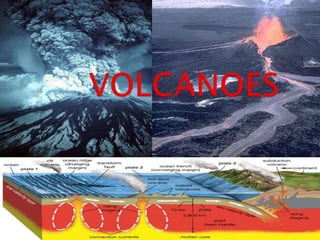
 Volcanic Eruptions.
 Mine Blasts.
 Nuclear Tests.
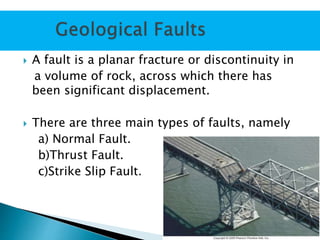
 A fault is a planar fracture or discontinuity in
a volume of rock, across which there has
been significant displacement.
 There are three main types of faults, namely
a) Normal Fault.
b)Thrust Fault.
c)Strike Slip Fault.
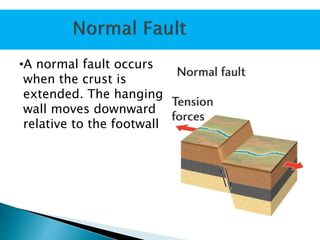
•A normal fault occurs
when the crust is
extended. The hanging
wall moves downward
relative to the footwall
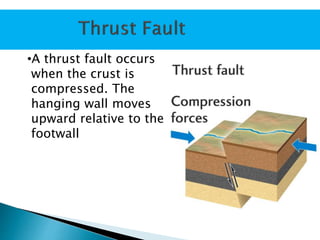
•A thrust fault occurs
when the crust is
compressed. The
hanging wall moves
upward relative to the
footwall
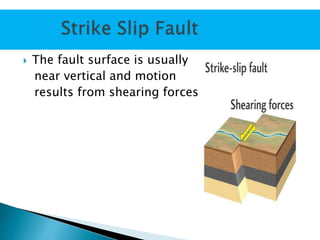
 The fault surface is usually
near vertical and motion
results from shearing forces
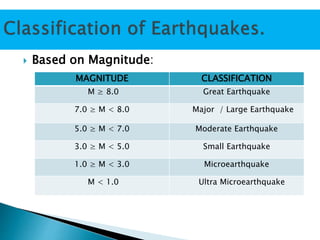
 Based on Magnitude:
MAGNITUDE CLASSIFICATION
M ≥ 8.0 Great Earthquake
7.0 ≥ M < 8.0 Major / Large Earthquake
5.0 ≥ M < 7.0 Moderate Earthquake
3.0 ≥ M < 5.0 Small Earthquake
1.0 ≥ M < 3.0 Microearthquake
M < 1.0 Ultra Microearthquake
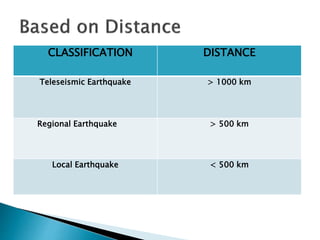
CLASSIFICATION DISTANCE
Teleseismic Earthquake > 1000 km
Regional Earthquake > 500 km
Local Earthquake < 500 km
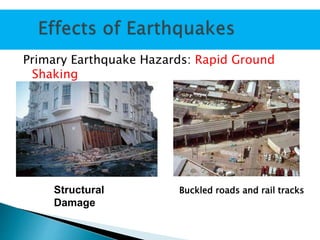
Primary Earthquake Hazards: Rapid Ground
Shaking
Structural
Damage
Buckled roads and rail tracks
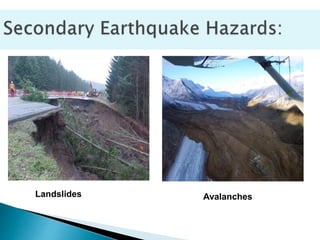
Landslides Avalanches
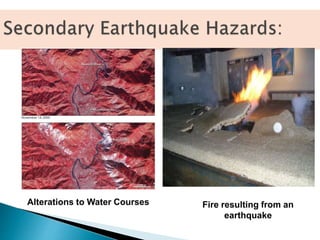
Alterations to Water Courses Fire resulting from an
earthquake
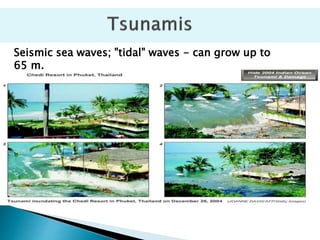
Seismic sea waves; "tidal" waves - can grow up to
65 m.
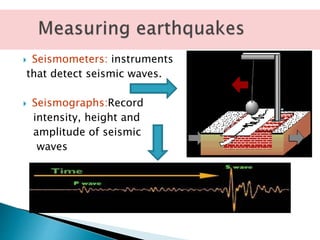
 Seismometers: instruments
that detect seismic waves.
 Seismographs:Record
intensity, height and
amplitude of seismic
waves
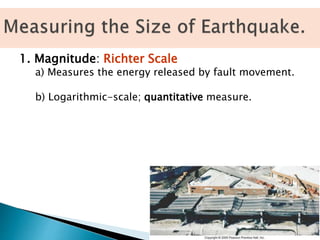
1. Magnitude: Richter Scale
a) Measures the energy released by fault movement.
b) Logarithmic-scale; quantitative measure.
2) Intensity: Mercalli Scale:
What did you feel?
 Assigns an intensity or rating to measure an
earthquake at a particular location (qualitative)
 Measures the destructive effect
 Intensity is a function of:
 Energy released by fault
 Geology of the location
 Surface substrate: can magnify shock waves
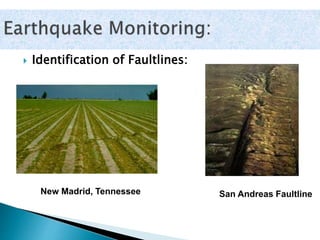
 Identification of Faultlines:
New Madrid, Tennessee San Andreas Faultline
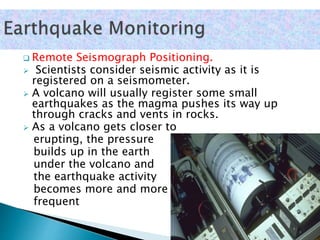
 Remote Seismograph Positioning.
 Scientists consider seismic activity as it is
registered on a seismometer.
 A volcano will usually register some small
earthquakes as the magma pushes its way up
through cracks and vents in rocks.
 As a volcano gets closer to
erupting, the pressure
builds up in the earth
under the volcano and
the earthquake activity
becomes more and more
frequent
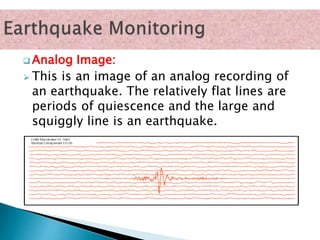
 Analog Image:
 This is an image of an analog recording of
an earthquake. The relatively flat lines are
periods of quiescence and the large and
squiggly line is an earthquake.
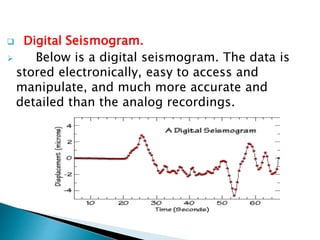
 Digital Seismogram.
 Below is a digital seismogram. The data is
stored electronically, easy to access and
manipulate, and much more accurate and
detailed than the analog recordings.
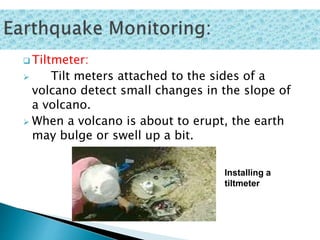
 Tiltmeter:
 Tilt meters attached to the sides of a
volcano detect small changes in the slope of
a volcano.
 When a volcano is about to erupt, the earth
may bulge or swell up a bit.
Installing a
tiltmeter
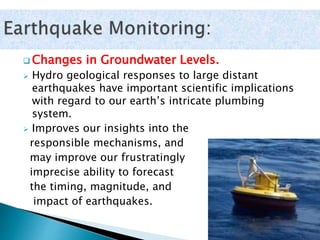
 Changes in Groundwater Levels.
 Hydro geological responses to large distant
earthquakes have important scientific implications
with regard to our earth’s intricate plumbing
system.
 Improves our insights into the
responsible mechanisms, and
may improve our frustratingly
imprecise ability to forecast
the timing, magnitude, and
impact of earthquakes.
 Observations of Strange Behaviors in Animals.
The cause of unusual animal behavior seconds
before humans feel an earthquake can be easily
explain-ed.
 Very few humans notice the smaller P wave that
travels the fastest from the earthquake source and
arrives before the larger S wave.
 But many animals with more keen senses are able
to feel the P wave seconds before the S wave
arrives.
indeed it’s possible that some animals could sense
these signals and connect the perception with an
impending earthquake.
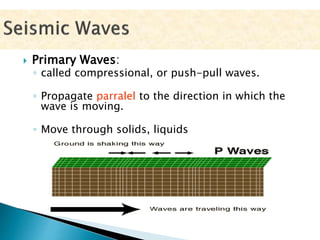
 Primary Waves:
◦ called compressional, or push-pull waves.
◦ Propagate parralel to the direction in which the
wave is moving.
◦ Move through solids, liquids
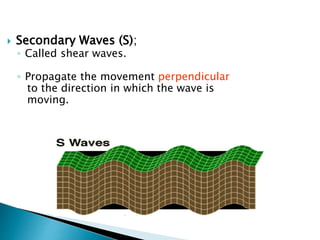
 Secondary Waves (S);
◦ Called shear waves.
◦ Propagate the movement perpendicular
to the direction in which the wave is
moving.
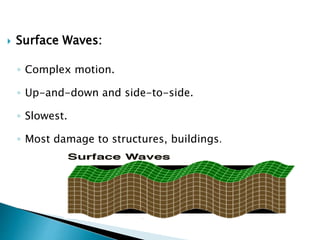
 Surface Waves:
◦ Complex motion.
◦ Up-and-down and side-to-side.
◦ Slowest.
◦ Most damage to structures, buildings.
Earthquake ppt
Earthquake ppt
Earthquake ppt

Earthquake ppt

  • 2.
     Earthquake alsoknown as quake , tremor or temblor is the phenomenon where there is a sudden release of extreme energy from the earth crust resulting in shaking and displacement of the ground along with the creation of sesmic waves.  If the Epicenter of a larger earthquake is situated in the offsore (sea/ocean) seabed may be displaced sufficiently to cause Tsunami.  It also triggers land slides and occassionally volcanic eruptions.
  • 3.
     Earthquake shakingmay cause loss of life and destruction of property.  In a strong earthquake the ground shakes violently.  Buildings may fall or sink into the soil. Rocks and soil may move downhill at a rapid rate.  Such landslides can bury houses and people.
  • 4.
     Earthquake =Vibration of the Earth produced by the rapid release of energy  Seismic waves = Energy moving outward from the focus of an earthquake  Focus= location of initial slip on the fault; where the earthquake origins  Epicenter= spot on Earth’s surface directly above the focus focusepicenter
  • 6.
     Geological Faults. Volcanic Eruptions.  Mine Blasts.  Nuclear Tests.
  • 7.
     A faultis a planar fracture or discontinuity in a volume of rock, across which there has been significant displacement.  There are three main types of faults, namely a) Normal Fault. b)Thrust Fault. c)Strike Slip Fault.
  • 8.
    •A normal faultoccurs when the crust is extended. The hanging wall moves downward relative to the footwall
  • 9.
    •A thrust faultoccurs when the crust is compressed. The hanging wall moves upward relative to the footwall
  • 10.
     The faultsurface is usually near vertical and motion results from shearing forces
  • 12.
     Based onMagnitude: MAGNITUDE CLASSIFICATION M ≥ 8.0 Great Earthquake 7.0 ≥ M < 8.0 Major / Large Earthquake 5.0 ≥ M < 7.0 Moderate Earthquake 3.0 ≥ M < 5.0 Small Earthquake 1.0 ≥ M < 3.0 Microearthquake M < 1.0 Ultra Microearthquake
  • 13.
    CLASSIFICATION DISTANCE Teleseismic Earthquake> 1000 km Regional Earthquake > 500 km Local Earthquake < 500 km
  • 14.
    Primary Earthquake Hazards:Rapid Ground Shaking Structural Damage Buckled roads and rail tracks
  • 15.
  • 16.
    Alterations to WaterCourses Fire resulting from an earthquake
  • 17.
    Seismic sea waves;"tidal" waves - can grow up to 65 m.
  • 18.
     Seismometers: instruments thatdetect seismic waves.  Seismographs:Record intensity, height and amplitude of seismic waves
  • 19.
    1. Magnitude: RichterScale a) Measures the energy released by fault movement. b) Logarithmic-scale; quantitative measure.
  • 20.
    2) Intensity: MercalliScale: What did you feel?  Assigns an intensity or rating to measure an earthquake at a particular location (qualitative)  Measures the destructive effect  Intensity is a function of:  Energy released by fault  Geology of the location  Surface substrate: can magnify shock waves
  • 21.
     Identification ofFaultlines: New Madrid, Tennessee San Andreas Faultline
  • 22.
     Remote SeismographPositioning.  Scientists consider seismic activity as it is registered on a seismometer.  A volcano will usually register some small earthquakes as the magma pushes its way up through cracks and vents in rocks.  As a volcano gets closer to erupting, the pressure builds up in the earth under the volcano and the earthquake activity becomes more and more frequent
  • 23.
     Analog Image: This is an image of an analog recording of an earthquake. The relatively flat lines are periods of quiescence and the large and squiggly line is an earthquake.
  • 24.
     Digital Seismogram. Below is a digital seismogram. The data is stored electronically, easy to access and manipulate, and much more accurate and detailed than the analog recordings.
  • 25.
     Tiltmeter:  Tiltmeters attached to the sides of a volcano detect small changes in the slope of a volcano.  When a volcano is about to erupt, the earth may bulge or swell up a bit. Installing a tiltmeter
  • 26.
     Changes inGroundwater Levels.  Hydro geological responses to large distant earthquakes have important scientific implications with regard to our earth’s intricate plumbing system.  Improves our insights into the responsible mechanisms, and may improve our frustratingly imprecise ability to forecast the timing, magnitude, and impact of earthquakes.
  • 27.
     Observations ofStrange Behaviors in Animals. The cause of unusual animal behavior seconds before humans feel an earthquake can be easily explain-ed.  Very few humans notice the smaller P wave that travels the fastest from the earthquake source and arrives before the larger S wave.  But many animals with more keen senses are able to feel the P wave seconds before the S wave arrives. indeed it’s possible that some animals could sense these signals and connect the perception with an impending earthquake.
  • 28.
     Primary Waves: ◦called compressional, or push-pull waves. ◦ Propagate parralel to the direction in which the wave is moving. ◦ Move through solids, liquids
  • 29.
     Secondary Waves(S); ◦ Called shear waves. ◦ Propagate the movement perpendicular to the direction in which the wave is moving.
  • 30.
     Surface Waves: ◦Complex motion. ◦ Up-and-down and side-to-side. ◦ Slowest. ◦ Most damage to structures, buildings.