16.3 Shoreline Processes and Features
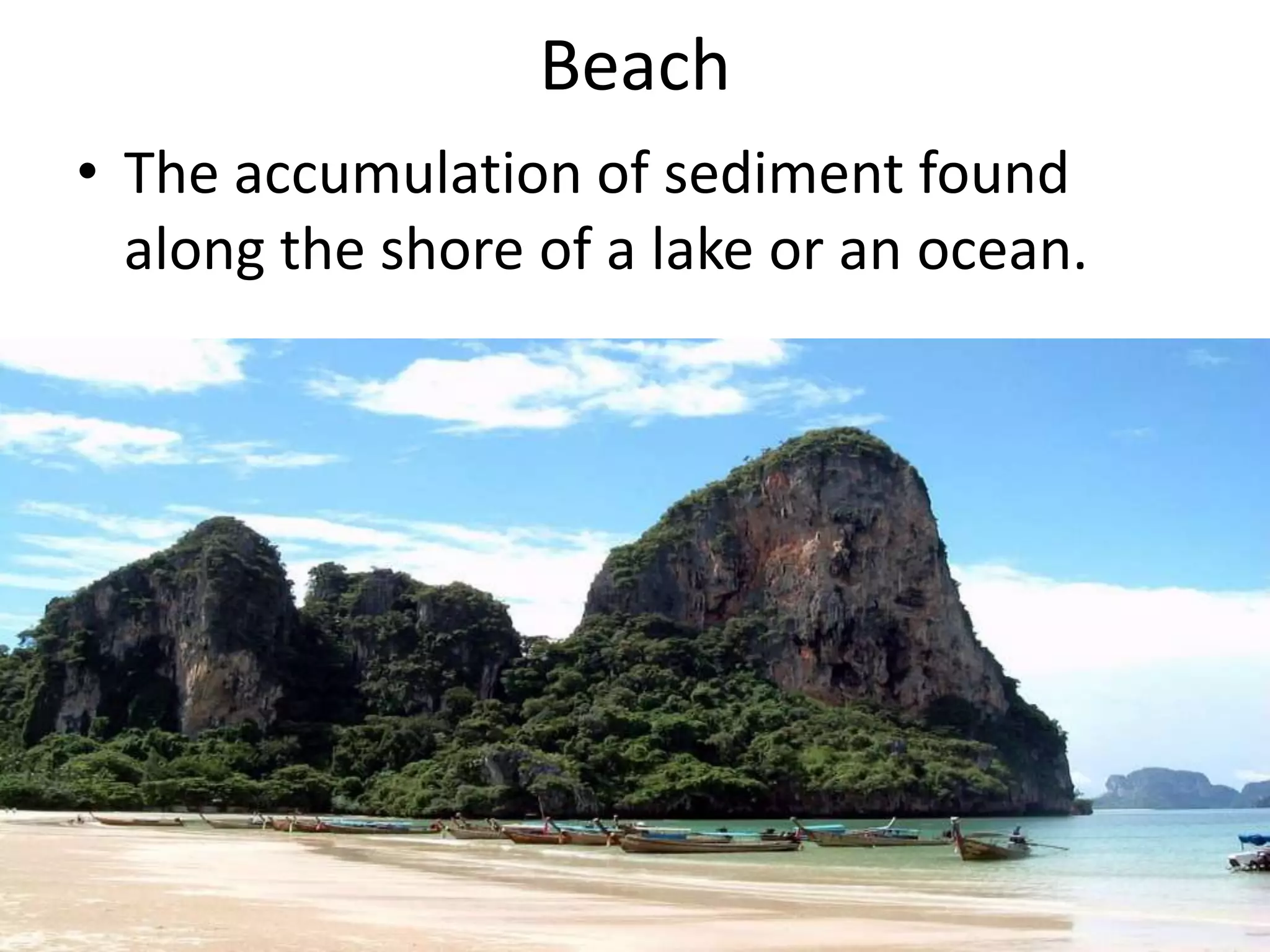
BeachThe accumulation of sediment found along the shore of a lake or an ocean.
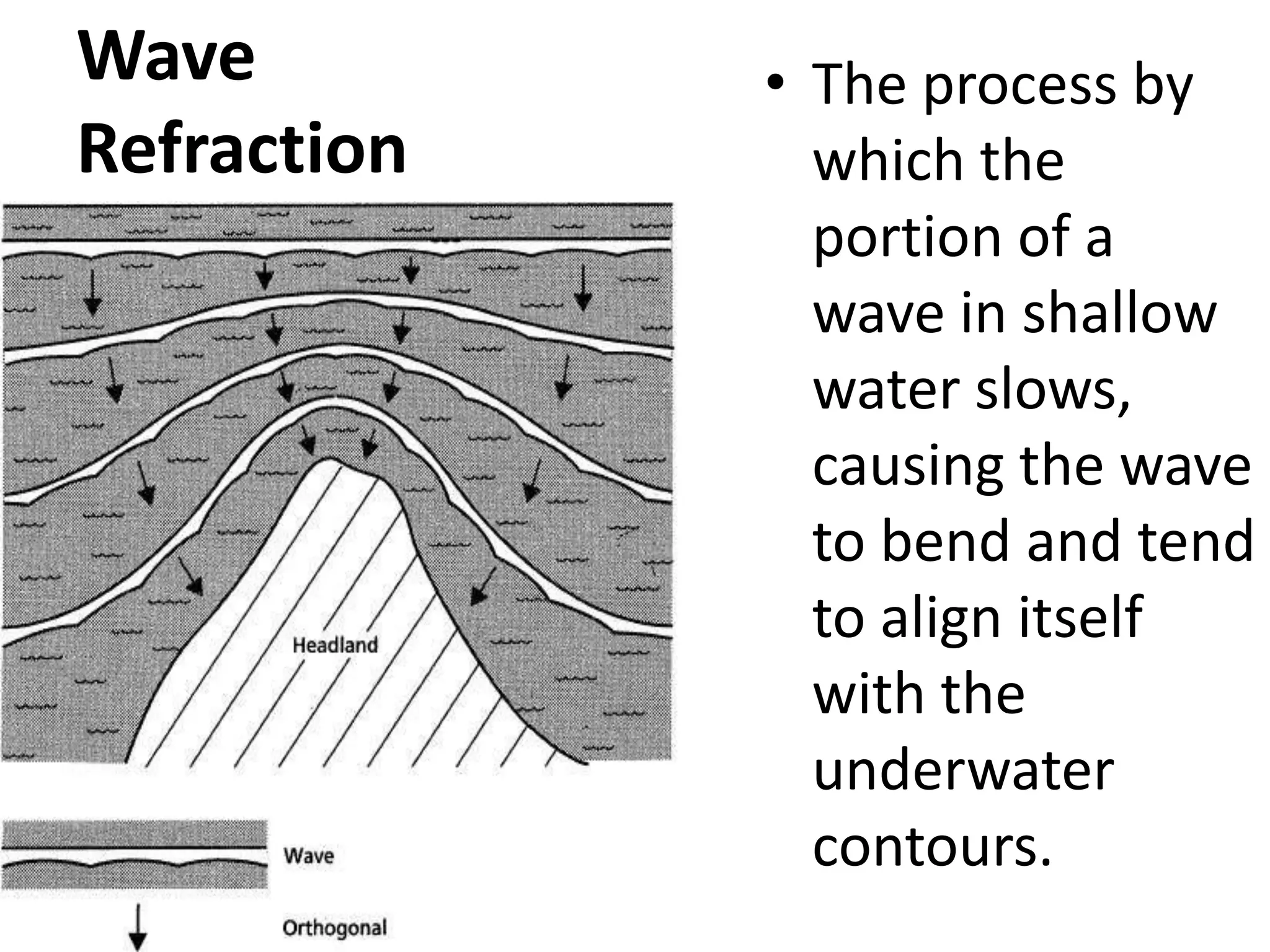
Wave RefractionThe process by which the portion of a wave in shallow water slows, causing the wave to bend and tend to align itself with the underwater contours.
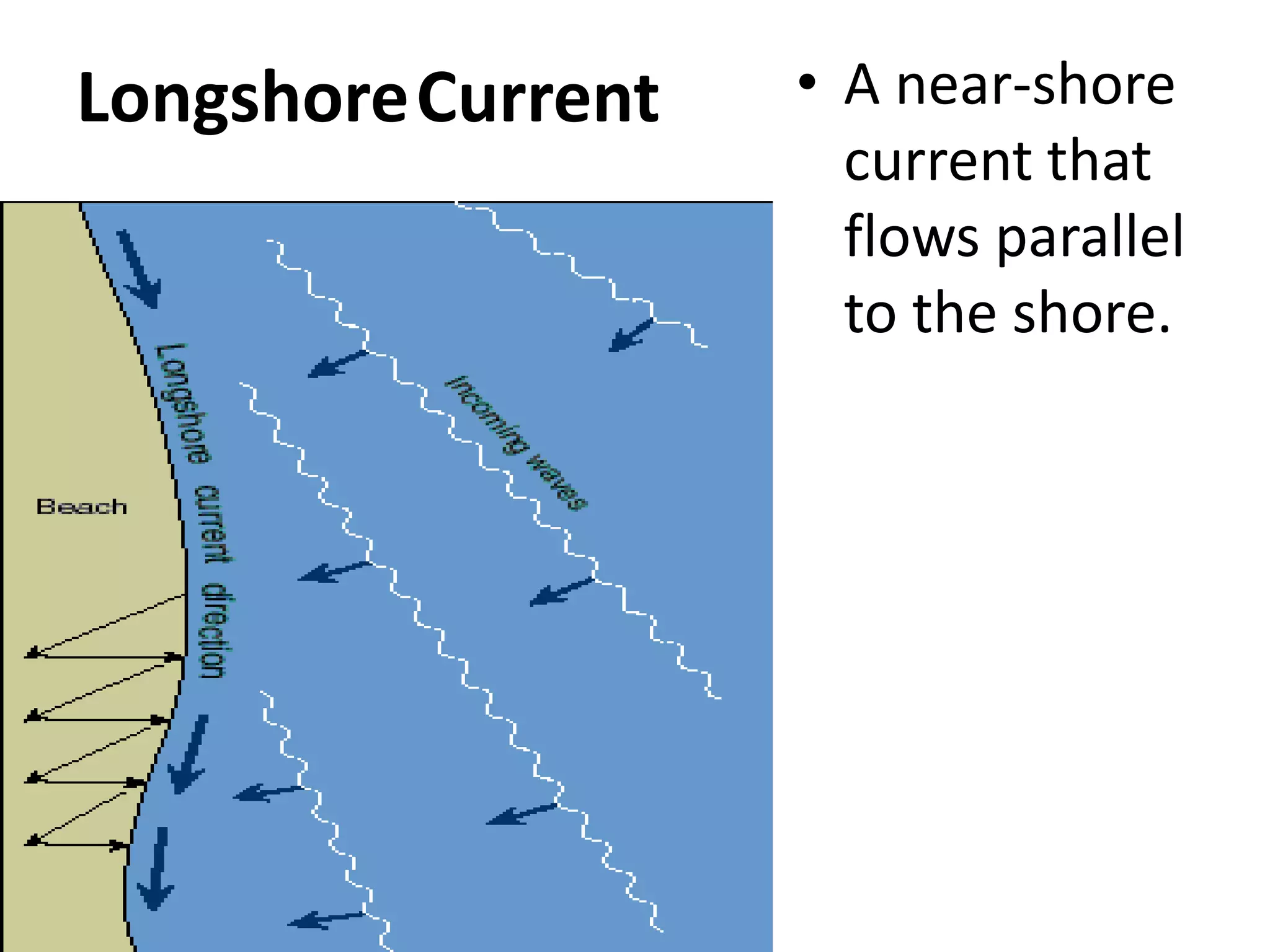
A near-shore current that flows parallel to the shore.LongshoreCurrent
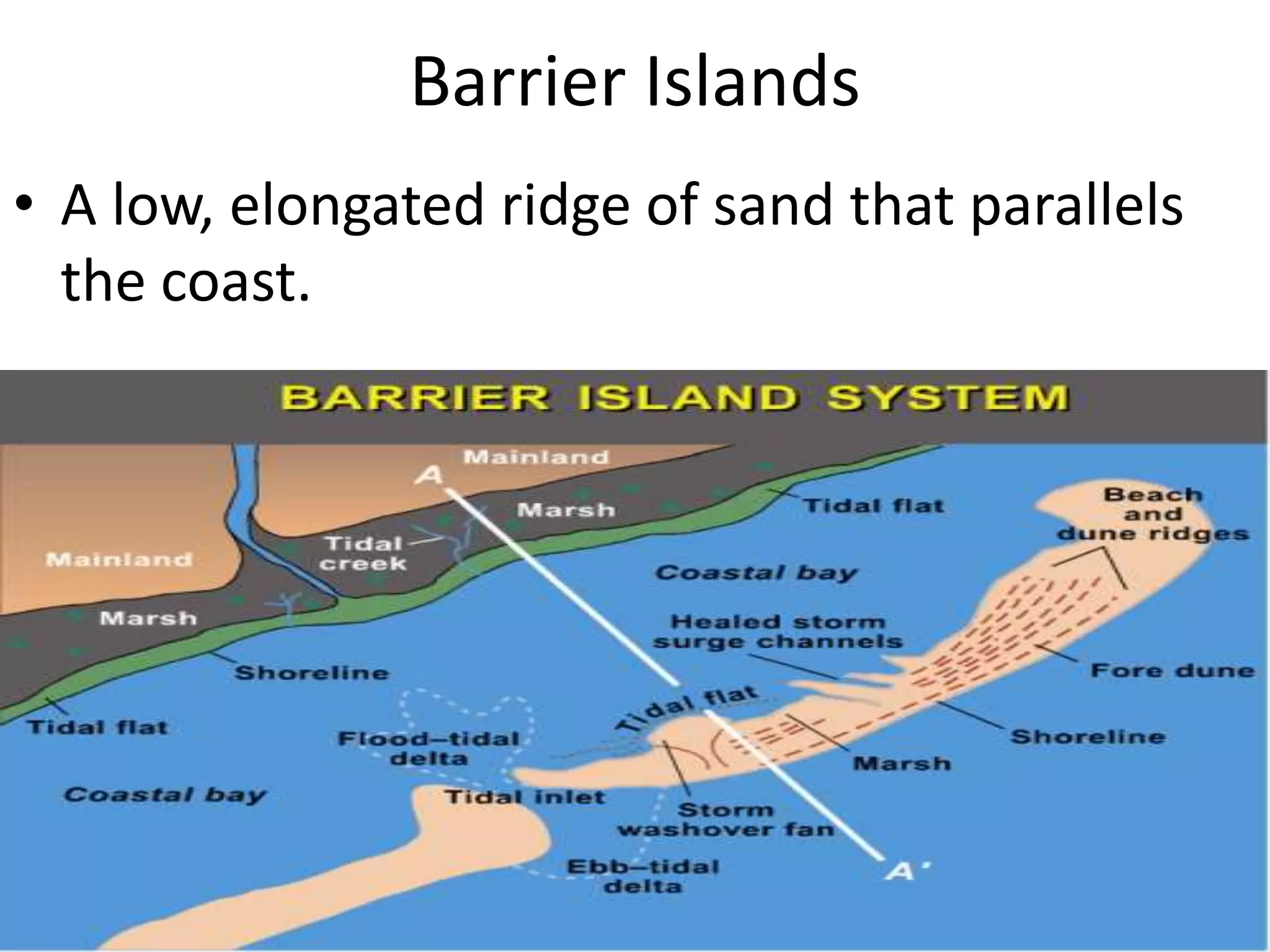
Barrier Islands A low, elongated ridge of sand that parallels the coast.
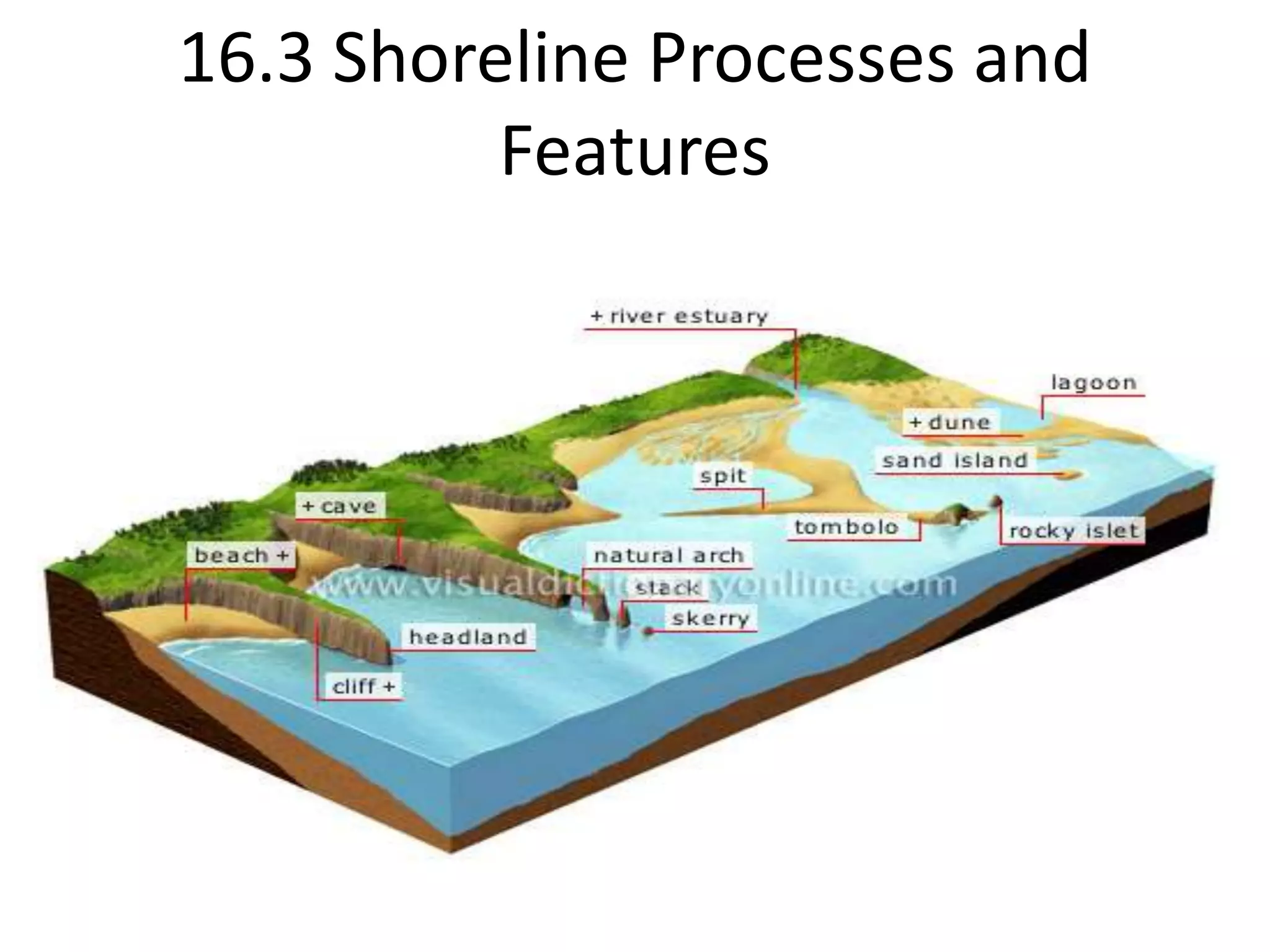
Key Concept How are sediments along the shoreline moved?Waves along the shoreline are constantly eroding, transporting, and depositing sediments. Many types of shoreline features can result from this activity.
Key ConceptHow does refraction affect wave action along the shore?Because of refraction, wave energy is concentrated against the sides and ends of headlands that project into the water, whereas wave action is weakened in bays.
Key ConceptWhat do longshore currents do?Turbulence allows longshore currents to easily move the fine suspended sand and to roll larger sand and gravel particles along the bottom.
Key ConceptBy which processes do shoreline features form?Shoreline features that originate primarily from the work of erosion are called erosional features. Sediment that is transported along the shore and deposited in areas where energy is low produced depositional features.
Key ConceptWhat structures can be built to protect a shoreline?Groins, breakwater, and seawalls are some structures built to protect a coast from erosion or to prevent the movement of sand along a beach.
Key ConceptWhat is beach nourishment?Beach nourishment is the addition of large quantities of sand to the beach system.

Earth science 16.3

  • 1.
  • 2.
    BeachThe accumulation ofsediment found along the shore of a lake or an ocean.
  • 3.
    Wave RefractionThe processby which the portion of a wave in shallow water slows, causing the wave to bend and tend to align itself with the underwater contours.
  • 4.
    A near-shore currentthat flows parallel to the shore.LongshoreCurrent
  • 5.
    Barrier Islands Alow, elongated ridge of sand that parallels the coast.
  • 6.
    Key Concept Howare sediments along the shoreline moved?Waves along the shoreline are constantly eroding, transporting, and depositing sediments. Many types of shoreline features can result from this activity.
  • 7.
    Key ConceptHow doesrefraction affect wave action along the shore?Because of refraction, wave energy is concentrated against the sides and ends of headlands that project into the water, whereas wave action is weakened in bays.
  • 8.
    Key ConceptWhat dolongshore currents do?Turbulence allows longshore currents to easily move the fine suspended sand and to roll larger sand and gravel particles along the bottom.
  • 9.
    Key ConceptBy whichprocesses do shoreline features form?Shoreline features that originate primarily from the work of erosion are called erosional features. Sediment that is transported along the shore and deposited in areas where energy is low produced depositional features.
  • 10.
    Key ConceptWhat structurescan be built to protect a shoreline?Groins, breakwater, and seawalls are some structures built to protect a coast from erosion or to prevent the movement of sand along a beach.
  • 11.
    Key ConceptWhat isbeach nourishment?Beach nourishment is the addition of large quantities of sand to the beach system.