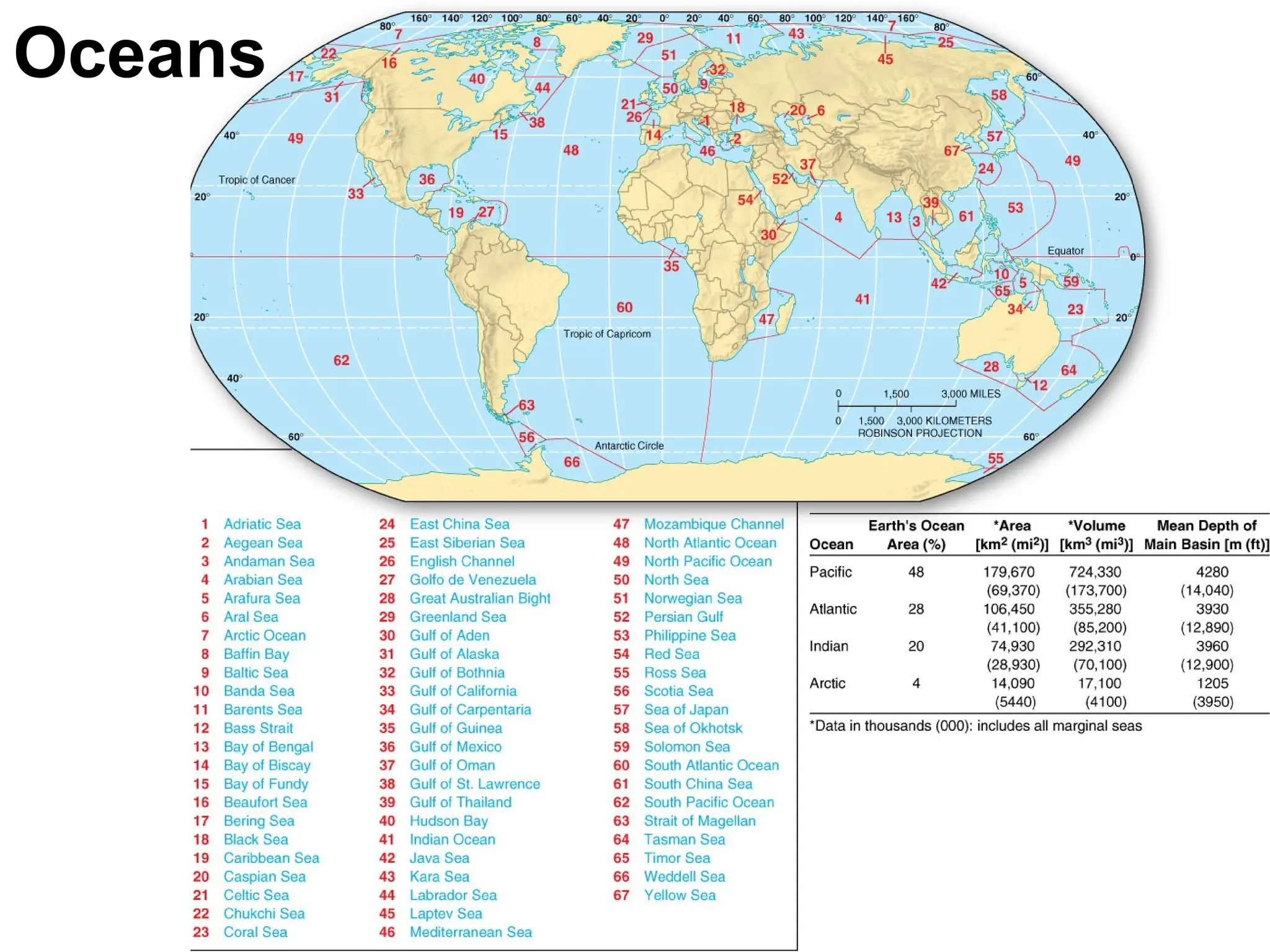
Oceans
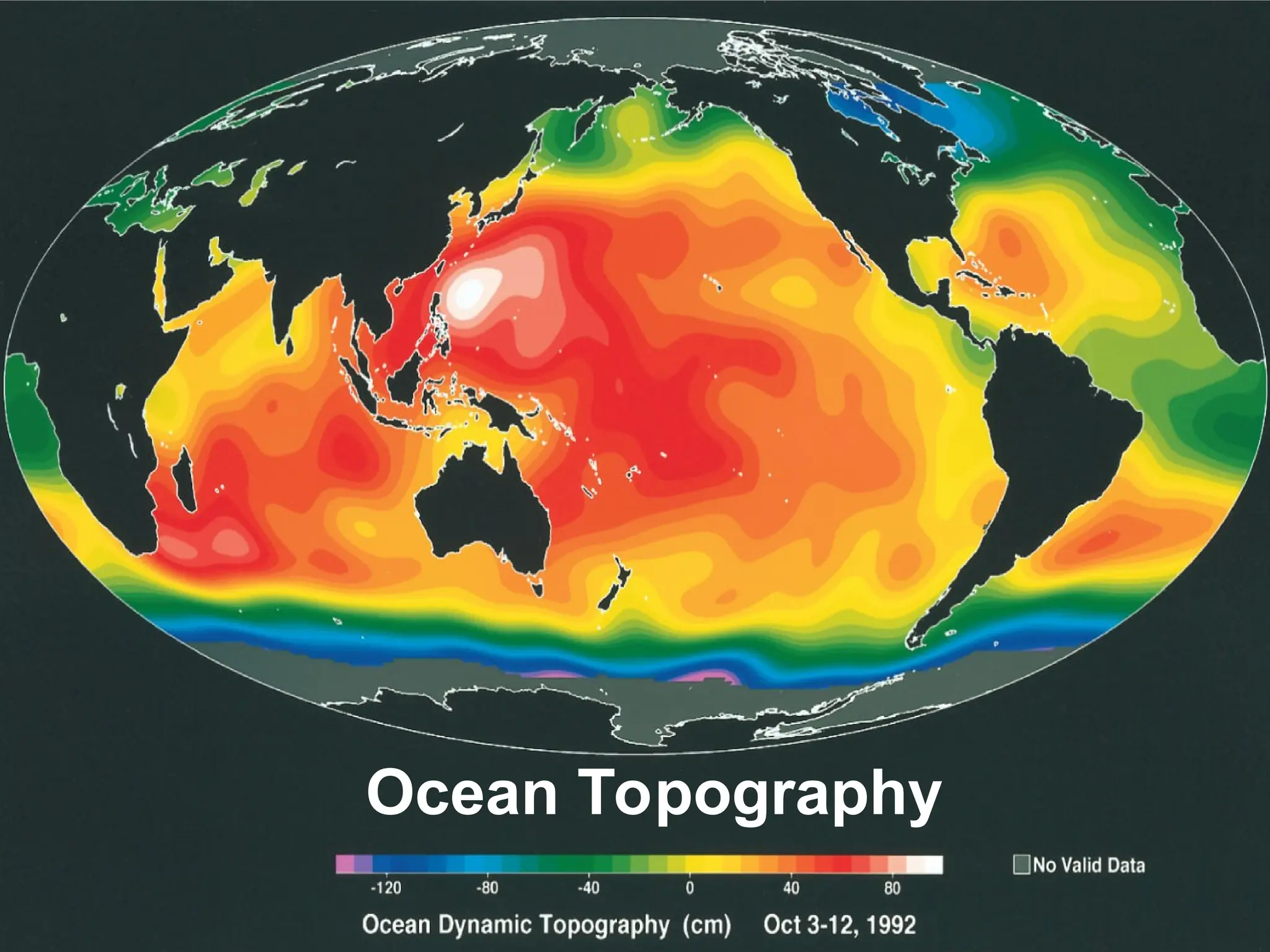
Ocean Topography
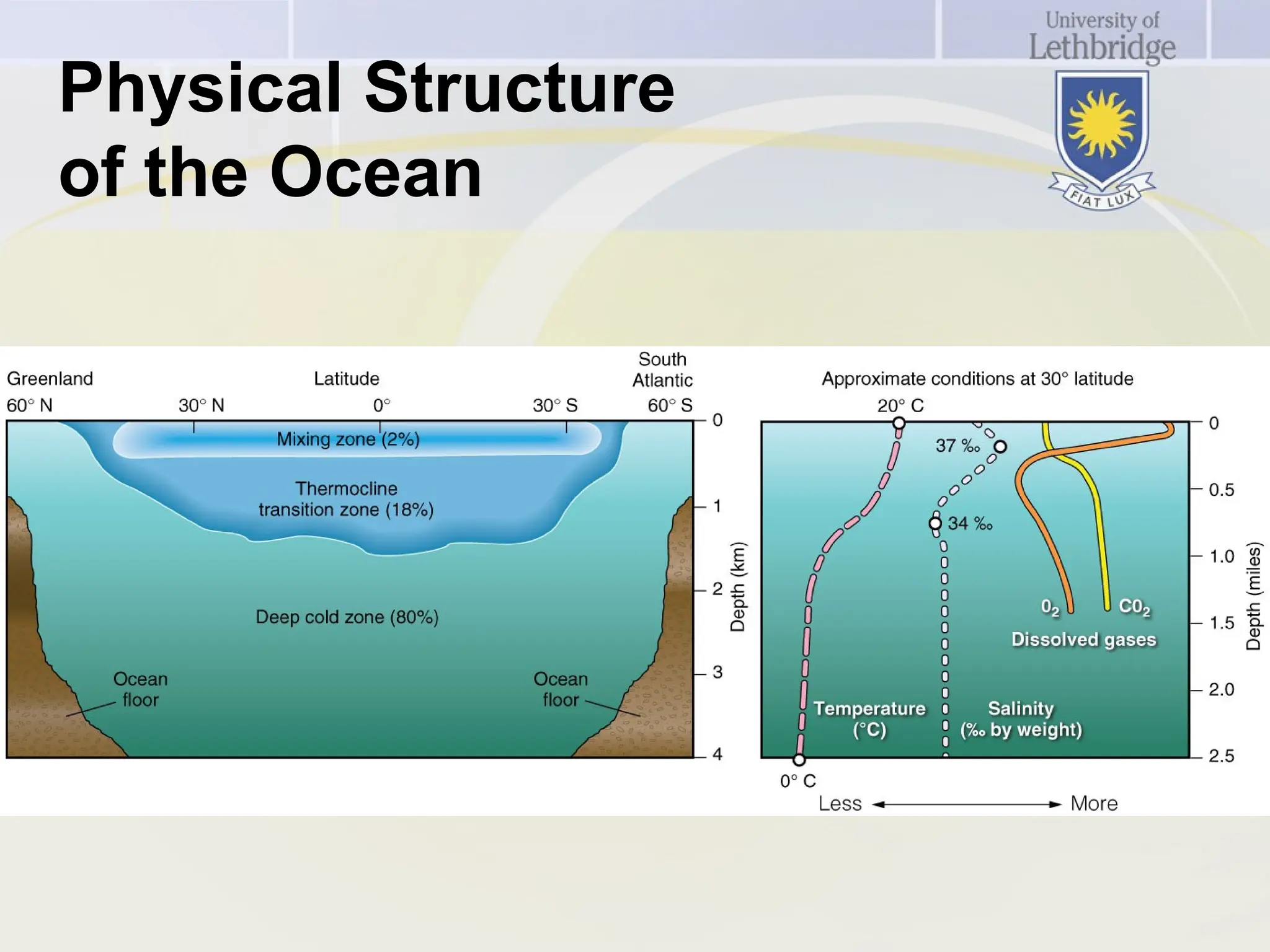
Physical Structure
of the Ocean
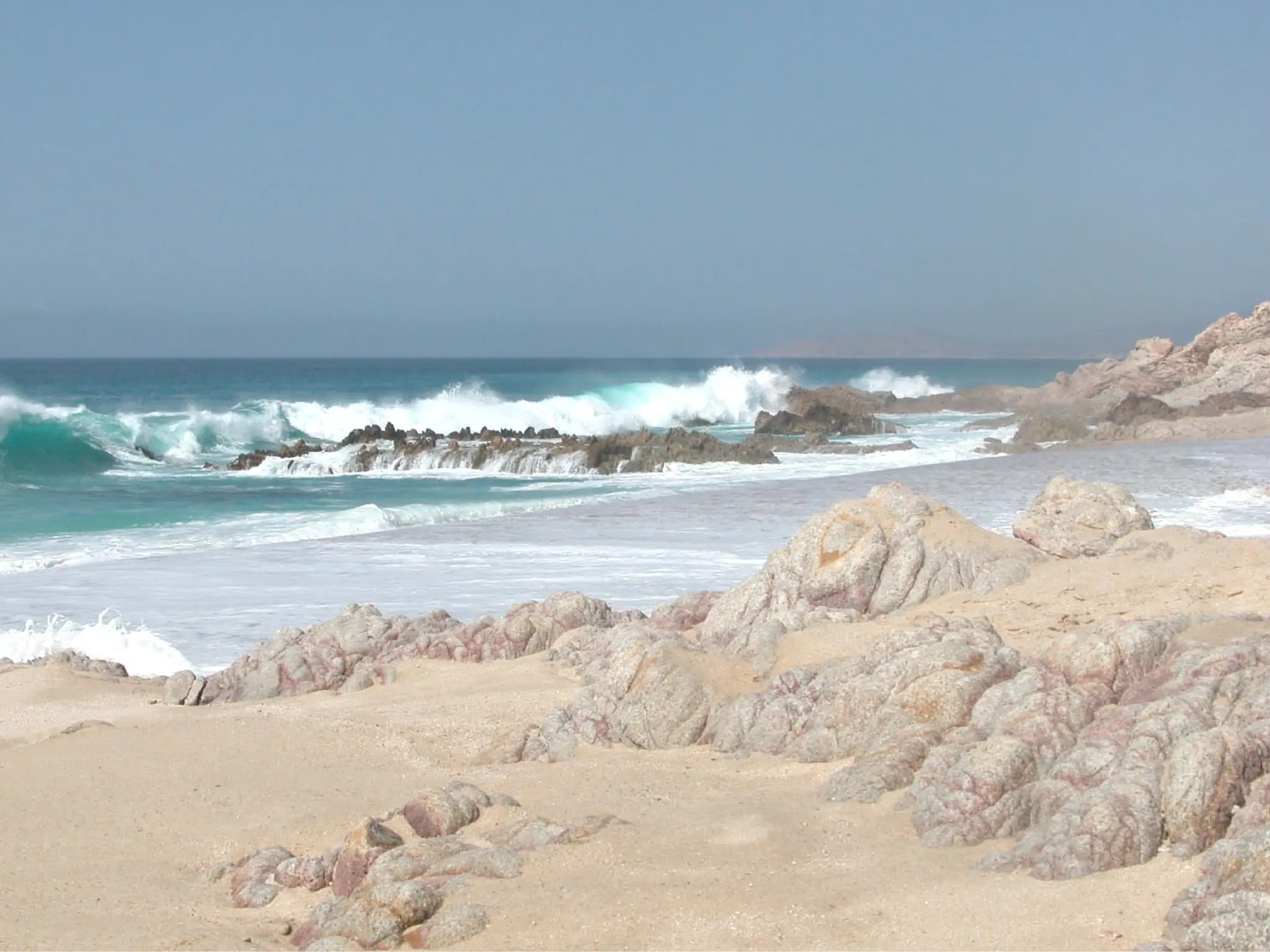
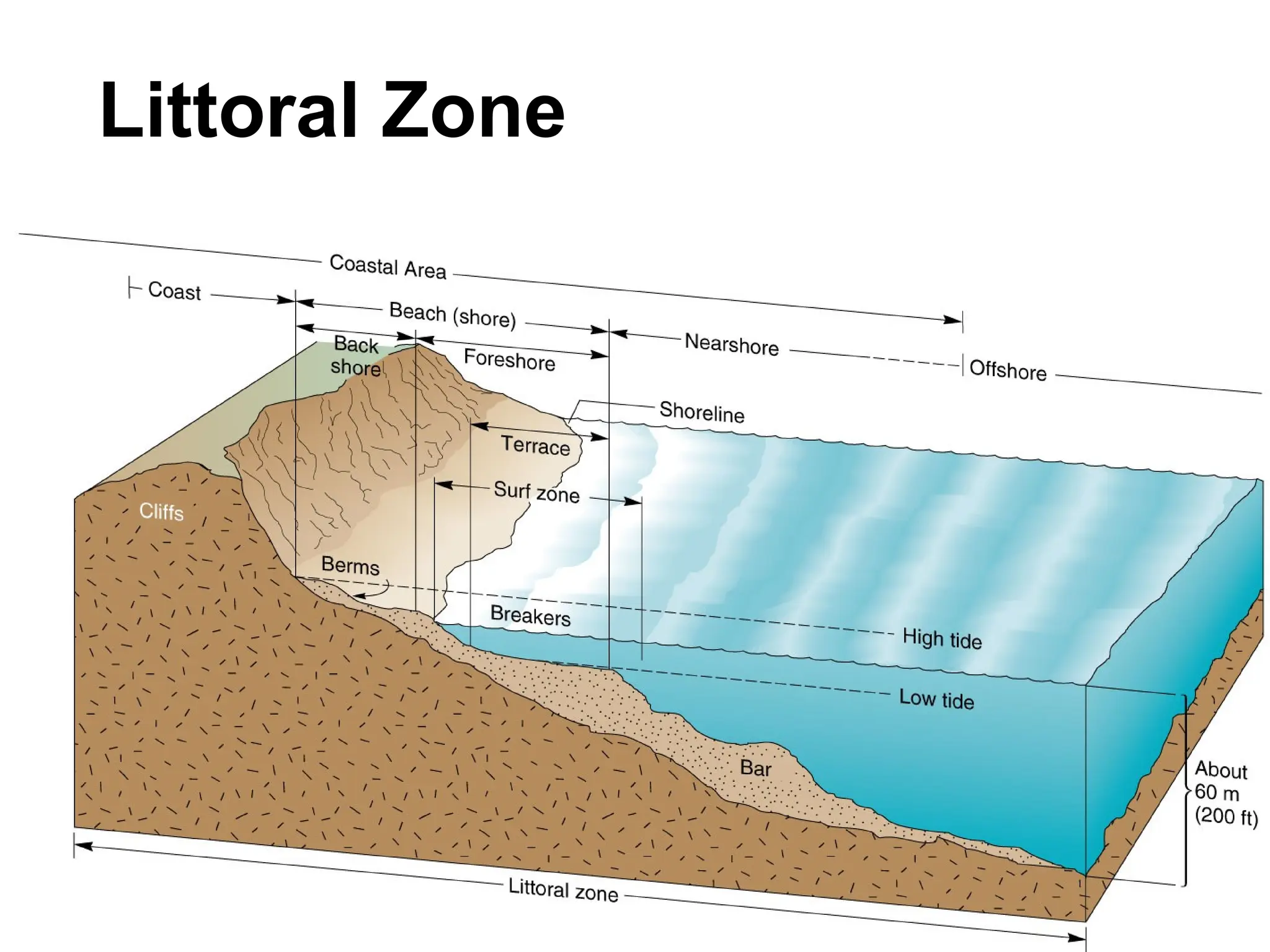
Littoral Zone
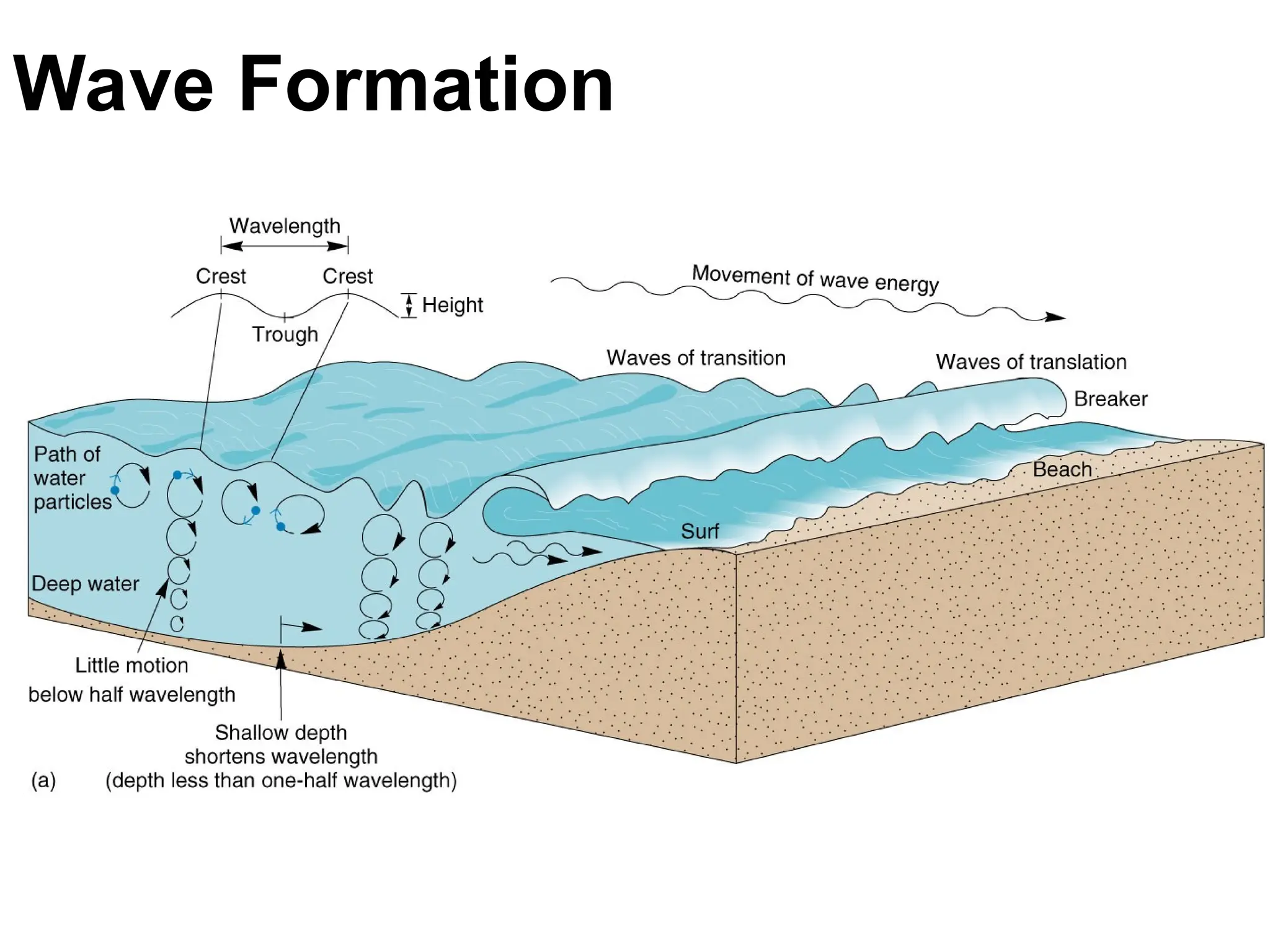
Wave Formation
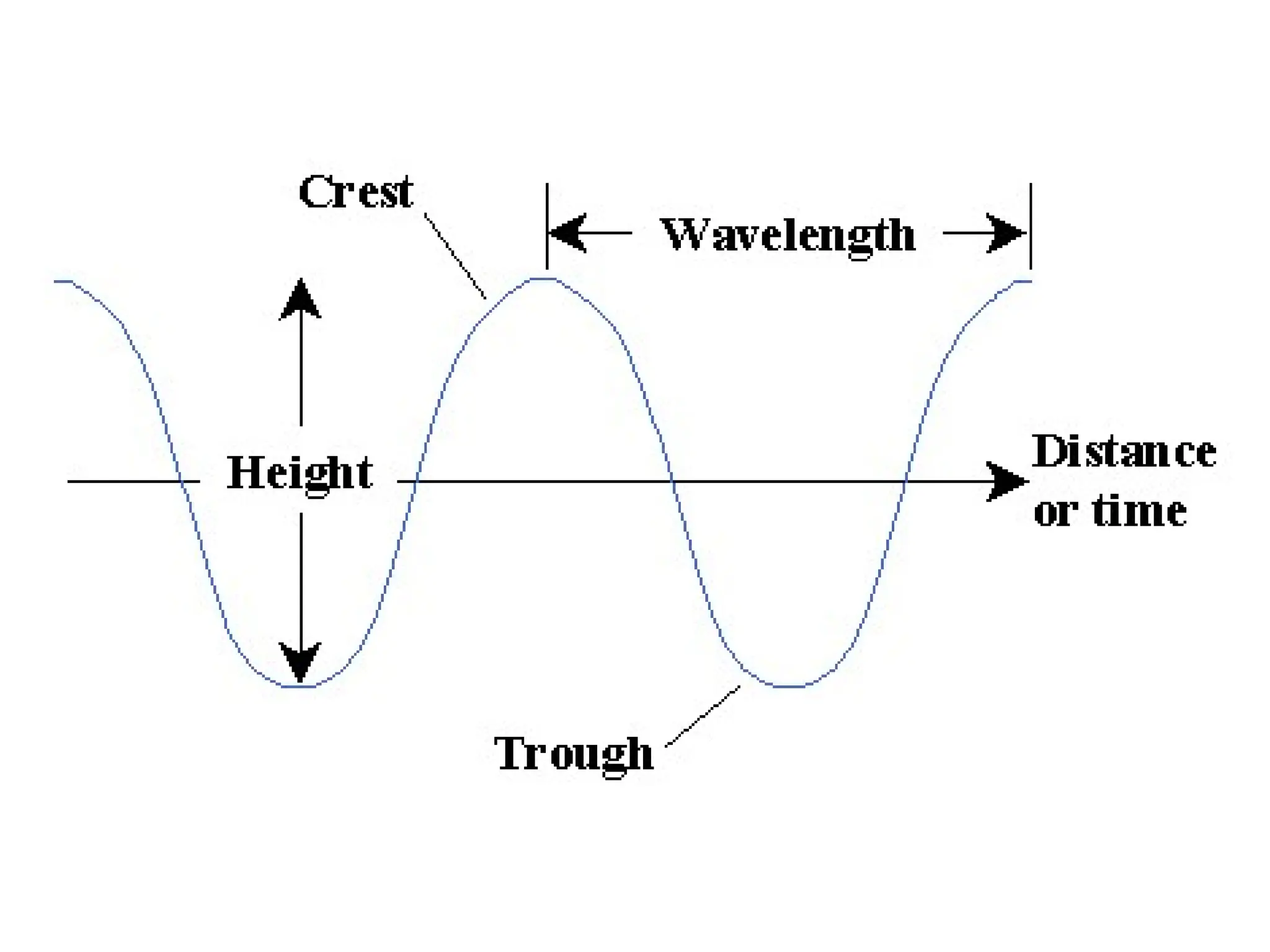
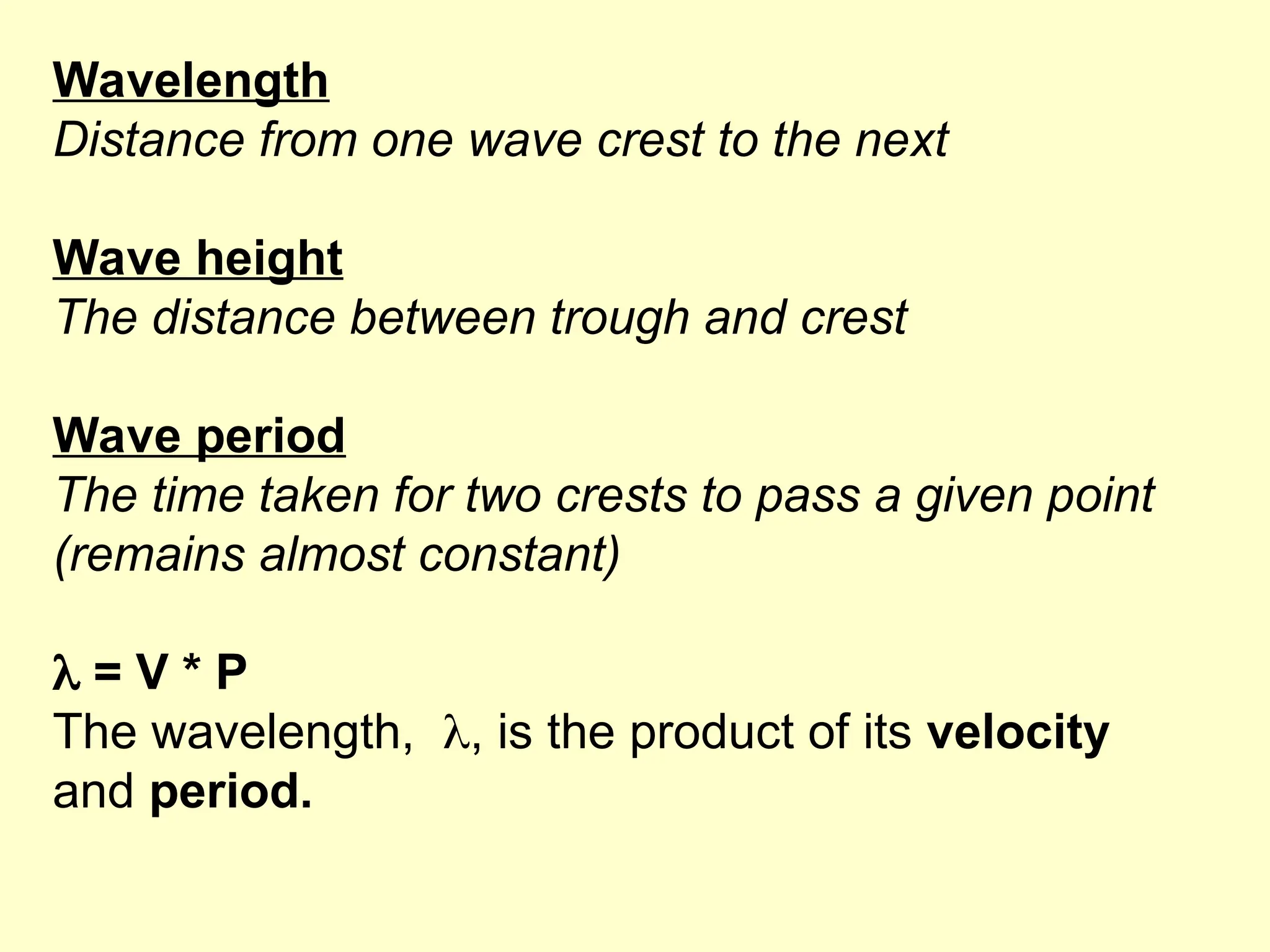
Wavelength
Distance from one wave crest to the next
Wave height
The distance between trough and crest
Wave period
The time taken for two crests to pass a given point
(remains almost constant)
 = V * P
The wavelength, , is the product of its velocity
and period.
Wave Properties
The energy source for both coastal erosion
and sediment transport are the ocean waves
generated by the frictional effect of the winds
ncident on the ocean surface
1) Kinetic Energy:
The motion of the water within the wave.
2) Potential Energy:
Due to the position of water above the wave trough.
Wave energy increases with wind speed and fetch
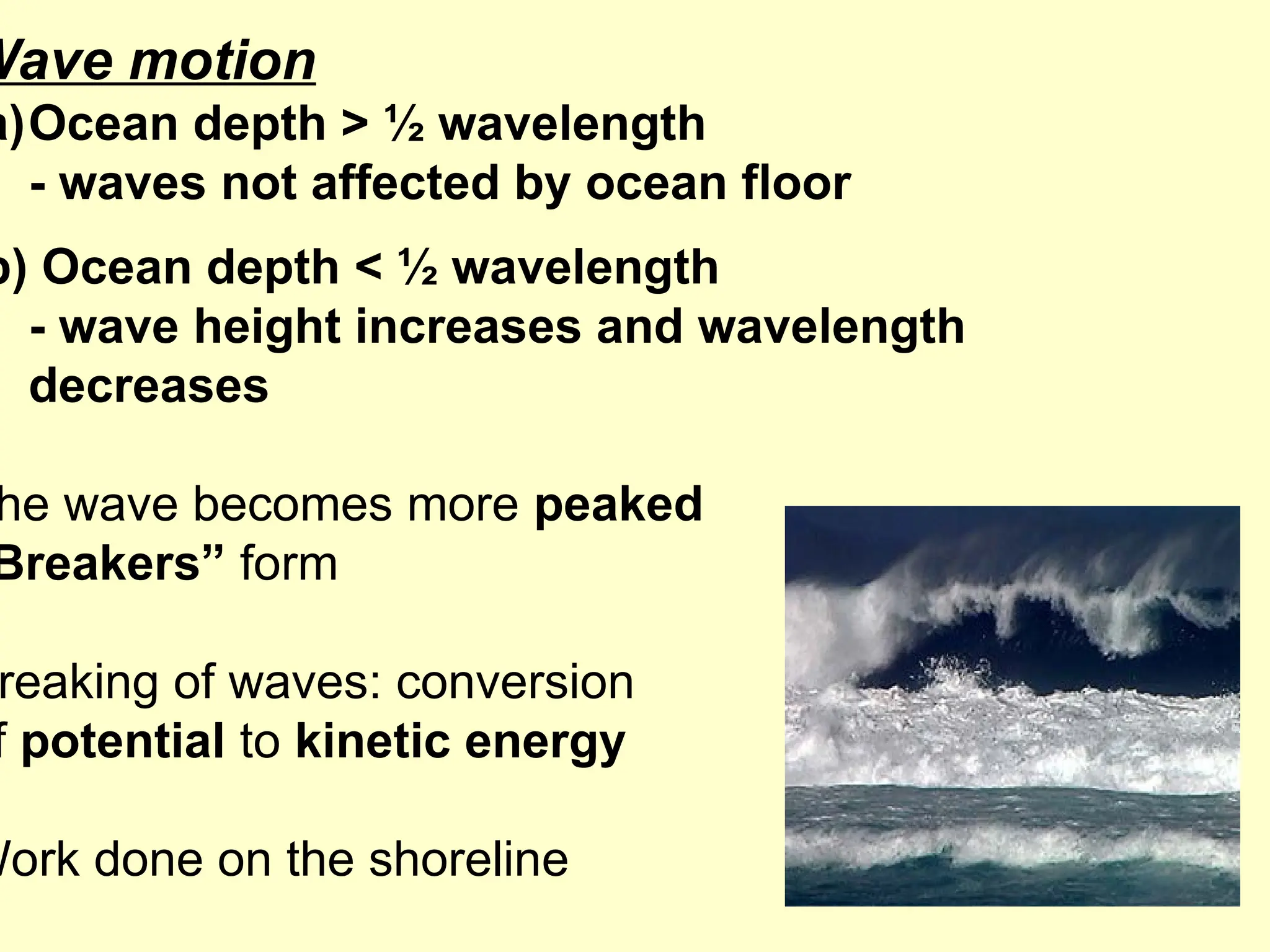
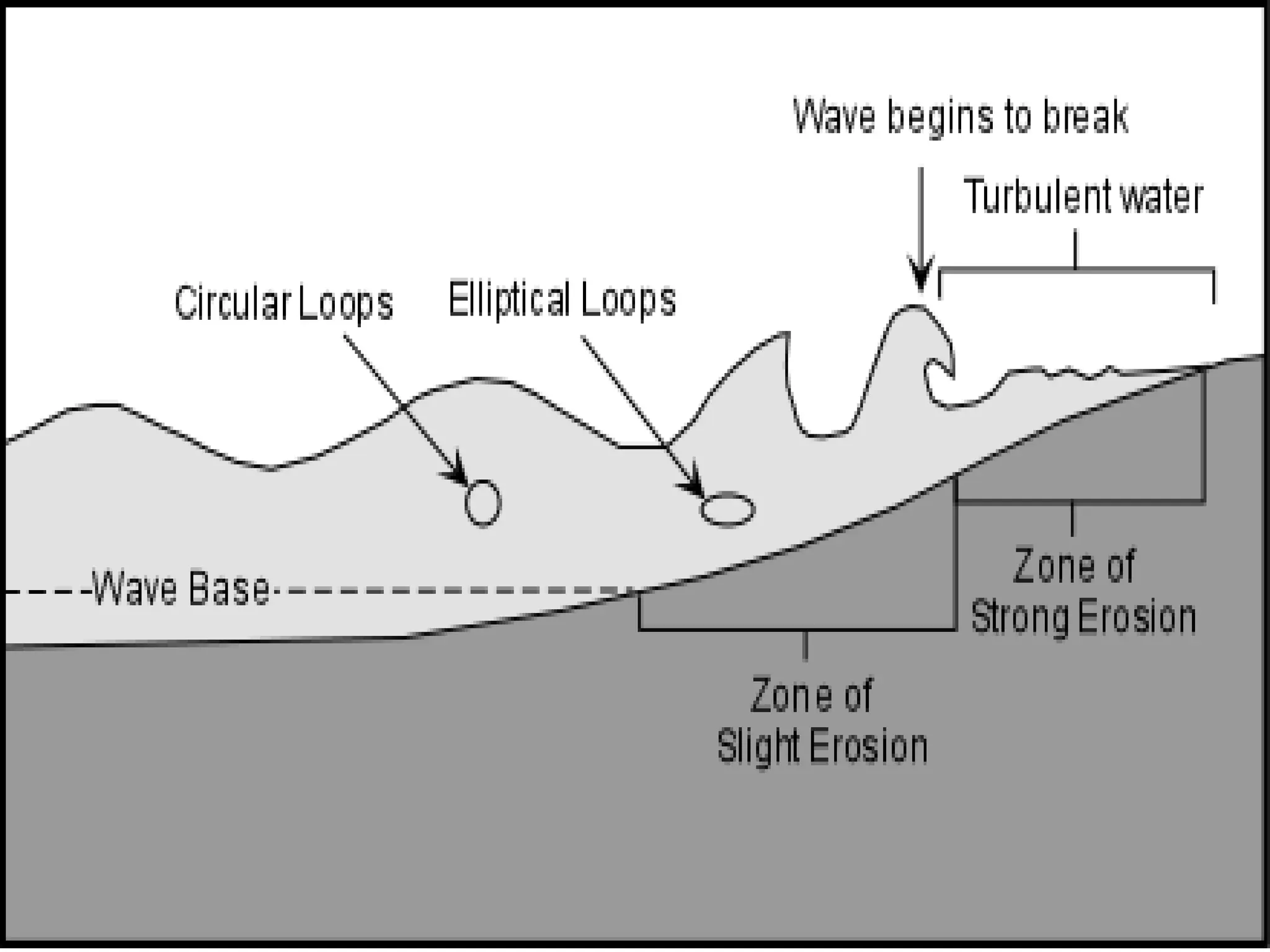
Wave motion
a)Ocean depth > ½ wavelength
- waves not affected by ocean floor
b) Ocean depth < ½ wavelength
- wave height increases and wavelength
decreases
he wave becomes more peaked
Breakers” form
reaking of waves: conversion
f potential to kinetic energy
Work done on the shoreline
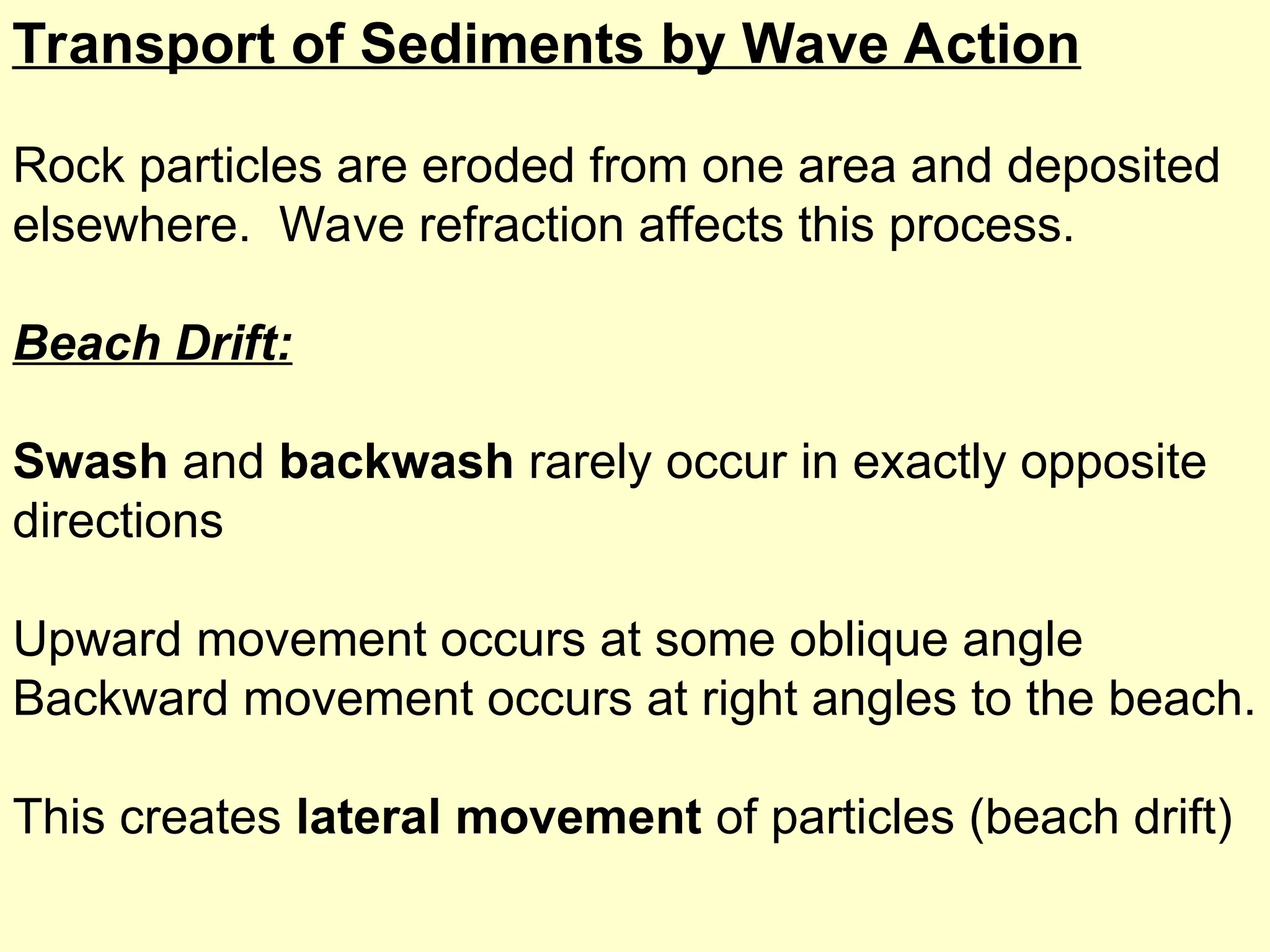
Transport of Sediments by Wave Action
Rock particles are eroded from one area and deposited
elsewhere. Wave refraction affects this process.
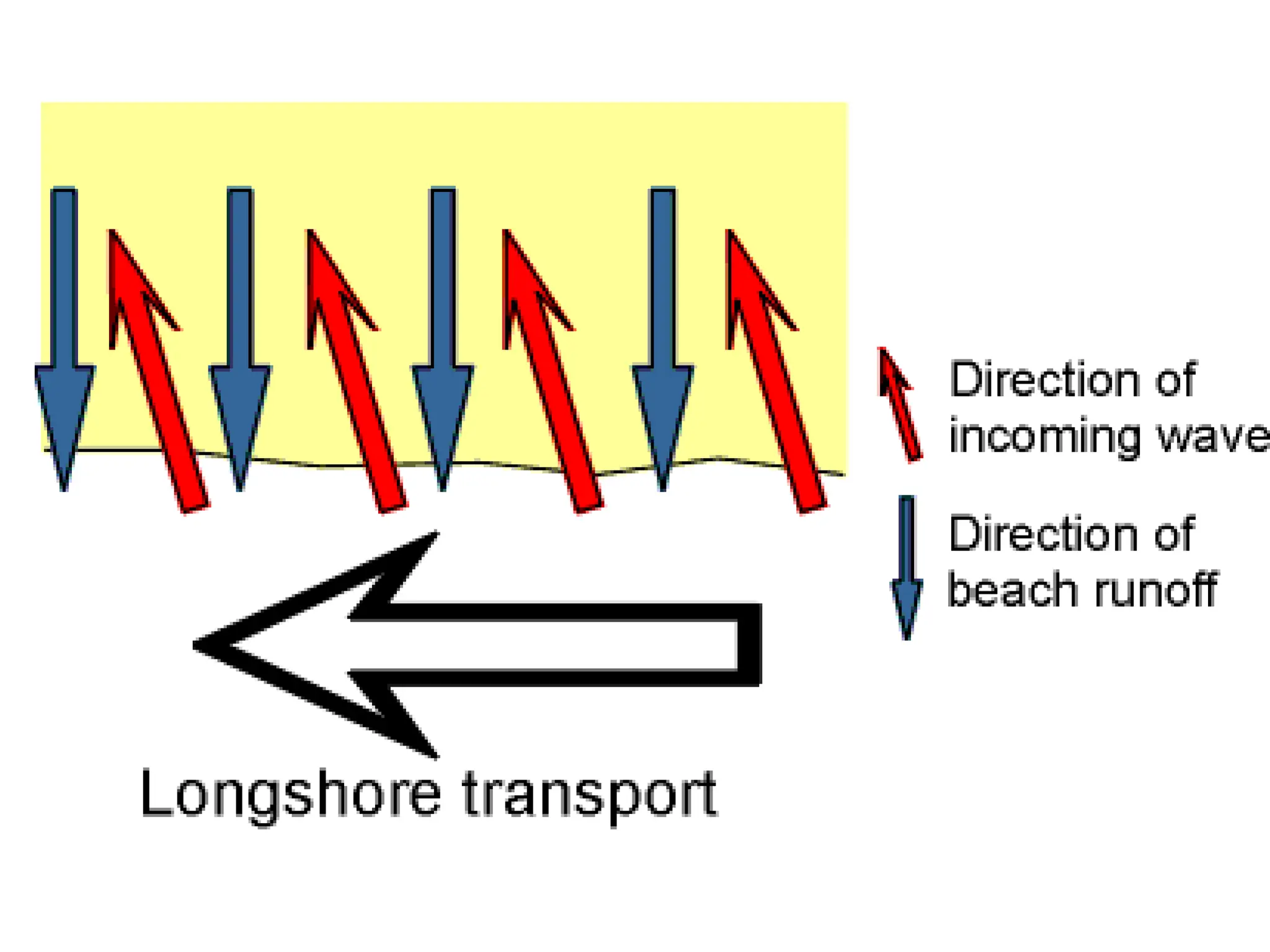
Beach Drift:
Swash and backwash rarely occur in exactly opposite
directions
Upward movement occurs at some oblique angle
Backward movement occurs at right angles to the beach.
This creates lateral movement of particles (beach drift)
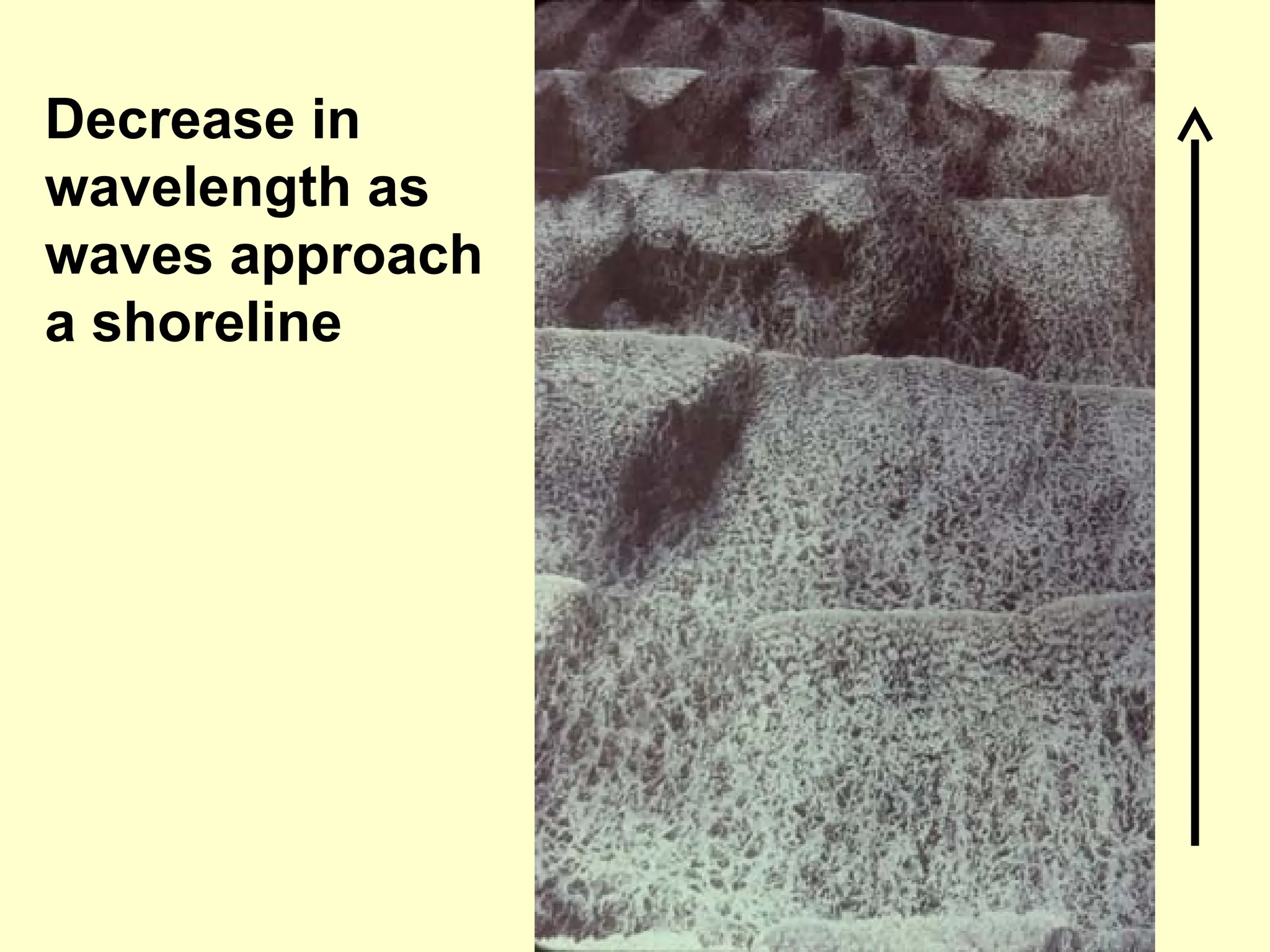
Decrease in
wavelength as
waves approach
a shoreline
Wave Refraction
Straight shoreline
- drag exerted by the ocean floor causes waves to
break parallel with the shoreline.
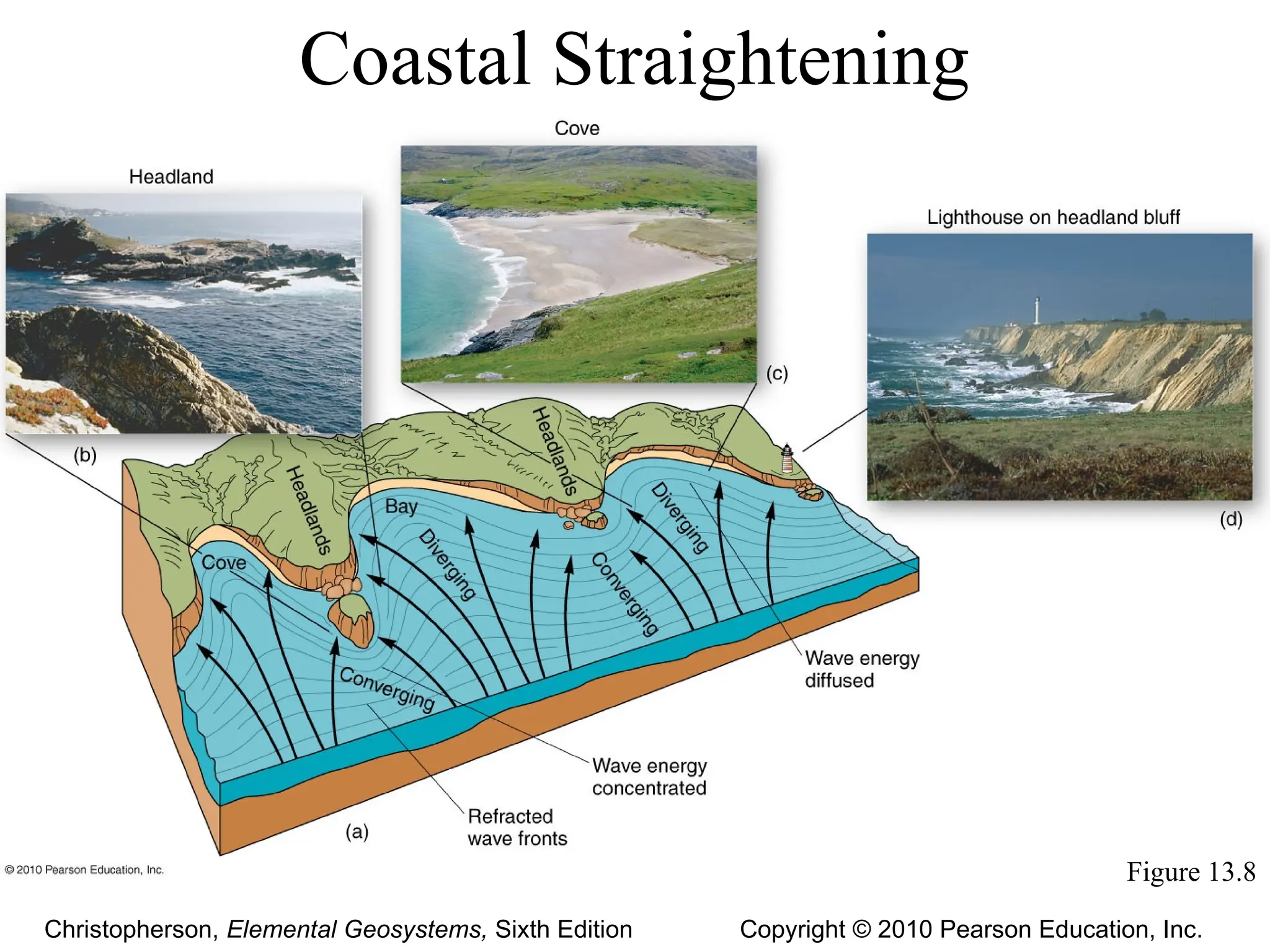
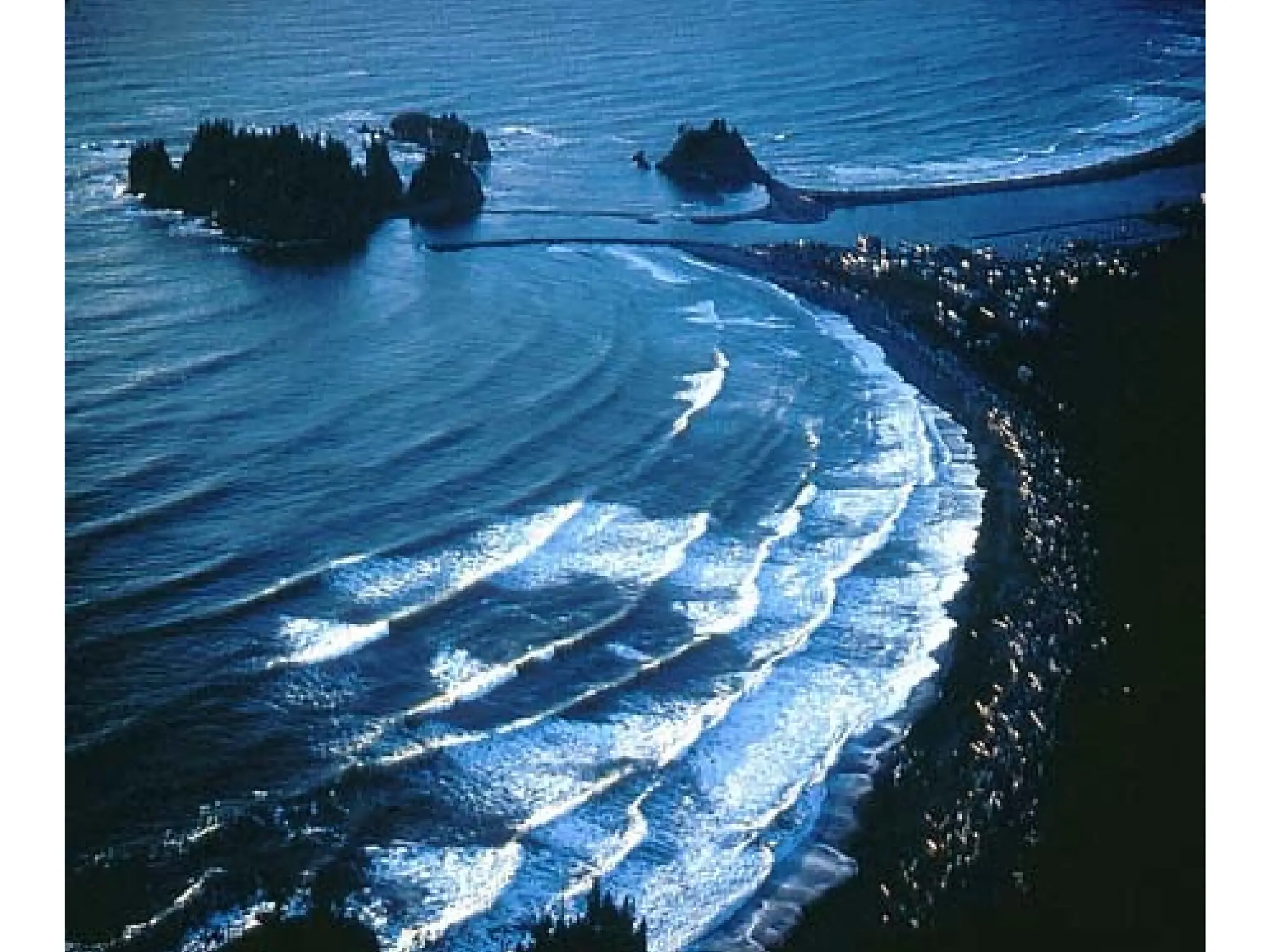
The direction of travel of a wave varies as it
approaches an indented coast.
Crests approaching the headlands experience the
drag of the ocean floor first, which causes:
1. Increase in wave height
2. Decrease in wavelength
3. Decrease in velocity
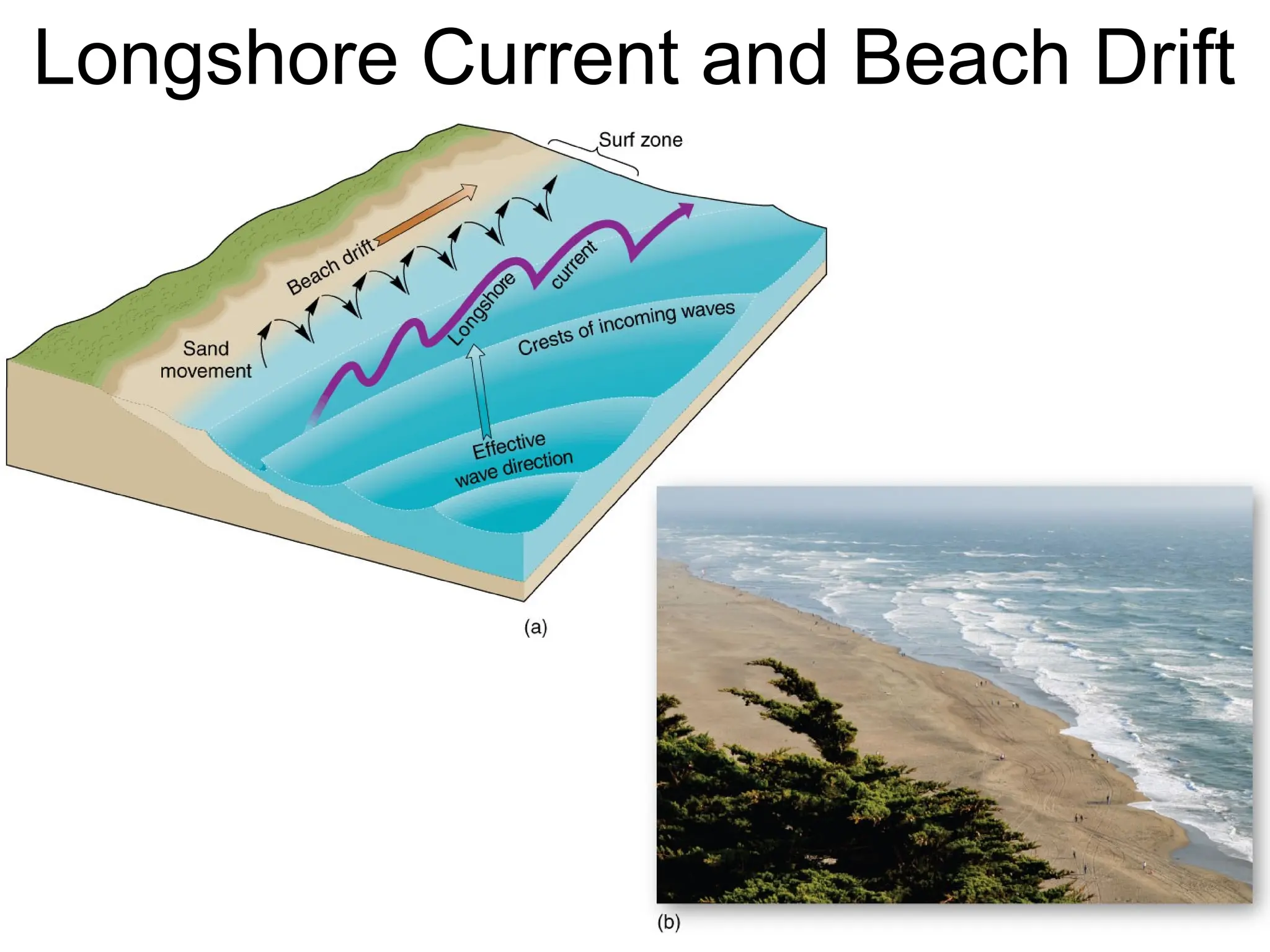
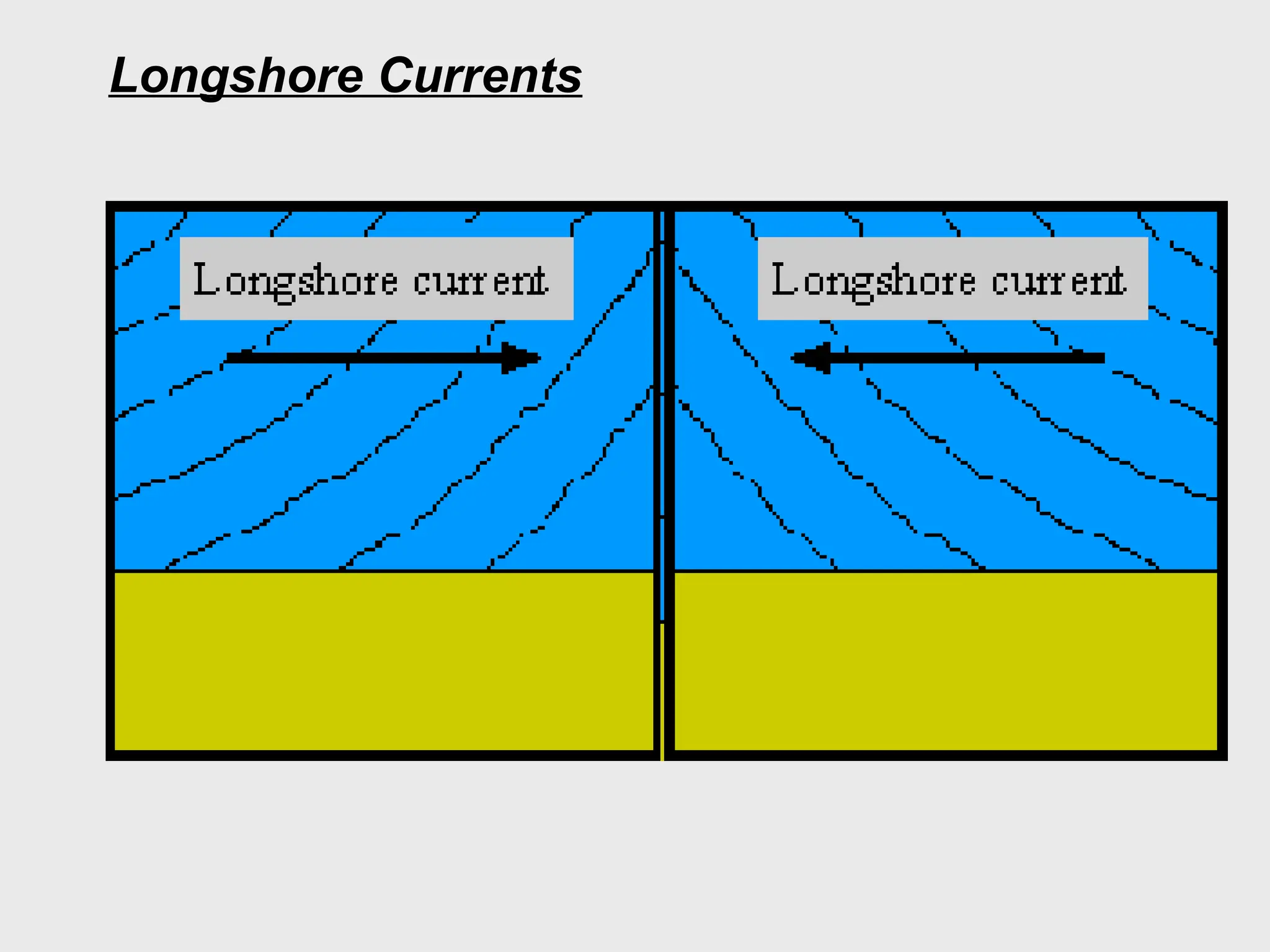
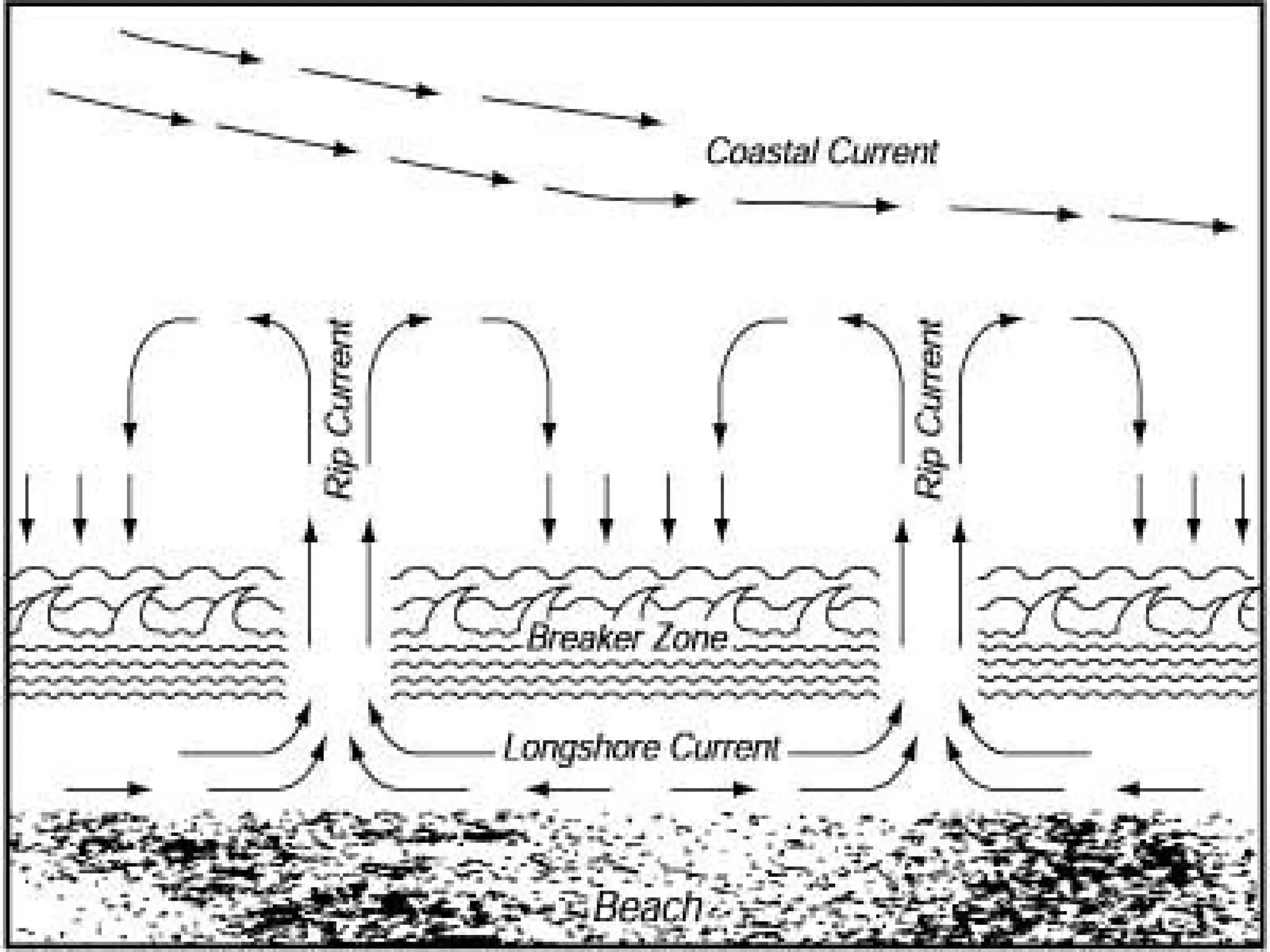
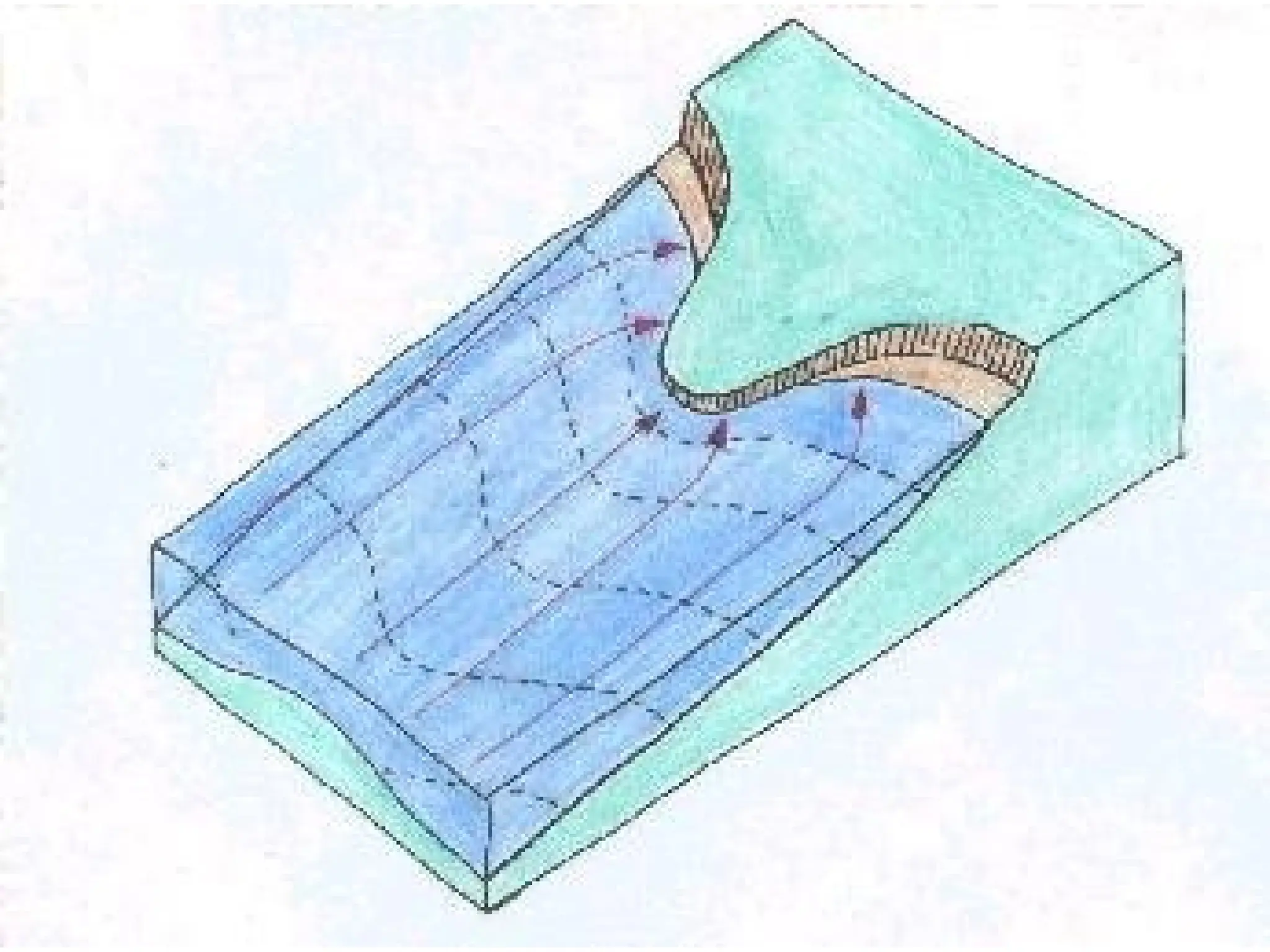
Longshore Current and Beach Drift
Longshore Currents
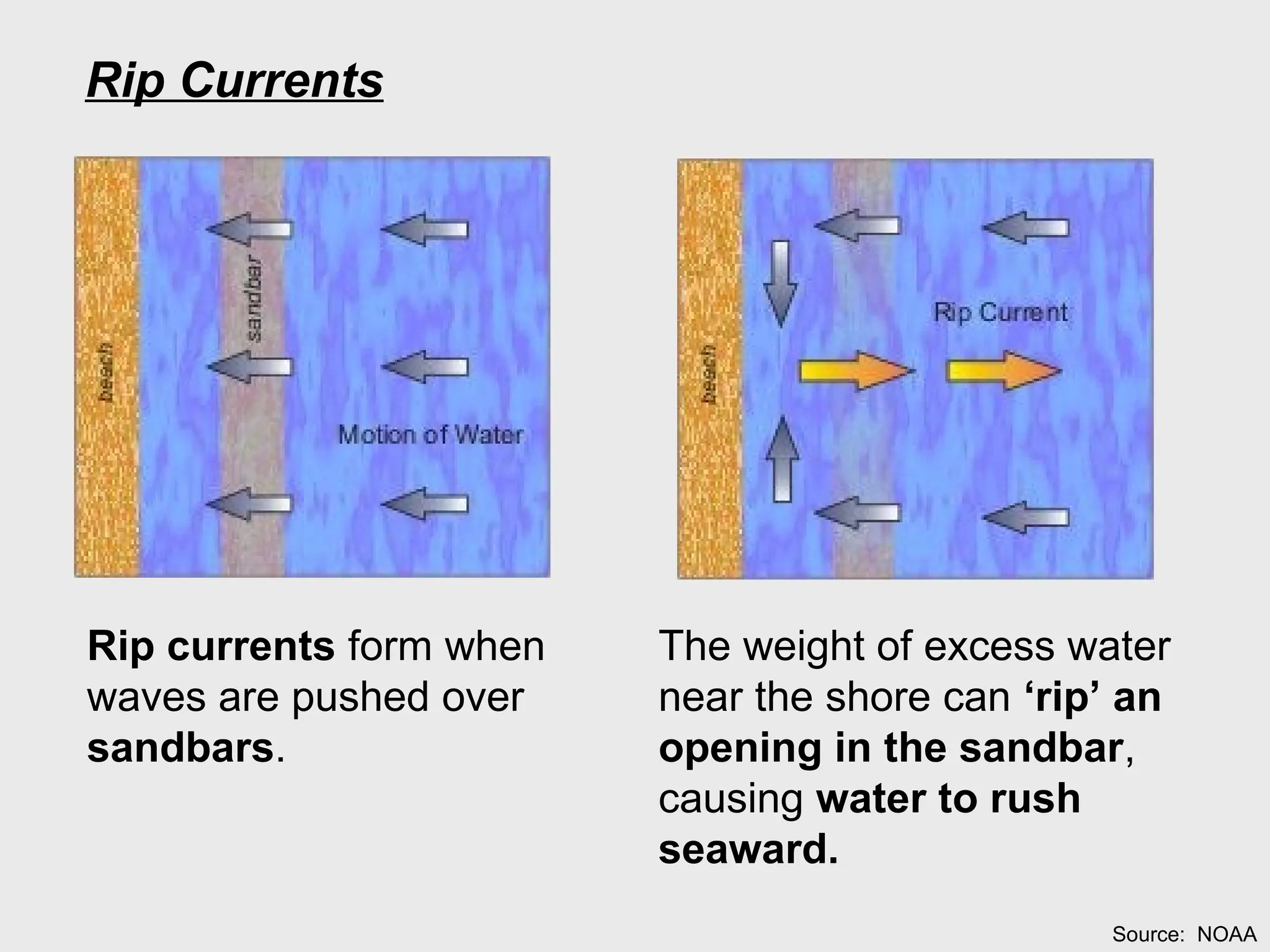
Rip currents form when
waves are pushed over
sandbars.
The weight of excess water
near the shore can ‘rip’ an
opening in the sandbar,
causing water to rush
seaward.
Rip Currents
Source: NOAA
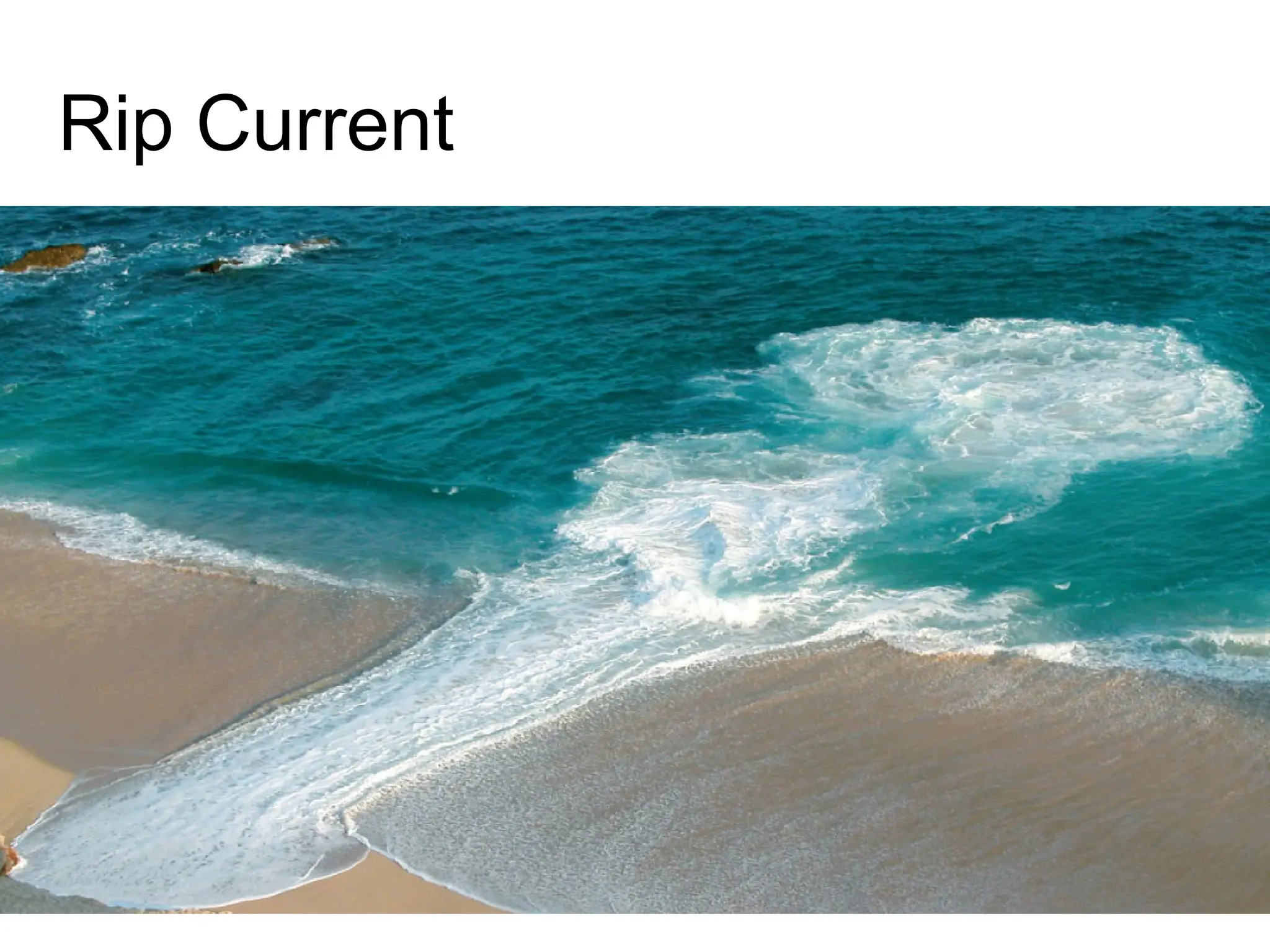
Rip Current
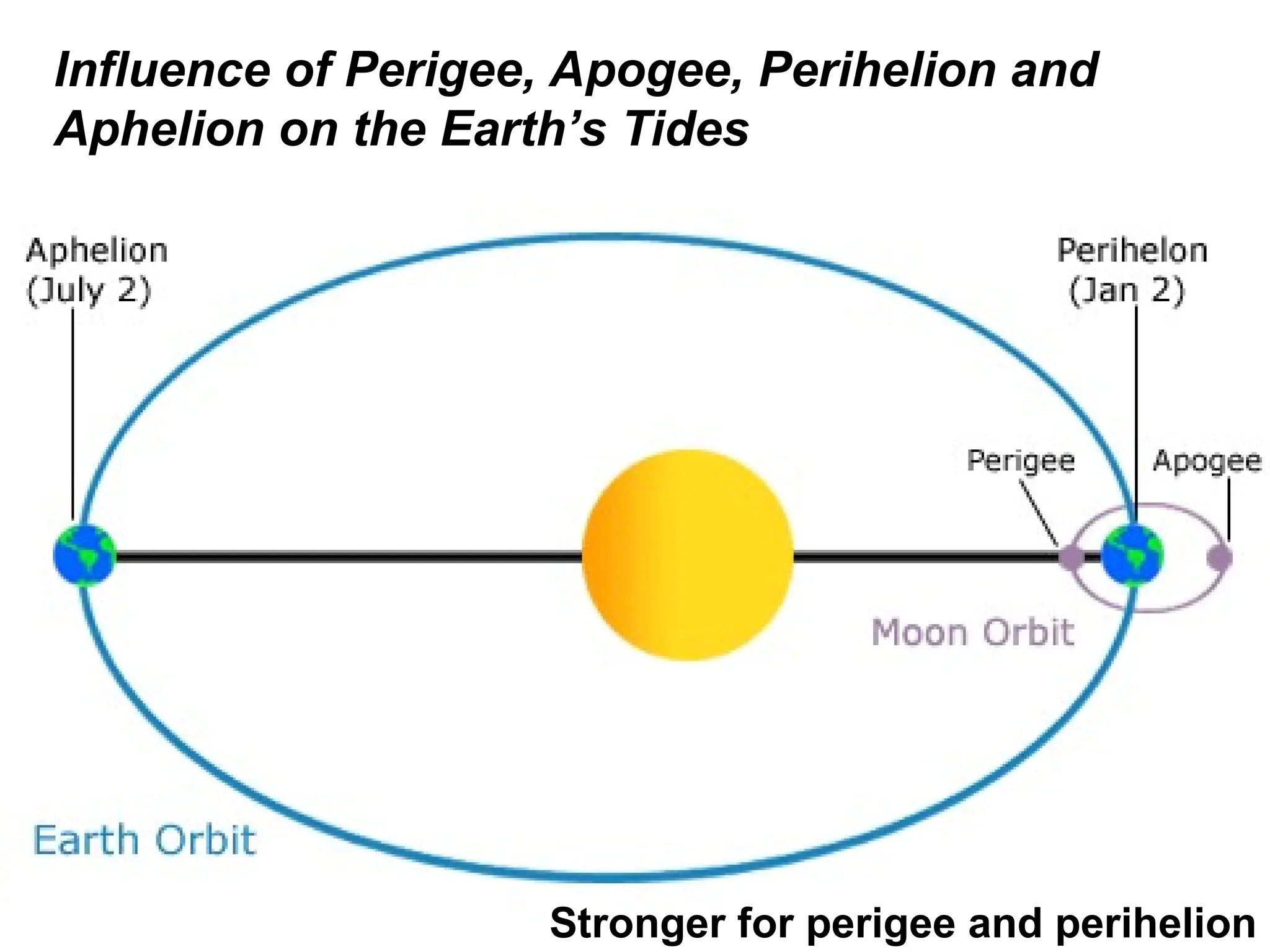
Tidal forces
Tides enhanced during full Moon and new Moon
Sun-Moon-Earth closely aligned
Influence of Perigee, Apogee, Perihelion and
Aphelion on the Earth’s Tides
Stronger for perigee and perihelion
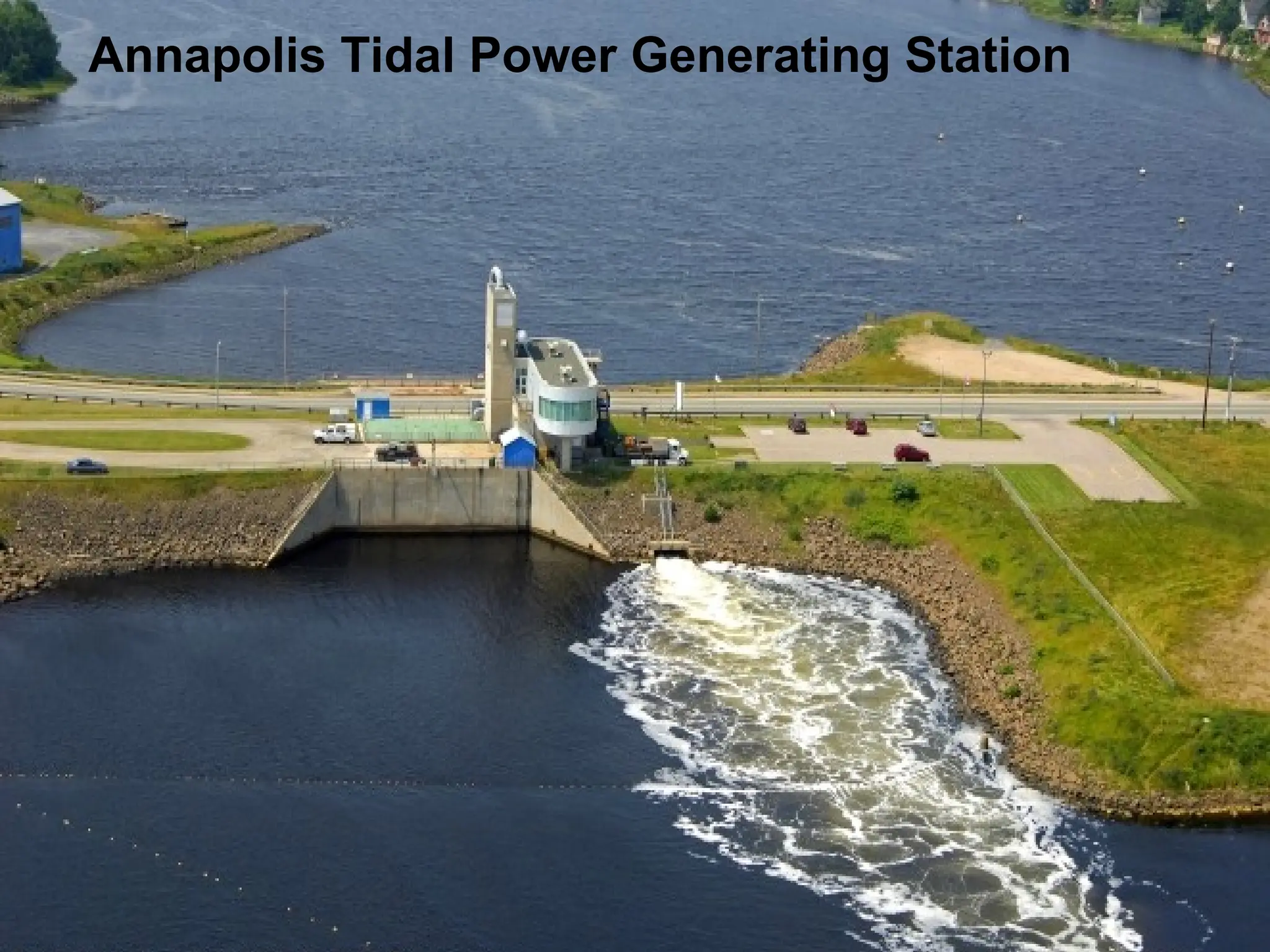
Annapolis Tidal Power Generating Station
Hopewell Rocks, New Brunswick
“flower pot rocks”
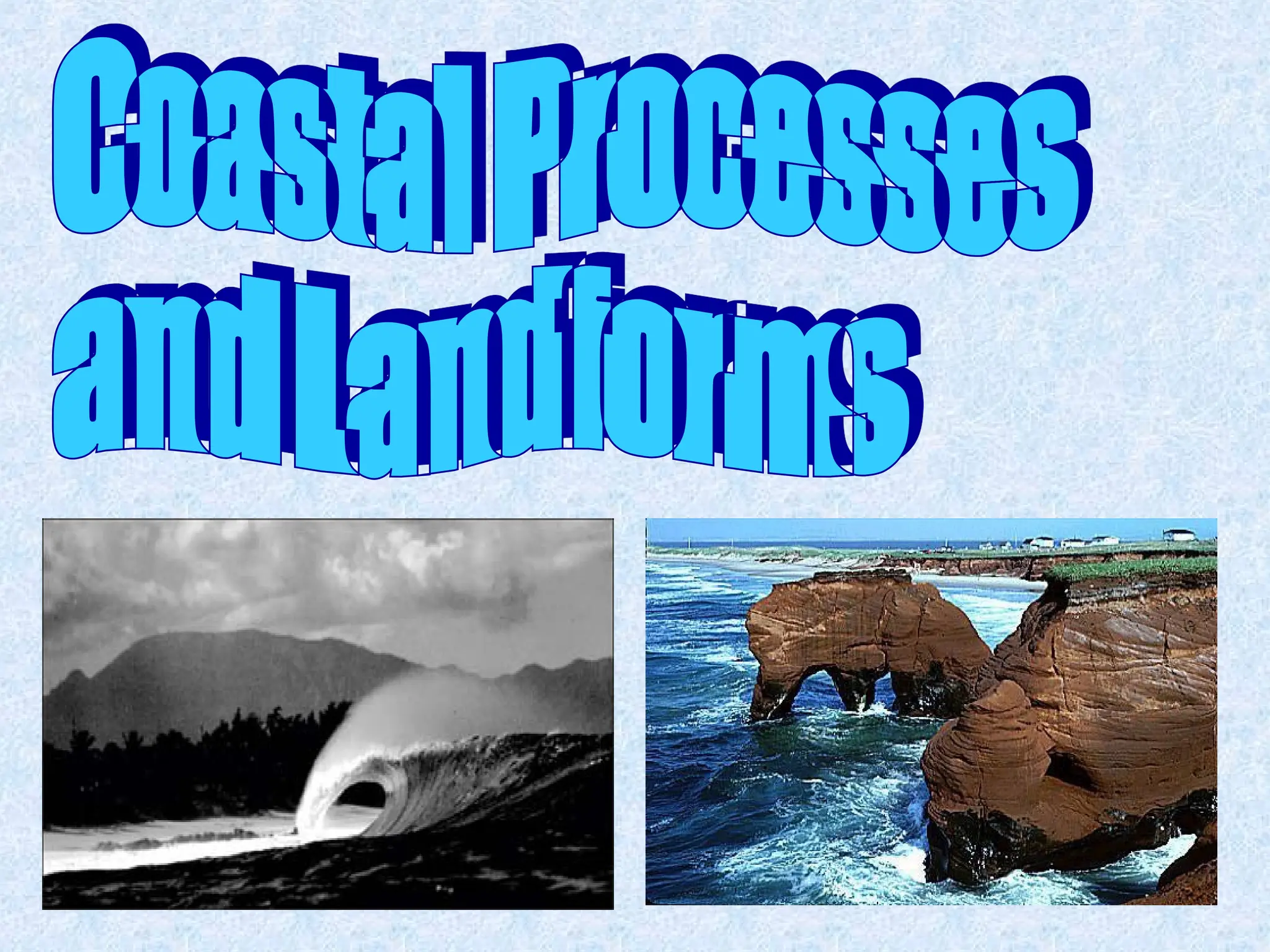
Coastal Processes
and Landforms
Erosional and depositional landforms of coastal areas
are the result of the action of ocean waves.
Erosional Landforms Depositional landforms
Sea Cliffs Beaches
Wave-cut Notches Barrier Spit
Caves Baymouth Bar
Sea stacks Lagoon
Sea arches Tombolo
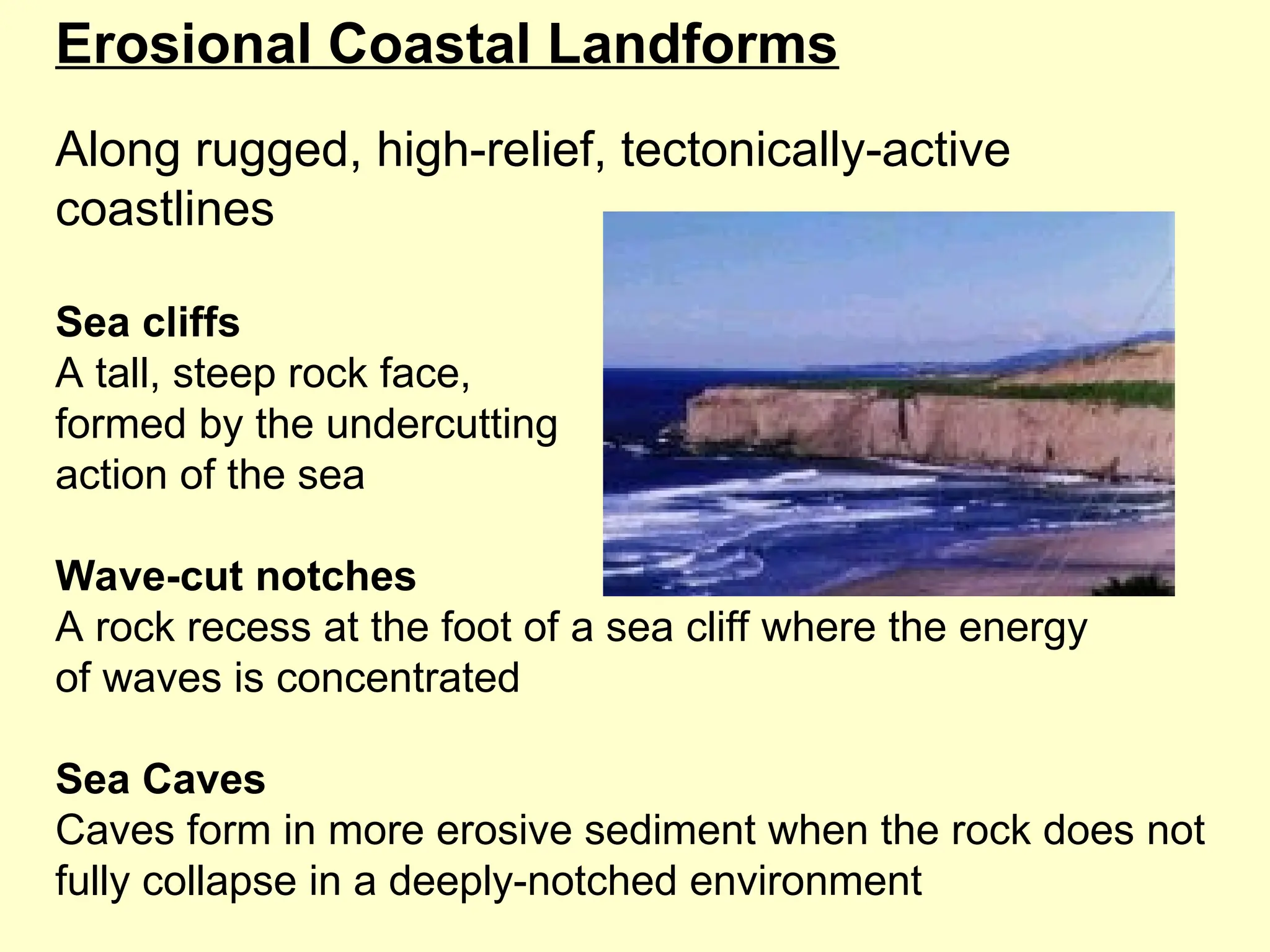
Erosional Coastal Landforms
Along rugged, high-relief, tectonically-active
coastlines
Sea cliffs
A tall, steep rock face,
formed by the undercutting
action of the sea
Wave-cut notches
A rock recess at the foot of a sea cliff where the energy
of waves is concentrated
Sea Caves
Caves form in more erosive sediment when the rock does not
fully collapse in a deeply-notched environment
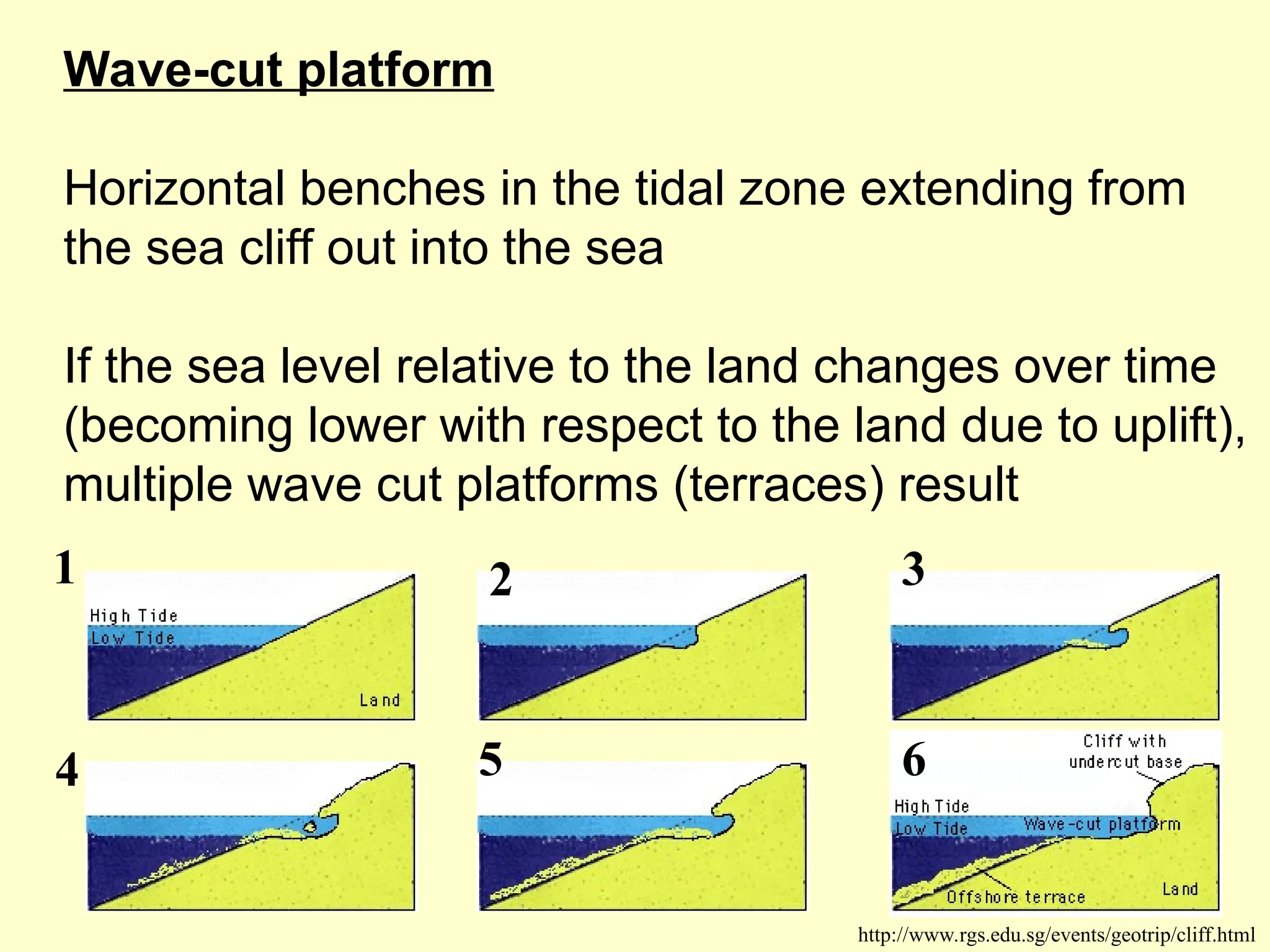
Wave-cut platform
Horizontal benches in the tidal zone extending from
the sea cliff out into the sea
If the sea level relative to the land changes over time
(becoming lower with respect to the land due to uplift),
multiple wave cut platforms (terraces) result
1 3
2
5
4 6
http://www.rgs.edu.sg/events/geotrip/cliff.html
Erosional Features
Depositional Coastal Features
Littoral Drift
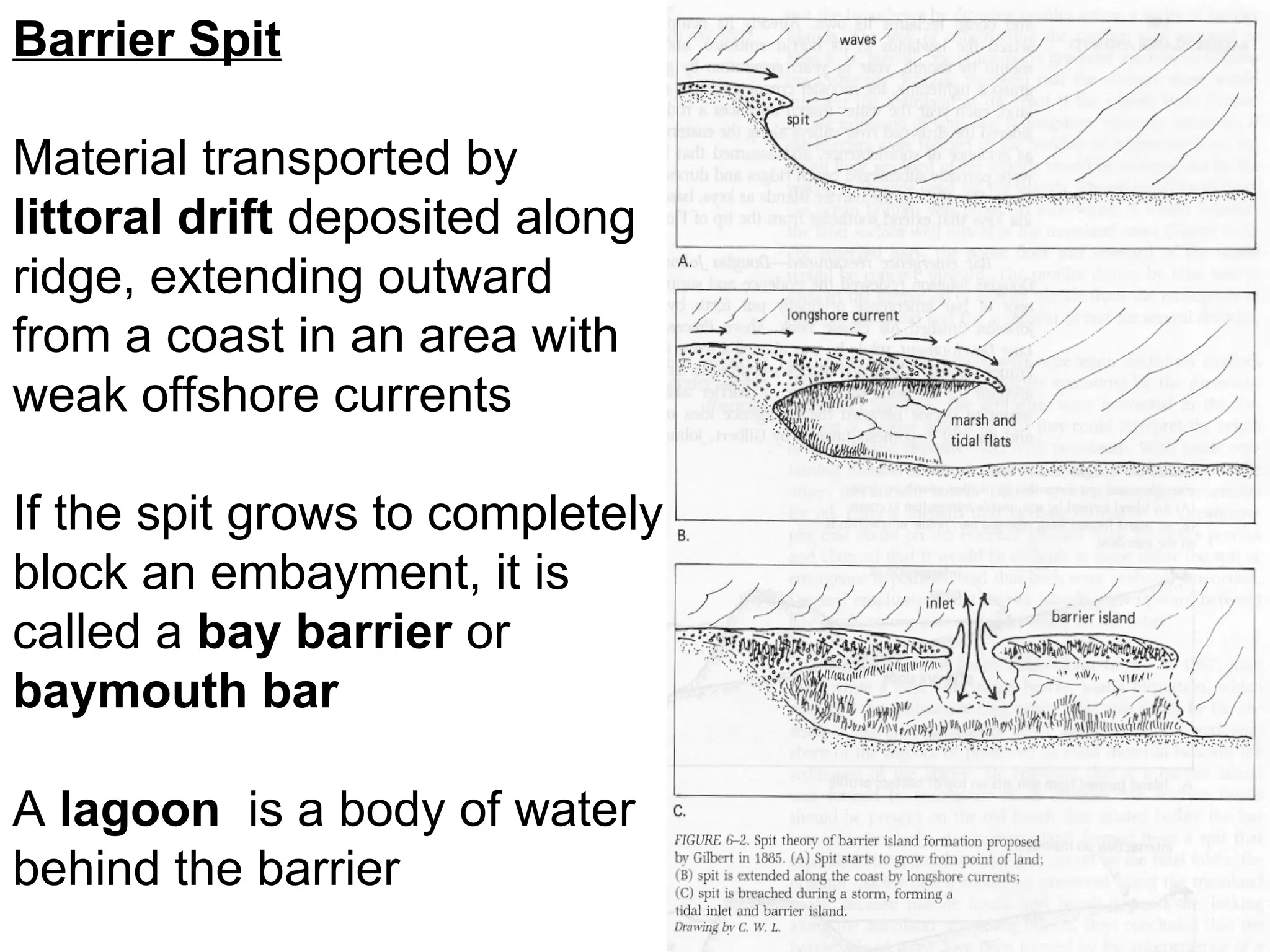
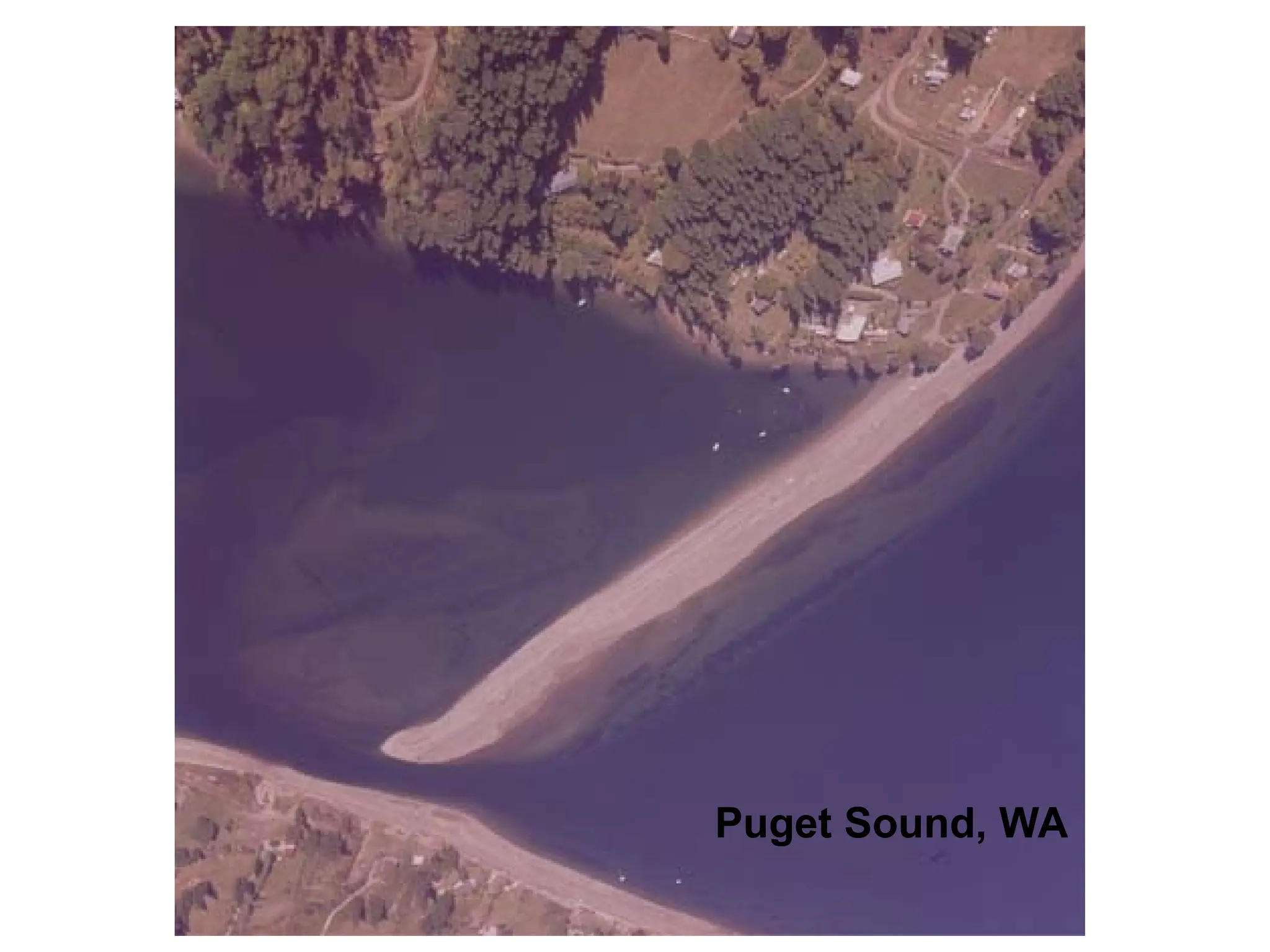
Barrier Spit
Material transported by
littoral drift deposited along
ridge, extending outward
from a coast in an area with
weak offshore currents
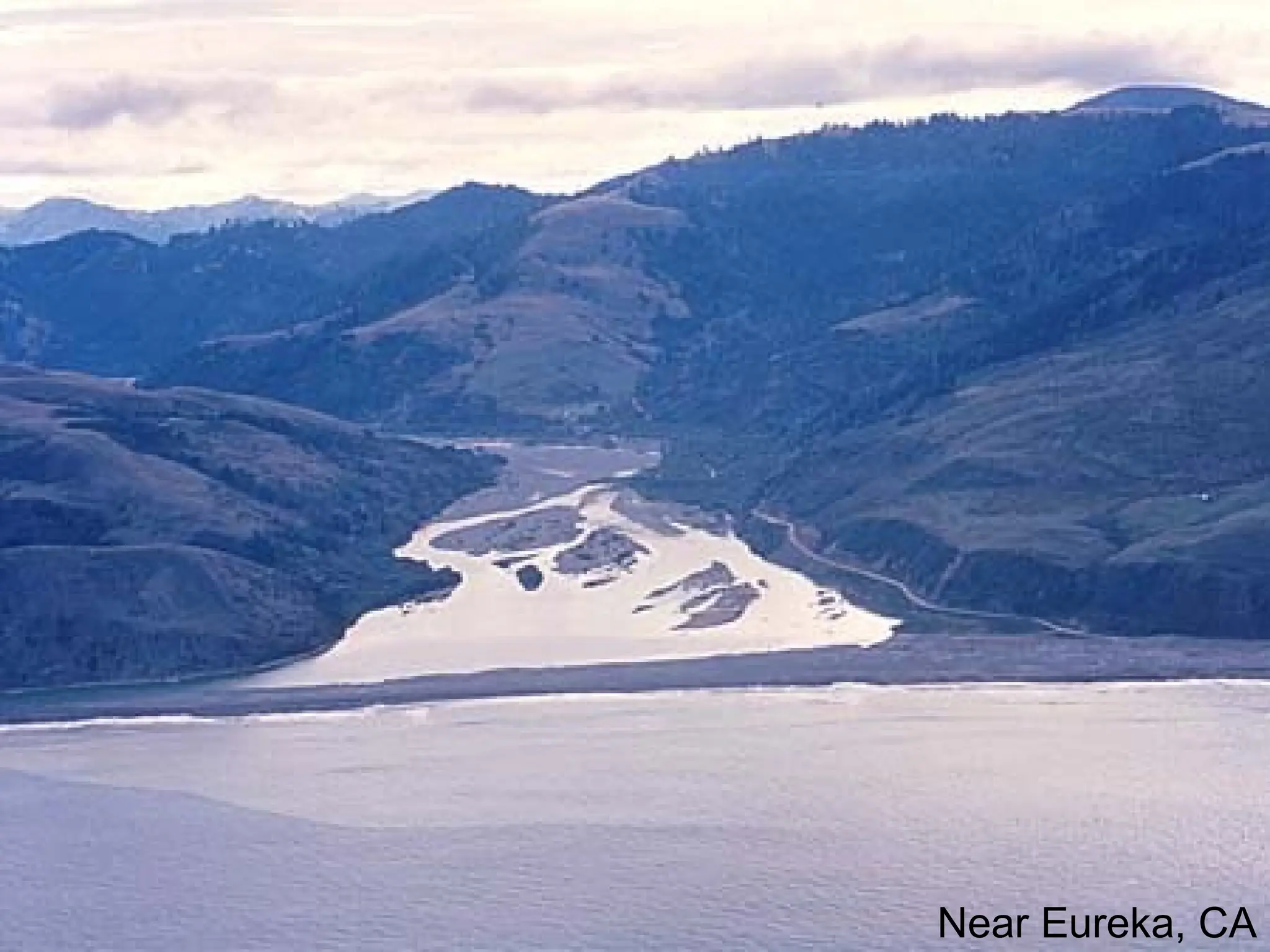
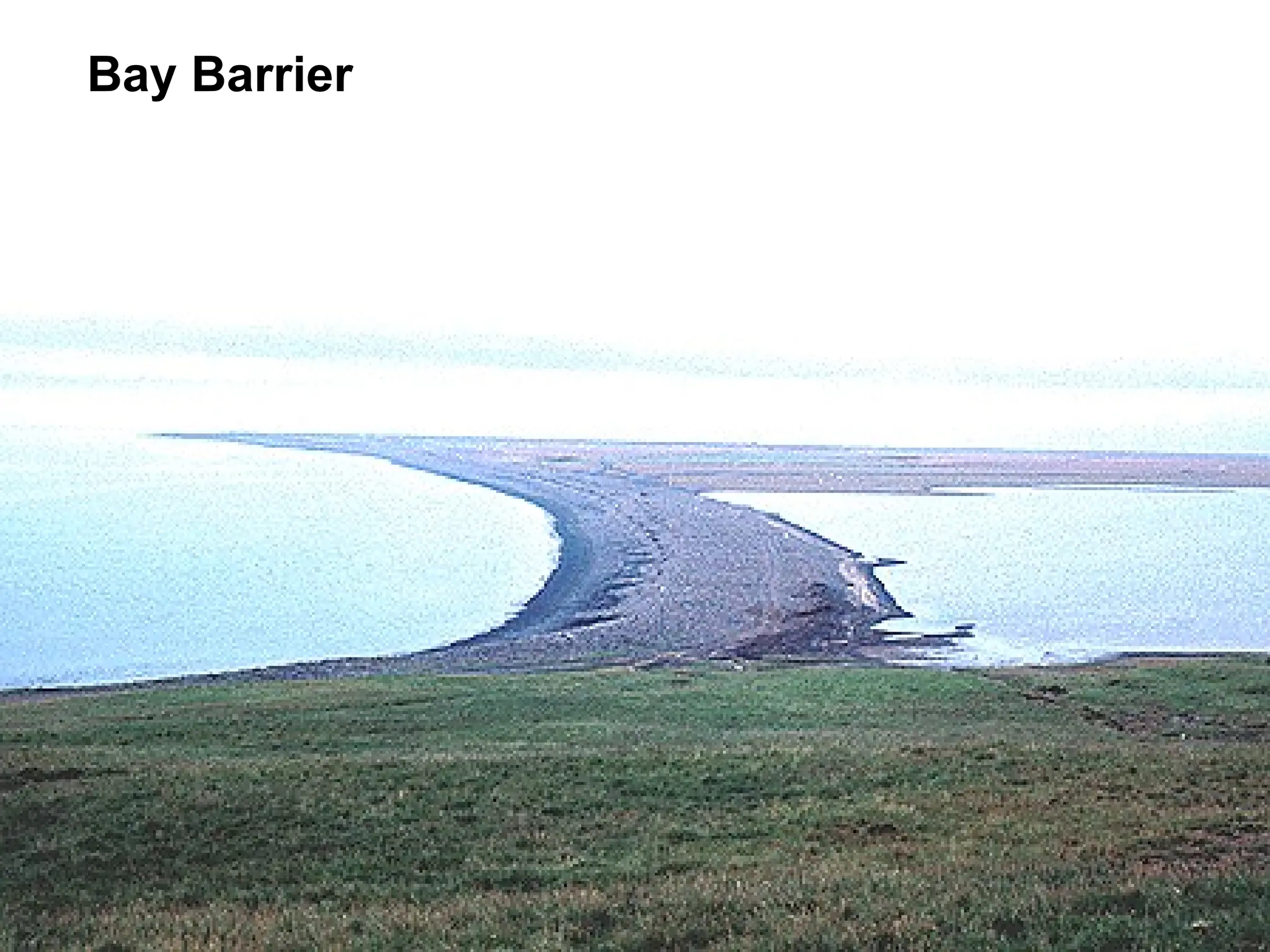
If the spit grows to completely
block an embayment, it is
called a bay barrier or
baymouth bar
A lagoon is a body of water
behind the barrier
Puget Sound, WA
Bay Barrier
Near Eureka, CA
Coastal Straightening
Figure 13.8
Copyright © 2010 Pearson Education, Inc.
Christopherson, Elemental Geosystems, Sixth Edition
Frost Island, WA
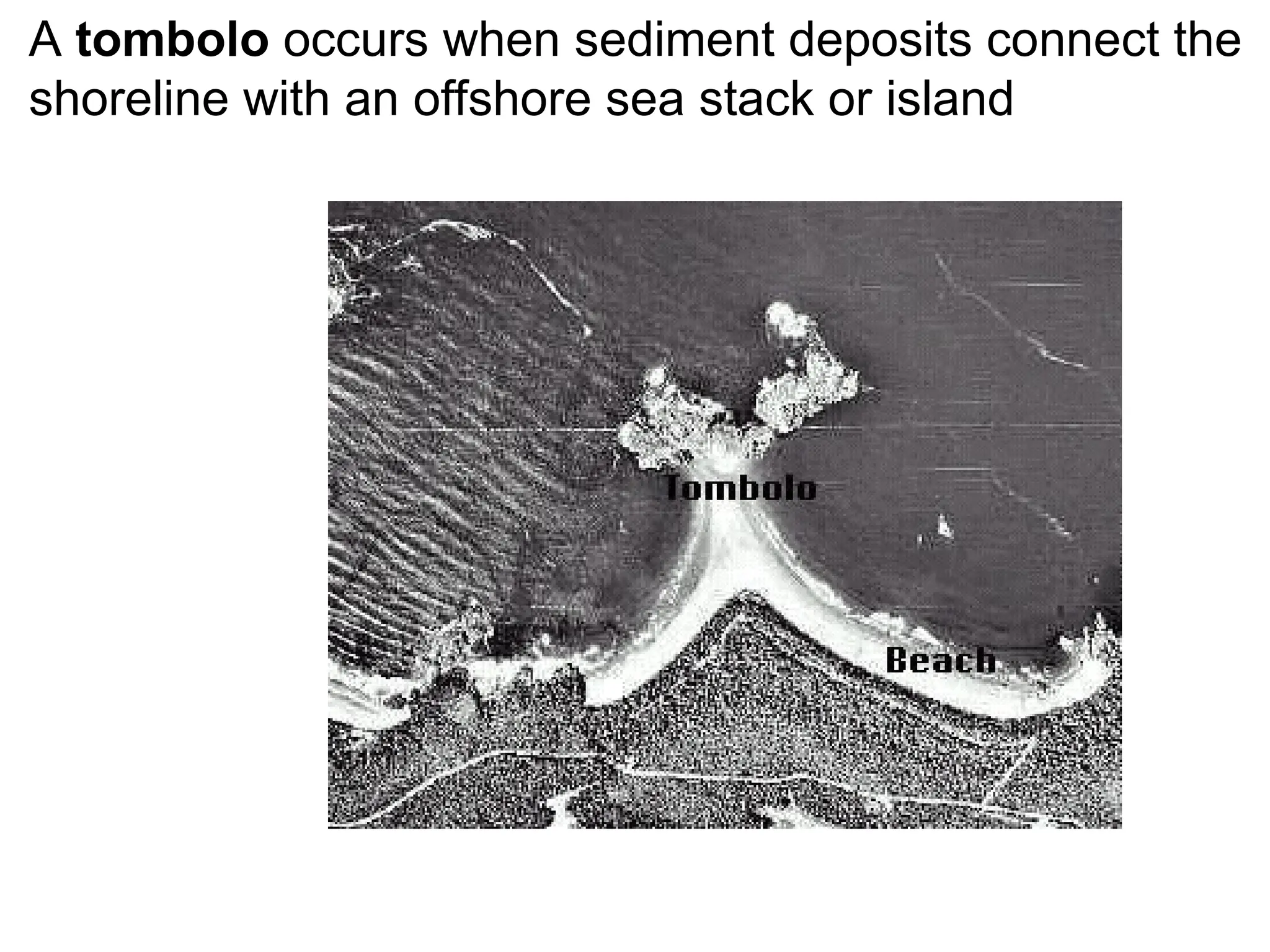
A tombolo occurs when sediment deposits connect the
shoreline with an offshore sea stack or island
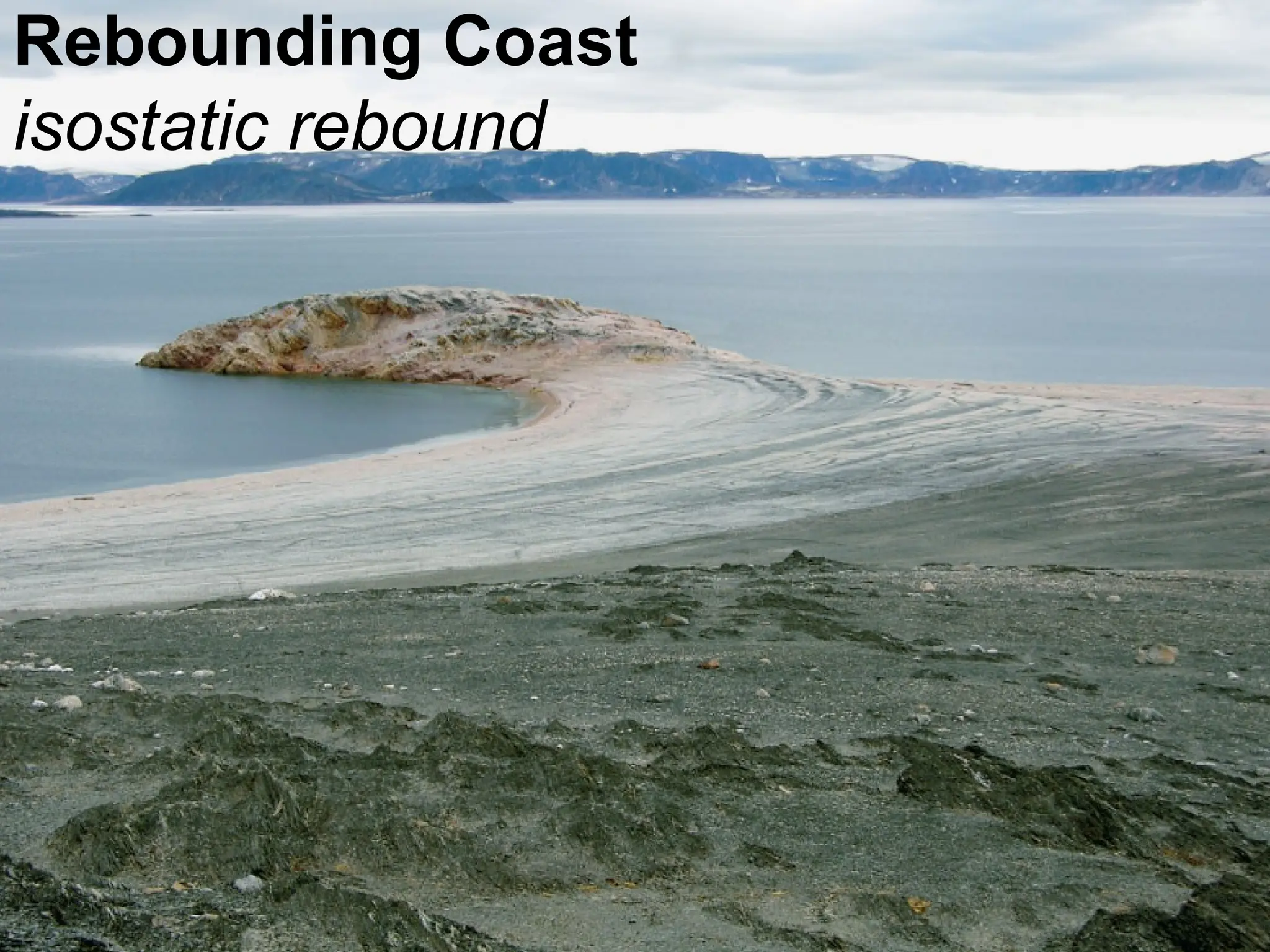
Rebounding Coast
isostatic rebound
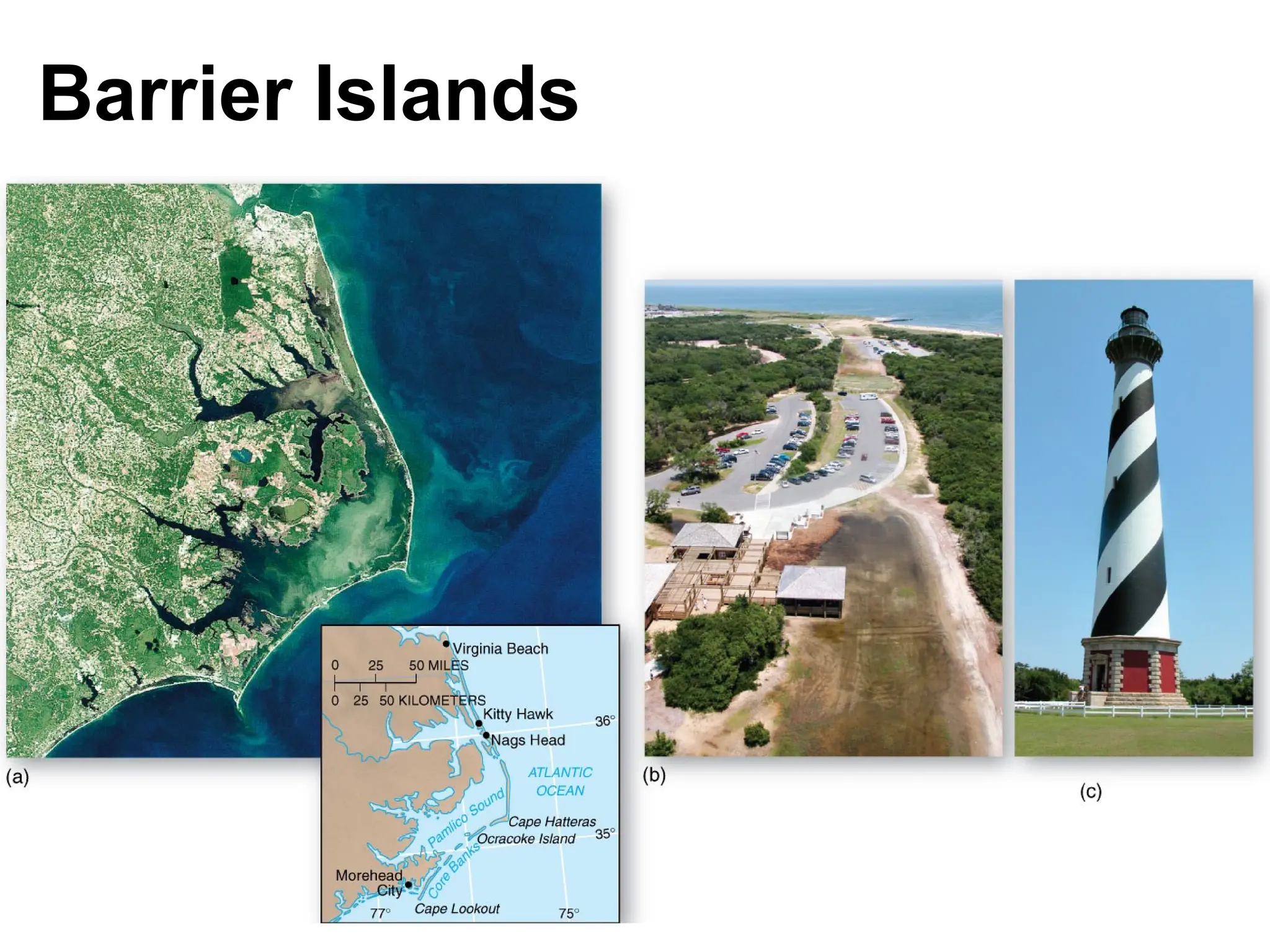
Barrier Islands
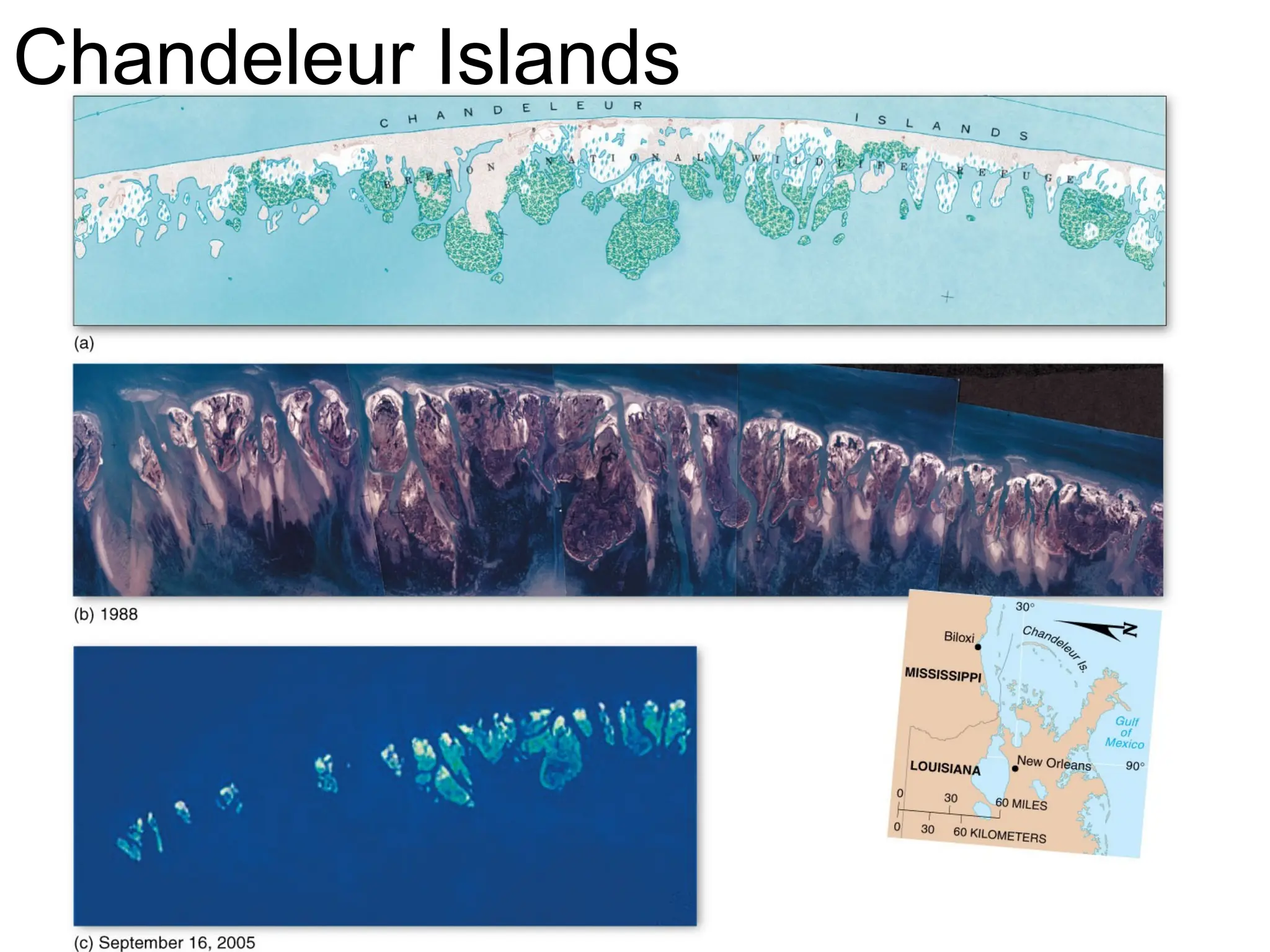
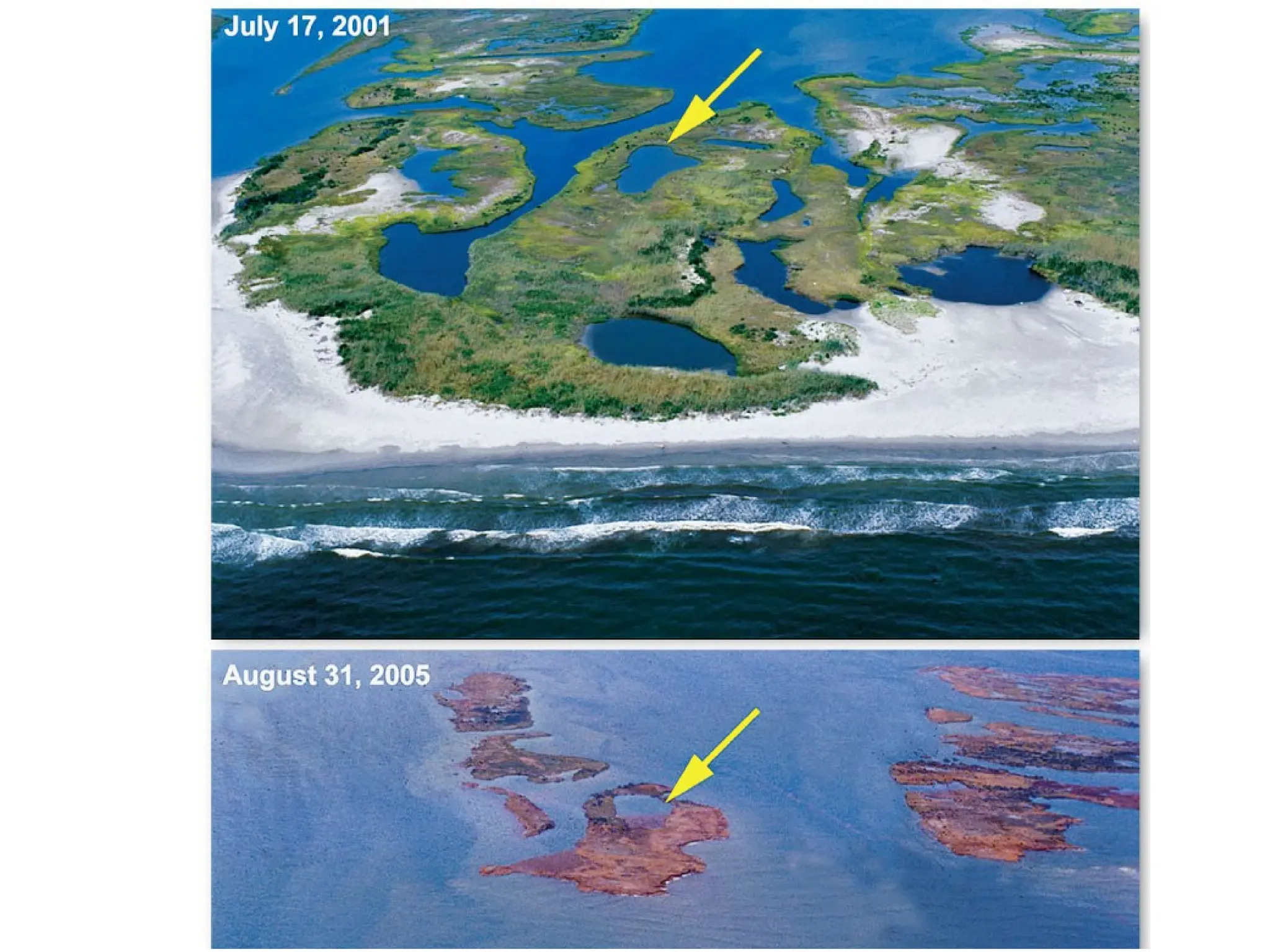
Chandeleur Islands
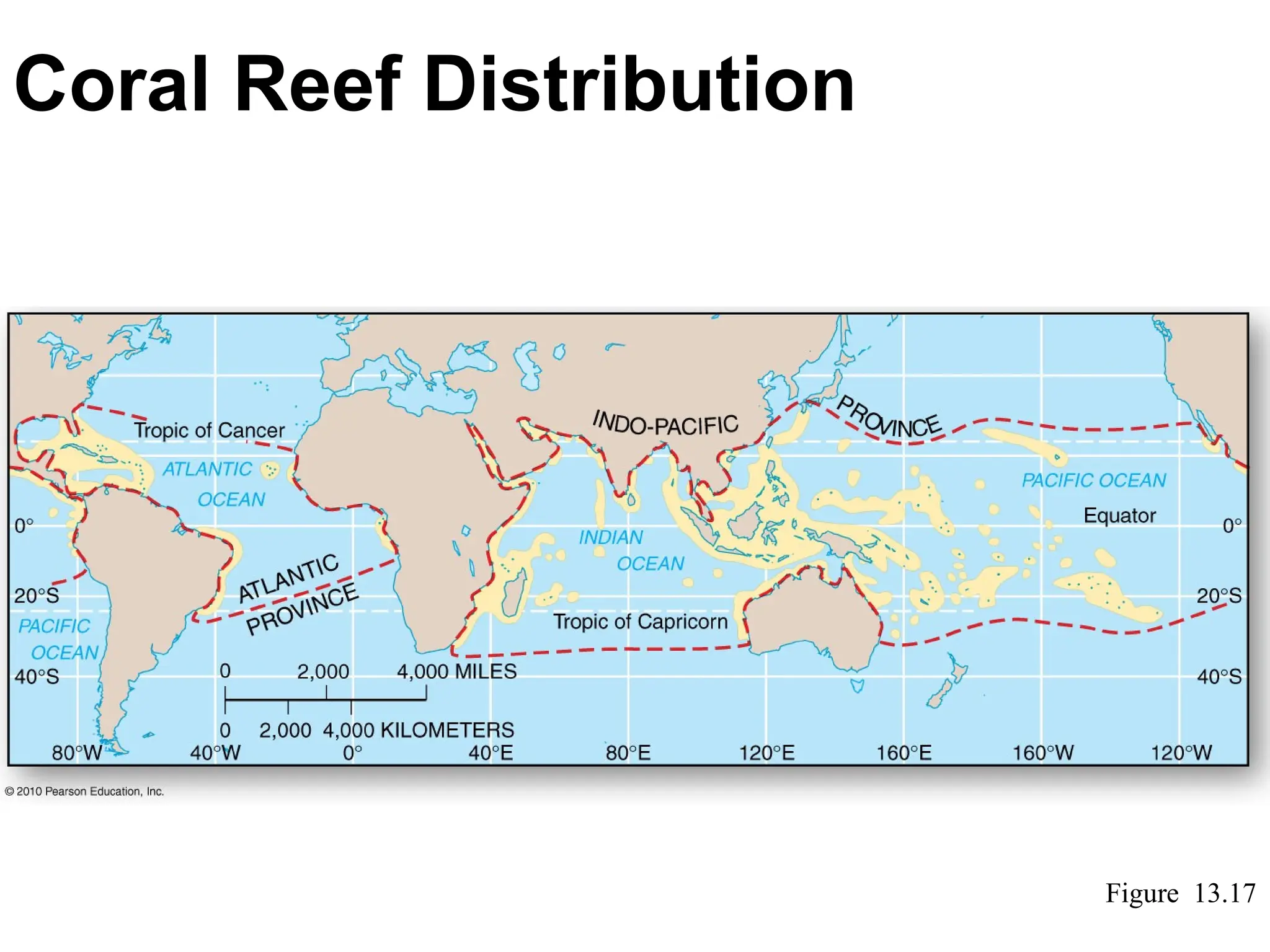
Coral Reef Distribution
Figure 13.17
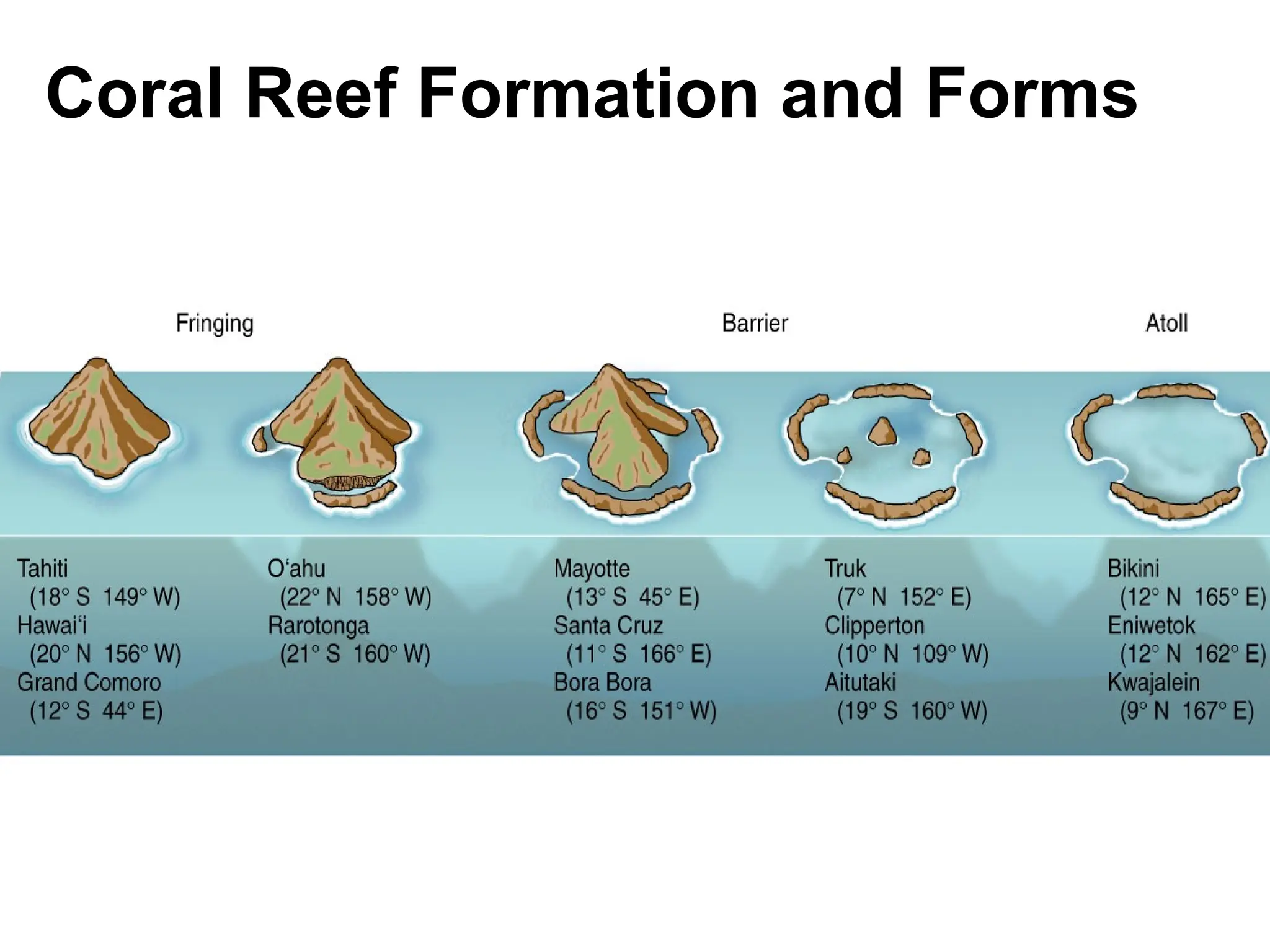
Coral Reef Formation and Forms
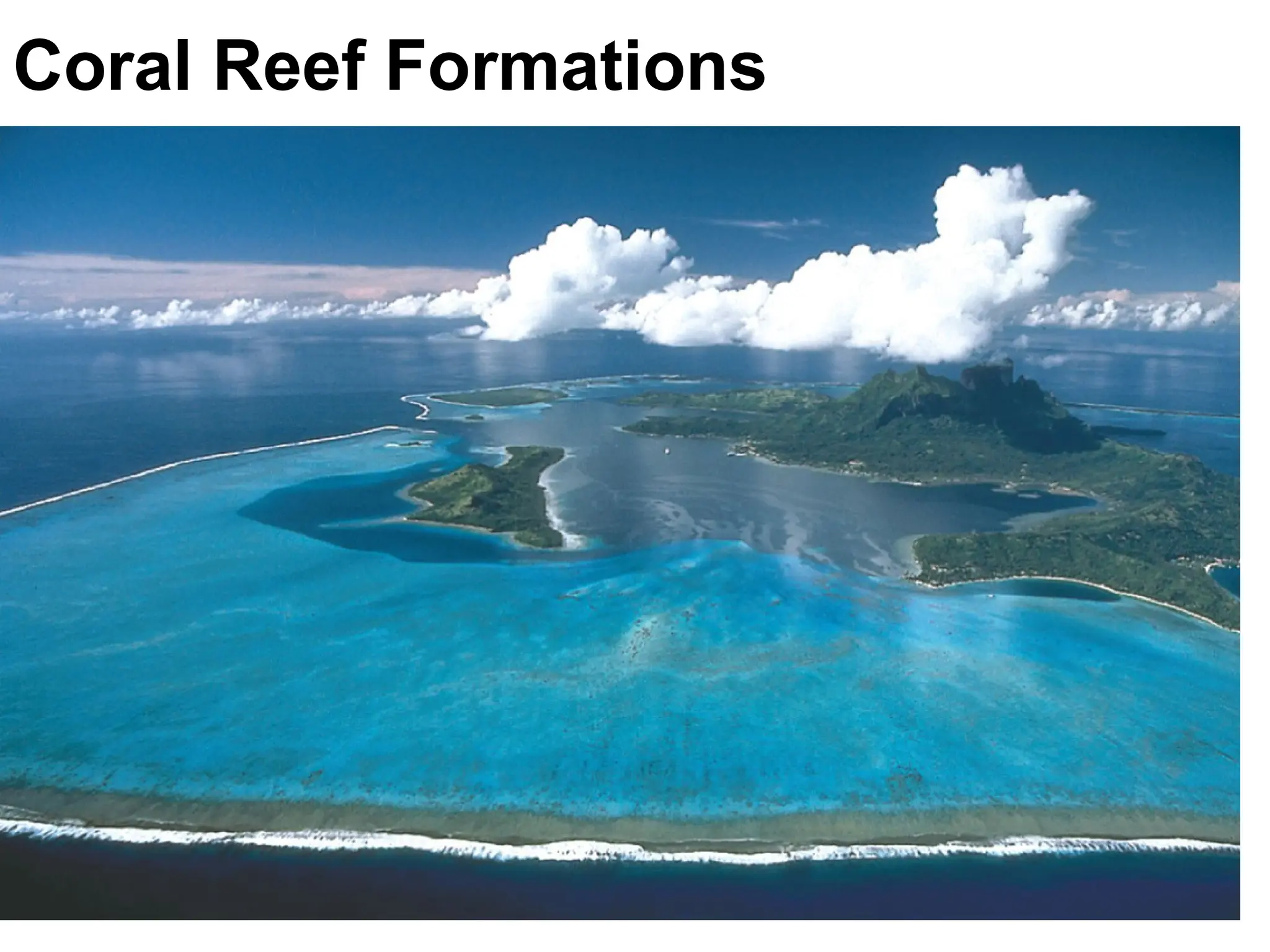
Coral Reef Formations
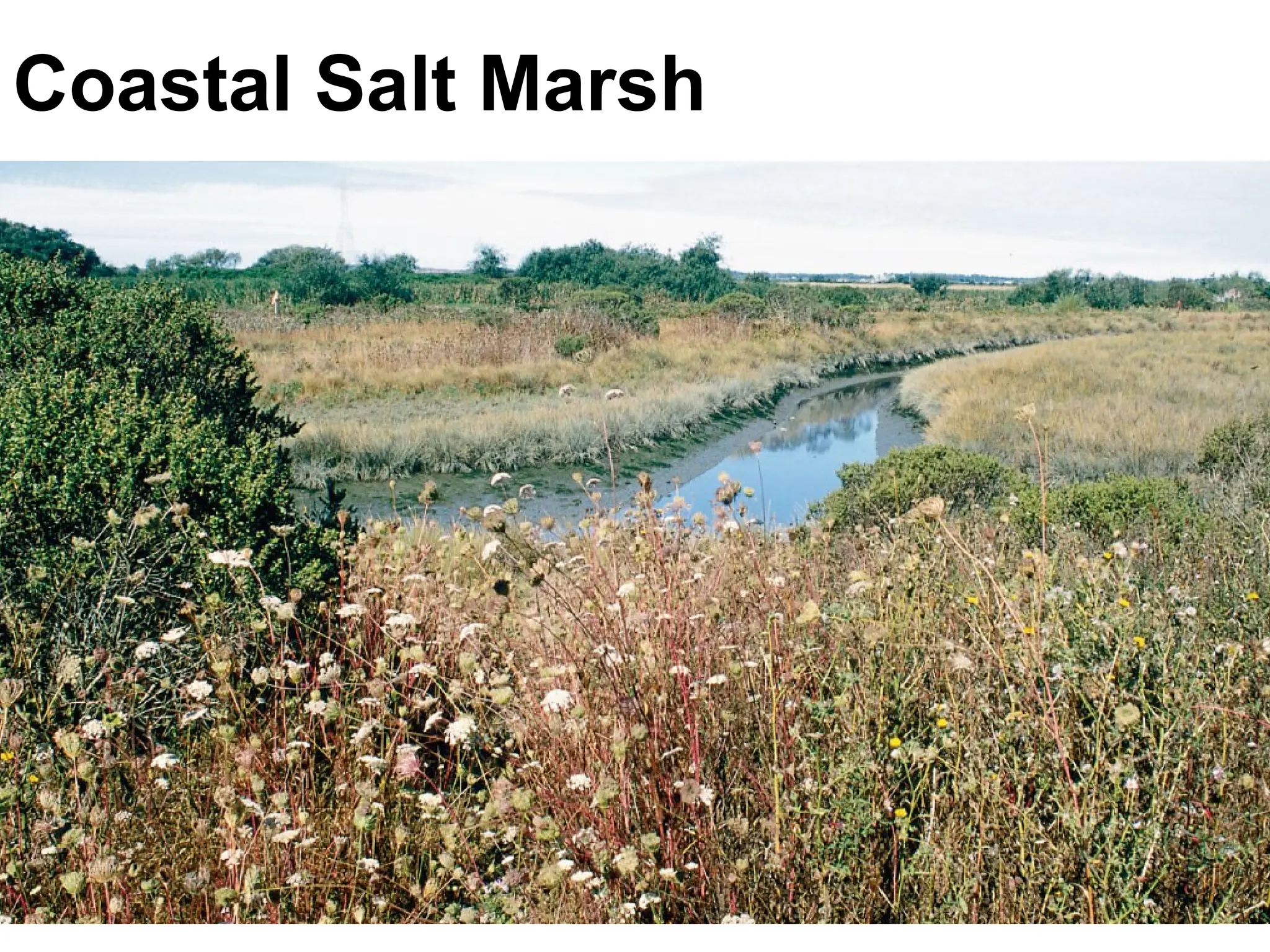
Coastal Salt Marsh
Mangroves

Coastal processes and landforms geography.ppt