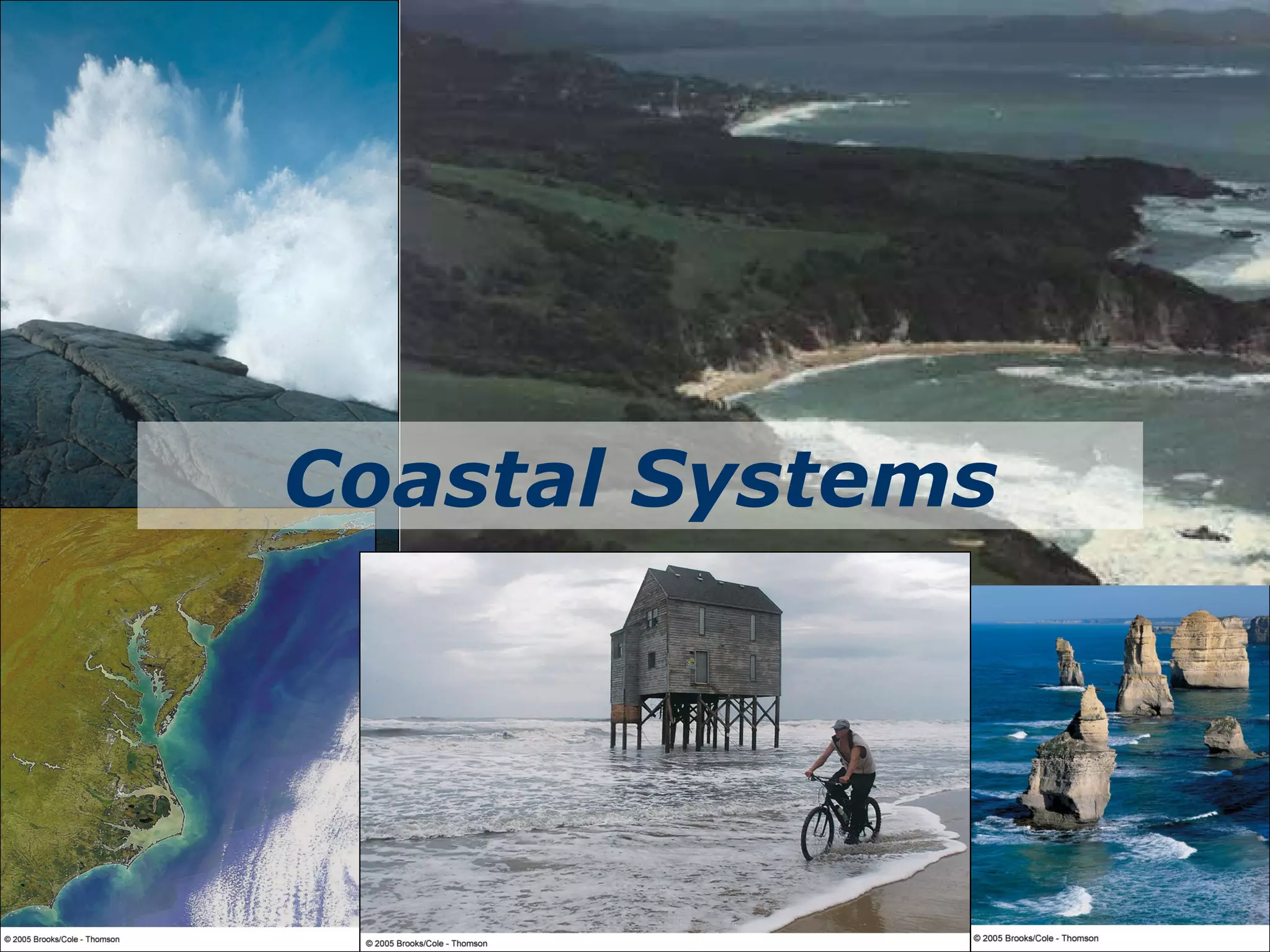
Coastal Systems
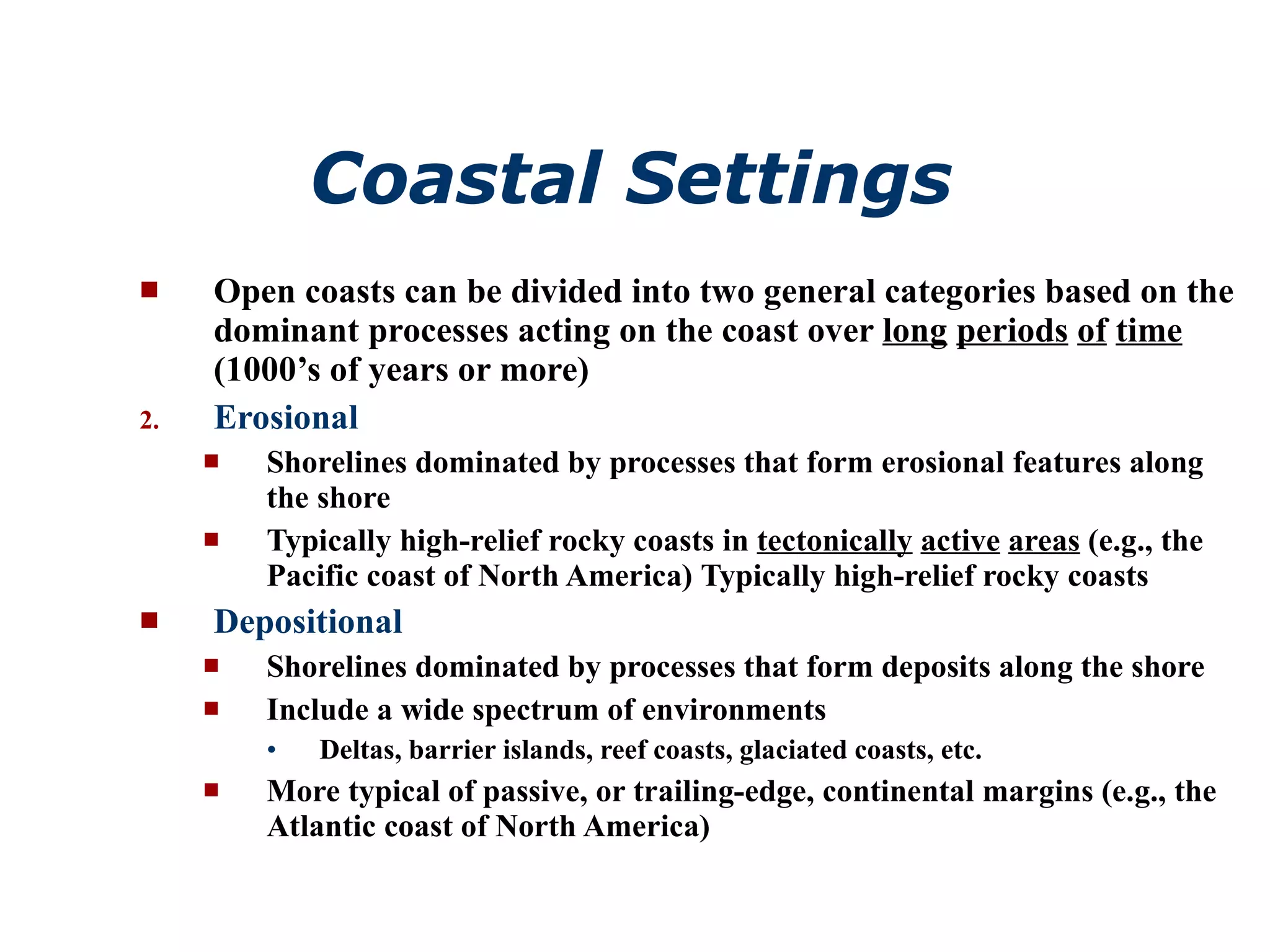
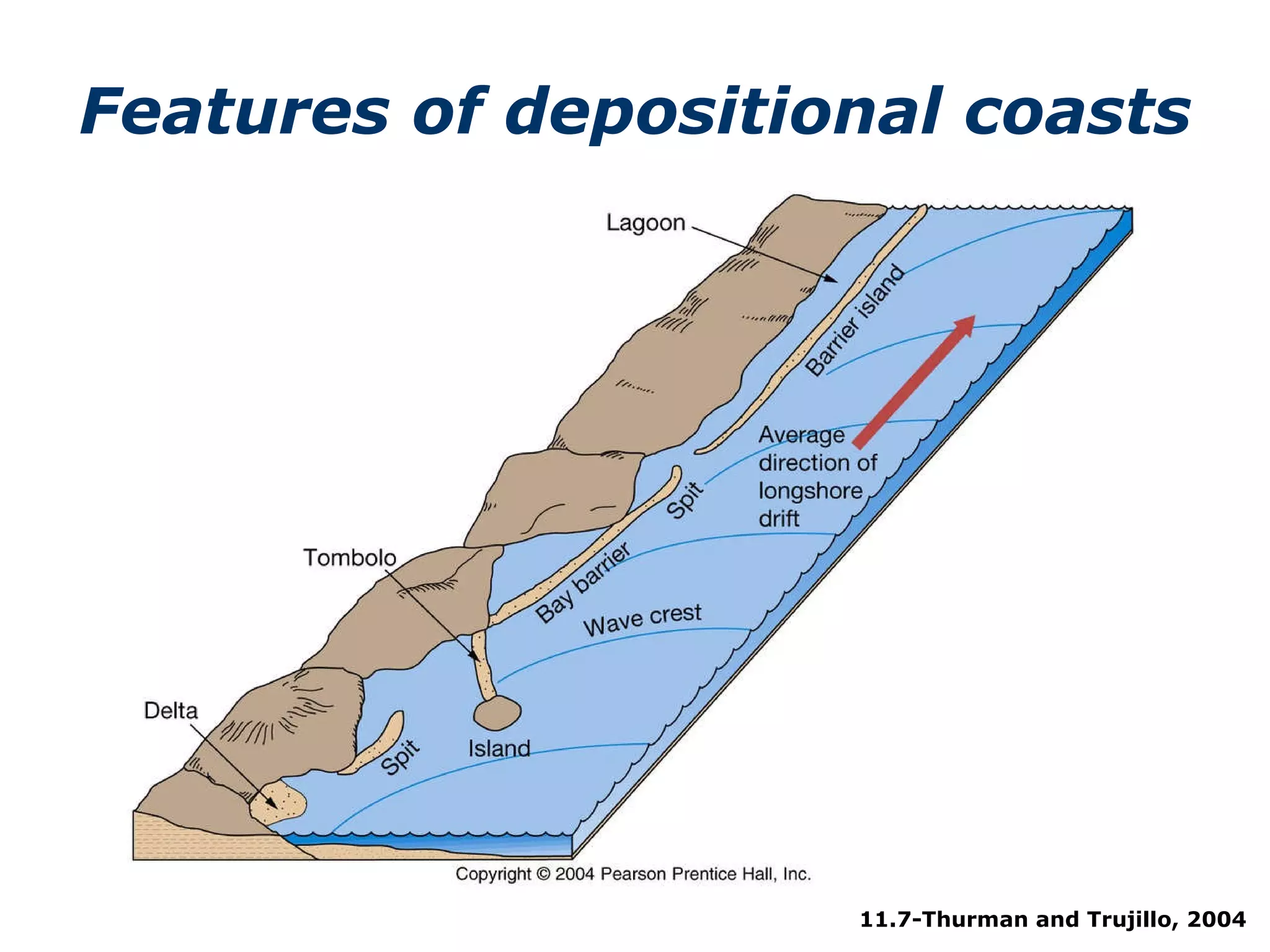
Coastal Settings Open coasts can be divided into two general categories based on the dominant processes acting on the coast over  long   periods   of   time  (1000’s of years or more) Erosional Shorelines dominated by processes that form erosional features along the shore  Typically high-relief rocky coasts in  tectonically   active   areas  (e.g., the Pacific coast of North America)  Typically high-relief rocky coasts  Depositional   Shorelines dominated by processes that form deposits along the shore  Include a wide spectrum of environments   Deltas, barrier islands, reef coasts, glaciated coasts, etc. More typical of passive, or trailing-edge, continental margins (e.g., the Atlantic coast of North America)
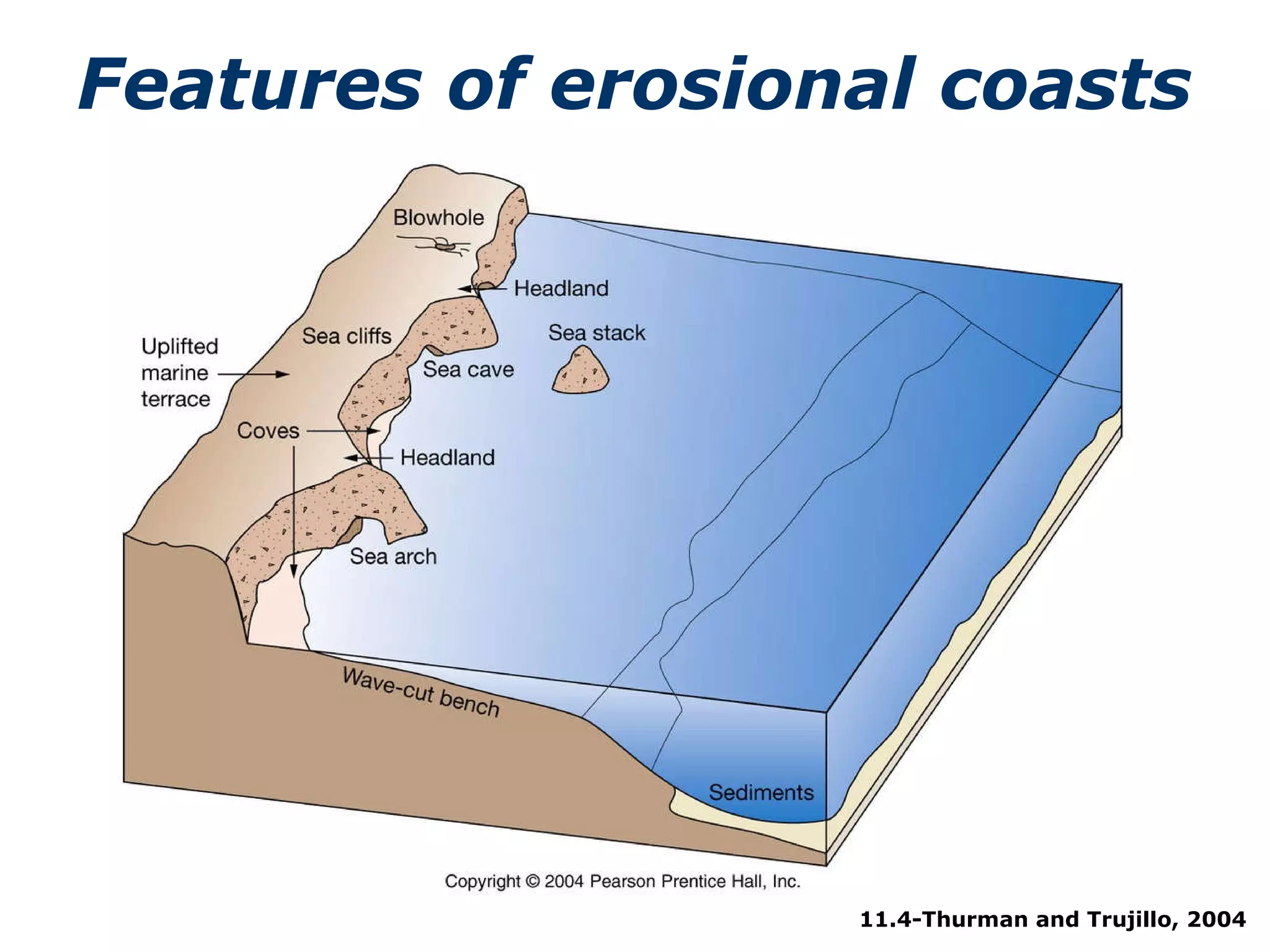
Features of erosional coasts 11.4-Thurman and Trujillo, 2004
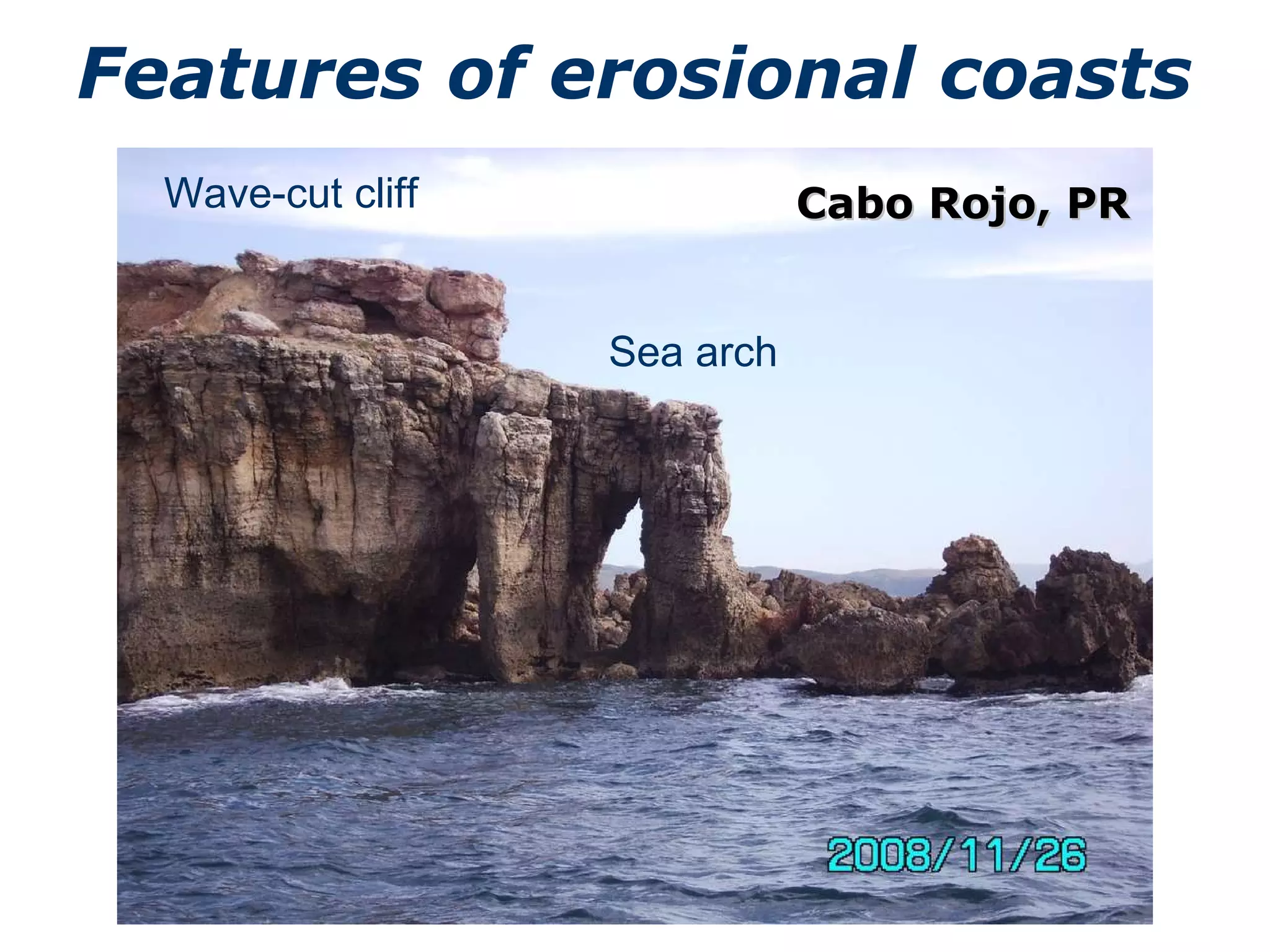
Features of erosional coasts Cabo Rojo, PR Sea arch Wave-cut cliff
Features of depositional coasts 11.7-Thurman and Trujillo, 2004
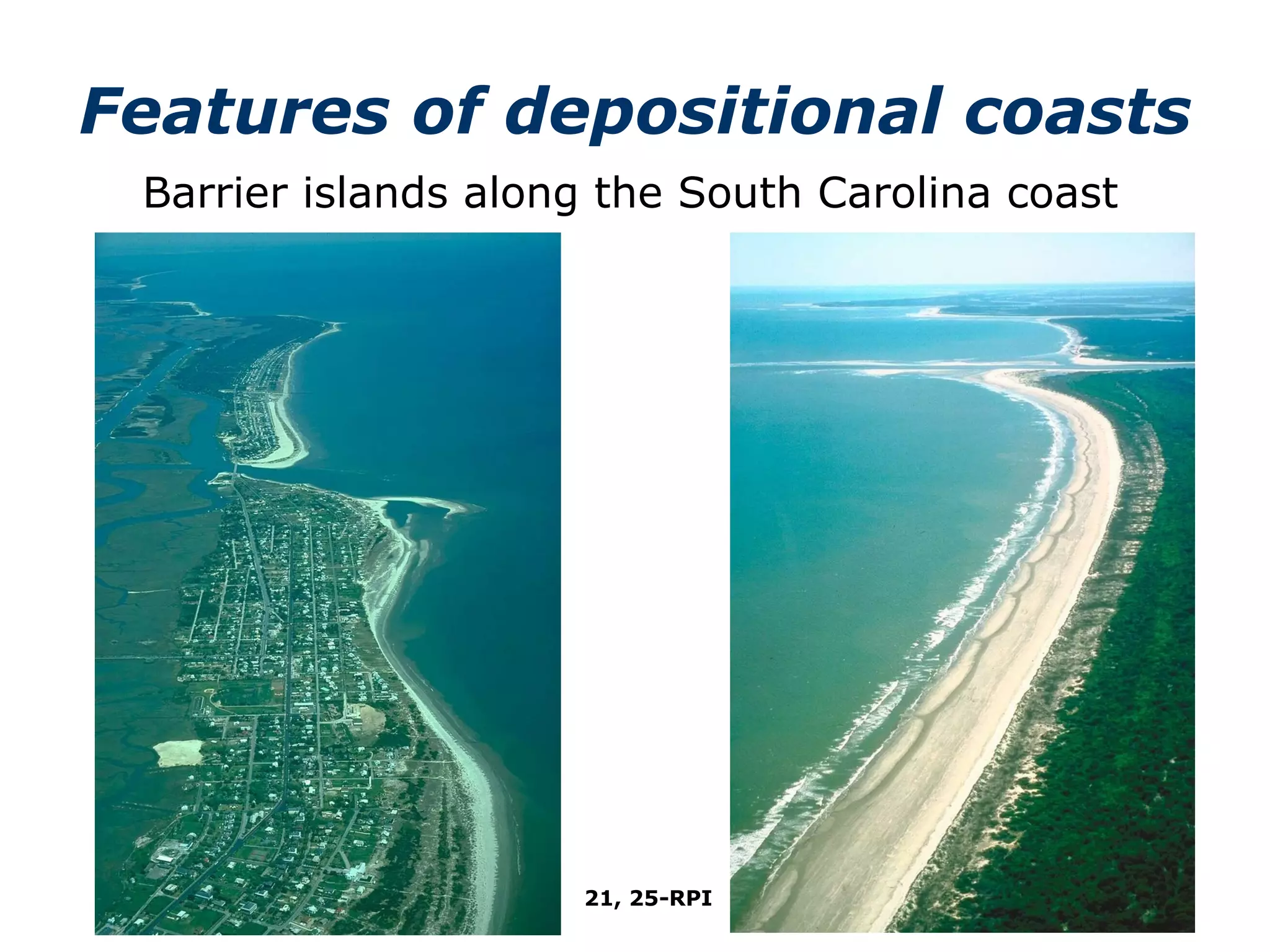
Features of depositional coasts 21, 25-RPI Barrier islands along the South Carolina coast
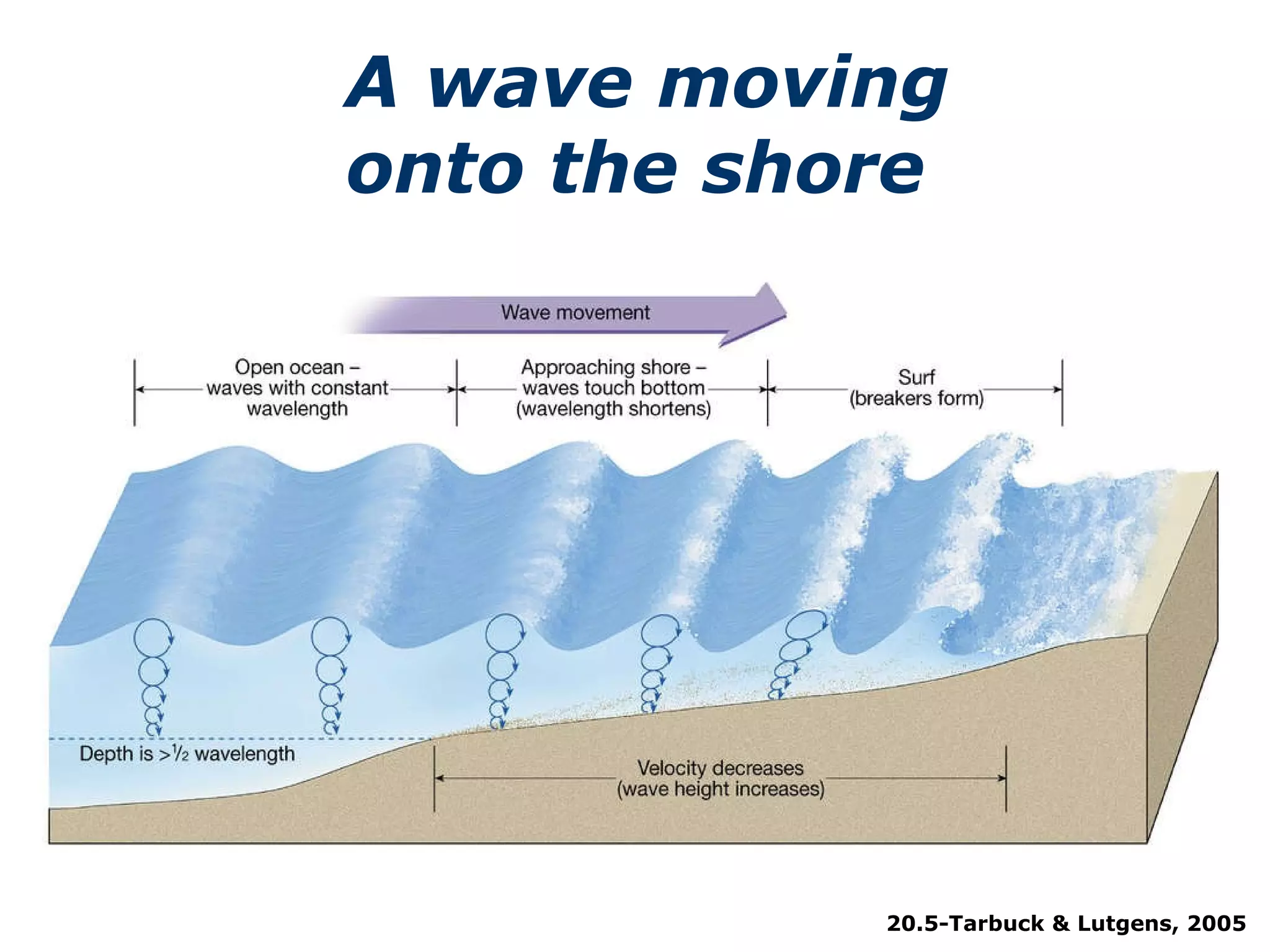
A wave moving  onto the shore 20.5-Tarbuck & Lutgens, 2005
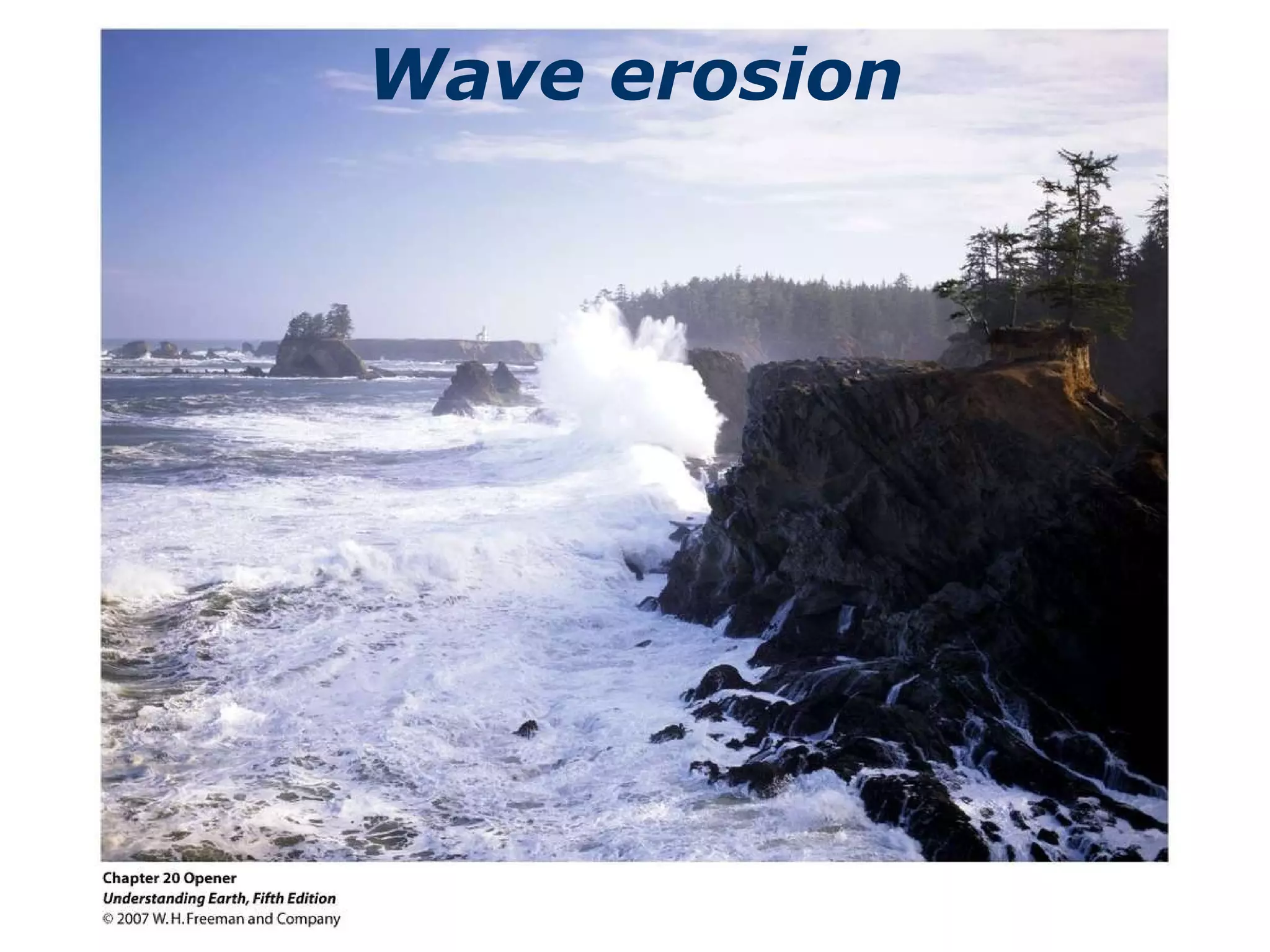
Wave erosion
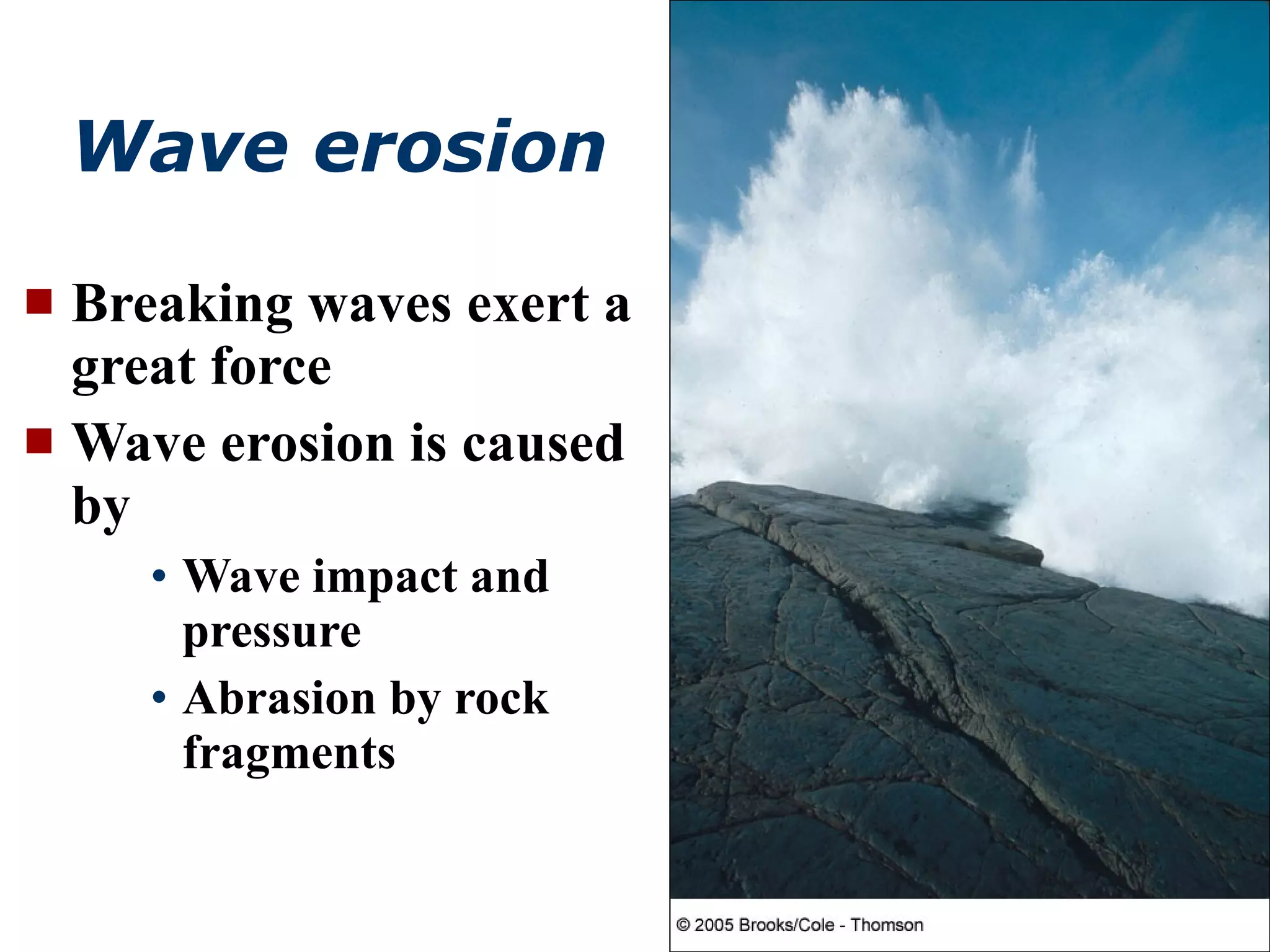
Wave erosion Breaking waves exert a great force Wave erosion is caused by Wave impact and pressure Abrasion by rock fragments
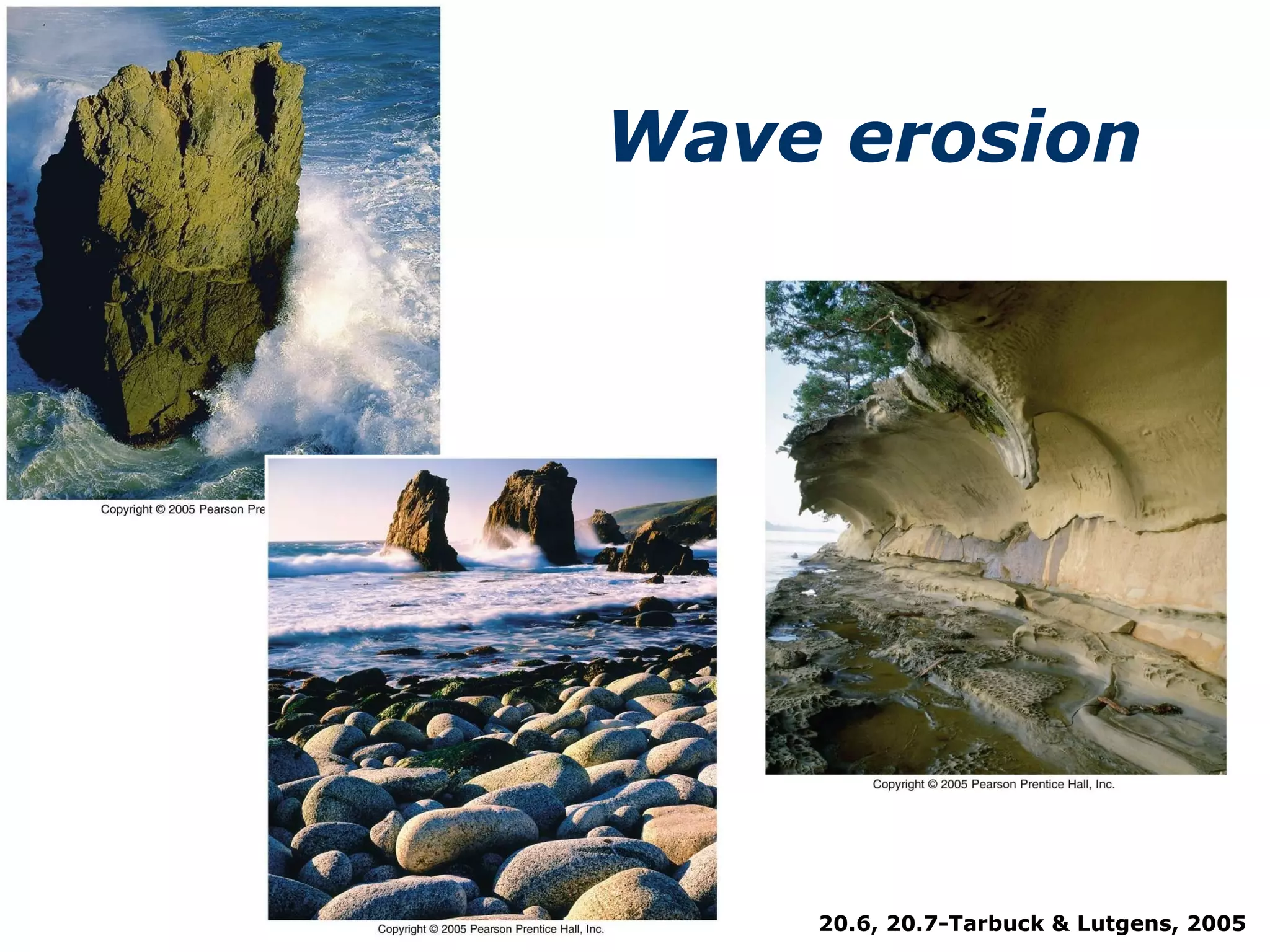
Wave erosion 20.6, 20.7-Tarbuck & Lutgens, 2005
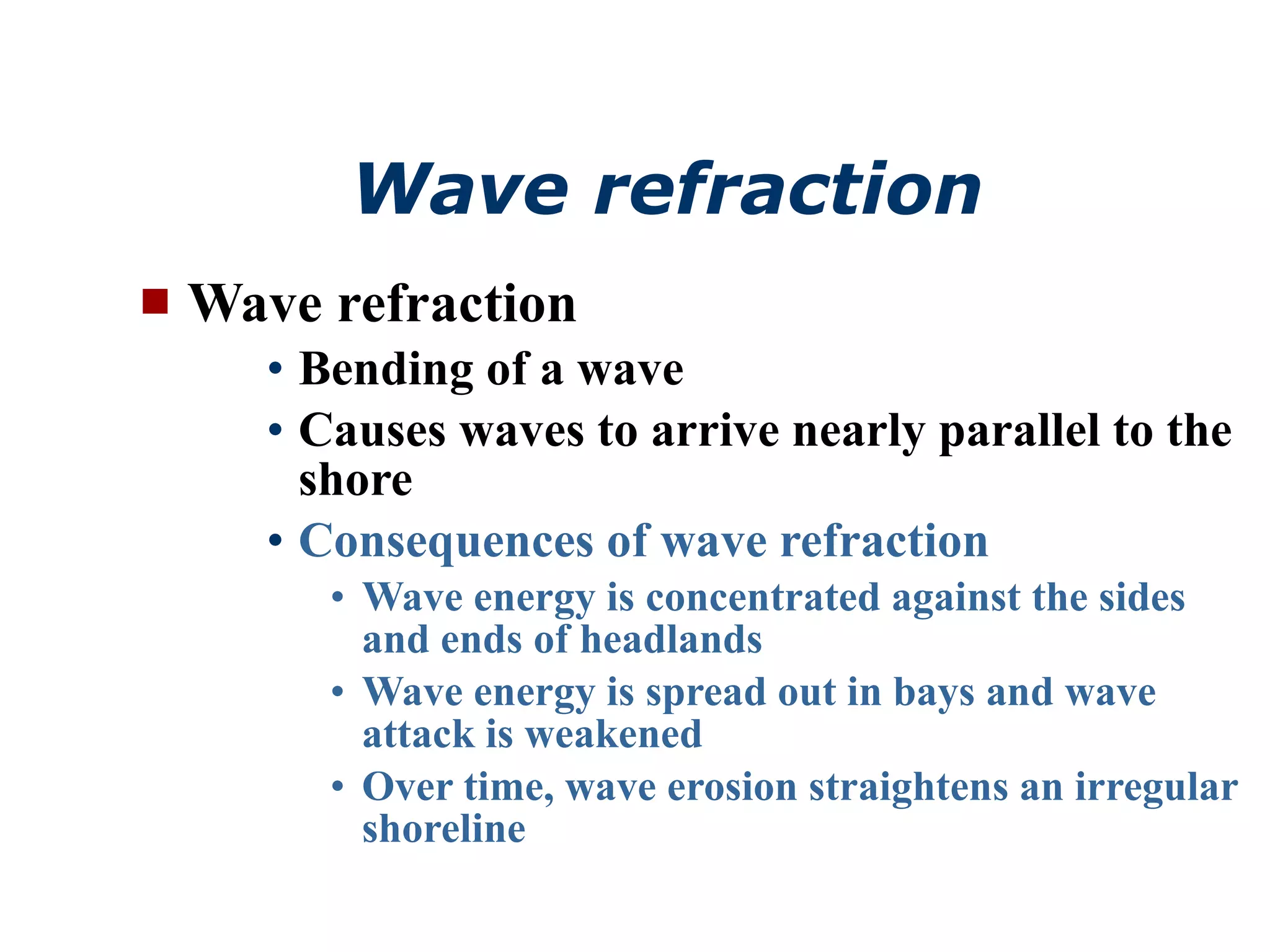
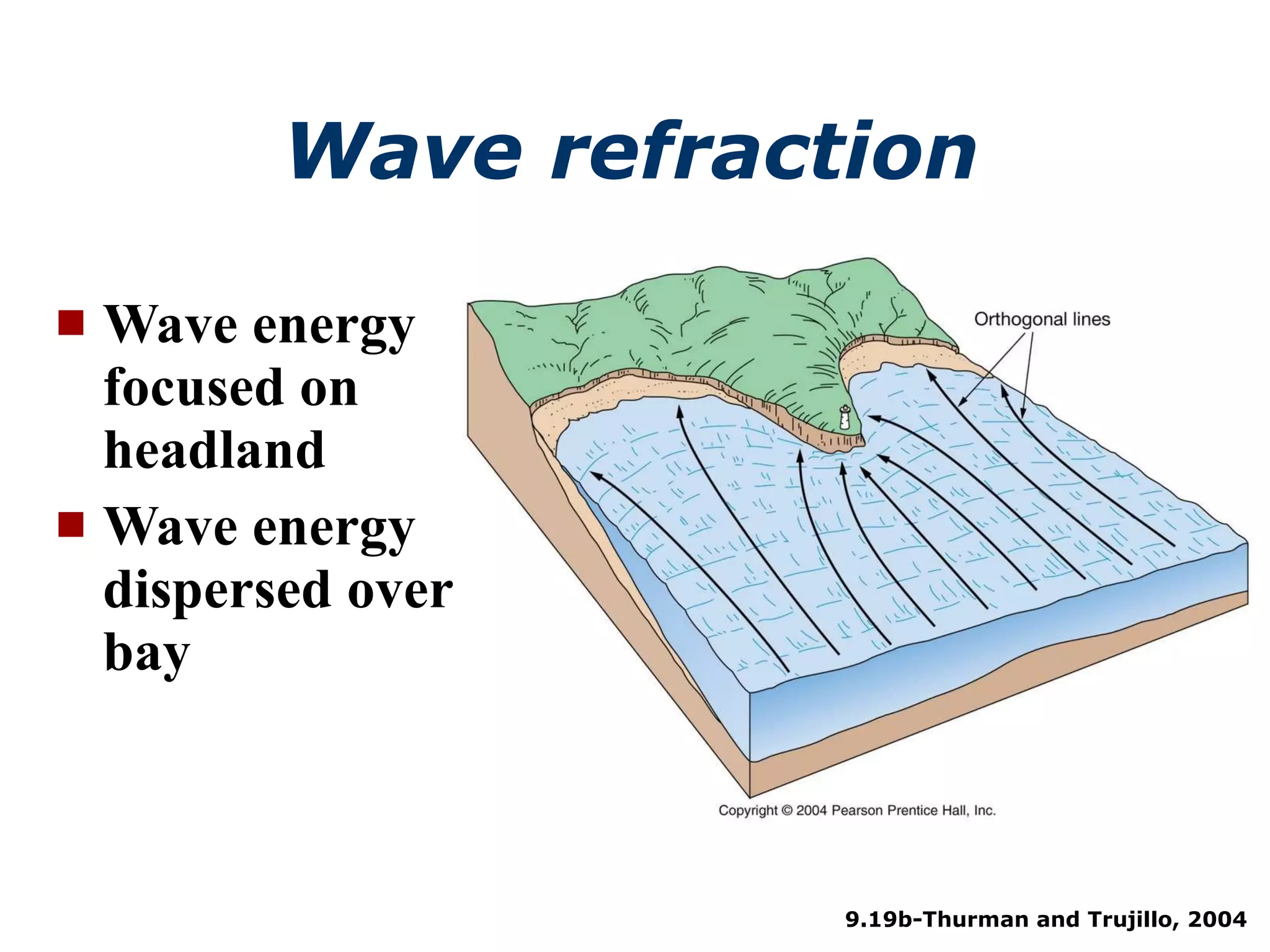
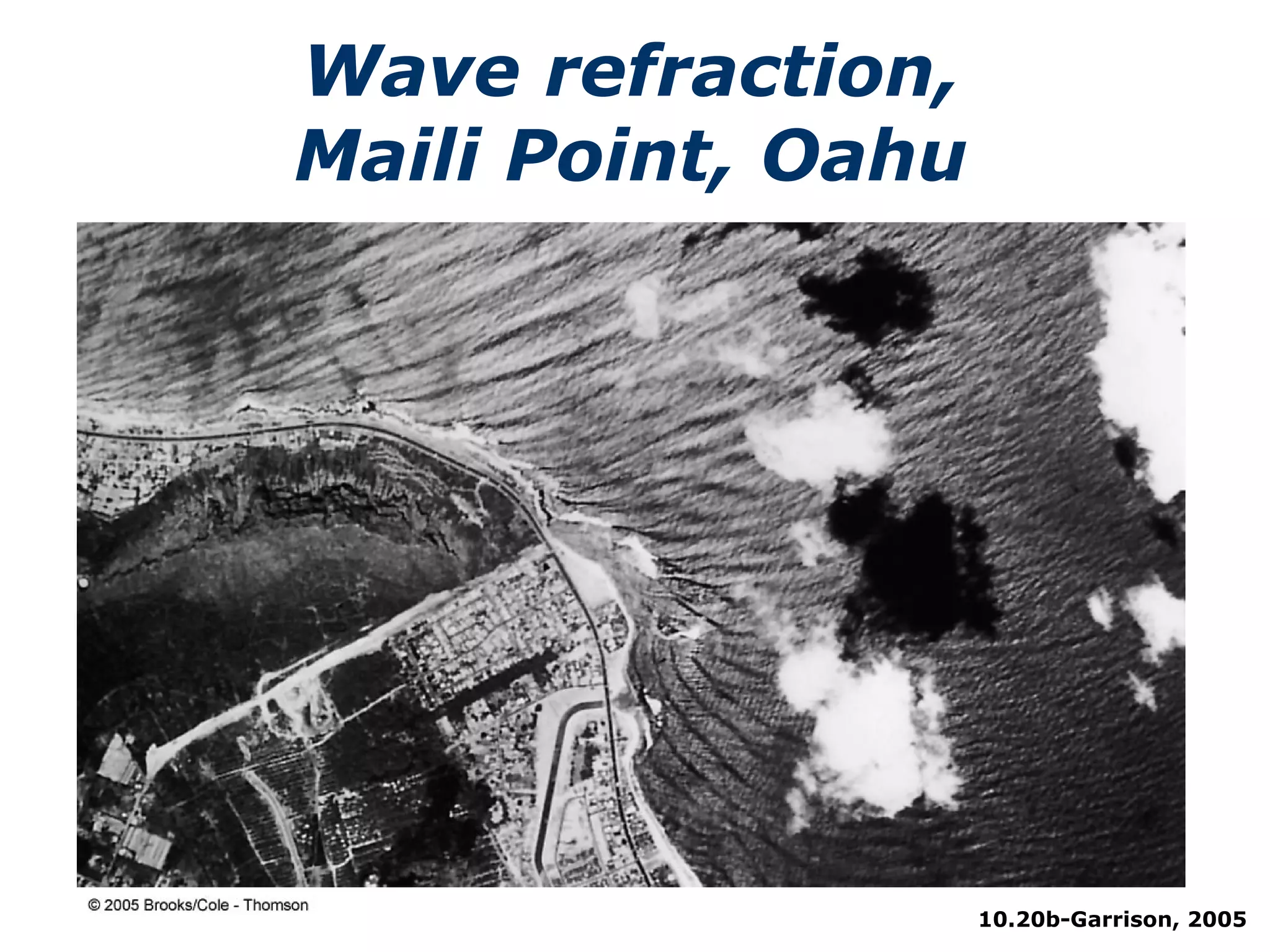
Wave refraction   Wave refraction Bending of a wave Causes waves to arrive nearly parallel to the shore Consequences of wave refraction Wave energy is concentrated against the sides and ends of headlands Wave energy is spread out in bays and wave attack is weakened Over time, wave erosion straightens an irregular shoreline
Wave energy focused on headland Wave energy dispersed over bay Wave refraction 9.19b-Thurman and Trujillo, 2004
Wave Reflection and Refraction
Wave Motion/Refraction
10.20b-Garrison, 2005 Wave refraction, Maili Point, Oahu
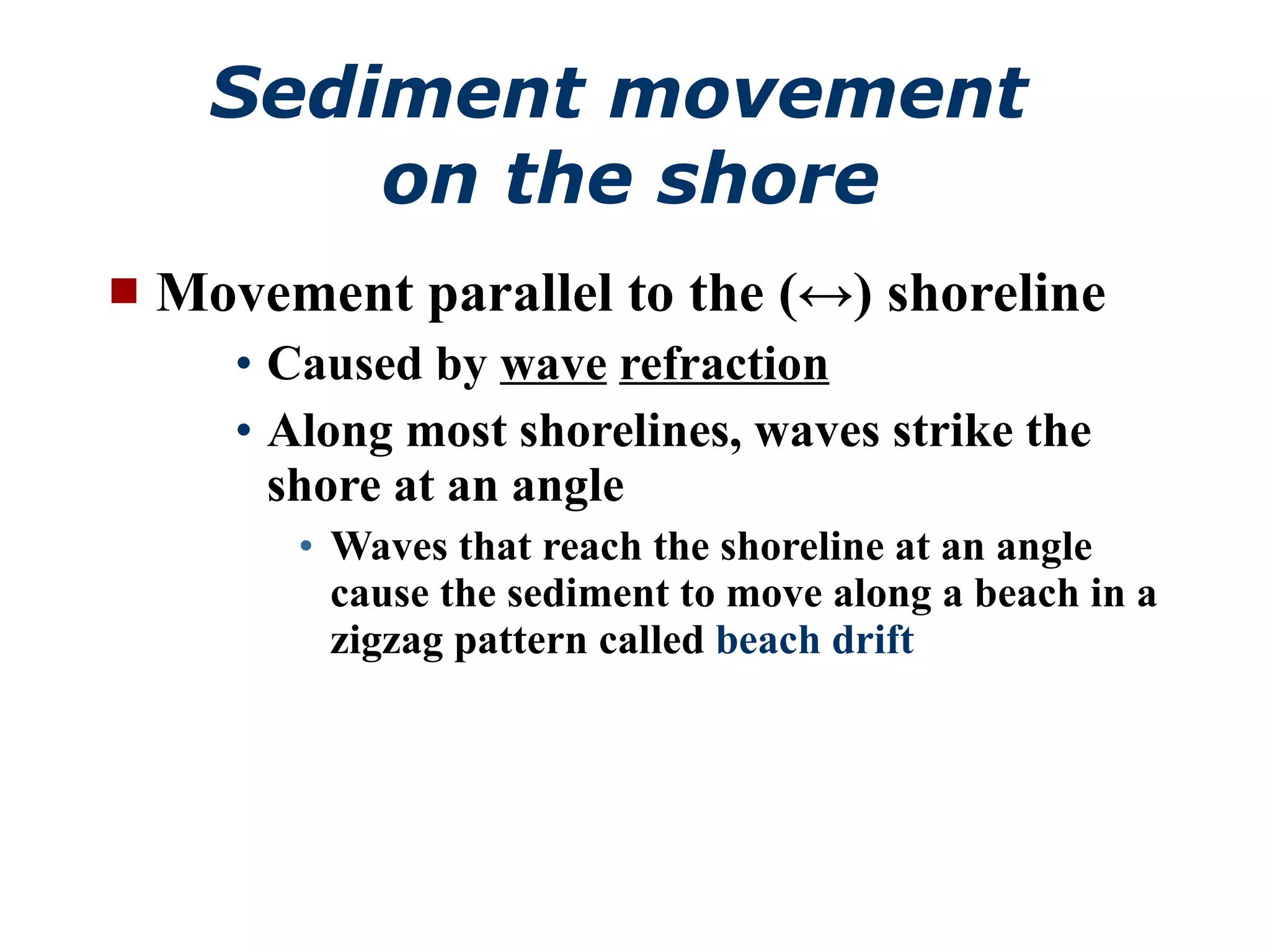
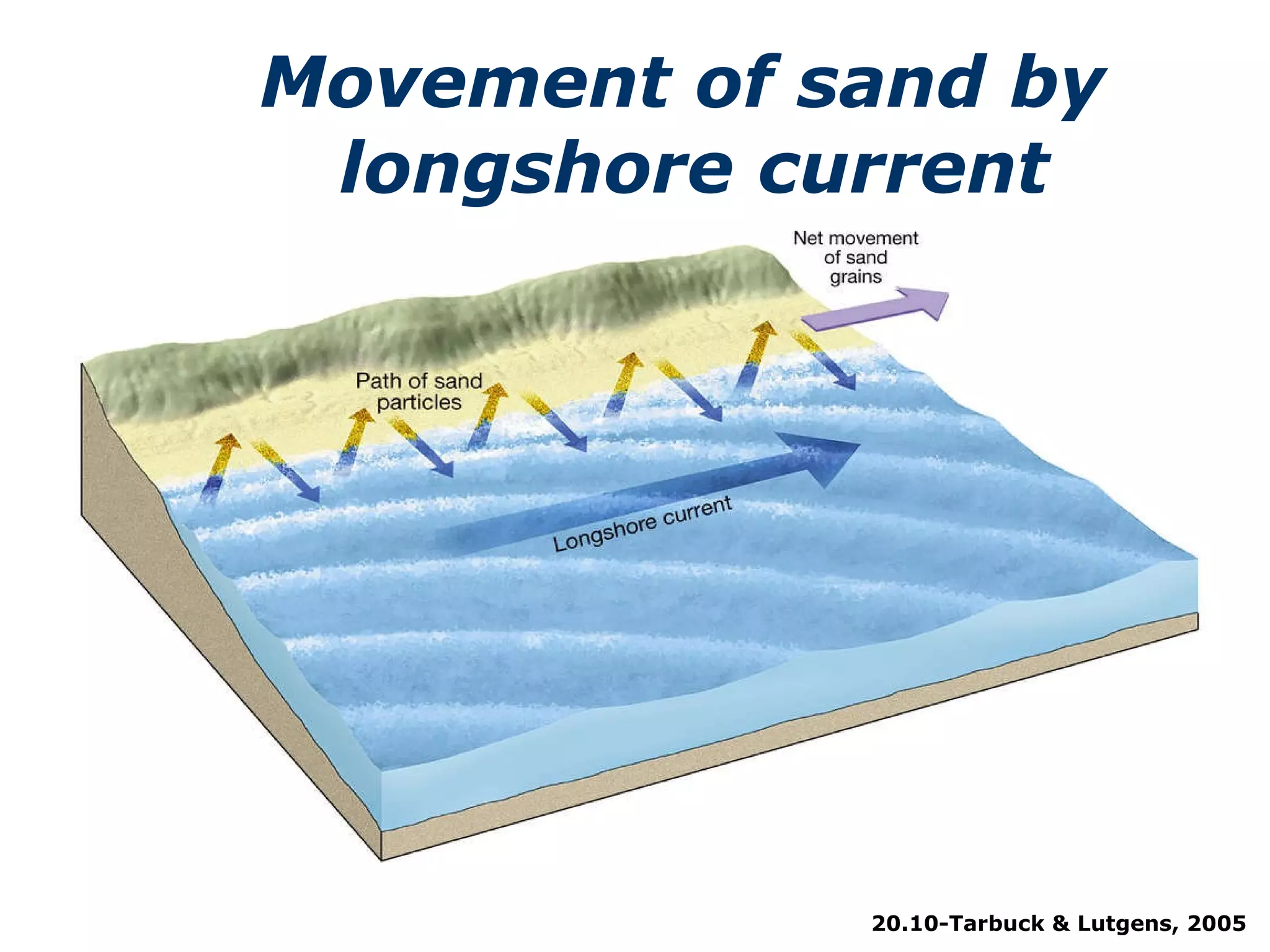
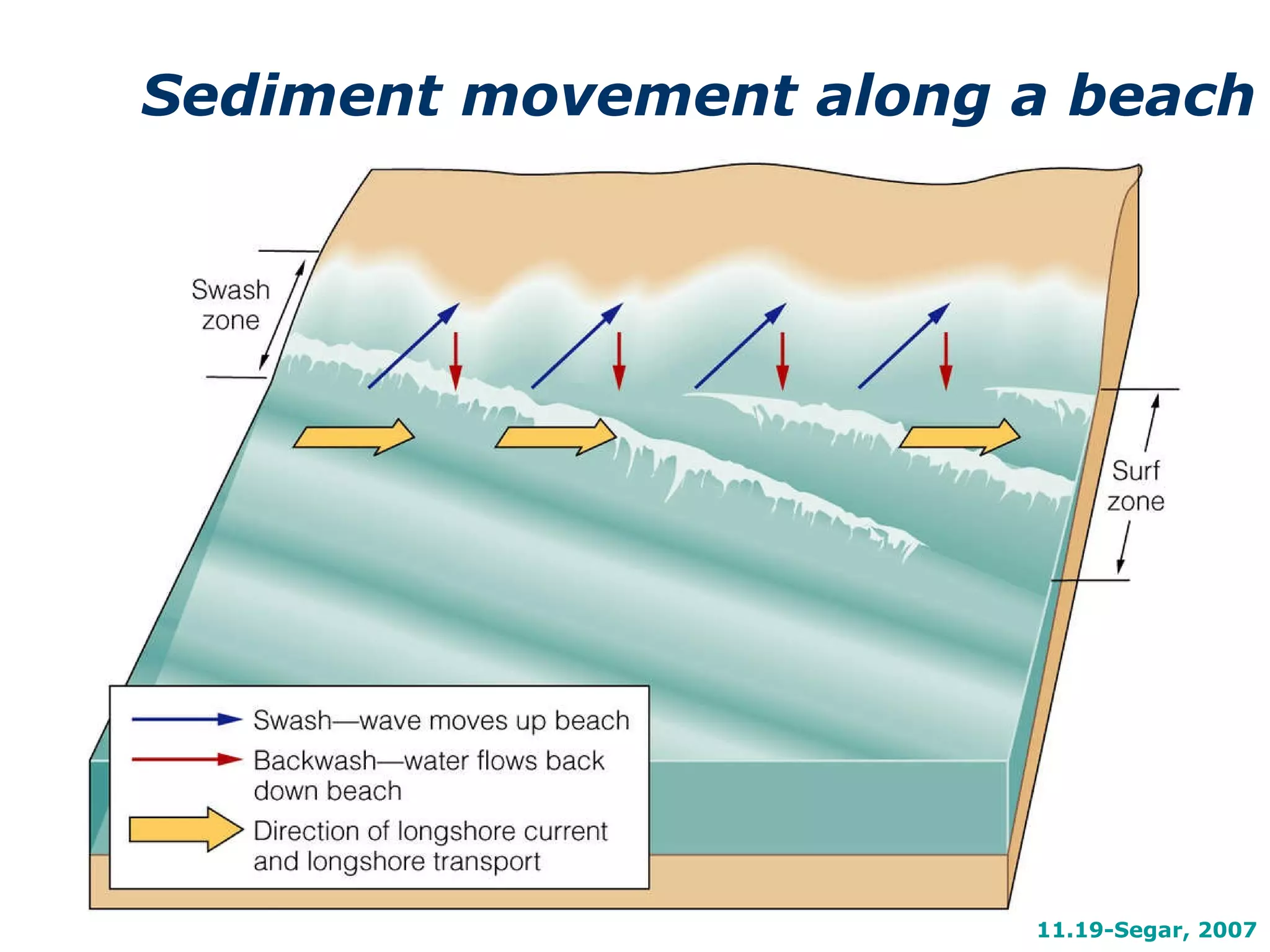
Movement parallel to the ( ↔ ) shoreline Caused by  wave   refraction Along most shorelines, waves strike the shore at an angle Waves that reach the shoreline at an angle cause the sediment to move along a beach in a zigzag pattern called  beach drift Sediment movement  on the shore
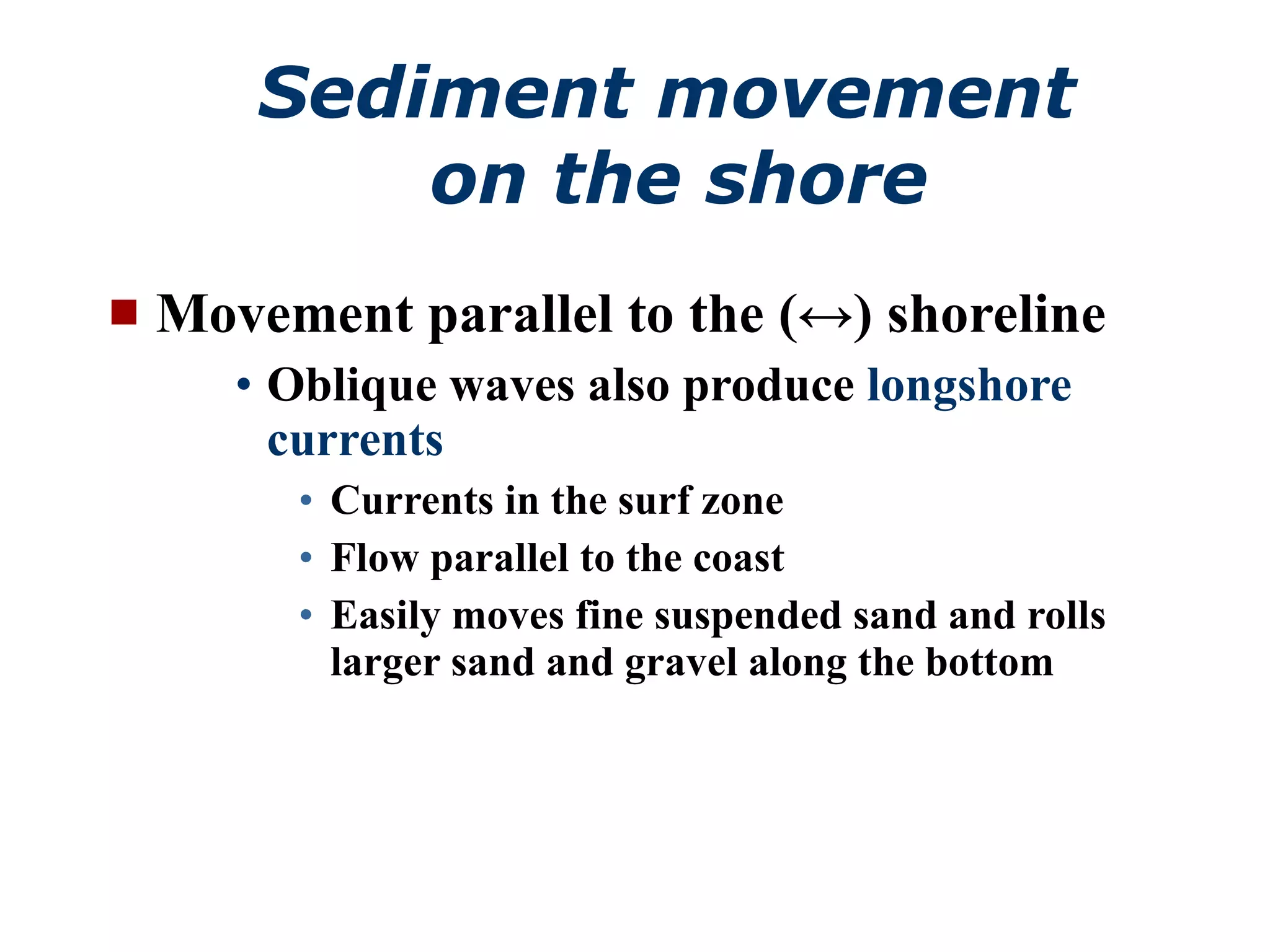
Sediment movement  on the shore Movement parallel to the ( ↔ ) shoreline Oblique waves also produce  longshore currents Currents in the surf zone Flow parallel to the coast Easily moves fine suspended sand and rolls larger sand and gravel along the bottom
Movement of sand by  longshore current 20.10-Tarbuck & Lutgens, 2005
Sediment movement along a beach 11.19-Segar, 2007
Beach Drift and Longshore Currents
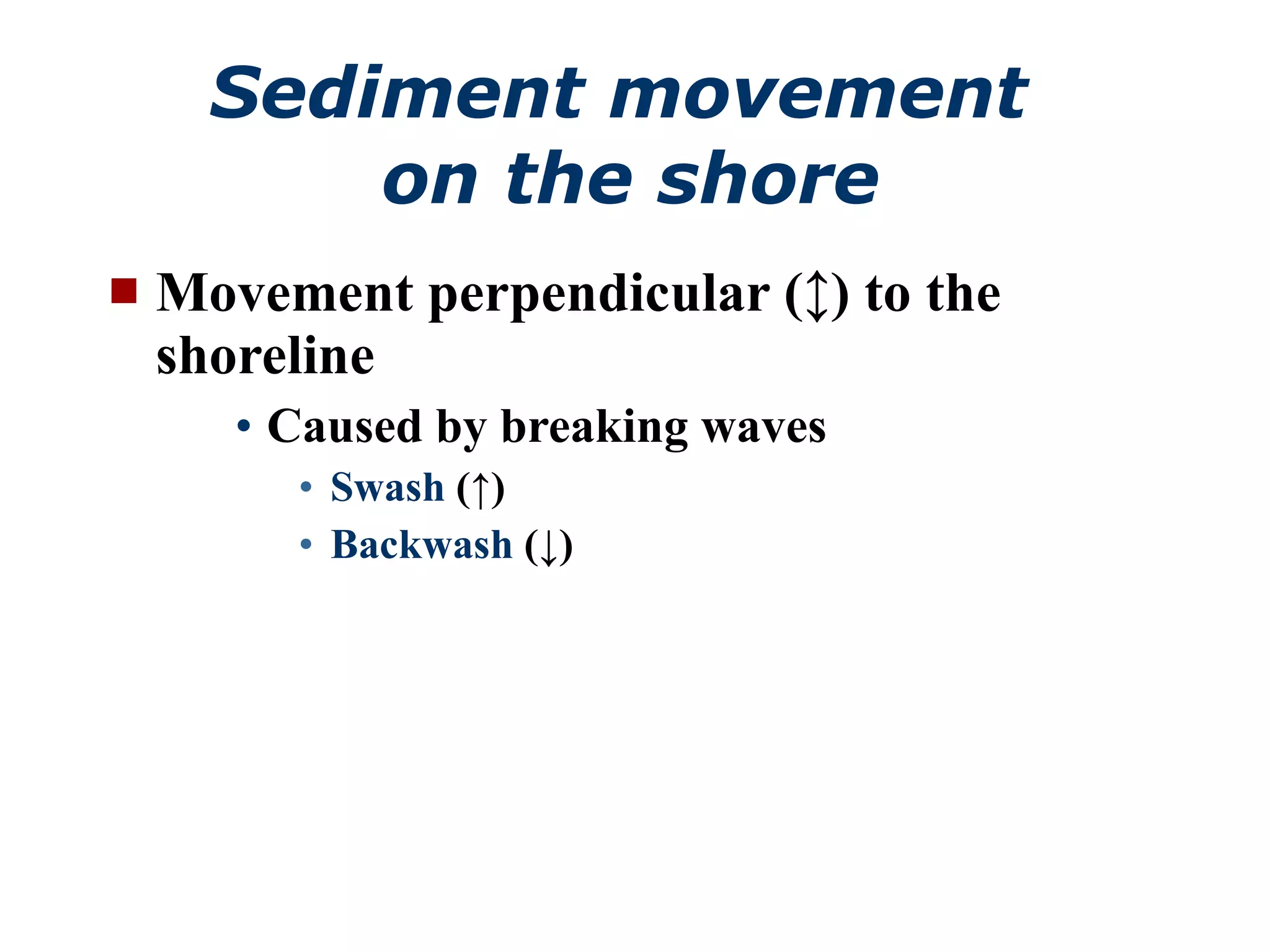
Movement perpendicular ( ↕ ) to the shoreline Caused by breaking waves Swash  ( ↑ ) Backwash  ( ↓ ) Sediment movement  on the shore
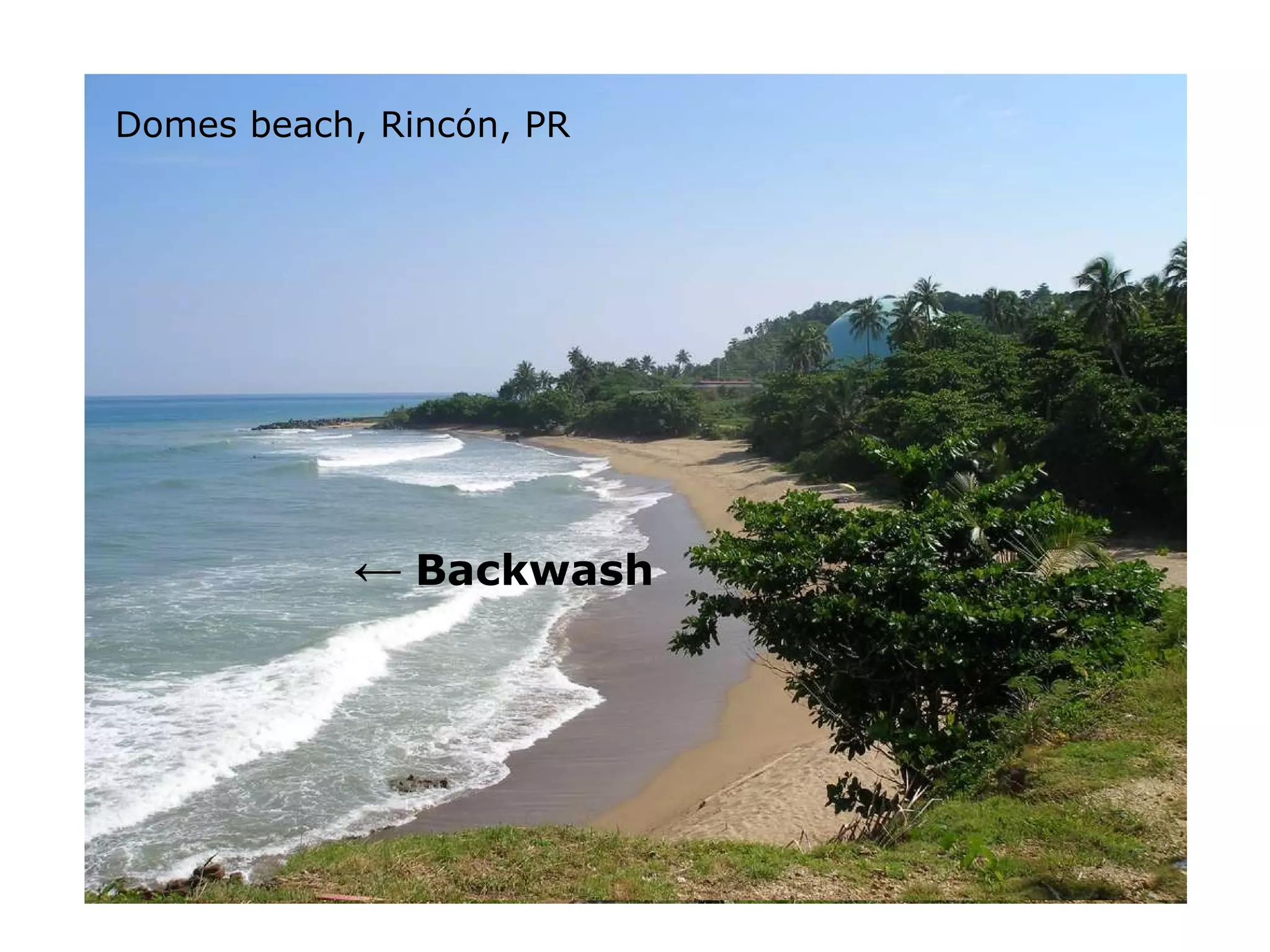
Swash  -> ←  Backwash Domes beach, Rincón, PR
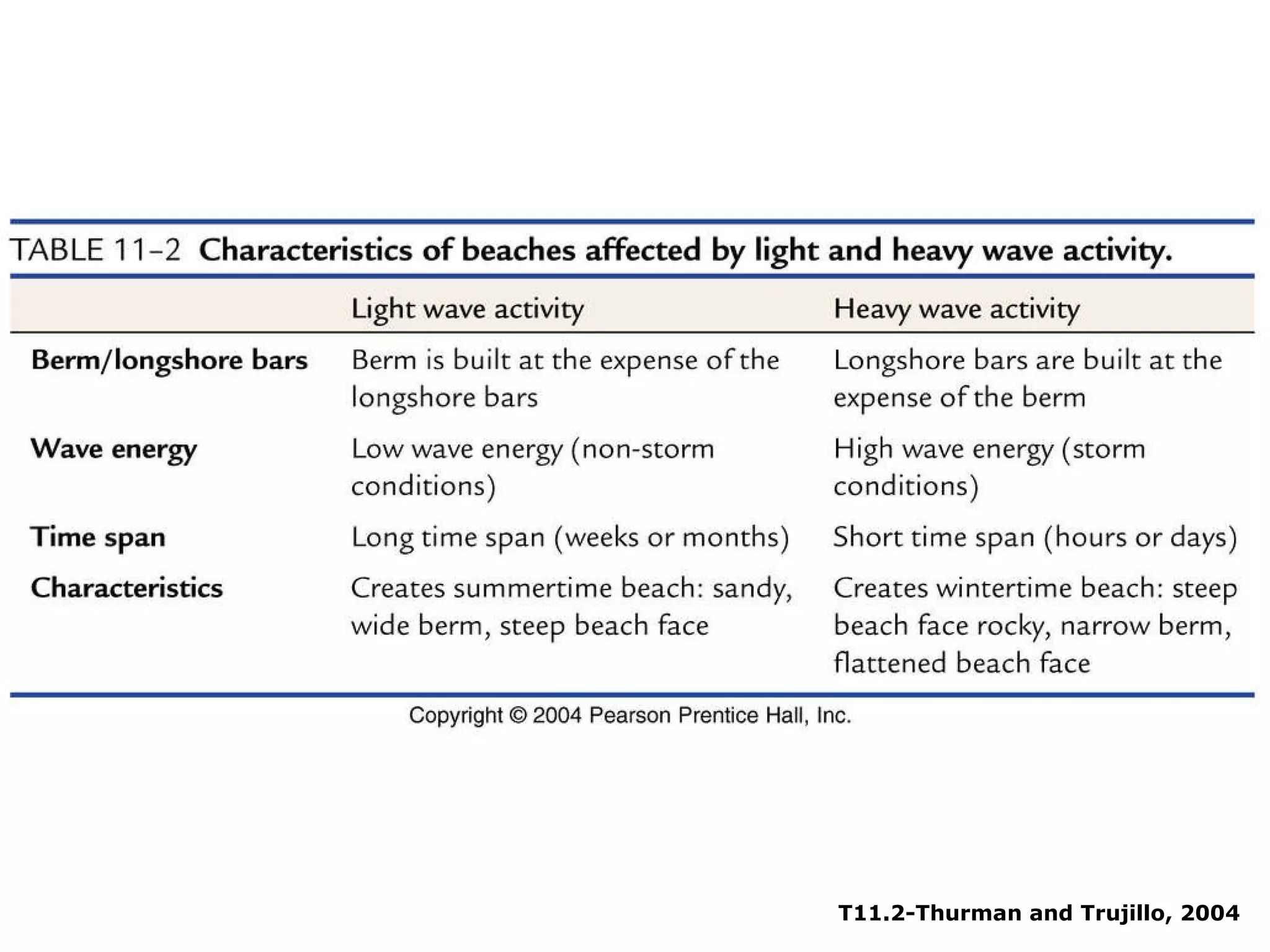
T11.2-Thurman and Trujillo, 2004
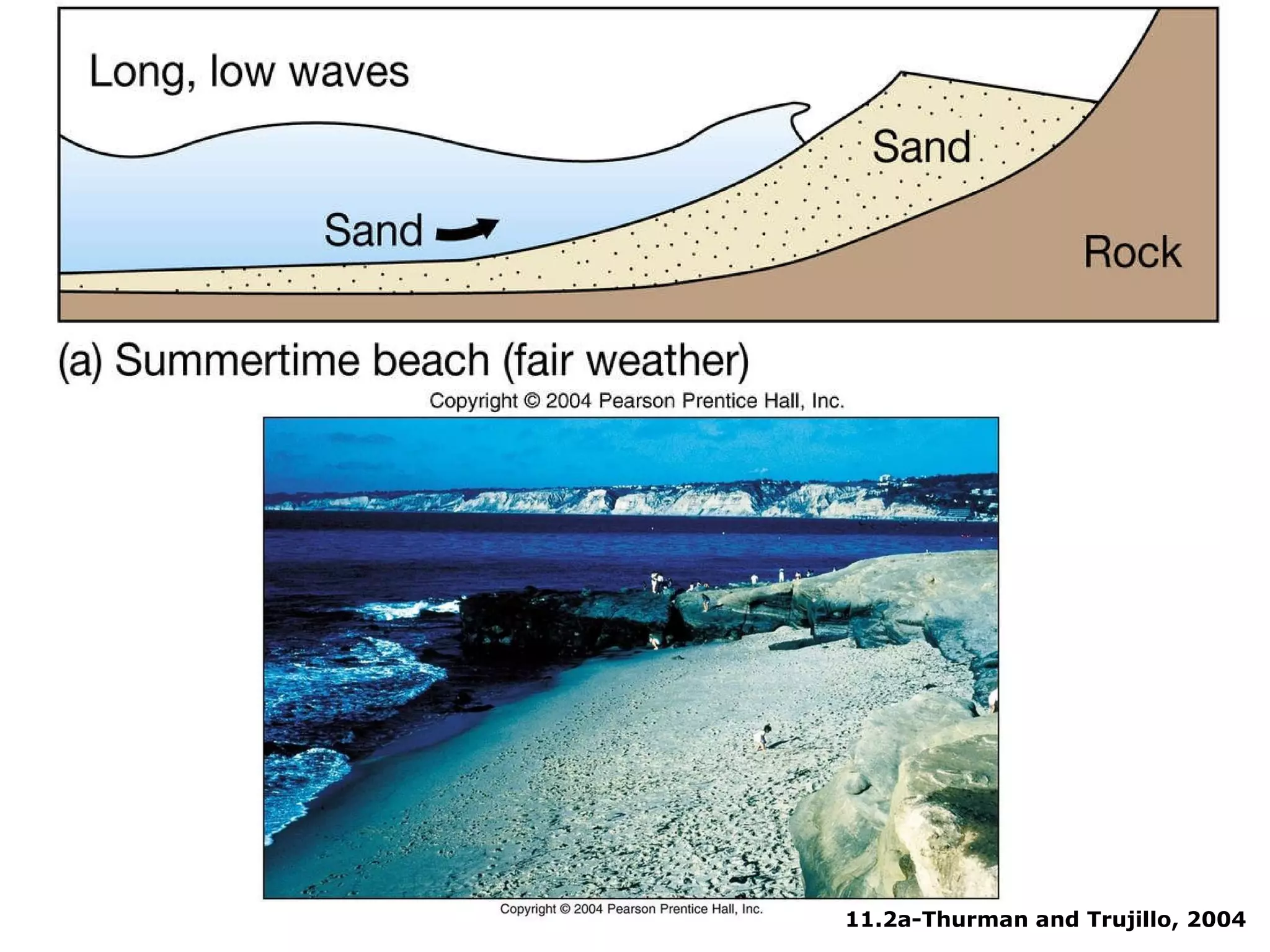
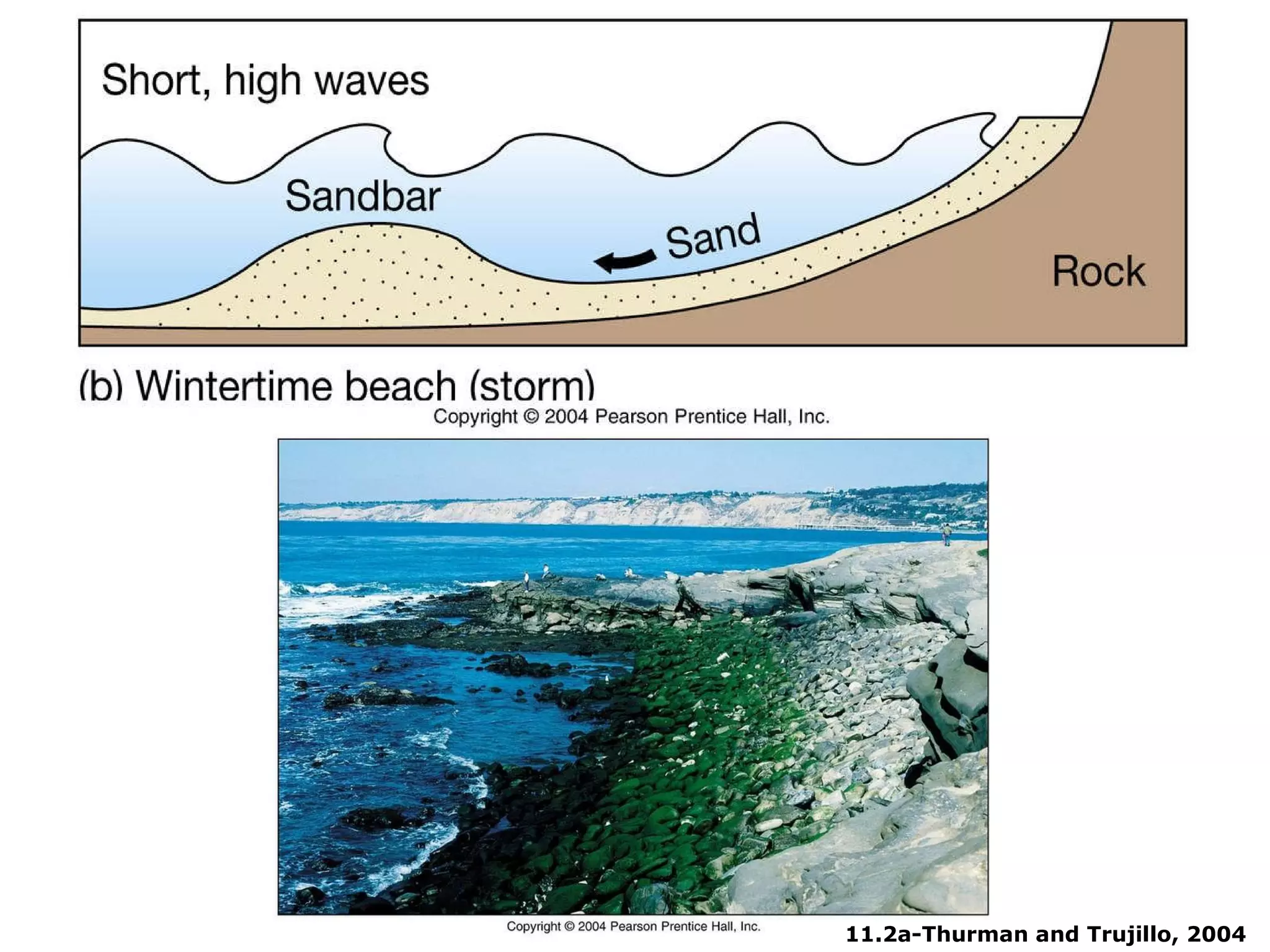
11.2a-Thurman and Trujillo, 2004
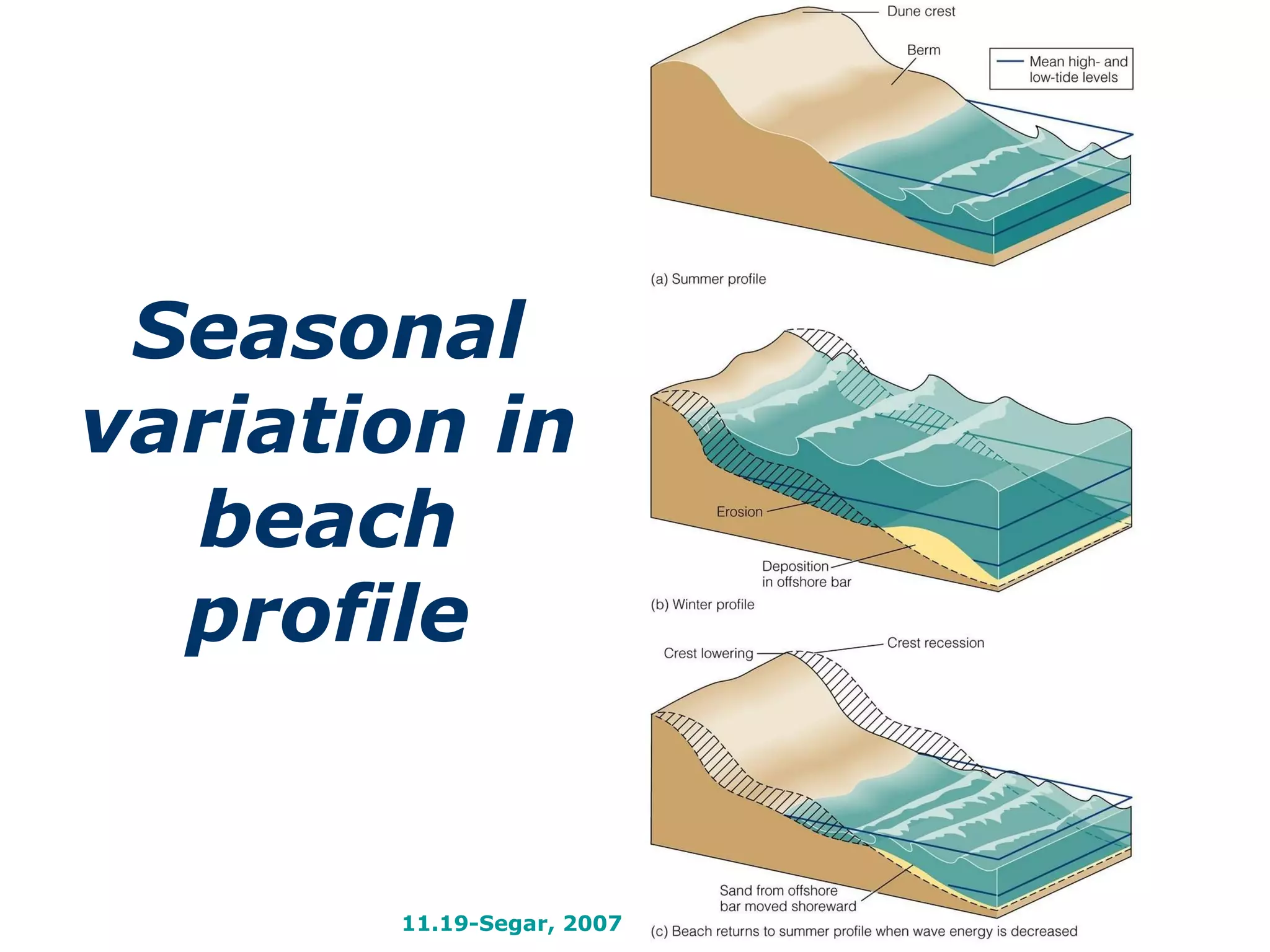
Seasonal variation in beach profile 11.19-Segar, 2007
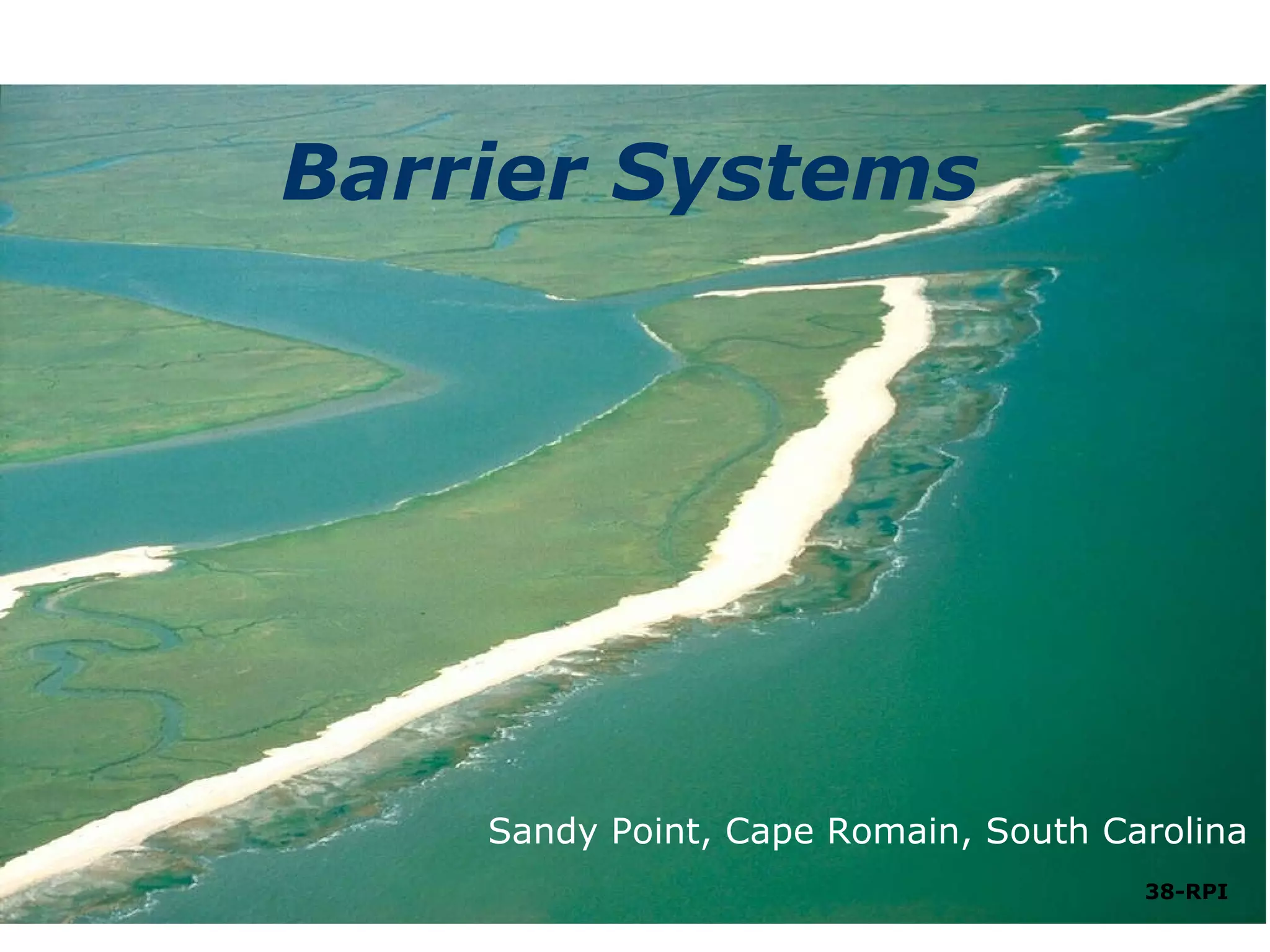
Barrier Systems Sandy Point, Cape Romain, South Carolina 38-RPI
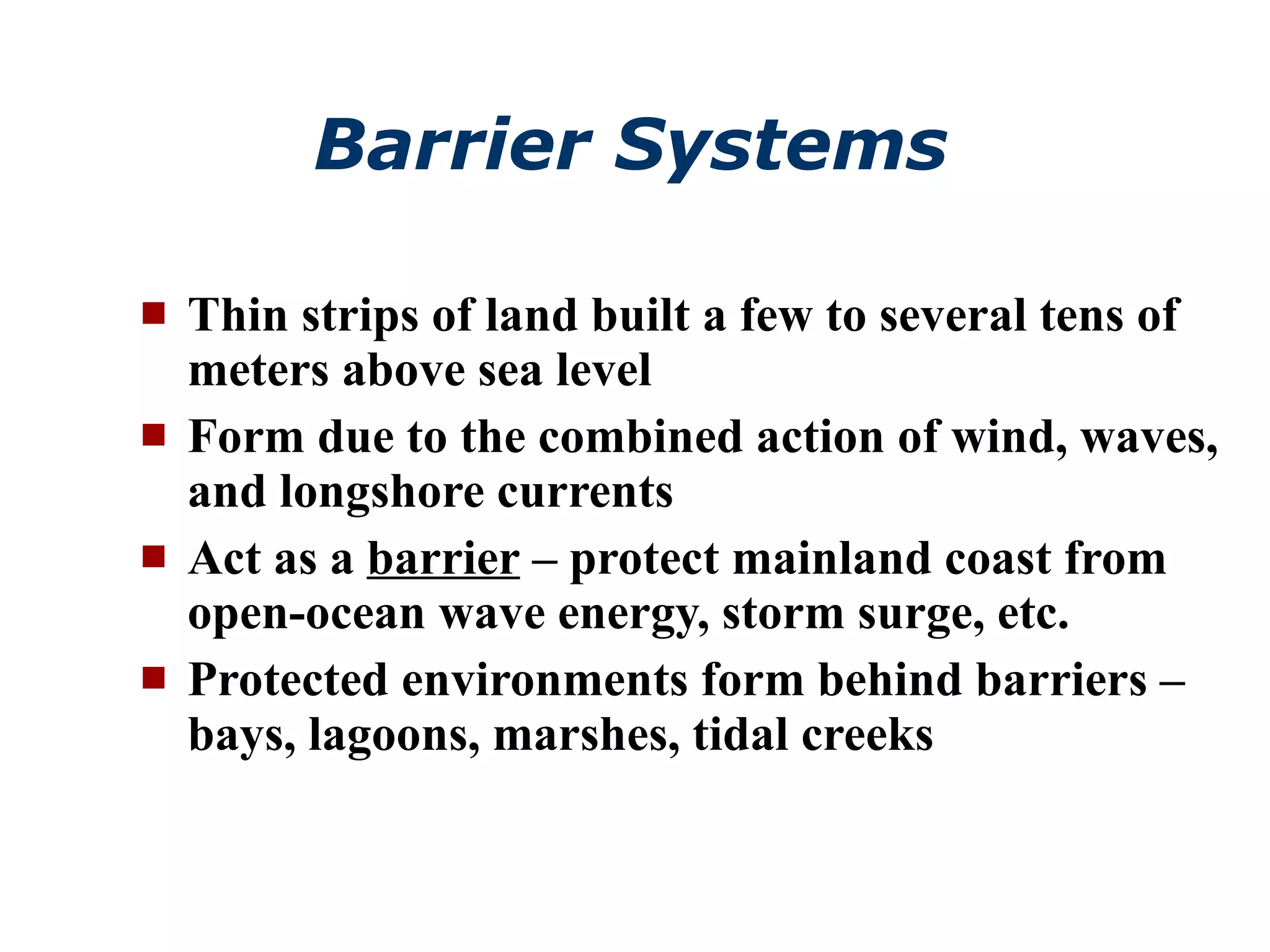
Barrier Systems Thin strips of land built a few to several tens of meters above sea level Form due to the combined action of wind, waves, and longshore currents Act as a  barrier  – protect mainland coast from open-ocean wave energy, storm surge, etc. Protected environments form behind barriers – bays, lagoons, marshes, tidal creeks
Barrier Systems Most common along  passive   margins Economically important Vulnerable  to storms, rising sea level, erosion One of the major forces impacting barriers today, as well as in the past, is  rising   sea   level
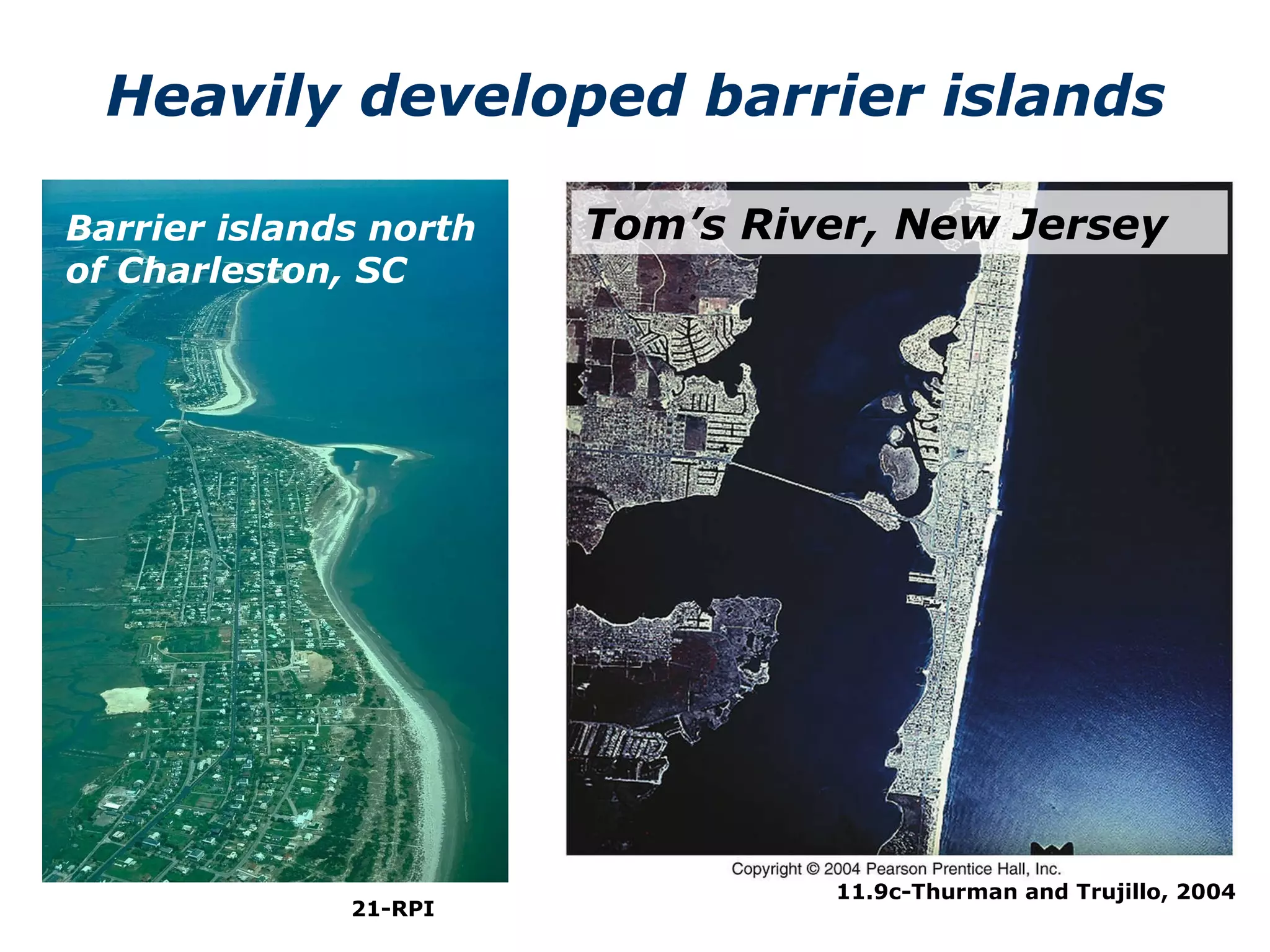
11.9c-Thurman and Trujillo, 2004 Heavily developed barrier islands Tom’s River, New Jersey Barrier islands north of Charleston, SC 21-RPI
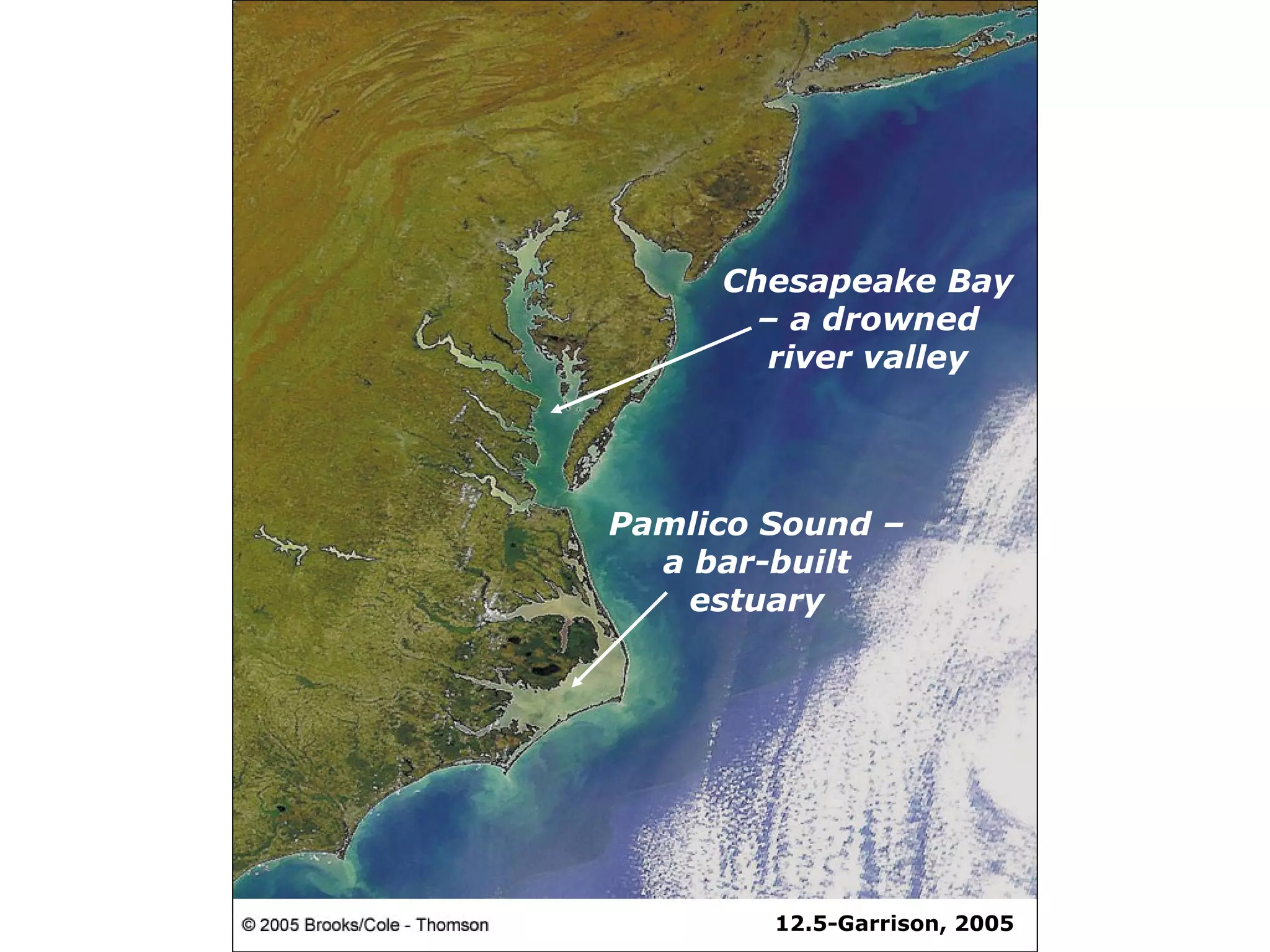
Chesapeake Bay – a drowned river valley Pamlico Sound – a bar-built estuary 12.5-Garrison, 2005
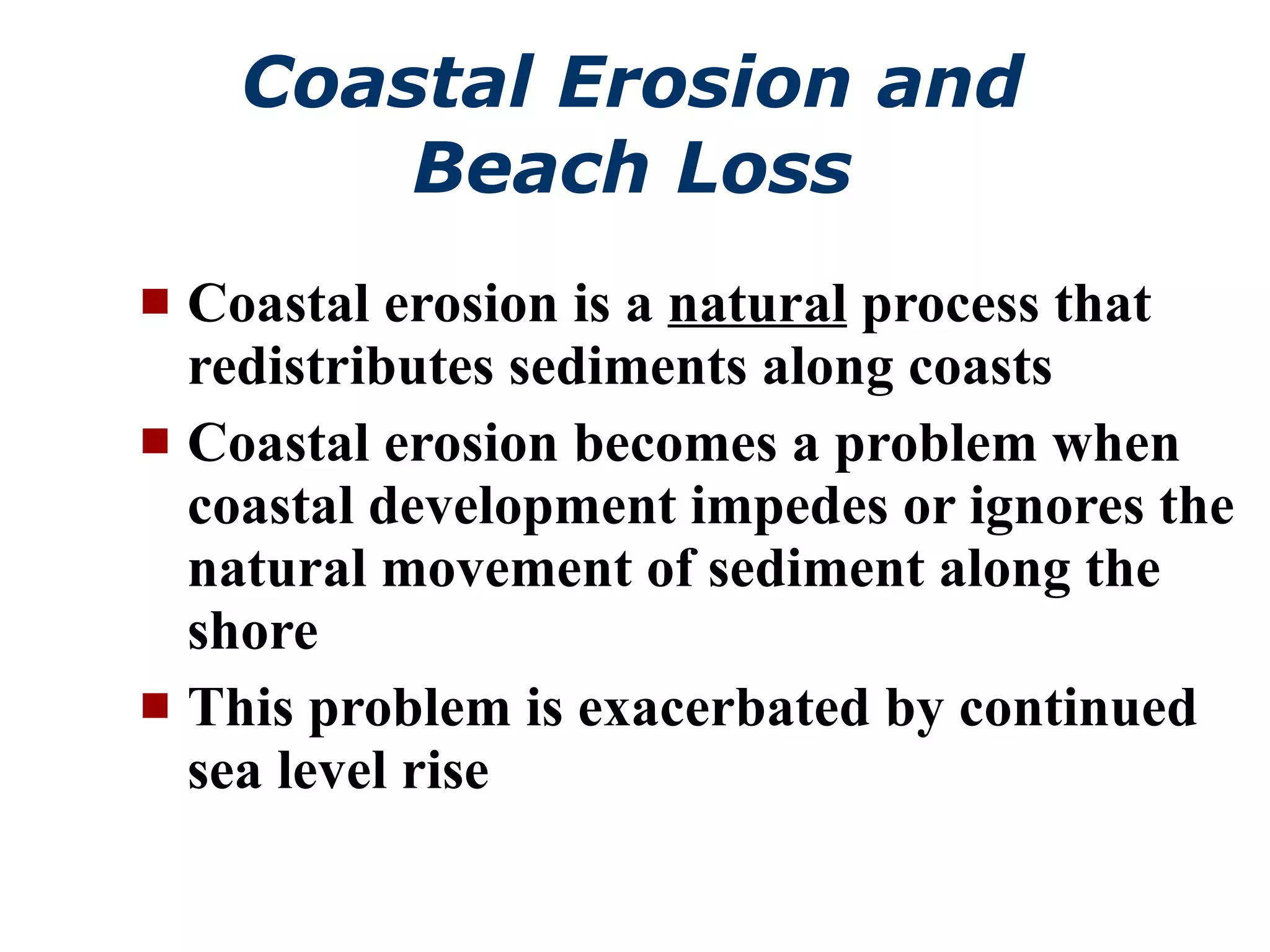
Coastal Erosion and Beach Loss Coastal erosion is a  natural  process that redistributes sediments along coasts Coastal erosion becomes a problem when coastal development impedes or ignores the natural movement of sediment along the shore This problem is exacerbated by continued sea level rise
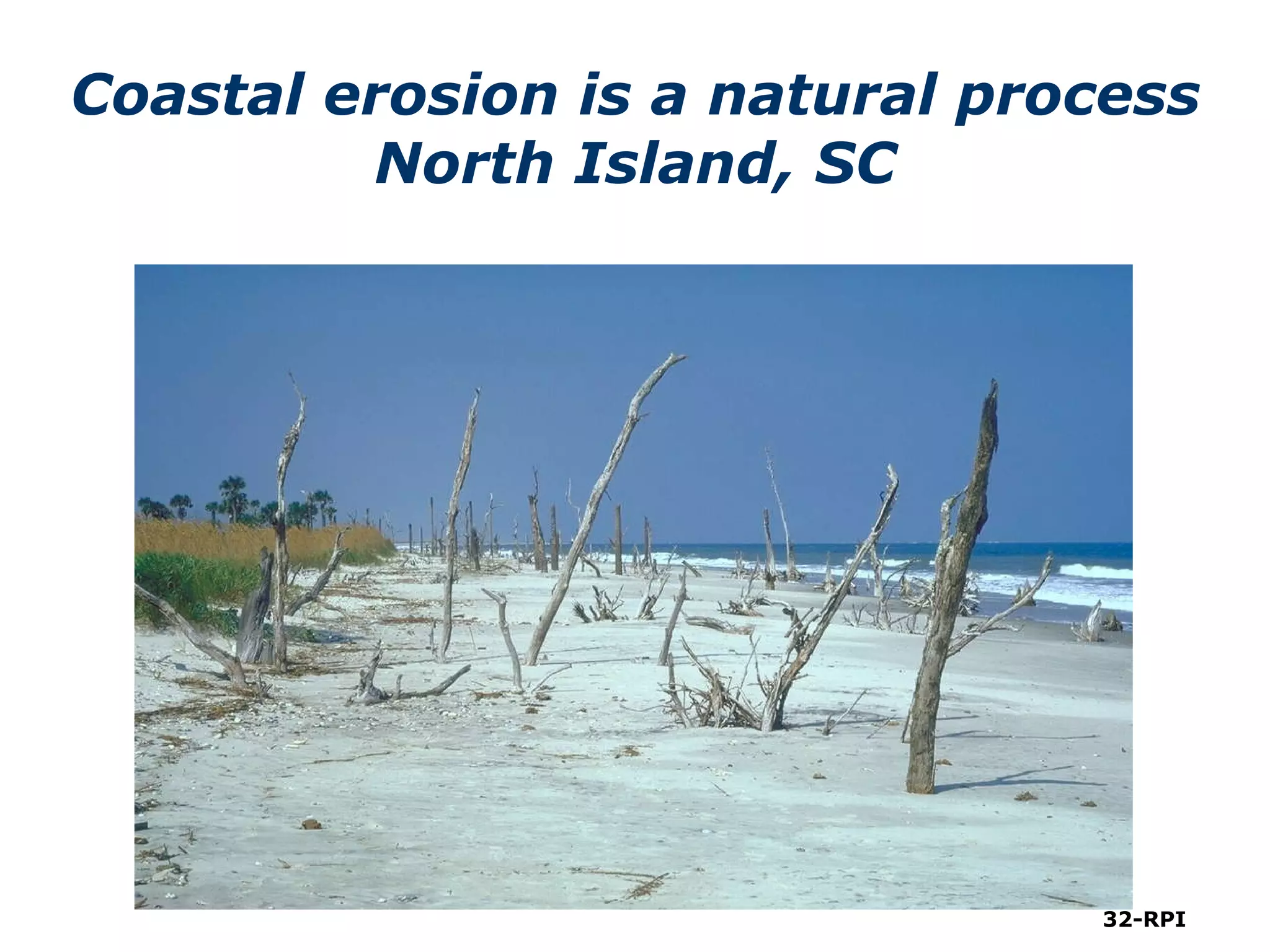
Coastal erosion is a natural process North Island, SC 32-RPI
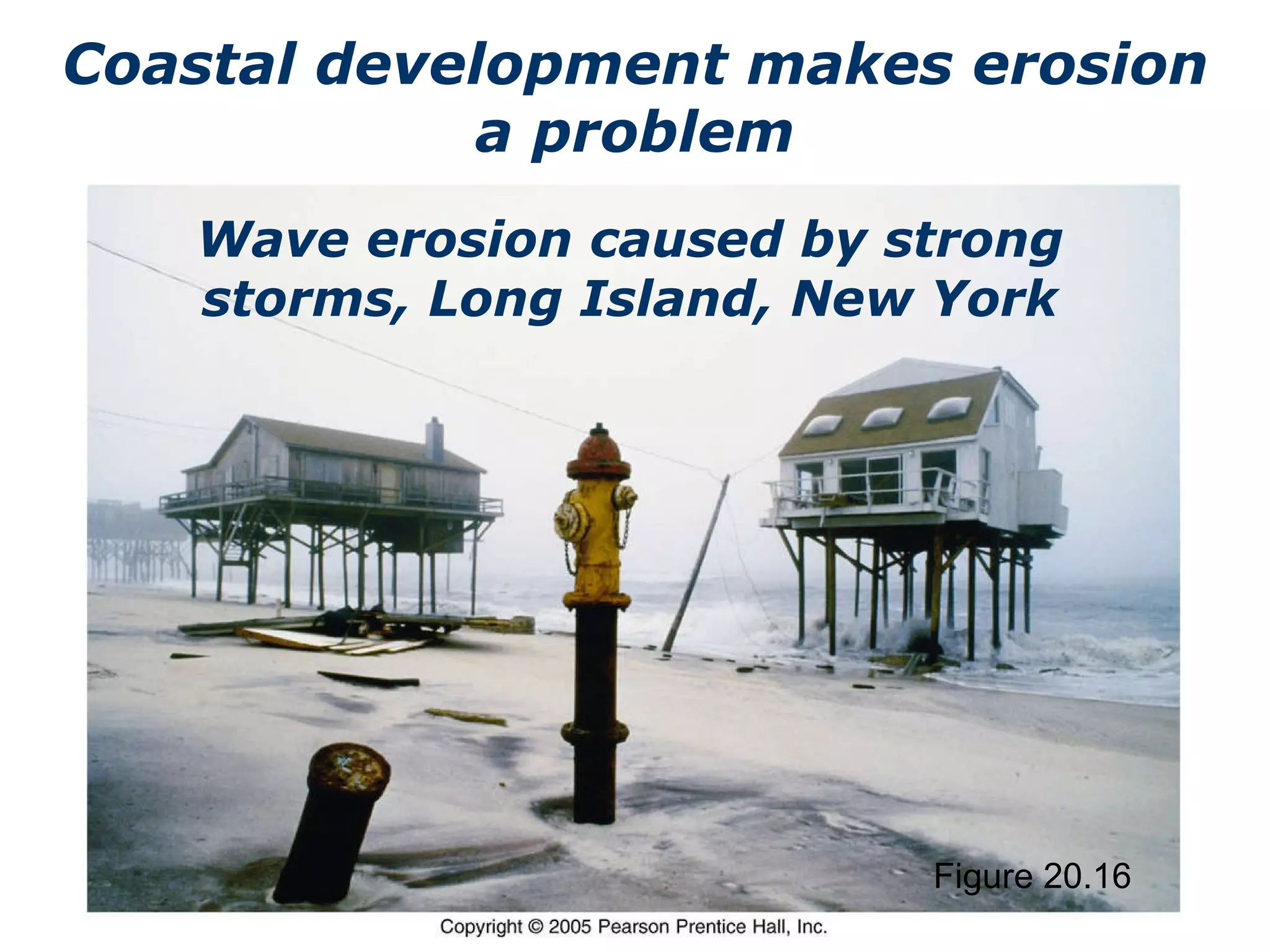
Figure 20.16 Wave erosion caused by strong storms, Long Island, New York Coastal development makes erosion a problem
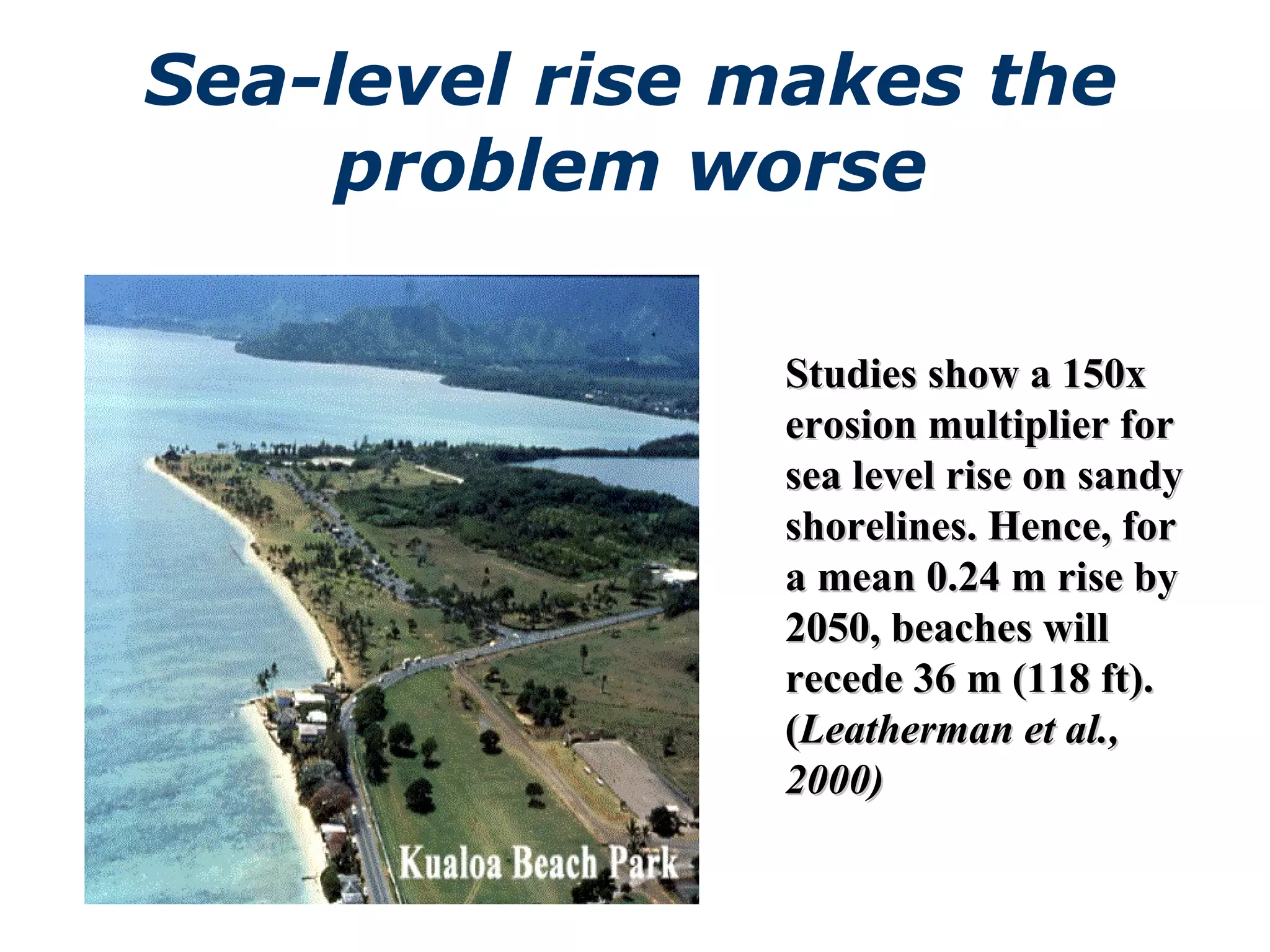
Sea-level rise makes the problem worse Studies show a 150x erosion multiplier for sea level rise on sandy shorelines. Hence, for a mean 0.24 m rise by 2050, beaches will recede 36 m (118 ft). ( Leatherman et al., 2000)
Stabilizing the shore Shoreline erosion is influenced by several local factors including Proximity to sediment-laden rivers Degree of tectonic activity Topography and composition of the land Prevailing wind and weather patterns Configuration of the coastline and nearshore areas
Stabilizing the shore Three basic responses to erosion problems Building structures (Hard stabilization) Beach nourishment Relocation
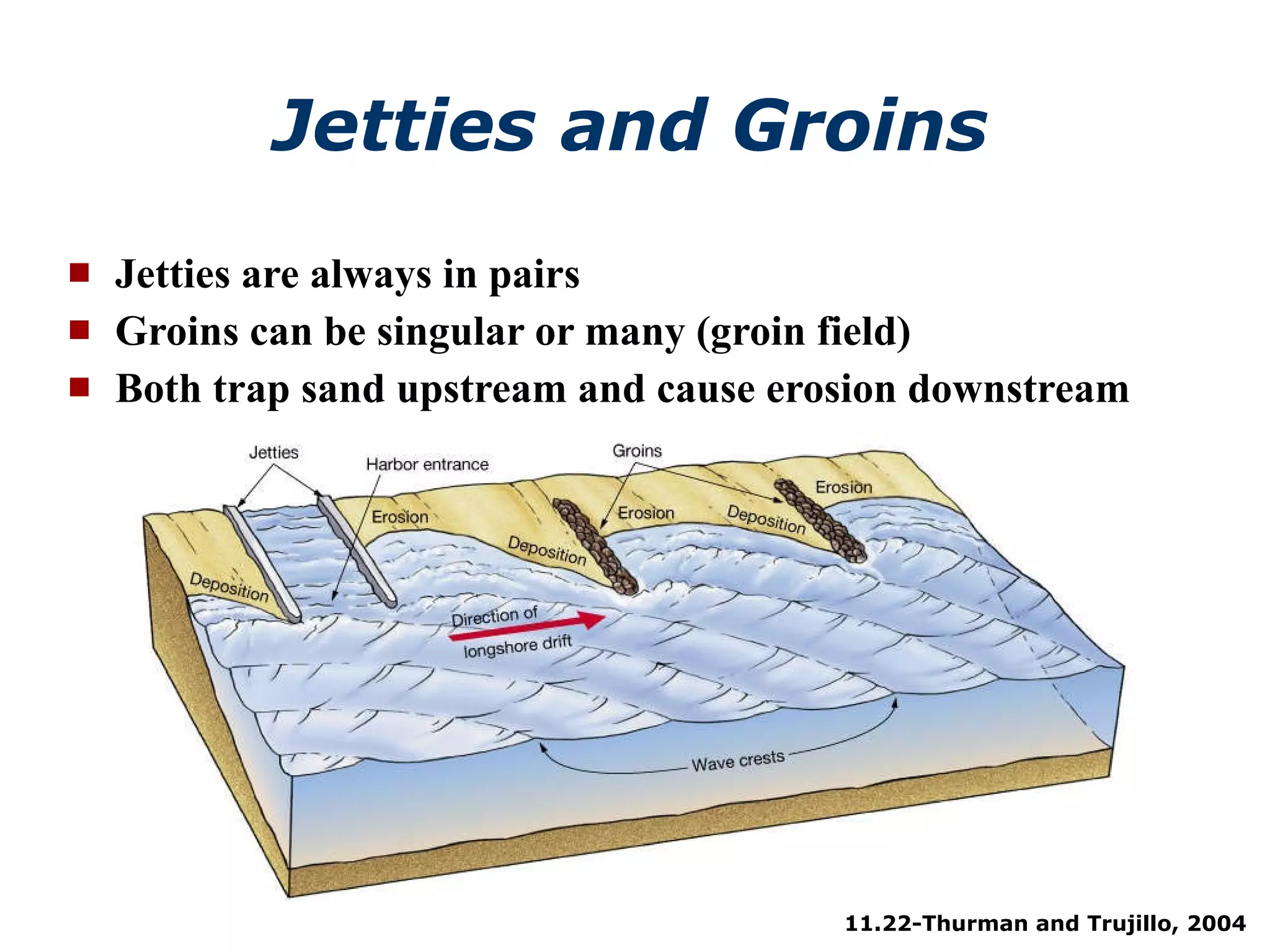
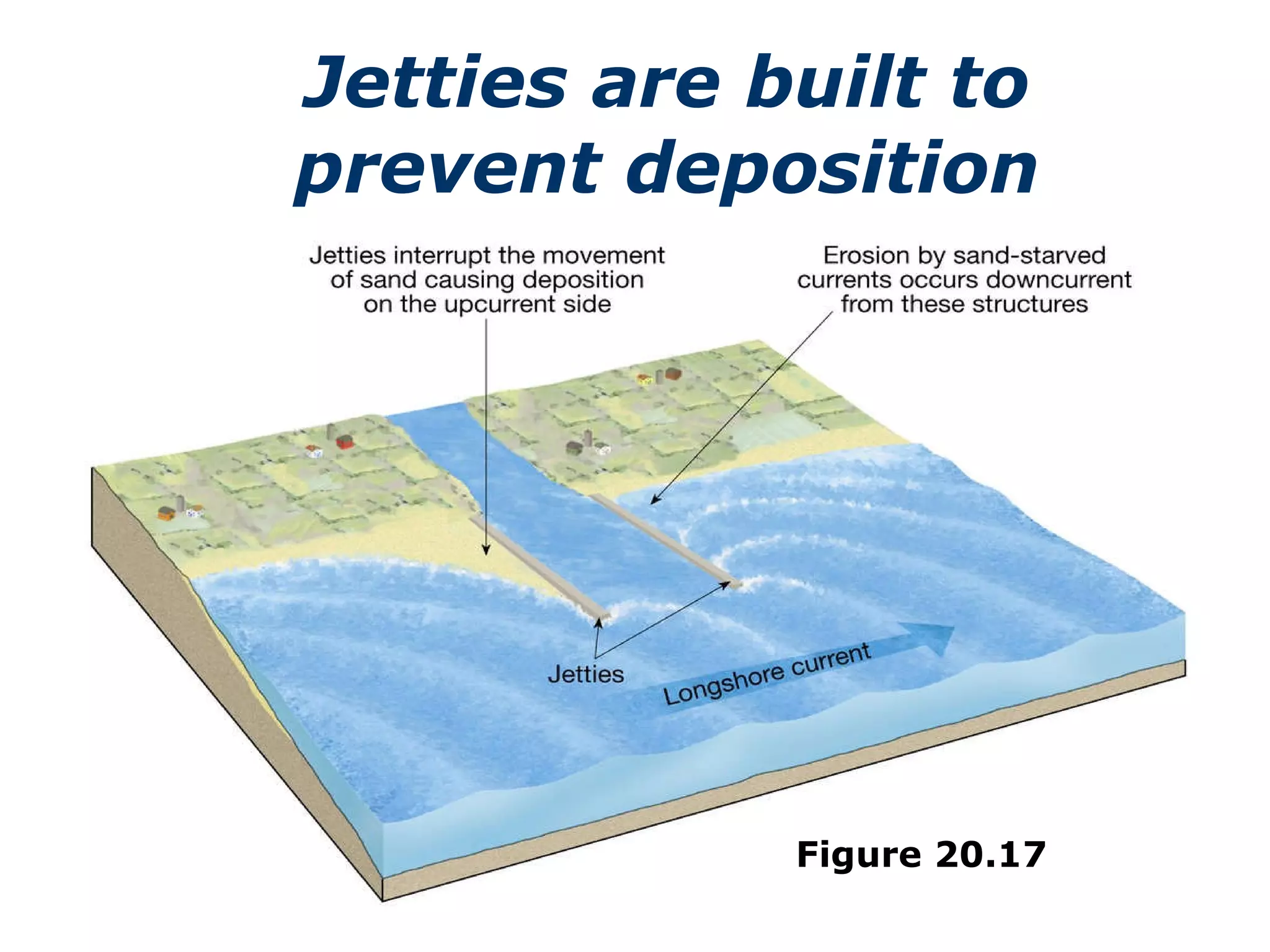
Stabilizing the shore Hard stabilization perpendicular to the shore Jetties Usually built in pairs to develop and maintain harbors Extend into the ocean at the entrances to rivers and harbors
Jetties are built to prevent deposition Figure 20.17
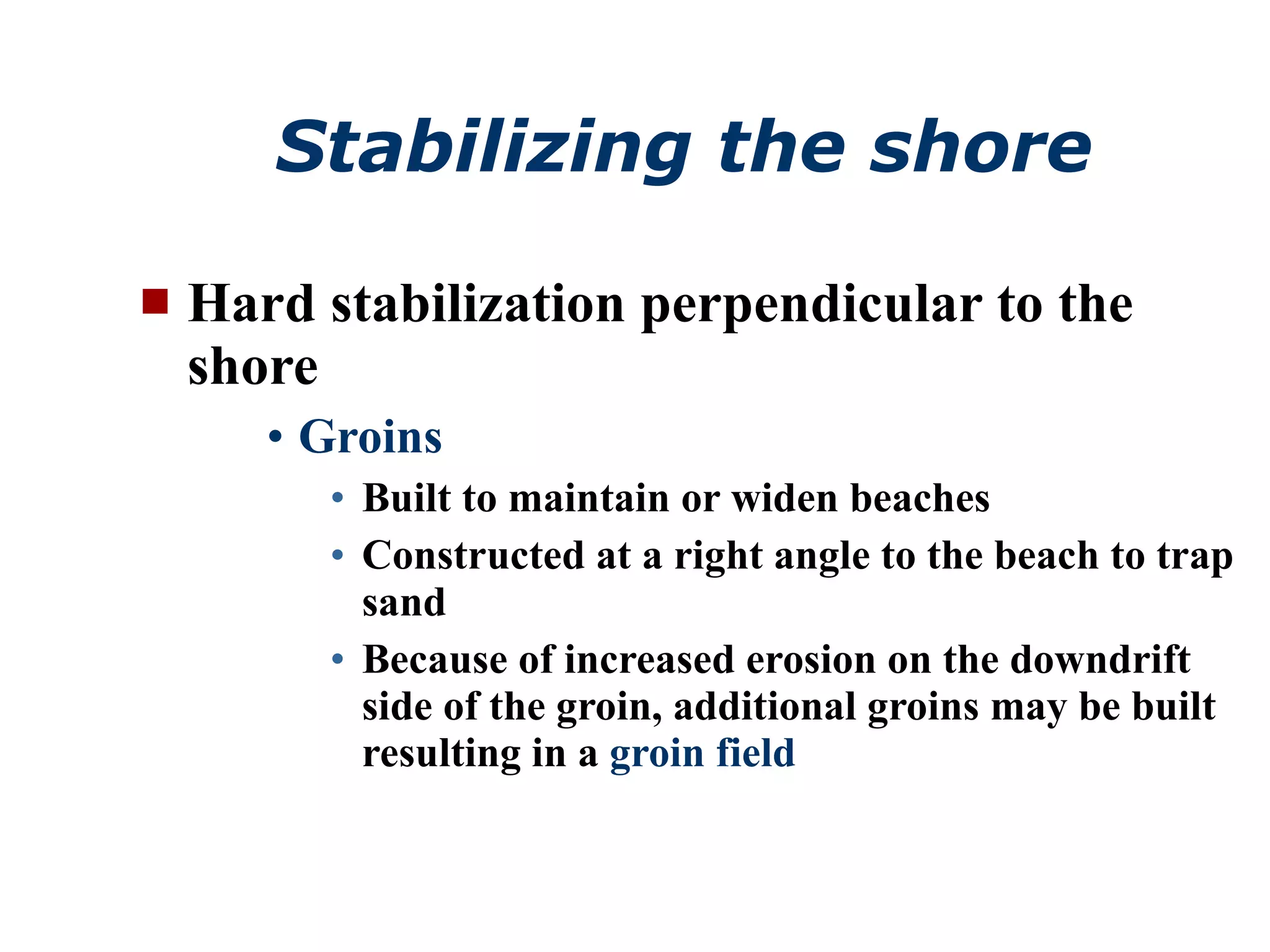
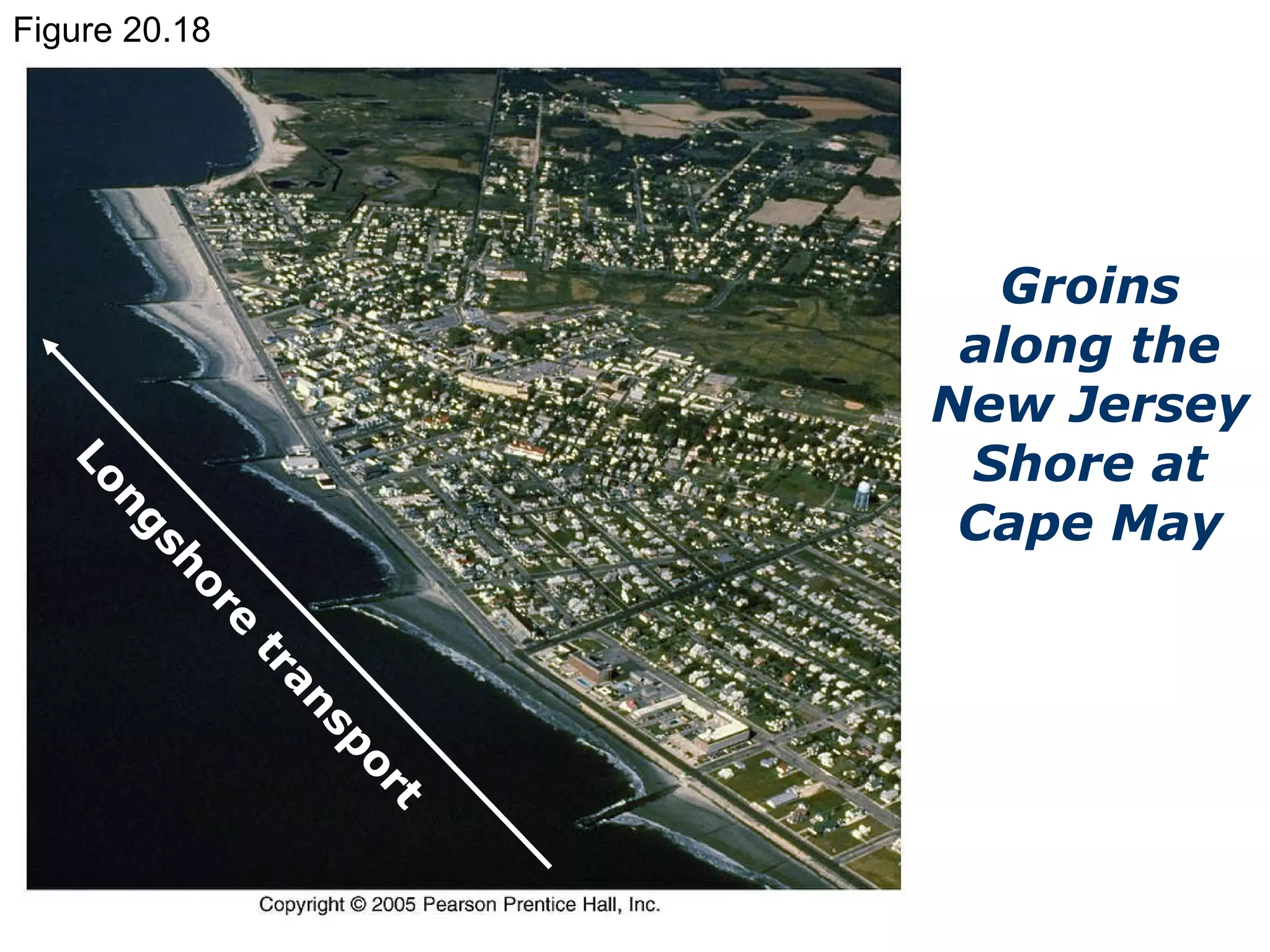
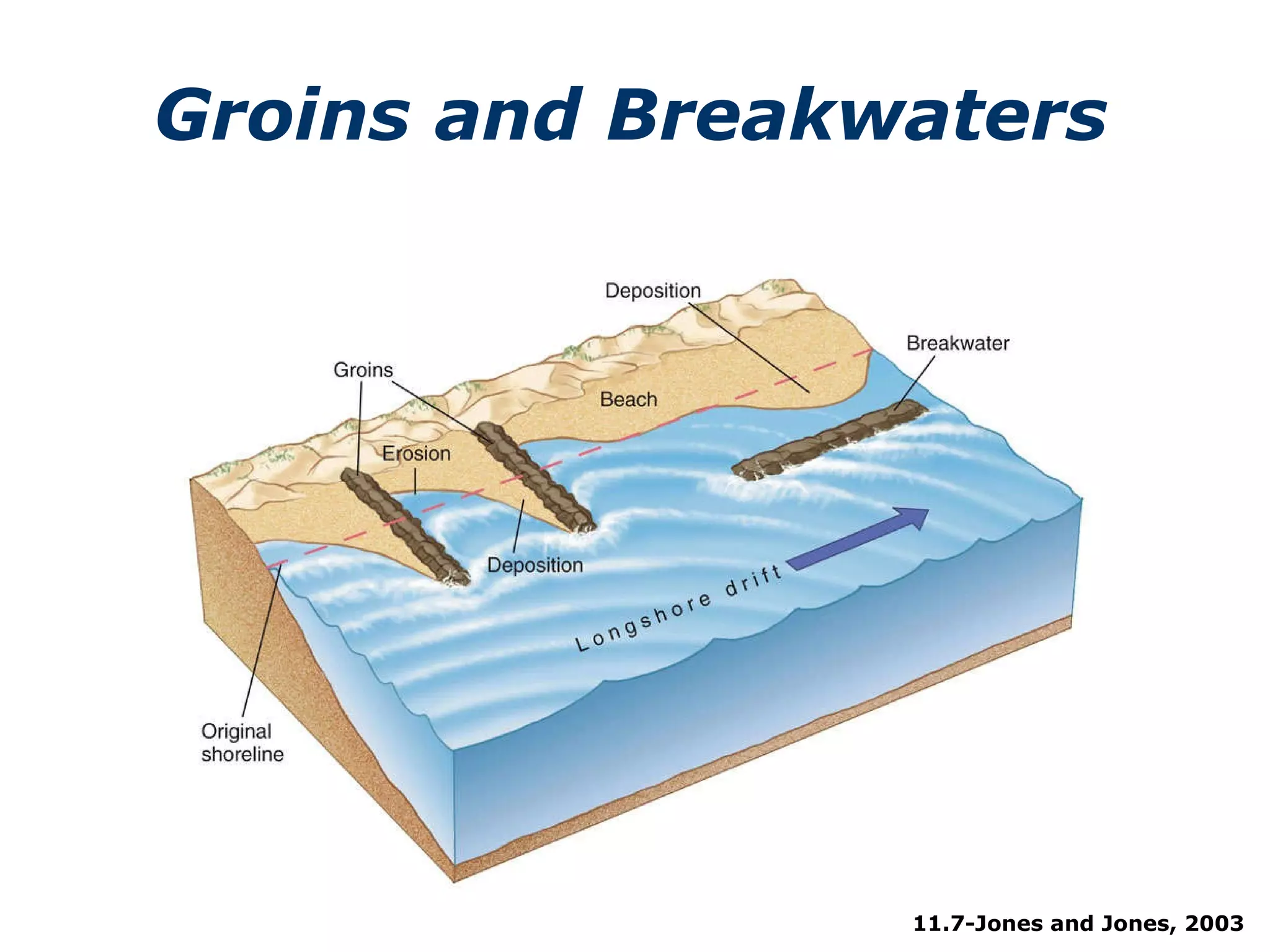
Stabilizing the shore Hard stabilization perpendicular to the shore Groins Built to maintain or widen beaches Constructed at a right angle to the beach to trap sand Because of increased erosion on the downdrift side of the groin, additional groins may be built resulting in a  groin field
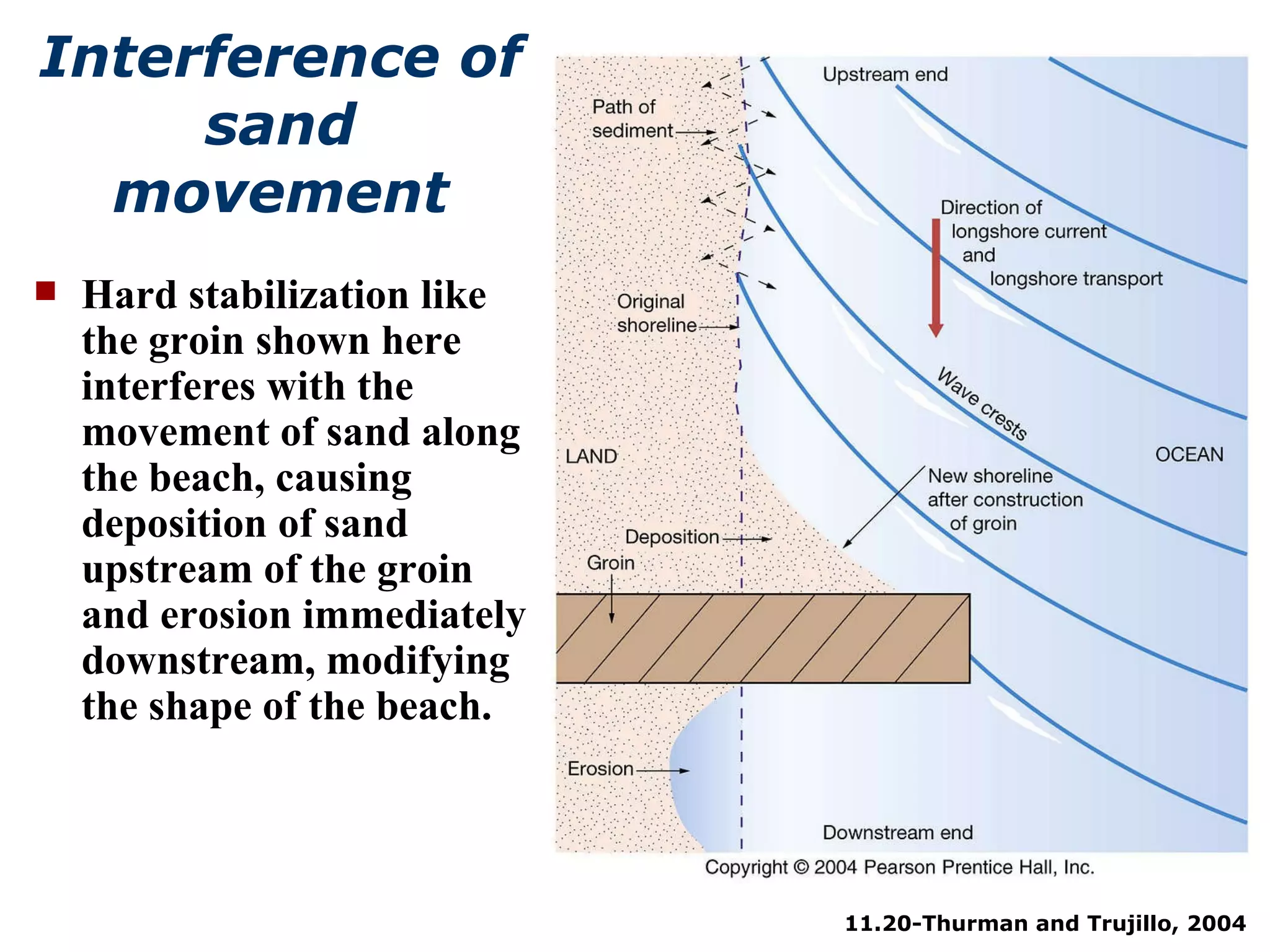
11.20-Thurman and Trujillo, 2004 Interference of sand movement Hard stabilization like the groin shown here interferes with the movement of sand along the beach, causing deposition of sand upstream of the groin and erosion immediately downstream, modifying the shape of the beach.
Figure 20.18 Groins along the New Jersey Shore at Cape May Longshore transport
Jetties and Groins Jetties are always in pairs Groins can be singular or many (groin field) Both trap sand upstream and cause erosion downstream 11.22-Thurman and Trujillo, 2004
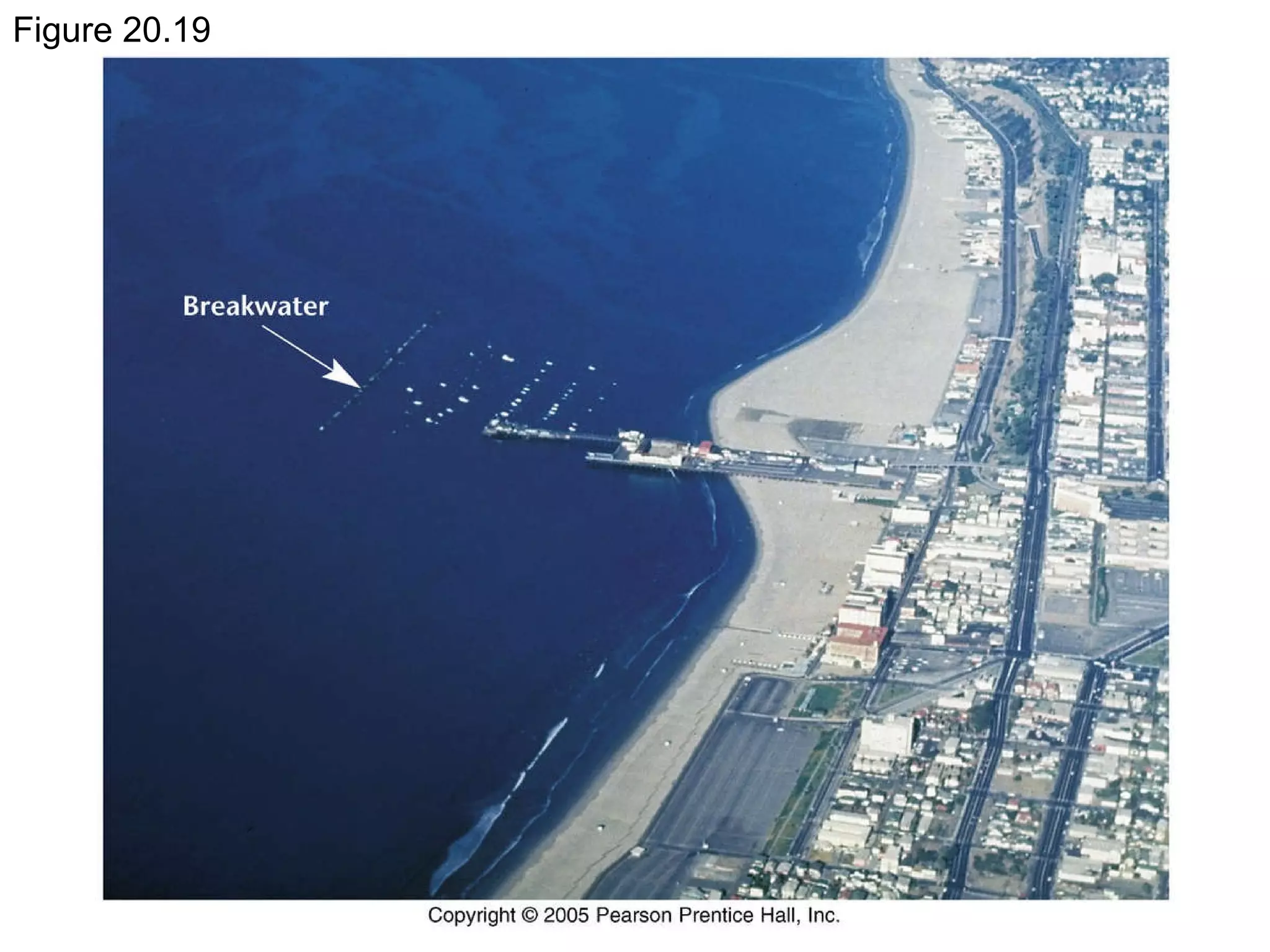
Stabilizing the shore Hard stabilization parallel to the shore Breakwater Barrier built offshore and parallel to the coast Protects boats from the force of large breaking waves
Groins and Breakwaters 11.7-Jones and Jones, 2003
Figure 20.19
Coastal Stabilization Structures
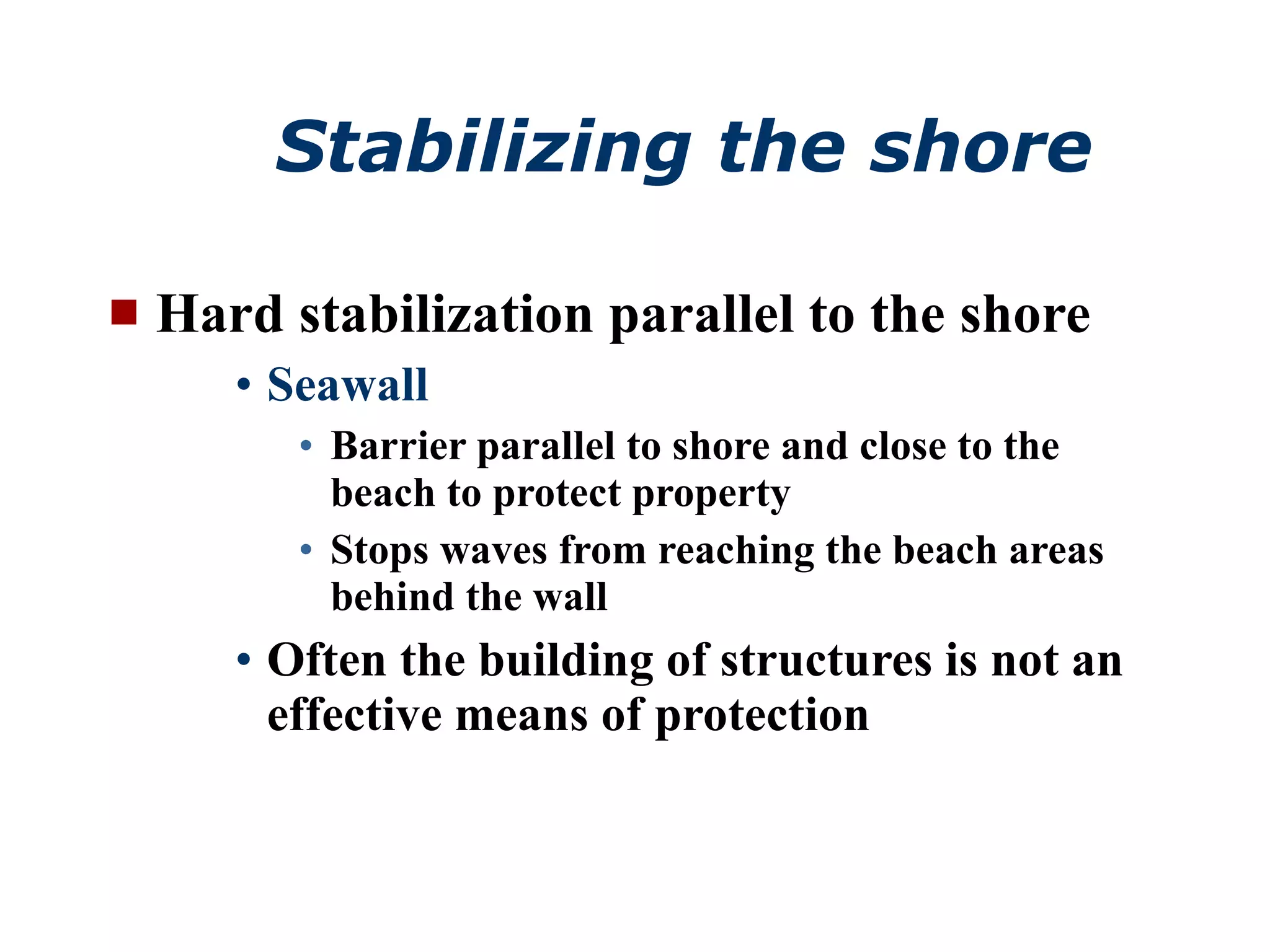
Stabilizing the shore Hard stabilization parallel to the shore Seawall Barrier parallel to shore and close to the beach to protect property Stops waves from reaching the beach areas behind the wall Often the building of structures is not an effective means of protection
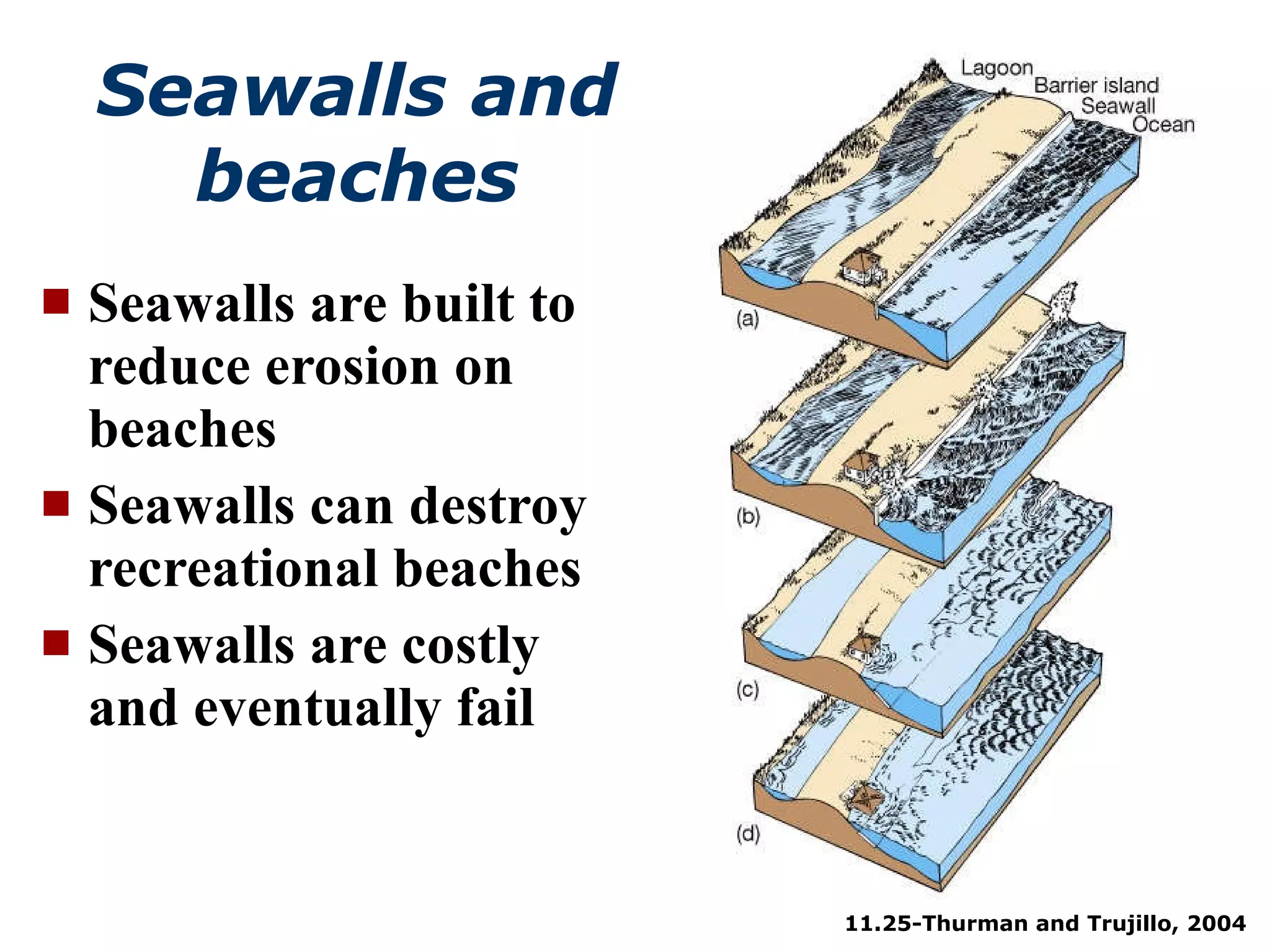
Seawalls and beaches Seawalls are built to reduce erosion on beaches Seawalls can destroy recreational beaches Seawalls are costly and eventually fail  11.25-Thurman and Trujillo, 2004
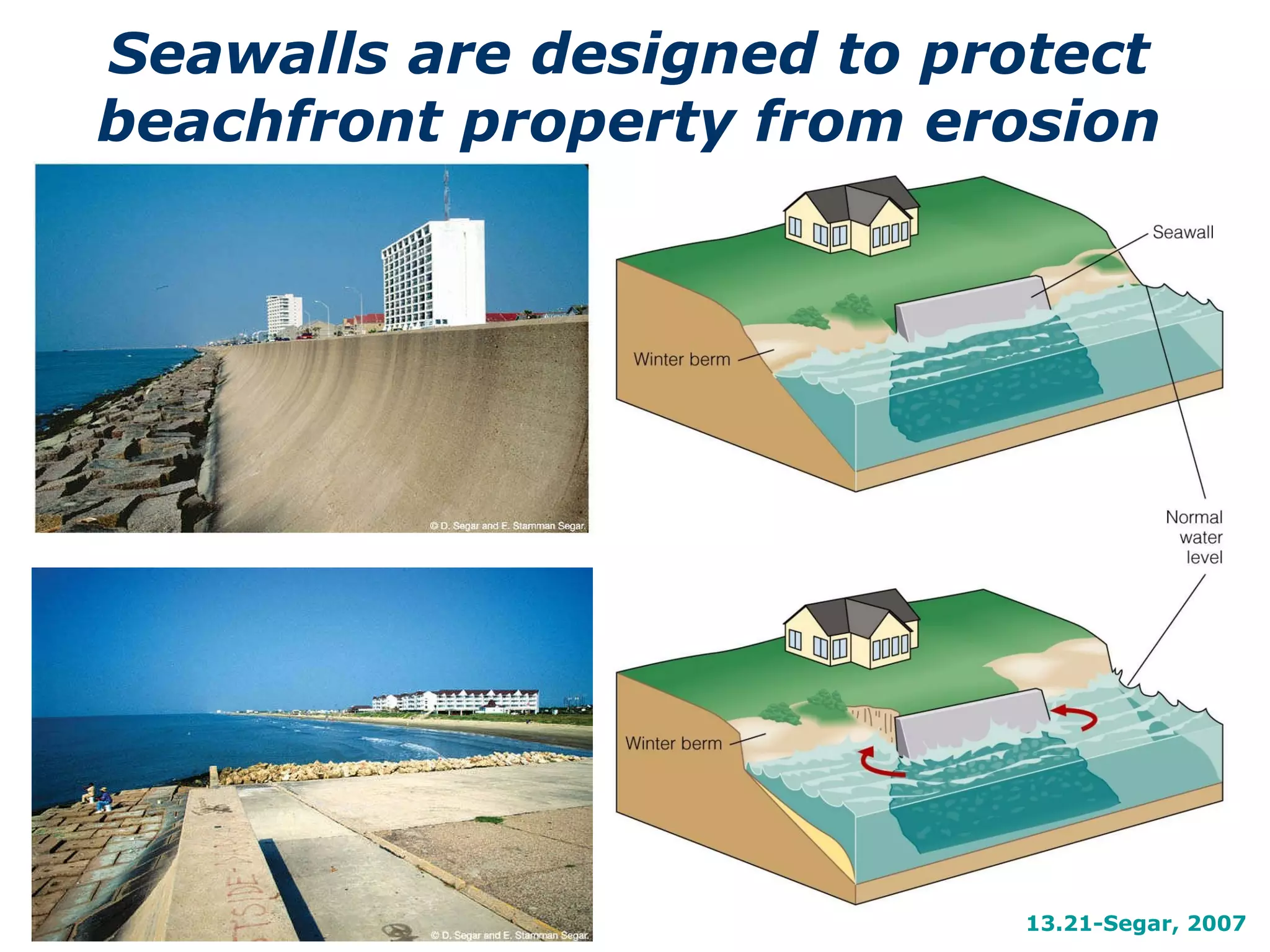
Seawalls are designed to protect beachfront property from erosion 13.21-Segar, 2007
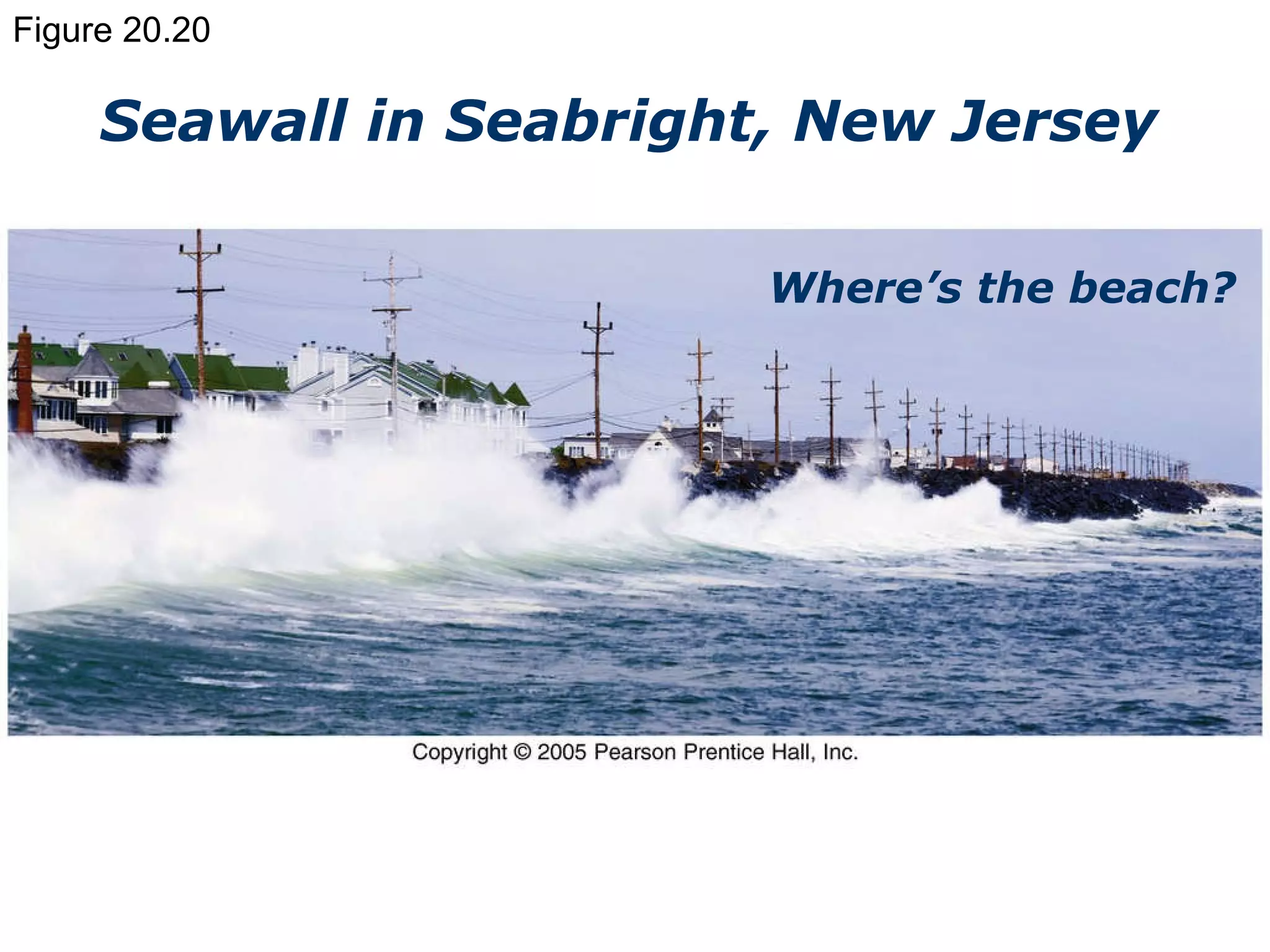
Figure 20.20 Seawall in Seabright, New Jersey Where’s the beach?
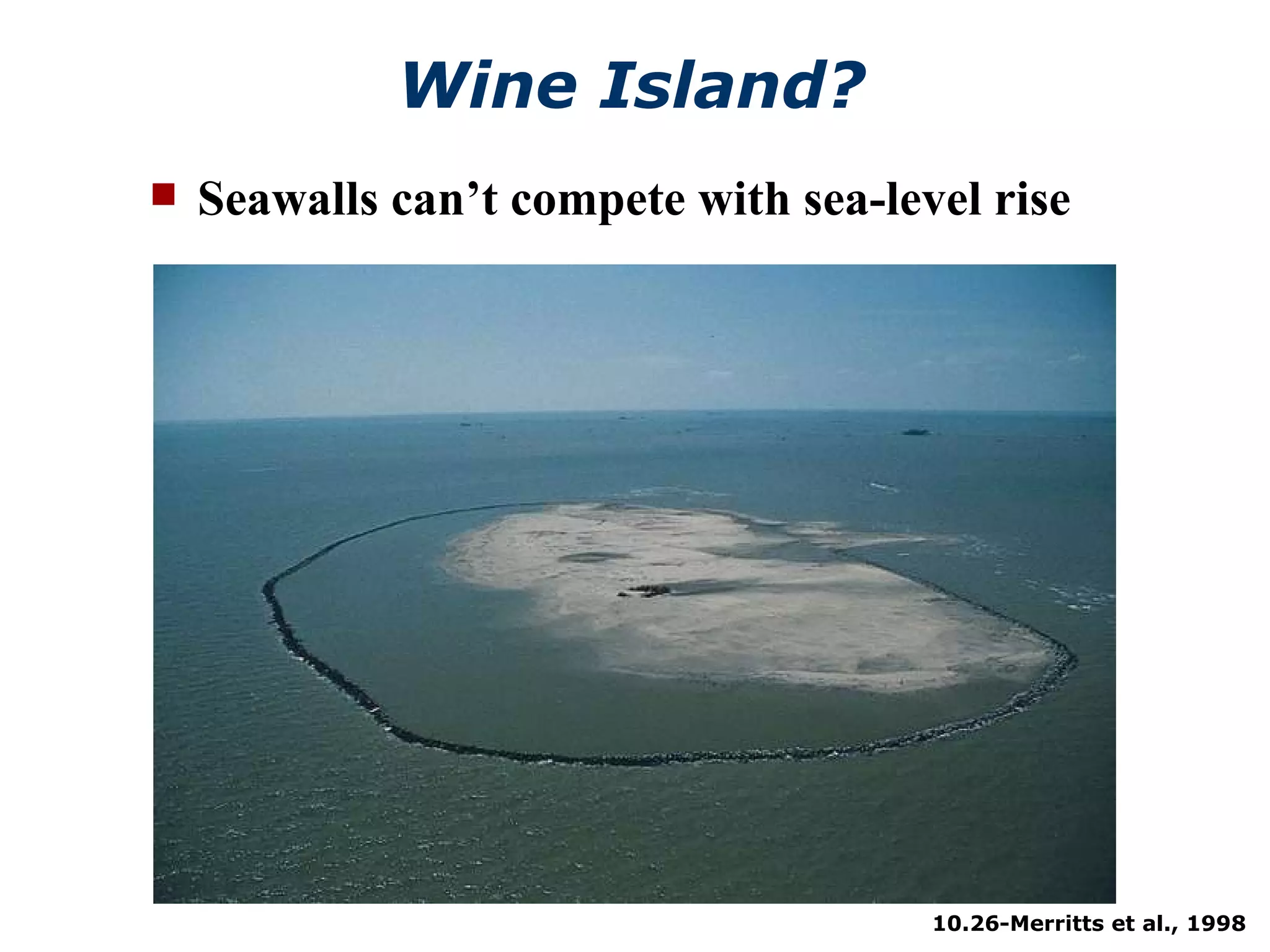
Wine Island? 10.26-Merritts et al., 1998 Seawalls can’t compete with sea-level rise
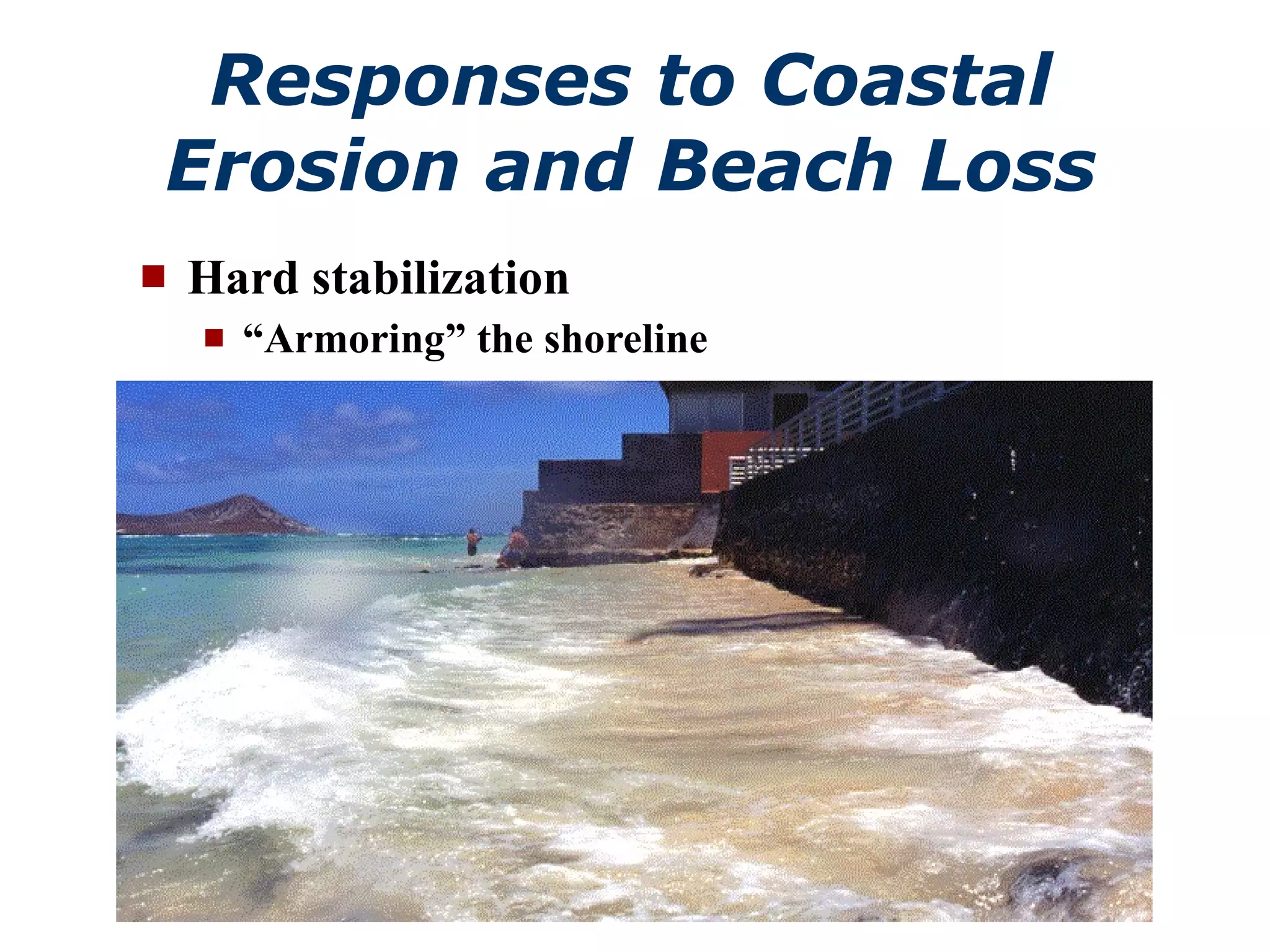
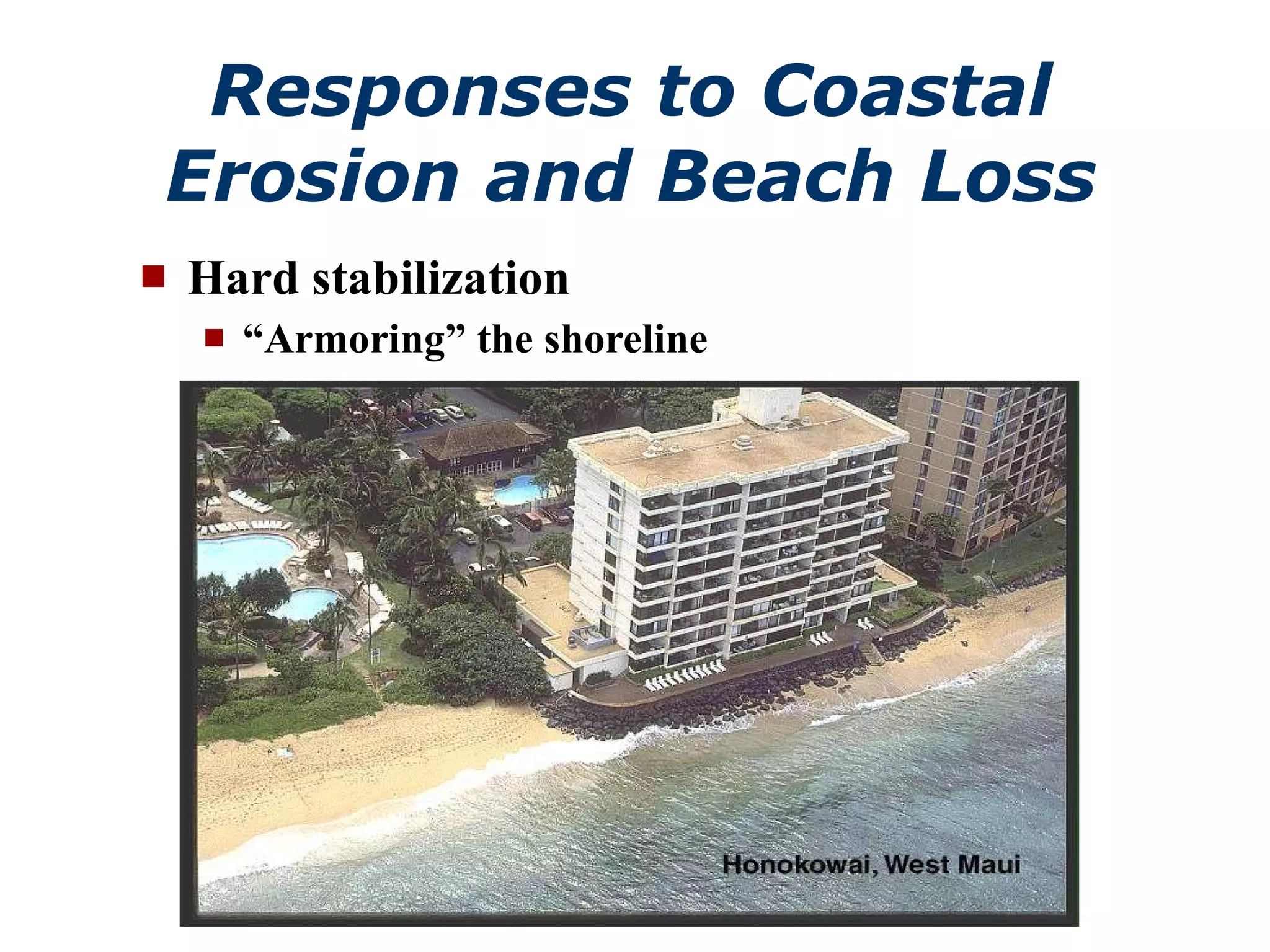
Responses to Coastal Erosion and Beach Loss Hard stabilization “ Armoring” the shoreline
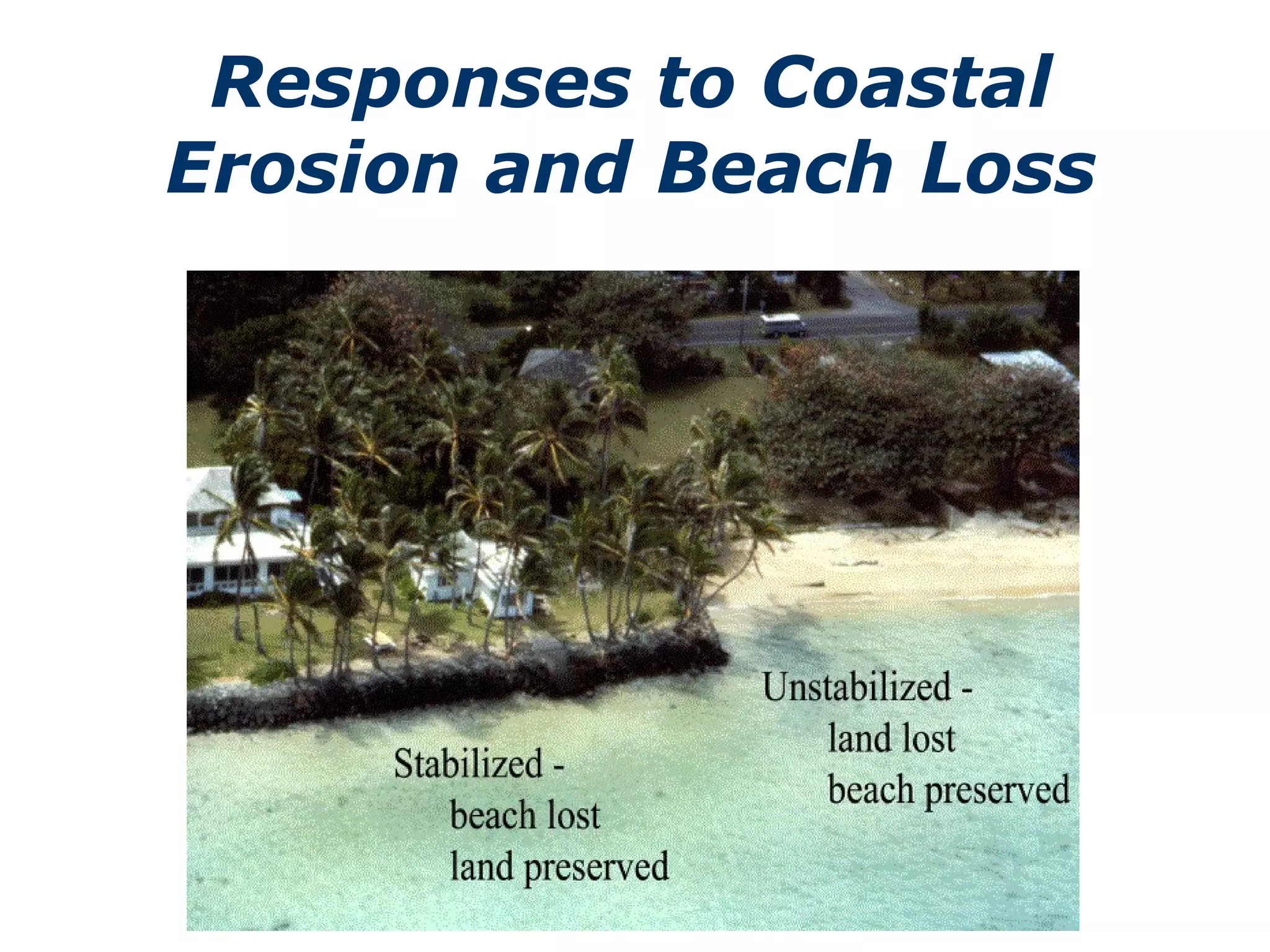
Responses to Coastal Erosion and Beach Loss
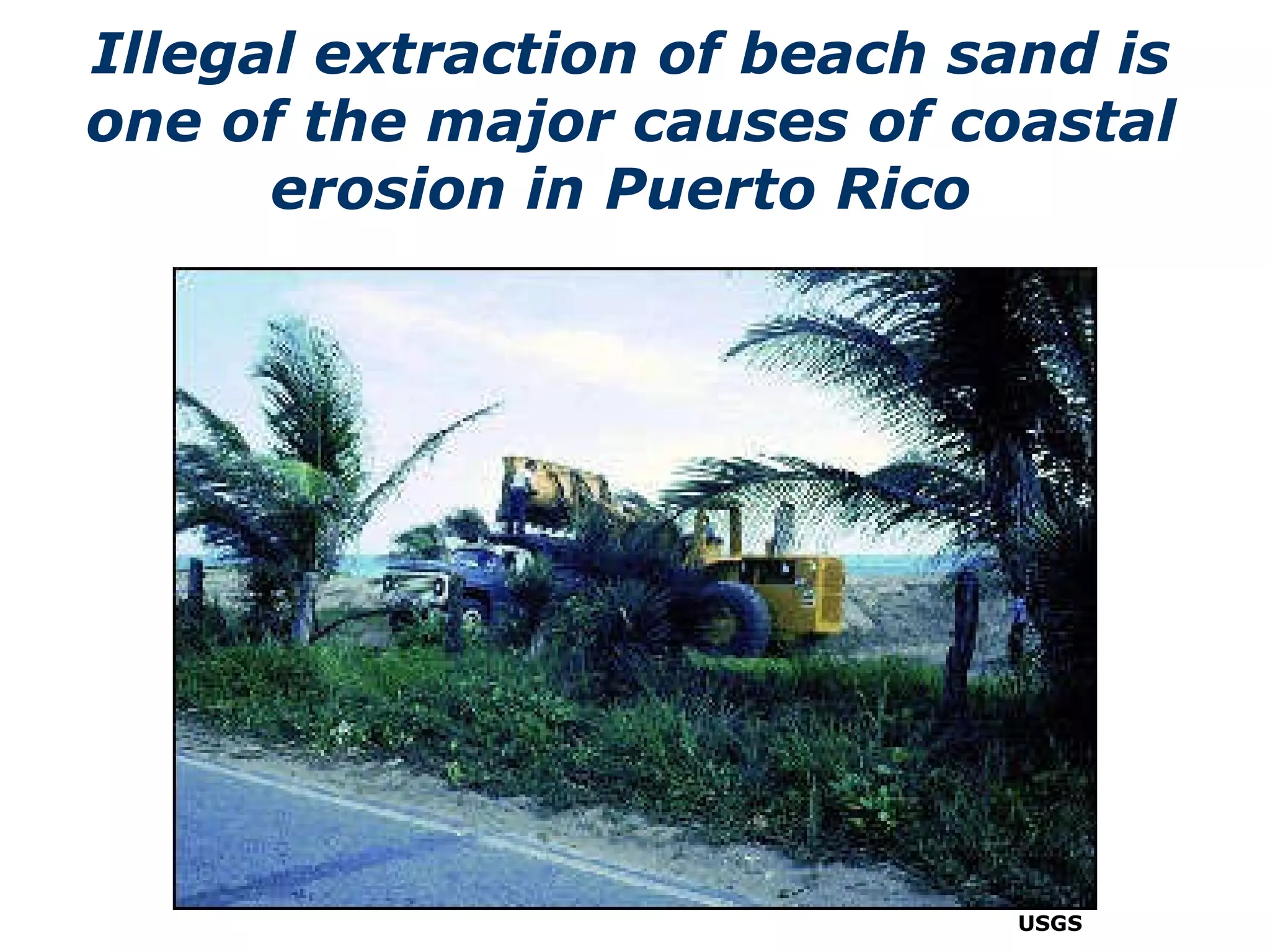
USGS Illegal extraction of beach sand is one of the major causes of coastal erosion in Puerto Rico
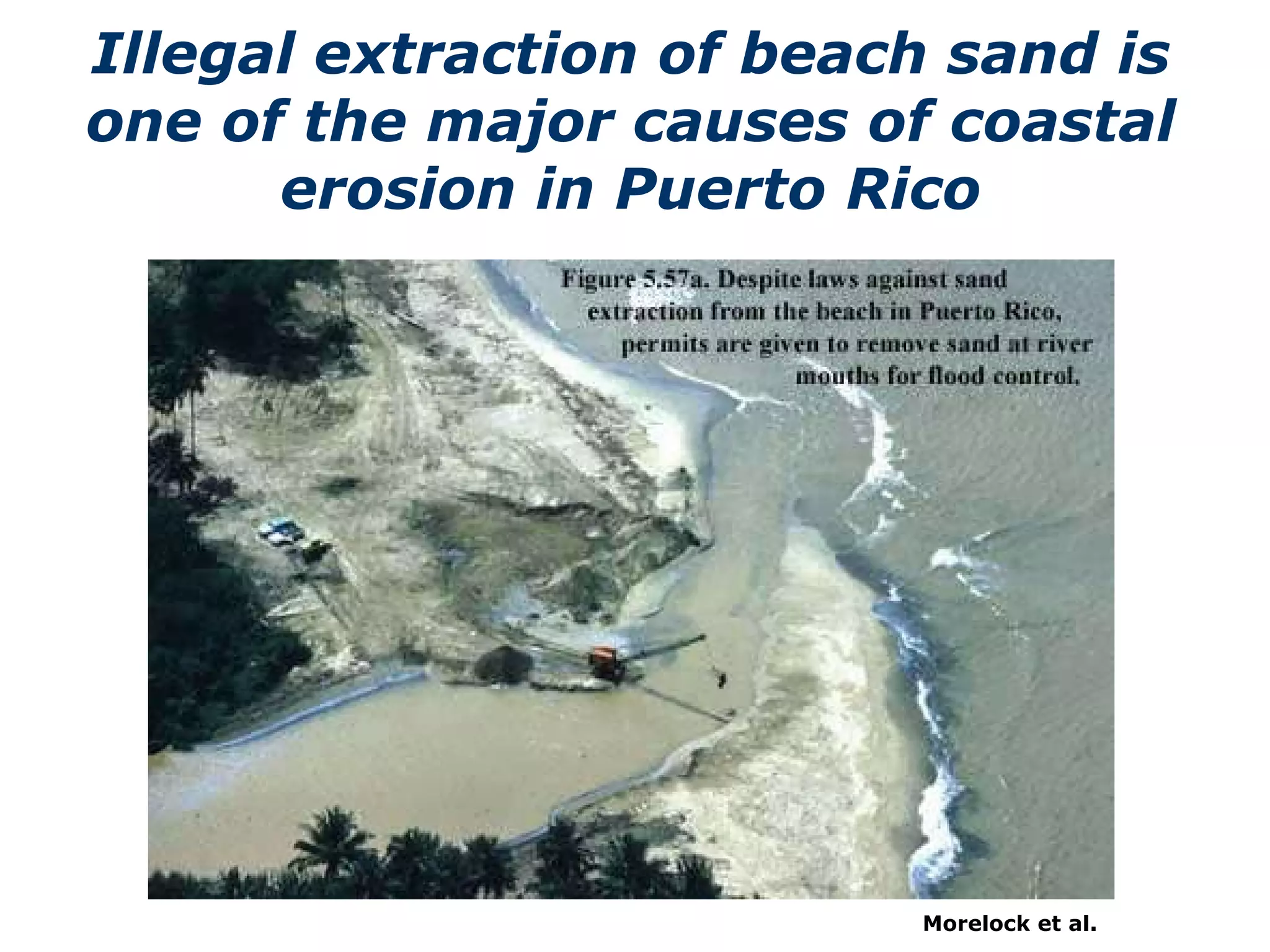
Morelock et al. Illegal extraction of beach sand is one of the major causes of coastal erosion in Puerto Rico
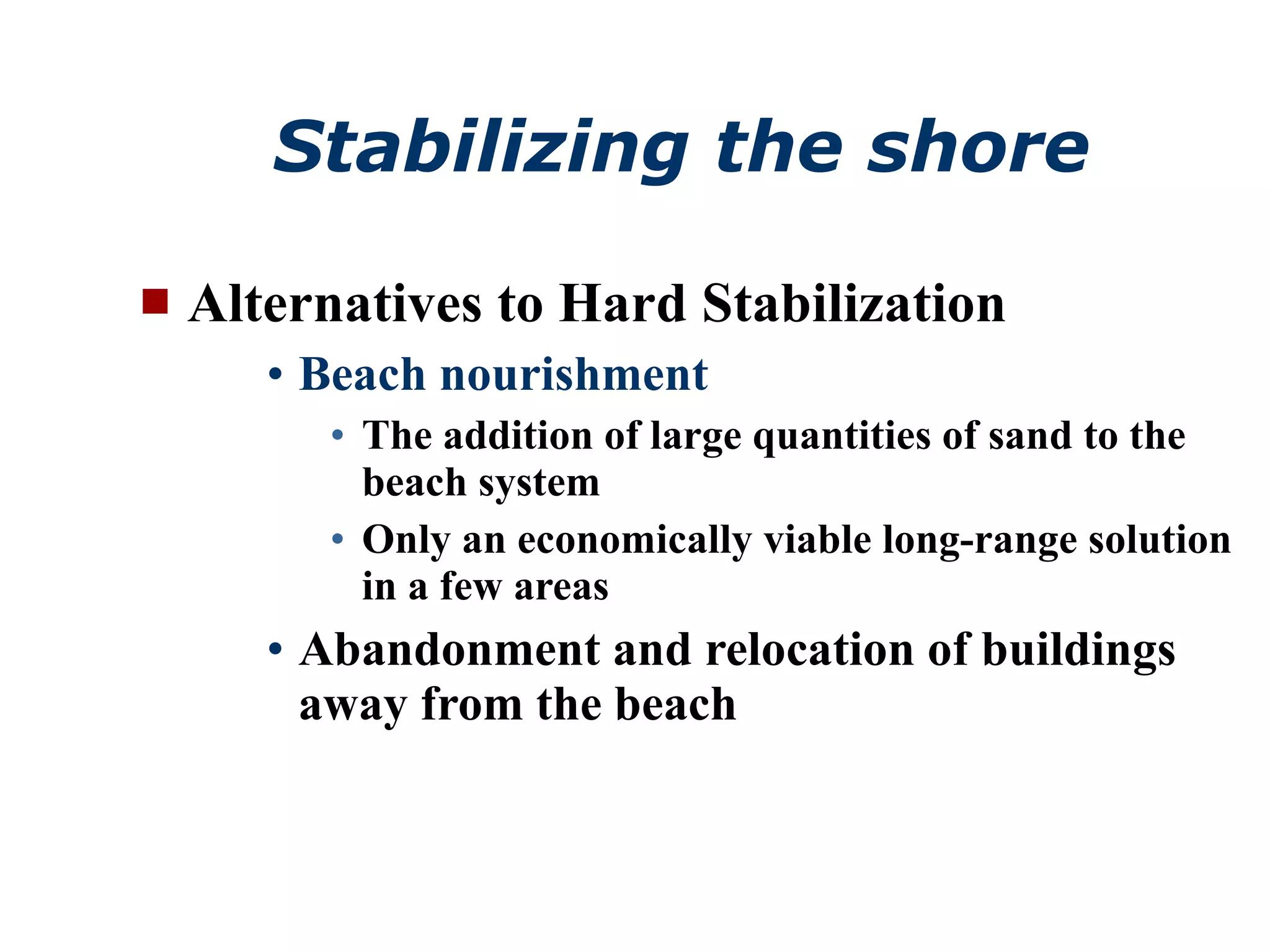
Stabilizing the shore Alternatives to Hard Stabilization Beach nourishment The addition of large quantities of sand to the beach system Only an economically viable long-range solution in a few areas Abandonment and relocation of buildings away from the beach
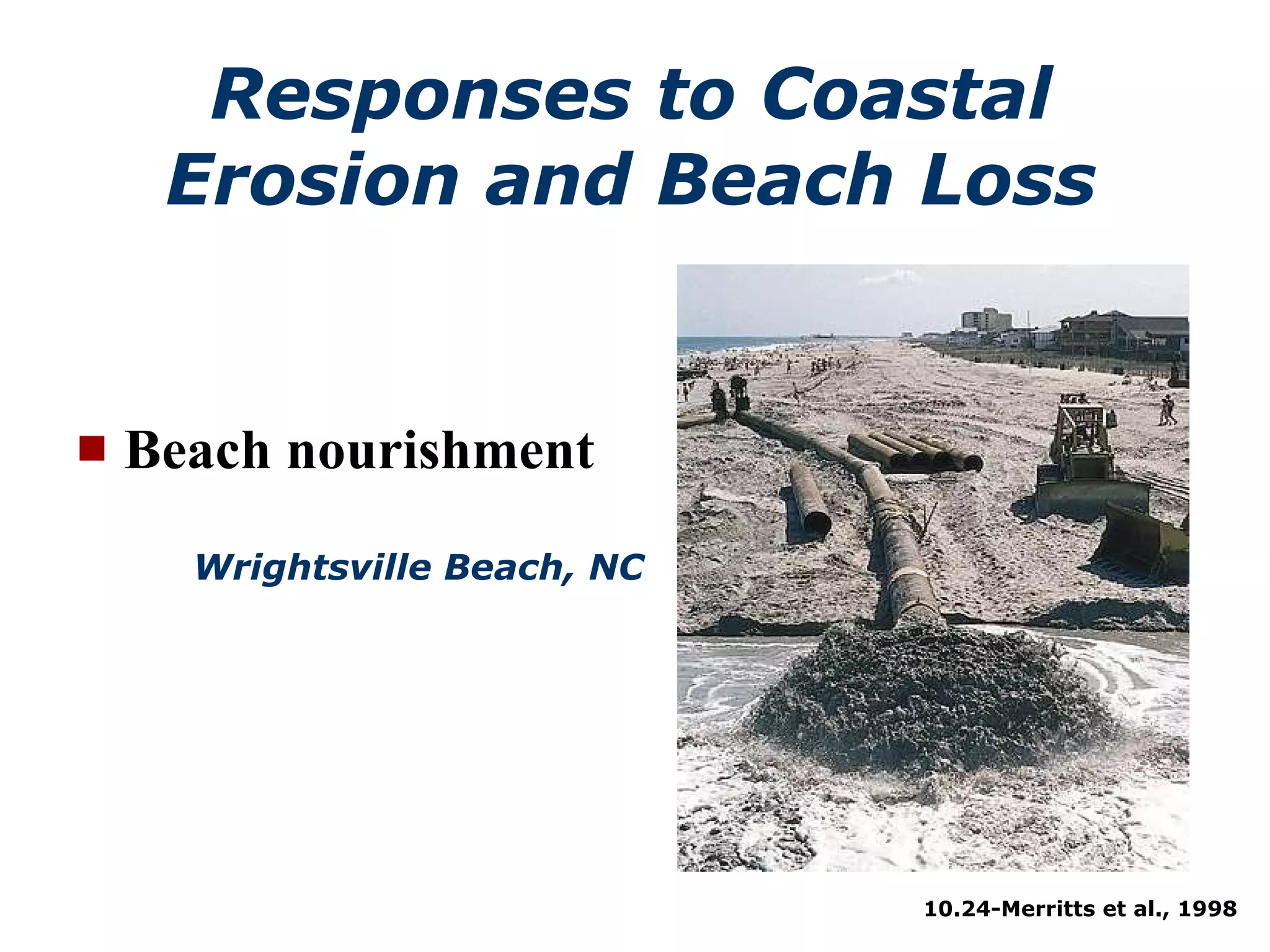
Responses to Coastal Erosion and Beach Loss Beach nourishment Wrightsville Beach, NC 10.24-Merritts et al., 1998
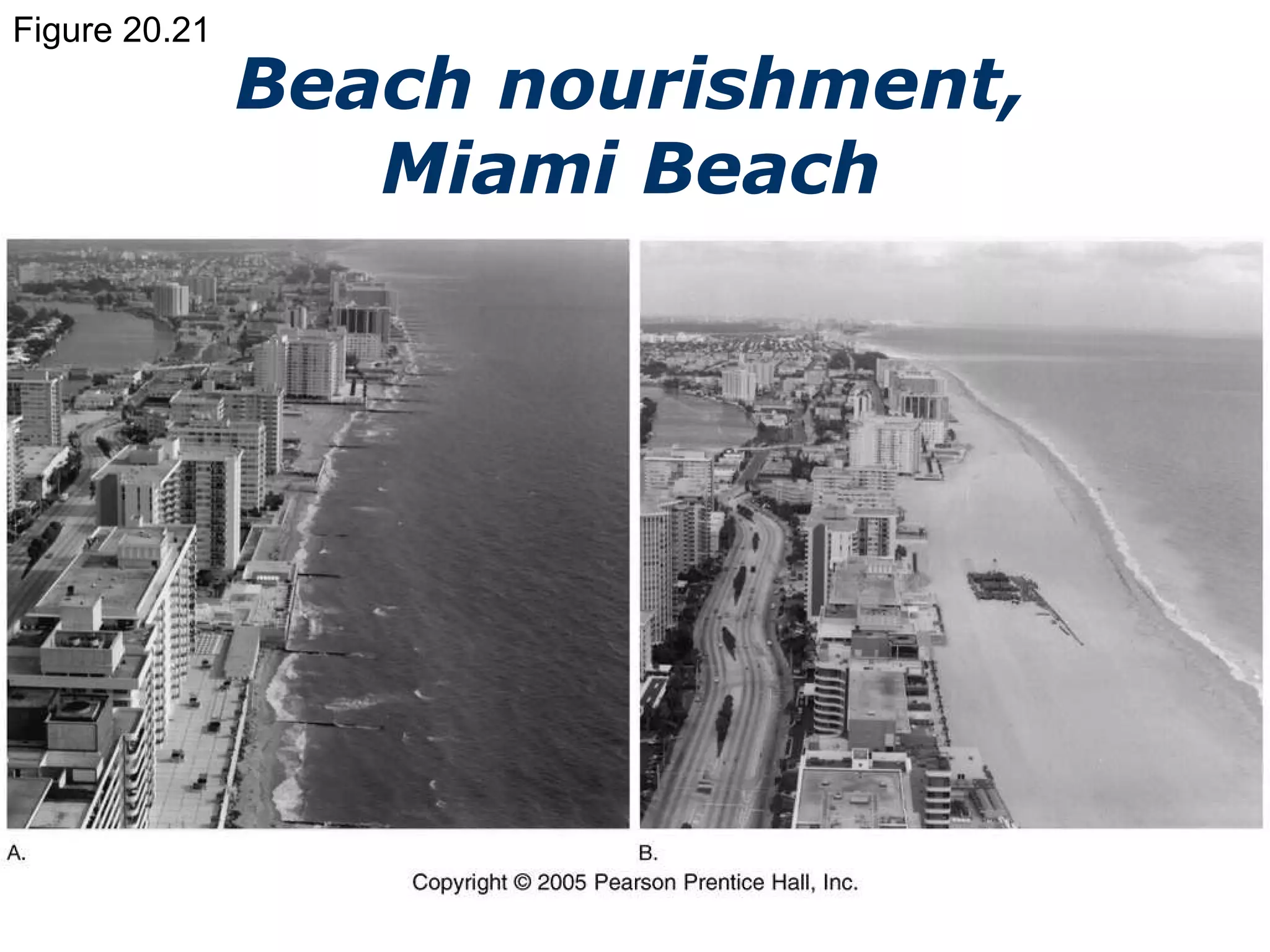
Figure 20.21 Beach nourishment, Miami Beach
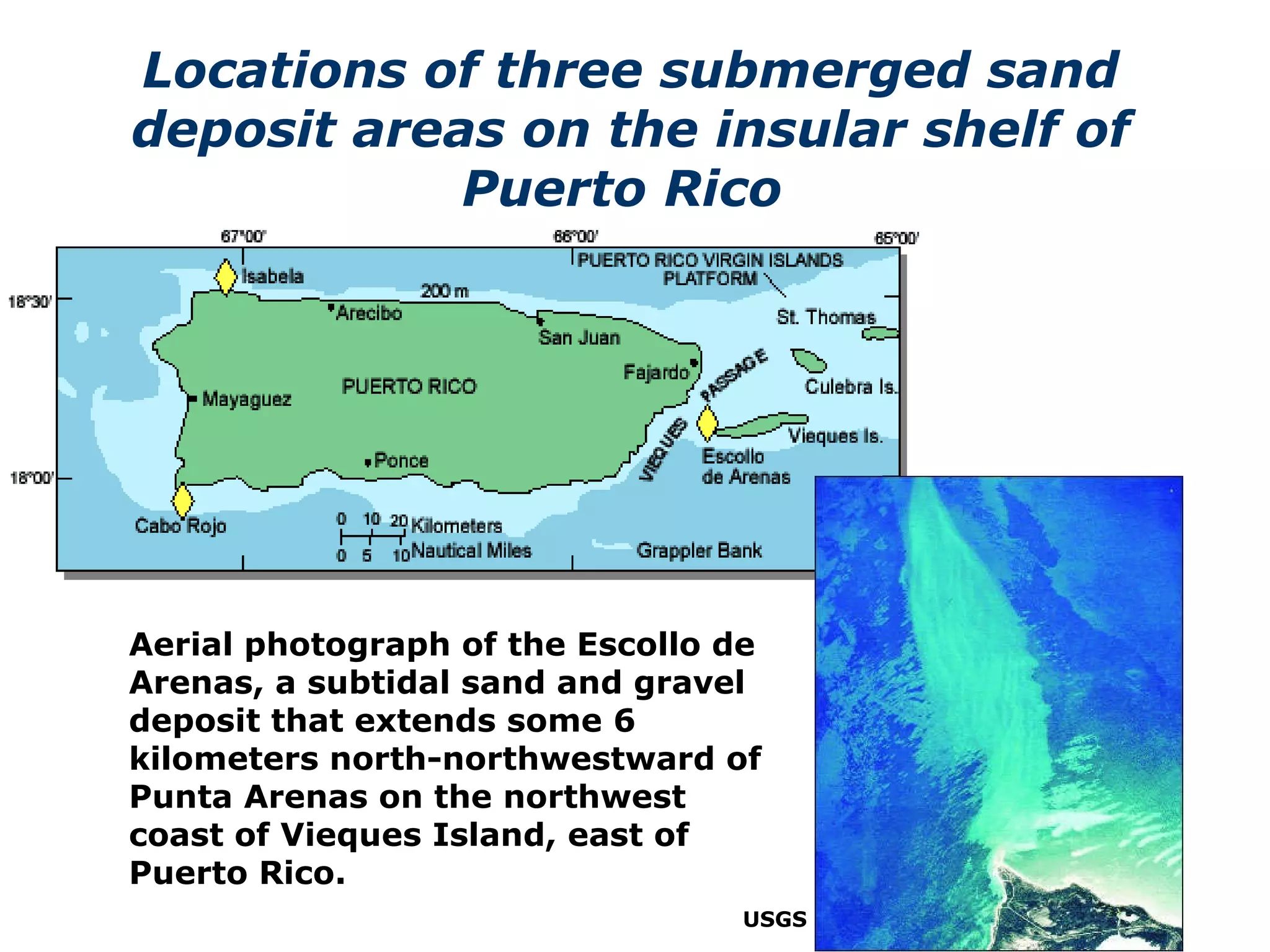
USGS Locations of three submerged sand deposit areas on the insular shelf of Puerto Rico   Aerial photograph of the Escollo de Arenas, a subtidal sand and gravel deposit that extends some 6 kilometers north-northwestward of Punta Arenas on the northwest coast of Vieques Island, east of Puerto Rico.
Responses to Coastal Erosion and Beach Loss Caveats of beach nourishment Not  permanent solution Expensive Need appropriate sand source
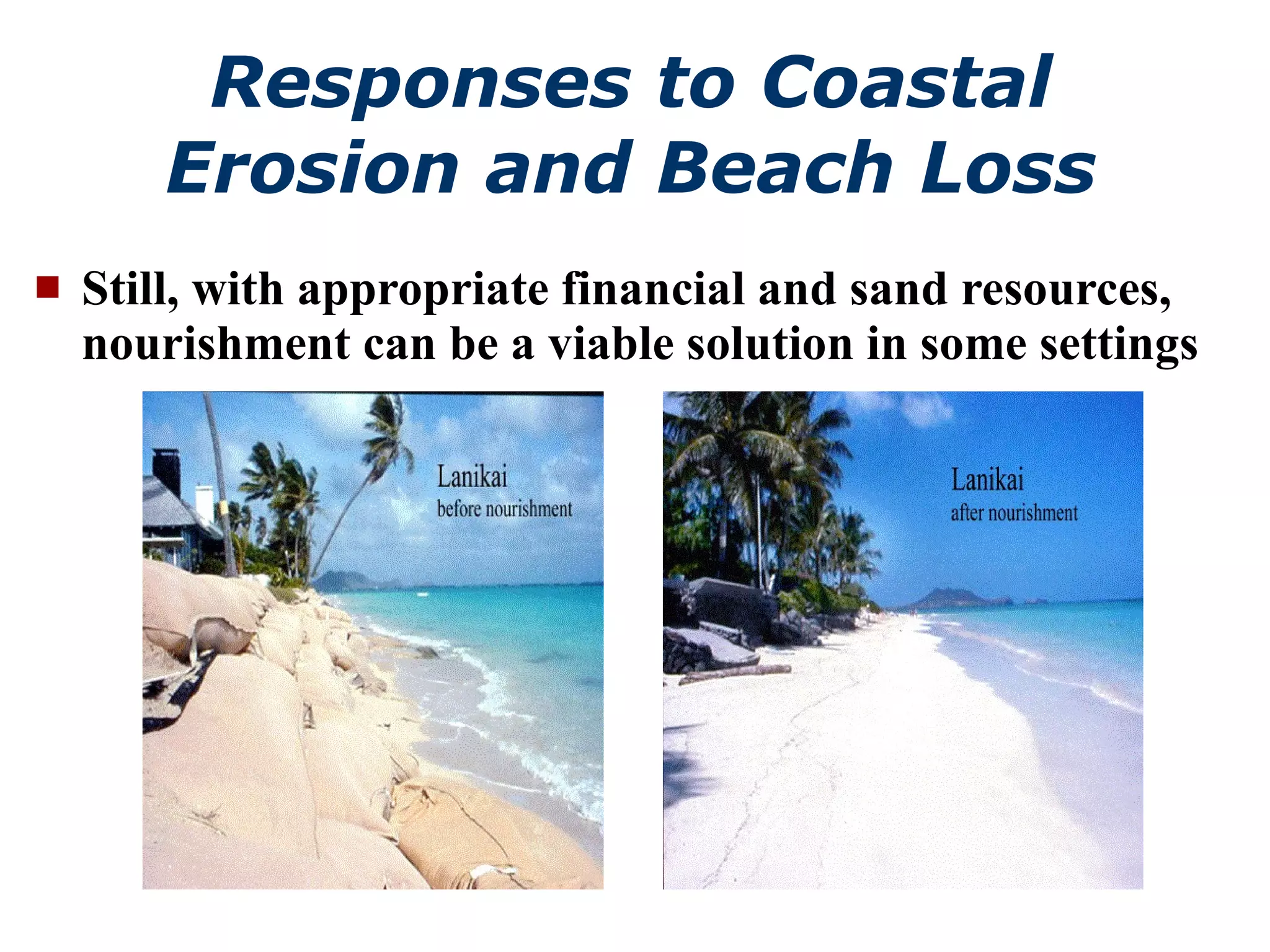
Responses to Coastal Erosion and Beach Loss Still, with appropriate financial and sand resources, nourishment can be a viable solution in some settings
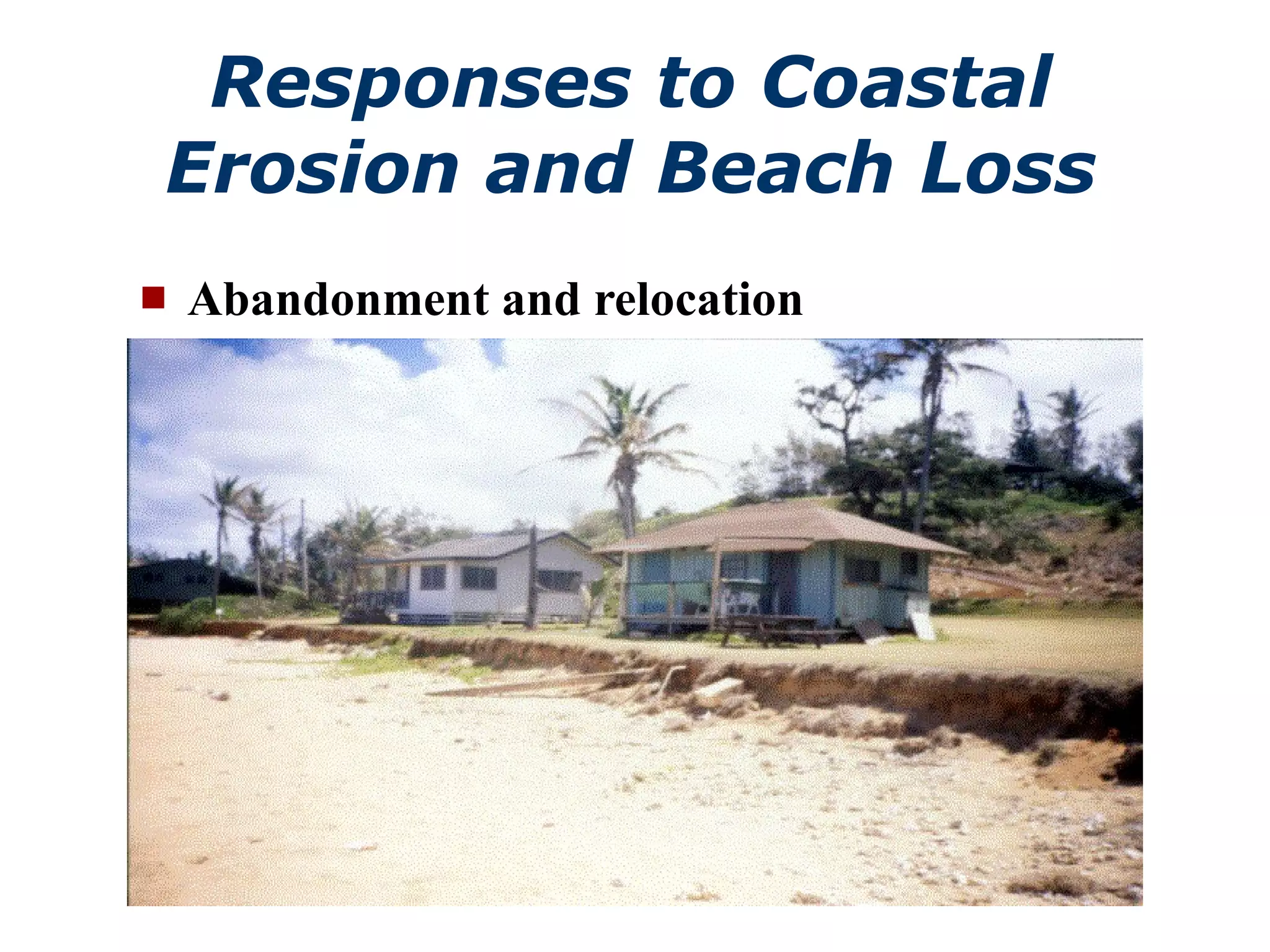
Responses to Coastal Erosion and Beach Loss Abandonment and relocation
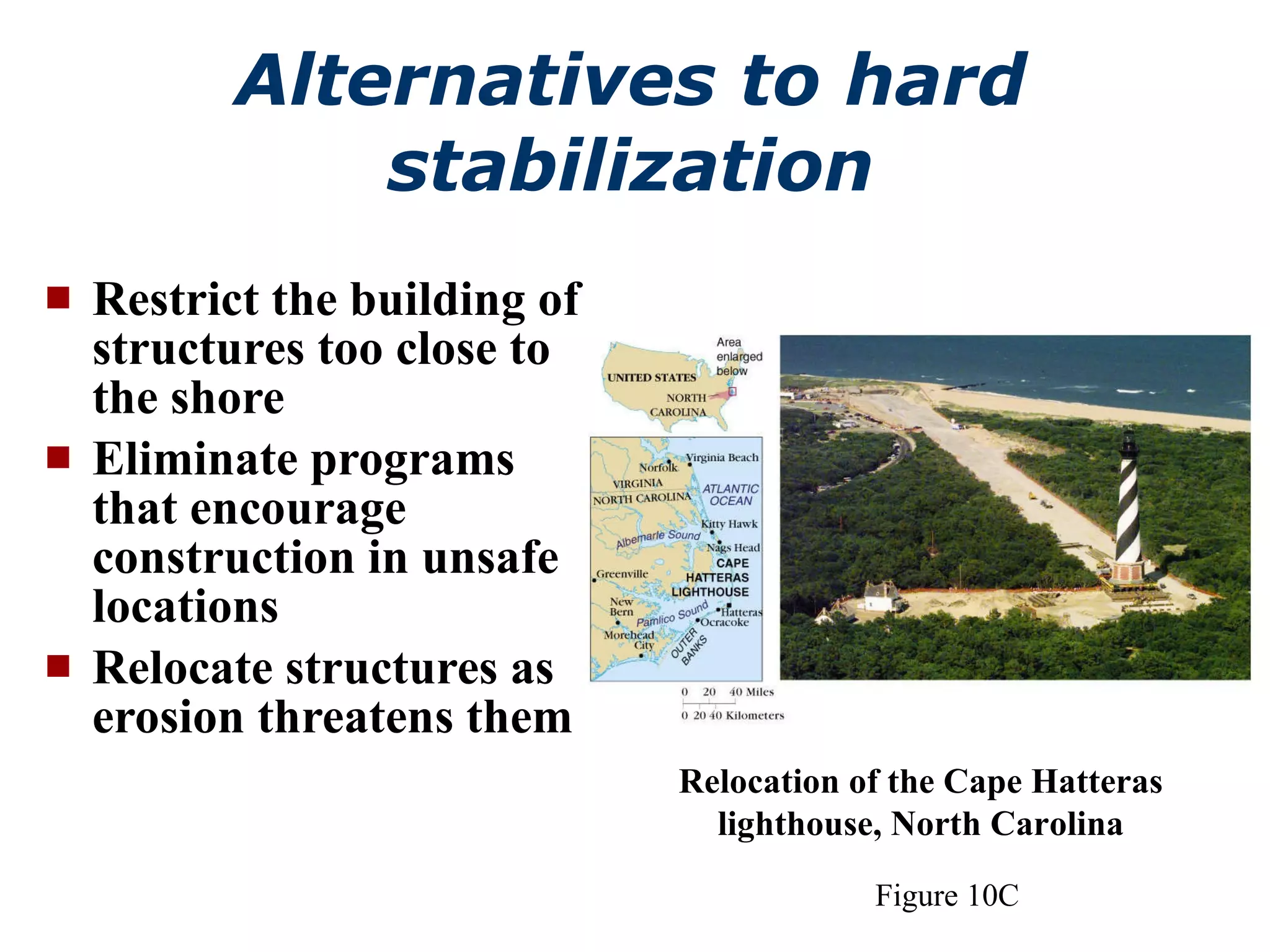
Alternatives to hard stabilization Restrict the building of structures too close to the shore Eliminate programs that encourage construction in unsafe locations Relocate structures as erosion threatens them  Figure 10C Relocation of the Cape Hatteras lighthouse, North Carolina
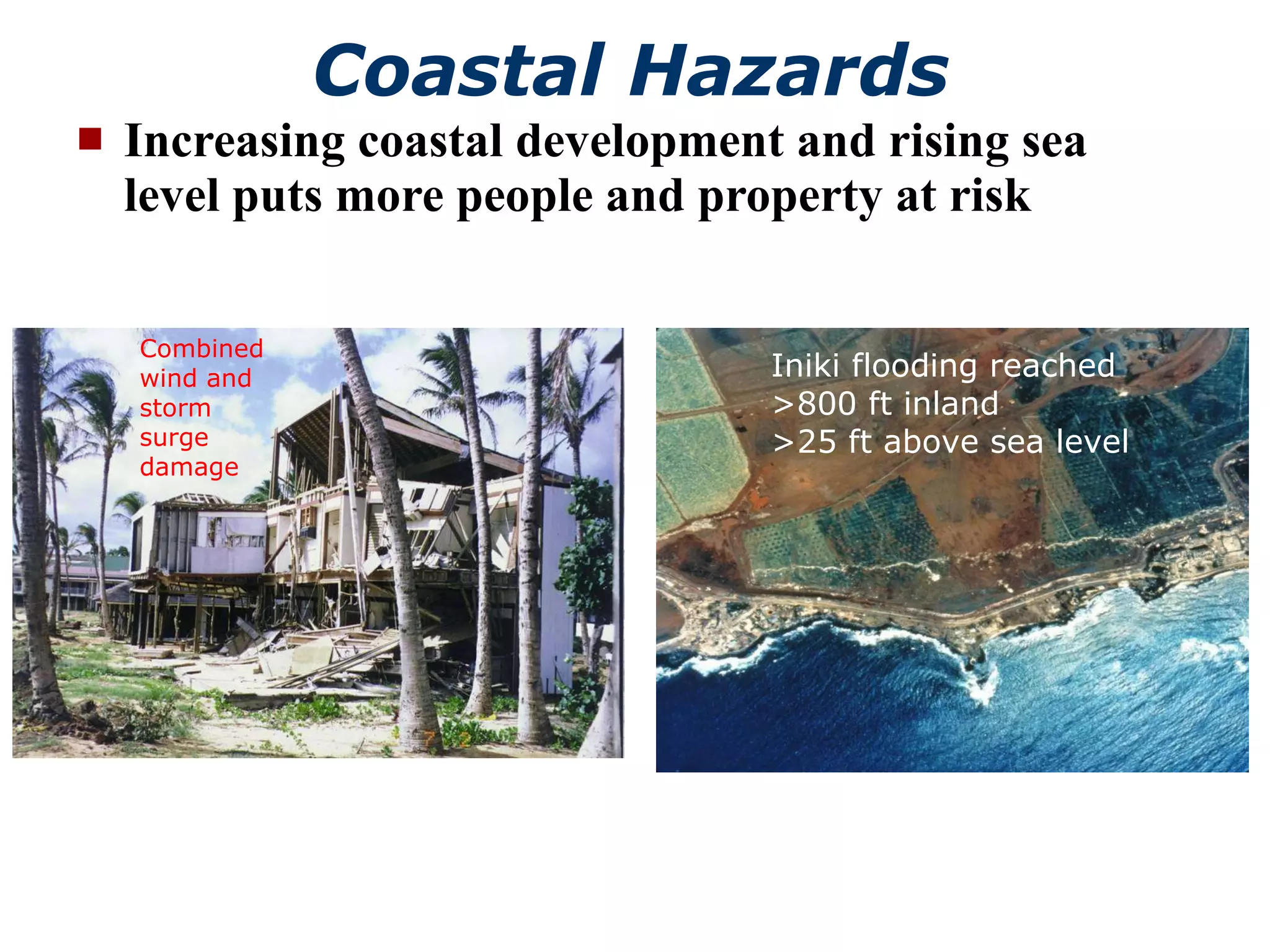
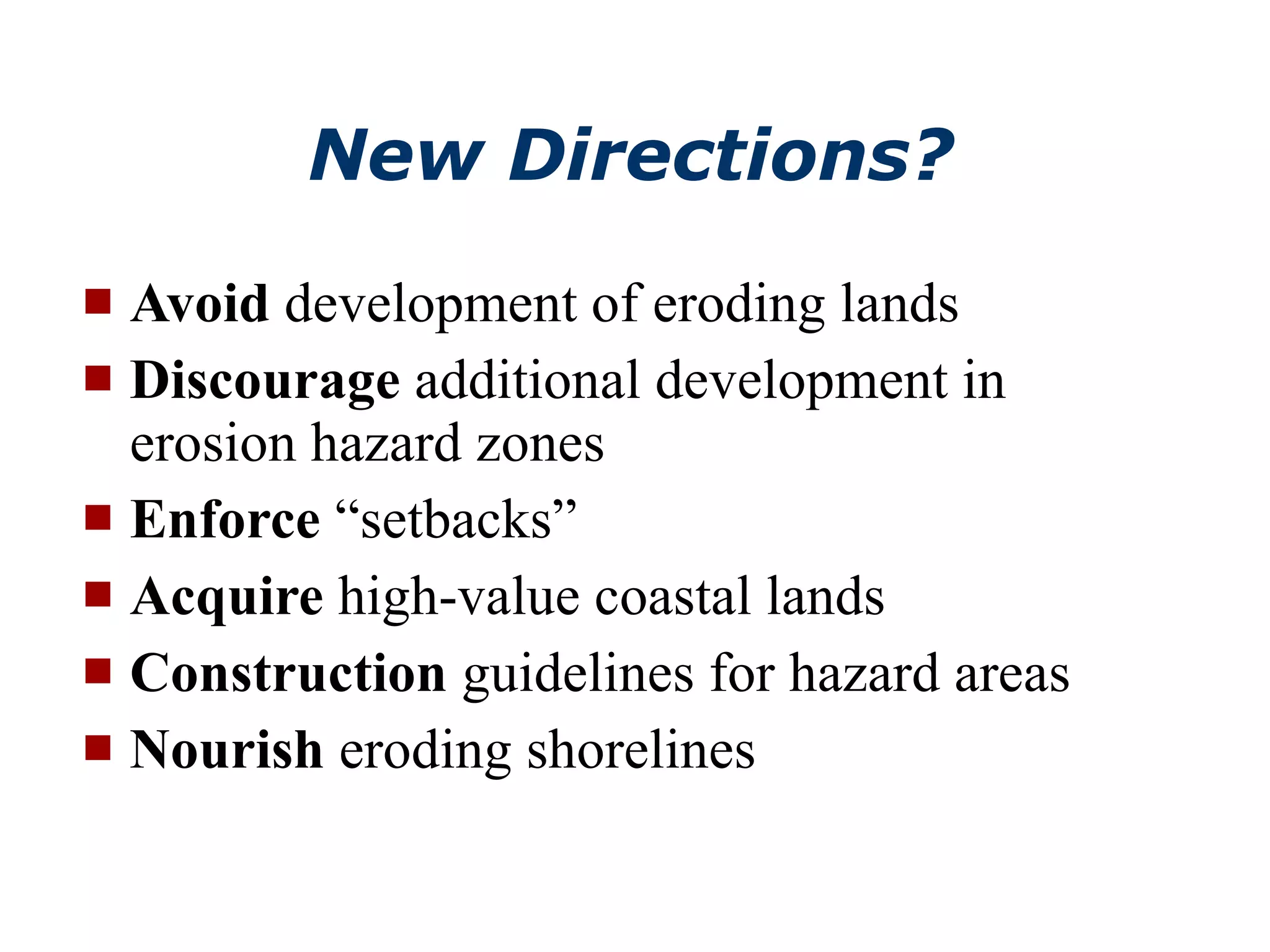
Coastal Hazards Increasing coastal development and rising sea level puts more people and property at risk Combined wind and storm surge damage Iniki flooding reached >800 ft inland >25 ft above sea level
New Directions? Avoid  development of eroding lands Discourage  additional development in erosion hazard zones Enforce  “setbacks” Acquire  high-value coastal lands Construction  guidelines for hazard areas Nourish  eroding shorelines Natural resources  are those that are derived from the Earth and that exist independent of human activity - Cutter and Renwick, 2004
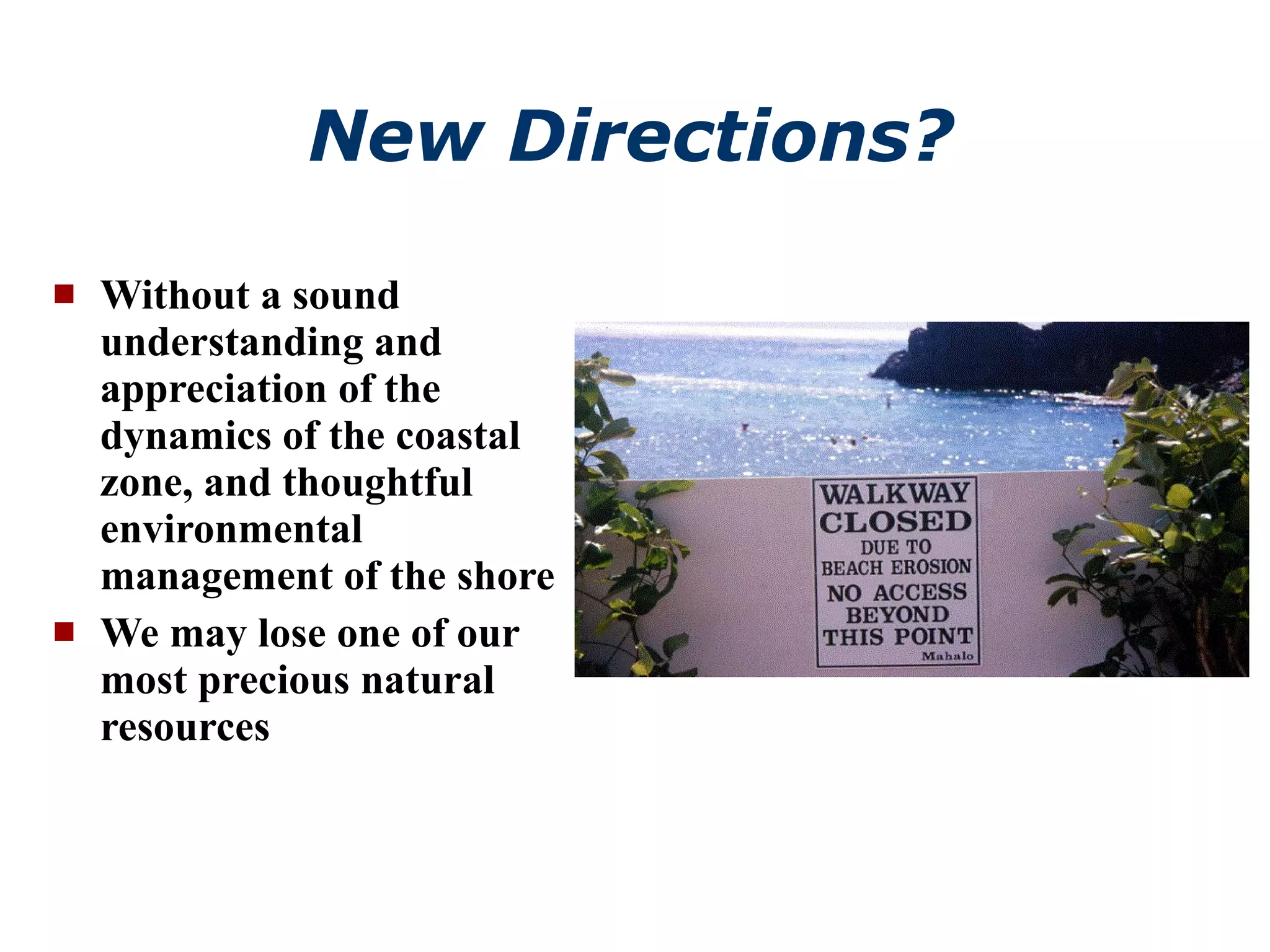
New Directions? Without a sound understanding and appreciation of the dynamics of the coastal zone, and thoughtful environmental management of the shore We may lose one of our most precious natural resources

Coastal processes

  • 1.
  • 2.
    Coastal Settings Opencoasts can be divided into two general categories based on the dominant processes acting on the coast over long periods of time (1000’s of years or more) Erosional Shorelines dominated by processes that form erosional features along the shore Typically high-relief rocky coasts in tectonically active areas (e.g., the Pacific coast of North America) Typically high-relief rocky coasts Depositional Shorelines dominated by processes that form deposits along the shore Include a wide spectrum of environments Deltas, barrier islands, reef coasts, glaciated coasts, etc. More typical of passive, or trailing-edge, continental margins (e.g., the Atlantic coast of North America)
  • 3.
    Features of erosionalcoasts 11.4-Thurman and Trujillo, 2004
  • 4.
    Features of erosionalcoasts Cabo Rojo, PR Sea arch Wave-cut cliff
  • 5.
    Features of depositionalcoasts 11.7-Thurman and Trujillo, 2004
  • 6.
    Features of depositionalcoasts 21, 25-RPI Barrier islands along the South Carolina coast
  • 7.
    A wave moving onto the shore 20.5-Tarbuck & Lutgens, 2005
  • 8.
  • 9.
    Wave erosion Breakingwaves exert a great force Wave erosion is caused by Wave impact and pressure Abrasion by rock fragments
  • 10.
    Wave erosion 20.6,20.7-Tarbuck & Lutgens, 2005
  • 11.
    Wave refraction Wave refraction Bending of a wave Causes waves to arrive nearly parallel to the shore Consequences of wave refraction Wave energy is concentrated against the sides and ends of headlands Wave energy is spread out in bays and wave attack is weakened Over time, wave erosion straightens an irregular shoreline
  • 12.
    Wave energy focusedon headland Wave energy dispersed over bay Wave refraction 9.19b-Thurman and Trujillo, 2004
  • 13.
  • 14.
  • 15.
    10.20b-Garrison, 2005 Waverefraction, Maili Point, Oahu
  • 16.
    Movement parallel tothe ( ↔ ) shoreline Caused by wave refraction Along most shorelines, waves strike the shore at an angle Waves that reach the shoreline at an angle cause the sediment to move along a beach in a zigzag pattern called beach drift Sediment movement on the shore
  • 17.
    Sediment movement on the shore Movement parallel to the ( ↔ ) shoreline Oblique waves also produce longshore currents Currents in the surf zone Flow parallel to the coast Easily moves fine suspended sand and rolls larger sand and gravel along the bottom
  • 18.
    Movement of sandby longshore current 20.10-Tarbuck & Lutgens, 2005
  • 19.
    Sediment movement alonga beach 11.19-Segar, 2007
  • 20.
    Beach Drift andLongshore Currents
  • 21.
    Movement perpendicular (↕ ) to the shoreline Caused by breaking waves Swash ( ↑ ) Backwash ( ↓ ) Sediment movement on the shore
  • 22.
    Swash ->← Backwash Domes beach, Rincón, PR
  • 23.
  • 24.
  • 25.
  • 26.
    Seasonal variation inbeach profile 11.19-Segar, 2007
  • 27.
    Barrier Systems SandyPoint, Cape Romain, South Carolina 38-RPI
  • 28.
    Barrier Systems Thinstrips of land built a few to several tens of meters above sea level Form due to the combined action of wind, waves, and longshore currents Act as a barrier – protect mainland coast from open-ocean wave energy, storm surge, etc. Protected environments form behind barriers – bays, lagoons, marshes, tidal creeks
  • 29.
    Barrier Systems Mostcommon along passive margins Economically important Vulnerable to storms, rising sea level, erosion One of the major forces impacting barriers today, as well as in the past, is rising sea level
  • 30.
    11.9c-Thurman and Trujillo,2004 Heavily developed barrier islands Tom’s River, New Jersey Barrier islands north of Charleston, SC 21-RPI
  • 31.
    Chesapeake Bay –a drowned river valley Pamlico Sound – a bar-built estuary 12.5-Garrison, 2005
  • 32.
    Coastal Erosion andBeach Loss Coastal erosion is a natural process that redistributes sediments along coasts Coastal erosion becomes a problem when coastal development impedes or ignores the natural movement of sediment along the shore This problem is exacerbated by continued sea level rise
  • 33.
    Coastal erosion isa natural process North Island, SC 32-RPI
  • 34.
    Figure 20.16 Waveerosion caused by strong storms, Long Island, New York Coastal development makes erosion a problem
  • 35.
    Sea-level rise makesthe problem worse Studies show a 150x erosion multiplier for sea level rise on sandy shorelines. Hence, for a mean 0.24 m rise by 2050, beaches will recede 36 m (118 ft). ( Leatherman et al., 2000)
  • 36.
    Stabilizing the shoreShoreline erosion is influenced by several local factors including Proximity to sediment-laden rivers Degree of tectonic activity Topography and composition of the land Prevailing wind and weather patterns Configuration of the coastline and nearshore areas
  • 37.
    Stabilizing the shoreThree basic responses to erosion problems Building structures (Hard stabilization) Beach nourishment Relocation
  • 38.
    Stabilizing the shoreHard stabilization perpendicular to the shore Jetties Usually built in pairs to develop and maintain harbors Extend into the ocean at the entrances to rivers and harbors
  • 39.
    Jetties are builtto prevent deposition Figure 20.17
  • 40.
    Stabilizing the shoreHard stabilization perpendicular to the shore Groins Built to maintain or widen beaches Constructed at a right angle to the beach to trap sand Because of increased erosion on the downdrift side of the groin, additional groins may be built resulting in a groin field
  • 41.
    11.20-Thurman and Trujillo,2004 Interference of sand movement Hard stabilization like the groin shown here interferes with the movement of sand along the beach, causing deposition of sand upstream of the groin and erosion immediately downstream, modifying the shape of the beach.
  • 42.
    Figure 20.18 Groinsalong the New Jersey Shore at Cape May Longshore transport
  • 43.
    Jetties and GroinsJetties are always in pairs Groins can be singular or many (groin field) Both trap sand upstream and cause erosion downstream 11.22-Thurman and Trujillo, 2004
  • 44.
    Stabilizing the shoreHard stabilization parallel to the shore Breakwater Barrier built offshore and parallel to the coast Protects boats from the force of large breaking waves
  • 45.
    Groins and Breakwaters11.7-Jones and Jones, 2003
  • 46.
  • 47.
  • 48.
    Stabilizing the shoreHard stabilization parallel to the shore Seawall Barrier parallel to shore and close to the beach to protect property Stops waves from reaching the beach areas behind the wall Often the building of structures is not an effective means of protection
  • 49.
    Seawalls and beachesSeawalls are built to reduce erosion on beaches Seawalls can destroy recreational beaches Seawalls are costly and eventually fail 11.25-Thurman and Trujillo, 2004
  • 50.
    Seawalls are designedto protect beachfront property from erosion 13.21-Segar, 2007
  • 51.
    Figure 20.20 Seawallin Seabright, New Jersey Where’s the beach?
  • 52.
    Wine Island? 10.26-Merrittset al., 1998 Seawalls can’t compete with sea-level rise
  • 53.
    Responses to CoastalErosion and Beach Loss Hard stabilization “ Armoring” the shoreline
  • 54.
    Responses to CoastalErosion and Beach Loss Hard stabilization “ Armoring” the shoreline
  • 55.
    Responses to CoastalErosion and Beach Loss
  • 56.
    USGS Illegal extractionof beach sand is one of the major causes of coastal erosion in Puerto Rico
  • 57.
    Morelock et al.Illegal extraction of beach sand is one of the major causes of coastal erosion in Puerto Rico
  • 58.
    Stabilizing the shoreAlternatives to Hard Stabilization Beach nourishment The addition of large quantities of sand to the beach system Only an economically viable long-range solution in a few areas Abandonment and relocation of buildings away from the beach
  • 59.
    Responses to CoastalErosion and Beach Loss Beach nourishment Wrightsville Beach, NC 10.24-Merritts et al., 1998
  • 60.
    Figure 20.21 Beachnourishment, Miami Beach
  • 61.
    USGS Locations ofthree submerged sand deposit areas on the insular shelf of Puerto Rico Aerial photograph of the Escollo de Arenas, a subtidal sand and gravel deposit that extends some 6 kilometers north-northwestward of Punta Arenas on the northwest coast of Vieques Island, east of Puerto Rico.
  • 62.
    Responses to CoastalErosion and Beach Loss Caveats of beach nourishment Not permanent solution Expensive Need appropriate sand source
  • 63.
    Responses to CoastalErosion and Beach Loss Still, with appropriate financial and sand resources, nourishment can be a viable solution in some settings
  • 64.
    Responses to CoastalErosion and Beach Loss Abandonment and relocation
  • 65.
    Alternatives to hardstabilization Restrict the building of structures too close to the shore Eliminate programs that encourage construction in unsafe locations Relocate structures as erosion threatens them Figure 10C Relocation of the Cape Hatteras lighthouse, North Carolina
  • 66.
    Coastal Hazards Increasingcoastal development and rising sea level puts more people and property at risk Combined wind and storm surge damage Iniki flooding reached >800 ft inland >25 ft above sea level
  • 67.
    New Directions? Avoid development of eroding lands Discourage additional development in erosion hazard zones Enforce “setbacks” Acquire high-value coastal lands Construction guidelines for hazard areas Nourish eroding shorelines Natural resources are those that are derived from the Earth and that exist independent of human activity - Cutter and Renwick, 2004
  • 68.
    New Directions? Withouta sound understanding and appreciation of the dynamics of the coastal zone, and thoughtful environmental management of the shore We may lose one of our most precious natural resources

Editor's Notes

  • #14 To view this animation, click “View” and then “Slide Show” on the top navigation bar.
  • #15 To view this animation, click “View” and then “Slide Show” on the top navigation bar.
  • #20 FIGURE 13.15 ( p. 354) Water moves up a beach face at an angle with the wave direction but returns directly down the beach slope. Sand picked up by the incoming wave is washed up the beach and is returned seaward a small distance further down the beach in the direction of the waves. Successive waves move sand progressively along the beach—a process known as “longshore drift” or “littoral drift.”
  • #21 To view this animation, click "View" and then "Slide Show" on the top navigation bar.
  • #27 FIGURE 13.18 ( p. 357) Seasonal variation in beach profile. (a) During summer, when waves are relatively gentle, the beach profile is steep, and one or more summer berms form immediately above the high-tide line. (b) Winter or storm waves, especially when combined with storm surges, reach farther up the beach and erode sand from the berm, moving the sand seaward to form one or more offshore bars. The result is a narrower flat-beach foreshore that is cut back to dunes or a winter berm left from periodic extreme winter storms. (c) When storm waves cease, the gentler waves return sand from the offshore bar to the beach, rebuilding its summer profile. If storms are strong in a particular winter, the beach may recede inland, and dunes may be somewhat lowered.
  • #48 To view this animation, click "View" and then "Slide Show" on the top navigation bar.
  • #51 FIGURE 13.21 ( p. 361) Seawalls are designed to protect beachfront property from erosion. (a) The Galveston seawall was constructed after the destructive hurricane of 1900. Since the wall was completed in 1962, the beach has eroded along much of its length, leaving the shoreline more exposed to attack by the highest waves of future hurricanes. (b) The barrier island has continued to retreat since the Galveston seawall was constructed. The beach just beyond the end of the wall has now retreated substantially farther shoreward than the wall’s location as a result of the natural process of barrier island retreat and the consequent reduction in the amount of sand in the littoral drift system that occurred once the beach had been eroded away in front of the wall. (c) Seawalls are undermined from the sides and eventually destroyed as sea level rises. CREDIT: (a-b) © D. Segar and E. Stamman Segar.