Coasts AS Geography
The Coast is the narrow zone where the land overlaps the sea and interacts It is affected by Terrestrial, Human, marine and Atmospheric processes and their relationships. It is the most varied and rapidly changing of all landforms and ecosystems.
The Importance of Coastal Environments The Coastal zone is an  interface  between the sea and the land. Where the marine and terrestrial processes combine to produce a variety of changing landforms. Coasts suffer from rapid erosion and flooding thus can threaten lives and property. Changes to coastlines are both short term (e.g. Storms) and long term (Rising sea levels)
Coastal ecosystems are coming under constant pressure from human activities e.g. (Sand dunes and coral reefs) Over half the world’s population live within 60km of the sea. Two thirds of our largest cities are within 60km of the sea. There is constant competition for it’s natural resources. Coastal management is becoming a major issue Human intervention has lead to unexpected impacts With human development and global warming demands will increase so need for management, particularly sustainable management strategies are needed.
DIFFERENT TYPES OF COASTAL ZONES:
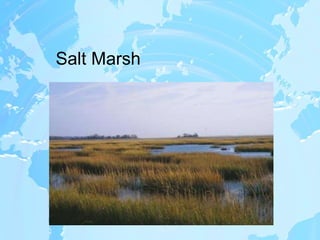
Salt Marsh
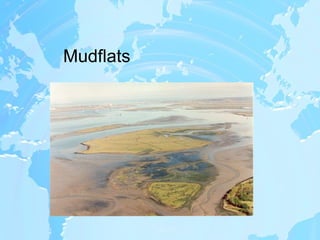
Mudflats
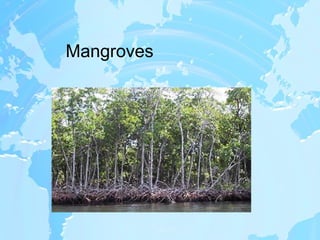
Mangroves
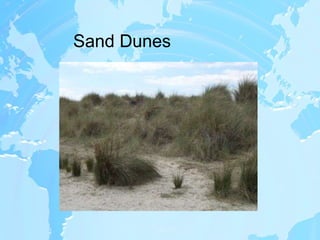
Sand Dunes
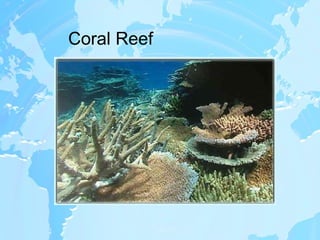
Coral Reef
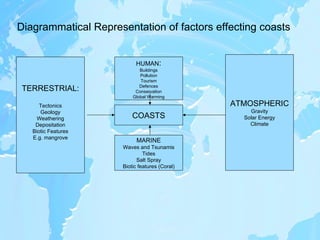
Diagrammatical Representation of factors effecting coasts TERRESTRIAL: Tectonics Geology Weathering Depositation Biotic Features E.g. mangrove ATMOSPHERIC Gravity Solar Energy Climate HUMAN : Buildings Pollution Tourism Defences Conservation Global Warming MARINE Waves and Tsunamis Tides Salt Spray Biotic features (Coral) COASTS
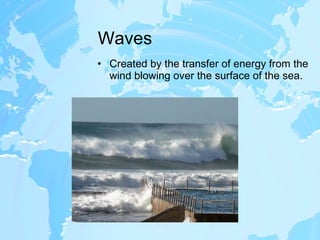
Waves Created by the transfer of energy from the wind blowing over the surface of the sea.
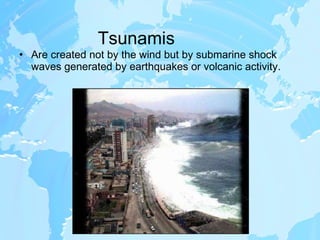
Tsunamis Are created not by the wind but by submarine shock waves generated by earthquakes or volcanic activity.
With waves the greater the wind the greater the  frictional drag  and therefore the size of wave Those that travel short distances and are the result of local waves are seen as  sea  waves Those   that are formed from distant storms and travel large distances are known as  swell .
Wave Energy Wind velocity Period of time the wind has blown Length of the  fetch
Exercise 1. On a map of the UK find areas which have the biggest  fetch
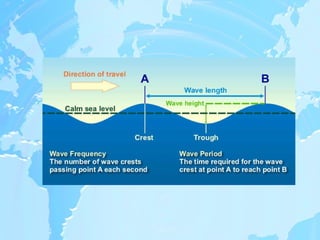
Wave terminology CREST  HEIGHT TROUGH WAVE PERIOD VELOCITY STEEPNESS ENERGY SWELL
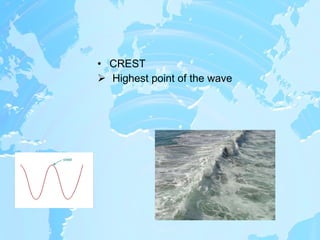
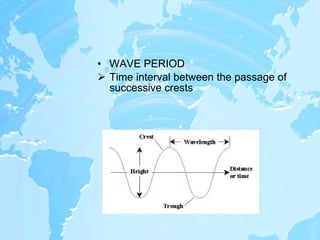
CREST  Highest point of the wave
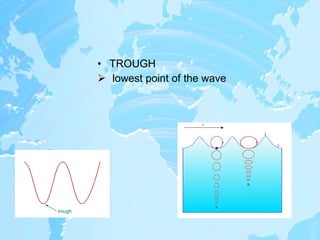
TROUGH  lowest point of the wave
WAVE PERIOD  Time interval between the passage of successive crests
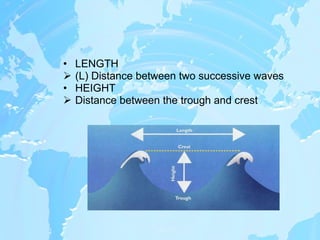
LENGTH  (L) Distance between two successive waves HEIGHT Distance between the trough and crest
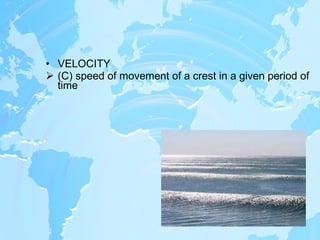
VELOCITY  (C) speed of movement of a crest in a given period of time
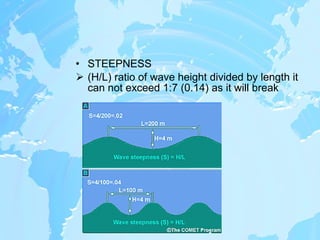
STEEPNESS  (H/L) ratio of wave height divided by length it can not exceed 1:7 (0.14) as it will break
ENERGY  (E) expressed as E~ (Is proportional to) LH2
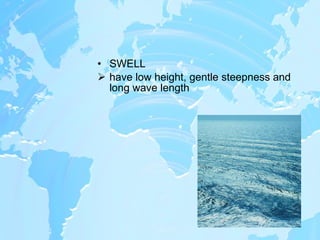
SWELL  have low height, gentle steepness and long wave length
 
Waves in Deep Water Determined where the depth of water is greater than half the wave length (D = >  L ) 4
Waves in Shallow Water Depth is less than half the wavelength D = <  L ) 2 Plunge line  is where the depth of water and the height are virtually equally  and the wave breaks Body of foaming water that runs up the beach is known as the SWASH Body of water that runs back to the sea is the BACKWASH
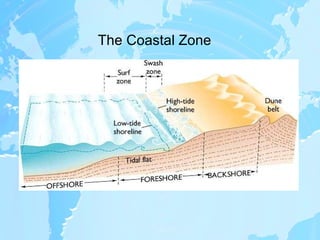
The Coastal Zone
Wave Video
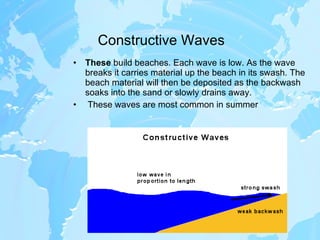
Constructive Waves These  build beaches. Each wave is low. As the wave breaks it carries material up the beach in its swash. The beach material will then be deposited as the backwash soaks into the sand or slowly drains away. These waves are most common in summer
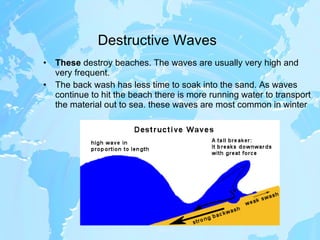
Destructive Waves These  destroy beaches. The waves are usually very high and very frequent.  The back wash has less time to soak into the sand. As waves continue to hit the beach there is more running water to transport the material out to sea. these waves are most common in winter
Exercise Complete activity 1 on page 82

Coasts Introduction

  • 1.
  • 2.
    The Coast isthe narrow zone where the land overlaps the sea and interacts It is affected by Terrestrial, Human, marine and Atmospheric processes and their relationships. It is the most varied and rapidly changing of all landforms and ecosystems.
  • 3.
    The Importance ofCoastal Environments The Coastal zone is an interface between the sea and the land. Where the marine and terrestrial processes combine to produce a variety of changing landforms. Coasts suffer from rapid erosion and flooding thus can threaten lives and property. Changes to coastlines are both short term (e.g. Storms) and long term (Rising sea levels)
  • 4.
    Coastal ecosystems arecoming under constant pressure from human activities e.g. (Sand dunes and coral reefs) Over half the world’s population live within 60km of the sea. Two thirds of our largest cities are within 60km of the sea. There is constant competition for it’s natural resources. Coastal management is becoming a major issue Human intervention has lead to unexpected impacts With human development and global warming demands will increase so need for management, particularly sustainable management strategies are needed.
  • 5.
    DIFFERENT TYPES OFCOASTAL ZONES:
  • 6.
  • 7.
  • 8.
  • 9.
  • 10.
  • 11.
    Diagrammatical Representation offactors effecting coasts TERRESTRIAL: Tectonics Geology Weathering Depositation Biotic Features E.g. mangrove ATMOSPHERIC Gravity Solar Energy Climate HUMAN : Buildings Pollution Tourism Defences Conservation Global Warming MARINE Waves and Tsunamis Tides Salt Spray Biotic features (Coral) COASTS
  • 12.
    Waves Created bythe transfer of energy from the wind blowing over the surface of the sea.
  • 13.
    Tsunamis Are creatednot by the wind but by submarine shock waves generated by earthquakes or volcanic activity.
  • 14.
    With waves thegreater the wind the greater the frictional drag and therefore the size of wave Those that travel short distances and are the result of local waves are seen as sea waves Those that are formed from distant storms and travel large distances are known as swell .
  • 15.
    Wave Energy Windvelocity Period of time the wind has blown Length of the fetch
  • 16.
    Exercise 1. Ona map of the UK find areas which have the biggest fetch
  • 17.
    Wave terminology CREST HEIGHT TROUGH WAVE PERIOD VELOCITY STEEPNESS ENERGY SWELL
  • 18.
    CREST Highestpoint of the wave
  • 19.
    TROUGH lowestpoint of the wave
  • 20.
    WAVE PERIOD Time interval between the passage of successive crests
  • 21.
    LENGTH (L)Distance between two successive waves HEIGHT Distance between the trough and crest
  • 22.
    VELOCITY (C)speed of movement of a crest in a given period of time
  • 23.
    STEEPNESS (H/L)ratio of wave height divided by length it can not exceed 1:7 (0.14) as it will break
  • 24.
    ENERGY (E)expressed as E~ (Is proportional to) LH2
  • 25.
    SWELL havelow height, gentle steepness and long wave length
  • 26.
  • 27.
    Waves in DeepWater Determined where the depth of water is greater than half the wave length (D = > L ) 4
  • 28.
    Waves in ShallowWater Depth is less than half the wavelength D = < L ) 2 Plunge line is where the depth of water and the height are virtually equally and the wave breaks Body of foaming water that runs up the beach is known as the SWASH Body of water that runs back to the sea is the BACKWASH
  • 29.
  • 30.
  • 31.
    Constructive Waves These build beaches. Each wave is low. As the wave breaks it carries material up the beach in its swash. The beach material will then be deposited as the backwash soaks into the sand or slowly drains away. These waves are most common in summer
  • 32.
    Destructive Waves These destroy beaches. The waves are usually very high and very frequent. The back wash has less time to soak into the sand. As waves continue to hit the beach there is more running water to transport the material out to sea. these waves are most common in winter
  • 33.