Coastal Erosion And Mechanism
contents
• Terminologies
• Coastal affecting agents
• Coastal mechanism
• Erosional landforms of ocean
• Long shore drift
• Depositional landforms of ocean
• Effects of coastal erosion
• Conclusion
• References
Terminologies
• shoreline – It is the
line along which the
water meets the land.
• Coast – The area
extending from the
landward backshore
boundary to the limit
of ocean-related
features like dunes.
Emergent and Submergent Coasts
• Emergent coast – coastline rises relative to sea
level as a consequence of sea level decline or
land uplift
• Submergent coast – coastline is lowered
(covered by water) relative to sea level as a
consequence of sea level increase or land
subsidence
• Global warming and cooling and plate tectonic
motion can obviously affect long-term sea
levels.
Coastal Affecting Agents
• Wind: The movement of air is called wind.
• Wave: Waves are the result of the wind blowing
over the sea. As they approach land they break.
• Tide: periodic, rhythmic rise and fall of water
along coastlines due to the gravitational tug of
the Sun and Moon on the Earth.
• Currents: unidirectional flow of water and energy
caused by wind, water density differences and
water temperature differences.
The bottom of the wave touches the sand and slows down
due to increased friction. The top of the wave becomes
higher and steeper until it topples over.
Why do waves break?
Types of waves
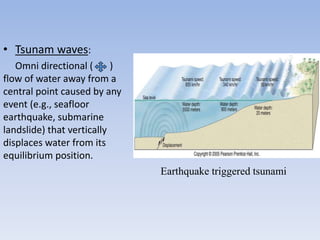
• Tsunam waves:
Omni directional ( )
flow of water away from a
central point caused by any
event (e.g., seafloor
earthquake, submarine
landslide) that vertically
displaces water from its
equilibrium position.
Earthquake triggered tsunami
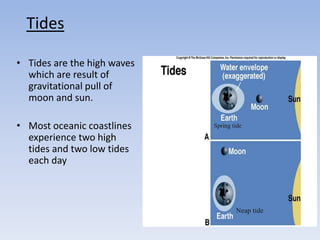
Tides
• Tides are the high waves
which are result of
gravitational pull of
moon and sun.
• Most oceanic coastlines
experience two high
tides and two low tides
each day
Spring tide
Neap tide
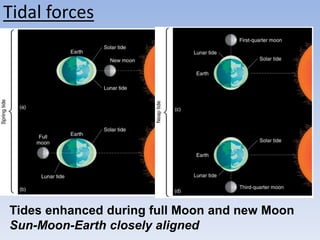
Tidal forces
Tides enhanced during full Moon and new Moon
Sun-Moon-Earth closely aligned
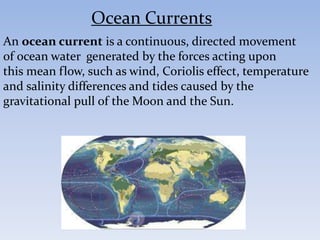
An ocean current is a continuous, directed movement
of ocean water generated by the forces acting upon
this mean flow, such as wind, Coriolis effect, temperature
and salinity differences and tides caused by the
gravitational pull of the Moon and the Sun.
Ocean Currents
• Coastal processes are the set of mechanisms that
operate along a coastline, bringing about various
combinations of erosion and deposition.
• The land water interface along the coastline is always
in a highly dynamic state and nature works towards
maintaining an equilibrium condition.
Coastal processes
Coastal Mechanism
• Coastal erosion
• Longshore drift
• Coastal deposition
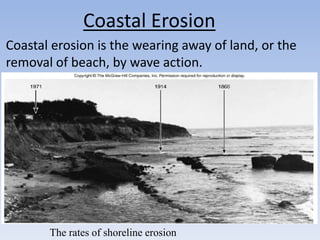
Coastal erosion is the wearing away of land, or the
removal of beach, by wave action.
Coastal Erosion
The rates of shoreline erosion
Processes of erosion
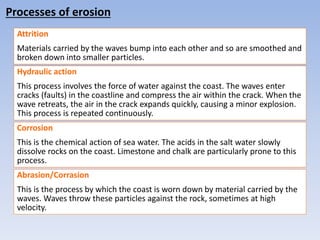
Attrition
Materials carried by the waves bump into each other and so are smoothed and
broken down into smaller particles.
Abrasion/Corrasion
This is the process by which the coast is worn down by material carried by the
waves. Waves throw these particles against the rock, sometimes at high
velocity.
Hydraulic action
This process involves the force of water against the coast. The waves enter
cracks (faults) in the coastline and compress the air within the crack. When the
wave retreats, the air in the crack expands quickly, causing a minor explosion.
This process is repeated continuously.
Corrosion
This is the chemical action of sea water. The acids in the salt water slowly
dissolve rocks on the coast. Limestone and chalk are particularly prone to this
process.
Processes of erosion
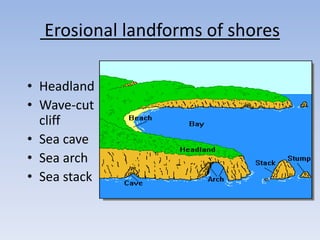
Erosional landforms of shores
• Headland
• Wave-cut
cliff
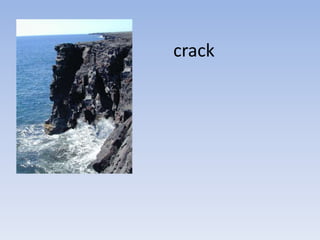
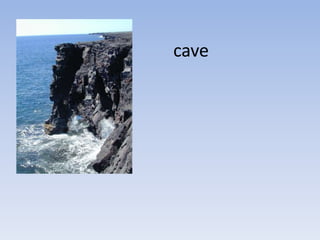
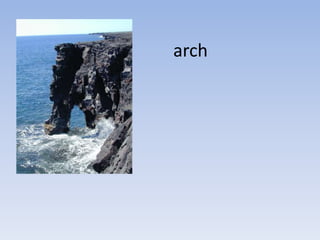
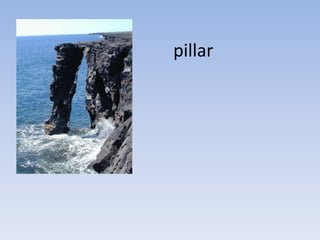
• Sea cave
• Sea arch
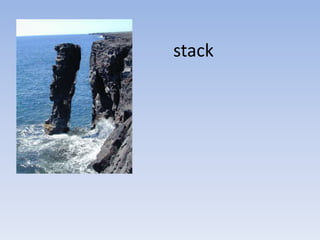
• Sea stack
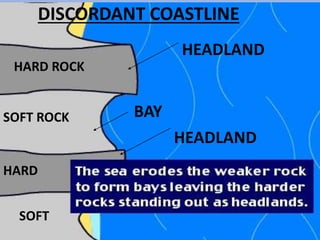
HARD ROCK
HARD
SOFT ROCK
SOFT
HEADLAND
HEADLAND
BAY
DISCORDANT COASTLINE
Tom Abbott, Biddulph High School and
made available through
www.sln.org.uk/geography and only for
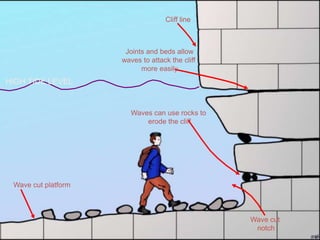
Joints and beds allow
waves to attack the cliff
more easily
Waves can use rocks to
erode the cliff
Wave cut platform
Wave cut
notch
Cliff line
HIGH TIDE LEVEL
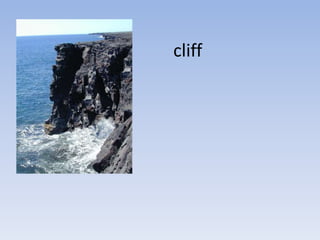
cliff
crack
cave
arch
pillar
stack
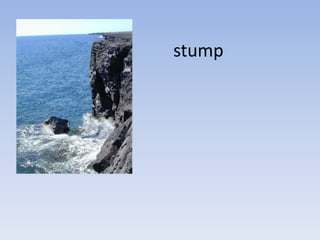
stump
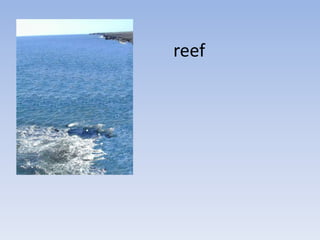
reef
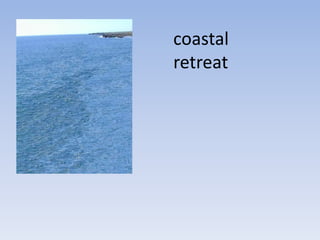
coastal
retreat
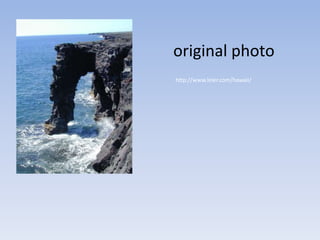
original photo
http://www.leler.com/hawaii/
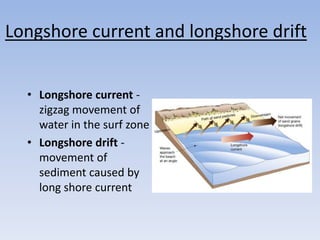
Longshore current and longshore drift
• Longshore current -
zigzag movement of
water in the surf zone
• Longshore drift -
movement of
sediment caused by
long shore current
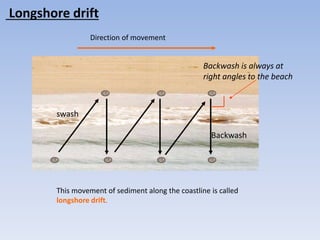
This movement of sediment along the coastline is called
longshore drift.
Direction of movement
swash
Backwash
Backwash is always at
right angles to the beach
Longshore drift
Tom Abbott, Biddulph High School and
made available through
www.sln.org.uk/geography and only for
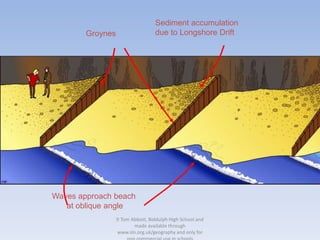
Groynes
Sediment accumulation
due to Longshore Drift
Waves approach beach
at oblique angle
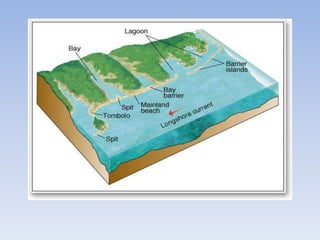
Depositional landforms of ocean
• Beach
• Spit
• Bay
• Tombolo
• Barrier island
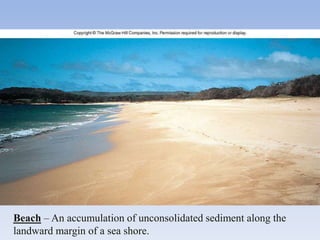
Beach – An accumulation of unconsolidated sediment along the
landward margin of a sea shore.
How are beaches formed?
Beaches form in sheltered environments, such as bays. When the
swash is stronger than the backwash, deposition occurs.
Sometimes sand from offshore bars can be blown onto the shore
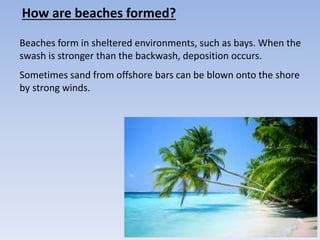
by strong winds.
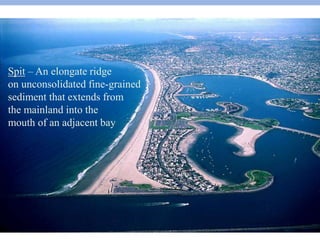
Spit – An elongate ridge
on unconsolidated fine-grained
sediment that extends from
the mainland into the
mouth of an adjacent bay
If a spit joins one part of the mainland to another it is
called a bar.
A lagoon is a body of water behind the barrier
What is bar?
A lagoon is a body of water
behind the barrier
A lagoon is a body of water
behind the barrier
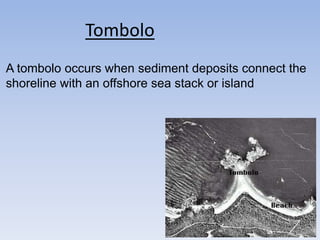
Tombolo
A tombolo occurs when sediment deposits connect the
shoreline with an offshore sea stack or island
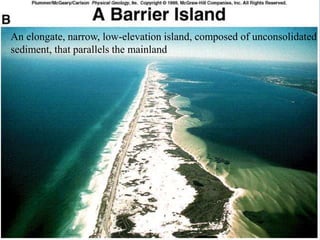
An elongate, narrow, low-elevation island, composed of unconsolidated
sediment, that parallels the mainland
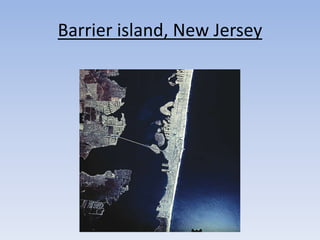
Barrier island, New Jersey
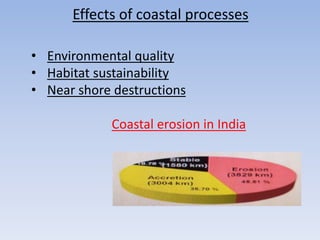
Effects of coastal processes
• Environmental quality
• Habitat sustainability
• Near shore destructions
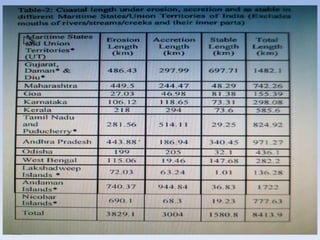
Coastal erosion in India
conclusion
• Coastal processes are dynamic and highly unpredictable.
• Coastal affecting agents are wind , waves , tides , currents
etc.,
• Major coastal erosional landforms are head lands, wave cut
cliff, sea-caves, arch, stacks etc.,
• Major depositional landforms are –beaches, spills, bars,
tombolo, barrier islands etc.,
• It Is very crucial to understand the near shore physical
system, the consequent impact on sediment dynamics , and
the coastline’s response to it.
• Proper mitigation methods should be implemented in order
to reduce coastal erosion.
References
Books
• Parbin Sing,Engineering & General Geology, S.K.Kataria &
Sons.
• K M Bangar, Principals of Engineering Geology,publisher ,
Standard publisher distributers.
• Dimitri P krynine,William R judd, principles of Engineering
Geology and Geotechnics.
Websites
• http://en.wikipedia.org/wiki/Coastal_landform
coastal erosion

coastal erosion

  • 1.
  • 2.
    contents • Terminologies • Coastalaffecting agents • Coastal mechanism • Erosional landforms of ocean • Long shore drift • Depositional landforms of ocean • Effects of coastal erosion • Conclusion • References
  • 3.
    Terminologies • shoreline –It is the line along which the water meets the land. • Coast – The area extending from the landward backshore boundary to the limit of ocean-related features like dunes.
  • 4.
    Emergent and SubmergentCoasts • Emergent coast – coastline rises relative to sea level as a consequence of sea level decline or land uplift • Submergent coast – coastline is lowered (covered by water) relative to sea level as a consequence of sea level increase or land subsidence • Global warming and cooling and plate tectonic motion can obviously affect long-term sea levels.
  • 5.
    Coastal Affecting Agents •Wind: The movement of air is called wind. • Wave: Waves are the result of the wind blowing over the sea. As they approach land they break. • Tide: periodic, rhythmic rise and fall of water along coastlines due to the gravitational tug of the Sun and Moon on the Earth. • Currents: unidirectional flow of water and energy caused by wind, water density differences and water temperature differences.
  • 6.
    The bottom ofthe wave touches the sand and slows down due to increased friction. The top of the wave becomes higher and steeper until it topples over. Why do waves break?
  • 7.
  • 8.
    • Tsunam waves: Omnidirectional ( ) flow of water away from a central point caused by any event (e.g., seafloor earthquake, submarine landslide) that vertically displaces water from its equilibrium position. Earthquake triggered tsunami
  • 9.
    Tides • Tides arethe high waves which are result of gravitational pull of moon and sun. • Most oceanic coastlines experience two high tides and two low tides each day Spring tide Neap tide
  • 10.
    Tidal forces Tides enhancedduring full Moon and new Moon Sun-Moon-Earth closely aligned
  • 11.
    An ocean currentis a continuous, directed movement of ocean water generated by the forces acting upon this mean flow, such as wind, Coriolis effect, temperature and salinity differences and tides caused by the gravitational pull of the Moon and the Sun. Ocean Currents
  • 12.
    • Coastal processesare the set of mechanisms that operate along a coastline, bringing about various combinations of erosion and deposition. • The land water interface along the coastline is always in a highly dynamic state and nature works towards maintaining an equilibrium condition. Coastal processes
  • 13.
    Coastal Mechanism • Coastalerosion • Longshore drift • Coastal deposition
  • 14.
    Coastal erosion isthe wearing away of land, or the removal of beach, by wave action. Coastal Erosion The rates of shoreline erosion
  • 15.
  • 16.
    Attrition Materials carried bythe waves bump into each other and so are smoothed and broken down into smaller particles. Abrasion/Corrasion This is the process by which the coast is worn down by material carried by the waves. Waves throw these particles against the rock, sometimes at high velocity. Hydraulic action This process involves the force of water against the coast. The waves enter cracks (faults) in the coastline and compress the air within the crack. When the wave retreats, the air in the crack expands quickly, causing a minor explosion. This process is repeated continuously. Corrosion This is the chemical action of sea water. The acids in the salt water slowly dissolve rocks on the coast. Limestone and chalk are particularly prone to this process. Processes of erosion
  • 17.
    Erosional landforms ofshores • Headland • Wave-cut cliff • Sea cave • Sea arch • Sea stack
  • 18.
  • 19.
    Tom Abbott, BiddulphHigh School and made available through www.sln.org.uk/geography and only for Joints and beds allow waves to attack the cliff more easily Waves can use rocks to erode the cliff Wave cut platform Wave cut notch Cliff line HIGH TIDE LEVEL
  • 20.
  • 21.
  • 22.
  • 23.
  • 24.
  • 25.
  • 26.
  • 27.
  • 28.
  • 29.
  • 30.
    Longshore current andlongshore drift • Longshore current - zigzag movement of water in the surf zone • Longshore drift - movement of sediment caused by long shore current
  • 31.
    This movement ofsediment along the coastline is called longshore drift. Direction of movement swash Backwash Backwash is always at right angles to the beach Longshore drift
  • 32.
    Tom Abbott, BiddulphHigh School and made available through www.sln.org.uk/geography and only for Groynes Sediment accumulation due to Longshore Drift Waves approach beach at oblique angle
  • 33.
    Depositional landforms ofocean • Beach • Spit • Bay • Tombolo • Barrier island
  • 34.
    Beach – Anaccumulation of unconsolidated sediment along the landward margin of a sea shore.
  • 35.
    How are beachesformed? Beaches form in sheltered environments, such as bays. When the swash is stronger than the backwash, deposition occurs. Sometimes sand from offshore bars can be blown onto the shore by strong winds.
  • 36.
    Spit – Anelongate ridge on unconsolidated fine-grained sediment that extends from the mainland into the mouth of an adjacent bay
  • 37.
    If a spitjoins one part of the mainland to another it is called a bar. A lagoon is a body of water behind the barrier What is bar? A lagoon is a body of water behind the barrier A lagoon is a body of water behind the barrier
  • 38.
    Tombolo A tombolo occurswhen sediment deposits connect the shoreline with an offshore sea stack or island
  • 39.
    An elongate, narrow,low-elevation island, composed of unconsolidated sediment, that parallels the mainland
  • 40.
  • 42.
    Effects of coastalprocesses • Environmental quality • Habitat sustainability • Near shore destructions Coastal erosion in India
  • 44.
    conclusion • Coastal processesare dynamic and highly unpredictable. • Coastal affecting agents are wind , waves , tides , currents etc., • Major coastal erosional landforms are head lands, wave cut cliff, sea-caves, arch, stacks etc., • Major depositional landforms are –beaches, spills, bars, tombolo, barrier islands etc., • It Is very crucial to understand the near shore physical system, the consequent impact on sediment dynamics , and the coastline’s response to it. • Proper mitigation methods should be implemented in order to reduce coastal erosion.
  • 45.
    References Books • Parbin Sing,Engineering& General Geology, S.K.Kataria & Sons. • K M Bangar, Principals of Engineering Geology,publisher , Standard publisher distributers. • Dimitri P krynine,William R judd, principles of Engineering Geology and Geotechnics. Websites • http://en.wikipedia.org/wiki/Coastal_landform