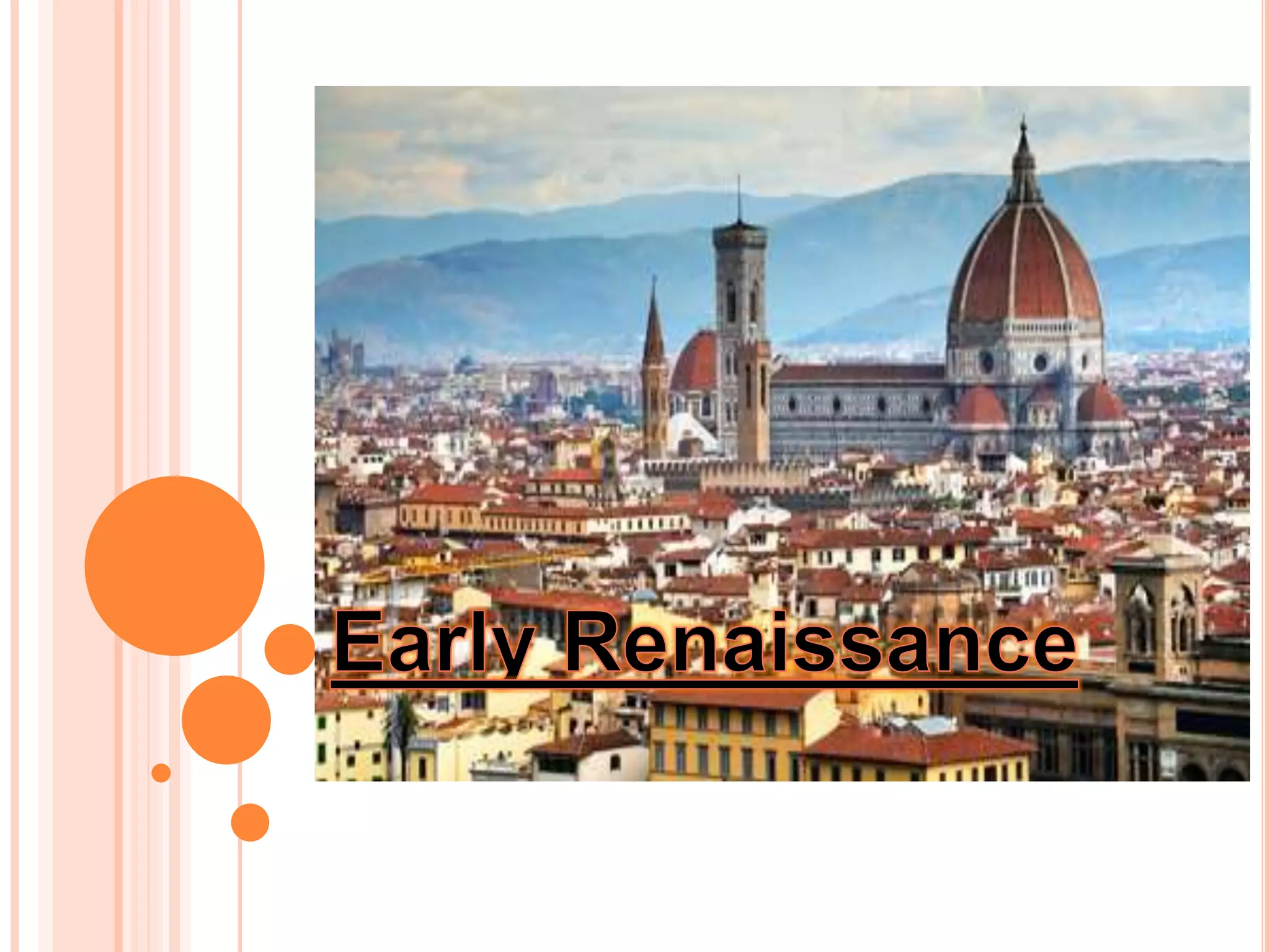
EARLY RENAISSANCE
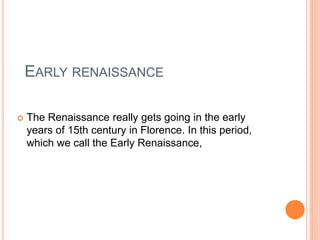
 The Renaissance really gets going in the early
years of 15th century in Florence. In this period,
which we call the Early Renaissance,
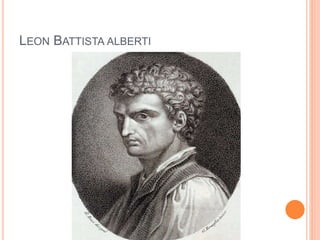
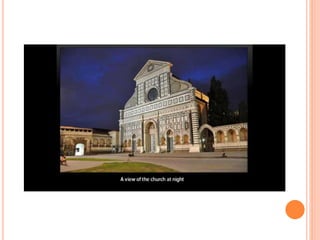
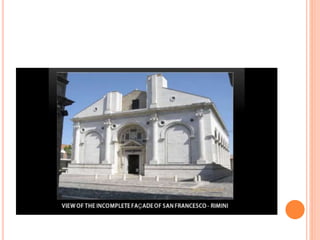
LEON BATTISTA ALBERTI
 WAS AN AUTHOR, ARCHITECT, POET, PRIEST AND PHILOSOPHER.
 HIS WORKS EXHIBIT DECORATIVE TREATMENTS .
 IN HIS BOOK DE RE AEDIFICATORIA, HIS EXPRESSIONS INFLUENCES MEN`S MIND IN
FAVOUR OF THE REVIVED ROMAN STYLE.
 HE DEVELOPED A CLEVER SYSTEM OF CLASSICAL PILASTERS AND ARCHITRAVES
WHICH COULD BE SUPERIMPOSED ON ANY EARLIER SMOOTH SURFACE, CALLED
“ORNAMENTUM”.
 WAS A CLASSICAL THEORIST WHO SAW ARCHITECTURE AS A WAY TO ADDRESS
SOCIETAL ORDER.
 ALBERTI DEFINED THE RENAISSANCE ARCHITECT AS A UNIVERSALIST, AN
INTELLECTUAL, A MAN OF GENIUS AND A CONSORT TO THOSE IN POSITIONS OF
POWER AND AUTHORITY. HE HIMSELF WAS A RENAISSANCE MAN.
 HE WORKED IN ROME AFTER HIS STUDIES IN FLORENCE WHERE HE HAD MANY
OPPORTUNITIES TO SEE THE MONUMENTS OF ANTIQUITIES AS WELL AS MEET THE
ARTISTS WHO WERE VISITING THEM.
 ALBERTI STUDIED THE WRITINGS OF THE CLASSICAL WORLD LIKE PLATO, ARISTOTLE,
PLUTARCH AND PLINY THE ELDER.
 HE WROTE DELLA PITTURA (ON PAINTING) WHERE IT INCLUDED BRUNELLESCHI’S
THEORIES OF PERSPECTIVE AND DE RE AEDIFICATORIA (ON BUILDING), THE FIRST
ARCHITECTURAL TREATISE OF THE RENAISSANCE.
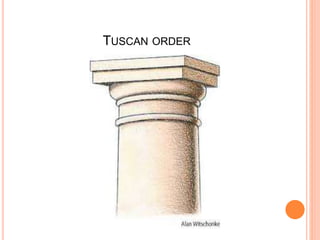
TUSCAN ORDER
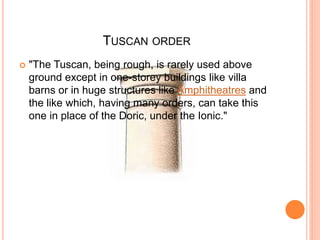
TUSCAN ORDER
 "The Tuscan, being rough, is rarely used above
ground except in one-storey buildings like villa
barns or in huge structures like Amphitheatres and
the like which, having many orders, can take this
one in place of the Doric, under the Ionic."
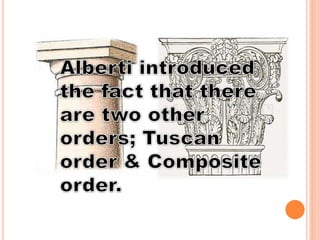
COMPOSITE ORDER
COMPOSITE ORDER
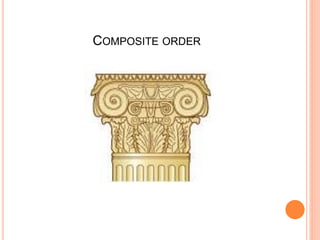
 The composite order is a mixed order, combining
the volutes of the Ionic order capital with
the acanthus leaves of the Corinthian order. The
composite order volutes are larger, however, and the
composite order also has echinus molding with egg-and-
dart ornamentation between the volutes. The column of
the composite order is ten diameters high.
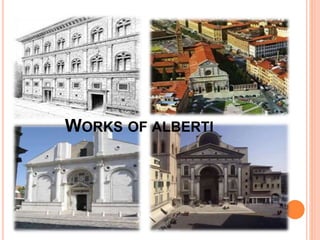
WORKS OF ALBERTI
PALAZZO RUCCELLAI
(RUCCELLAI PALACE) -
FLORENCE
PALAZZO RUCCELLAI (RUCCELLAI PALACE)
FLORENCE
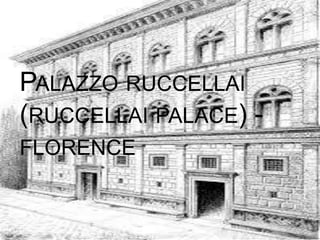
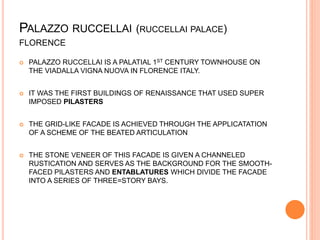
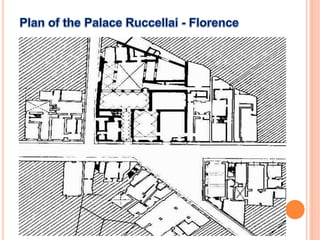
 PALAZZO RUCCELLAI IS A PALATIAL 1ST CENTURY TOWNHOUSE ON
THE VIADALLA VIGNA NUOVA IN FLORENCE ITALY.
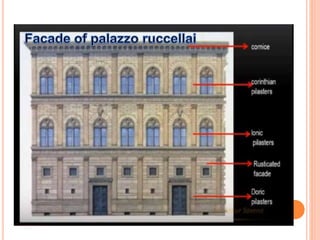
 IT WAS THE FIRST BUILDINGS OF RENAISSANCE THAT USED SUPER
IMPOSED PILASTERS
 THE GRID-LIKE FACADE IS ACHIEVED THROUGH THE APPLICATATION
OF A SCHEME OF THE BEATED ARTICULATION
 THE STONE VENEER OF THIS FACADE IS GIVEN A CHANNELED
RUSTICATION AND SERVES AS THE BACKGROUND FOR THE SMOOTH-
FACED PILASTERS AND ENTABLATURES WHICH DIVIDE THE FACADE
INTO A SERIES OF THREE=STORY BAYS.
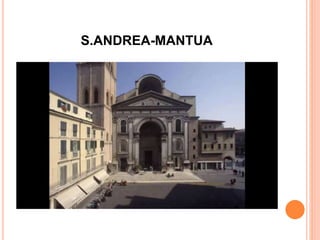
S.ANDREA-MANTUA
ELEMENTS OF RENAISSANCE ARCHITECTURE
ELEMENTS:
 Plans - square, symmetrical appearance in which proportions are usually
based on a module
 Facades - symmetrical around their vertical axis, domestic buildings are
often surmounted by a cornice
 Columns and pilasters - the Roman orders of columns are used: Tuscan,
Doric, Ionic, Corinthian and Composite
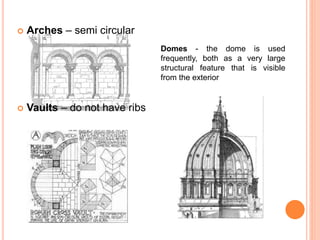
 Arches – semi circular
 Vaults – do not have ribs
 Domes - the dome is used frequently, both as a very large structural
feature that is visible from the exterior
 Arches – semi circular
 Vaults – do not have ribs
Domes - the dome is used
frequently, both as a very large
structural feature that is visible
from the exterior

THEORY: Early Renaissance Architecture

  • 2.
    EARLY RENAISSANCE  TheRenaissance really gets going in the early years of 15th century in Florence. In this period, which we call the Early Renaissance,
  • 3.
  • 4.
    LEON BATTISTA ALBERTI WAS AN AUTHOR, ARCHITECT, POET, PRIEST AND PHILOSOPHER.  HIS WORKS EXHIBIT DECORATIVE TREATMENTS .  IN HIS BOOK DE RE AEDIFICATORIA, HIS EXPRESSIONS INFLUENCES MEN`S MIND IN FAVOUR OF THE REVIVED ROMAN STYLE.  HE DEVELOPED A CLEVER SYSTEM OF CLASSICAL PILASTERS AND ARCHITRAVES WHICH COULD BE SUPERIMPOSED ON ANY EARLIER SMOOTH SURFACE, CALLED “ORNAMENTUM”.  WAS A CLASSICAL THEORIST WHO SAW ARCHITECTURE AS A WAY TO ADDRESS SOCIETAL ORDER.  ALBERTI DEFINED THE RENAISSANCE ARCHITECT AS A UNIVERSALIST, AN INTELLECTUAL, A MAN OF GENIUS AND A CONSORT TO THOSE IN POSITIONS OF POWER AND AUTHORITY. HE HIMSELF WAS A RENAISSANCE MAN.  HE WORKED IN ROME AFTER HIS STUDIES IN FLORENCE WHERE HE HAD MANY OPPORTUNITIES TO SEE THE MONUMENTS OF ANTIQUITIES AS WELL AS MEET THE ARTISTS WHO WERE VISITING THEM.  ALBERTI STUDIED THE WRITINGS OF THE CLASSICAL WORLD LIKE PLATO, ARISTOTLE, PLUTARCH AND PLINY THE ELDER.  HE WROTE DELLA PITTURA (ON PAINTING) WHERE IT INCLUDED BRUNELLESCHI’S THEORIES OF PERSPECTIVE AND DE RE AEDIFICATORIA (ON BUILDING), THE FIRST ARCHITECTURAL TREATISE OF THE RENAISSANCE.
  • 6.
  • 7.
    TUSCAN ORDER  "TheTuscan, being rough, is rarely used above ground except in one-storey buildings like villa barns or in huge structures like Amphitheatres and the like which, having many orders, can take this one in place of the Doric, under the Ionic."
  • 8.
  • 9.
    COMPOSITE ORDER  Thecomposite order is a mixed order, combining the volutes of the Ionic order capital with the acanthus leaves of the Corinthian order. The composite order volutes are larger, however, and the composite order also has echinus molding with egg-and- dart ornamentation between the volutes. The column of the composite order is ten diameters high.
  • 10.
  • 11.
  • 12.
    PALAZZO RUCCELLAI (RUCCELLAIPALACE) FLORENCE  PALAZZO RUCCELLAI IS A PALATIAL 1ST CENTURY TOWNHOUSE ON THE VIADALLA VIGNA NUOVA IN FLORENCE ITALY.  IT WAS THE FIRST BUILDINGS OF RENAISSANCE THAT USED SUPER IMPOSED PILASTERS  THE GRID-LIKE FACADE IS ACHIEVED THROUGH THE APPLICATATION OF A SCHEME OF THE BEATED ARTICULATION  THE STONE VENEER OF THIS FACADE IS GIVEN A CHANNELED RUSTICATION AND SERVES AS THE BACKGROUND FOR THE SMOOTH- FACED PILASTERS AND ENTABLATURES WHICH DIVIDE THE FACADE INTO A SERIES OF THREE=STORY BAYS.
  • 22.
  • 23.
    ELEMENTS OF RENAISSANCEARCHITECTURE ELEMENTS:  Plans - square, symmetrical appearance in which proportions are usually based on a module  Facades - symmetrical around their vertical axis, domestic buildings are often surmounted by a cornice  Columns and pilasters - the Roman orders of columns are used: Tuscan, Doric, Ionic, Corinthian and Composite  Arches – semi circular  Vaults – do not have ribs  Domes - the dome is used frequently, both as a very large structural feature that is visible from the exterior
  • 24.
     Arches –semi circular  Vaults – do not have ribs Domes - the dome is used frequently, both as a very large structural feature that is visible from the exterior