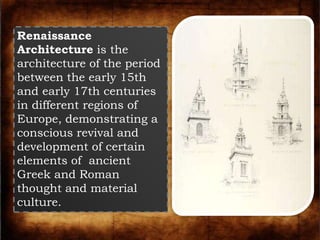
Renaissance 
Architecture is the 
architecture of the period 
between the early 15th 
and early 17th centuries 
in different regions of 
Europe, demonstrating a 
conscious revival and 
development of certain 
elements of ancient 
Greek and Roman 
thought and material 
culture.
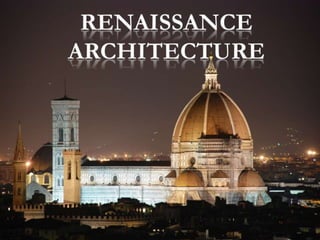
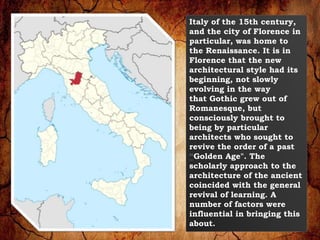
Italy of the 15th century, 
and the city of Florence in 
particular, was home to 
the Renaissance. It is in 
Florence that the new 
architectural style had its 
beginning, not slowly 
evolving in the way 
that Gothic grew out of 
Romanesque, but 
consciously brought to 
being by particular 
architects who sought to 
revive the order of a past 
“Golden Age". The 
scholarly approach to the 
architecture of the ancient 
coincided with the general 
revival of learning. A 
number of factors were 
influential in bringing this 
about.
Historians often divide the Renaissance in Italy into 
three phases. Whereas art historians might talk of an 
"Early Renaissance" period, in which they include 
developments in 14th-century painting and sculpture, 
this is usually not the case in architectural history. The 
bleak economic conditions of the late 14th century did 
not produce buildings that are considered to be part of 
the Renaissance. As a result, the word "Renaissance" 
among architectural historians usually applies to the 
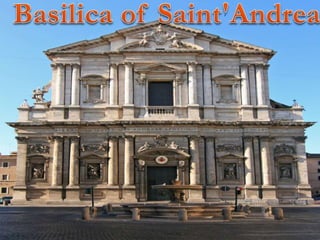
period 1400 to ca. 1525, or later in the case of non- 
Italian Renaissances. 
Historians often use the following designations: 
 Renaissance (ca. 1400–1500); also known as 
the Quattrocento] and sometimes Early Renaissance[ 
 High Renaissance (ca.1500–1525) 
 Mannerism (ca. 1520–1600)
In the Quattrocento, concepts of architectural 
order were explored and rules were formulated. 
The study of classical antiquity led in 
particular to the adoption of Classical detail 
and Ornamentation.
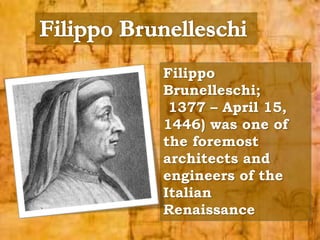
Filippo 
Brunelleschi; 
1377 – April 15, 
1446) was one of 
the foremost 
architects and 
engineers of the 
Italian 
Renaissance
Leon Battista Alberti[1] 
(February 14, 1404 – 
April 20, 1472) was an 
Italian humanist author, 
artist, architect, poet, 
priest, linguist, 
philosopher and 
cryptographer; he 
epitomised the 
Renaissance Man.
During the High Renaissance, concepts derived 
from classical antiquity were developed and used 
with greater surety. The most representative 
architect is Bramante (1444–1514) who expanded 
the applicability of classical architecture to 
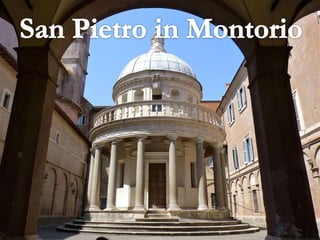
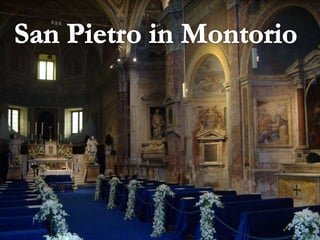
contemporary buildings. His San Pietro in 
Montorio (1503) was directly inspired by circular 
Roman temples. He was, however, hardly a slave 
to the classical forms and it was his style that was 
to dominate Italian architecture in the 16th 
century.
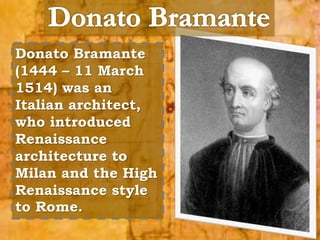
Donato Bramante 
(1444 – 11 March 
1514) was an 
Italian architect, 
who introduced 
Renaissance 
architecture to 
Milan and the High 
Renaissance style 
to Rome.
Raphael, (1483– 
1520), Urbino. 
Raffaello da Urbino, 
better known simple 
as Raphael, was an 
Italian painter and 
architect of the high 
Renaissance.
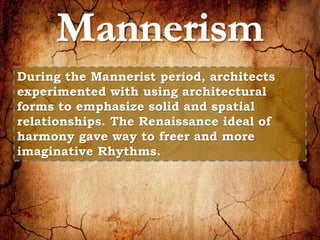
During the Mannerist period, architects 
experimented with using architectural 
forms to emphasize solid and spatial 
relationships. The Renaissance ideal of 
harmony gave way to freer and more 
imaginative Rhythms.
1475 - 1564 
Italian Renaissance sculptor, painter, 
architect and poet. Generally 
considered one of the greatest artists 
ever. He worked in Florence and Rome. 
Michelangelo receives his formal 
education from the painter Domenico 
Ghirlandaio and the sculptor Bertoldo 
di Giovanni. In Florence Michelangelo 
becomes acquainted with Classical 
antiquity, which will have enormous 
influence on his work. Via Lorenzo de' 
Medici Michelangelo meets some of the 
greatest scientists of his days.
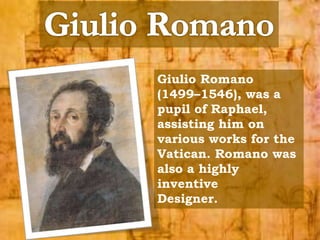
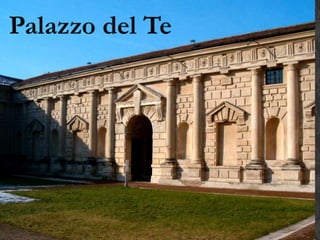
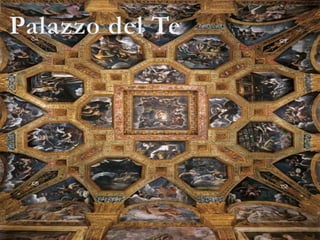
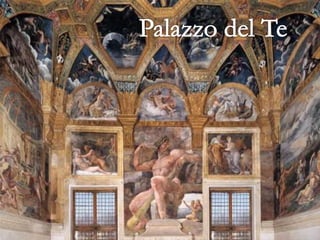
Giulio Romano 
(1499–1546), was a 
pupil of Raphael, 
assisting him on 
various works for the 
Vatican. Romano was 
also a highly 
inventive 
Designer.
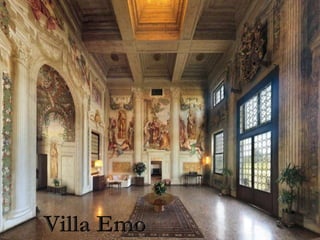
Renaissance style places emphasis on 
symmetry, proportion, geometry and the 
regularity of parts as they are demonstrated 
in the architecture of classical antiquity and 
in particular ancient Roman architecture, of 
which many examples remained. Orderly 
arrangements of columns, pilasters and 
lintels, as well as the use of semicircular 
arches, hemispherical domes, niches 
replaced the more complex proportional 
systems and irregular profiles of medieval 
buildings.
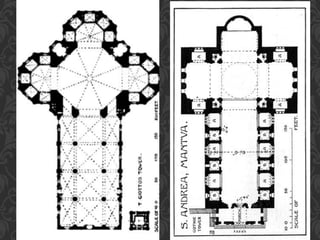
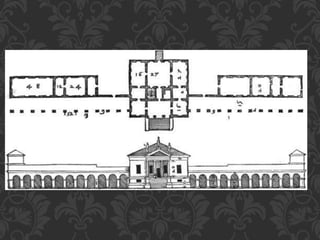
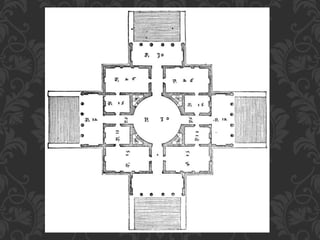
The plans of Renaissance buildings 
have a square, symmetrical 
appearance in which proportions are 
usually based on a module within a 
church the module is often the 
width of an aisle.
The Roman orders of columns are used:- 
Tuscan, Doric, Ionic, Corinthian and 
Composite. The orders can either be 
structural, supporting an arcade or 
architrave, or purely decorative, set 
against a wall in the form of pilasters. 
During the Renaissance architects aimed 
to use columns, pilasters as an integrated 
system.
Arches are semi-circular or (in the 
Mannerist style) segmental. Arches are 
often used in arcades, supported on piers 
or columns with capitals. 
• Arches and domes were popular. This was 
again taken from Roman and Greek 
architecture.
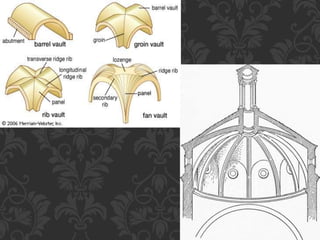
Vaults do not have ribs. They are semi-circular 
or segmental and on a square 
plan, unlike the Gothic vault which is 
frequently rectangular.
The 16th century saw the economic and 
political ascendancy of France and Spain, and 
then later of Holland, England, Germany and 
Russia. The result was that these places began 
to import the Renaissance style as indicators 
of their new cultural position. This also meant 
that it was not until about 1500 and later that 
signs of Renaissance architectural style began 
to appear outside Italy.
Mediterranean Sea

Renaissance architecture

  • 2.
    Renaissance Architecture isthe architecture of the period between the early 15th and early 17th centuries in different regions of Europe, demonstrating a conscious revival and development of certain elements of ancient Greek and Roman thought and material culture.
  • 3.
    Italy of the15th century, and the city of Florence in particular, was home to the Renaissance. It is in Florence that the new architectural style had its beginning, not slowly evolving in the way that Gothic grew out of Romanesque, but consciously brought to being by particular architects who sought to revive the order of a past “Golden Age". The scholarly approach to the architecture of the ancient coincided with the general revival of learning. A number of factors were influential in bringing this about.
  • 4.
    Historians often dividethe Renaissance in Italy into three phases. Whereas art historians might talk of an "Early Renaissance" period, in which they include developments in 14th-century painting and sculpture, this is usually not the case in architectural history. The bleak economic conditions of the late 14th century did not produce buildings that are considered to be part of the Renaissance. As a result, the word "Renaissance" among architectural historians usually applies to the period 1400 to ca. 1525, or later in the case of non- Italian Renaissances. Historians often use the following designations:  Renaissance (ca. 1400–1500); also known as the Quattrocento] and sometimes Early Renaissance[  High Renaissance (ca.1500–1525)  Mannerism (ca. 1520–1600)
  • 5.
    In the Quattrocento,concepts of architectural order were explored and rules were formulated. The study of classical antiquity led in particular to the adoption of Classical detail and Ornamentation.
  • 6.
    Filippo Brunelleschi; 1377– April 15, 1446) was one of the foremost architects and engineers of the Italian Renaissance
  • 11.
    Leon Battista Alberti[1] (February 14, 1404 – April 20, 1472) was an Italian humanist author, artist, architect, poet, priest, linguist, philosopher and cryptographer; he epitomised the Renaissance Man.
  • 16.
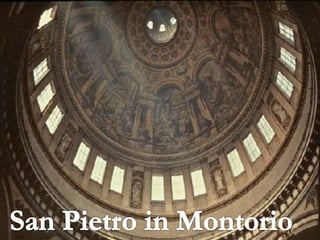
    During the HighRenaissance, concepts derived from classical antiquity were developed and used with greater surety. The most representative architect is Bramante (1444–1514) who expanded the applicability of classical architecture to contemporary buildings. His San Pietro in Montorio (1503) was directly inspired by circular Roman temples. He was, however, hardly a slave to the classical forms and it was his style that was to dominate Italian architecture in the 16th century.
  • 17.
    Donato Bramante (1444– 11 March 1514) was an Italian architect, who introduced Renaissance architecture to Milan and the High Renaissance style to Rome.
  • 20.
    Raphael, (1483– 1520),Urbino. Raffaello da Urbino, better known simple as Raphael, was an Italian painter and architect of the high Renaissance.
  • 33.
    During the Manneristperiod, architects experimented with using architectural forms to emphasize solid and spatial relationships. The Renaissance ideal of harmony gave way to freer and more imaginative Rhythms.
  • 34.
    1475 - 1564 Italian Renaissance sculptor, painter, architect and poet. Generally considered one of the greatest artists ever. He worked in Florence and Rome. Michelangelo receives his formal education from the painter Domenico Ghirlandaio and the sculptor Bertoldo di Giovanni. In Florence Michelangelo becomes acquainted with Classical antiquity, which will have enormous influence on his work. Via Lorenzo de' Medici Michelangelo meets some of the greatest scientists of his days.
  • 41.
    Giulio Romano (1499–1546),was a pupil of Raphael, assisting him on various works for the Vatican. Romano was also a highly inventive Designer.
  • 44.
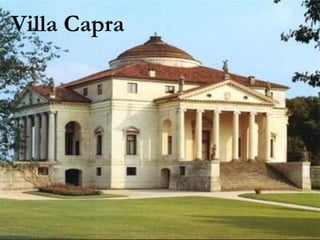
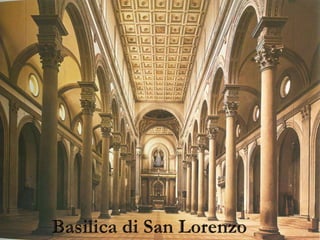
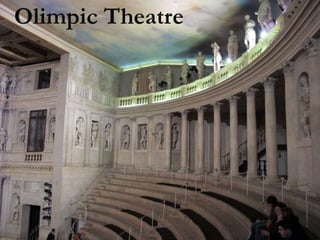
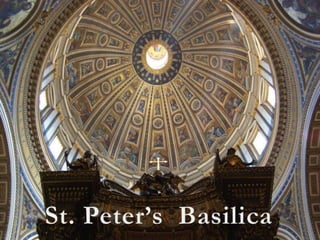
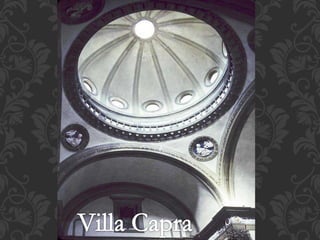
    Renaissance style placesemphasis on symmetry, proportion, geometry and the regularity of parts as they are demonstrated in the architecture of classical antiquity and in particular ancient Roman architecture, of which many examples remained. Orderly arrangements of columns, pilasters and lintels, as well as the use of semicircular arches, hemispherical domes, niches replaced the more complex proportional systems and irregular profiles of medieval buildings.
  • 45.
    The plans ofRenaissance buildings have a square, symmetrical appearance in which proportions are usually based on a module within a church the module is often the width of an aisle.
  • 49.
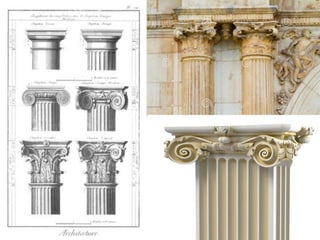
    The Roman ordersof columns are used:- Tuscan, Doric, Ionic, Corinthian and Composite. The orders can either be structural, supporting an arcade or architrave, or purely decorative, set against a wall in the form of pilasters. During the Renaissance architects aimed to use columns, pilasters as an integrated system.
  • 55.
    Arches are semi-circularor (in the Mannerist style) segmental. Arches are often used in arcades, supported on piers or columns with capitals. • Arches and domes were popular. This was again taken from Roman and Greek architecture.
  • 62.
    Vaults do nothave ribs. They are semi-circular or segmental and on a square plan, unlike the Gothic vault which is frequently rectangular.
  • 67.
    The 16th centurysaw the economic and political ascendancy of France and Spain, and then later of Holland, England, Germany and Russia. The result was that these places began to import the Renaissance style as indicators of their new cultural position. This also meant that it was not until about 1500 and later that signs of Renaissance architectural style began to appear outside Italy.
  • 68.