


Philippines, and Architecture, into
the 21st Century context (PART 2)
Histarc 4 (last lecture na medyo mas maiksi ) for 1st Term S.Y. 2016-17
Ar. Ronald John B. Dalmacio, uap M_Arch-HD
Professor
Winand Klassen’s idea about
Classicism, Modernism, and
Deconstructivism (well ata)
Why does man feel isolated and alternated from
his fellowmen, from his world and perhaps from
God?
Why does he find life meaningless, and
consequently feels the urge to search for
meaning?
If the search for meaning is a modern
phenomenon; how did people of past
generations find meaning in their lives?
If Vitruvius did not speak about meaning in
architecture, was it because it was not a
problem for him and his generation?
The reason may be, that his world and the world
of Western Antiquity was a God-centered world.
Much of the architecture consisted of temples
and sacred places built in honor of their God.
If we exclude the Greek temple from ancient
Greek architecture, little would remain to be
contemplated.
It is perhaps no coincidence that one of the
great surviving examples of ancient Roman
architecture, which contains a vast interior
space, is the Pantheon, and it was dedicated, as
the name implies, to all Gods.
Up to the Gothic era, the Divine was the primary
socio-cultural force.
As it influenced architectural design it also
wanted to be expressed, and a cultural force or
value being expressed by architectural form, is
called its content or meaning.
In the Renaissance a shift from the God-
centered universe to a man-centred world
occurred.
From now on man wanted to be expressed
through architecture, or man wanted to express
himself.
The figure of man became inscribed in square
and circles, even in floor plans of churches.
Man took center-stage, but this was not yet a
godless world.
God had to give up only some part of his
presence.
Man discovered that his non-material
aspirations were not only and primarily of a
religious kind, as they had been in the Middle
Ages.
There was a new world of science and art to be
discovered, all open to the human mind.
These higher sensibilities, as Sullivan would say,
had to be expressed through architecture; that
was its meaning.
Man’s involvement in the arts – poetry, music,
the theatre, painting, and sculpture – and in
science as it was applied in gradually led man
away from his involvement with God.
The divine was no longer greatly needed.
Man had asked God for many things which
science and technology now could provide
And then there was a freshly acquired
confidence in his own reasoning power.
Man considered himself powerful and self-
sufficient.
God finally was declared dead, and the
Uebermensch appeared.
For a while man relished his newly acquired
power and freedom.
• First, he did not notice that by abandoning
God, he had lost something.
After all, what he could observe around himself
was progress , and it looked like progress for the
better.
NSFAD ‘95
The Unity of Spatial Concepts in Philippine
Architecture and Other Arts
– Prof. Felipe de Leon, Jr.
Points from the essay
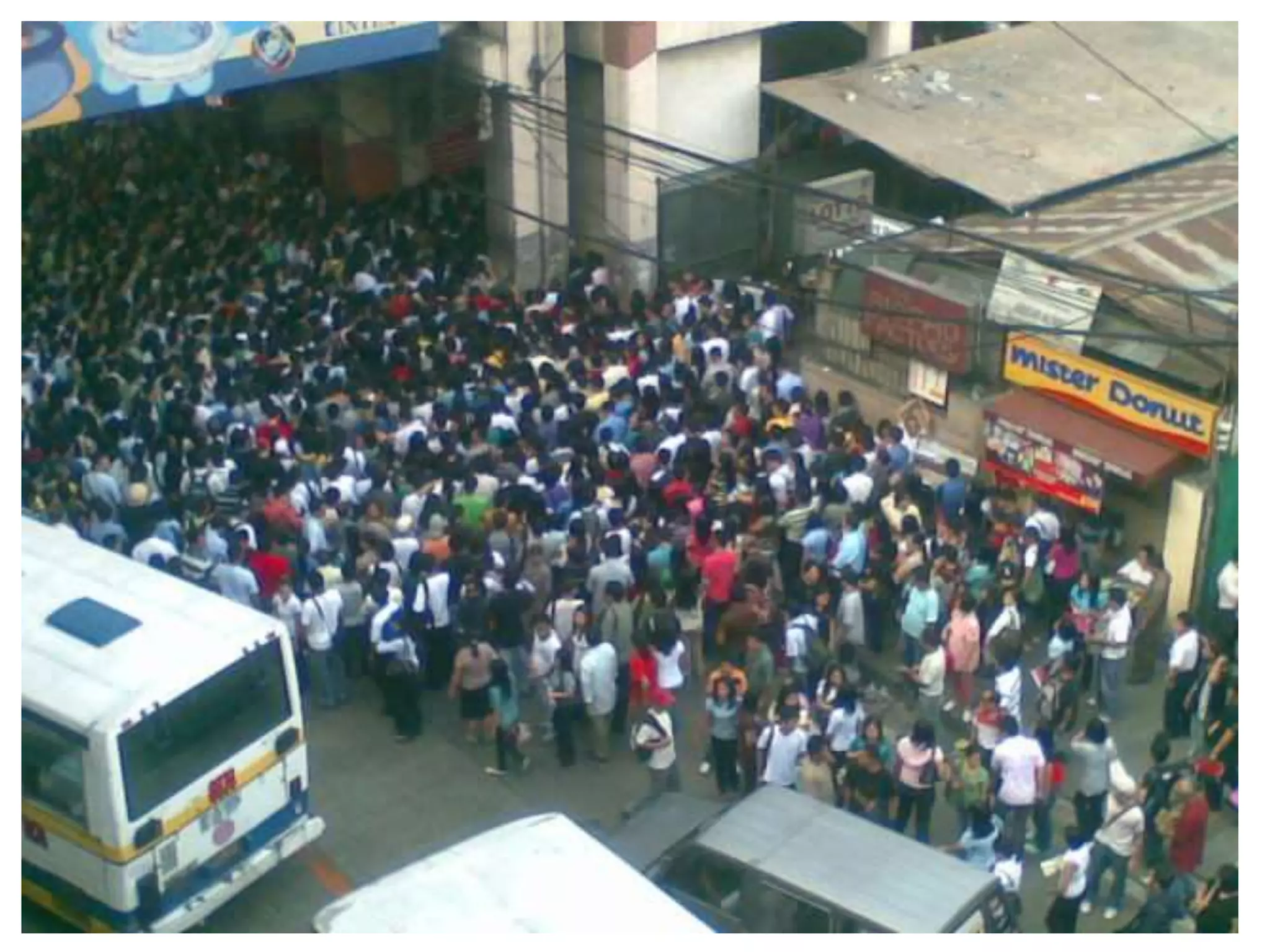
POINT 1. “Sabi ko nga kasi napakahirap
pagalawin ang architecture because ito ang
pinaka communal; social in the sense that you
involve a lot of people.”
Like I told you before it’s difficult to move
architecture because this is the most communal;
social in the sense that you involve a lot of
people.
“Actually, we can be very
flexible about Philippine
architecture if we base our
designs on concepts of space
found in Philippine culture as a
whole.”
Points from the essay
POINT 2. Every culture is a unity. I have not seen
a culture which is not a unity. Which means,
there is a core concept/s that permeate a
culture.
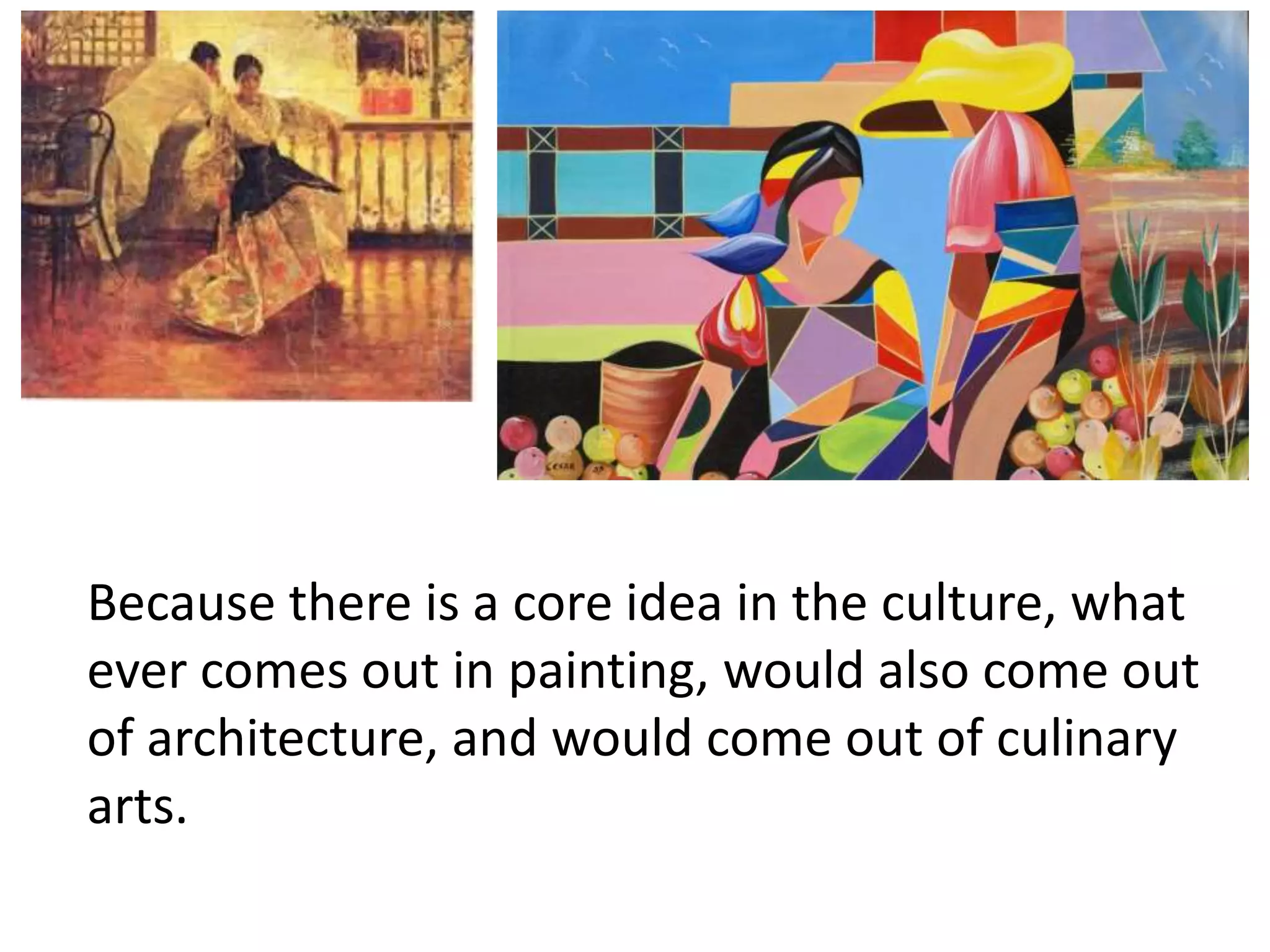
Because there is a core idea in the culture, what
ever comes out in painting, would also come out
of architecture, and would come out of culinary
arts.
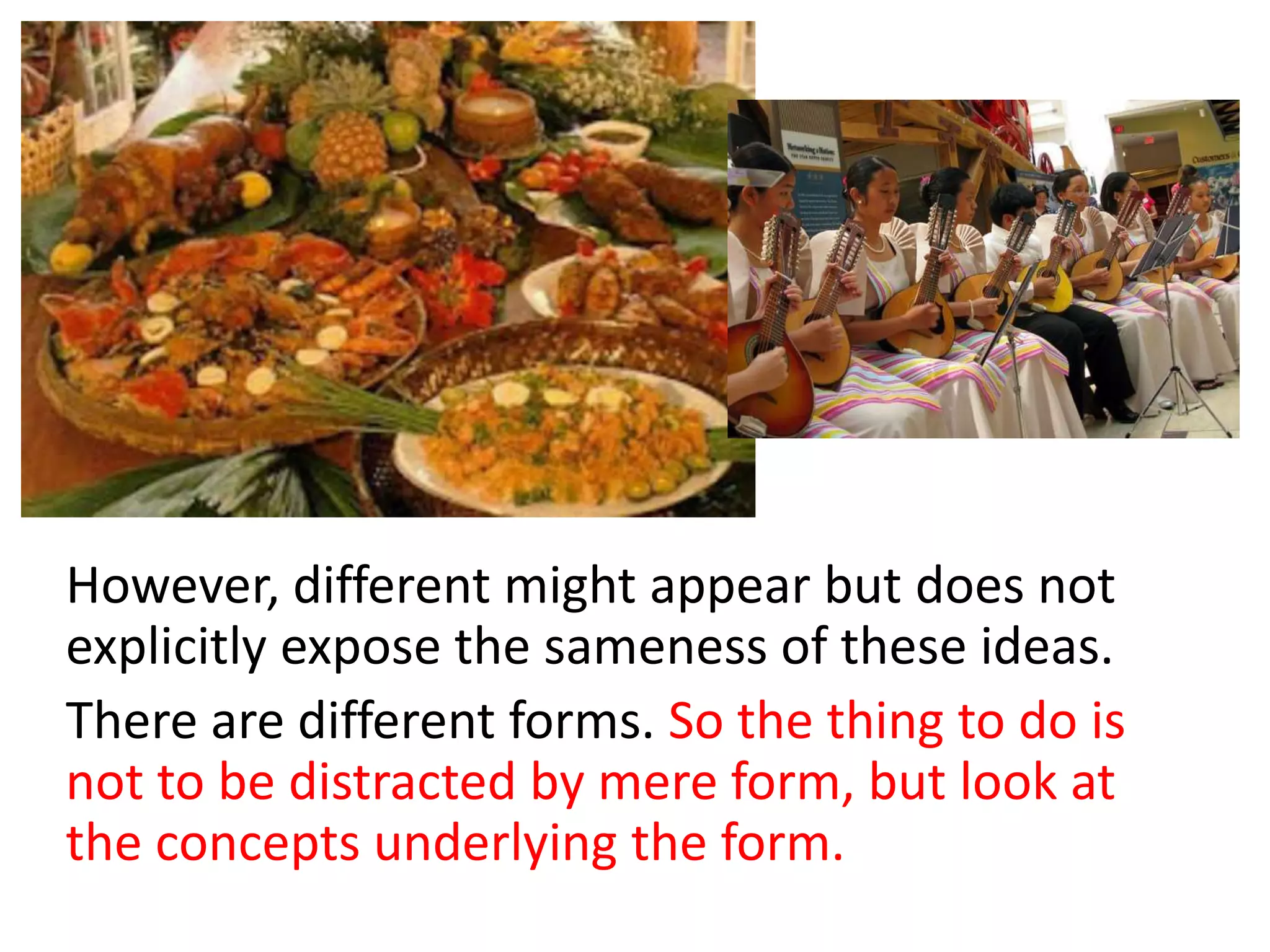
However, different might appear but does not
explicitly expose the sameness of these ideas.
There are different forms. So the thing to do is
not to be distracted by mere form, but look at
the concepts underlying the form.
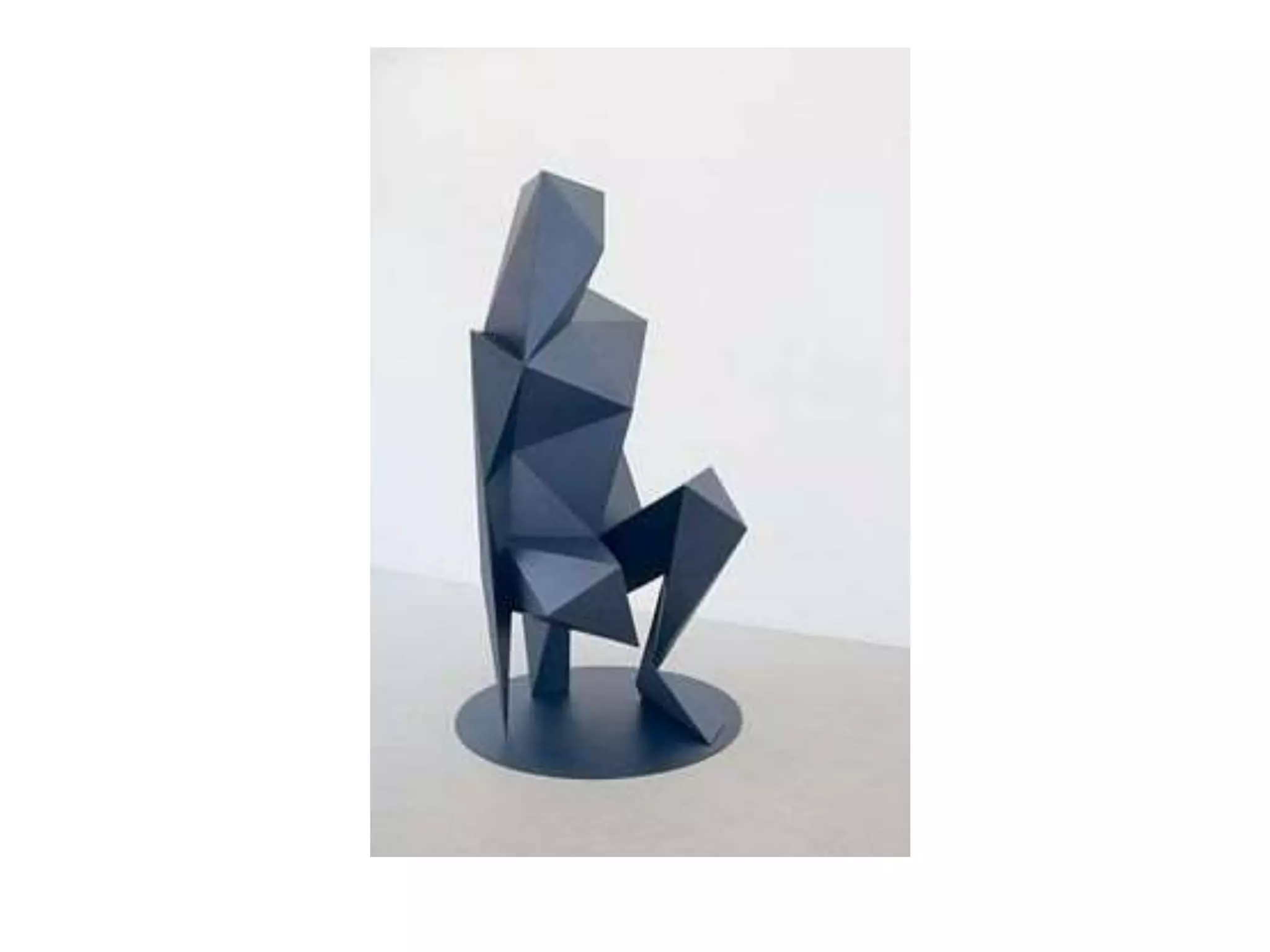
The assumption is that culture is one,
but there are many aspects.
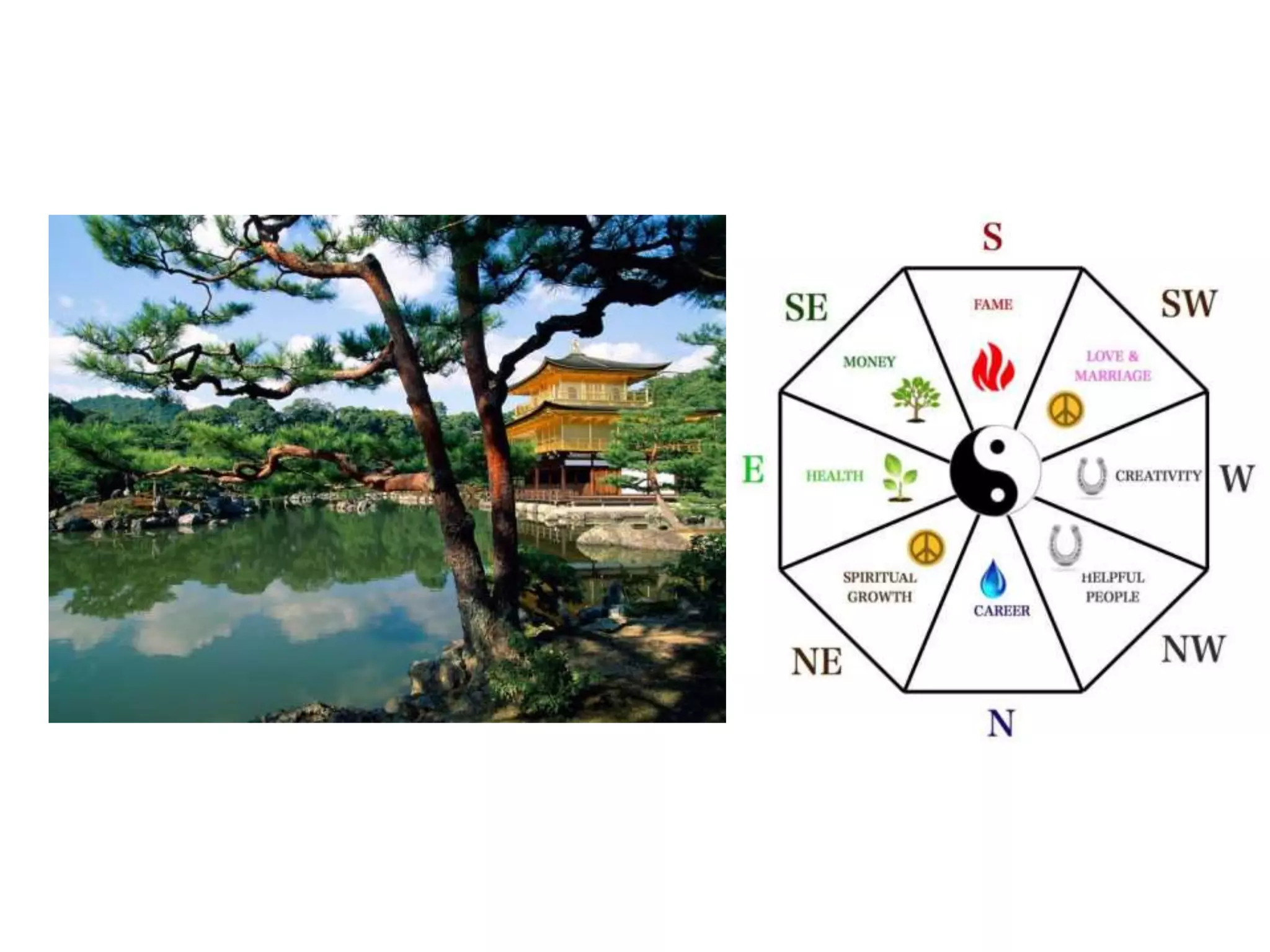
POINT 3. The concept of “kapwa”.
Points from the essay
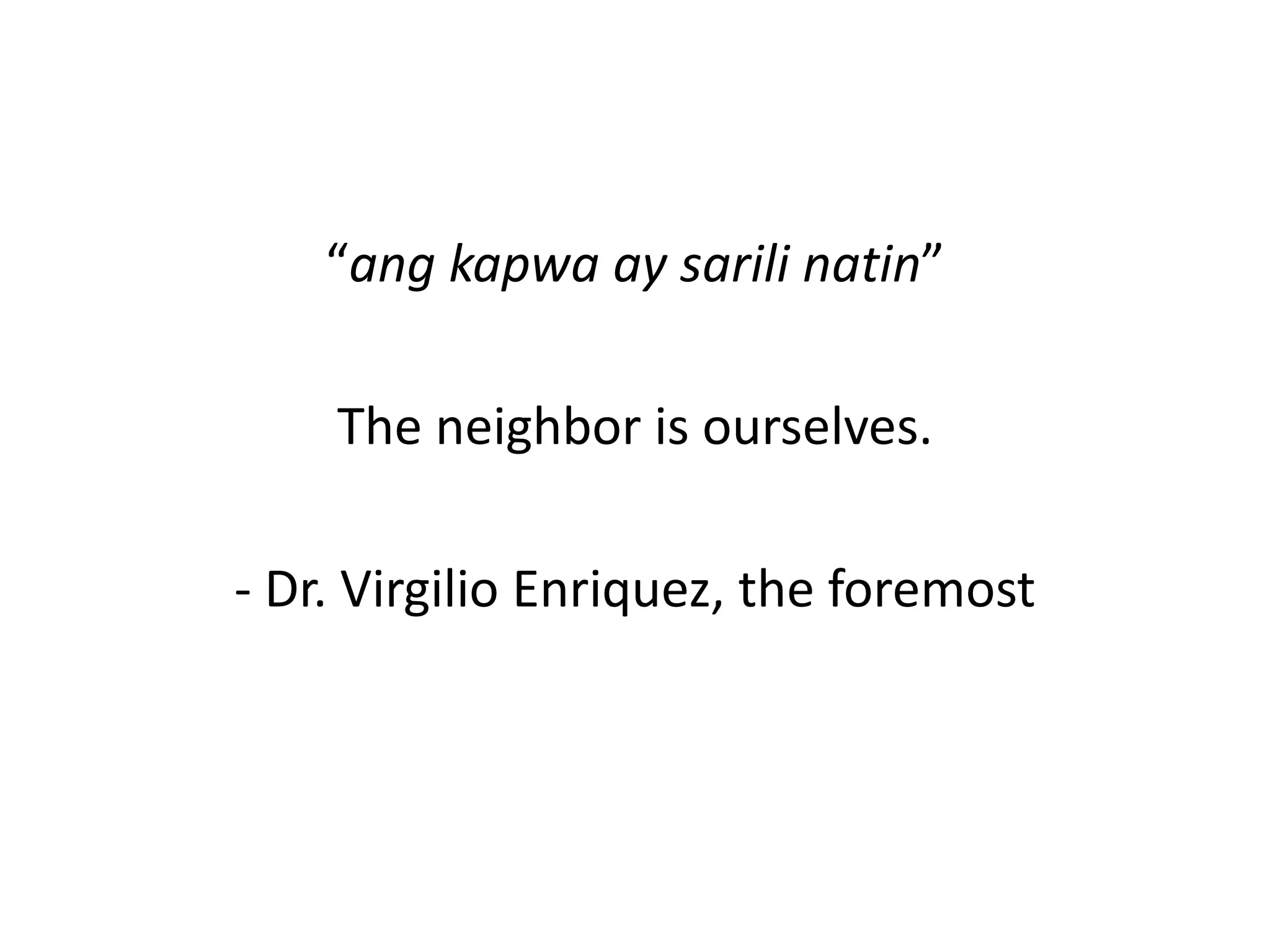
“ang kapwa ay sarili natin”
The neighbor is ourselves.
- Dr. Virgilio Enriquez, the foremost
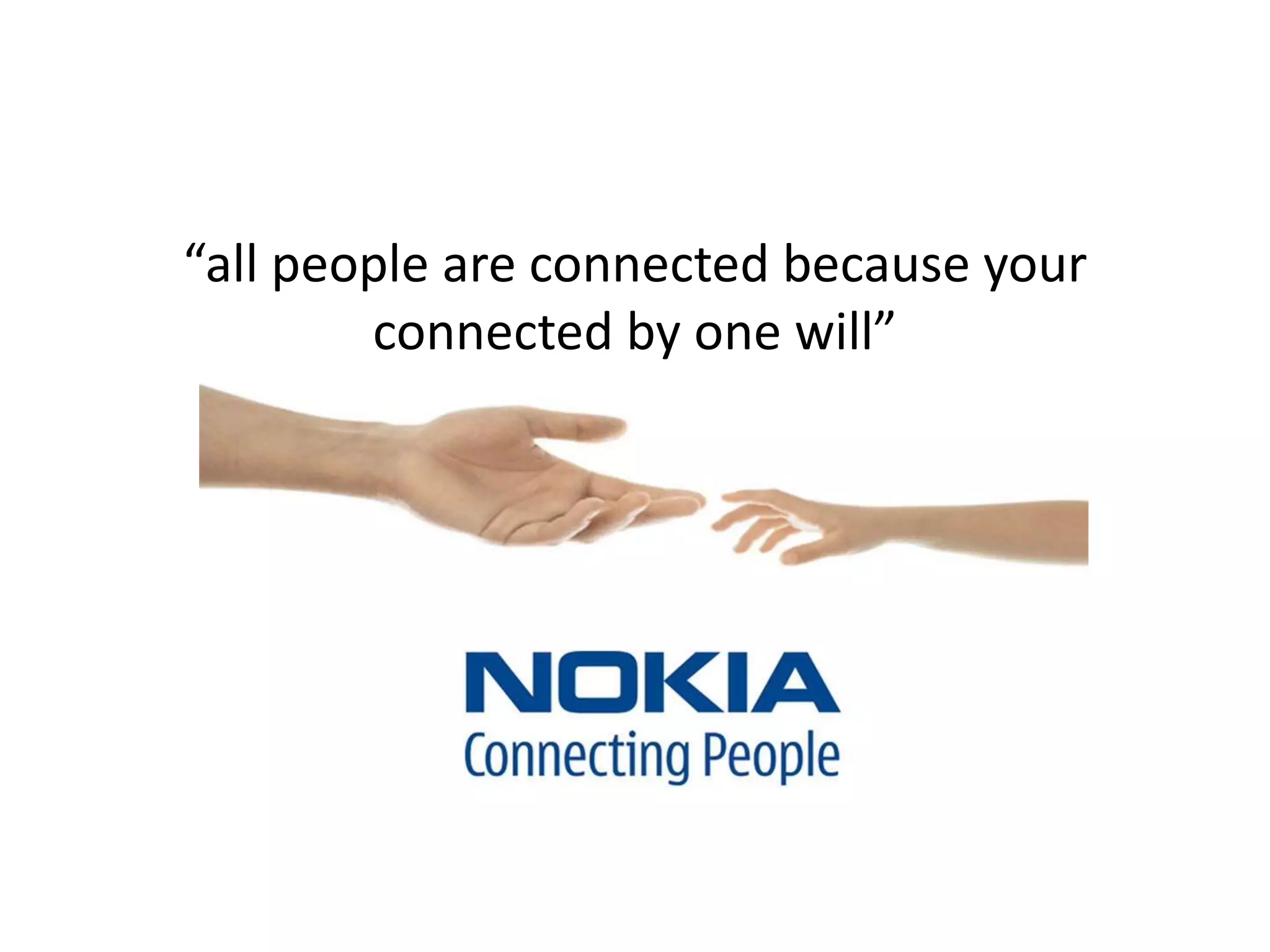
“all people are connected because your
connected by one will”
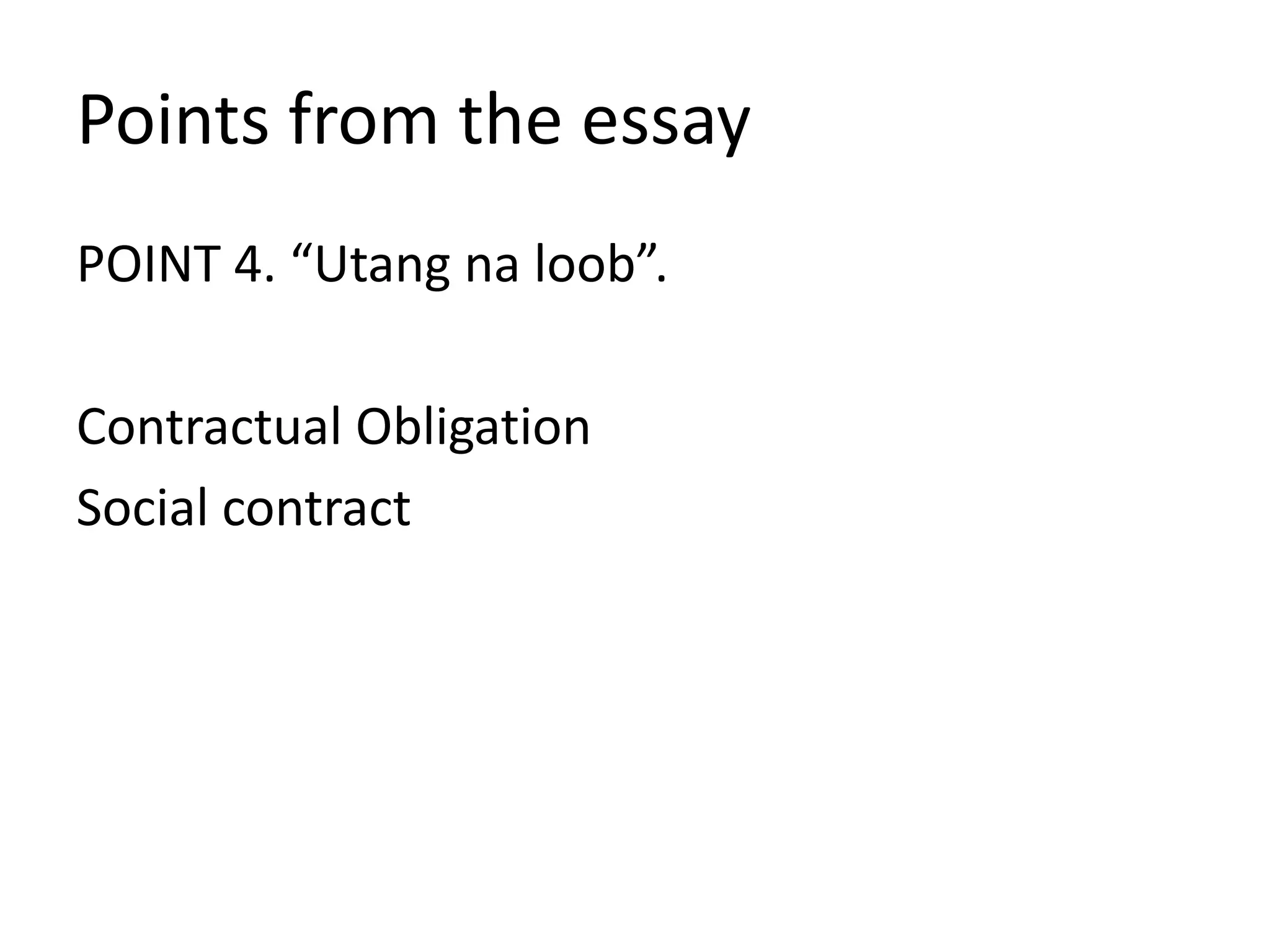
POINT 4. “Utang na loob”.
Contractual Obligation
Social contract
Points from the essay
Western interpretation
We don’t need social contact in the
Western sense because we’re not
individualist, we are groupists.
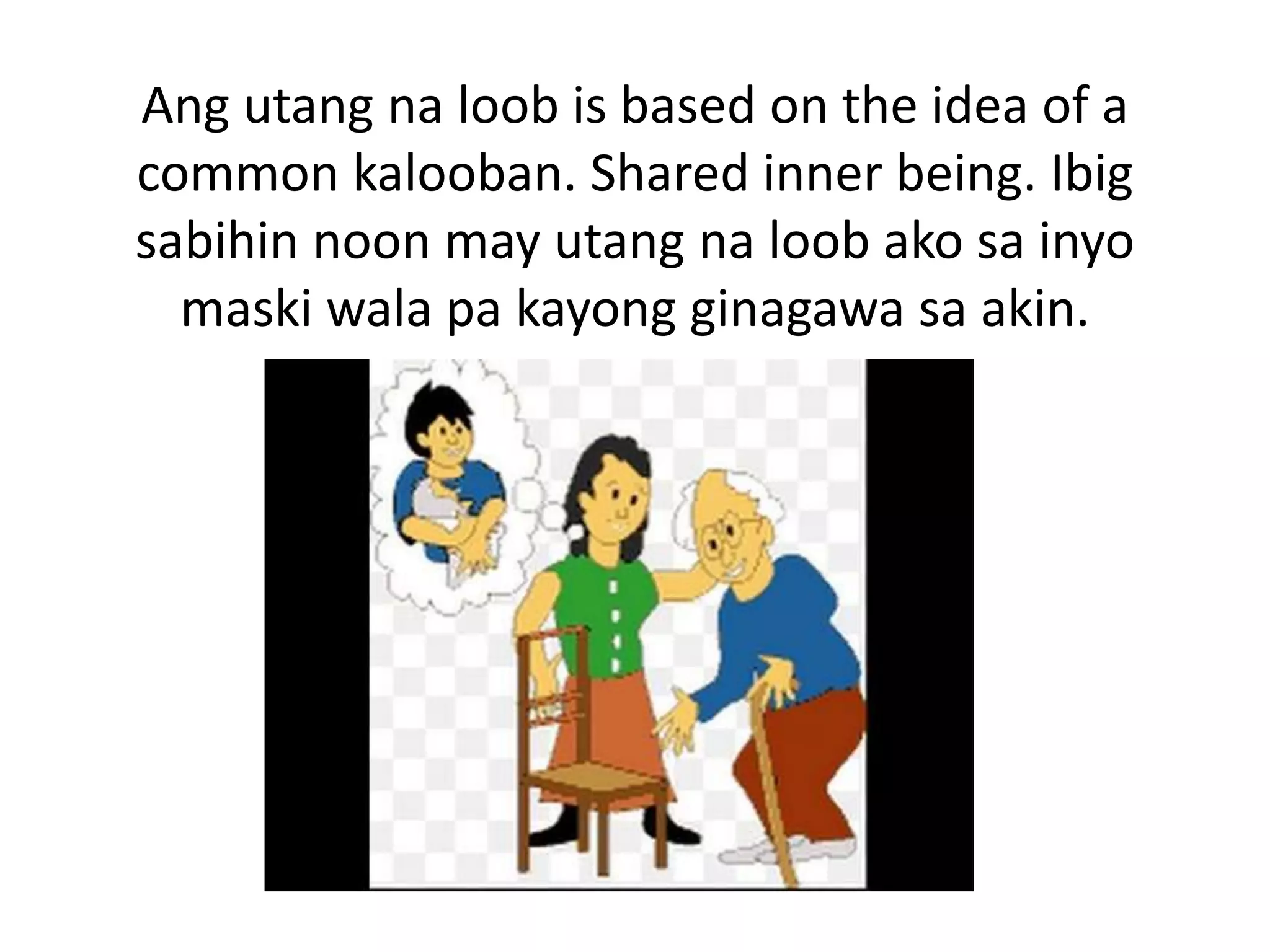
Ang utang na loob is based on the idea of a
common kalooban. Shared inner being. Ibig
sabihin noon may utang na loob ako sa inyo
maski wala pa kayong ginagawa sa akin.
“Another concept of being”
Capitalism
POINT 5 (last point, kasi ang dami!). The Filipino,
because of our sensitivity, and connectedness to
people, paligoy-ligoy yan.
But actually this one of the most human
characteristics of the Filipino.
Points from the essay
Prof. de Leon summarizes his speech
with the following;
• We are very very strong in interpersonal skills, social
forms that connect people, creative interaction…
improvisation, extemporaneous creativity.
• We are really freedom fighters,
• We have a very good capacity for simultaneously, we
are highly integrative.
• We are highly expressive, we are very rhythmic, we are
very flexible, we have a very deep faith in God.
• We are a highly devotional people and that is why we
are the most spiritual.
Hindi ninyo puwedeing i-repress ang
Pilipino. That is why we were the first
country to liberate itself from the
colonizers.
Before you leave Histarc 4, these are my
suggestions on what you can do to assimilate
what you learn to your future arcdes;
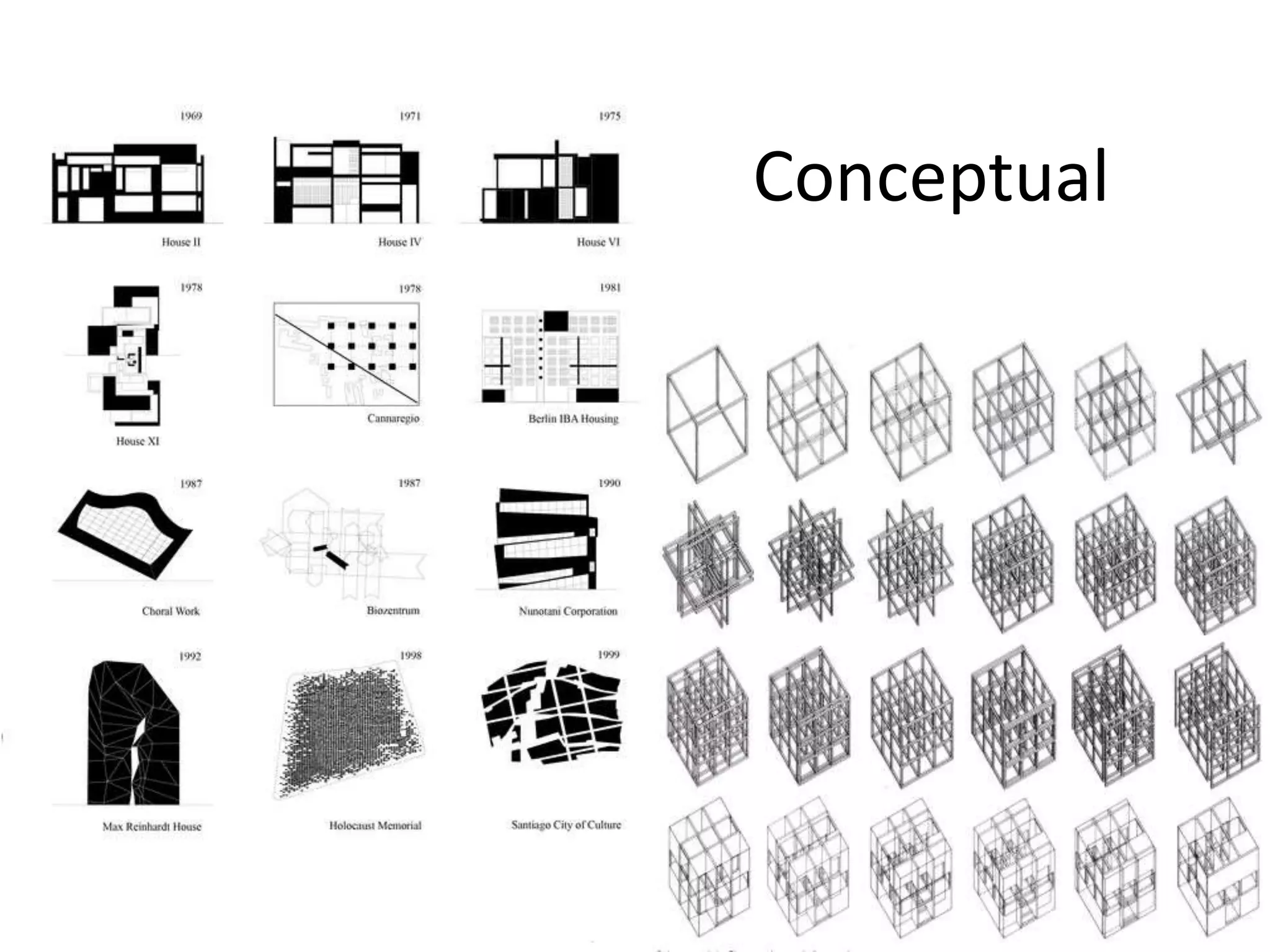
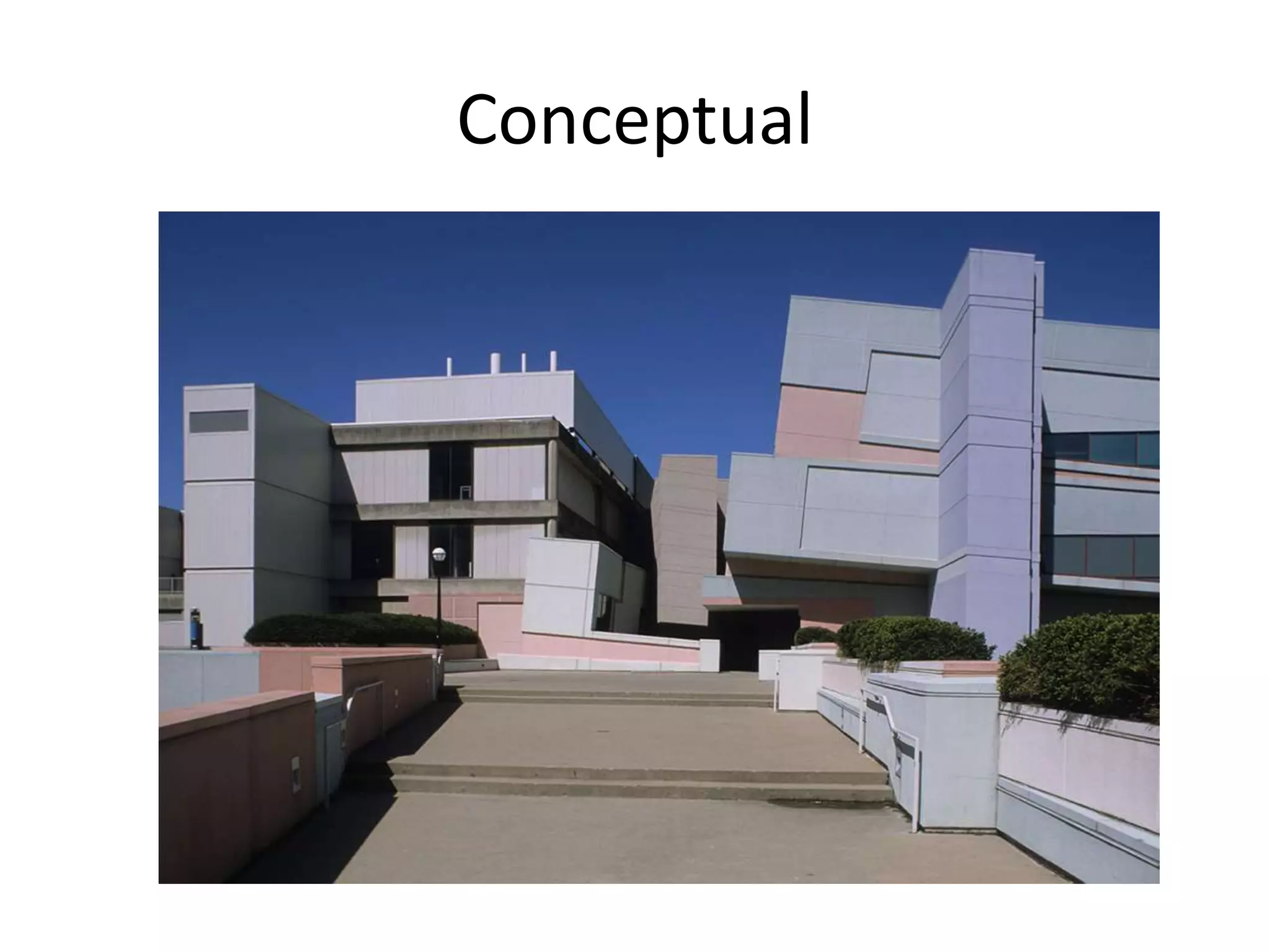
• Conceptual
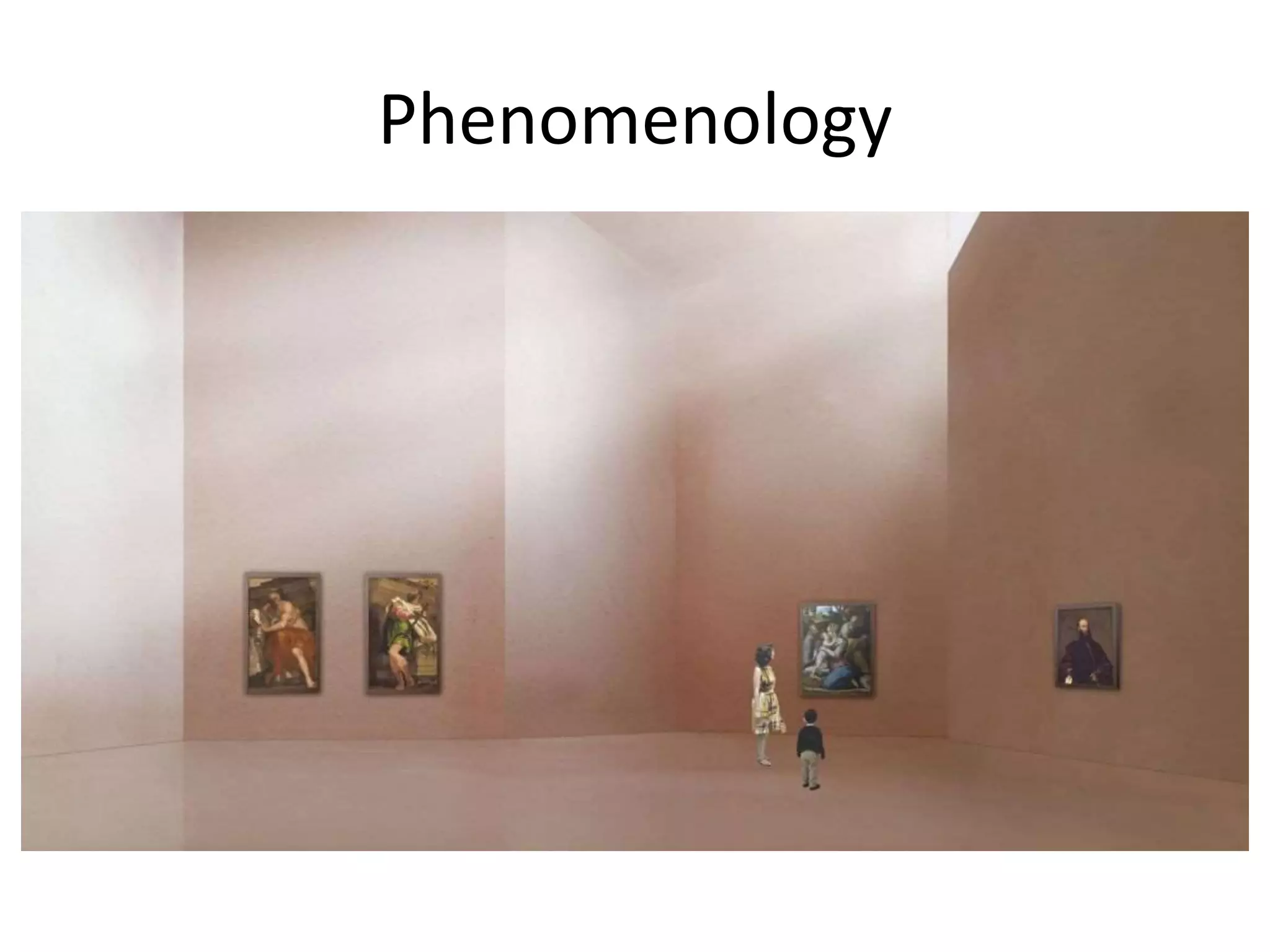
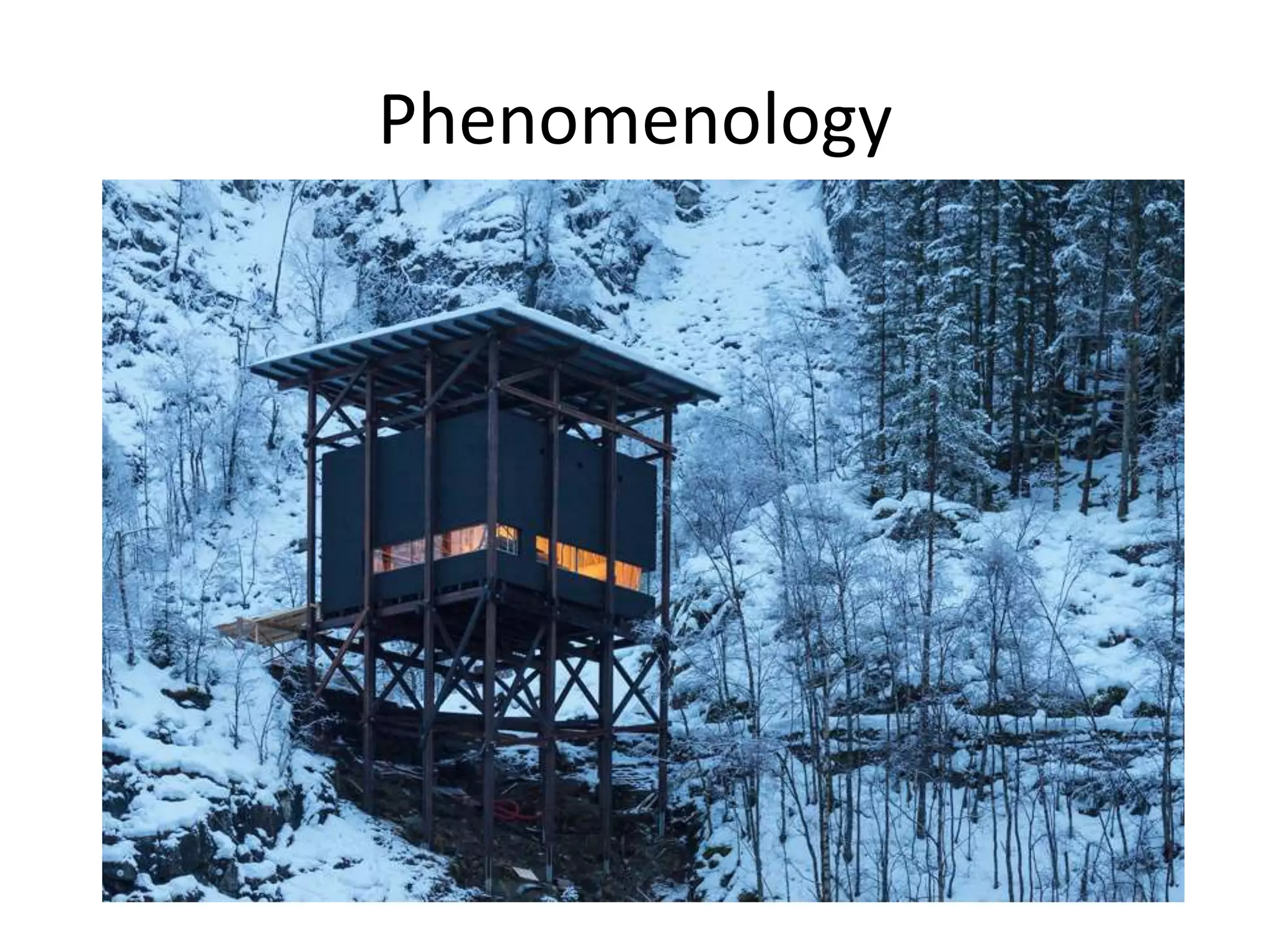
• Phenomenology
Conceptual
Phenomenology
Conceptual
Phenomenology
At the end of the day, you my dear
students, will also be history, and
the only thing remains is
architecture.
Congratulations for passing Histarc 4.

HISTORY: Philippines, and Architecture, into the 21st Century Context (PART 2)

  • 1.
    Philippines, and Architecture,into the 21st Century context (PART 2) Histarc 4 (last lecture na medyo mas maiksi ) for 1st Term S.Y. 2016-17 Ar. Ronald John B. Dalmacio, uap M_Arch-HD Professor
  • 2.
    Winand Klassen’s ideaabout Classicism, Modernism, and Deconstructivism (well ata)
  • 3.
    Why does manfeel isolated and alternated from his fellowmen, from his world and perhaps from God?
  • 4.
    Why does hefind life meaningless, and consequently feels the urge to search for meaning?
  • 5.
    If the searchfor meaning is a modern phenomenon; how did people of past generations find meaning in their lives?
  • 6.
    If Vitruvius didnot speak about meaning in architecture, was it because it was not a problem for him and his generation?
  • 7.
    The reason maybe, that his world and the world of Western Antiquity was a God-centered world.
  • 8.
    Much of thearchitecture consisted of temples and sacred places built in honor of their God.
  • 9.
    If we excludethe Greek temple from ancient Greek architecture, little would remain to be contemplated.
  • 10.
    It is perhapsno coincidence that one of the great surviving examples of ancient Roman architecture, which contains a vast interior space, is the Pantheon, and it was dedicated, as the name implies, to all Gods.
  • 11.
    Up to theGothic era, the Divine was the primary socio-cultural force.
  • 12.
    As it influencedarchitectural design it also wanted to be expressed, and a cultural force or value being expressed by architectural form, is called its content or meaning.
  • 13.
    In the Renaissancea shift from the God- centered universe to a man-centred world occurred.
  • 14.
    From now onman wanted to be expressed through architecture, or man wanted to express himself.
  • 15.
    The figure ofman became inscribed in square and circles, even in floor plans of churches.
  • 16.
    Man took center-stage,but this was not yet a godless world.
  • 17.
    God had togive up only some part of his presence.
  • 18.
    Man discovered thathis non-material aspirations were not only and primarily of a religious kind, as they had been in the Middle Ages.
  • 19.
    There was anew world of science and art to be discovered, all open to the human mind.
  • 20.
    These higher sensibilities,as Sullivan would say, had to be expressed through architecture; that was its meaning.
  • 21.
    Man’s involvement inthe arts – poetry, music, the theatre, painting, and sculpture – and in science as it was applied in gradually led man away from his involvement with God.
  • 22.
    The divine wasno longer greatly needed.
  • 23.
    Man had askedGod for many things which science and technology now could provide
  • 24.
    And then therewas a freshly acquired confidence in his own reasoning power.
  • 25.
    Man considered himselfpowerful and self- sufficient.
  • 26.
    God finally wasdeclared dead, and the Uebermensch appeared.
  • 27.
    For a whileman relished his newly acquired power and freedom.
  • 28.
    • First, hedid not notice that by abandoning God, he had lost something.
  • 29.
    After all, whathe could observe around himself was progress , and it looked like progress for the better.
  • 30.
    NSFAD ‘95 The Unityof Spatial Concepts in Philippine Architecture and Other Arts – Prof. Felipe de Leon, Jr.
  • 31.
    Points from theessay POINT 1. “Sabi ko nga kasi napakahirap pagalawin ang architecture because ito ang pinaka communal; social in the sense that you involve a lot of people.” Like I told you before it’s difficult to move architecture because this is the most communal; social in the sense that you involve a lot of people.
  • 33.
    “Actually, we canbe very flexible about Philippine architecture if we base our designs on concepts of space found in Philippine culture as a whole.”
  • 34.
    Points from theessay POINT 2. Every culture is a unity. I have not seen a culture which is not a unity. Which means, there is a core concept/s that permeate a culture.
  • 35.
    Because there isa core idea in the culture, what ever comes out in painting, would also come out of architecture, and would come out of culinary arts.
  • 36.
    However, different mightappear but does not explicitly expose the sameness of these ideas. There are different forms. So the thing to do is not to be distracted by mere form, but look at the concepts underlying the form.
  • 37.
    The assumption isthat culture is one, but there are many aspects.
  • 39.
    POINT 3. Theconcept of “kapwa”. Points from the essay
  • 42.
    “ang kapwa aysarili natin” The neighbor is ourselves. - Dr. Virgilio Enriquez, the foremost
  • 44.
    “all people areconnected because your connected by one will”
  • 46.
    POINT 4. “Utangna loob”. Contractual Obligation Social contract Points from the essay
  • 47.
  • 48.
    We don’t needsocial contact in the Western sense because we’re not individualist, we are groupists.
  • 49.
    Ang utang naloob is based on the idea of a common kalooban. Shared inner being. Ibig sabihin noon may utang na loob ako sa inyo maski wala pa kayong ginagawa sa akin.
  • 50.
  • 51.
  • 52.
    POINT 5 (lastpoint, kasi ang dami!). The Filipino, because of our sensitivity, and connectedness to people, paligoy-ligoy yan. But actually this one of the most human characteristics of the Filipino. Points from the essay
  • 54.
    Prof. de Leonsummarizes his speech with the following; • We are very very strong in interpersonal skills, social forms that connect people, creative interaction… improvisation, extemporaneous creativity. • We are really freedom fighters, • We have a very good capacity for simultaneously, we are highly integrative. • We are highly expressive, we are very rhythmic, we are very flexible, we have a very deep faith in God. • We are a highly devotional people and that is why we are the most spiritual.
  • 55.
    Hindi ninyo puwedeingi-repress ang Pilipino. That is why we were the first country to liberate itself from the colonizers.
  • 56.
    Before you leaveHistarc 4, these are my suggestions on what you can do to assimilate what you learn to your future arcdes; • Conceptual • Phenomenology
  • 57.
  • 58.
  • 59.
  • 60.
  • 61.
    At the endof the day, you my dear students, will also be history, and the only thing remains is architecture.
  • 62.