Downloaded 304 times
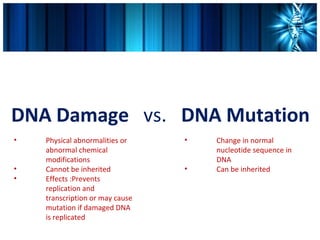
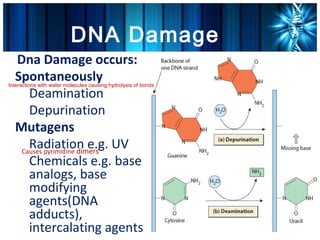
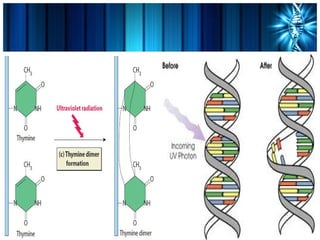
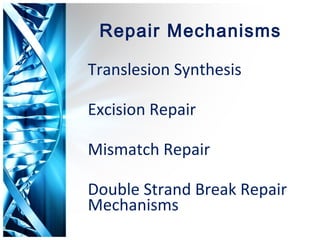
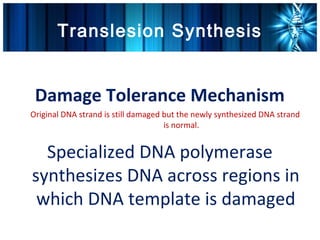
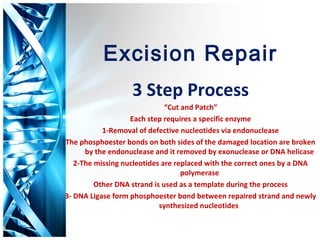
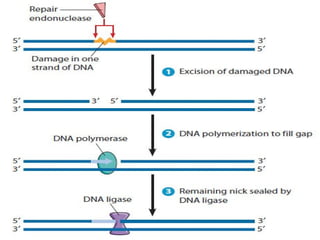
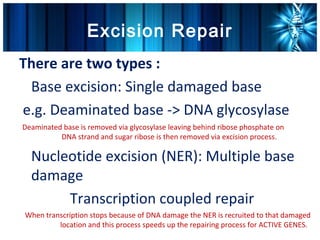
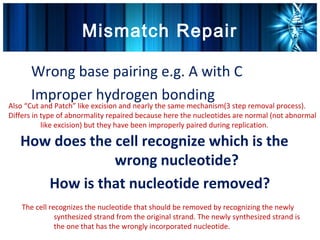
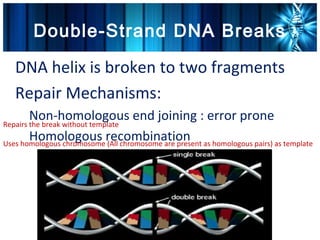

DNA can be damaged through spontaneous interactions with water molecules, exposure to mutagens like radiation or chemicals, or during DNA replication if a wrong nucleotide is incorporated. There are several DNA repair mechanisms to fix damage: translesion synthesis tolerates damage by replicating past it; excision repair cuts out the damaged section and replaces it with the correct nucleotides; mismatch repair fixes improperly paired bases; and double-strand break repair mechanisms like non-homologous end joining or homologous recombination are used to repair breaks in both strands of DNA. The cell can determine the correct nucleotide sequence using the newly synthesized strand as a guide since it contains the wrongly incorporated base.


