Download to read offline


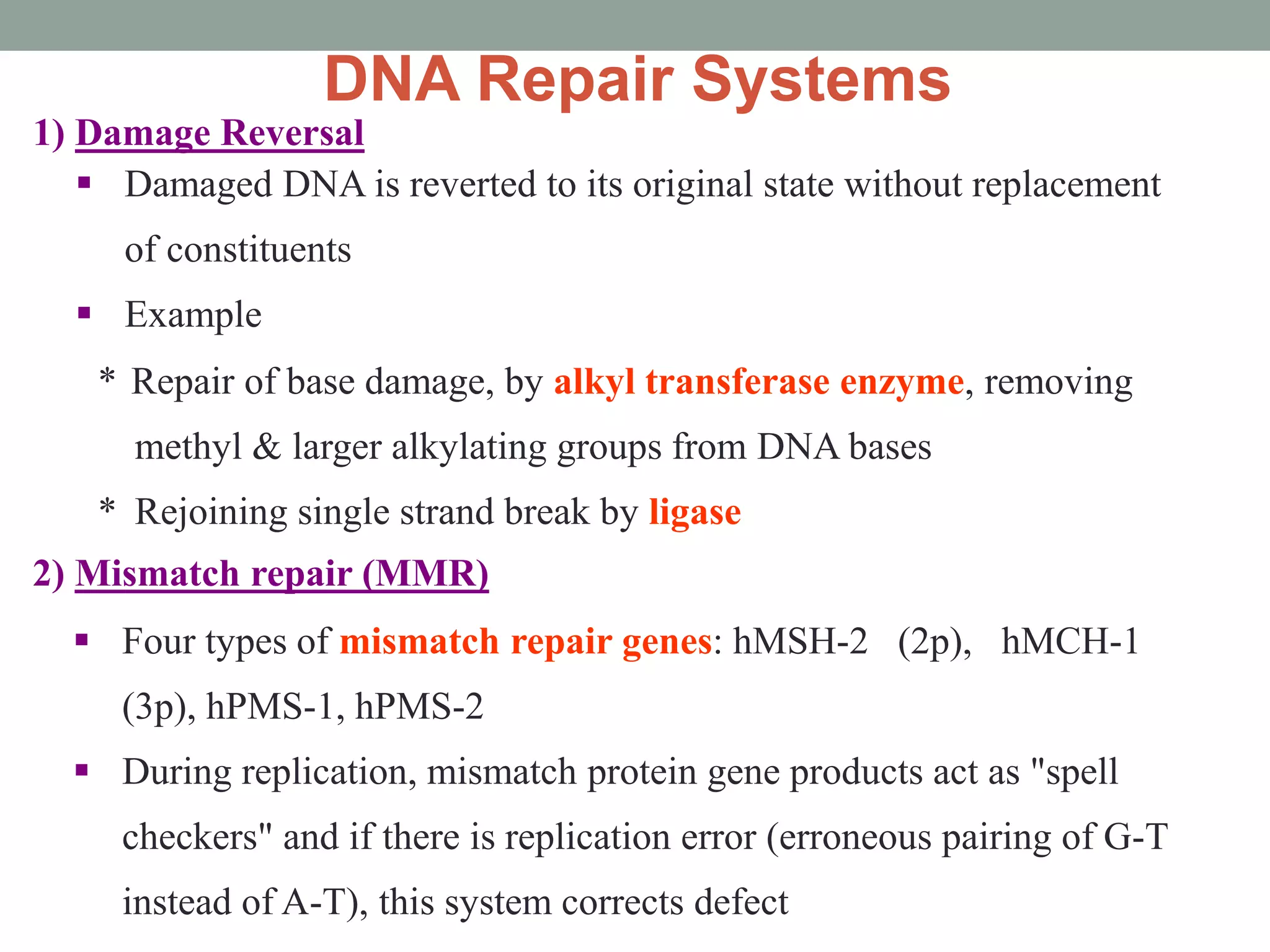

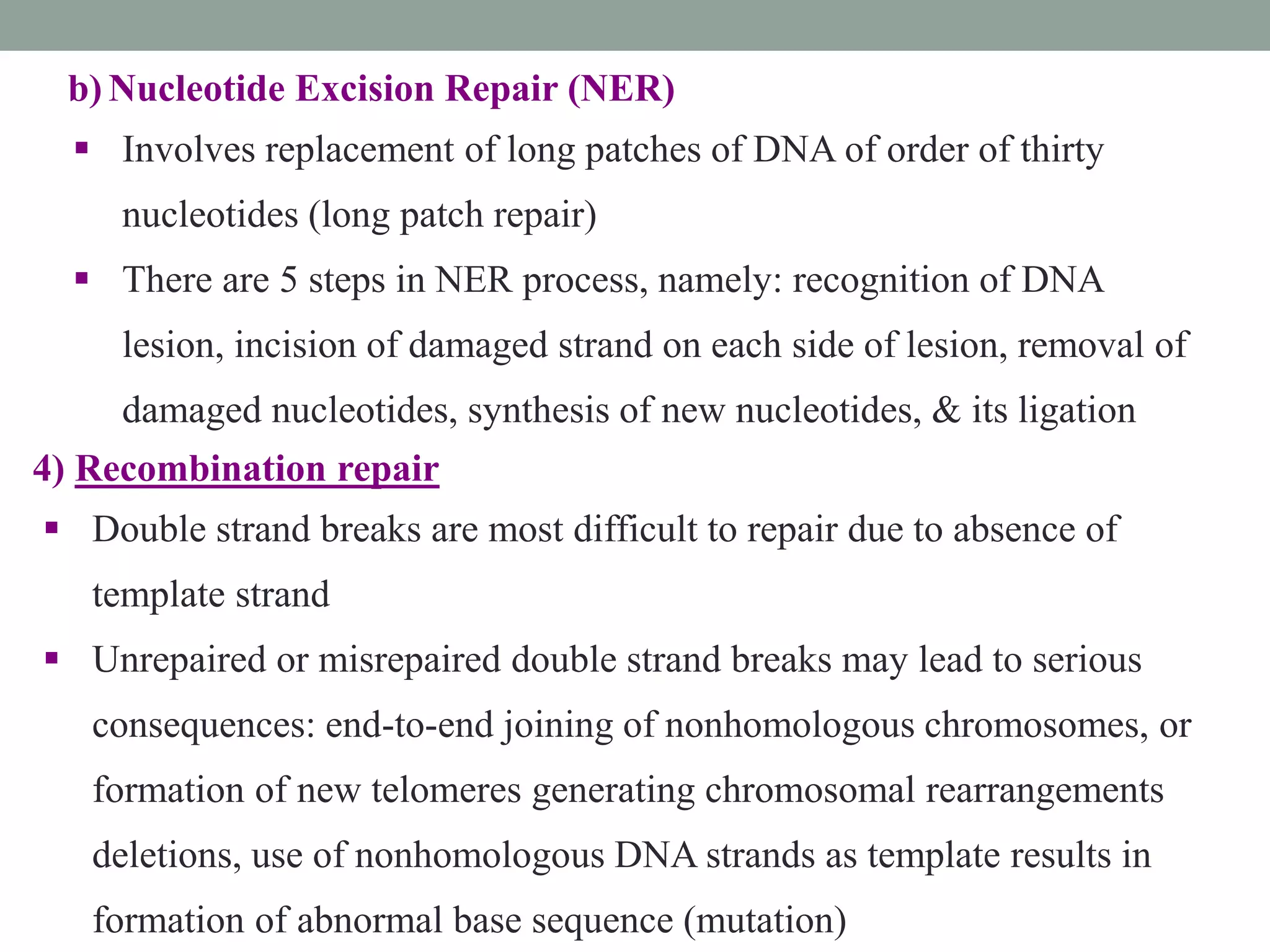
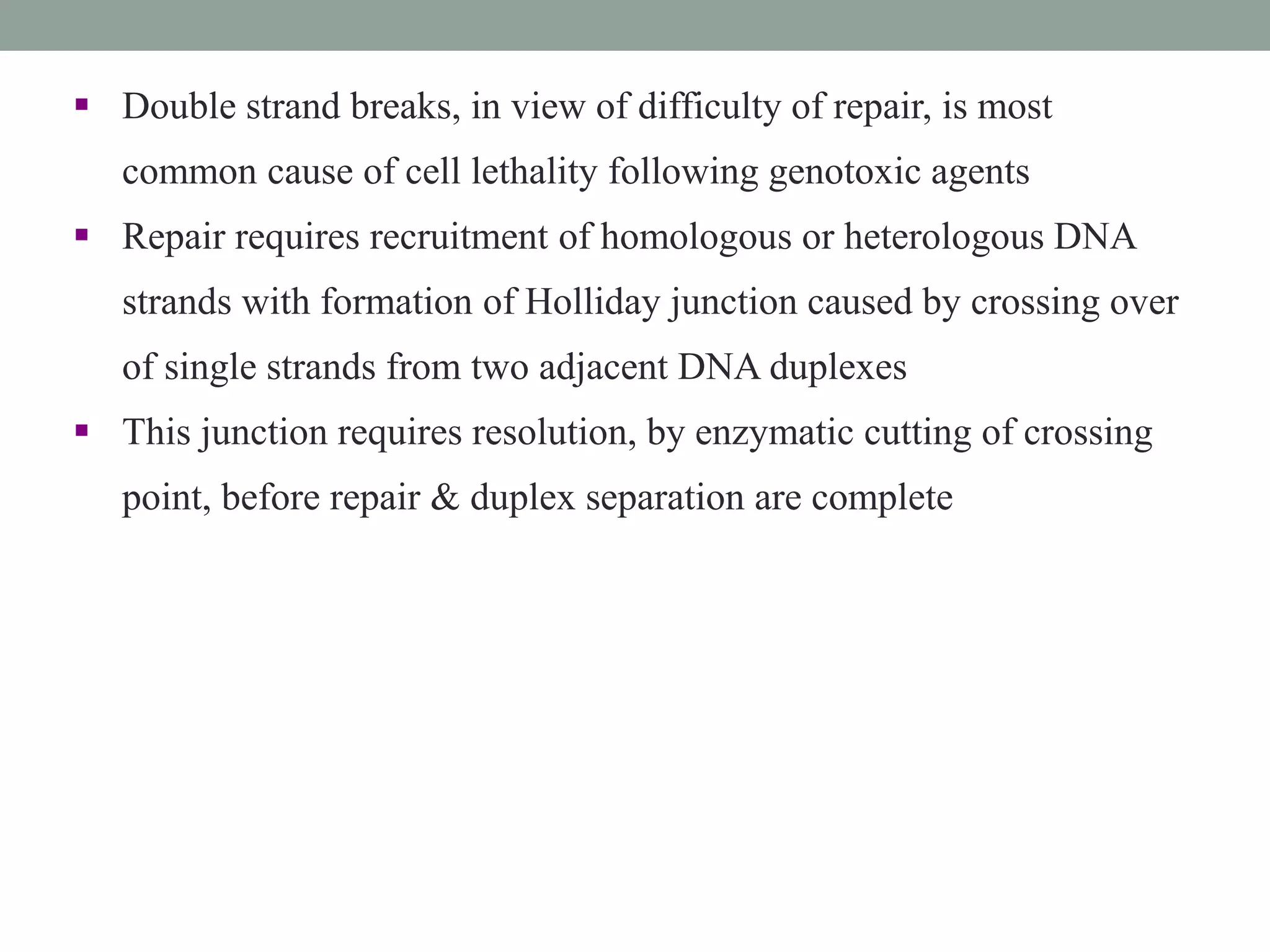

DNA repair systems help maintain the integrity of genetic material by correcting damage from mutagens. There are several types of DNA repair mechanisms, including direct damage reversal, mismatch repair, base excision repair, nucleotide excision repair, and recombination repair. Key DNA repair proteins like p53 play an important role in recognizing DNA damage and initiating cell cycle arrest to allow time for repair or inducing apoptosis if damage is irreparable. Double strand breaks are the most difficult to repair and can lead to chromosomal rearrangements if unrepaired.


