AbbasWael Abbas
Supervisor: Dr. Sultan Musleh
 Pancytopenia is a
 reduction in the number of 2 or more
▪ RBCs,
▪ WBCs and,
▪ platelets
 in the peripheral blood
 below the lower limits of the age-adjusted normal
range for healthy people.
 Therefore it is the combination of anemia,
leukopenia, and thrombocytopenia :-
 It may result from
 decreased production of blood cells or bone
marrow failure,
 immune-mediated destruction
 non-immune-mediated sequestration in the
periphery,
 Deficiency of factors stimulating haematopoiesis
• The diagnosis is made from the results of CBC,
 Congenital
 Fanconi’s Anemia
 Shwachman-Diamond syndrome
 Congenital aplastic anemia
 Etiology. autosomal recessive, defect in proteins
involved in DNA repair
 Clinical features
▪ bone marrow failure occurs at a mean age of 7 years.
Typical presentation is with ecchymosis and petechiae.
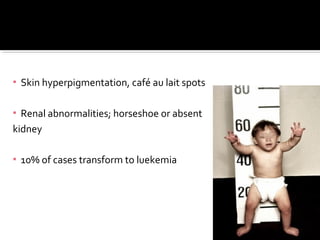
▪ Skeletal abnormalities; short stature in almost all
patients, and absence or hypoplasia of the thumb and
radius, microcephaly
▪ Skin hyperpigmentation, café au lait spots
▪ Renal abnormalities; horseshoe or absent
kidney
▪ 10% of cases transform to luekemia
 pancytopenia, RBC macrocytosis, low
reticulocyte count, elevated Hgb F, and bone
marrow hypocellularity
 The diagnosis is based on demonstration of
increased chromosomal breakage after
exposure to agents that damage DNA
 transfusions of RBCs and platelets as needed
 bone marrow transplant from an HLA-
compatible donor
 Corticosteroids
 Androgenic therapy; 20% of cases
 Autosomal recessive
 clinical feature:
malabsorption, short stature caused by metaphyseal
chondrodysplasia, marrow failure and neutropenia.
recurrent infections
▫ Mechanism : Decreased Marrow Production
• Conditions
▫ Cytotoxic Chemotherapy
▫ Radiation Therapy
▫ Megaloblastic anemia
▫ Bone Marrow Infiltration
▫ Viral Infections like CMV, EBV, HIV
▫ Hypersplenism
▫ Idiopathic Aplastic Anemia
▫ SLE, RA
 ‫والثالث‬ ‫التستماع‬ ‫حسن‬ ‫والثاني‬ ‫الصمت‬ ‫العلم‬ ‫أول‬
‫نشره‬ ‫والخامس‬ ‫به‬ ‫العمل‬ ‫والرابع‬ ‫حفظه‬

‫المنفلوطي‬ ‫لطفي‬ ‫مصطفى‬
 History
 Clinical Examination
 CBC
 Peripheral smear examination
 Bone Marrow Aspiration
 Bone Marrow Biopsy
 Other specific investigations
 Duration of symptoms
 H/o Transfusions
 H/o Haemoglobinuria
 Dietary history
 Family history
 Exposure to –
 Drugs ( sulfonamide, anticonvulsant, chloramphenicole)
 Chemicals
 Radiation
 Infections
 Weight loss, fever – malignancy & inflammatory
 Jaundice – Hep B & C
 Joint Pain – SLE
 Blood Loss
• A thorough physical exam is required, preferably by a
haematologist.
• Skin; petechiae, and purpura, hyperpigmintation
• Lymphadenopathy
• splenomegaly.
The following reference points to specific organ systems and
associated conditions and is helpful to guide the examination.
• Eye examination
▫ Jaundiced sclera (paroxysmal nocturnal hemoglobinuria,
hepatitis, cirrhosis)
▫ Epiphora (dyskeratosis congenita)
• Oral examination
▫ Stomatitis or cheilitis (neutropenia, vitamin B12 deficiency)
▫ Gingival hyperplasia (leukemia)
▫ Oral candidiasis or pharyngeal exudate (neutropenia, herpes
family virus infections)
• Cardiovascular examination
▫ Tachycardia, edema, congestive cardiac failure
▫ Exercise intolerance
▫ Systolic flow murmur
▫ Tachypnea (sign of symptomatic anemia)
• Abdominal examination
▫ Right upper quadrant tenderness (hepatitis)
• Musculoskeletal examination
▫ Short stature (Fanconi anemia, other congenital syndromes)
▫ Swelling/synovitis (SLE)
▫ Abnormal thumbs (e.g., Fanconi anemia)
• A CBC and examination of peripheral blood film by a
hematologist are essential. A standard battery of
evaluative tests may include:
▫ Serum reticulocyte count
▫ Serum LFTs
▫ Hepatic serology
▫ Serum coagulation profile, bleeding time, fibrinogen, and D-
dimer
▫ Coombs test
▫ Serum B12 and folate
▫ Serum HIV and nucleic acid testing.
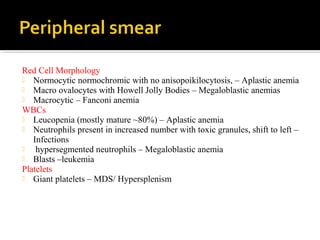
Red Cell Morphology
 Normocytic normochromic with no anisopoikilocytosis, – Aplastic anemia
 Macro ovalocytes with Howell Jolly Bodies – Megaloblastic anemias
 Macrocytic – Fanconi anemia
WBCs
 Leucopenia (mostly mature ~80%) – Aplastic anemia
 Neutrophils present in increased number with toxic granules, shift to left –
Infections
 hypersegmented neutrophils – Megaloblastic anemia
 Blasts –leukemia
Platelets
 Giant platelets – MDS/ Hypersplenism
Aspiration and biopsy
 Hypocellular
 Cellular
 Bone marrow filtration
 thank you

Pancytopenia among pediatric pateint

  • 1.
  • 2.
     Pancytopenia isa  reduction in the number of 2 or more ▪ RBCs, ▪ WBCs and, ▪ platelets  in the peripheral blood  below the lower limits of the age-adjusted normal range for healthy people.
  • 3.
     Therefore itis the combination of anemia, leukopenia, and thrombocytopenia :-
  • 4.
     It mayresult from  decreased production of blood cells or bone marrow failure,  immune-mediated destruction  non-immune-mediated sequestration in the periphery,  Deficiency of factors stimulating haematopoiesis
  • 5.
    • The diagnosisis made from the results of CBC,
  • 7.
     Congenital  Fanconi’sAnemia  Shwachman-Diamond syndrome
  • 8.
     Congenital aplasticanemia  Etiology. autosomal recessive, defect in proteins involved in DNA repair  Clinical features ▪ bone marrow failure occurs at a mean age of 7 years. Typical presentation is with ecchymosis and petechiae. ▪ Skeletal abnormalities; short stature in almost all patients, and absence or hypoplasia of the thumb and radius, microcephaly
  • 9.
    ▪ Skin hyperpigmentation,café au lait spots ▪ Renal abnormalities; horseshoe or absent kidney ▪ 10% of cases transform to luekemia
  • 10.
     pancytopenia, RBCmacrocytosis, low reticulocyte count, elevated Hgb F, and bone marrow hypocellularity  The diagnosis is based on demonstration of increased chromosomal breakage after exposure to agents that damage DNA
  • 11.
     transfusions ofRBCs and platelets as needed  bone marrow transplant from an HLA- compatible donor  Corticosteroids  Androgenic therapy; 20% of cases
  • 12.
     Autosomal recessive clinical feature: malabsorption, short stature caused by metaphyseal chondrodysplasia, marrow failure and neutropenia. recurrent infections
  • 13.
    ▫ Mechanism :Decreased Marrow Production • Conditions ▫ Cytotoxic Chemotherapy ▫ Radiation Therapy ▫ Megaloblastic anemia ▫ Bone Marrow Infiltration ▫ Viral Infections like CMV, EBV, HIV ▫ Hypersplenism ▫ Idiopathic Aplastic Anemia ▫ SLE, RA
  • 14.
     ‫والثالث‬ ‫التستماع‬‫حسن‬ ‫والثاني‬ ‫الصمت‬ ‫العلم‬ ‫أول‬ ‫نشره‬ ‫والخامس‬ ‫به‬ ‫العمل‬ ‫والرابع‬ ‫حفظه‬  ‫المنفلوطي‬ ‫لطفي‬ ‫مصطفى‬
  • 15.
     History  ClinicalExamination  CBC  Peripheral smear examination  Bone Marrow Aspiration  Bone Marrow Biopsy  Other specific investigations
  • 16.
     Duration ofsymptoms  H/o Transfusions  H/o Haemoglobinuria  Dietary history  Family history  Exposure to –  Drugs ( sulfonamide, anticonvulsant, chloramphenicole)  Chemicals  Radiation  Infections  Weight loss, fever – malignancy & inflammatory  Jaundice – Hep B & C  Joint Pain – SLE  Blood Loss
  • 17.
    • A thoroughphysical exam is required, preferably by a haematologist. • Skin; petechiae, and purpura, hyperpigmintation • Lymphadenopathy • splenomegaly.
  • 18.
    The following referencepoints to specific organ systems and associated conditions and is helpful to guide the examination. • Eye examination ▫ Jaundiced sclera (paroxysmal nocturnal hemoglobinuria, hepatitis, cirrhosis) ▫ Epiphora (dyskeratosis congenita) • Oral examination ▫ Stomatitis or cheilitis (neutropenia, vitamin B12 deficiency) ▫ Gingival hyperplasia (leukemia) ▫ Oral candidiasis or pharyngeal exudate (neutropenia, herpes family virus infections)
  • 19.
    • Cardiovascular examination ▫Tachycardia, edema, congestive cardiac failure ▫ Exercise intolerance ▫ Systolic flow murmur ▫ Tachypnea (sign of symptomatic anemia) • Abdominal examination ▫ Right upper quadrant tenderness (hepatitis) • Musculoskeletal examination ▫ Short stature (Fanconi anemia, other congenital syndromes) ▫ Swelling/synovitis (SLE) ▫ Abnormal thumbs (e.g., Fanconi anemia)
  • 20.
    • A CBCand examination of peripheral blood film by a hematologist are essential. A standard battery of evaluative tests may include: ▫ Serum reticulocyte count ▫ Serum LFTs ▫ Hepatic serology ▫ Serum coagulation profile, bleeding time, fibrinogen, and D- dimer ▫ Coombs test ▫ Serum B12 and folate ▫ Serum HIV and nucleic acid testing.
  • 21.
    Red Cell Morphology Normocytic normochromic with no anisopoikilocytosis, – Aplastic anemia  Macro ovalocytes with Howell Jolly Bodies – Megaloblastic anemias  Macrocytic – Fanconi anemia WBCs  Leucopenia (mostly mature ~80%) – Aplastic anemia  Neutrophils present in increased number with toxic granules, shift to left – Infections  hypersegmented neutrophils – Megaloblastic anemia  Blasts –leukemia Platelets  Giant platelets – MDS/ Hypersplenism
  • 22.
    Aspiration and biopsy Hypocellular  Cellular  Bone marrow filtration
  • 24.

Editor's Notes

  • #14 Hypersplenism may be the result of anatomic causes (portal hypertension or splenic hypertrophy from thalassemia); infections (including malaria); or storage diseases (Gaucher disease, lymphomas, or histiocytosis). Splenectomy is indicated only when the
  • #17 Anti cancer, Antibiotic, Anti epileptics, Anti thyroid (Aplastic) Barbiturates, Phenytoin, OCP ( B12 & FA