Abbas Wael Abbas
1
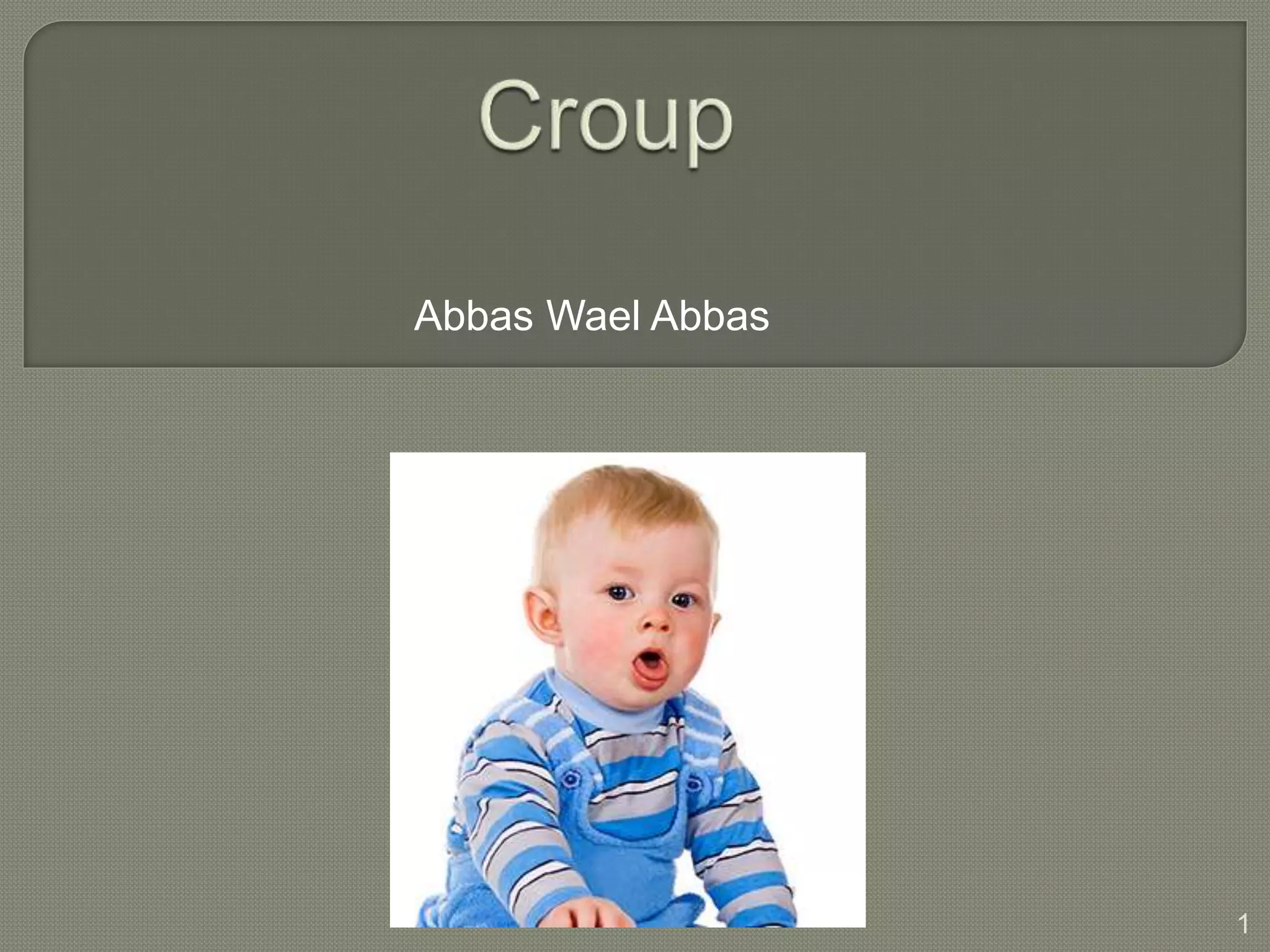
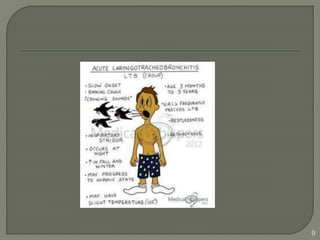
croup refers to a heterogeneous group of
mainly acute and infectious processes that are
characterized by a bark- like or brassy cough
and may be associated with hoarseness,
inspiratory stridor, and respiratory distress
spasmodic or laryngotracheobronchitis
2
Most common cause of upper airway acute
infection is virus , except ?
parainfuenza viruses (types 1, 2, and 3) 75% of
cases
Infuenza A is associated with severe
laryngotracheobronchitis
adenovirus, RSV , and measles
M.pneumoniae rare cause, mild
3
Most patient between 3 mo and 5 yr, with the
peak in the 2nd yr of life
more common in boys
most commonly in the late fall and winter
15% of patients have a strong family history of
croup
4
most common form of acute upper respiratory
obstruction
low-grade fever 1-3 days before the signs and
symptoms of upper airway obstruction become
apparent
rhinorrhea, pharyngitis, mild cough
barking cough, hoarseness, and inspiratory
stridor
5
 child may prefer to sit up in bed or be held upright
 Symptoms are characteristically worse at night
And aggravated by agitation and crying
 resolve completely within a week
 Other family members might have mild respiratory
illnesses with laryngitis.
6
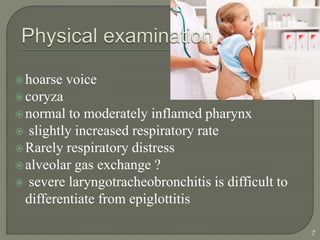
hoarse voice
coryza
normal to moderately inflamed pharynx
 slightly increased respiratory rate
Rarely respiratory distress
alveolar gas exchange ?
 severe laryngotracheobronchitis is difficult to
differentiate from epiglottitis
7
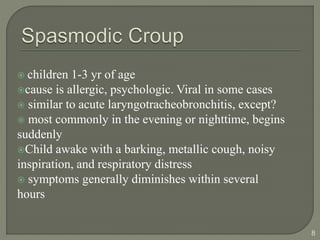
 children 1-3 yr of age
cause is allergic, psychologic. Viral in some cases
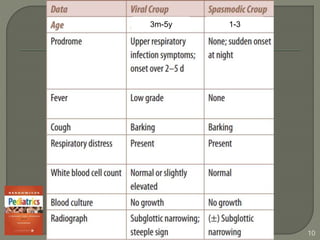
 similar to acute laryngotracheobronchitis, except?
 most commonly in the evening or nighttime, begins
suddenly
Child awake with a barking, metallic cough, noisy
inspiration, and respiratory distress
 symptoms generally diminishes within several
hours
8
9
1-33m-5y
10
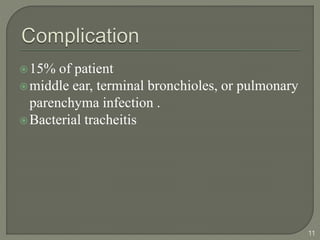
15% of patient
middle ear, terminal bronchioles, or pulmonary
parenchyma infection .
Bacterial tracheitis
11
12
13
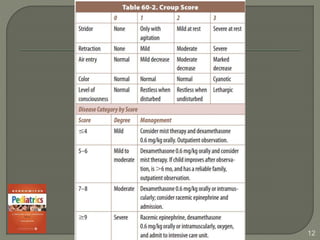
The mainstay of treatment for children with
croup is airway management and treatment of
hypoxia
Most children with either acute spasmodic
croup or infectious croup can be managed
safely at home
observation showed cold night air is benefcial,
a Cochrane review has found no evidence
supporting
14
 Beneficial in mild, moderate, sever if given in the
first 3 days
 single dose of 0.6 mg/ kg. a dose as low as 0.15
mg/kg may be just as effective
 oral dose of dexamethasone as effective as
intramuscular. Nebulized budesonide
 oral prednisolone is less effective
 adverse effect candida albican laryngotracheitis in
patient who received dexamethasone, 1 mg/ kg/24
hr, for 8 days.
15
Nebulized racemic epinephrine is an
accepted treatment for moderate or severe
croup
decrease the laryngeal mucosal edema
dose of 0.25-0.5 mL of 2.25% racemic epineph-
rine in 3 mL of normal saline.
can be used as often as every 20 min
There is evidence that l-epinephrine (5 mL of
1:1,000 solution) is equally effective as
racemic epinephrine
16
 Duration of activity < 2h
 observe 2-3 h then discharge
17
Antibiotics are not indicated in croup.
Nonprescription cough and cold medications
should not be used in children < 4 yr
A helium-oxygen mixture (heliox) may be
considered in children with severe croup for
whom intubation is being considered
although the evidence is inconclusive
18
progressive stridor
severe stridor at rest
 respiratory distress
hypoxia
cyanosis
depressed mental status
 poor oral intake
the need for reliable observation
19
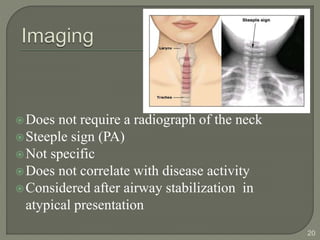
Does not require a radiograph of the neck
Steeple sign (PA)
Not specific
Does not correlate with disease activity
Considered after airway stabilization in
atypical presentation
20
Thank you
21

Croup laryngotracheobronchitis 2015

  • 1.
  • 2.
    croup refers toa heterogeneous group of mainly acute and infectious processes that are characterized by a bark- like or brassy cough and may be associated with hoarseness, inspiratory stridor, and respiratory distress spasmodic or laryngotracheobronchitis 2
  • 3.
    Most common causeof upper airway acute infection is virus , except ? parainfuenza viruses (types 1, 2, and 3) 75% of cases Infuenza A is associated with severe laryngotracheobronchitis adenovirus, RSV , and measles M.pneumoniae rare cause, mild 3
  • 4.
    Most patient between3 mo and 5 yr, with the peak in the 2nd yr of life more common in boys most commonly in the late fall and winter 15% of patients have a strong family history of croup 4
  • 5.
    most common formof acute upper respiratory obstruction low-grade fever 1-3 days before the signs and symptoms of upper airway obstruction become apparent rhinorrhea, pharyngitis, mild cough barking cough, hoarseness, and inspiratory stridor 5
  • 6.
     child mayprefer to sit up in bed or be held upright  Symptoms are characteristically worse at night And aggravated by agitation and crying  resolve completely within a week  Other family members might have mild respiratory illnesses with laryngitis. 6
  • 7.
    hoarse voice coryza normal tomoderately inflamed pharynx  slightly increased respiratory rate Rarely respiratory distress alveolar gas exchange ?  severe laryngotracheobronchitis is difficult to differentiate from epiglottitis 7
  • 8.
     children 1-3yr of age cause is allergic, psychologic. Viral in some cases  similar to acute laryngotracheobronchitis, except?  most commonly in the evening or nighttime, begins suddenly Child awake with a barking, metallic cough, noisy inspiration, and respiratory distress  symptoms generally diminishes within several hours 8
  • 9.
  • 10.
  • 11.
    15% of patient middleear, terminal bronchioles, or pulmonary parenchyma infection . Bacterial tracheitis 11
  • 12.
  • 13.
  • 14.
    The mainstay oftreatment for children with croup is airway management and treatment of hypoxia Most children with either acute spasmodic croup or infectious croup can be managed safely at home observation showed cold night air is benefcial, a Cochrane review has found no evidence supporting 14
  • 15.
     Beneficial inmild, moderate, sever if given in the first 3 days  single dose of 0.6 mg/ kg. a dose as low as 0.15 mg/kg may be just as effective  oral dose of dexamethasone as effective as intramuscular. Nebulized budesonide  oral prednisolone is less effective  adverse effect candida albican laryngotracheitis in patient who received dexamethasone, 1 mg/ kg/24 hr, for 8 days. 15
  • 16.
    Nebulized racemic epinephrineis an accepted treatment for moderate or severe croup decrease the laryngeal mucosal edema dose of 0.25-0.5 mL of 2.25% racemic epineph- rine in 3 mL of normal saline. can be used as often as every 20 min There is evidence that l-epinephrine (5 mL of 1:1,000 solution) is equally effective as racemic epinephrine 16
  • 17.
     Duration ofactivity < 2h  observe 2-3 h then discharge 17
  • 18.
    Antibiotics are notindicated in croup. Nonprescription cough and cold medications should not be used in children < 4 yr A helium-oxygen mixture (heliox) may be considered in children with severe croup for whom intubation is being considered although the evidence is inconclusive 18
  • 19.
    progressive stridor severe stridorat rest  respiratory distress hypoxia cyanosis depressed mental status  poor oral intake the need for reliable observation 19
  • 20.
    Does not requirea radiograph of the neck Steeple sign (PA) Not specific Does not correlate with disease activity Considered after airway stabilization in atypical presentation 20
  • 21.