Digoxin toxicity
Introduction 
 One of top toxins in the world because 
of the wide availability of digoxin and a 
narrow therapeutic window. 
 Digitalis is a plant-derived cardiac 
glycoside commonly used in the treatment 
of congestive heart failure (CHF), atrial 
fibrillation, and reentrant supraventricular 
tachycardia. 
 Digoxin-specific fragment antigen-binding 
(Fab) antibody has contributed 
significantly to the improved morbidity 
and mortality of toxic patients
Mechanism Of Action 
The positive inotropic effect of digitalis has 
the following component: 
 Direct inhibition of membrane-bound 
Na+/K+ -ATPase, which pumps 3 Na+ 
outside the cell in exchange with 2 K+ 
inside the cell which is responsible for 
maintenance of resting membrane 
potential (RMP) in most excitable cells. 
 This leads to an increase intracellular 
sodium gradually, and a gradual, small 
decrease in intracellular potassium.
 Cardiac fiber [Ca2+] is exchanged for 
extracellular sodium (3:1 ratio) by by 
Na+/Ca+ exchanger transport system that 
is driven by the concentration gradient for 
these ions and the transmembrane 
potential; increase in [Na+]i is related 
crucially to the positive inotropic effect of 
digitalis. 
 Facilitation of Ca+ entry through the 
voltage gated Ca+ channels of the 
membrane. That is associated with 
increase in slow inward calcium current 
during the plateau of action potential.
 They exert negative chronotropic effect 
through vagal and extravagal stimulation. 
 They decrease AV conduction through 
direct action on the myocardium and vagal 
stimulation. 
 They increase heart automaticity in 
overdose only leading to pulse bigeminus 
and pulse trigeminus.
Digoxin pharmacokinetics 
 The therapeutic daily dose of digoxin 
ranges from 5-15mcg/kg. 
 its bioavailability is 95%. 
 The kidney excretes 60-80% of the 
digoxin dose unchanged. 
 The onset of action by oral administration 
occurs in 30-120 minutes 
 the onset of action with intravenous 
administration occurs in 5-30 minutes. 
 Only 1% of the total amount of digoxin in 
the body is in the serum; of that amount 
about 30 % bound to plasma proteins.
 Large volume of distribution about 8L. 
 A dose less than 5 mg is rarely to cause 
toxicity, however a dose higher than 11 mg 
may be fatal 
 In pediatrics a dose higher than 4 mg can 
cause toxicity. 
 During pregnancy Digoxin is used widely in 
the acute management and prophylaxis of 
fetal paroxysmal supraventricular tachycardia, 
as well as in rate control of atrial fibrillation. It 
is a category C drug. Increased digoxin 
dosage may be necessary during 
pregnancy because of enhanced renal 
clearance and expanded blood volume.
Pathophysiology 
 1. Cardiac: Dysrrhythmia 
 Alterations in cardiac rate and rhythm 
occurring in digitalis toxicity may simulate 
almost every known type of dysrhythmia. 
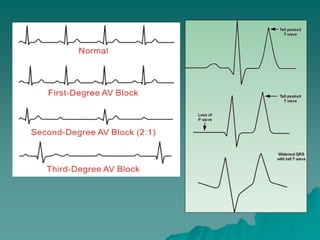
- Decrease AV conduction leading to 
bradycardia and heart block (first, second, 
third). 
Indeed, AV junctional block of varying 
degrees, alone or with increased 
ventricular automaticity, are the most 
common manifestations of digoxin 
toxicity, occurring in 30-40% of patients 
with recognized digoxin toxicity.
- Increase automaticity leading to several 
types of tachyarrhythmias. 
When conduction and the normal pacemaker 
are both depressed, ectopic pacemakers may 
take over, producing atrial and ventricular 
tachycardia. 
2- Arrhythmias can cause inadequate tissue 
perfusion, with resultant central nervous 
system (CNS) and renal mplications such 
as the following: 
 Hypoxic seizures 
 Acute tubular necrosis
 3- Hyperkalemia is the major electrolytic 
complication in acute, massive digitoxin 
poisoning. In addition hyperkalmemia slows 
AV conduction adding to digoxin toxicity. 
 Hypokalemia is seen with chronic toxicity. 
 4- GIT manifestations: 
nausea, vomiting, abdominal pain, anorexia 
Digitalis preparation cause nausea and 
vomiting where it increases vagal 
stimulation and activates chemoreceptor 
trigger zone. 
 5- Visual disturbance: colored vision (yellow 
and green patches), Scotomata, diplopia. 

Clinical digoxin toxicity represents a complex 
interaction between digoxin and various 
electrolyte and renal abnormalities. 
 A patient with normal digoxin levels (0.5-2 
ng/mL) but renal insufficiency or severe 
hypokalemia may have more serious 
cardiotoxicity than a patient with high 
digoxin levels and no renal or electrolyte 
disturbances. 
 The most common precipitating cause of 
digitalis intoxication is depletion of potassium 
stores, which occurs often in patients with 
heart failure as a result of diuretic therapy 
and secondary hyperaldosteronism.
 Deteriorating renal function, dehydration, 
electrolyte disturbances, or drug 
interactions usually precipitate chronic 
toxicity. 
 Acute overdose or accidental exposure to 
plants containing cardiac glycosides may 
cause acute toxicity. 
 Erroneous dosing, especially in infants 
receiving parenteral digoxin, is a frequent 
cause of digoxin toxicity and is usually 
associated with high mortality. 
 Acute, nontherapeutic overdose— 
unintentional, suicidal, or homicidal—can 
cause toxicity
Drug Interaction 
 Some medications directly increase 
digoxin plasma levels; other medications 
alter renal excretion or induce electrolyte 
abnormalities. Drugs that have been 
reported to cause digoxin toxicity include 
the following: 
 Amiloride 
 Amiodarone - Reduces renal clearance of 
digoxin and may have additive effects on 
the heart rate 
 Benzodiazepines (alprazolam, diazepam) -
 Beta blockers May have additive effects on 
the heart rate 
 Calcium channel blockers - Diltiazem and 
verapamil increase serum digoxin levels; 
not all calcium channel blockers share this 
effect. 
 Cyclosporine, Erythromycin, 
clarithromycin, and tetracyclines, 
Propafenone 
 Quinidine - Increases digoxin level 
substantially 
 Propylthiouracil,Indomethacin,
 Spironolactone, Hydrochlorothiazide, 
Furosemide and other loop diuretics, 
Triamterene 
 Amphotericin B - May precipitate 
hypokalemia and subsequent digoxin 
toxicity 
 Herb/nutraceutical - Avoid ephedra (risk 
of cardiac stimulation); avoid natural 
licorice (causes sodium and water 
retention and increases potassium loss) 
 Increase patient awareness about the 
symptoms of digitalis toxicity. 
 In addition, educate patients about drug 
interactions and about maintaining 
adequate hydration.
Work up 
 Prognosis in digitalis toxicity is poor with 
increasing age and associated comorbid 
conditions. Morbidity and mortality rates 
increase if the patient has a dysrhythmia, 
advanced AV block, or other significant 
ECG abnormality. 
 The lethal dose of most glycosides is 
approximately 5-10 times the minimal 
effective dose and only about twice the 
dose that leads to minor toxic 
manifestations.
 Usually arrhythmia, and hyperkalemia 
suggestive of acute toxicity (usually common 
in young indidiuals, bradryarythmias are more 
common) 
 - Visual disturbances and hypokalemia in 
chronic toxicity (usually in old patients on 
digoxin treatment, all types of arrhythmia 
more commonly tachyarrhythmias) 
 The plasma digoxin level can be used to 
monitor compliance and toxicity and can be 
used as a guide to the appropriate dosing of 
medication (TDM). 
 Therapeutic digoxin levels vary; the lower limit 
ranges from 0.6-1.3 ng/mL, while the upper 
limit generally is agreed to be 2.6 ng/mL.
 False-negative assay results may occur in 
the setting of acute ingestion of nondigoxin 
cardiac glycosides, such as foxglove and 
oleander, even in the setting of profound 
clinical toxicity. 
 Initial potassium levels are better correlated 
with the prognosis than either ECG changes 
or the initial serum digoxin level. In one 
monitor, all patients with an initial potassium 
level greater than 5.5 died
 Measure Na+, K+, Cl-, CO2-, Mg++, Ca++, 
blood urea nitrogen (BUN), and creatinine 
levels. 
 Long-term digoxin users often have 
hypomagnesemia secondary to diuretic 
usage. Intracellular magnesium depletion 
may occur in long-term diuretic use 
despite a normal serum magnesium level. 
Importantly, magnesium is a cofactor of 
the Na+/K+ -ATPase pump, and alterations 
of its concentration will affect the pump's 
actions.
ECG shows any of the following 
 Atrial fibrillation with slow, regular 
ventricular rate 
 Atrial tachycardia with block (atrial 
rate usually 150-200 bpm) 
 Bidirectional ventricular tachycardia 
 Inverted T wave 
 Peaked T wave (hyperkalemia) 
 Torsade de pointes
Managment 
 hydration with IV fluids, oxygenation and 
support of ventilatory function, 
discontinuation of the drug, and, 
sometimes, the correction of electrolyte 
imbalances. 
 Fab antibody fragments are extremely 
effective in the treatment of severe, acute 
digitalis toxicity
 Management of arrhythmia: 
– In case of tachycardia: give lidocaine or 
phenytoin (No effect on AV conduction). 
– In case of bradycardia: give atropine. 
– In case of hyperkalemia: give EDTA and 
give insulin + glucose to shift K+ 
intracellularly. 
- Ca gluconate is contraindicated because 
of Ca, Ca contraindicated) 

 Correction of electrolyte disturbances as 
hypo and hyper kalemia 
 Correct hypomagnesemia in cases of 
tachycardia. Give 1-2 g Mg sulfate even 
with normal Mg levels it also may act as 
an indirect antagonist of digoxin at the 
supraphysiologic level. 
 Temporary pacing is an alternative for 
patients with nodal blocks before any 
other medical interventions are 
attempted. 
 Electrocardioversion is not recommended 
except with specific cases
GI Decontamination and 
Enhanced Elimination 
 The first-line treatment for acute ingestion 
is gastric lavage with repeated dosing of 
activated charcoal to reduce absorption 
and interrupt enterohepatic circulation. It 
is most effective if ingestion has occurred 
within 6-8 hours. 
 Pretreatment with atropine has been 
recommended to decrease the incidence 
of AV block or bradycardia as a result of 
increased vagal tone caused by gastric 
lavage.
 To break enterohepatic circulation, use 
binding resins, such as cholestyramine. 
 Induced emesis with ipecac syrup - Not 
recommended, because of the increased 
vagal effect 
 Whole-bowel irrigation - May be useful, 
but clinical data are lacking 
 Forced diuresis - Not recommended, 
because it has not been shown to increase 
renal excretion and can worsen electrolyte 
abnormalities 
 Dialysis - Has been shown to produce only 
small-added clearances unless severe 
hyprekalemia
Digoxin toxicity

Digoxin toxicity

  • 1.
  • 2.
    Introduction  Oneof top toxins in the world because of the wide availability of digoxin and a narrow therapeutic window.  Digitalis is a plant-derived cardiac glycoside commonly used in the treatment of congestive heart failure (CHF), atrial fibrillation, and reentrant supraventricular tachycardia.  Digoxin-specific fragment antigen-binding (Fab) antibody has contributed significantly to the improved morbidity and mortality of toxic patients
  • 3.
    Mechanism Of Action The positive inotropic effect of digitalis has the following component:  Direct inhibition of membrane-bound Na+/K+ -ATPase, which pumps 3 Na+ outside the cell in exchange with 2 K+ inside the cell which is responsible for maintenance of resting membrane potential (RMP) in most excitable cells.  This leads to an increase intracellular sodium gradually, and a gradual, small decrease in intracellular potassium.
  • 4.
     Cardiac fiber[Ca2+] is exchanged for extracellular sodium (3:1 ratio) by by Na+/Ca+ exchanger transport system that is driven by the concentration gradient for these ions and the transmembrane potential; increase in [Na+]i is related crucially to the positive inotropic effect of digitalis.  Facilitation of Ca+ entry through the voltage gated Ca+ channels of the membrane. That is associated with increase in slow inward calcium current during the plateau of action potential.
  • 5.
     They exertnegative chronotropic effect through vagal and extravagal stimulation.  They decrease AV conduction through direct action on the myocardium and vagal stimulation.  They increase heart automaticity in overdose only leading to pulse bigeminus and pulse trigeminus.
  • 7.
    Digoxin pharmacokinetics The therapeutic daily dose of digoxin ranges from 5-15mcg/kg.  its bioavailability is 95%.  The kidney excretes 60-80% of the digoxin dose unchanged.  The onset of action by oral administration occurs in 30-120 minutes  the onset of action with intravenous administration occurs in 5-30 minutes.  Only 1% of the total amount of digoxin in the body is in the serum; of that amount about 30 % bound to plasma proteins.
  • 8.
     Large volumeof distribution about 8L.  A dose less than 5 mg is rarely to cause toxicity, however a dose higher than 11 mg may be fatal  In pediatrics a dose higher than 4 mg can cause toxicity.  During pregnancy Digoxin is used widely in the acute management and prophylaxis of fetal paroxysmal supraventricular tachycardia, as well as in rate control of atrial fibrillation. It is a category C drug. Increased digoxin dosage may be necessary during pregnancy because of enhanced renal clearance and expanded blood volume.
  • 9.
    Pathophysiology  1.Cardiac: Dysrrhythmia  Alterations in cardiac rate and rhythm occurring in digitalis toxicity may simulate almost every known type of dysrhythmia. - Decrease AV conduction leading to bradycardia and heart block (first, second, third). Indeed, AV junctional block of varying degrees, alone or with increased ventricular automaticity, are the most common manifestations of digoxin toxicity, occurring in 30-40% of patients with recognized digoxin toxicity.
  • 10.
    - Increase automaticityleading to several types of tachyarrhythmias. When conduction and the normal pacemaker are both depressed, ectopic pacemakers may take over, producing atrial and ventricular tachycardia. 2- Arrhythmias can cause inadequate tissue perfusion, with resultant central nervous system (CNS) and renal mplications such as the following:  Hypoxic seizures  Acute tubular necrosis
  • 11.
     3- Hyperkalemiais the major electrolytic complication in acute, massive digitoxin poisoning. In addition hyperkalmemia slows AV conduction adding to digoxin toxicity.  Hypokalemia is seen with chronic toxicity.  4- GIT manifestations: nausea, vomiting, abdominal pain, anorexia Digitalis preparation cause nausea and vomiting where it increases vagal stimulation and activates chemoreceptor trigger zone.  5- Visual disturbance: colored vision (yellow and green patches), Scotomata, diplopia. 
  • 13.
    Clinical digoxin toxicityrepresents a complex interaction between digoxin and various electrolyte and renal abnormalities.  A patient with normal digoxin levels (0.5-2 ng/mL) but renal insufficiency or severe hypokalemia may have more serious cardiotoxicity than a patient with high digoxin levels and no renal or electrolyte disturbances.  The most common precipitating cause of digitalis intoxication is depletion of potassium stores, which occurs often in patients with heart failure as a result of diuretic therapy and secondary hyperaldosteronism.
  • 14.
     Deteriorating renalfunction, dehydration, electrolyte disturbances, or drug interactions usually precipitate chronic toxicity.  Acute overdose or accidental exposure to plants containing cardiac glycosides may cause acute toxicity.  Erroneous dosing, especially in infants receiving parenteral digoxin, is a frequent cause of digoxin toxicity and is usually associated with high mortality.  Acute, nontherapeutic overdose— unintentional, suicidal, or homicidal—can cause toxicity
  • 16.
    Drug Interaction Some medications directly increase digoxin plasma levels; other medications alter renal excretion or induce electrolyte abnormalities. Drugs that have been reported to cause digoxin toxicity include the following:  Amiloride  Amiodarone - Reduces renal clearance of digoxin and may have additive effects on the heart rate  Benzodiazepines (alprazolam, diazepam) -
  • 17.
     Beta blockersMay have additive effects on the heart rate  Calcium channel blockers - Diltiazem and verapamil increase serum digoxin levels; not all calcium channel blockers share this effect.  Cyclosporine, Erythromycin, clarithromycin, and tetracyclines, Propafenone  Quinidine - Increases digoxin level substantially  Propylthiouracil,Indomethacin,
  • 18.
     Spironolactone, Hydrochlorothiazide, Furosemide and other loop diuretics, Triamterene  Amphotericin B - May precipitate hypokalemia and subsequent digoxin toxicity  Herb/nutraceutical - Avoid ephedra (risk of cardiac stimulation); avoid natural licorice (causes sodium and water retention and increases potassium loss)  Increase patient awareness about the symptoms of digitalis toxicity.  In addition, educate patients about drug interactions and about maintaining adequate hydration.
  • 19.
    Work up Prognosis in digitalis toxicity is poor with increasing age and associated comorbid conditions. Morbidity and mortality rates increase if the patient has a dysrhythmia, advanced AV block, or other significant ECG abnormality.  The lethal dose of most glycosides is approximately 5-10 times the minimal effective dose and only about twice the dose that leads to minor toxic manifestations.
  • 21.
     Usually arrhythmia,and hyperkalemia suggestive of acute toxicity (usually common in young indidiuals, bradryarythmias are more common)  - Visual disturbances and hypokalemia in chronic toxicity (usually in old patients on digoxin treatment, all types of arrhythmia more commonly tachyarrhythmias)  The plasma digoxin level can be used to monitor compliance and toxicity and can be used as a guide to the appropriate dosing of medication (TDM).  Therapeutic digoxin levels vary; the lower limit ranges from 0.6-1.3 ng/mL, while the upper limit generally is agreed to be 2.6 ng/mL.
  • 22.
     False-negative assayresults may occur in the setting of acute ingestion of nondigoxin cardiac glycosides, such as foxglove and oleander, even in the setting of profound clinical toxicity.  Initial potassium levels are better correlated with the prognosis than either ECG changes or the initial serum digoxin level. In one monitor, all patients with an initial potassium level greater than 5.5 died
  • 23.
     Measure Na+,K+, Cl-, CO2-, Mg++, Ca++, blood urea nitrogen (BUN), and creatinine levels.  Long-term digoxin users often have hypomagnesemia secondary to diuretic usage. Intracellular magnesium depletion may occur in long-term diuretic use despite a normal serum magnesium level. Importantly, magnesium is a cofactor of the Na+/K+ -ATPase pump, and alterations of its concentration will affect the pump's actions.
  • 26.
    ECG shows anyof the following  Atrial fibrillation with slow, regular ventricular rate  Atrial tachycardia with block (atrial rate usually 150-200 bpm)  Bidirectional ventricular tachycardia  Inverted T wave  Peaked T wave (hyperkalemia)  Torsade de pointes
  • 28.
    Managment  hydrationwith IV fluids, oxygenation and support of ventilatory function, discontinuation of the drug, and, sometimes, the correction of electrolyte imbalances.  Fab antibody fragments are extremely effective in the treatment of severe, acute digitalis toxicity
  • 29.
     Management ofarrhythmia: – In case of tachycardia: give lidocaine or phenytoin (No effect on AV conduction). – In case of bradycardia: give atropine. – In case of hyperkalemia: give EDTA and give insulin + glucose to shift K+ intracellularly. - Ca gluconate is contraindicated because of Ca, Ca contraindicated) 
  • 30.
     Correction ofelectrolyte disturbances as hypo and hyper kalemia  Correct hypomagnesemia in cases of tachycardia. Give 1-2 g Mg sulfate even with normal Mg levels it also may act as an indirect antagonist of digoxin at the supraphysiologic level.  Temporary pacing is an alternative for patients with nodal blocks before any other medical interventions are attempted.  Electrocardioversion is not recommended except with specific cases
  • 31.
    GI Decontamination and Enhanced Elimination  The first-line treatment for acute ingestion is gastric lavage with repeated dosing of activated charcoal to reduce absorption and interrupt enterohepatic circulation. It is most effective if ingestion has occurred within 6-8 hours.  Pretreatment with atropine has been recommended to decrease the incidence of AV block or bradycardia as a result of increased vagal tone caused by gastric lavage.
  • 32.
     To breakenterohepatic circulation, use binding resins, such as cholestyramine.  Induced emesis with ipecac syrup - Not recommended, because of the increased vagal effect  Whole-bowel irrigation - May be useful, but clinical data are lacking  Forced diuresis - Not recommended, because it has not been shown to increase renal excretion and can worsen electrolyte abnormalities  Dialysis - Has been shown to produce only small-added clearances unless severe hyprekalemia