 Benzodiazepines (BZDs) are sedative-hypnotic agents 
that were first introduced in 1960. 
 BZDs commonly are used for a variety of situations 
that include 
1. seizure control 
2. anxiety 
3. alcohol withdrawal 
4. insomnia 
5. control of drug-associated agitation 
6. muscle relaxants 
7. preanesthetic agents. 
8. They also are combined frequently with other 
medications for procedural sedation.
Because of their widespread use, these 
drugs have propensity for abuse. 
 In addition, benzodiazepines frequently 
are used in overdose, either alone or in 
association with other substances.
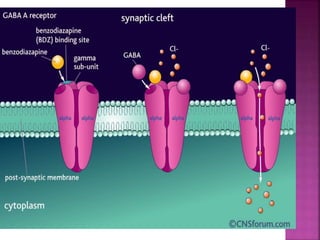
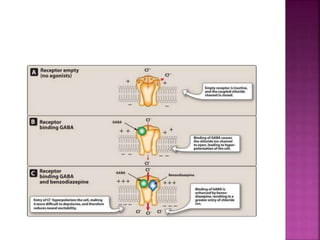
 Benzodiazepines (BZD) exert their action by 
potentiating the activity of GABA. They bind 
to a specific receptor on the GABA A receptor 
complex, which facilitates the binding of 
GABA to its specific receptor site. 
 BZD binding causes increased frequency of 
opening of the chloride channel complexed 
with the GABA A receptor. 
 Chloride channel opening results in 
membrane hyperpolarization, which inhibits 
cellular excitation.
 Enhanced GABA neurotransmission results in 
sedation, striated muscle relaxation, 
anxiolysis, and anticonvulsant effects. 
 Stimulation of peripheral nervous system 
GABA receptors may cause decreased cardiac 
contractility and vasodilation. These changes 
could have the potential to alter tissue 
perfusion.
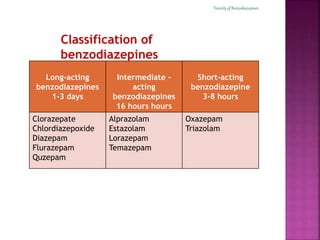
Long-acting 
benzodiazepines 
1-3 days 
Intermediate – 
acting 
benzodiazepines 
16 hours hours 
Toxicity of Benzodiazepines 
Short-acting 
benzodiazepine 
3-8 hours 
Clorazepate 
Chlordiazepoxide 
Diazepam 
Flurazepam 
Quzepam 
Alprazolam 
Estazolam 
Lorazepam 
Temazepam 
Oxazepam 
Triazolam 
Classification of 
benzodiazepines
 BZDs are metabolized predominantly in the 
liver by oxidation and/or conjugation. 
 Most BZDs are broken down into 
pharmacologically active metabolites, which 
may have longer half-lives than the parent 
compounds.
 The rate of BZD onset of action is determined by 
its ability to cross the blood-brain barrier. 
 The relatively lipophilic BZDs usually produce a 
faster onset of effect than the relatively water-soluble 
BZDs. 
 BZD effects can be potentiated when ethanol is 
present as coingestant. 
 Peak blood concentrations of most agents occur 
within 1-3 hours. 
 After a single dose, the lipophilic agents can 
have a shorter duration of action (shorter CNS 
effect) than water-soluble agents because rapid 
redistribution from the CNS to peripheral sites 
(eg, adipose tissue); thus, lorazepam (water 
soluble) has a longer CNS duration of action than 
diazepam (lipophilic). 
 However, diazepam metabolizes to active 
intermediates with prolonged half-life extending 
its therapeutic effects.
 Benzodiazepines generally are thought to be safe 
and death is rare. 
 Mortality and morbidity from a pure oral BZD 
overdose is rare; it usually occurs in conjunction 
with concomitant alcohol ingestion or use of 
other sedative-hypnotics. 
 Intravenous administration or overdose of 
ultrashort-acting BZDs (eg, triazolam) is more 
likely to result in apnea and death. 
 Elderly individuals and very young persons are 
more susceptible to the CNS depressant effects 
of BZDs than people in other age groups. 
 Intravenous administration is associated with 
greater degrees of hypotension than other routes 
of administration and occasional cardiac and 
respiratory arrest.
Toxicity of Benzodiazepines 
• Benzodiazepines toxicity (cont’d): 
- Psychological and physical dependence on 
benzodiazepines can develop if high doses of 
the drugs are given over a prolonged period. 
- Abrupt discontinuation of the benzodiazepines 
results in withdrawal symptoms, including 
anxiety, agitation, restlessness, rebound 
insomnia, tension, tremors and rarely, 
seizures. 
- Because of the long half-lives of some 
benzodiazepines (e.g. Diazepam), withdrawal 
symptoms may occur slowly and last a number 
of days after discontinuation of therapy. 
Benzodiazepines with a short elimination half-life, 
such as triazolam, induce more abrupt 
and severe withdrawal reactions than those 
seen with drugs that are slowly eliminated, 
such as flurazepam
 History should include the time, dose, and 
intent of the overdose. 
 Determine if co-ingestants are present and 
the duration of benzodiazepine use. 
 Signs and symptoms 
1. Dizziness, Confusion,Drowsiness, 
Unresponsiveness, Anxiety, and Agitation 
2. Blurred vision and Nystagmus 
3. Slurred speech, ataxia, Weakness 
4. hypotension 
5. Respiratory depression 
6. Coma
Work up 
- as barbiturates. 
Management 
 As barbiturates 
 Flumazenil is a competitive BZD receptor 
antagonist and should be used cautiously 
because it has potential to precipitate BZD 
withdrawal in chronic users, resulting in 
seizures. 
 Flumazenil administration is contraindicated 
in mixed overdoses (eg, TCAs) because BZD 
reversal can precipitate seizures and cardiac 
arrhythmias.
Benzodiazepines  toxicity

Benzodiazepines toxicity

  • 2.
     Benzodiazepines (BZDs)are sedative-hypnotic agents that were first introduced in 1960.  BZDs commonly are used for a variety of situations that include 1. seizure control 2. anxiety 3. alcohol withdrawal 4. insomnia 5. control of drug-associated agitation 6. muscle relaxants 7. preanesthetic agents. 8. They also are combined frequently with other medications for procedural sedation.
  • 3.
    Because of theirwidespread use, these drugs have propensity for abuse.  In addition, benzodiazepines frequently are used in overdose, either alone or in association with other substances.
  • 4.
     Benzodiazepines (BZD)exert their action by potentiating the activity of GABA. They bind to a specific receptor on the GABA A receptor complex, which facilitates the binding of GABA to its specific receptor site.  BZD binding causes increased frequency of opening of the chloride channel complexed with the GABA A receptor.  Chloride channel opening results in membrane hyperpolarization, which inhibits cellular excitation.
  • 7.
     Enhanced GABAneurotransmission results in sedation, striated muscle relaxation, anxiolysis, and anticonvulsant effects.  Stimulation of peripheral nervous system GABA receptors may cause decreased cardiac contractility and vasodilation. These changes could have the potential to alter tissue perfusion.
  • 8.
    Long-acting benzodiazepines 1-3days Intermediate – acting benzodiazepines 16 hours hours Toxicity of Benzodiazepines Short-acting benzodiazepine 3-8 hours Clorazepate Chlordiazepoxide Diazepam Flurazepam Quzepam Alprazolam Estazolam Lorazepam Temazepam Oxazepam Triazolam Classification of benzodiazepines
  • 9.
     BZDs aremetabolized predominantly in the liver by oxidation and/or conjugation.  Most BZDs are broken down into pharmacologically active metabolites, which may have longer half-lives than the parent compounds.
  • 11.
     The rateof BZD onset of action is determined by its ability to cross the blood-brain barrier.  The relatively lipophilic BZDs usually produce a faster onset of effect than the relatively water-soluble BZDs.  BZD effects can be potentiated when ethanol is present as coingestant.  Peak blood concentrations of most agents occur within 1-3 hours.  After a single dose, the lipophilic agents can have a shorter duration of action (shorter CNS effect) than water-soluble agents because rapid redistribution from the CNS to peripheral sites (eg, adipose tissue); thus, lorazepam (water soluble) has a longer CNS duration of action than diazepam (lipophilic).  However, diazepam metabolizes to active intermediates with prolonged half-life extending its therapeutic effects.
  • 13.
     Benzodiazepines generallyare thought to be safe and death is rare.  Mortality and morbidity from a pure oral BZD overdose is rare; it usually occurs in conjunction with concomitant alcohol ingestion or use of other sedative-hypnotics.  Intravenous administration or overdose of ultrashort-acting BZDs (eg, triazolam) is more likely to result in apnea and death.  Elderly individuals and very young persons are more susceptible to the CNS depressant effects of BZDs than people in other age groups.  Intravenous administration is associated with greater degrees of hypotension than other routes of administration and occasional cardiac and respiratory arrest.
  • 14.
    Toxicity of Benzodiazepines • Benzodiazepines toxicity (cont’d): - Psychological and physical dependence on benzodiazepines can develop if high doses of the drugs are given over a prolonged period. - Abrupt discontinuation of the benzodiazepines results in withdrawal symptoms, including anxiety, agitation, restlessness, rebound insomnia, tension, tremors and rarely, seizures. - Because of the long half-lives of some benzodiazepines (e.g. Diazepam), withdrawal symptoms may occur slowly and last a number of days after discontinuation of therapy. Benzodiazepines with a short elimination half-life, such as triazolam, induce more abrupt and severe withdrawal reactions than those seen with drugs that are slowly eliminated, such as flurazepam
  • 16.
     History shouldinclude the time, dose, and intent of the overdose.  Determine if co-ingestants are present and the duration of benzodiazepine use.  Signs and symptoms 1. Dizziness, Confusion,Drowsiness, Unresponsiveness, Anxiety, and Agitation 2. Blurred vision and Nystagmus 3. Slurred speech, ataxia, Weakness 4. hypotension 5. Respiratory depression 6. Coma
  • 17.
    Work up -as barbiturates. Management  As barbiturates  Flumazenil is a competitive BZD receptor antagonist and should be used cautiously because it has potential to precipitate BZD withdrawal in chronic users, resulting in seizures.  Flumazenil administration is contraindicated in mixed overdoses (eg, TCAs) because BZD reversal can precipitate seizures and cardiac arrhythmias.