Downloaded 46 times


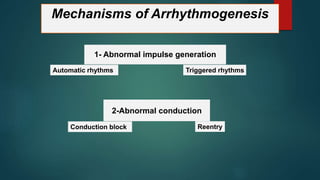
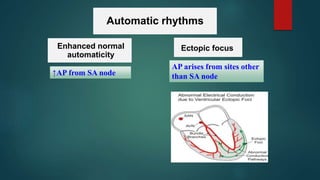
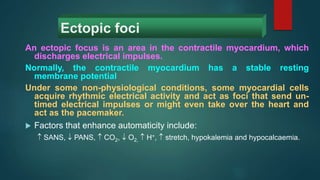
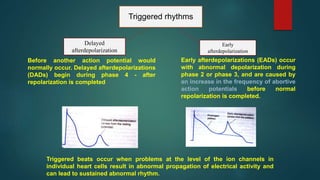
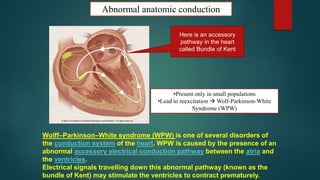

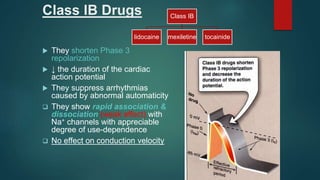
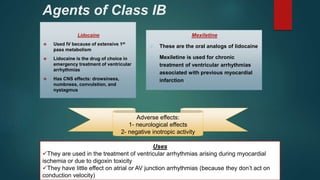
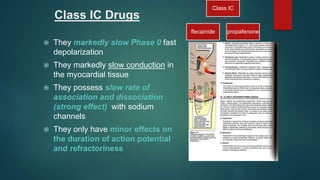
![ A. Digoxin
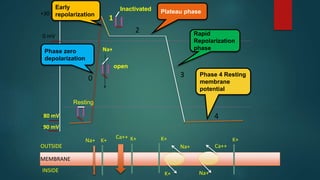
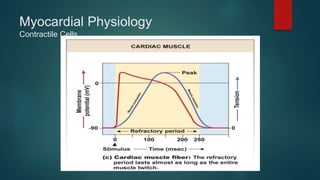
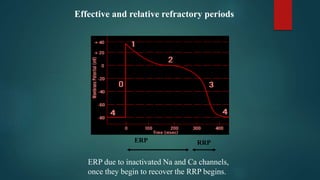
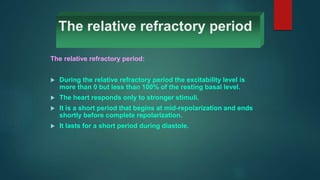
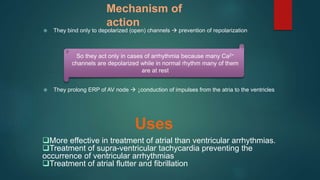
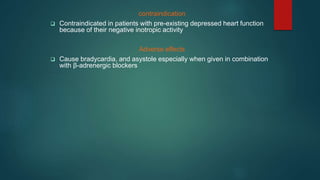
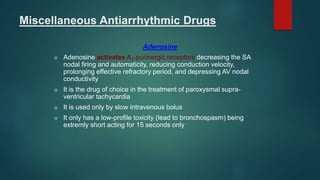
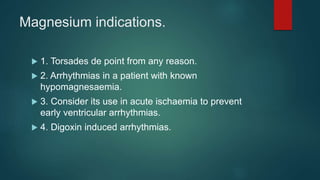
Digoxin [di-JOX-in] shortens the refractory period in atrial and ventricular
myocardial cells while prolonging the effective refractory period and
diminishing conduction velocity in the AV node.
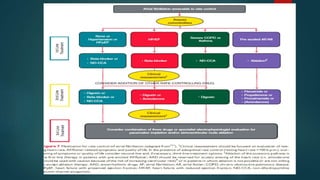
Digoxin is used to control the ventricular response rate in atrial fibrillation
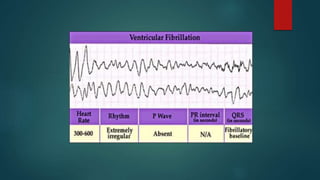
and flutter. At toxic concentrations, digoxin causes ectopic ventricular beats
that may result in ventricular tachycardia and fibrillation.
[Note: This arrhythmia is usually treated with lidocaine or phenytoin.]](https://image.slidesharecdn.com/arrhythmia-211205224744/85/Arrhythmia-71-320.jpg)
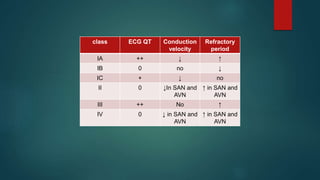
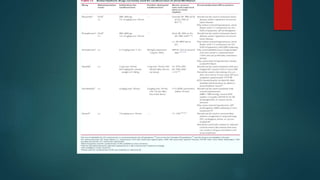
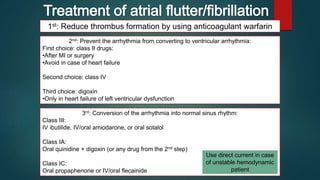
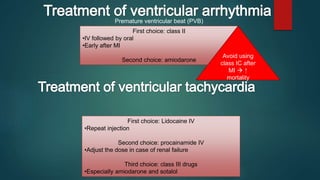
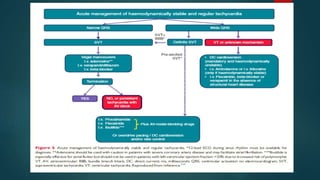
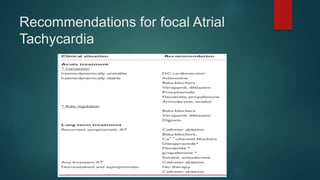
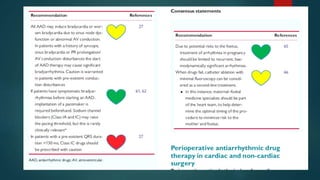
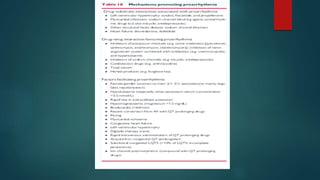
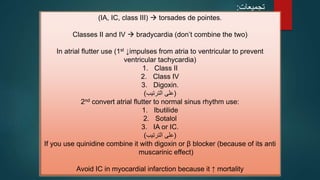


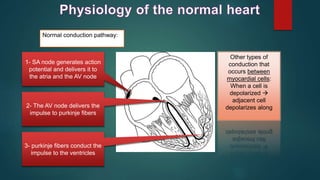
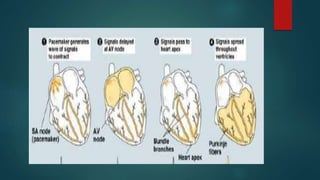
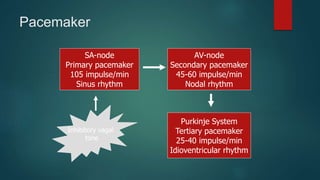
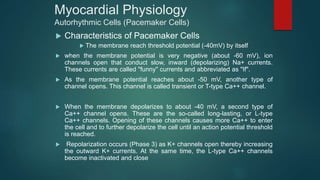
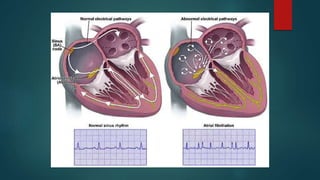
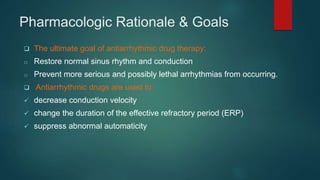
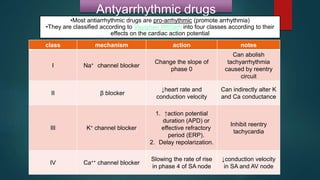
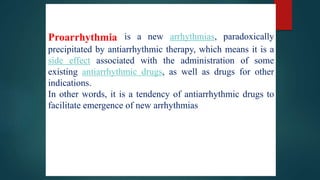
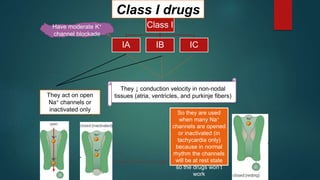
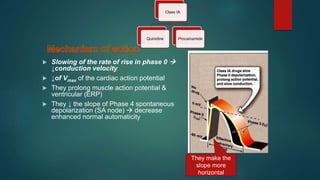
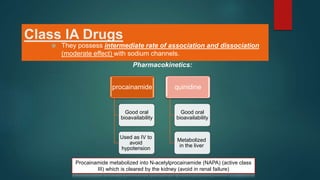
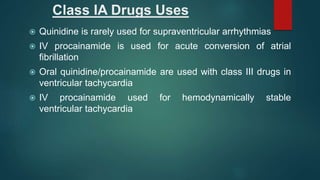
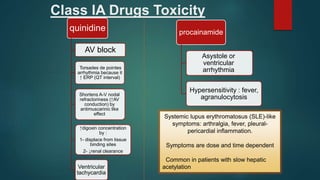
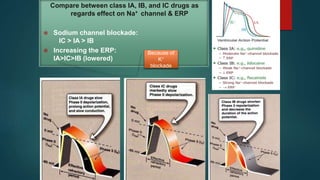
Antiarrhythmic drugs work by altering the conduction of electrical signals in the heart and changing the refractory periods of cardiac cells. They are classified into four classes based on their effects. Class IA drugs like quinidine and procainamide work by slowing the rise of the action potential upstroke, decreasing conduction velocity, and prolonging the refractory period. They have moderate potassium channel blocking effects. Class IA drugs are used for supraventricular arrhythmias and ventricular tachycardia but can cause toxicity like heart block or dangerous arrhythmias.


![CTEV [ clubfoot] DR ARUN LAL ,DR MOHAMED ASHRAF travancore medical college k...](https://cdn.slidesharecdn.com/ss_thumbnails/ctevclubfootdrarunlaldrmohamedashraftravancoremedicalcollegekollamkeralaindia-260208063247-18fc466c-thumbnail.jpg?width=640&height=640&fit=bounds)


