The Biological Basis for Cardiac
Repair After Myocardial
Infarction: From Inflammation to
Fibrosis
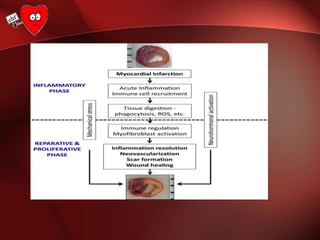
• In adult mammals, massive sudden loss of cardiomyocytes following infarction
overwhelms the limited regenerative capacity of the myocardium, resulting in
formation of a collagen-based scar.
• Necrotic cells release danger signals, activating innate immune pathways and
triggering an intense inflammatory response.
• Stimulation of toll-like receptor signaling and complement activation induces
expression of pro-inflammatory cytokines (such as interleukin-1 and tumor
necrosis factor-α) and chemokines (such as monocyte chemoattractant protein-
1/CCL2).
• Inflammatory signals promote adhesive interactions between leukocytes and
endothelial cells, leading to extravasation of neutrophils and monocytes.
• As infiltrating leukocytes clear the infarct from dead cells, mediators repressing
inflammation are released, and anti-inflammatory mononuclear cell subsets
predominate.
• Suppression of the inflammatory response is associated with activation of
reparative cells.
• Fibroblasts proliferate, undergo myofibroblast transdifferentiation, and deposit
large amounts of extracellular matrix proteins maintaining the structural integrity of
the infarcted ventricle. The renin-angiotensin-aldosterone system and members of
the transforming growth factor-β family play an important role in activation of
infarct myofibroblasts.
• Adverse left ventricular (LV) remodeling following myocardial infarction (MI)
constitutes the structural basis for ischemic heart failure (HF), and is
comprised of complex short- and long-term changes in LV size, shape,
function, and cellular and molecular composition.1, 2 While multiple
pathophysiological factors converge to remodel the heart after MI, the
fundamental determinants of this process (and its progression to clinical HF)
are the extent of the initial infarction and the sufficiency of the post-MI
reparative process.
• Dysregulation of immune pathways, impaired suppression of post-infarction
inflammation, perturbed spatial containment of the inflammatory response,
and overactive fibrosis may cause adverse remodeling in patients with
infarction contributing to the pathogenesis of heart failure. Therapeutic
modulation of the inflammatory and reparative response may hold promise for
prevention of post-infarction heart failure.
Heart Failure
Dr Amira Badr
Professor of Pharmacology & Toxicology
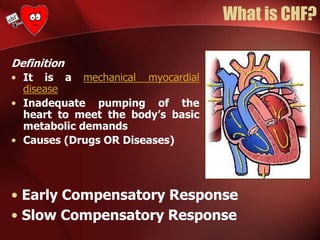
What is CHF?
Definition
• It is a mechanical myocardial
disease
• Inadequate pumping of the
heart to meet the body’s basic
metabolic demands
• Causes (Drugs OR Diseases)
• Early Compensatory Response
• Slow Compensatory Response
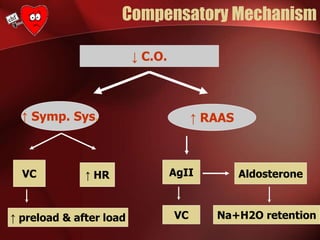
Compensatory Mechanism
↓ C.O.
↑ Symp. Sys. ↑ RAAS
VC
↑ preload & after load
↑ HR AgII Aldosterone
VC Na+H2O retention
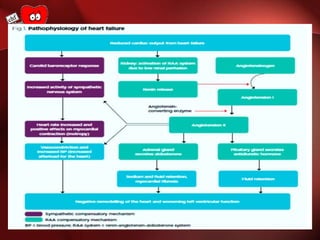
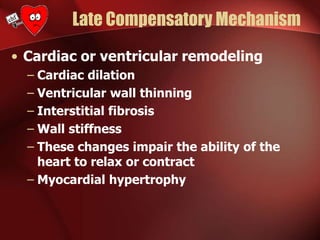
Neurohumoral Mechanism
CHF
Renal Ischaemia
Renin
Angiotensin I & II
Aldosterone
Epinephrine
Norepinephrine
ADH
(vasopressin)
Myocardial
cytokines e.g.
TNF
• Cardiac or ventricular remodeling
– Cardiac dilation
– Ventricular wall thinning
– Interstitial fibrosis
– Wall stiffness
– These changes impair the ability of the
heart to relax or contract
– Myocardial hypertrophy
Late Compensatory Mechanism
CHF Consequences
• Left ventricular failure will cause pulmonary
edema → hypoxemia & dyspnea
→ Weakness & fatigue
• Right ventricular failure → congestion of
peripheral veins & ankle edema
• So it is called “congestion” HF
Congestive Heart Failure
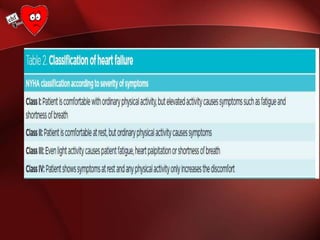
Symptoms:
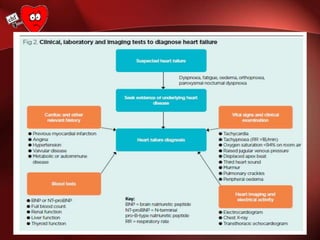
1- Shortness of breath
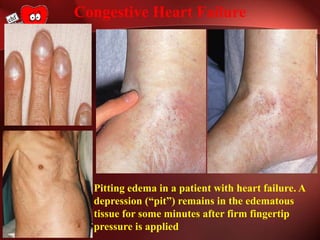
2- Leg swelling (edema)
3- Breathing worsens with lying flat (orthopnea)
4- Fatigue
Pitting edema in a patient with heart failure. A
depression (“pit”) remains in the edematous
tissue for some minutes after firm fingertip
pressure is applied
Congestive Heart Failure
Causes of CHF
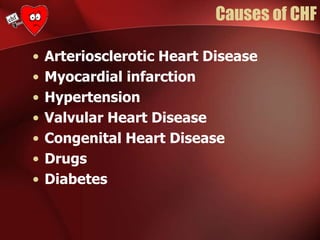
• Arteriosclerotic Heart Disease
• Myocardial infarction
• Hypertension
• Valvular Heart Disease
• Congenital Heart Disease
• Drugs
• Diabetes
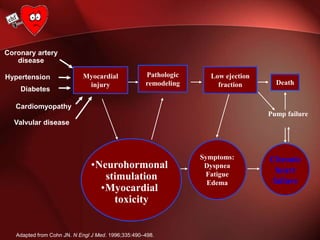
Adapted from Cohn JN. N Engl J Med. 1996;335:490–498.
Pathologic
remodeling
Low ejection
fraction Death
Symptoms:
Dyspnea
Fatigue
Edema
Chronic
heart
failure
•Neurohormonal
stimulation
•Myocardial
toxicity
Pump failure
Coronary artery
disease
Hypertension
Cardiomyopathy
Valvular disease
Myocardial
injury
Diabetes
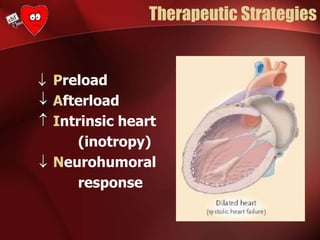
Preload
Afterload
Intrinsic heart
(inotropy)
Neurohumoral
response
Therapeutic Strategies




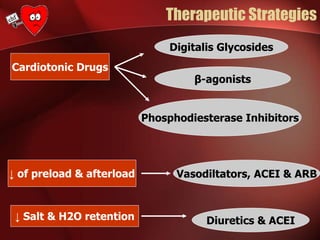
Therapeutic Strategies
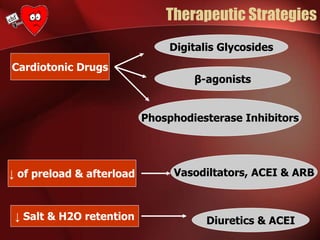
Cardiotonic Drugs
Digitalis Glycosides
β-agonists
Phosphodiesterase Inhibitors
↓ of preload & afterload Vasodiltators, ACEI & ARB
↓ Salt & H2O retention Diuretics & ACEI
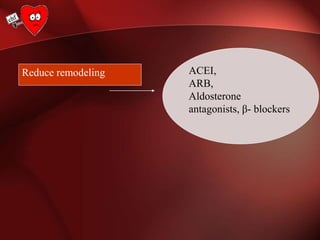
Reduce remodeling ACEI,
ARB,
Aldosterone
antagonists, β- blockers
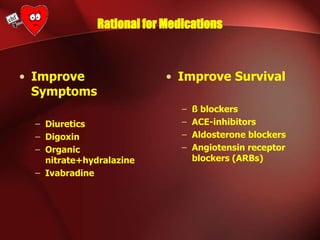
Rational for Medications
• Improve
Symptoms
– Diuretics
– Digoxin
– Organic
nitrate+hydralazine
– Ivabradine
• Improve Survival
– ß blockers
– ACE-inhibitors
– Aldosterone blockers
– Angiotensin receptor
blockers (ARBs)
Cardiac Glycosides
– Glycosides are obtained from dried leaves
of the foxglove, Digitalis purpurea
(digitoxin) or Digitalis lanata (digitoxin
and digoxin) and from the seeds of
Strophanthus gratus (ouabain)
– The term “Digitalis” is frequently used to
refer to the entire group of cardiac
glycosides
– They increase the contractility of cardiac
muscle
Pharmacodynamics
DIGOXIN
Mechanism of Action
Heart failure:
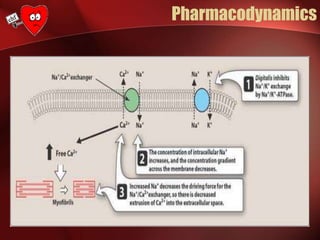
• Inhibition of the sodium/potassium ATPase pump in myocardial
cells results in a transient increase of intracellular sodium, which in
turn promotes calcium influx via the sodium-calcium exchange
pump leading to increased contractility ( positive inotropic effect).
• .
Supraventricular arrhythmias:
• Direct suppression of the AV node conduction to increase effective
refractory period and decrease conduction velocity.
• Enhanced vagal tone, and decreased ventricular rate to fast atrial
arrhythmias.
Therapeutic uses
• CHF:
Enhance cardiac contractility
Treatment of mild-to-moderate (or stage
C as recommended by the ACCF/AHA)
heart failure in adults; to increase
myocardial contractility in pediatric
patients with heart failure
• Atrial flutter and fibrillation:
Because of the ability to reduce the ventricular
rate by prolonging the refractory period of A-V
conduction (protection of ventricles)
Toxicity
• Earliest sign: Anorexia, nausea, vomiting & diarrhea
• Headache, fatigue & delirium
• Vision changes (yellow and green vision)
• Cardiac effects including:
The common cardiac side effect is arrhythmia,
characterized by slowing of AV conduction A
decrease in intracellular potassium is the primary
predisposing factor in these effects
AV dissociation, first-, second-
(Wenckebach), or third-degree heart block.
Ventricular arrhythmia
Treatment of digitalis toxicity
• Correction of potassium deficiency
• Antiarrhythmic drugs:
 lidocaine is favored
• Digoxin antibodies:
 Digoxin antibodies, Digibind (obtained from
immunized sheep) are extremely effective and
should always be used if other therapies
appear to be failing
Factors predisposing for digoxin toxicity
• Hypokalemia and hypercalcemia: ↑ digitalis toxicity
• Quinidine & verapamil: Never used to treat
digitalis-induced arrhythmia:
 It displaces digitalis from pp binding sites and impairs its
renal excretion
 It suppresses the idioventricular rhythm existing in
digitalis toxicity
• Thiazides and loop diuretics: ↑ digitalis toxicity if
they are used without K sparing diuretics
NEPRILYSIN INHIBITOR (SACUBITRIL)
USE WITH VALSARTAN
• Reduce the risk of cardiovascular death and
hospitalization in patients with chronic heart failure.
• Usually administered in conjunction with other heart
failure therapies, in place of an angiotensin-
converting enzyme (ACE) inhibitor or other
angiotensin II receptor blocker (ARB)
NEPRILYSIN INHIBITOR (SACUBITRIL)
Mechanism of Action
Prodrug that inhibits neprilysin (neutral endopeptidase
[NEP]) through the active metabolite LBQ657, leading
to increased levels of peptides, including natriuretic
peptides.
1- antagonizing the actions of the renin-angiotensin-
aldosterone system, thus promoting vasodilatation and
natriuresis.
2- Other important physiologic properties of the natriuretic
peptides are sympathoinhibitory, antiproliferative, anti-
ischemic, anti-inflammatory, and antioxidative.
Natriuretic peptides FUNCTIONS:
.
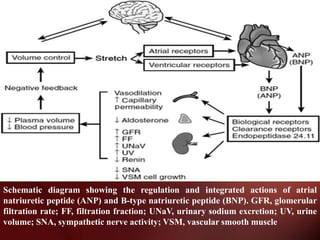
Schematic diagram showing the regulation and integrated actions of atrial
natriuretic peptide (ANP) and B-type natriuretic peptide (BNP). GFR, glomerular
filtration rate; FF, filtration fraction; UNaV, urinary sodium excretion; UV, urine
volume; SNA, sympathetic nerve activity; VSM, vascular smooth muscle
Ivabradine
USE
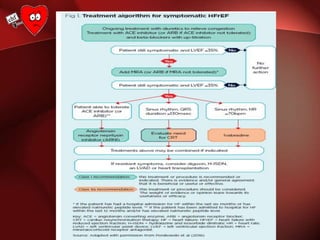
• Heart failure: Reduce the risk of hospitalization for worsening
heart failure in patients with stable, symptomatic chronic heart
failure with left ventricular ejection fraction ≤ 35%,
• Patients who are in sinus rhythm with resting heart rate ≥65
beats per minute (bpm) and either are on maximally tolerated
doses of ß- blockers or have a contraindication to ß-blocker use.
Mechanism of Action
• Selective f-channels within the sinoatrial (SA) node of cardiac
tissue resulting in disruption of If ion current flow prolonging
diastolic depolarization, slowing firing in the SA node, and
ultimately reducing heart rate.
• Partial inhibition of the retinal Ih current may explain visual
disturbances .
Therapeutic Strategies
Cardiotonic Drugs
Digitalis Glycosides
β-agonists
Phosphodiesterase Inhibitors
↓ of preload & afterload Vasodiltators, ACEI & ARB
↓ Salt & H2O retention Diuretics & ACEI
Other Inotropic Drugs
• β1-selective adrenoceptor agonist:
 Dobutamine is useful in some cases of acute
failure & cardiogenic shock
 Dobutamine selectively stimulates cardiac
contractility and usually causes less
tachycardia than do other beta-agonist
 Dobutamine also activates β2 in BV and so ↓
PR & afterload
Other Inotropic Drugs
• Phosphodiesterase inhibitors:
 Inamrinone and milrinone are the major drugs
used
 They increase cAMP by inhibiting its breakdown
by type 3 phosphodiesterase → ↑ cardiac
intracellular calcium (similar to β-agonists)
 They also cause vasodilation
 Long term use → increase risk of mortality
RAAS Inhibitors
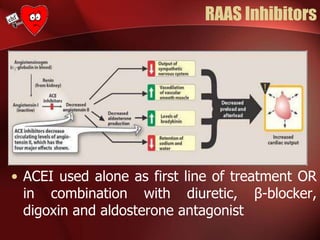
• ACEI used alone as first line of treatment OR
in combination with diuretic, β-blocker,
digoxin and aldosterone antagonist
Vasodilators
• Dilation of venous blood vessels leads to
decrease in cardiac preload and increasing
the venous capacitance
• Arterial dilators reduce systemic arteiolar
resistance and decrease afterload
• If the patient is intolerant of ACEI or β-
blockers, or if additional vasodilator
response is required, a combination of
hydralazine and isosorbid dinitrate is
recommended
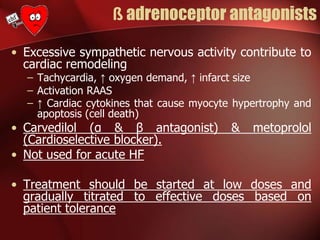
ß adrenoceptor antagonists
• Excessive sympathetic nervous activity contribute to
cardiac remodeling
– Tachycardia, ↑ oxygen demand, ↑ infarct size
– Activation RAAS
– ↑ Cardiac cytokines that cause myocyte hypertrophy and
apoptosis (cell death)
• Carvedilol (α & β antagonist) & metoprolol
(Cardioselective blocker).
• Not used for acute HF
• Treatment should be started at low doses and
gradually titrated to effective doses based on
patient tolerance
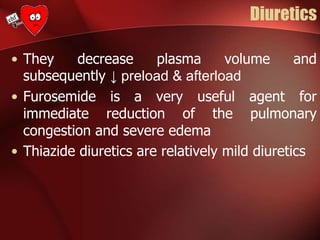
Diuretics
• They decrease plasma volume and
subsequently ↓ preload & afterload
• Furosemide is a very useful agent for
immediate reduction of the pulmonary
congestion and severe edema
• Thiazide diuretics are relatively mild diuretics
Aldosterone antagonists
• Spironolactone & Eplerenone
• Adverse effects
– Hyperkalemia (not used with K supplement)
– Gastritis & peptic ulcer
– Antiandrogenic effect (spironolactone)
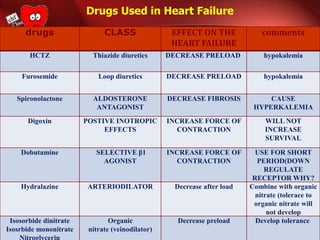
Drugs Used in Heart Failure
comments
EFFECT ON THE
HEART FAILURE
CLASS
drugs
hypokalemia
DECREASE PRELOAD
Thiazide diuretics
HCTZ
hypokalemia
DECREASE PRELOAD
Loop diuretics
Furosemide
CAUSE
HYPERKALEMIA
DECREASE FIBROSIS
ALDOSTERONE
ANTAGONIST
Spironolactone
WILL NOT
INCREASE
SURVIVAL
INCREASE FORCE OF
CONTRACTION
POSTIVE INOTROPIC
EFFECTS
Digoxin
USE FOR SHORT
PERIOD(DOWN
REGULATE
RECEPTOR WHY?
INCREASE FORCE OF
CONTRACTION
SELECTIVE β1
AGONIST
Dobutamine
Combine with organic
nitrate (tolerace to
organic nitrate will
not develop
Decrease after load
ARTERIODILATOR
Hydralazine
Develop tolerance
Decrease preload
Organic
nitrate (veinodilator)
Isosorbide dinitrate
Isosrbide mononitrate
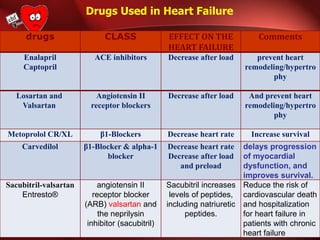
Drugs Used in Heart Failure
Comments
EFFECT ON THE
HEART FAILURE
CLASS
drugs
prevent heart
remodeling/hypertro
phy
Decrease after load
ACE inhibitors
Enalapril
Captopril
And prevent heart
remodeling/hypertro
phy
Decrease after load
Angiotensin II
receptor blockers
Losartan and
Valsartan
Increase survival
Decrease heart rate
β1-Blockers
Metoprolol CR/XL
delays progression
of myocardial
dysfunction, and
improves survival.
Decrease heart rate
Decrease after load
and preload
β1-Blocker & alpha-1
blocker
Carvedilol
Reduce the risk of
cardiovascular death
and hospitalization
for heart failure in
patients with chronic
heart failure
Sacubitril increases
levels of peptides,
including natriuretic
peptides.
angiotensin II
receptor blocker
(ARB) valsartan and
the neprilysin
inhibitor (sacubitril)
Sacubitril-valsartan
Entresto®
Heart failure

Heart failure

  • 1.
    The Biological Basisfor Cardiac Repair After Myocardial Infarction: From Inflammation to Fibrosis
  • 2.
    • In adultmammals, massive sudden loss of cardiomyocytes following infarction overwhelms the limited regenerative capacity of the myocardium, resulting in formation of a collagen-based scar. • Necrotic cells release danger signals, activating innate immune pathways and triggering an intense inflammatory response. • Stimulation of toll-like receptor signaling and complement activation induces expression of pro-inflammatory cytokines (such as interleukin-1 and tumor necrosis factor-α) and chemokines (such as monocyte chemoattractant protein- 1/CCL2). • Inflammatory signals promote adhesive interactions between leukocytes and endothelial cells, leading to extravasation of neutrophils and monocytes. • As infiltrating leukocytes clear the infarct from dead cells, mediators repressing inflammation are released, and anti-inflammatory mononuclear cell subsets predominate. • Suppression of the inflammatory response is associated with activation of reparative cells. • Fibroblasts proliferate, undergo myofibroblast transdifferentiation, and deposit large amounts of extracellular matrix proteins maintaining the structural integrity of the infarcted ventricle. The renin-angiotensin-aldosterone system and members of the transforming growth factor-β family play an important role in activation of infarct myofibroblasts.
  • 3.
    • Adverse leftventricular (LV) remodeling following myocardial infarction (MI) constitutes the structural basis for ischemic heart failure (HF), and is comprised of complex short- and long-term changes in LV size, shape, function, and cellular and molecular composition.1, 2 While multiple pathophysiological factors converge to remodel the heart after MI, the fundamental determinants of this process (and its progression to clinical HF) are the extent of the initial infarction and the sufficiency of the post-MI reparative process. • Dysregulation of immune pathways, impaired suppression of post-infarction inflammation, perturbed spatial containment of the inflammatory response, and overactive fibrosis may cause adverse remodeling in patients with infarction contributing to the pathogenesis of heart failure. Therapeutic modulation of the inflammatory and reparative response may hold promise for prevention of post-infarction heart failure.
  • 5.
    Heart Failure Dr AmiraBadr Professor of Pharmacology & Toxicology
  • 6.
    What is CHF? Definition •It is a mechanical myocardial disease • Inadequate pumping of the heart to meet the body’s basic metabolic demands • Causes (Drugs OR Diseases) • Early Compensatory Response • Slow Compensatory Response
  • 7.
    Compensatory Mechanism ↓ C.O. ↑Symp. Sys. ↑ RAAS VC ↑ preload & after load ↑ HR AgII Aldosterone VC Na+H2O retention
  • 9.
    Neurohumoral Mechanism CHF Renal Ischaemia Renin AngiotensinI & II Aldosterone Epinephrine Norepinephrine ADH (vasopressin) Myocardial cytokines e.g. TNF
  • 10.
    • Cardiac orventricular remodeling – Cardiac dilation – Ventricular wall thinning – Interstitial fibrosis – Wall stiffness – These changes impair the ability of the heart to relax or contract – Myocardial hypertrophy Late Compensatory Mechanism
  • 11.
    CHF Consequences • Leftventricular failure will cause pulmonary edema → hypoxemia & dyspnea → Weakness & fatigue • Right ventricular failure → congestion of peripheral veins & ankle edema • So it is called “congestion” HF
  • 12.
    Congestive Heart Failure Symptoms: 1-Shortness of breath 2- Leg swelling (edema) 3- Breathing worsens with lying flat (orthopnea) 4- Fatigue
  • 13.
    Pitting edema ina patient with heart failure. A depression (“pit”) remains in the edematous tissue for some minutes after firm fingertip pressure is applied Congestive Heart Failure
  • 15.
    Causes of CHF •Arteriosclerotic Heart Disease • Myocardial infarction • Hypertension • Valvular Heart Disease • Congenital Heart Disease • Drugs • Diabetes
  • 16.
    Adapted from CohnJN. N Engl J Med. 1996;335:490–498. Pathologic remodeling Low ejection fraction Death Symptoms: Dyspnea Fatigue Edema Chronic heart failure •Neurohormonal stimulation •Myocardial toxicity Pump failure Coronary artery disease Hypertension Cardiomyopathy Valvular disease Myocardial injury Diabetes
  • 18.
  • 19.
    Therapeutic Strategies Cardiotonic Drugs DigitalisGlycosides β-agonists Phosphodiesterase Inhibitors ↓ of preload & afterload Vasodiltators, ACEI & ARB ↓ Salt & H2O retention Diuretics & ACEI
  • 20.
  • 21.
    Rational for Medications •Improve Symptoms – Diuretics – Digoxin – Organic nitrate+hydralazine – Ivabradine • Improve Survival – ß blockers – ACE-inhibitors – Aldosterone blockers – Angiotensin receptor blockers (ARBs)
  • 22.
    Cardiac Glycosides – Glycosidesare obtained from dried leaves of the foxglove, Digitalis purpurea (digitoxin) or Digitalis lanata (digitoxin and digoxin) and from the seeds of Strophanthus gratus (ouabain) – The term “Digitalis” is frequently used to refer to the entire group of cardiac glycosides – They increase the contractility of cardiac muscle
  • 23.
  • 24.
    DIGOXIN Mechanism of Action Heartfailure: • Inhibition of the sodium/potassium ATPase pump in myocardial cells results in a transient increase of intracellular sodium, which in turn promotes calcium influx via the sodium-calcium exchange pump leading to increased contractility ( positive inotropic effect). • . Supraventricular arrhythmias: • Direct suppression of the AV node conduction to increase effective refractory period and decrease conduction velocity. • Enhanced vagal tone, and decreased ventricular rate to fast atrial arrhythmias.
  • 25.
    Therapeutic uses • CHF: Enhancecardiac contractility Treatment of mild-to-moderate (or stage C as recommended by the ACCF/AHA) heart failure in adults; to increase myocardial contractility in pediatric patients with heart failure • Atrial flutter and fibrillation: Because of the ability to reduce the ventricular rate by prolonging the refractory period of A-V conduction (protection of ventricles)
  • 26.
    Toxicity • Earliest sign:Anorexia, nausea, vomiting & diarrhea • Headache, fatigue & delirium • Vision changes (yellow and green vision) • Cardiac effects including: The common cardiac side effect is arrhythmia, characterized by slowing of AV conduction A decrease in intracellular potassium is the primary predisposing factor in these effects AV dissociation, first-, second- (Wenckebach), or third-degree heart block. Ventricular arrhythmia
  • 27.
    Treatment of digitalistoxicity • Correction of potassium deficiency • Antiarrhythmic drugs:  lidocaine is favored • Digoxin antibodies:  Digoxin antibodies, Digibind (obtained from immunized sheep) are extremely effective and should always be used if other therapies appear to be failing
  • 28.
    Factors predisposing fordigoxin toxicity • Hypokalemia and hypercalcemia: ↑ digitalis toxicity • Quinidine & verapamil: Never used to treat digitalis-induced arrhythmia:  It displaces digitalis from pp binding sites and impairs its renal excretion  It suppresses the idioventricular rhythm existing in digitalis toxicity • Thiazides and loop diuretics: ↑ digitalis toxicity if they are used without K sparing diuretics
  • 29.
    NEPRILYSIN INHIBITOR (SACUBITRIL) USEWITH VALSARTAN • Reduce the risk of cardiovascular death and hospitalization in patients with chronic heart failure. • Usually administered in conjunction with other heart failure therapies, in place of an angiotensin- converting enzyme (ACE) inhibitor or other angiotensin II receptor blocker (ARB)
  • 30.
    NEPRILYSIN INHIBITOR (SACUBITRIL) Mechanismof Action Prodrug that inhibits neprilysin (neutral endopeptidase [NEP]) through the active metabolite LBQ657, leading to increased levels of peptides, including natriuretic peptides.
  • 31.
    1- antagonizing theactions of the renin-angiotensin- aldosterone system, thus promoting vasodilatation and natriuresis. 2- Other important physiologic properties of the natriuretic peptides are sympathoinhibitory, antiproliferative, anti- ischemic, anti-inflammatory, and antioxidative. Natriuretic peptides FUNCTIONS:
  • 32.
    . Schematic diagram showingthe regulation and integrated actions of atrial natriuretic peptide (ANP) and B-type natriuretic peptide (BNP). GFR, glomerular filtration rate; FF, filtration fraction; UNaV, urinary sodium excretion; UV, urine volume; SNA, sympathetic nerve activity; VSM, vascular smooth muscle
  • 33.
    Ivabradine USE • Heart failure:Reduce the risk of hospitalization for worsening heart failure in patients with stable, symptomatic chronic heart failure with left ventricular ejection fraction ≤ 35%, • Patients who are in sinus rhythm with resting heart rate ≥65 beats per minute (bpm) and either are on maximally tolerated doses of ß- blockers or have a contraindication to ß-blocker use. Mechanism of Action • Selective f-channels within the sinoatrial (SA) node of cardiac tissue resulting in disruption of If ion current flow prolonging diastolic depolarization, slowing firing in the SA node, and ultimately reducing heart rate. • Partial inhibition of the retinal Ih current may explain visual disturbances .
  • 34.
    Therapeutic Strategies Cardiotonic Drugs DigitalisGlycosides β-agonists Phosphodiesterase Inhibitors ↓ of preload & afterload Vasodiltators, ACEI & ARB ↓ Salt & H2O retention Diuretics & ACEI
  • 35.
    Other Inotropic Drugs •β1-selective adrenoceptor agonist:  Dobutamine is useful in some cases of acute failure & cardiogenic shock  Dobutamine selectively stimulates cardiac contractility and usually causes less tachycardia than do other beta-agonist  Dobutamine also activates β2 in BV and so ↓ PR & afterload
  • 36.
    Other Inotropic Drugs •Phosphodiesterase inhibitors:  Inamrinone and milrinone are the major drugs used  They increase cAMP by inhibiting its breakdown by type 3 phosphodiesterase → ↑ cardiac intracellular calcium (similar to β-agonists)  They also cause vasodilation  Long term use → increase risk of mortality
  • 37.
    RAAS Inhibitors • ACEIused alone as first line of treatment OR in combination with diuretic, β-blocker, digoxin and aldosterone antagonist
  • 38.
    Vasodilators • Dilation ofvenous blood vessels leads to decrease in cardiac preload and increasing the venous capacitance • Arterial dilators reduce systemic arteiolar resistance and decrease afterload • If the patient is intolerant of ACEI or β- blockers, or if additional vasodilator response is required, a combination of hydralazine and isosorbid dinitrate is recommended
  • 39.
    ß adrenoceptor antagonists •Excessive sympathetic nervous activity contribute to cardiac remodeling – Tachycardia, ↑ oxygen demand, ↑ infarct size – Activation RAAS – ↑ Cardiac cytokines that cause myocyte hypertrophy and apoptosis (cell death) • Carvedilol (α & β antagonist) & metoprolol (Cardioselective blocker). • Not used for acute HF • Treatment should be started at low doses and gradually titrated to effective doses based on patient tolerance
  • 40.
    Diuretics • They decreaseplasma volume and subsequently ↓ preload & afterload • Furosemide is a very useful agent for immediate reduction of the pulmonary congestion and severe edema • Thiazide diuretics are relatively mild diuretics
  • 41.
    Aldosterone antagonists • Spironolactone& Eplerenone • Adverse effects – Hyperkalemia (not used with K supplement) – Gastritis & peptic ulcer – Antiandrogenic effect (spironolactone)
  • 42.
    Drugs Used inHeart Failure comments EFFECT ON THE HEART FAILURE CLASS drugs hypokalemia DECREASE PRELOAD Thiazide diuretics HCTZ hypokalemia DECREASE PRELOAD Loop diuretics Furosemide CAUSE HYPERKALEMIA DECREASE FIBROSIS ALDOSTERONE ANTAGONIST Spironolactone WILL NOT INCREASE SURVIVAL INCREASE FORCE OF CONTRACTION POSTIVE INOTROPIC EFFECTS Digoxin USE FOR SHORT PERIOD(DOWN REGULATE RECEPTOR WHY? INCREASE FORCE OF CONTRACTION SELECTIVE β1 AGONIST Dobutamine Combine with organic nitrate (tolerace to organic nitrate will not develop Decrease after load ARTERIODILATOR Hydralazine Develop tolerance Decrease preload Organic nitrate (veinodilator) Isosorbide dinitrate Isosrbide mononitrate
  • 43.
    Drugs Used inHeart Failure Comments EFFECT ON THE HEART FAILURE CLASS drugs prevent heart remodeling/hypertro phy Decrease after load ACE inhibitors Enalapril Captopril And prevent heart remodeling/hypertro phy Decrease after load Angiotensin II receptor blockers Losartan and Valsartan Increase survival Decrease heart rate β1-Blockers Metoprolol CR/XL delays progression of myocardial dysfunction, and improves survival. Decrease heart rate Decrease after load and preload β1-Blocker & alpha-1 blocker Carvedilol Reduce the risk of cardiovascular death and hospitalization for heart failure in patients with chronic heart failure Sacubitril increases levels of peptides, including natriuretic peptides. angiotensin II receptor blocker (ARB) valsartan and the neprilysin inhibitor (sacubitril) Sacubitril-valsartan Entresto®