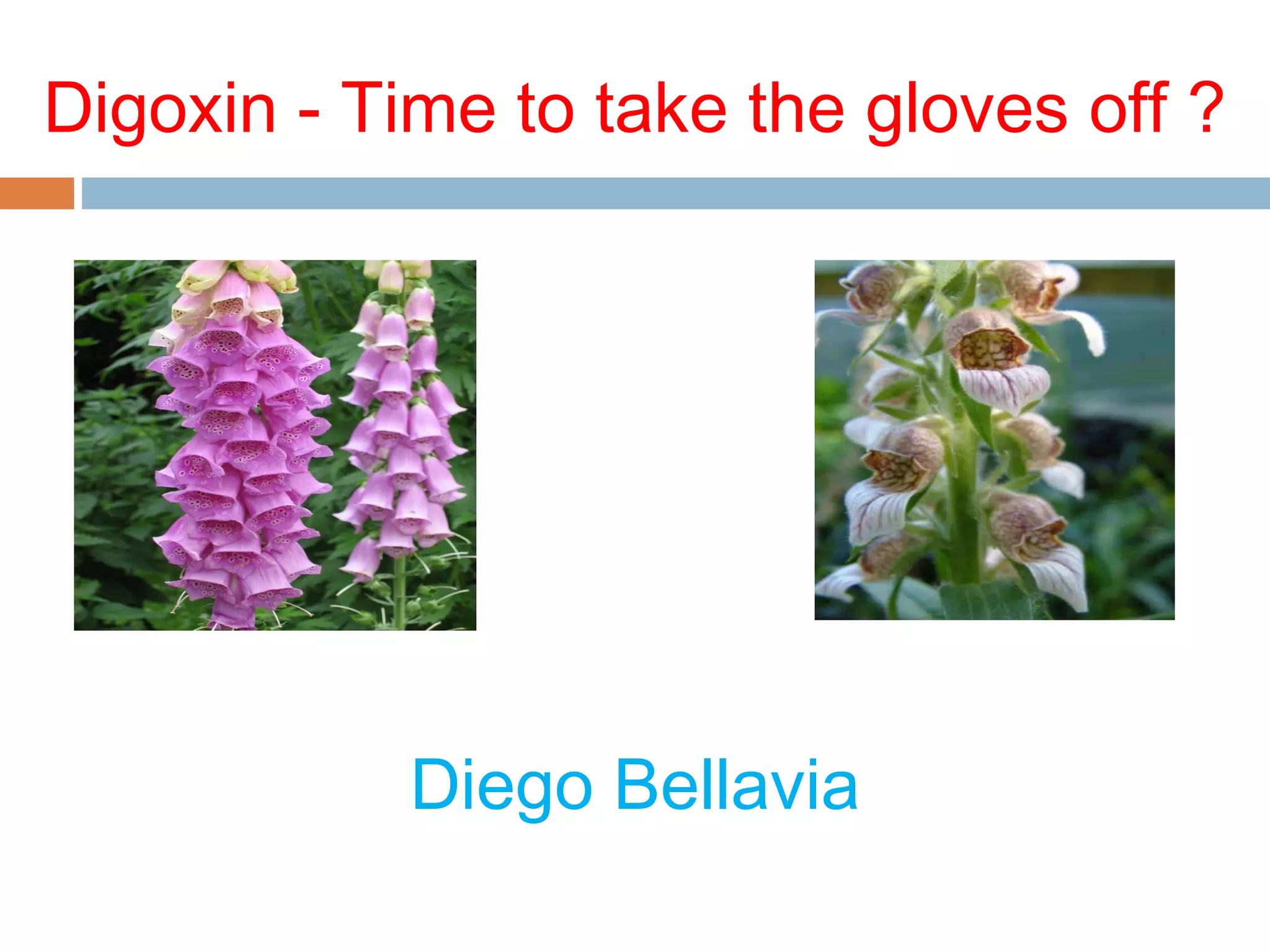
Digoxin - Time to take the gloves off ?
Diego Bellavia
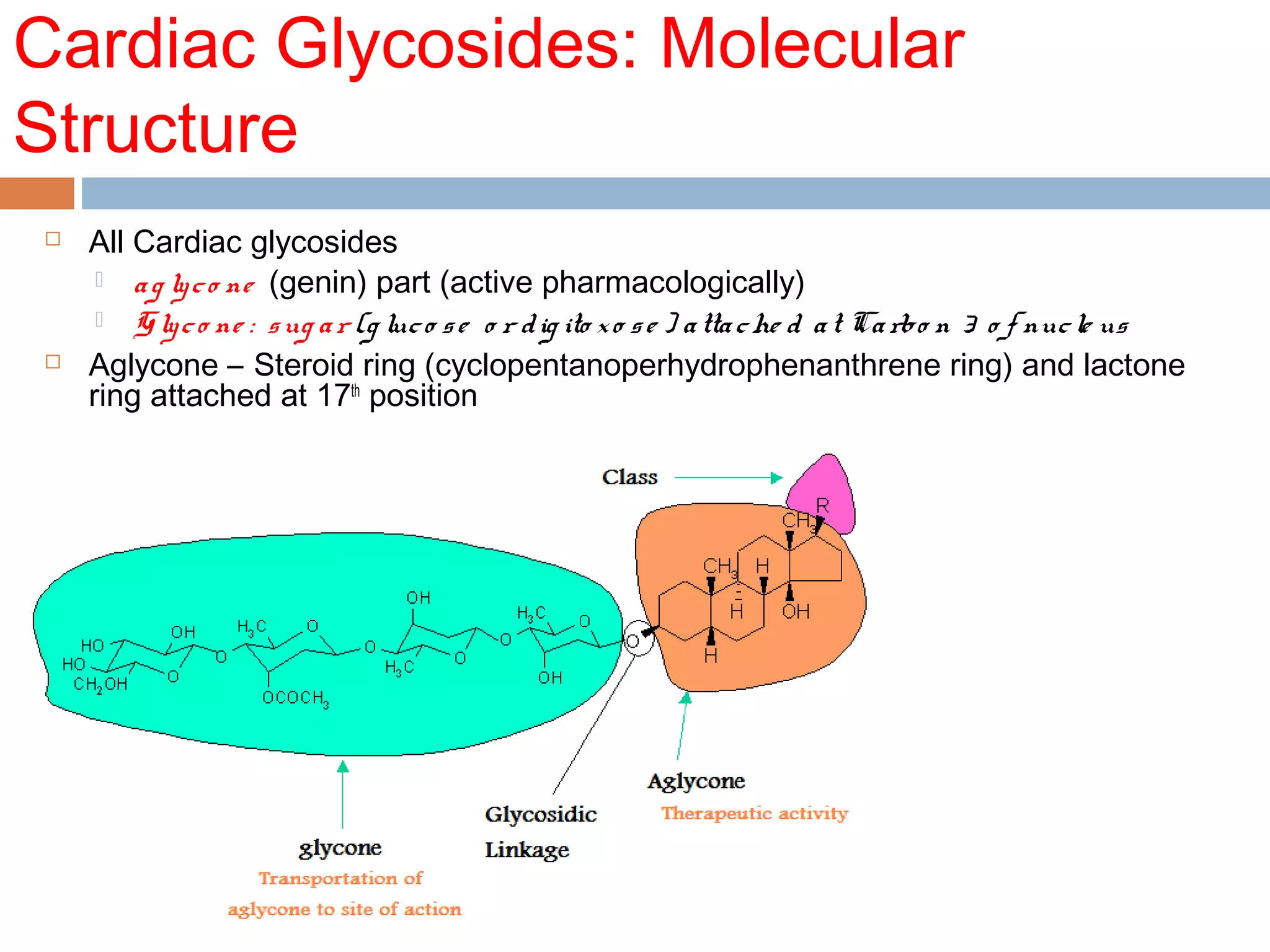
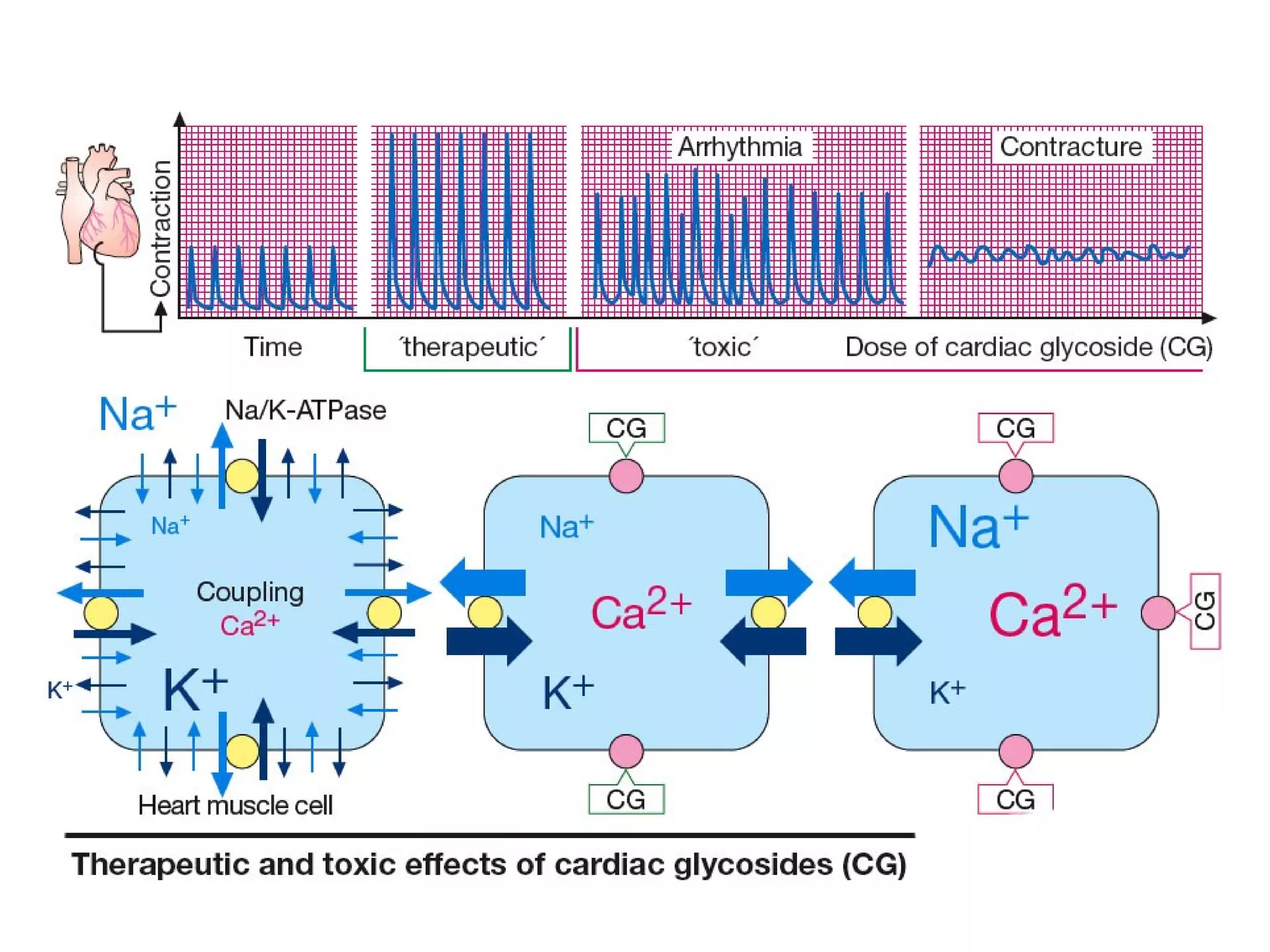
Cardiac Glycosides: Molecular
Structure
 All Cardiac glycosides
 ag lyco ne (genin) part (active pharmacologically)
 Glyco ne : sug ar (g luco se o r dig ito xo se ) attache d at Carbo n 3 o f nucle us
 Aglycone – Steroid ring (cyclopentanoperhydrophenanthrene ring) and lactone
ring attached at 17th
position
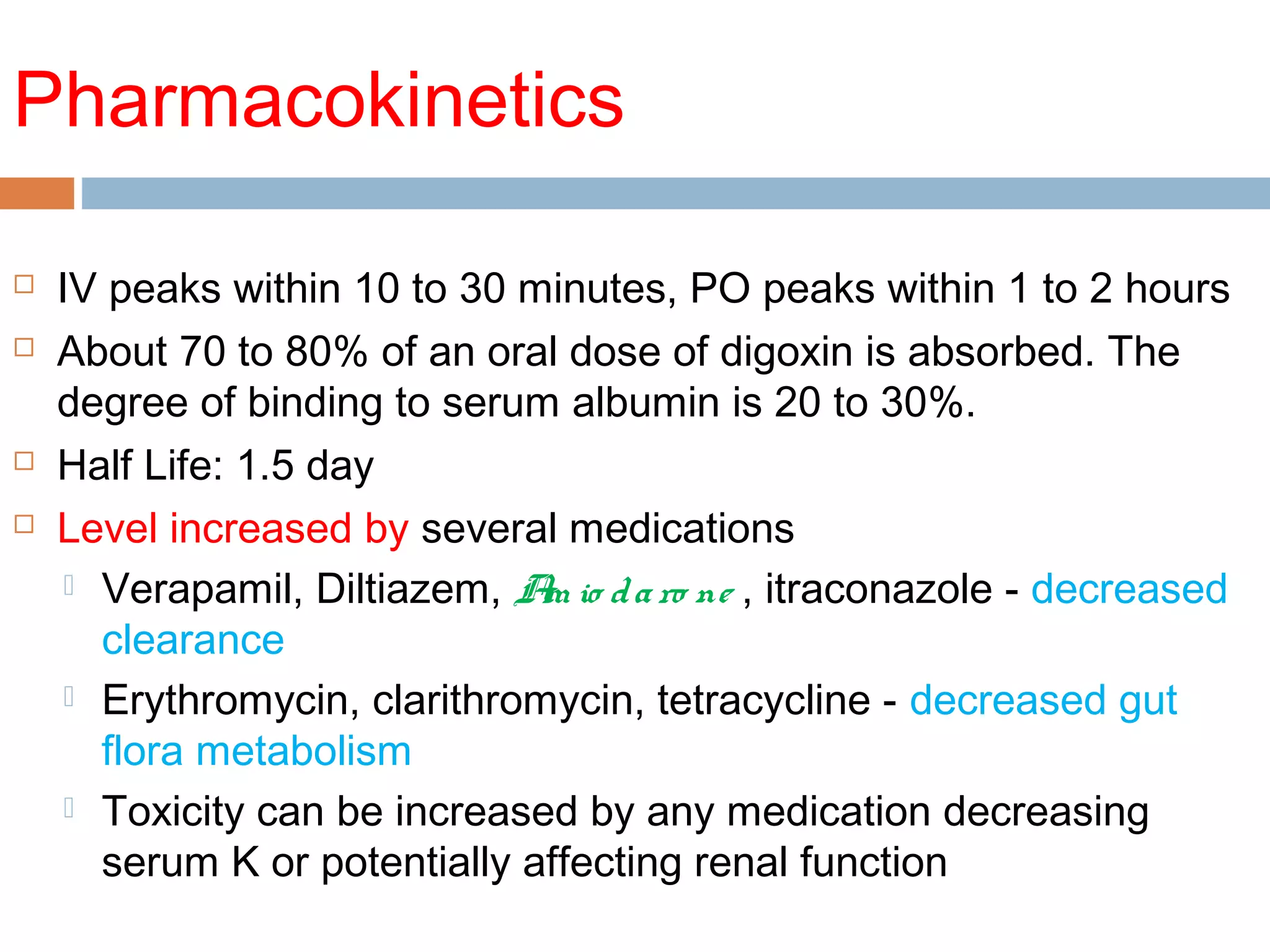
Pharmacokinetics
 IV peaks within 10 to 30 minutes, PO peaks within 1 to 2 hours
 About 70 to 80% of an oral dose of digoxin is absorbed. The
degree of binding to serum albumin is 20 to 30%.
 Half Life: 1.5 day
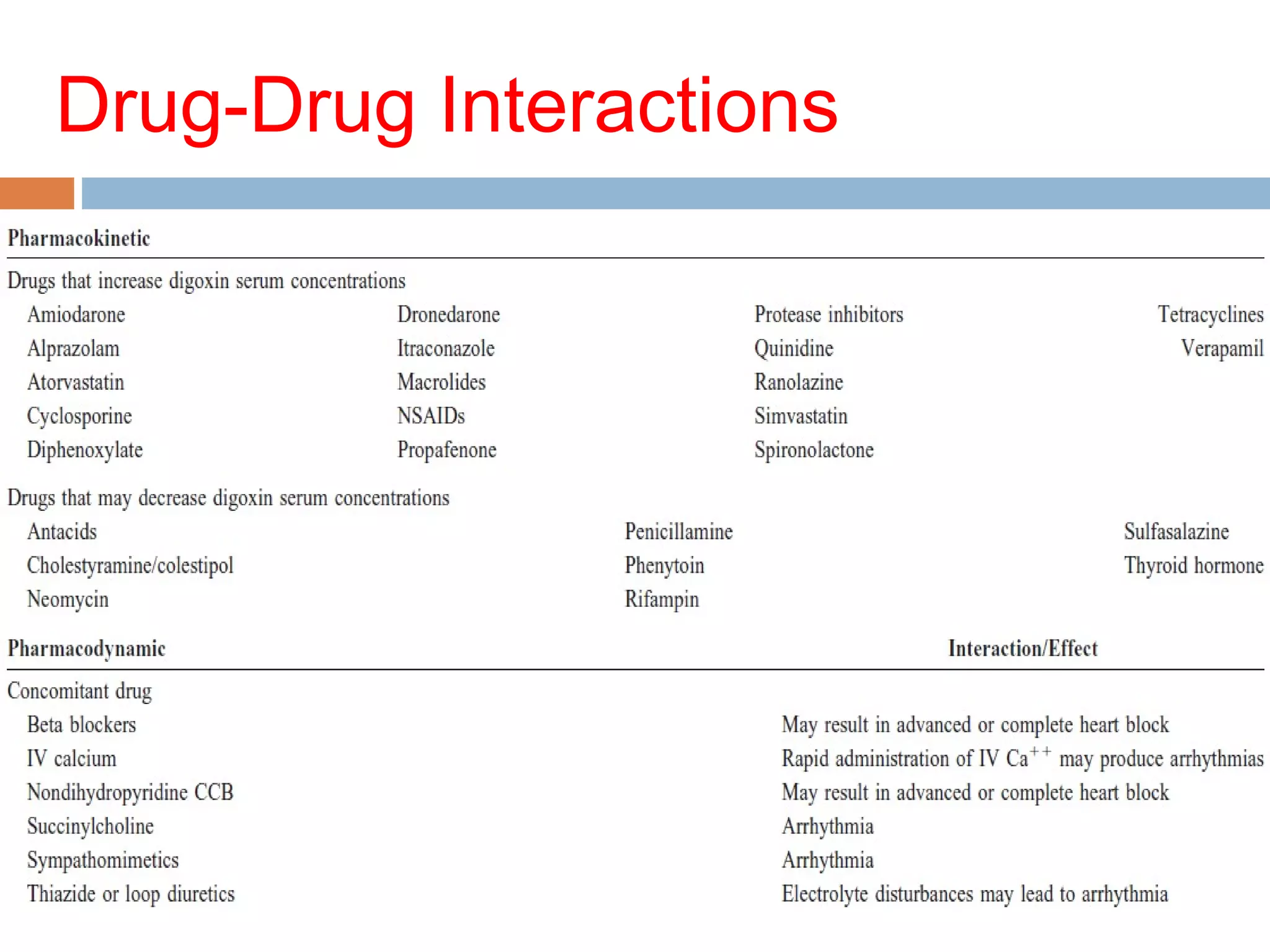
 Level increased by several medications
 Verapamil, Diltiazem, Am io daro ne , itraconazole - decreased
clearance
 Erythromycin, clarithromycin, tetracycline - decreased gut
flora metabolism
 Toxicity can be increased by any medication decreasing
serum K or potentially affecting renal function
Drug-Drug Interactions
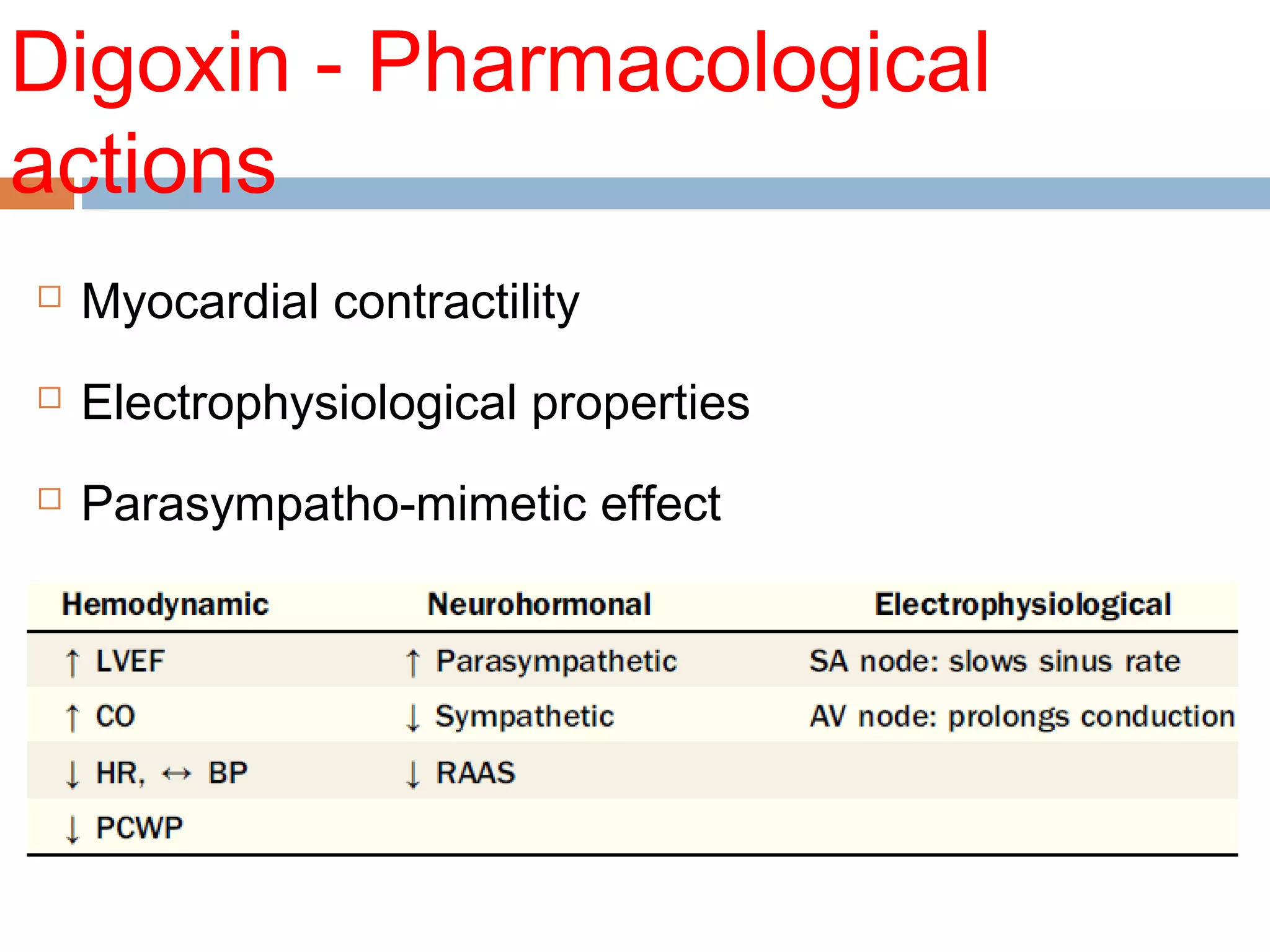
Digoxin - Pharmacological
actions
 Myocardial contractility
 Electrophysiological properties
 Parasympatho-mimetic effect
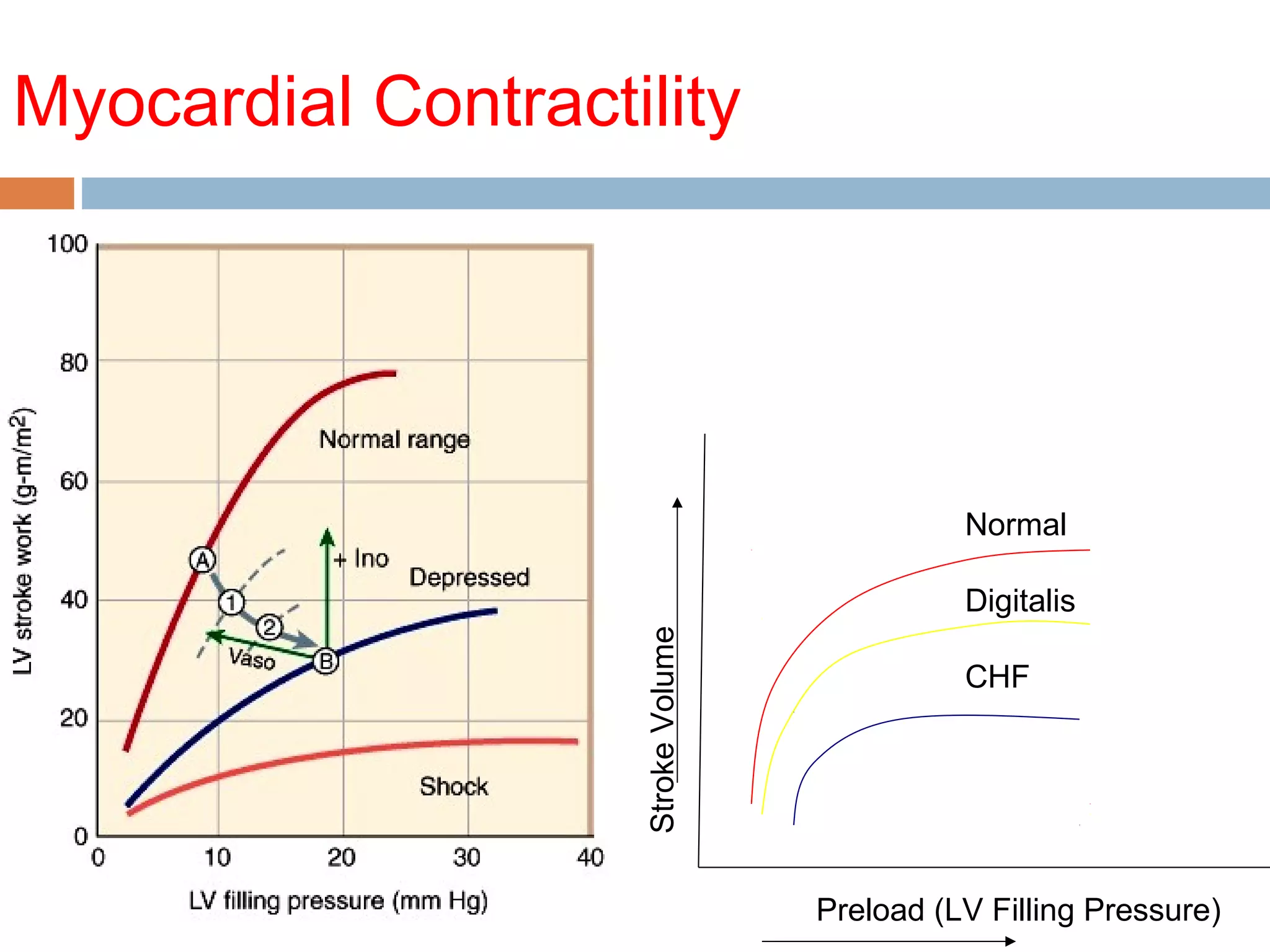
Myocardial Contractility
StrokeVolume
Preload (LV Filling Pressure)
Normal
Digitalis
CHF
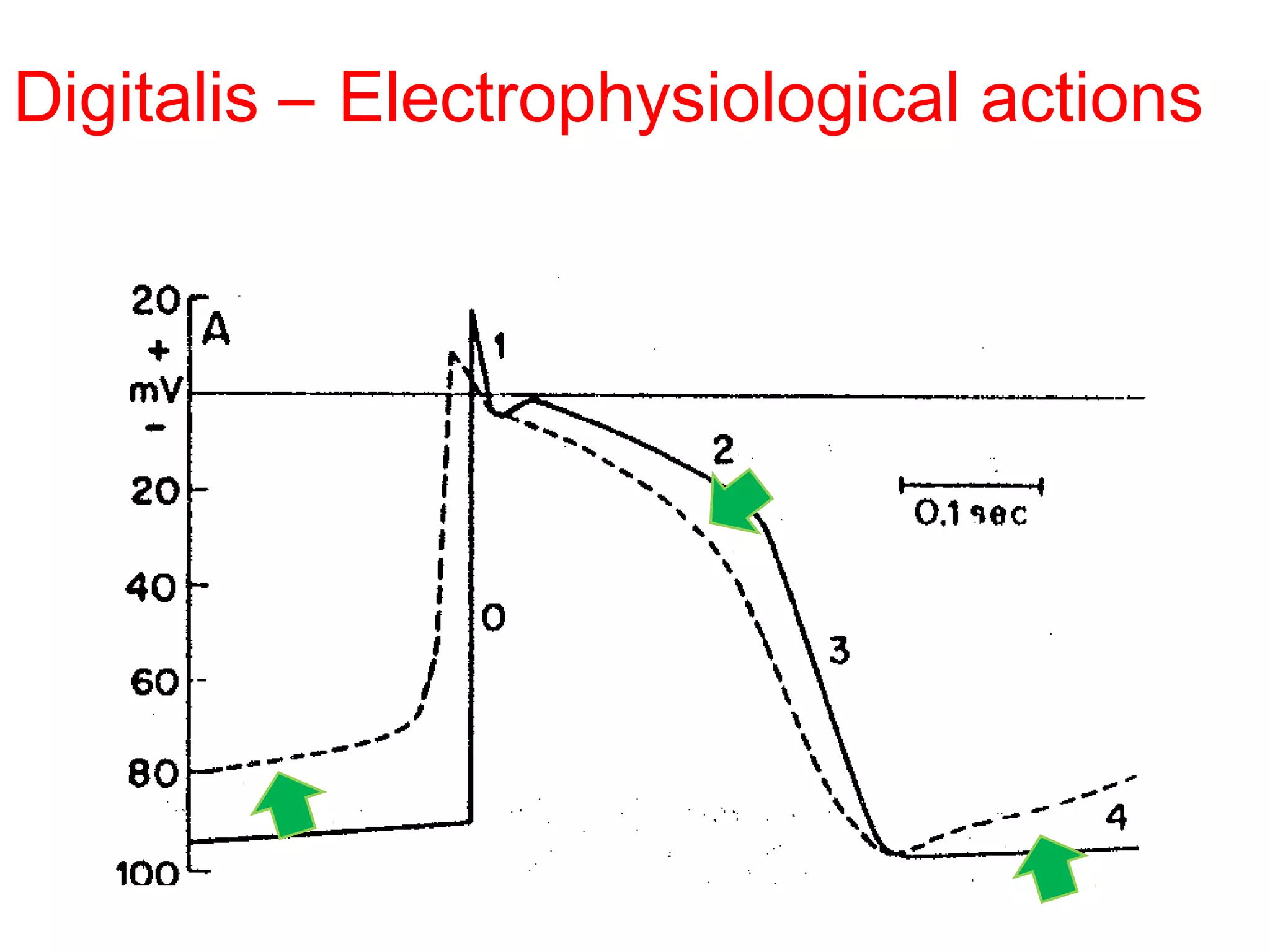
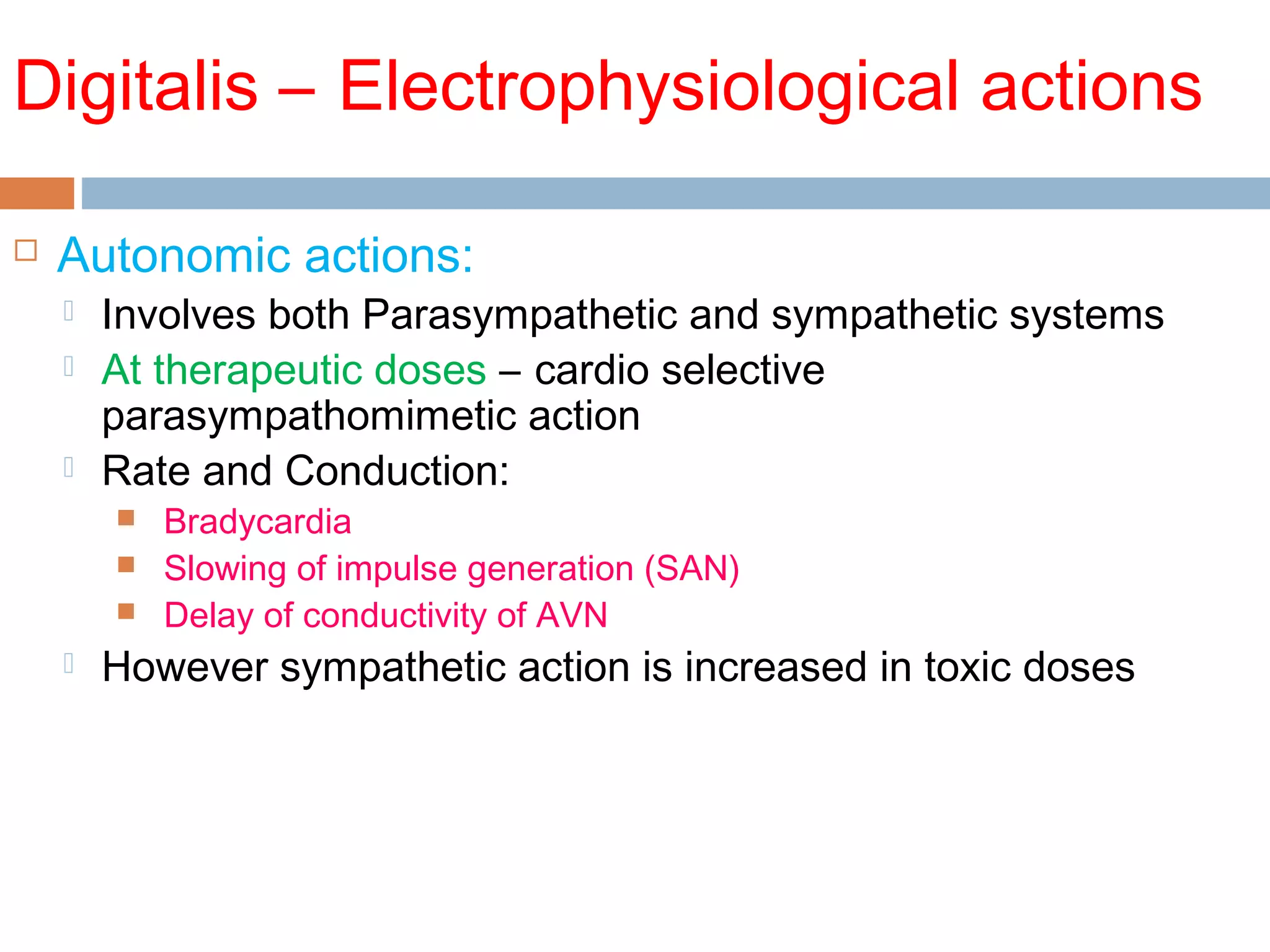
Digitalis – Electrophysiological actions
 Autonomic actions:
 Involves both Parasympathetic and sympathetic systems
 At therapeutic doses – cardio selective
parasympathomimetic action
 Rate and Conduction:
 Bradycardia
 Slowing of impulse generation (SAN)
 Delay of conductivity of AVN
 However sympathetic action is increased in toxic doses
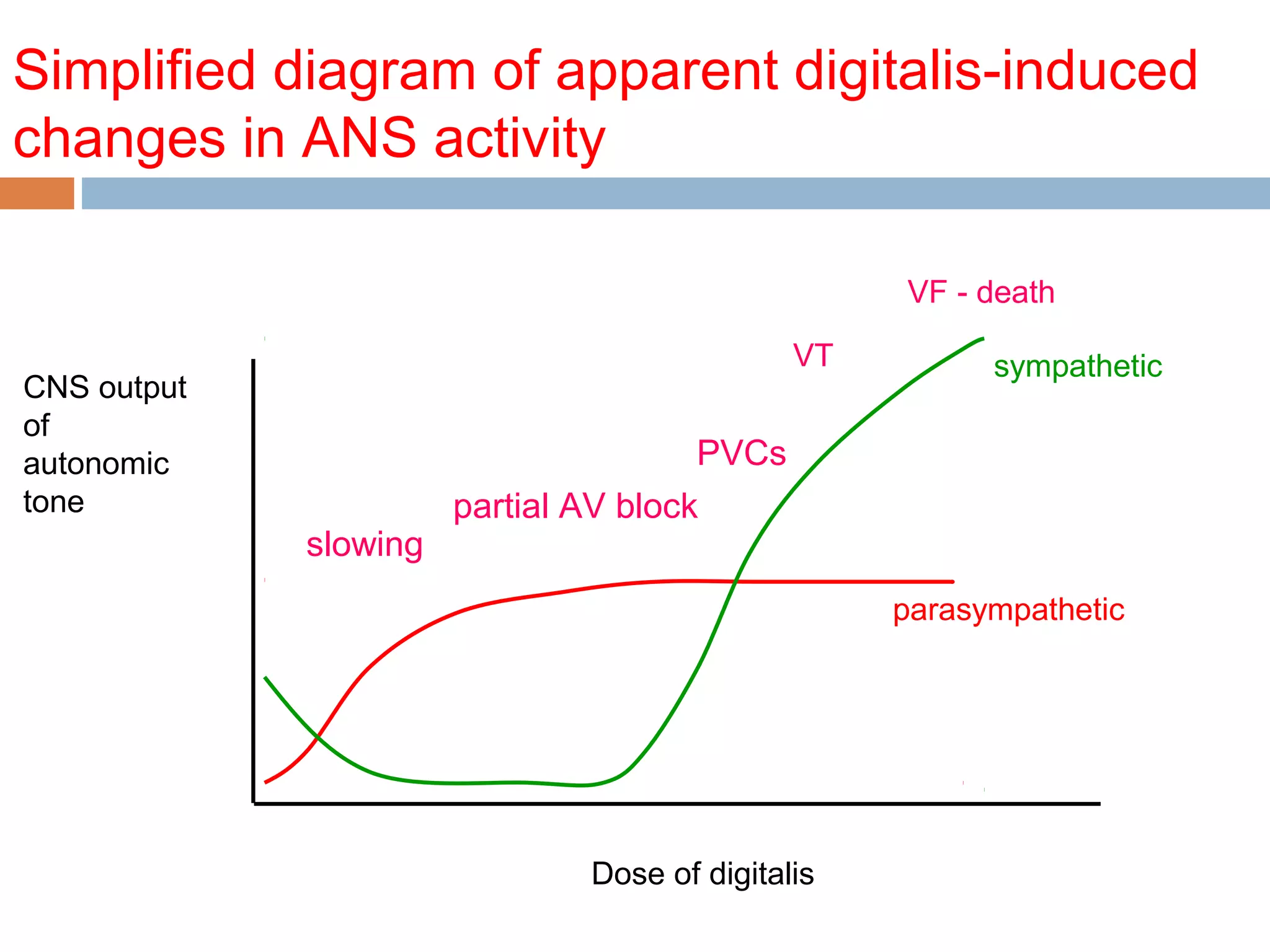
Simplified diagram of apparent digitalis-induced
changes in ANS activity
CNS output
of
autonomic
tone
Dose of digitalis
sympathetic
parasympathetic
slowing
VT
VF - death
partial AV block
PVCs
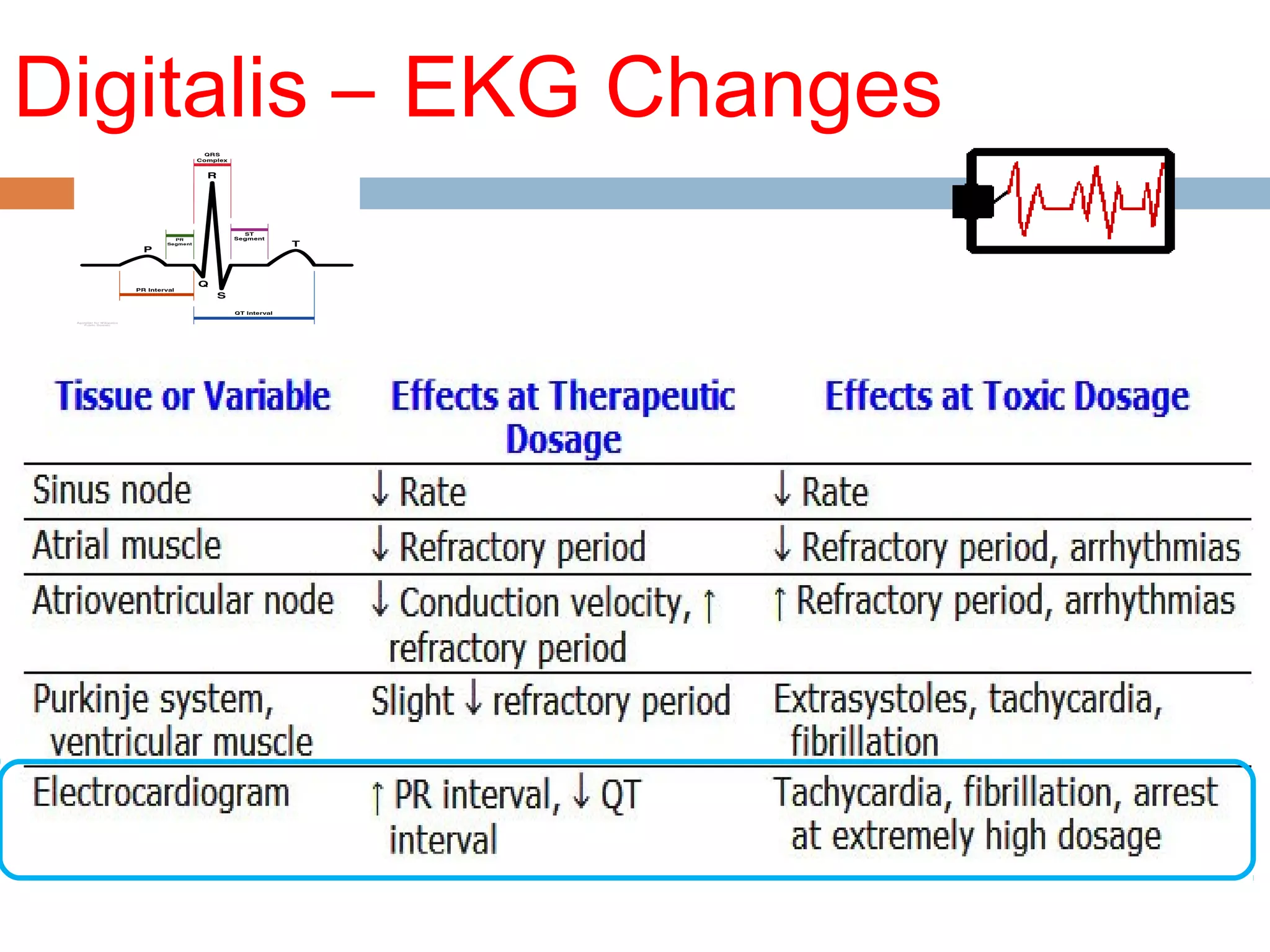
Digitalis – EKG Changes
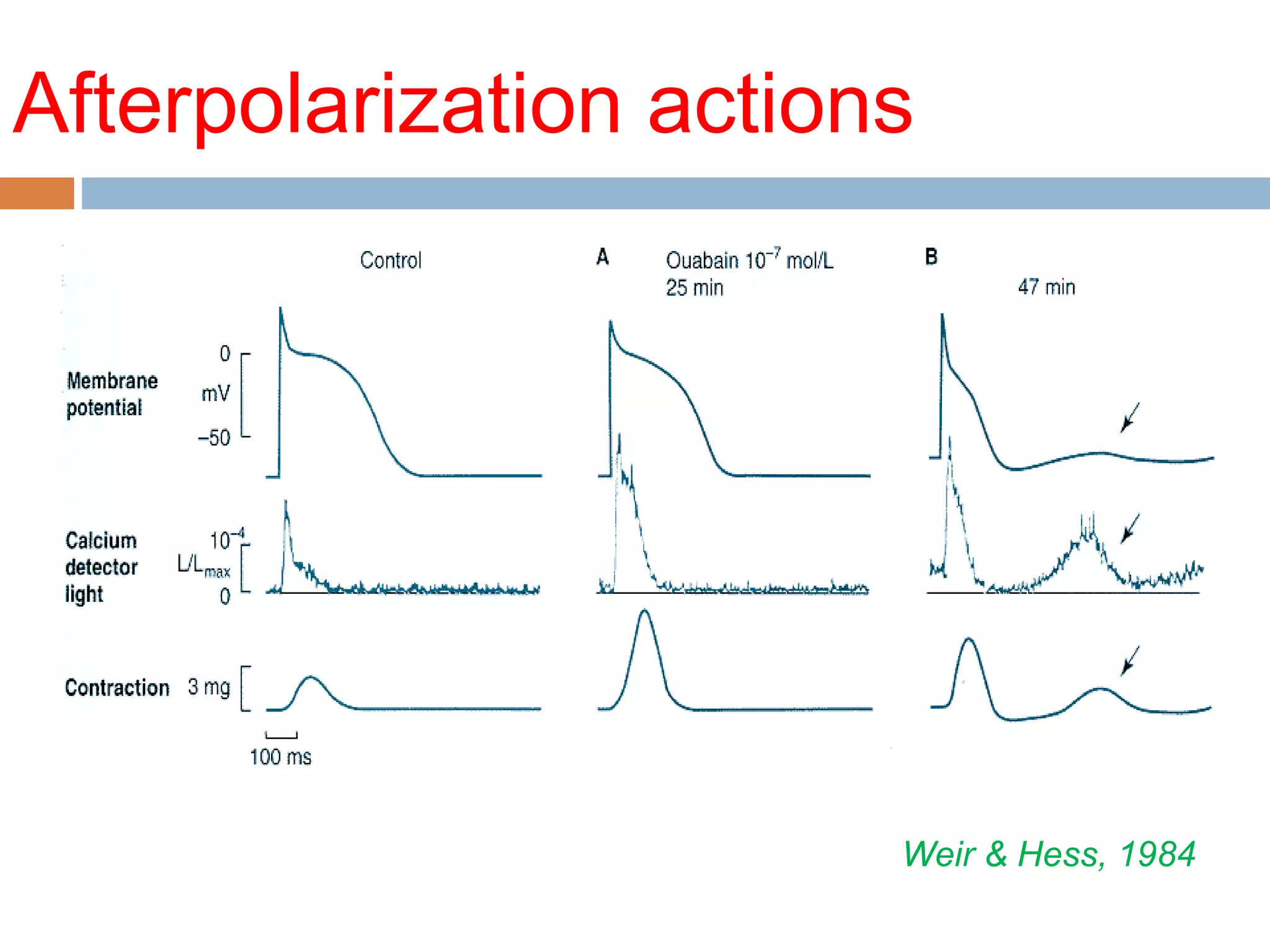
Afterpolarization actions
Weir & Hess, 1984
Afterpolarization actions Cont’d
 DADs may elicit premature depolarizations or
“ectopic beats” that are coupled to the preceding
normal action potentials.
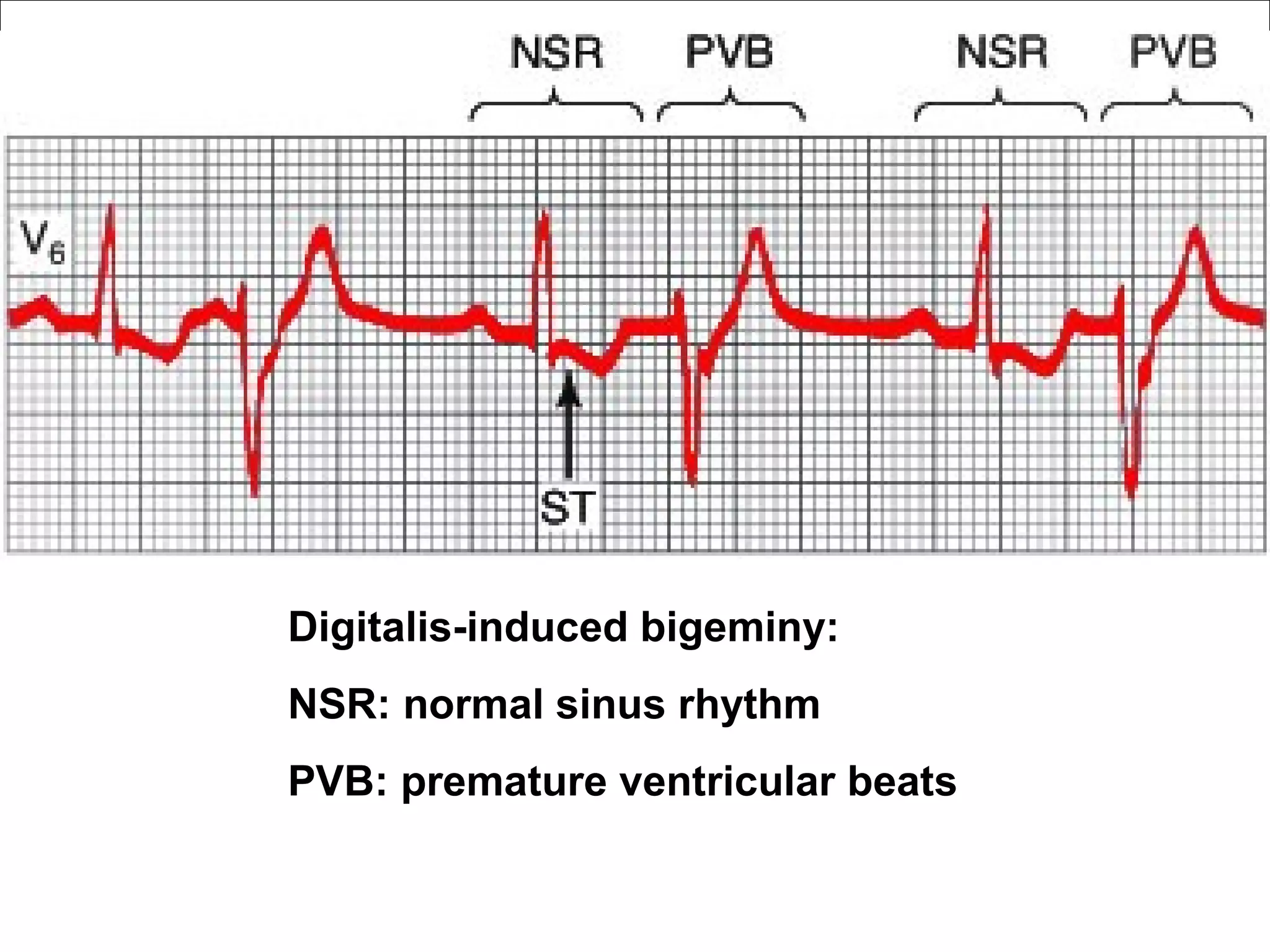
 If DADs in the Purkinje system regularly reach
threshold, bigeminy will be recorded on the ECG.
 With further intoxication, each DAD-evoked action
potential will itself elicit an afterpotential, and a
self-sustaining tachycardia will be established.
 Such a tachycardia may deteriorate into fibrillation;
Digitalis-induced bigeminy:
NSR: normal sinus rhythm
PVB: premature ventricular beats
Digitalis - Clearance
 Digoxin is primarily (i.e. 70%) excreted unchanged
in urine and rate of excretion parallels creatinine
(So, renal impairment and elderly Accumulation)
 25 to 28%: eliminated by non-renal routes.
 Biliary excretion up to 30% of a given dose, but the
enterohepatic cycle seems to be of minor importance.
Interactions With K+
, Ca2+
, Mg2+
 Potassium and digitalis inhibit each other's binding to
Na+/K+ ATPase
 Hyperkalemia reduces the enzyme-inhibiting actions of
cardiac glycosides, whereas hypokalemia facilitates
these actions.
 Abnormal automaticity is inhibited by hyperkalemia.
Moderately increased extracellular K+
therefore
reduces the (toxic) effects of digitalis.
Interactions With K+
, Ca2+
, Mg2+
Cont’d
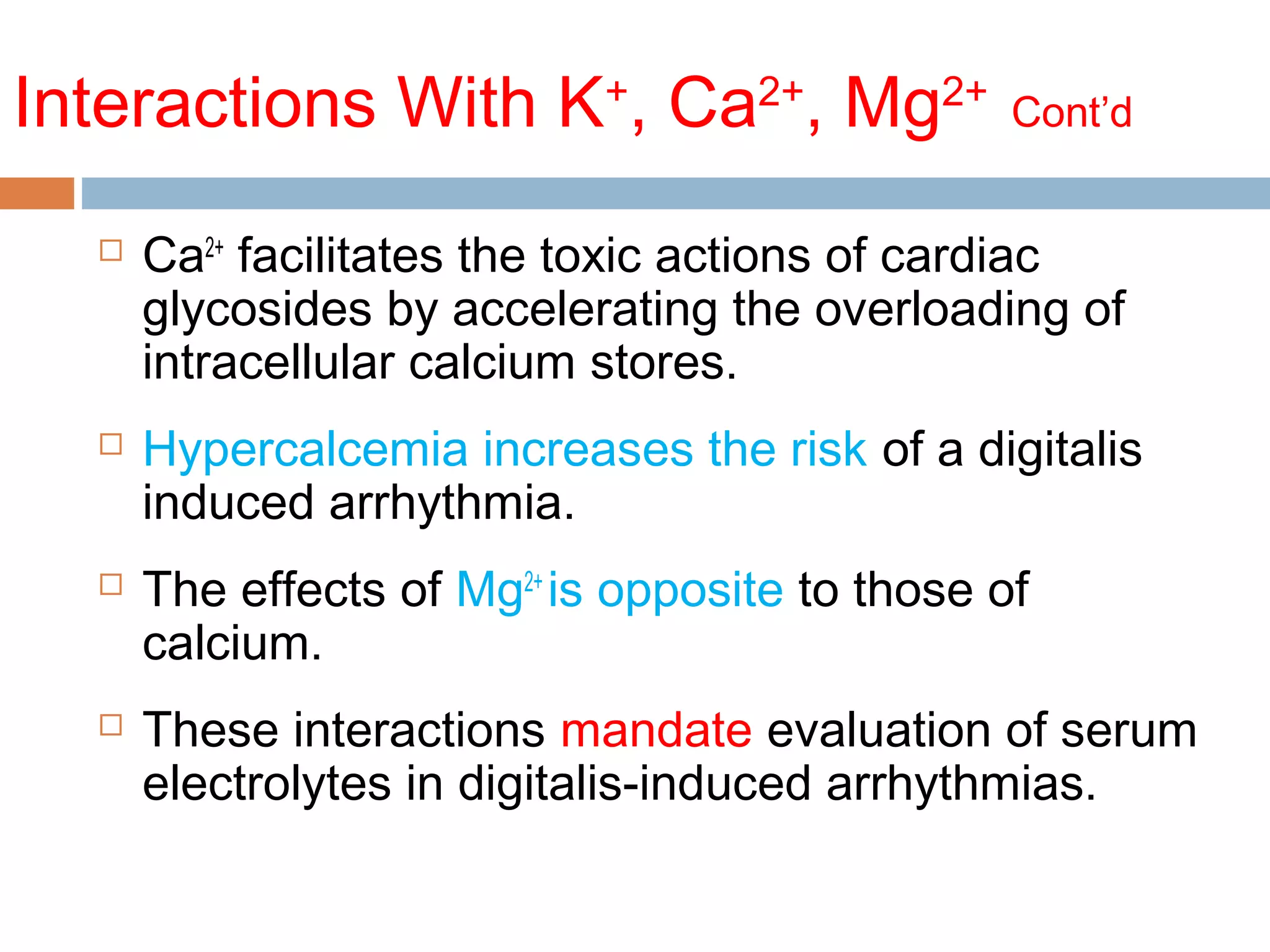
 Ca2+
facilitates the toxic actions of cardiac
glycosides by accelerating the overloading of
intracellular calcium stores.
 Hypercalcemia increases the risk of a digitalis
induced arrhythmia.
 The effects of Mg2+
is opposite to those of
calcium.
 These interactions mandate evaluation of serum
electrolytes in digitalis-induced arrhythmias.
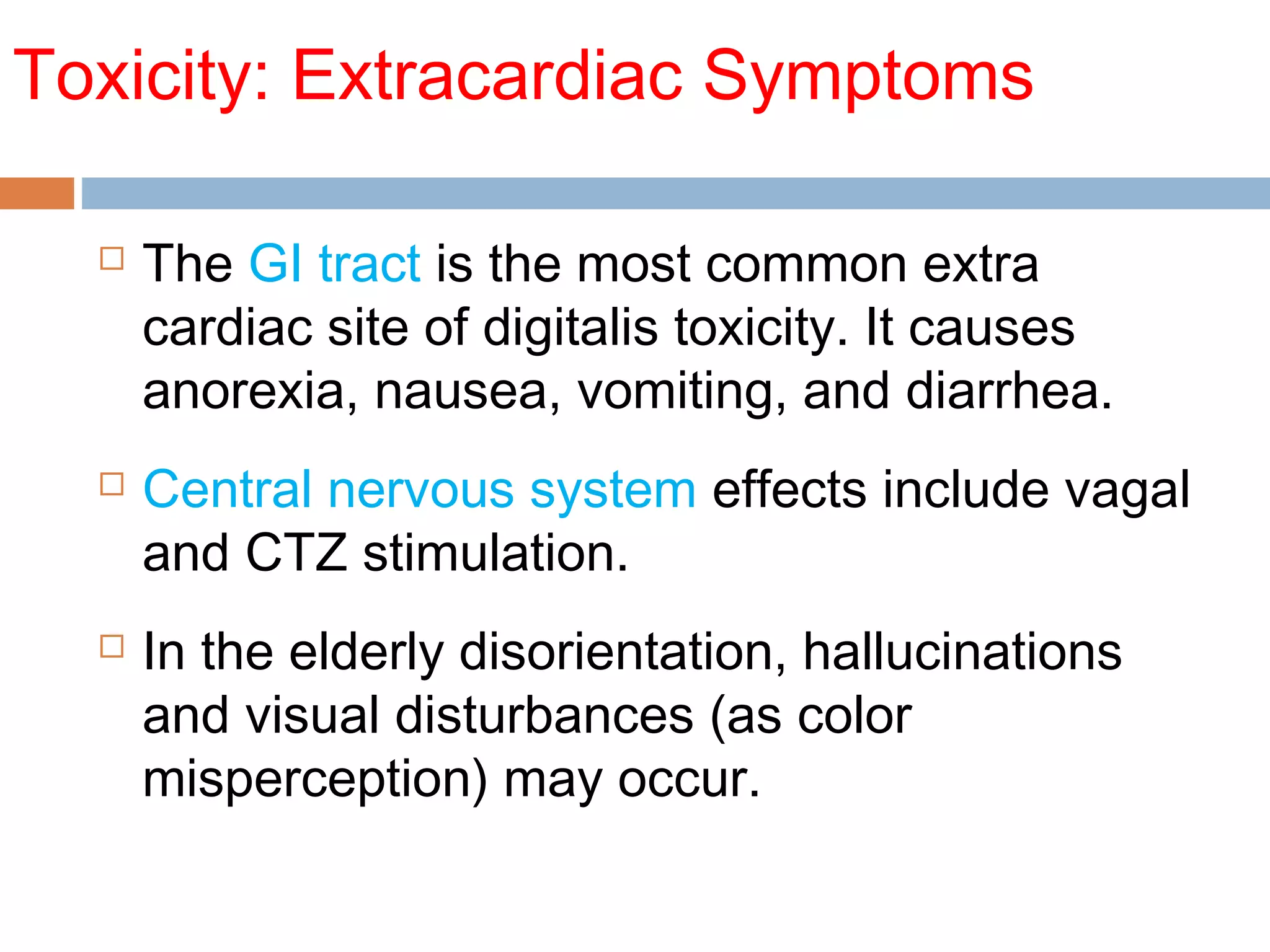
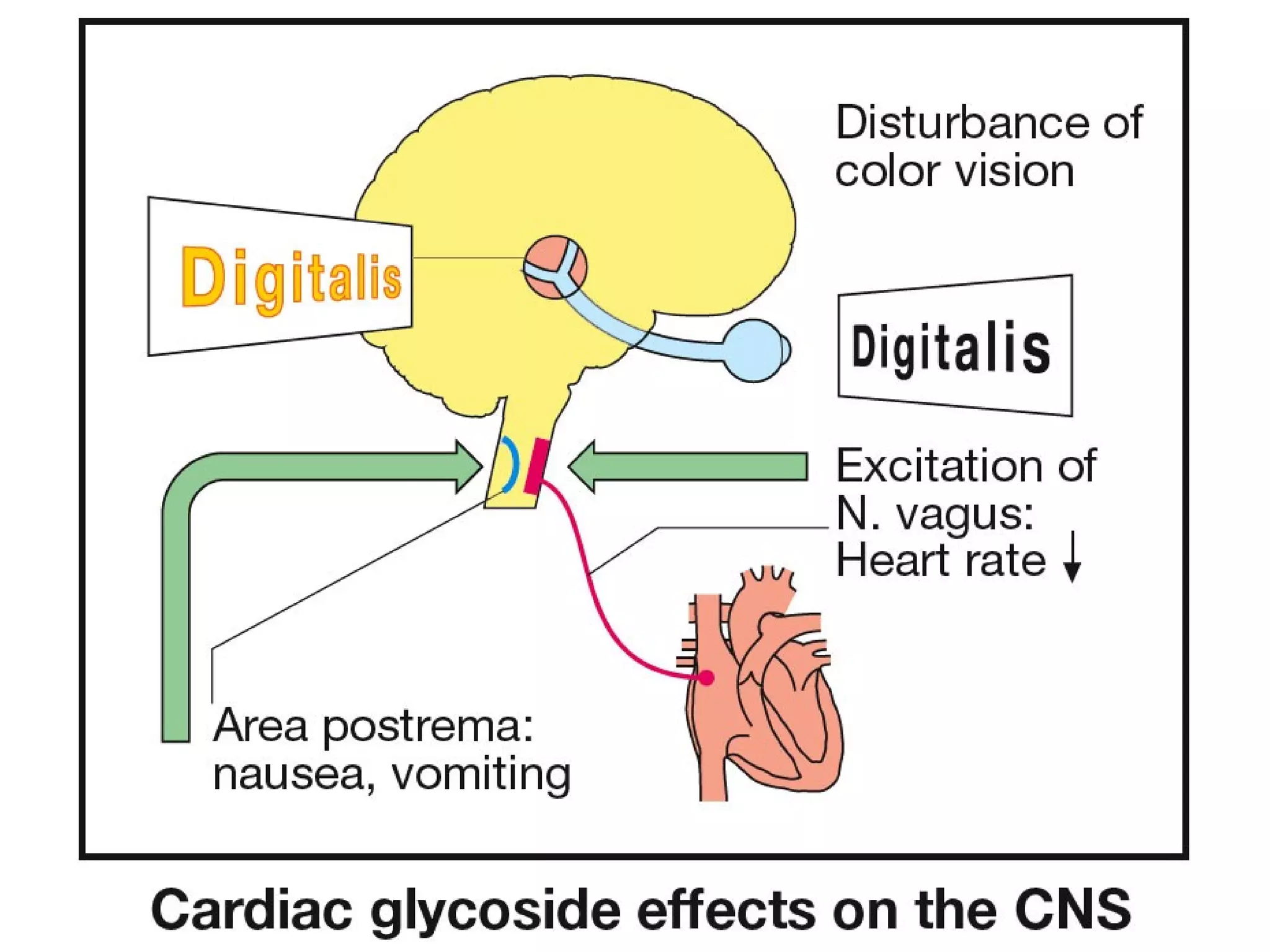
Toxicity: Extracardiac Symptoms
 The GI tract is the most common extra
cardiac site of digitalis toxicity. It causes
anorexia, nausea, vomiting, and diarrhea.
 Central nervous system effects include vagal
and CTZ stimulation.
 In the elderly disorientation, hallucinations
and visual disturbances (as color
misperception) may occur.
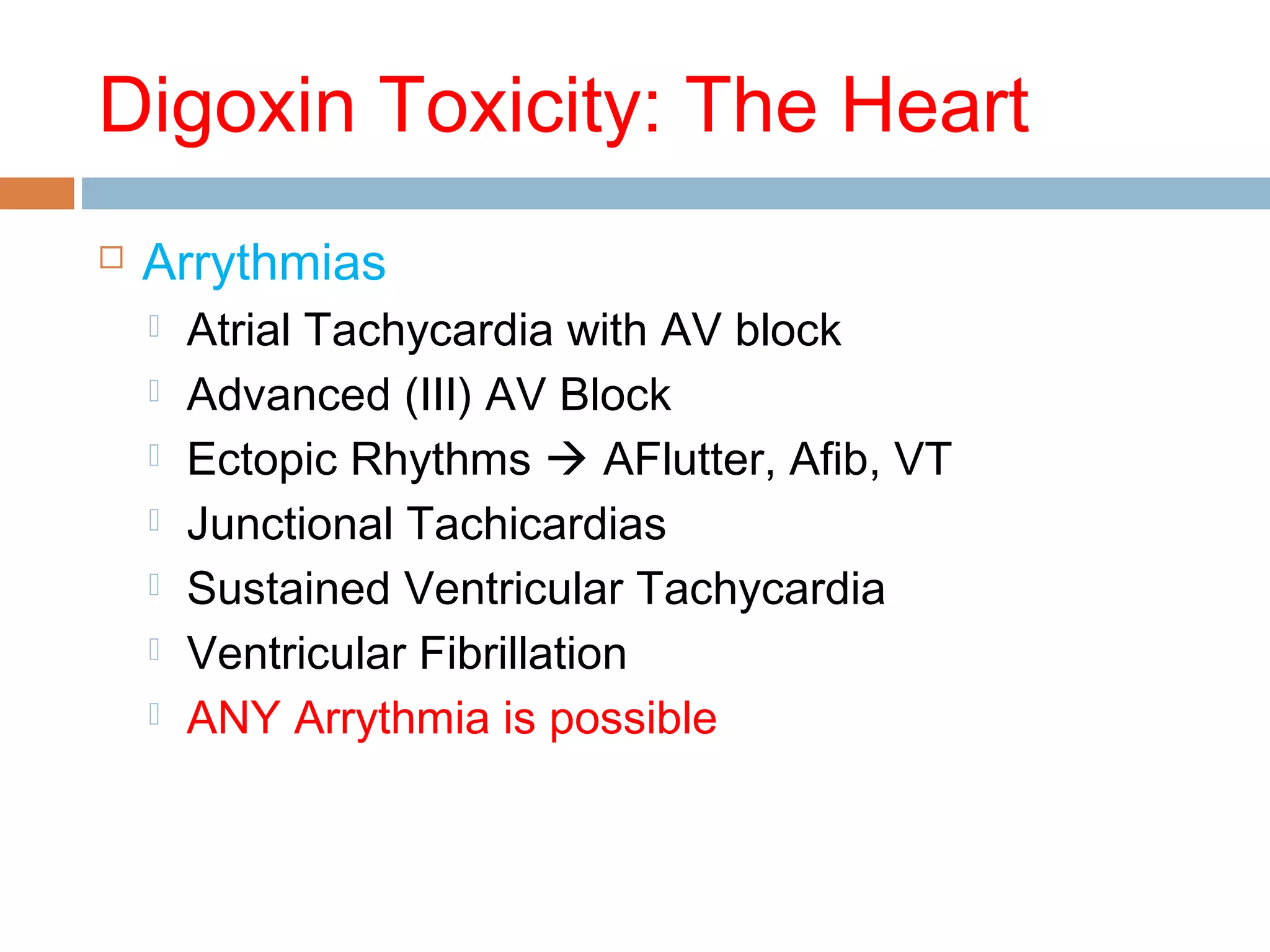
Digoxin Toxicity: The Heart
 Arrythmias
 Atrial Tachycardia with AV block
 Advanced (III) AV Block
 Ectopic Rhythms  AFlutter, Afib, VT
 Junctional Tachicardias
 Sustained Ventricular Tachycardia
 Ventricular Fibrillation
 ANY Arrythmia is possible
Treatment
 If early after intentional overdose, can give activated charcoal
 Bradycardia
 If asymptomatic keep serum K+ at least 4.0 (or higher)
 Symptomatic- Atropine, prompt pacing
 Tachicardia
 Excessive ventricular automaticity: Lidocaine IV
 DC Shock ONLY if VFib (NEVER for PSVT)
 DigiBindDigiFAB (Humanized sheep Mab)
 Symptomatic bradycardia – advanced AVB (unresponsive to Atropine)
 Malignant arrhythmia (particularly in the se tting o f hype rkale m ia)
 Hyperkalemia (K+ > 5 mEqL)
 Digoxin > 10 ngL (or > 4 ngL in chronic toxicity)
 Plasmapheresis will prevent rebound effect
 Monitor K, Free Digoxin Levels and ECG
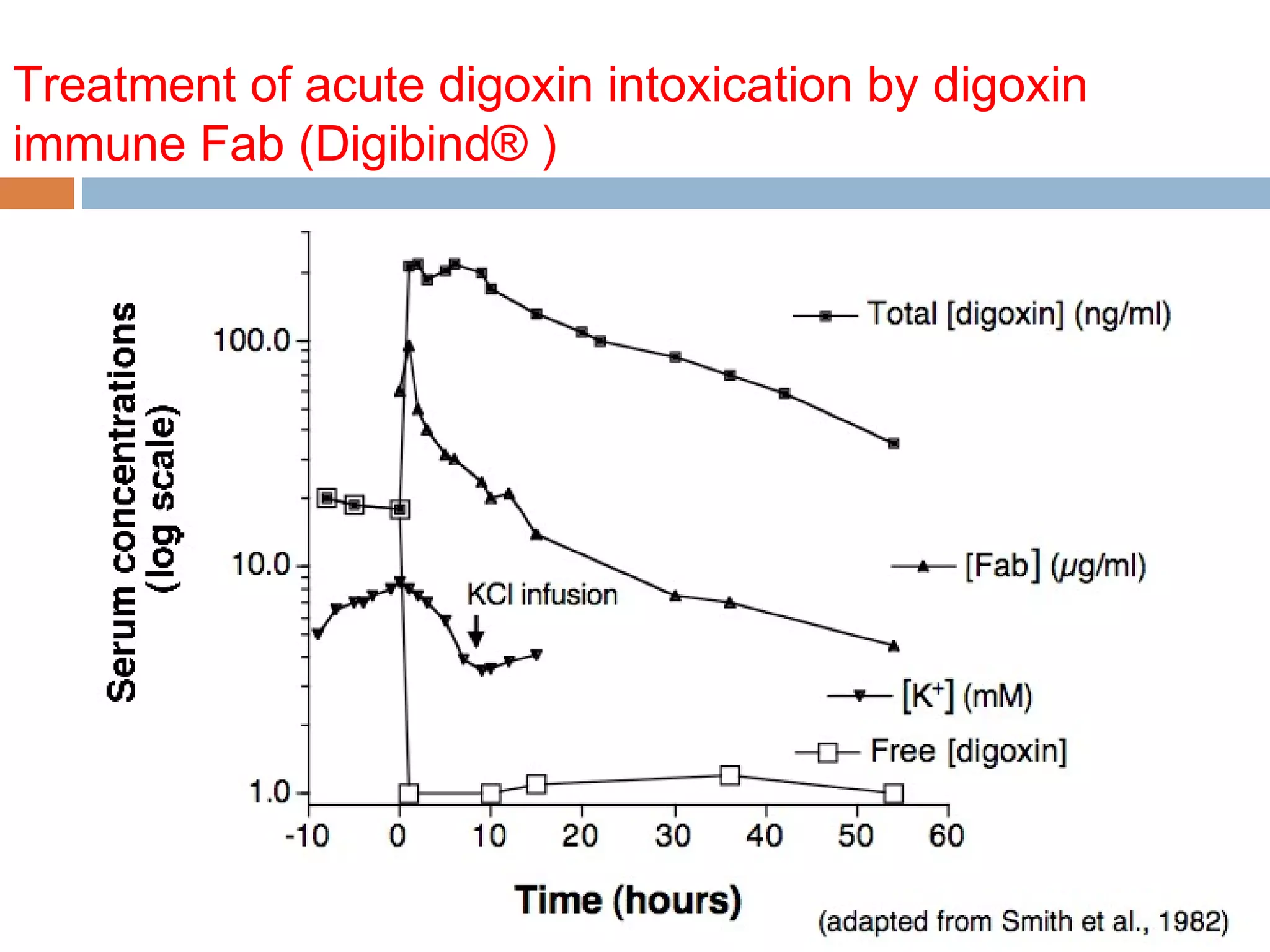
Treatment of acute digoxin intoxication by digoxin
immune Fab (Digibind® )
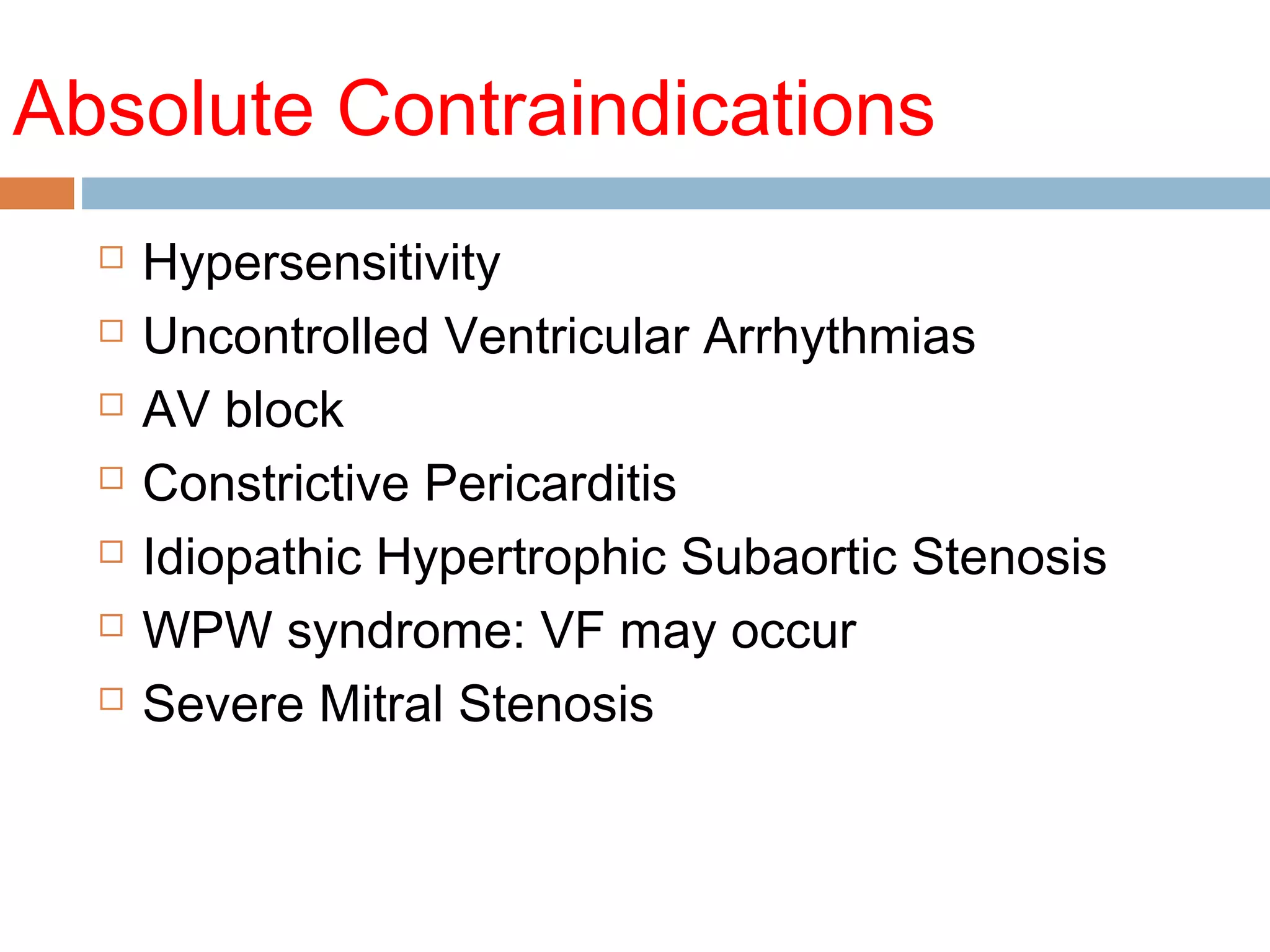
Absolute Contraindications
 Hypersensitivity
 Uncontrolled Ventricular Arrhythmias
 AV block
 Constrictive Pericarditis
 Idiopathic Hypertrophic Subaortic Stenosis
 WPW syndrome: VF may occur
 Severe Mitral Stenosis
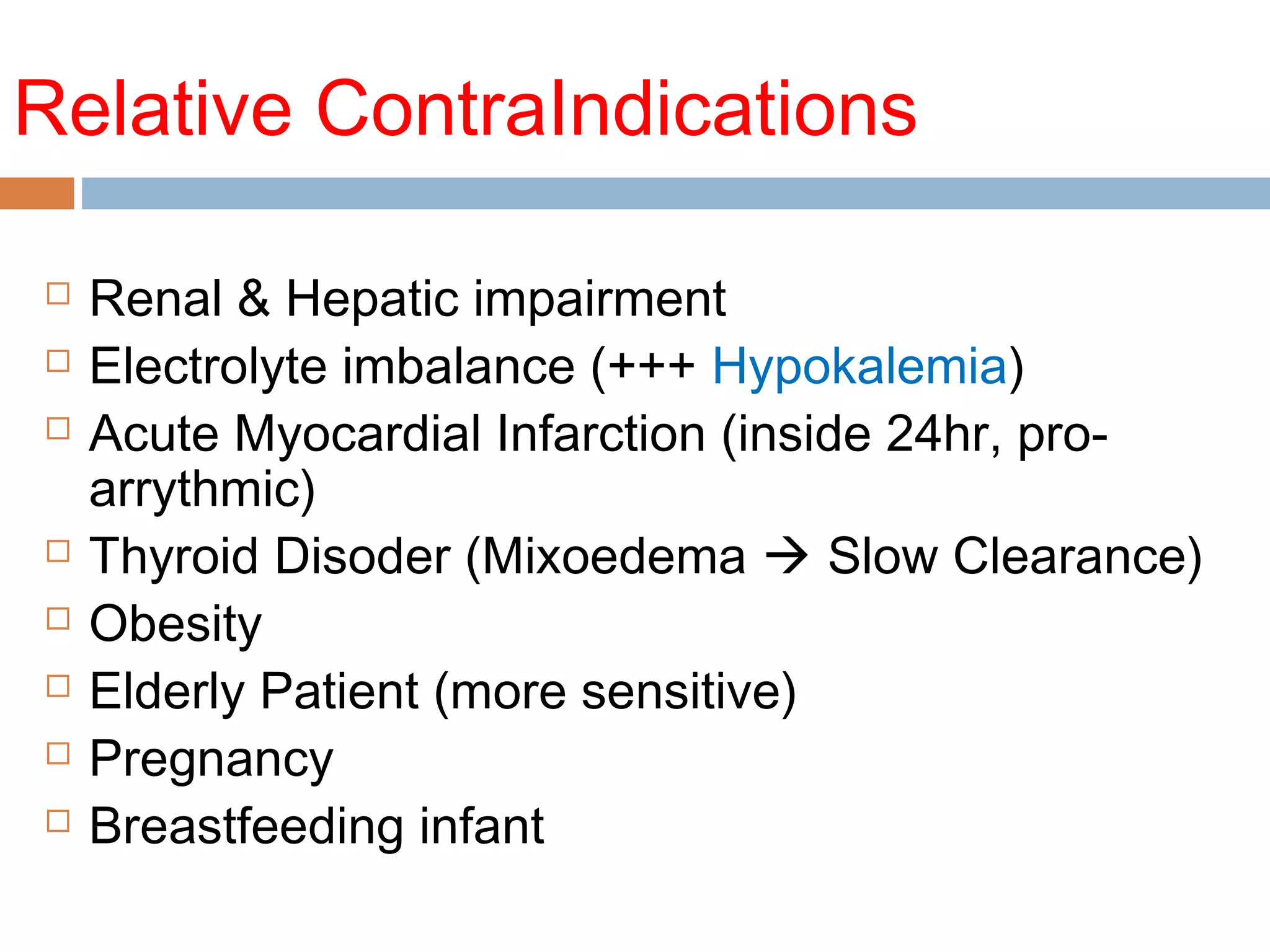
Relative ContraIndications
 Renal & Hepatic impairment
 Electrolyte imbalance (+++ Hypokalemia)
 Acute Myocardial Infarction (inside 24hr, pro-
arrythmic)
 Thyroid Disoder (Mixoedema  Slow Clearance)
 Obesity
 Elderly Patient (more sensitive)
 Pregnancy
 Breastfeeding infant
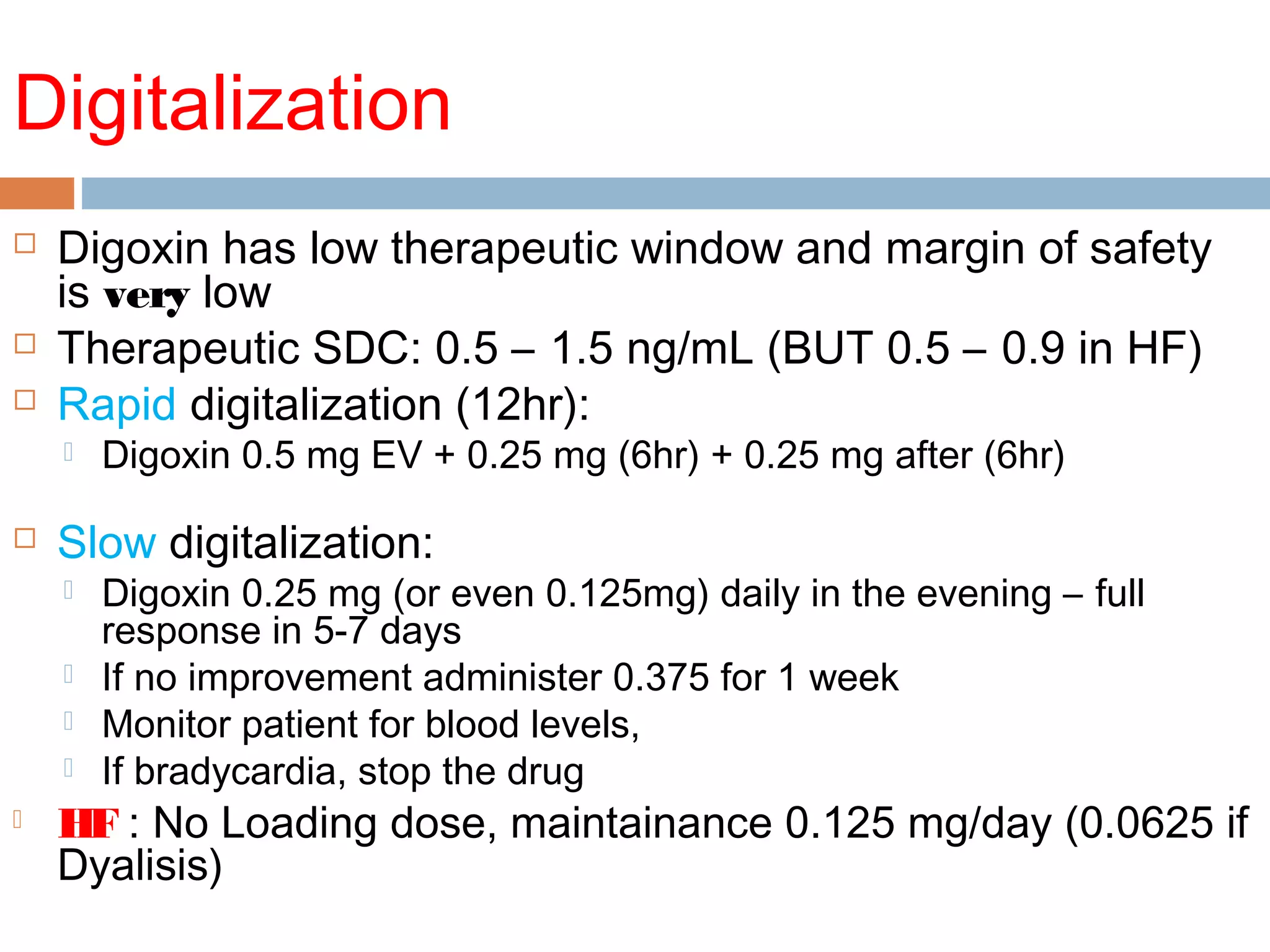
Digitalization
 Digoxin has low therapeutic window and margin of safety
is very low
 Therapeutic SDC: 0.5 – 1.5 ng/mL (BUT 0.5 – 0.9 in HF)
 Rapid digitalization (12hr):
 Digoxin 0.5 mg EV + 0.25 mg (6hr) + 0.25 mg after (6hr)
 Slow digitalization:
 Digoxin 0.25 mg (or even 0.125mg) daily in the evening – full
response in 5-7 days
 If no improvement administer 0.375 for 1 week
 Monitor patient for blood levels,
 If bradycardia, stop the drug
 HF : No Loading dose, maintainance 0.125 mg/day (0.0625 if
Dyalisis)
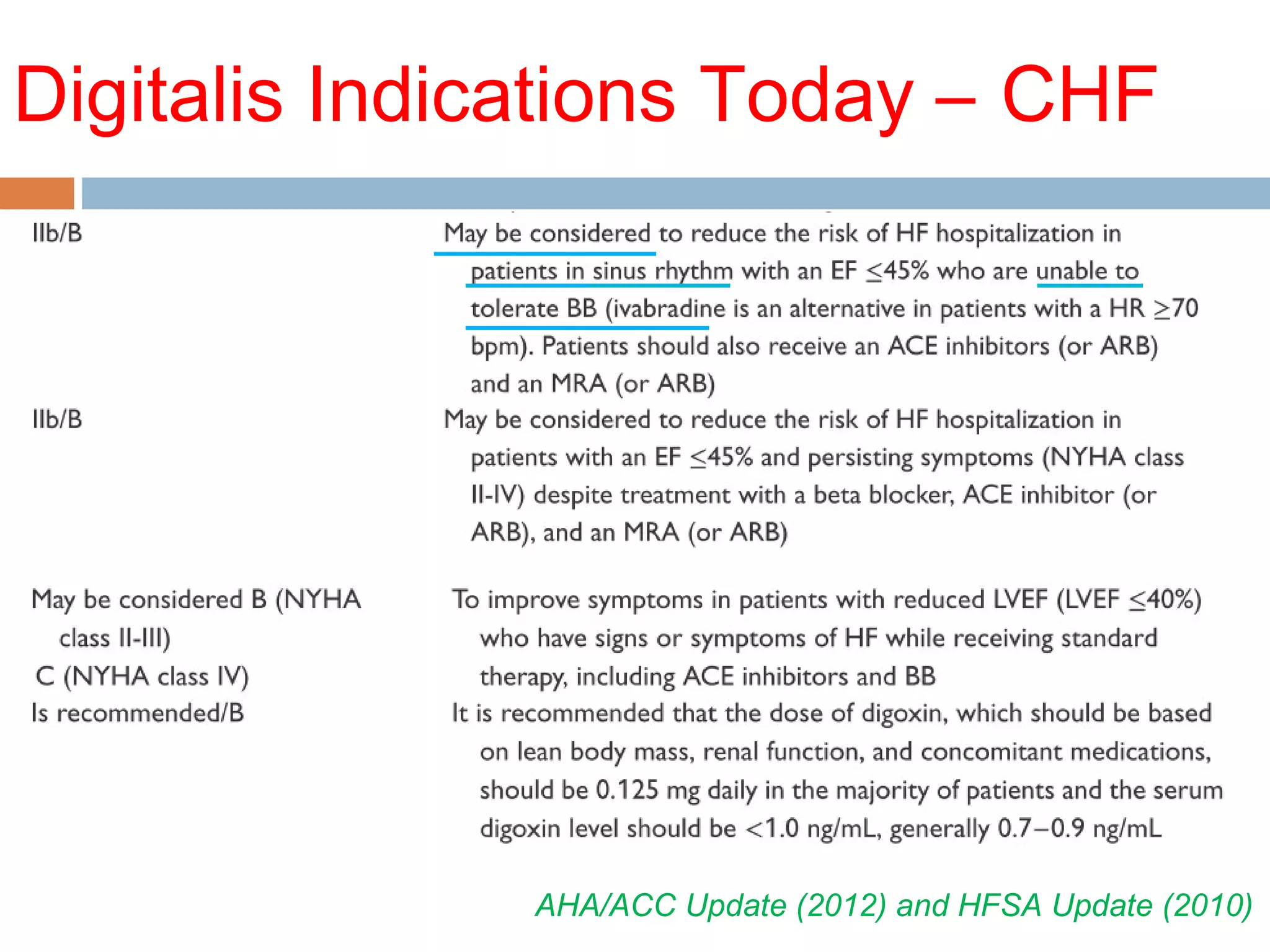
Digitalis Indications Today – CHF
AHA/ACC Update (2012) and HFSA Update (2010)
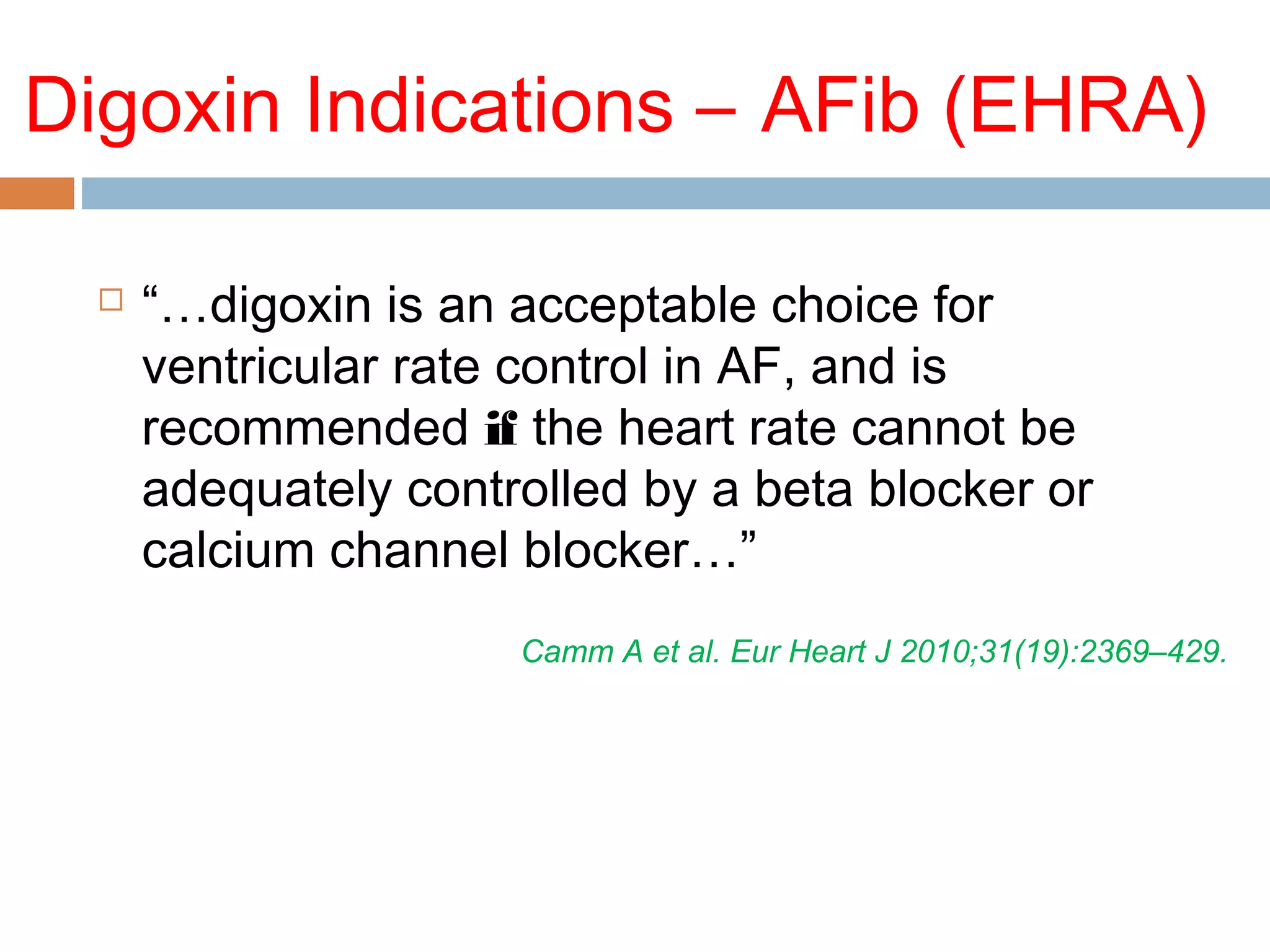
Digoxin Indications – AFib (EHRA)
 “…digoxin is an acceptable choice for
ventricular rate control in AF, and is
recommended if the heart rate cannot be
adequately controlled by a beta blocker or
calcium channel blocker…”
Camm A et al. Eur Heart J 2010;31(19):2369–429.
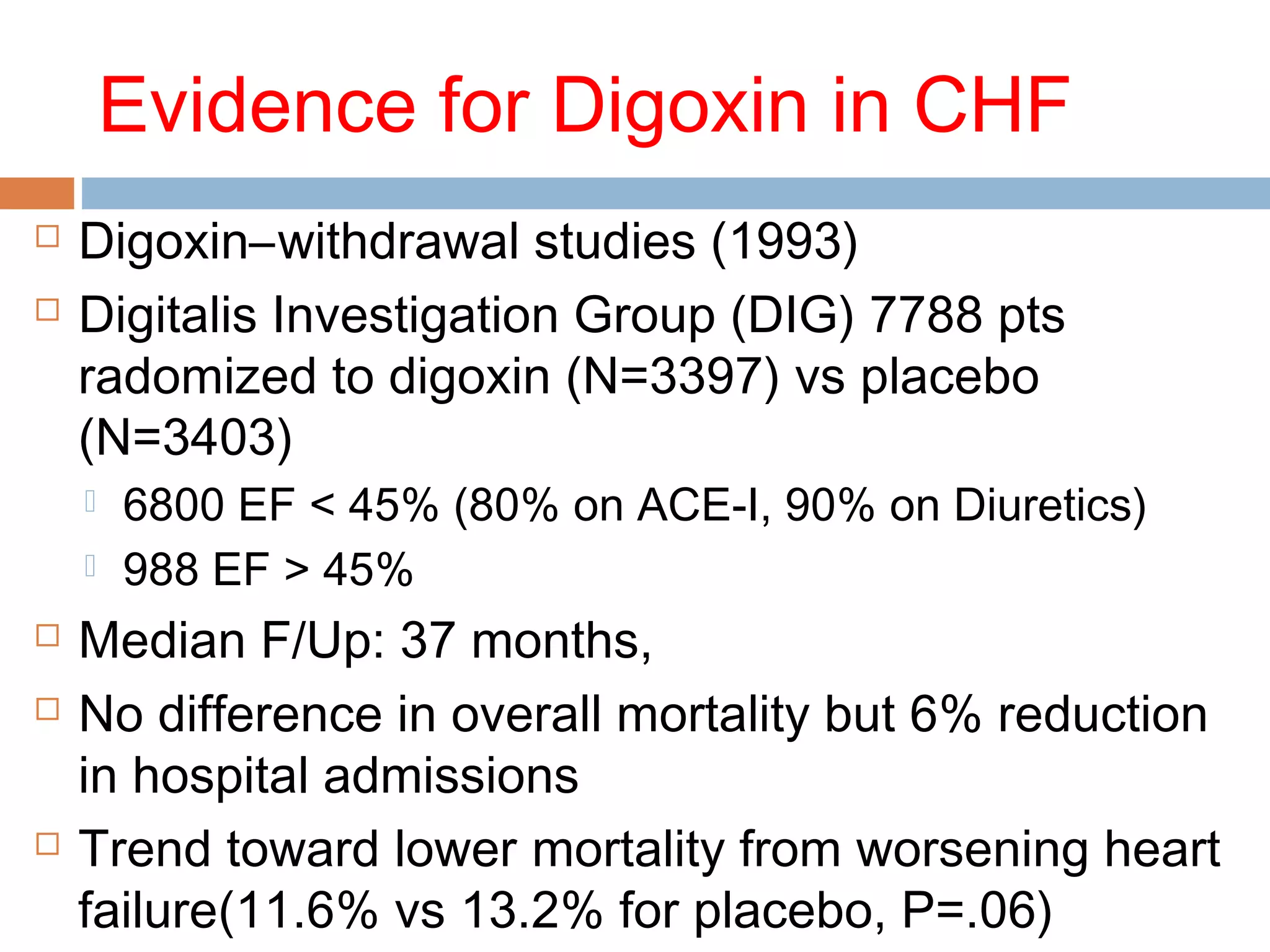
Evidence for Digoxin in CHF
 Digoxin–withdrawal studies (1993)
 Digitalis Investigation Group (DIG) 7788 pts
radomized to digoxin (N=3397) vs placebo
(N=3403)
 6800 EF < 45% (80% on ACE-I, 90% on Diuretics)
 988 EF > 45%
 Median F/Up: 37 months,
 No difference in overall mortality but 6% reduction
in hospital admissions
 Trend toward lower mortality from worsening heart
failure(11.6% vs 13.2% for placebo, P=.06)
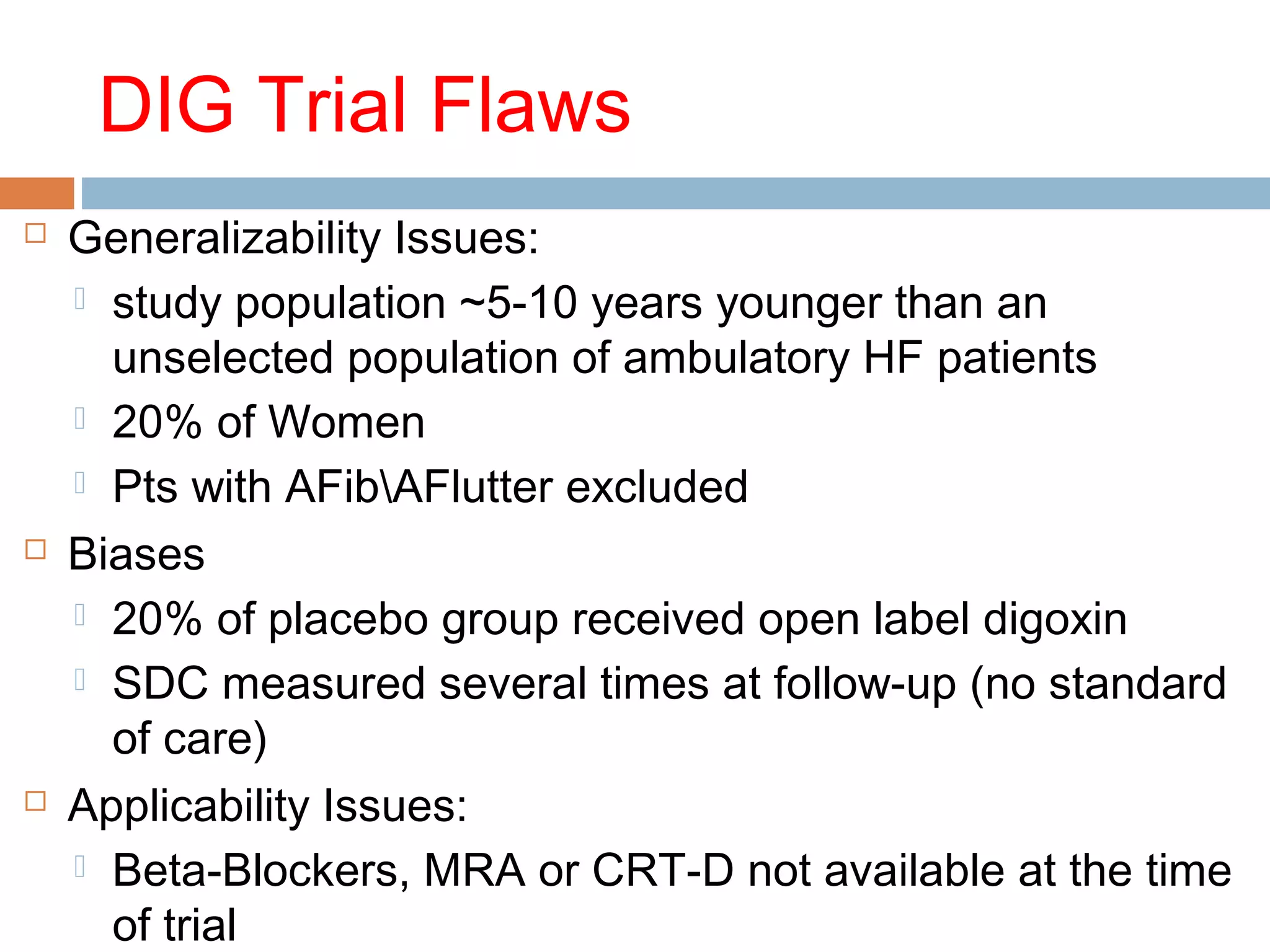
DIG Trial Flaws
 Generalizability Issues:
 study population ~5-10 years younger than an
unselected population of ambulatory HF patients
 20% of Women
 Pts with AFibAFlutter excluded
 Biases
 20% of placebo group received open label digoxin
 SDC measured several times at follow-up (no standard
of care)
 Applicability Issues:
 Beta-Blockers, MRA or CRT-D not available at the time
of trial
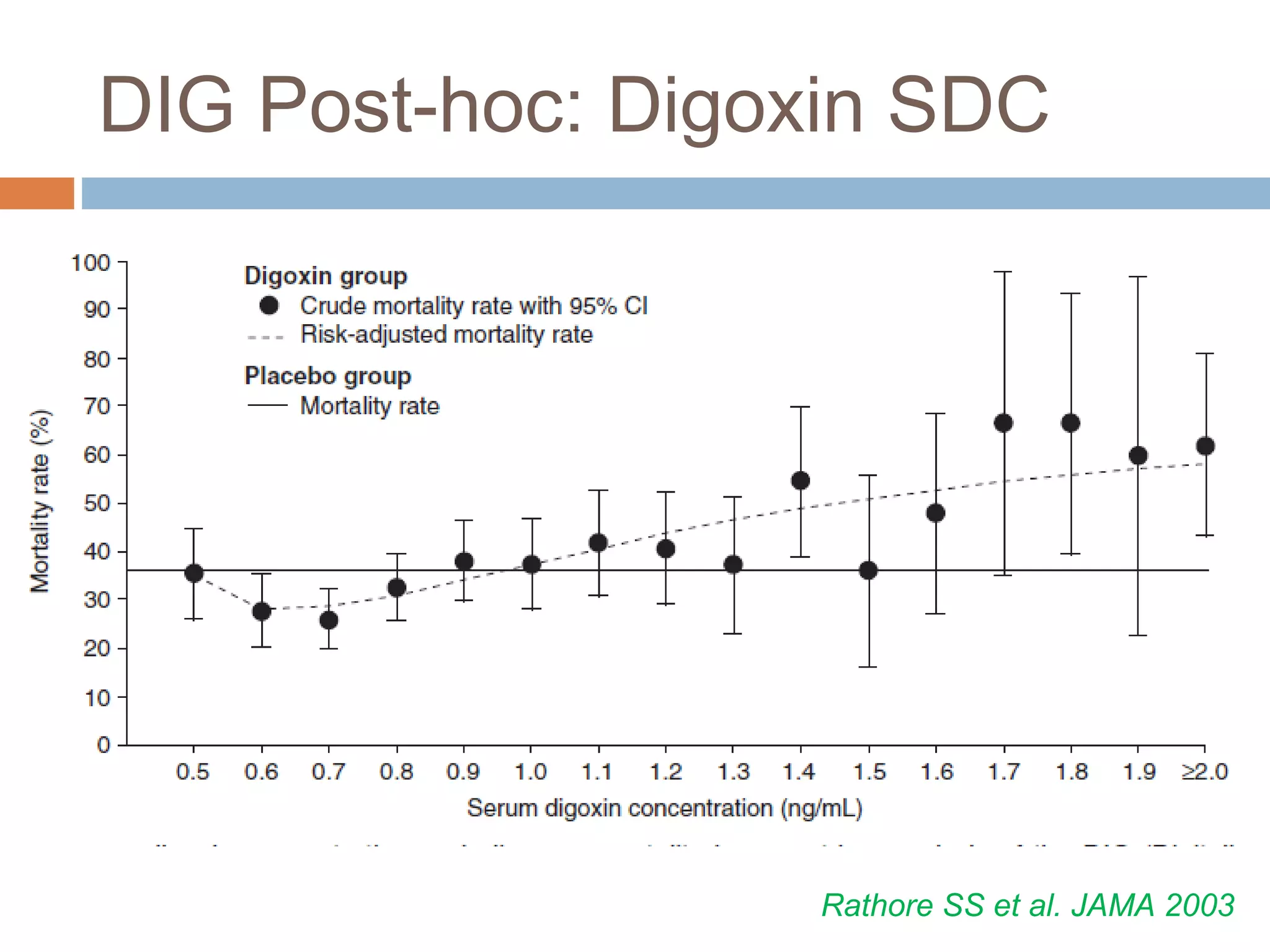
DIG Post-hoc: Digoxin SDC
Rathore SS et al. JAMA 2003
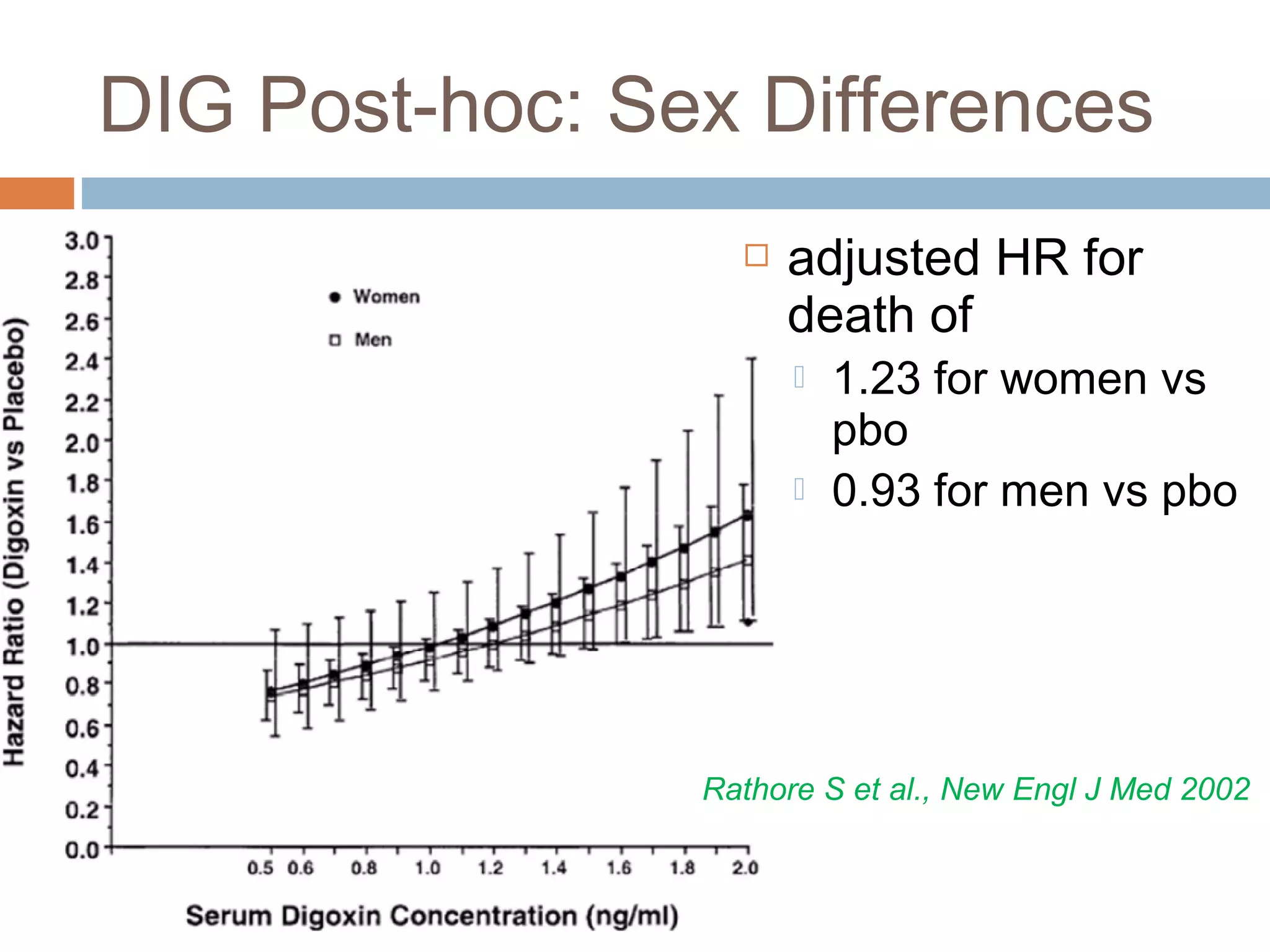
DIG Post-hoc: Sex Differences
 adjusted HR for
death of
 1.23 for women vs
pbo
 0.93 for men vs pbo
Rathore S et al., New Engl J Med 2002
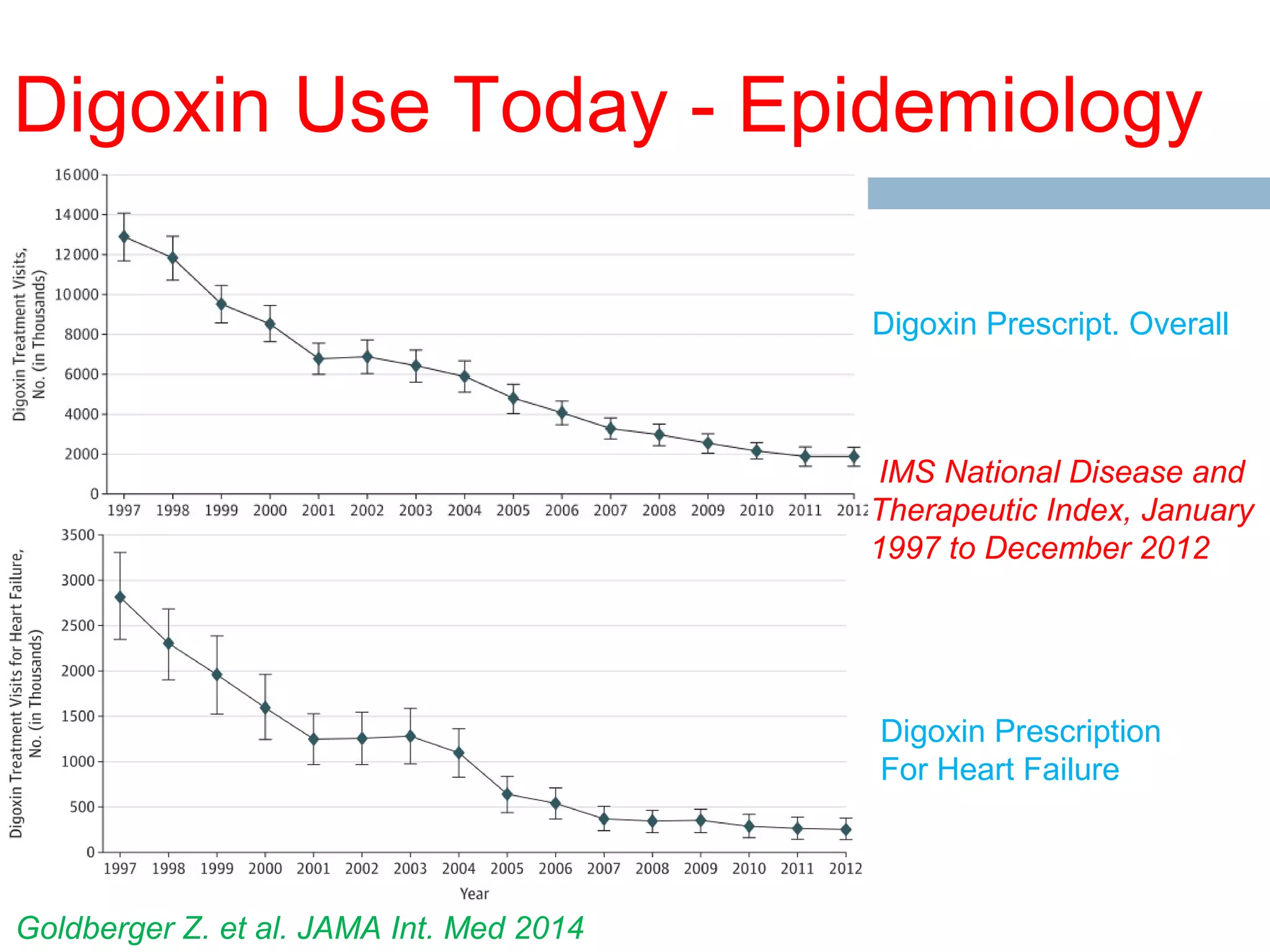
Digoxin Use Today - Epidemiology
IMS National Disease and
Therapeutic Index, January
1997 to December 2012
Digoxin Prescript. Overall
Digoxin Prescription
For Heart Failure
Goldberger Z. et al. JAMA Int. Med 2014
Digoxin Toxicity Today - Epidemiology
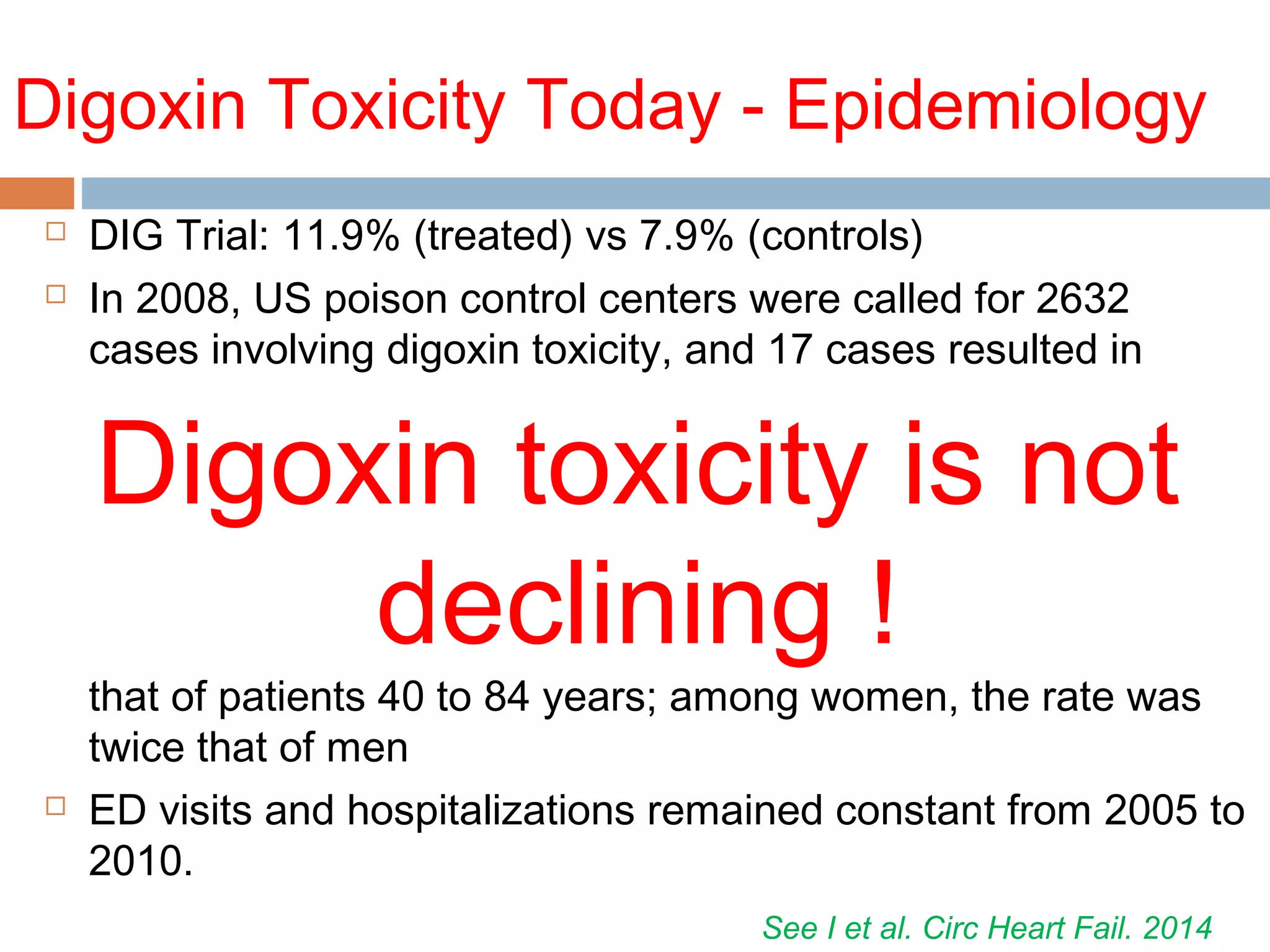
 DIG Trial: 11.9% (treated) vs 7.9% (controls)
 In 2008, US poison control centers were called for 2632
cases involving digoxin toxicity, and 17 cases resulted in
digoxin-related deaths
Bronstein AC et al. Clin Toxicol (Phila) 2009
 Estimated 5156 annual visits for digoxin toxicity ; more than
three fourths (78.8% resulted in hospitalization.
 The rate of ED visits among patients ≥85 years was twice
that of patients 40 to 84 years; among women, the rate was
twice that of men
 ED visits and hospitalizations remained constant from 2005 to
2010.
See I et al. Circ Heart Fail. 2014
Digoxin toxicity is not
declining !
Digoxin Toxicity - Etiology
 Medical Error
 Excessive dosing
 Inappropriate prescription
 Significant kidney disease (CrCl < 50 mLhr)
 Patient non compliance
Chan K. et al. J Am Soc Nephrol 2010
Kongkaew C. et al. Arch. of Card. Dis. (2012)
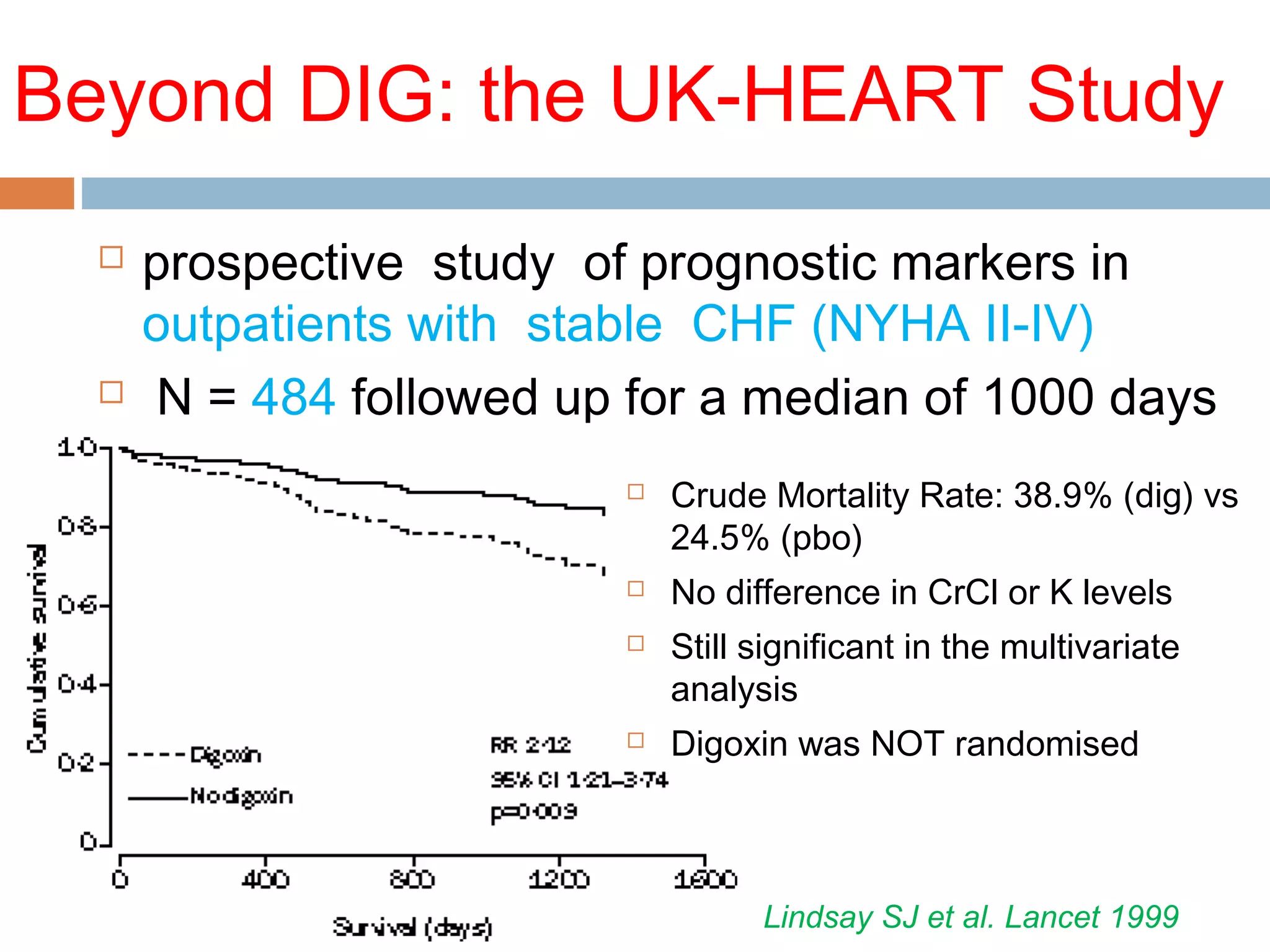
Beyond DIG: the UK-HEART Study
 prospective study of prognostic markers in
outpatients with stable CHF (NYHA II-IV)
 N = 484 followed up for a median of 1000 days
 Crude Mortality Rate: 38.9% (dig) vs
24.5% (pbo)
 No difference in CrCl or K levels
 Still significant in the multivariate
analysis
 Digoxin was NOT randomised
Lindsay SJ et al. Lancet 1999
Beyond DIG: The SPORTIF III-V
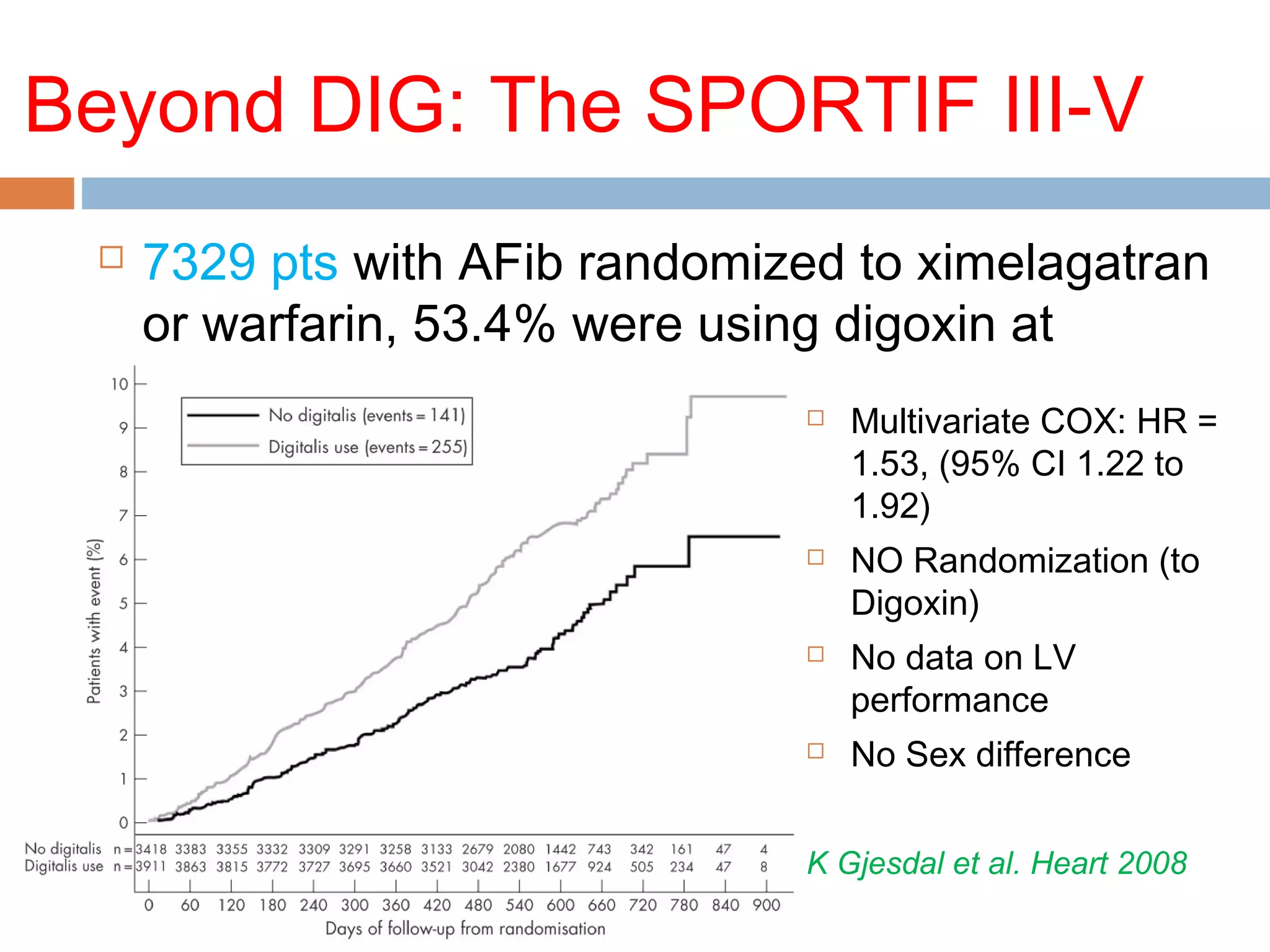
 7329 pts with AFib randomized to ximelagatran
or warfarin, 53.4% were using digoxin at
baseline  Multivariate COX: HR =
1.53, (95% CI 1.22 to
1.92)
 NO Randomization (to
Digoxin)
 No data on LV
performance
 No Sex difference
K Gjesdal et al. Heart 2008
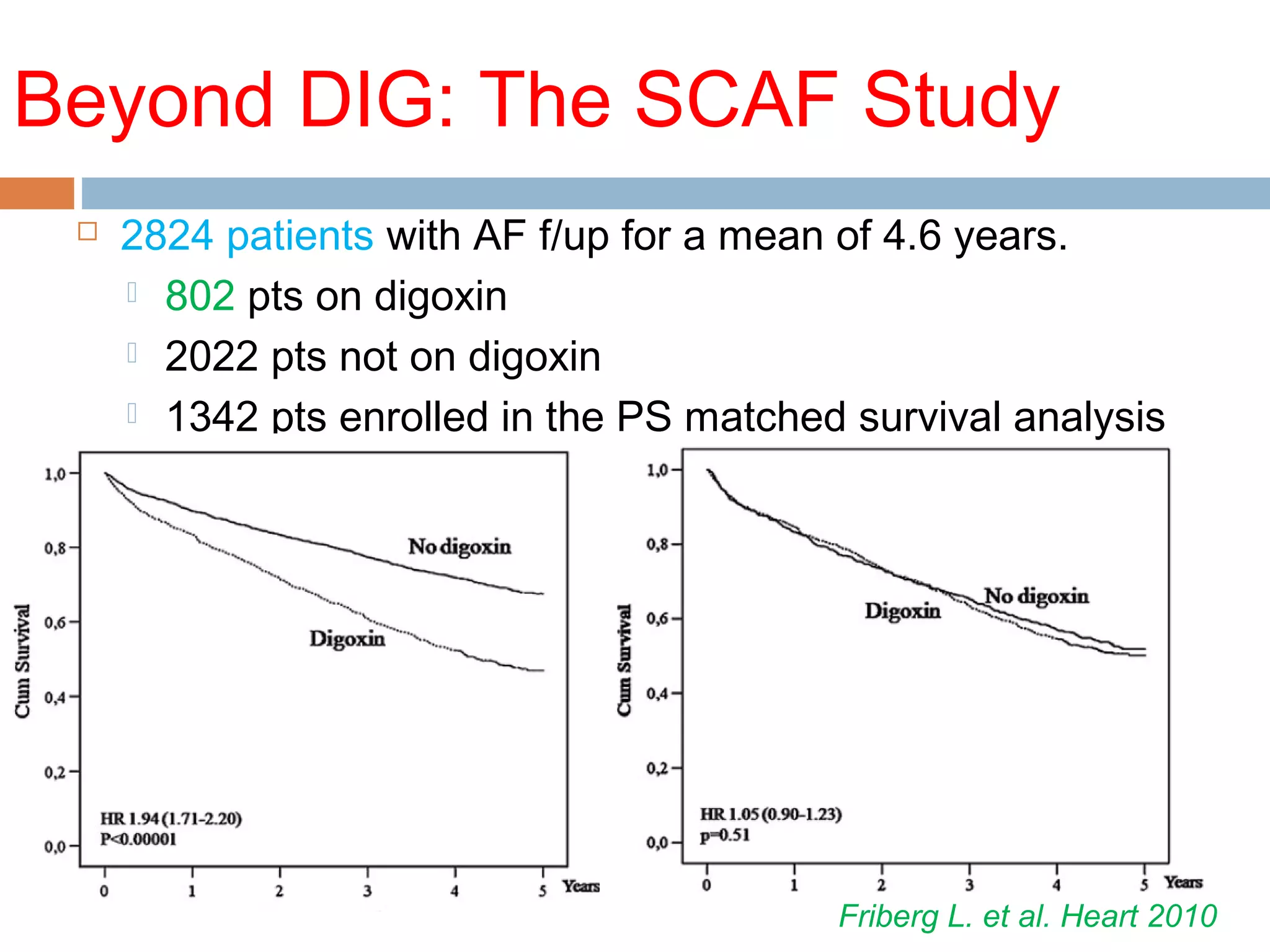
Beyond DIG: The SCAF Study
 2824 patients with AF f/up for a mean of 4.6 years.
 802 pts on digoxin
 2022 pts not on digoxin
 1342 pts enrolled in the PS matched survival analysis
Friberg L. et al. Heart 2010
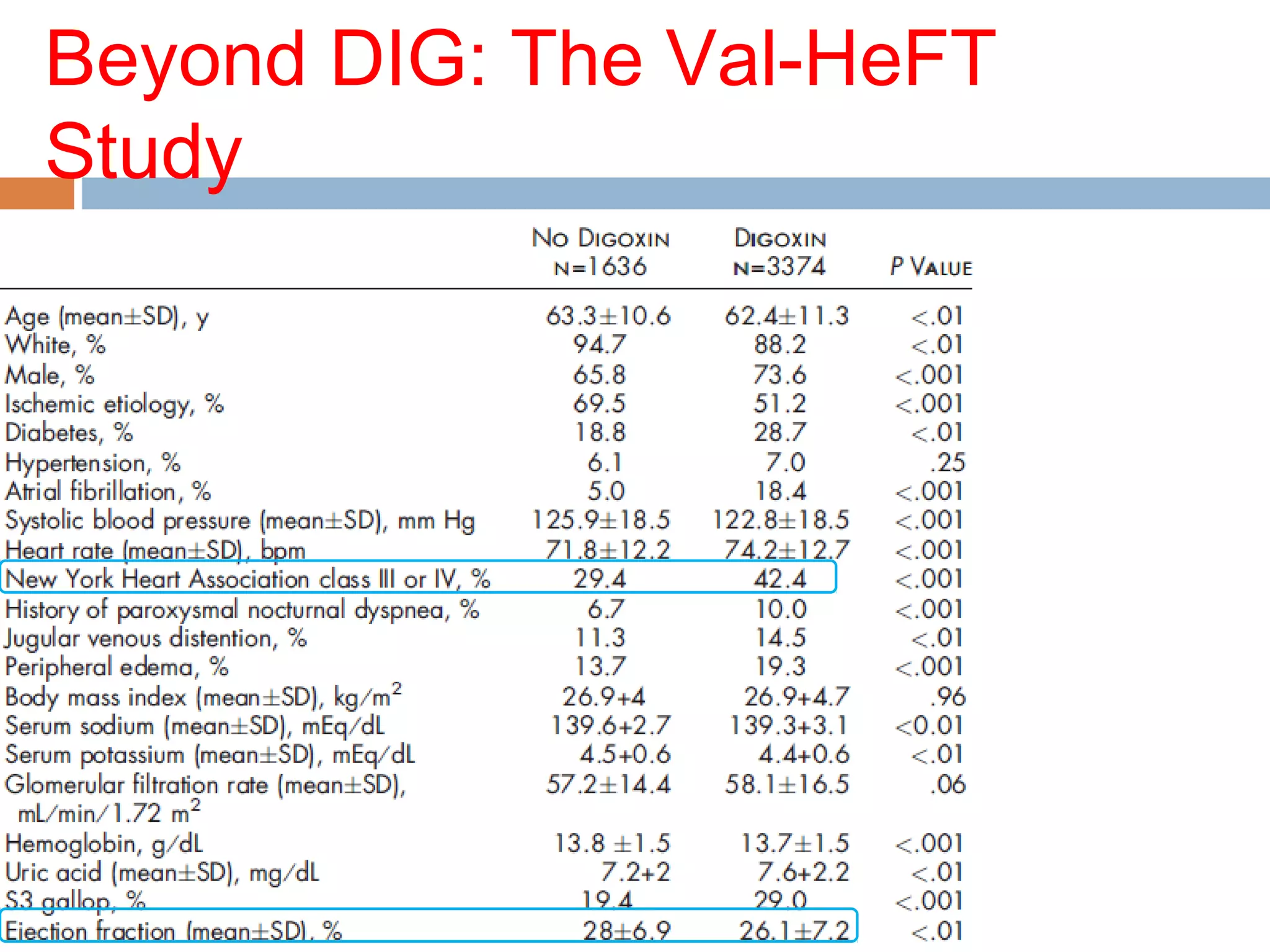
Beyond DIG: The Val-HeFT
Study
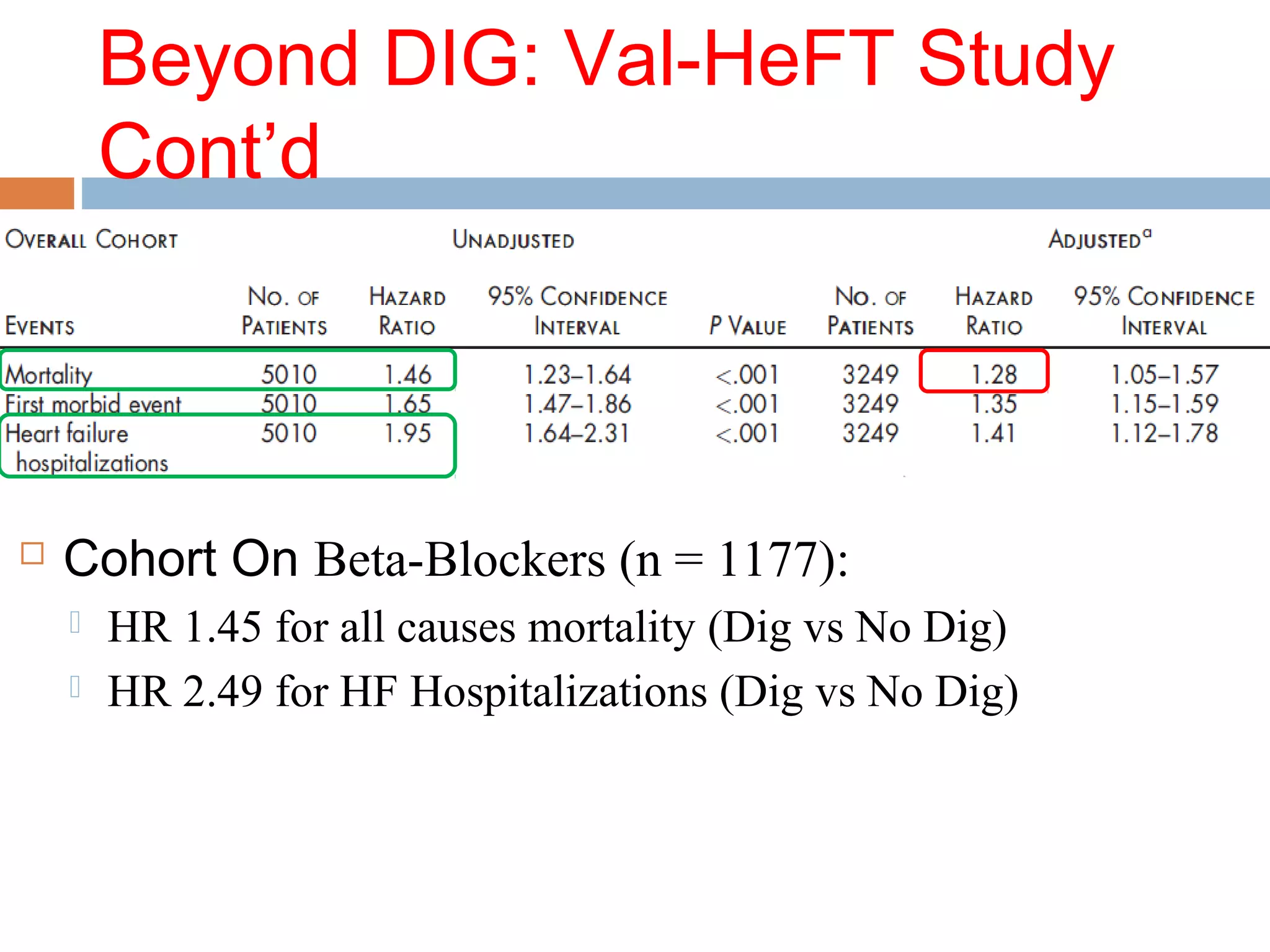
Beyond DIG: Val-HeFT Study
Cont’d
 Cohort On Beta-Blockers (n = 1177):
 HR 1.45 for all causes mortality (Dig vs No Dig)
 HR 2.49 for HF Hospitalizations (Dig vs No Dig)
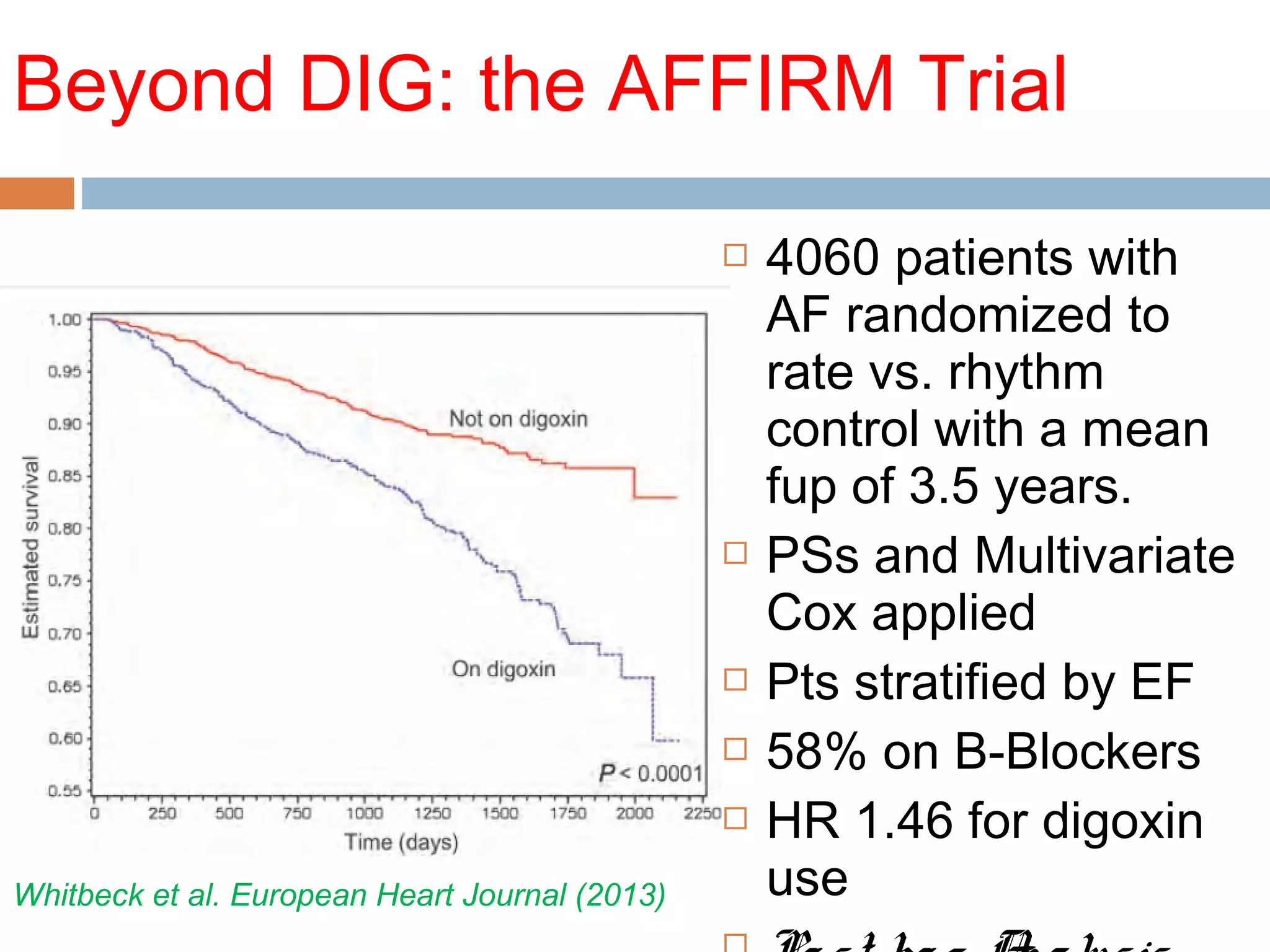
Beyond DIG: the AFFIRM Trial
 4060 patients with
AF randomized to
rate vs. rhythm
control with a mean
fup of 3.5 years.
 PSs and Multivariate
Cox applied
 Pts stratified by EF
 58% on B-Blockers
 HR 1.46 for digoxin
useWhitbeck et al. European Heart Journal (2013)
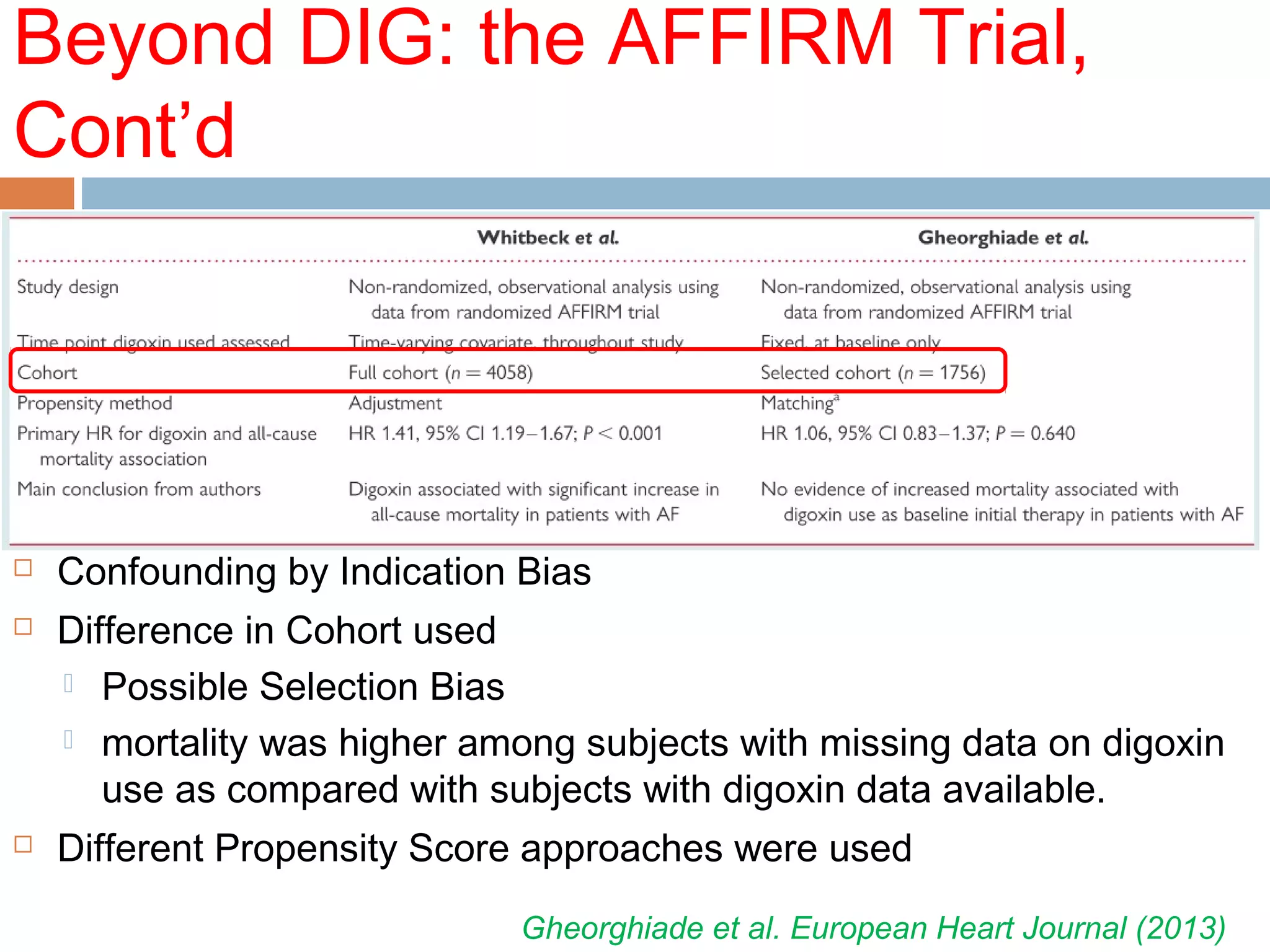
 Confounding by Indication Bias
 Difference in Cohort used
 Possible Selection Bias
 mortality was higher among subjects with missing data on digoxin
use as compared with subjects with digoxin data available.
 Different Propensity Score approaches were used
Beyond DIG: the AFFIRM Trial,
Cont’d
Gheorghiade et al. European Heart Journal (2013)
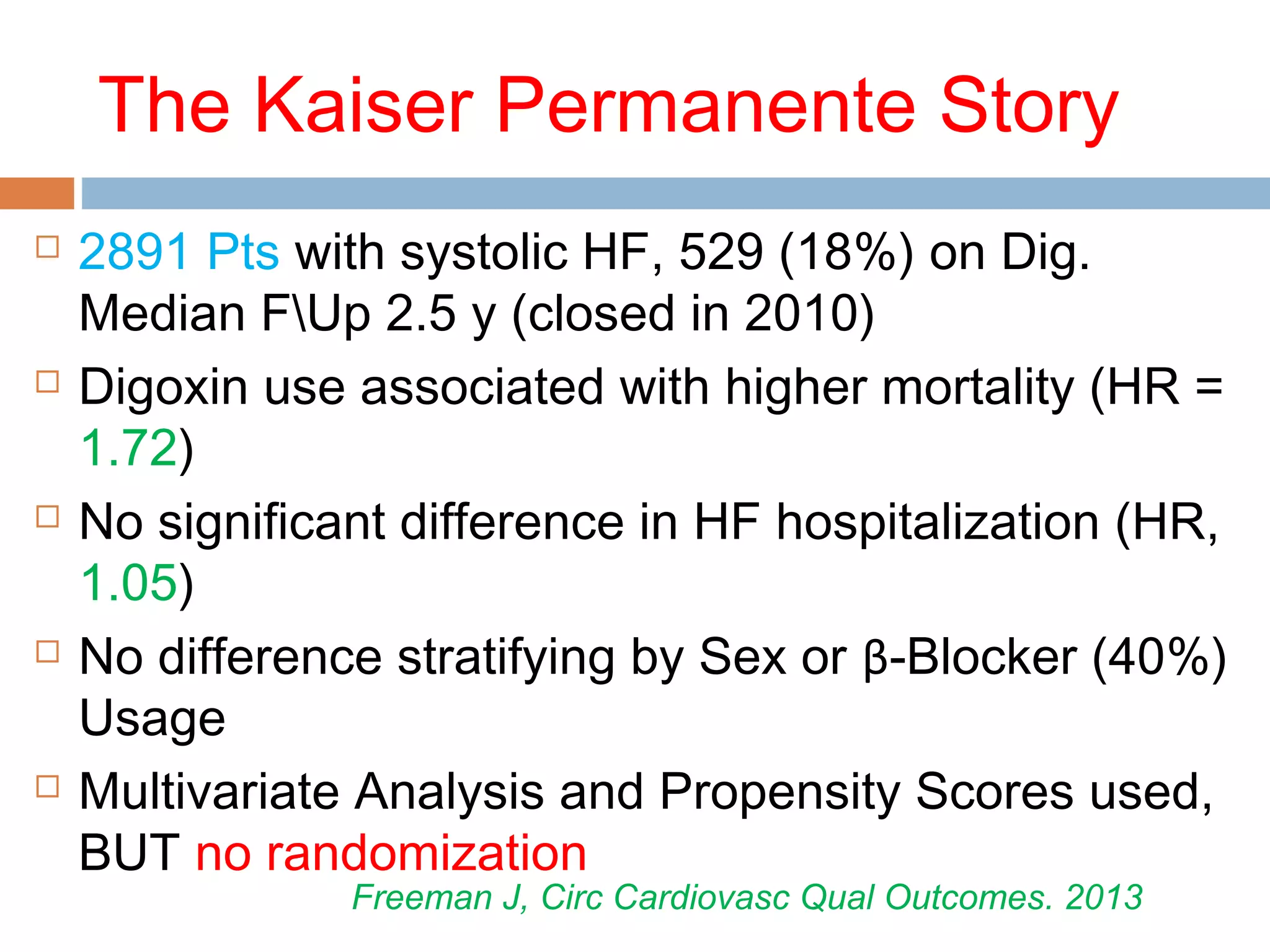
The Kaiser Permanente Story
 2891 Pts with systolic HF, 529 (18%) on Dig.
Median FUp 2.5 y (closed in 2010)
 Digoxin use associated with higher mortality (HR =
1.72)
 No significant difference in HF hospitalization (HR,
1.05)
 No difference stratifying by Sex or β-Blocker (40%)
Usage
 Multivariate Analysis and Propensity Scores used,
BUT no randomization
Freeman J, Circ Cardiovasc Qual Outcomes. 2013
Digoxin and PLT  Endothelial
Activation
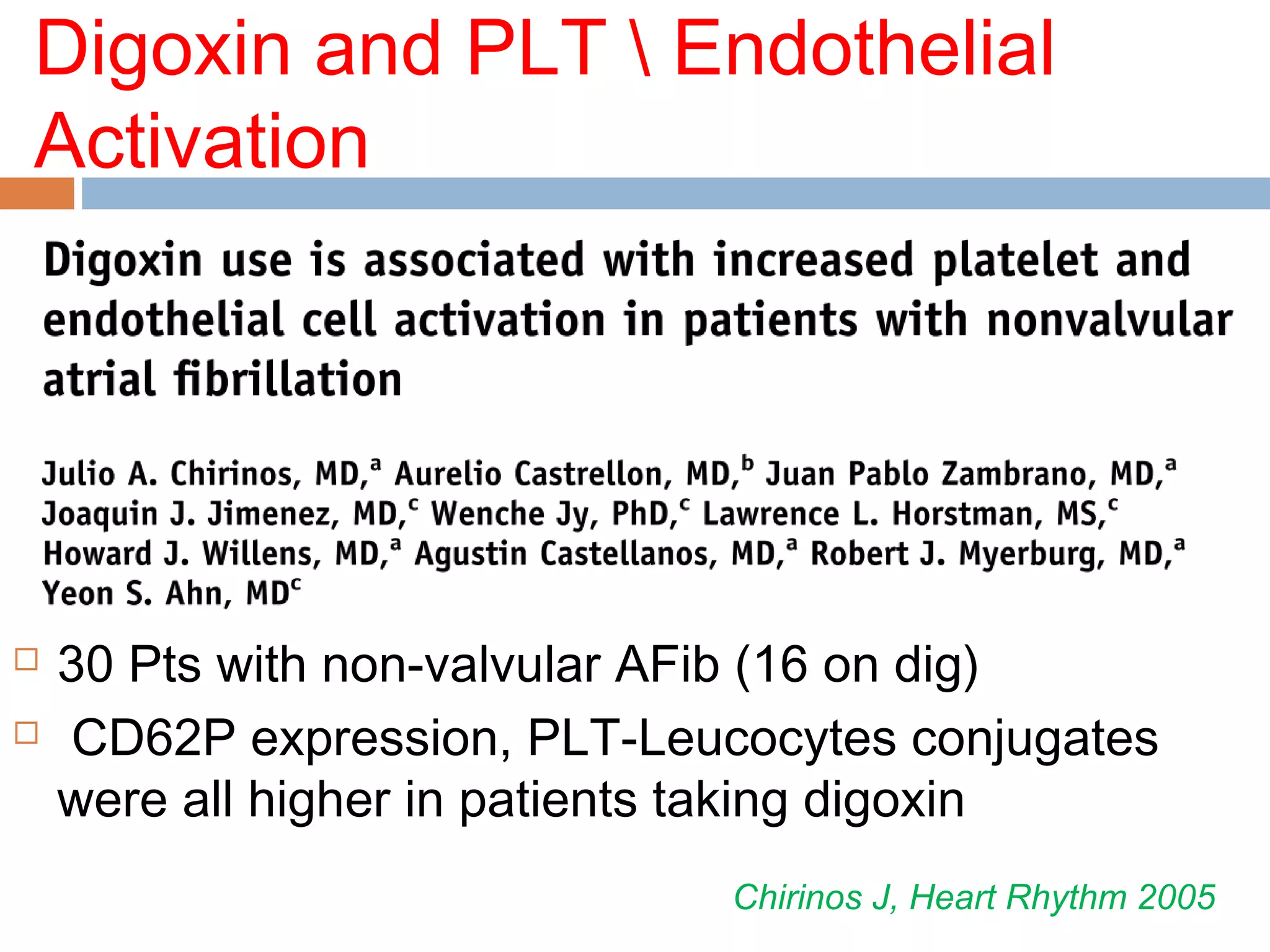
 30 Pts with non-valvular AFib (16 on dig)
 CD62P expression, PLT-Leucocytes conjugates
were all higher in patients taking digoxin
Chirinos J, Heart Rhythm 2005
Digoxin and Risk of Cancer
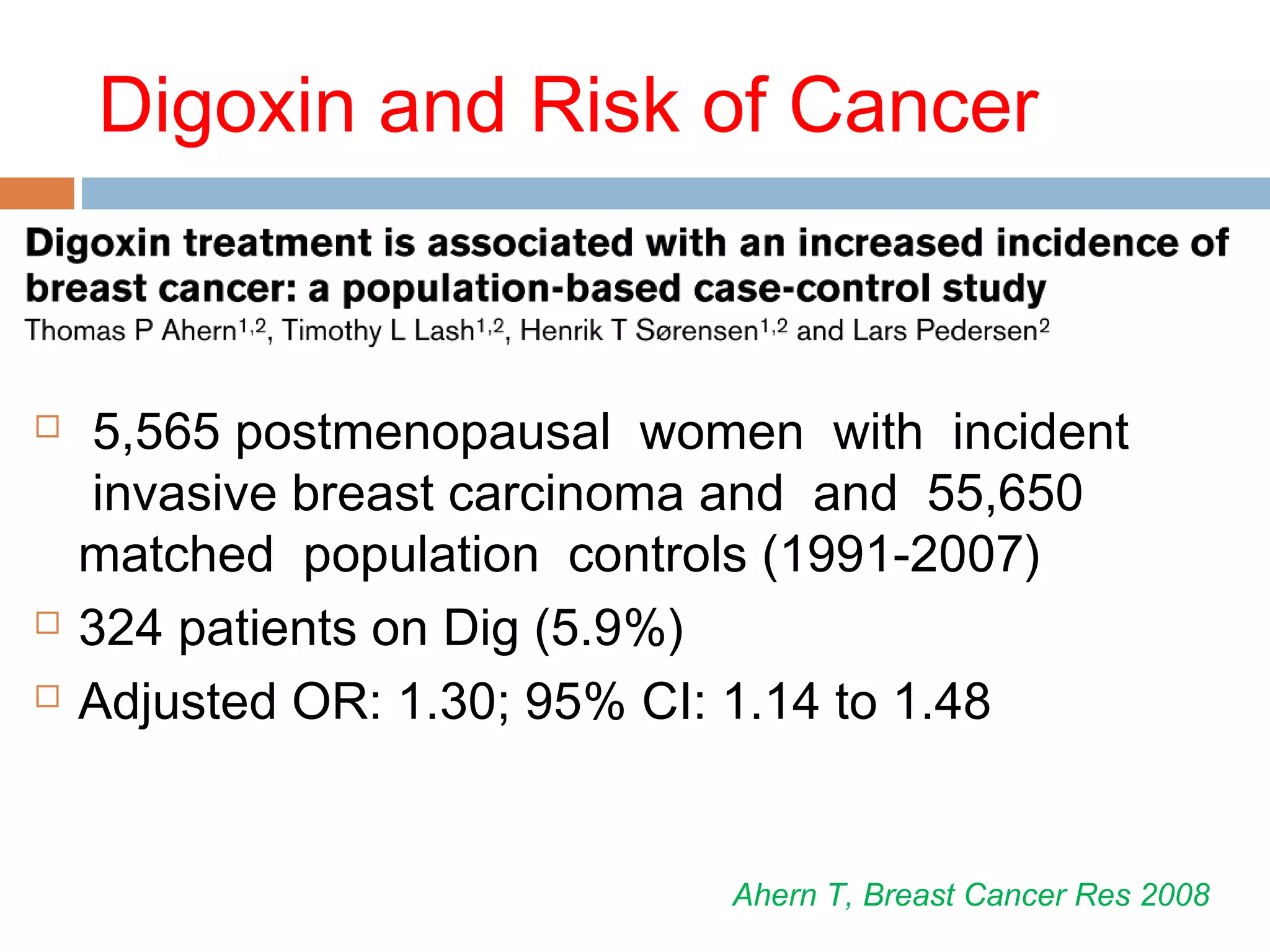
 5,565 postmenopausal women with incident
invasive breast carcinoma and and 55,650
matched population controls (1991-2007)
 324 patients on Dig (5.9%)
 Adjusted OR: 1.30; 95% CI: 1.14 to 1.48
Ahern T, Breast Cancer Res 2008
Conclusions: Proposing the DIG-IT Trial
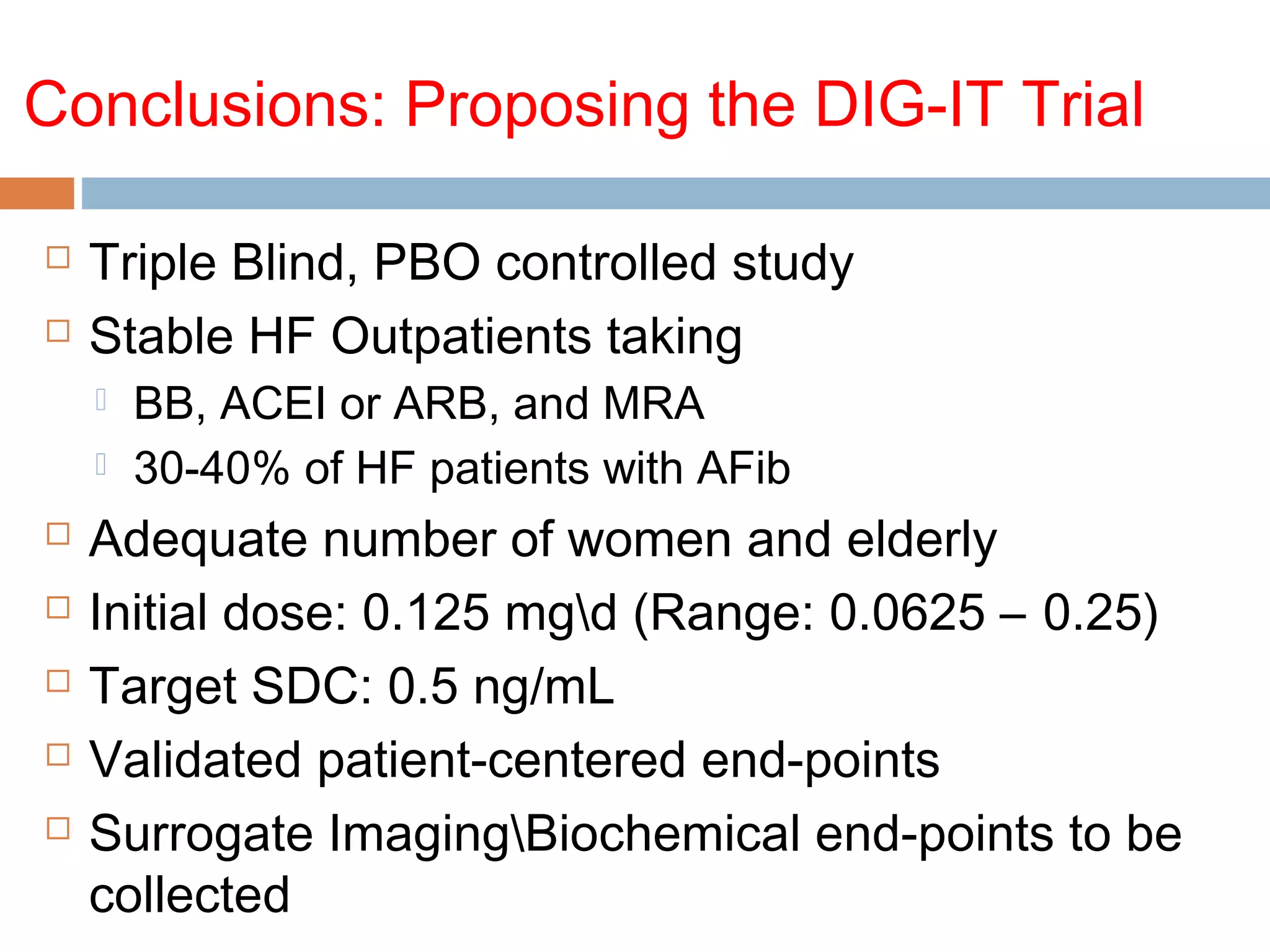
 Triple Blind, PBO controlled study
 Stable HF Outpatients taking
 BB, ACEI or ARB, and MRA
 30-40% of HF patients with AFib
 Adequate number of women and elderly
 Initial dose: 0.125 mgd (Range: 0.0625 – 0.25)
 Target SDC: 0.5 ng/mL
 Validated patient-centered end-points
 Surrogate ImagingBiochemical end-points to be
collected
DigiFAB Protocol
Fig. 1. Dosing recommendations for DSFab (Digibind or DigiFab). Infuse all doses over 30 minutes
through a 0.22-mm filter. If cardiac arrest is imminent, give via slow intravenous push. [dig]SS,
serum digoxin concentration (nanogram per milliliter) at steady state; F, esti- mated
bioavailability (if intravenous digoxin or digitoxin use 1, if digoxin tablets use 0.8); TBW,
total body weight. a Round number of vials upward. b If measurement in nanomole per liter,
multiply by 0.781. c If measurement in nanomole per liter, multiply by 0.765. d Inges- tions of
cardiac glycosides other than digoxin or digitoxin should be treated with empiric dosing
recommendations.
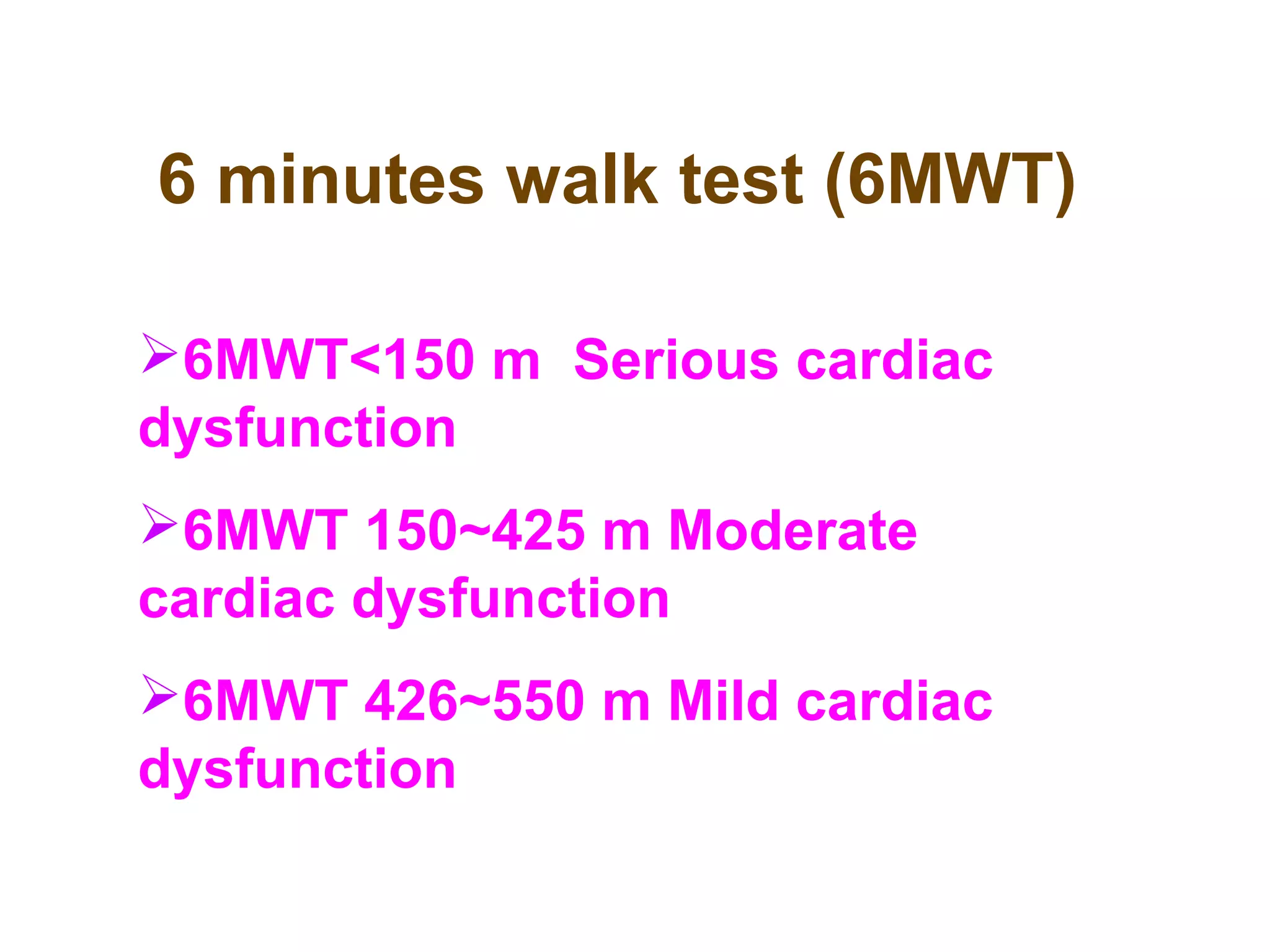
6 minutes walk test (6MWT)
6MWT<150 m Serious cardiac
dysfunction
6MWT 150~425 m Moderate
cardiac dysfunction
6MWT 426~550 m Mild cardiac
dysfunction
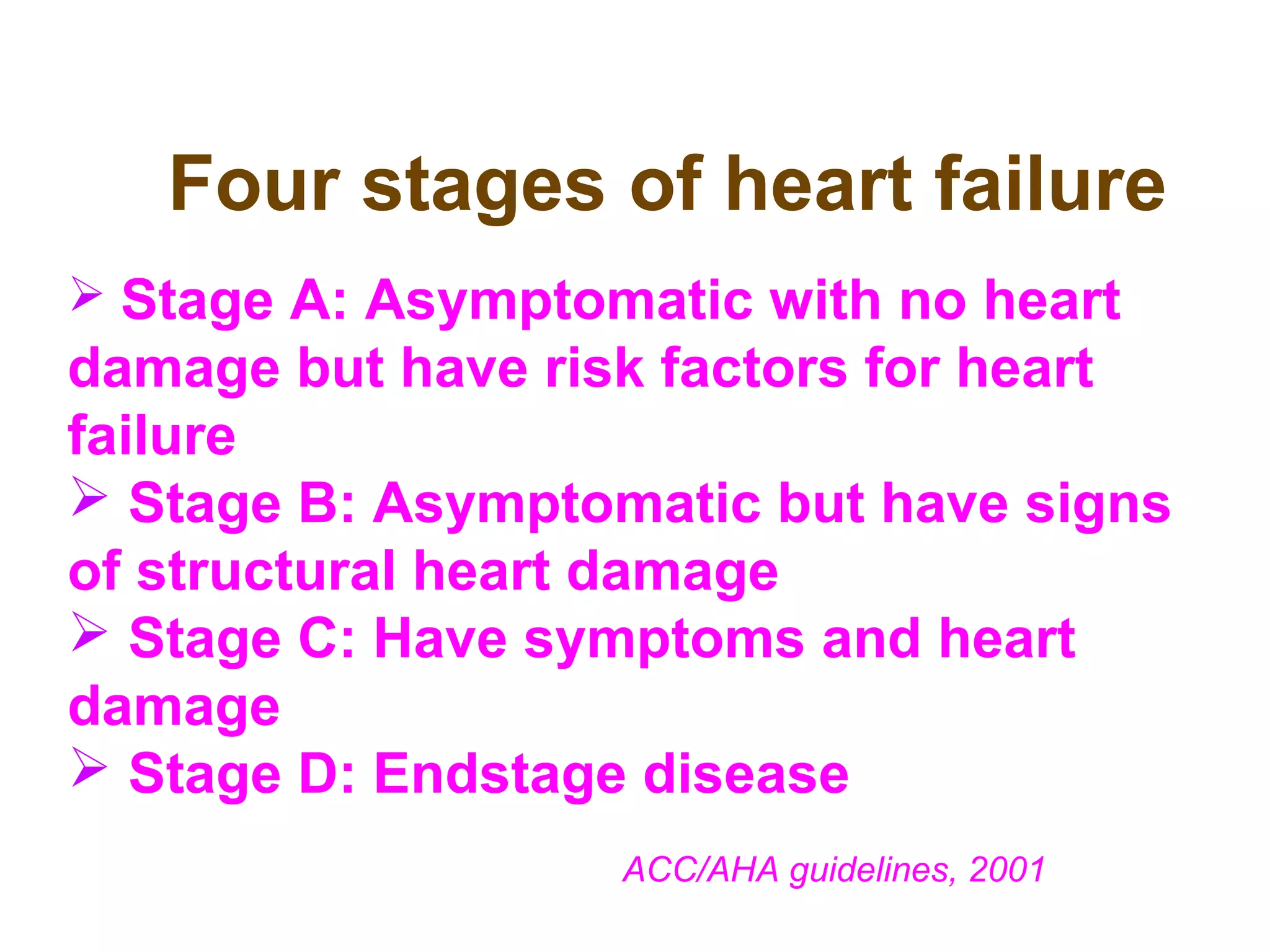
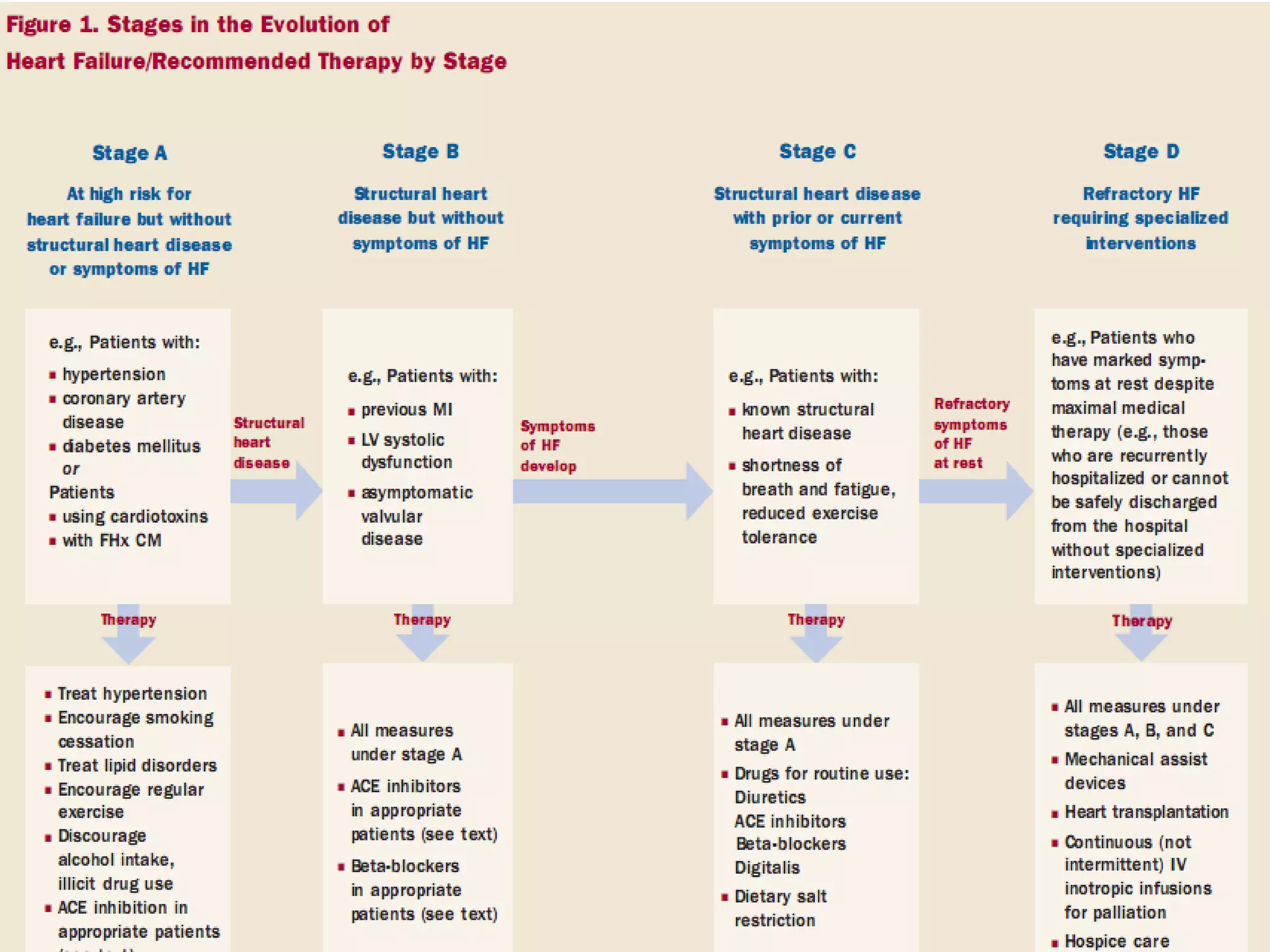
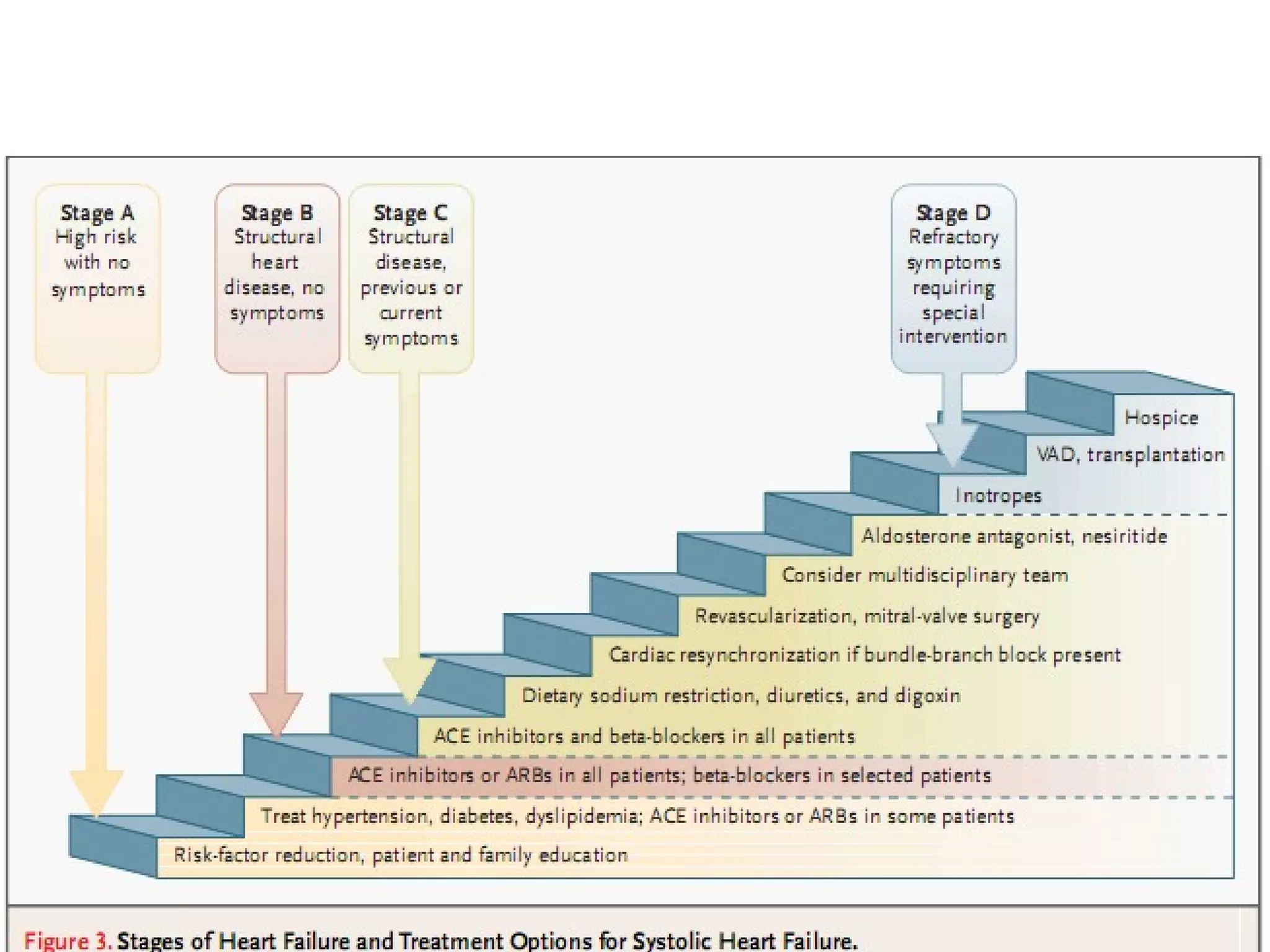
Four stages of heart failure
 Stage A: Asymptomatic with no heart
damage but have risk factors for heart
failure
 Stage B: Asymptomatic but have signs
of structural heart damage
 Stage C: Have symptoms and heart
damage
 Stage D: Endstage disease
ACC/AHA guidelines, 2001
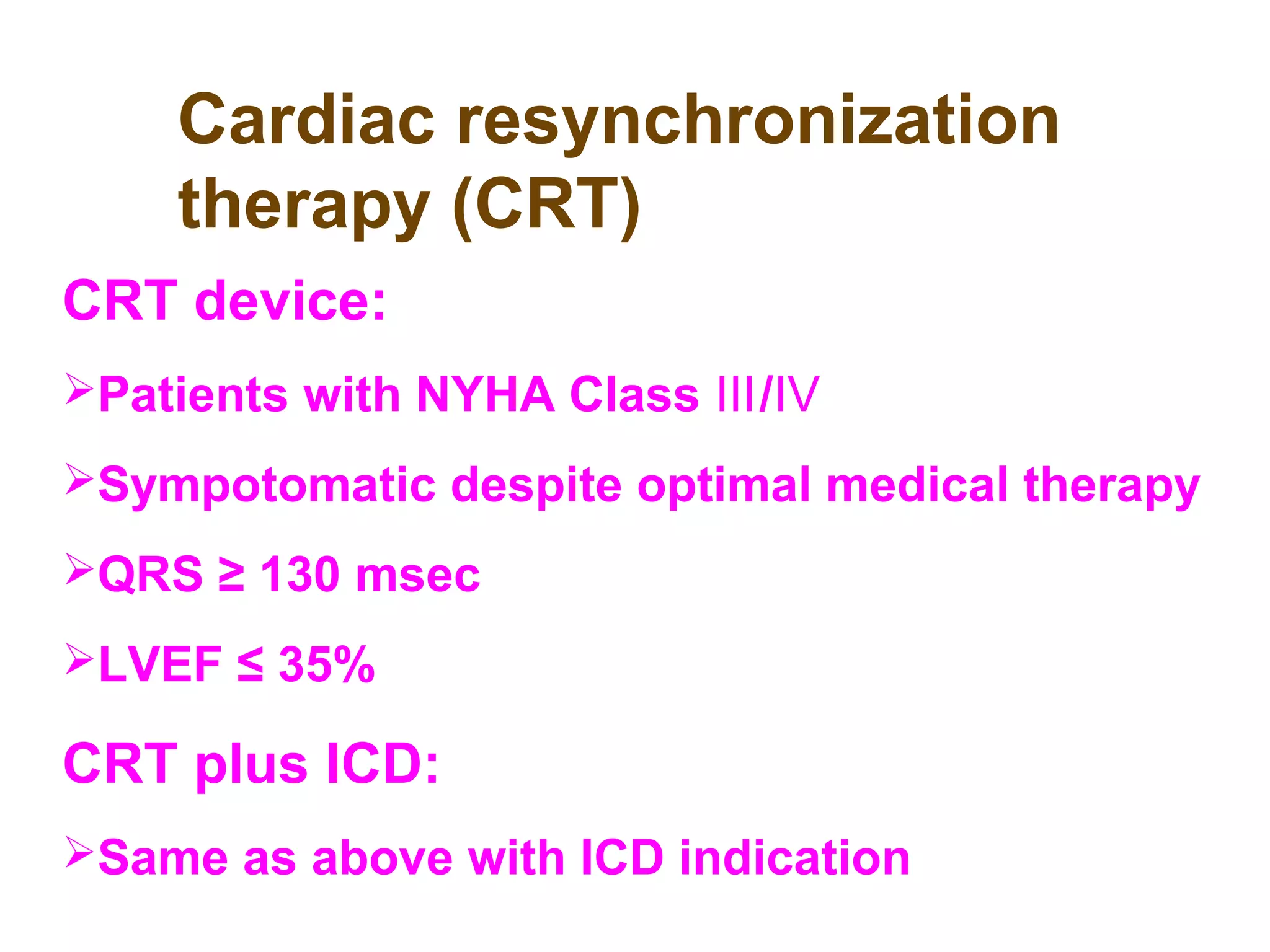
Cardiac resynchronization
therapy (CRT)
CRT device:
Patients with NYHA Class /Ⅲ Ⅳ
Sympotomatic despite optimal medical therapy
QRS ≥ 130 msec
LVEF ≤ 35%
CRT plus ICD:
Same as above with ICD indication
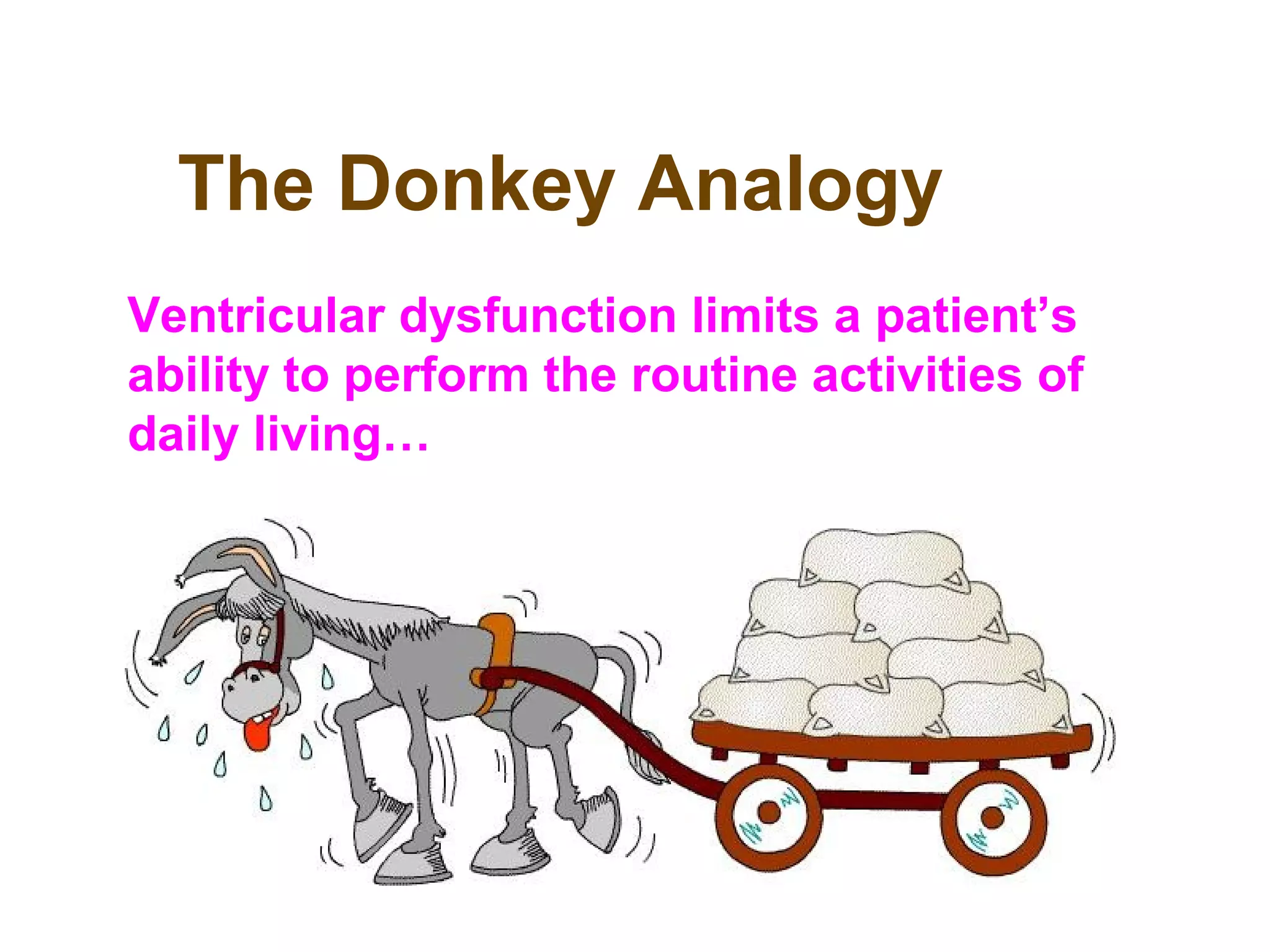
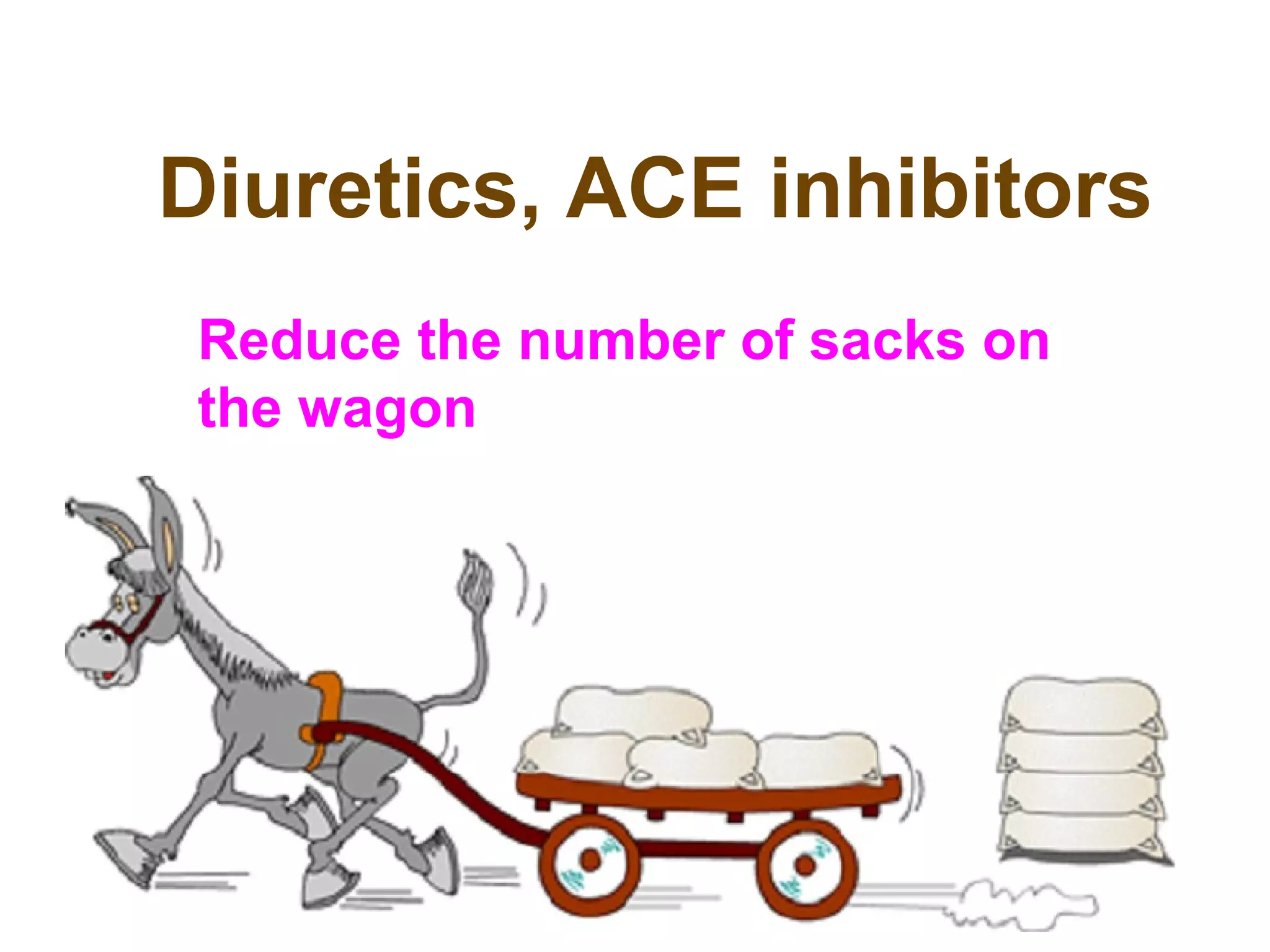
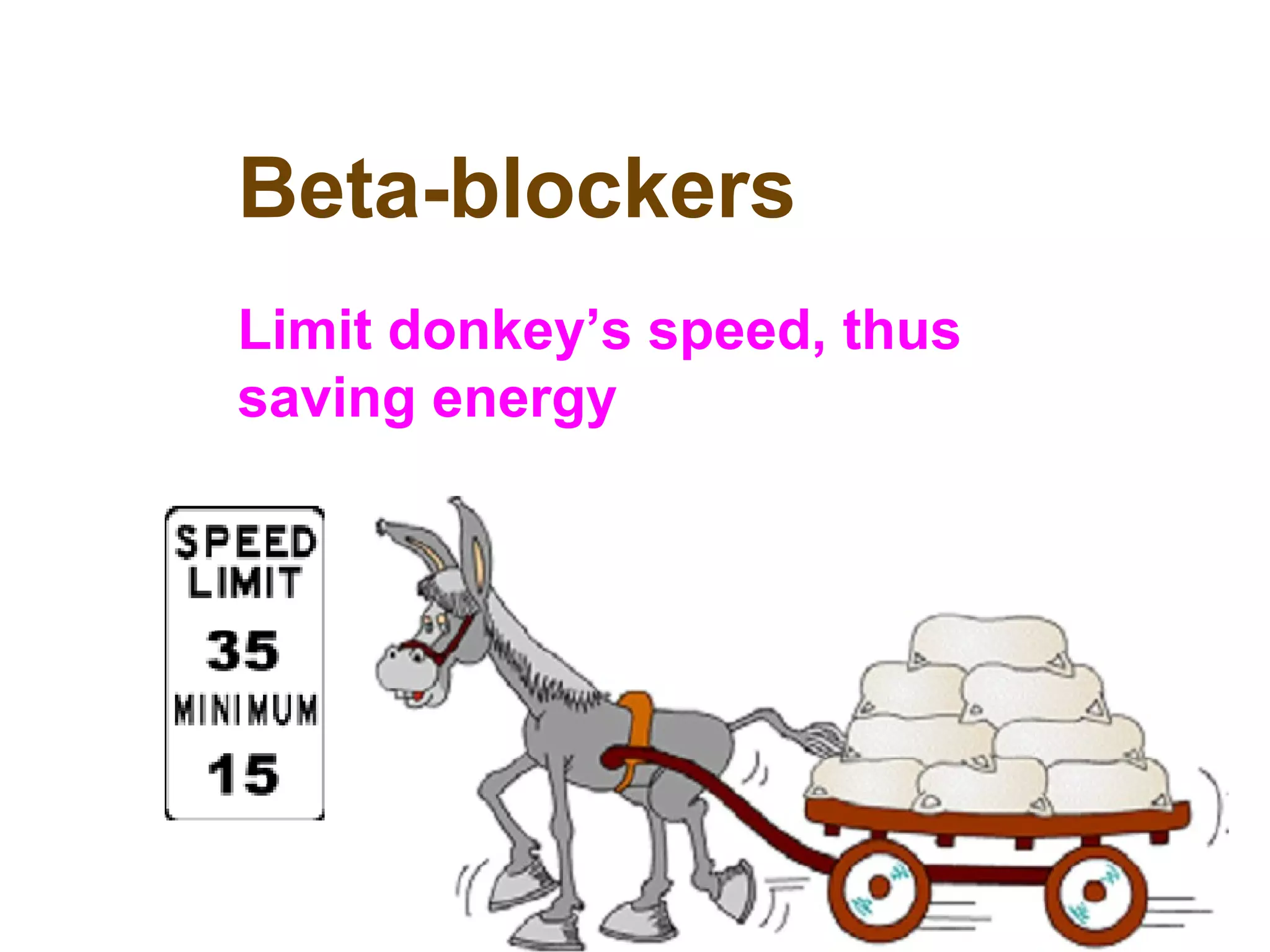
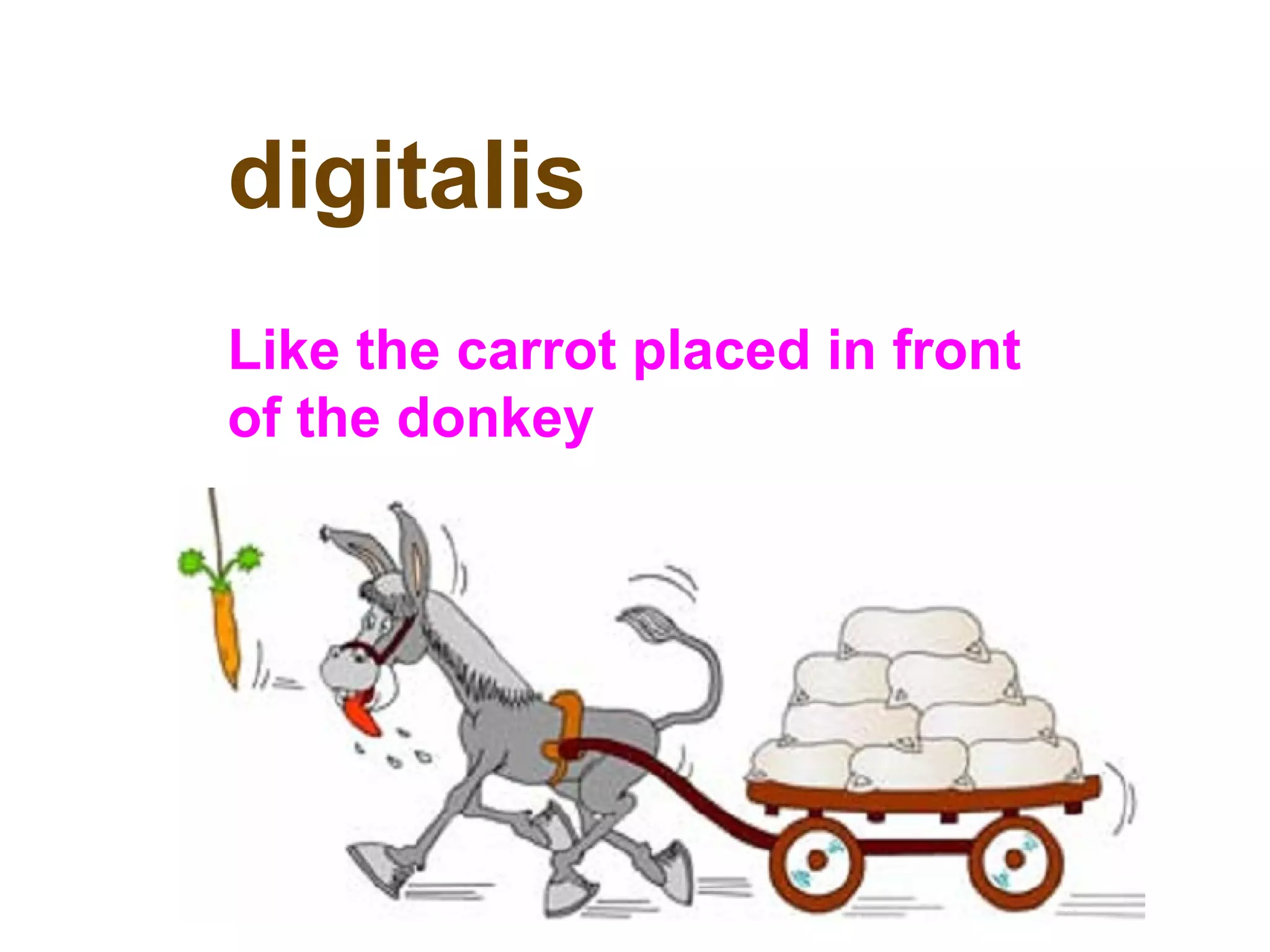
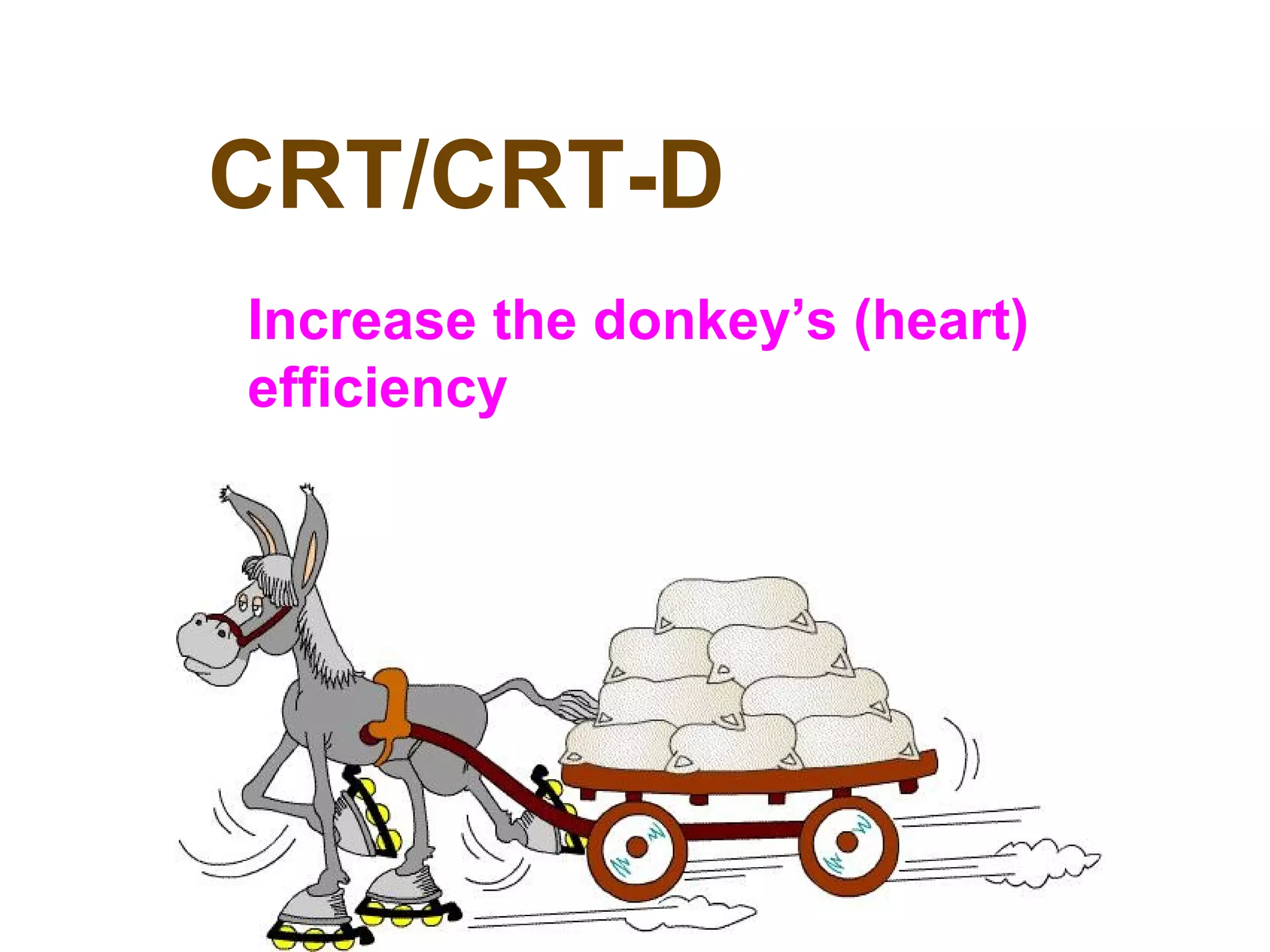
The Donkey Analogy
Ventricular dysfunction limits a patient’s
ability to perform the routine activities of
daily living…
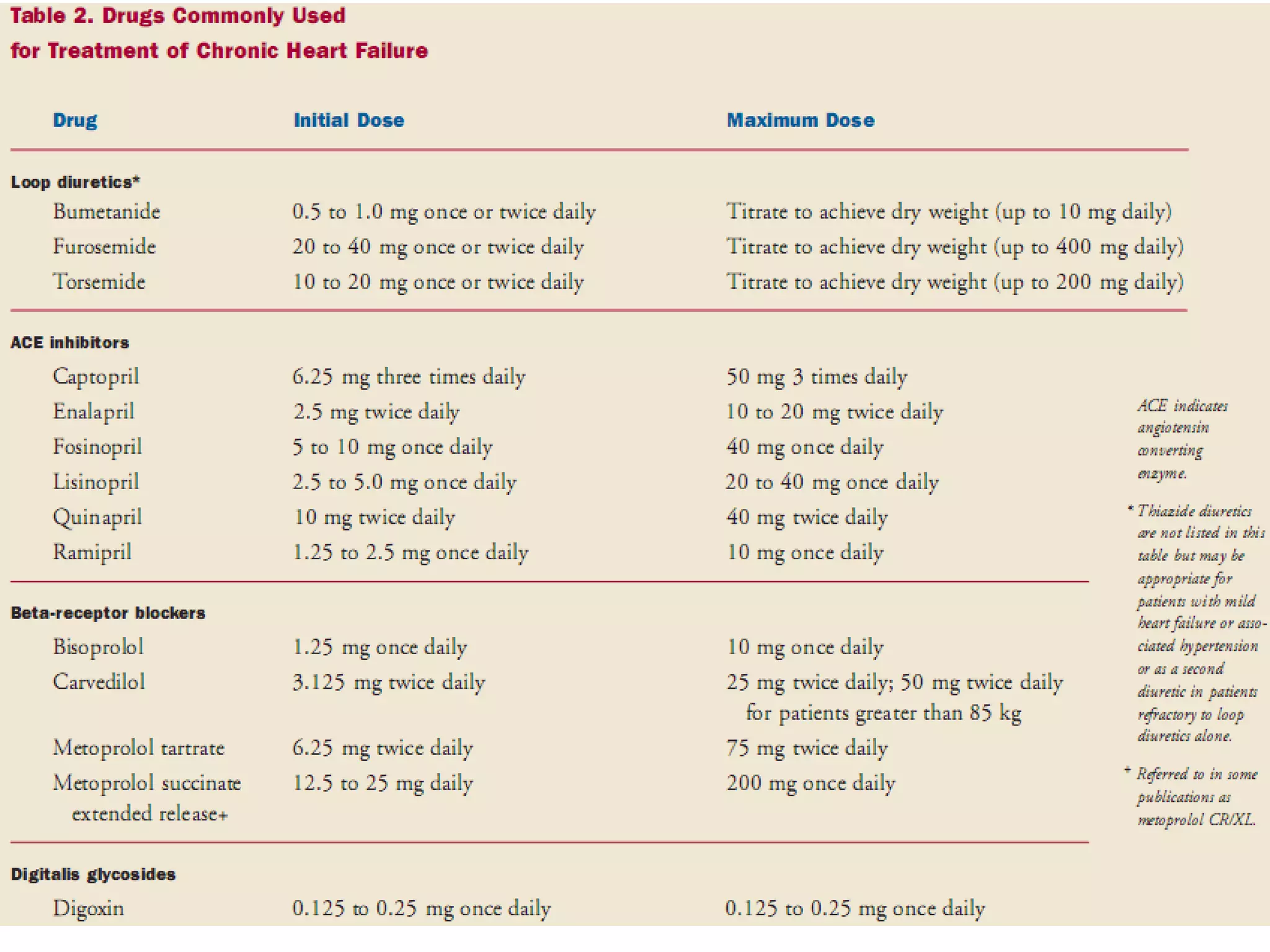
Diuretics, ACE inhibitors
Reduce the number of sacks on
the wagon
Beta-blockers
Limit donkey’s speed, thus
saving energy
digitalis
Like the carrot placed in front
of the donkey
CRT/CRT-D
Increase the donkey’s (heart)
efficiency
Heart failure: More than just
drugs.
Dietary counseling
Patient education
Physical activity
Medication compliance
Aggressive follow-up
Sudden death assessment
Take home message
Heart failure is clinical diagnosis
ACEI should be titrated to highest dose tolerable
Beta-blockers should be used universally but must
titrated slowly
Spironolactone should be used in NYHA / patientsⅢ Ⅳ
Digoxin can be used to reduce morbidity
Role of ARB remains to be determined in patient
intolerating ACEI
Preventive therapy or patient education is the key to
reduction of burden

Digoxin Toxicity and Trials

  • 1.
    Digoxin - Timeto take the gloves off ? Diego Bellavia
  • 2.
    Cardiac Glycosides: Molecular Structure All Cardiac glycosides  ag lyco ne (genin) part (active pharmacologically)  Glyco ne : sug ar (g luco se o r dig ito xo se ) attache d at Carbo n 3 o f nucle us  Aglycone – Steroid ring (cyclopentanoperhydrophenanthrene ring) and lactone ring attached at 17th position
  • 4.
    Pharmacokinetics  IV peakswithin 10 to 30 minutes, PO peaks within 1 to 2 hours  About 70 to 80% of an oral dose of digoxin is absorbed. The degree of binding to serum albumin is 20 to 30%.  Half Life: 1.5 day  Level increased by several medications  Verapamil, Diltiazem, Am io daro ne , itraconazole - decreased clearance  Erythromycin, clarithromycin, tetracycline - decreased gut flora metabolism  Toxicity can be increased by any medication decreasing serum K or potentially affecting renal function
  • 5.
  • 6.
    Digoxin - Pharmacological actions Myocardial contractility  Electrophysiological properties  Parasympatho-mimetic effect
  • 7.
    Myocardial Contractility StrokeVolume Preload (LVFilling Pressure) Normal Digitalis CHF
  • 8.
  • 9.
    Digitalis – Electrophysiologicalactions  Autonomic actions:  Involves both Parasympathetic and sympathetic systems  At therapeutic doses – cardio selective parasympathomimetic action  Rate and Conduction:  Bradycardia  Slowing of impulse generation (SAN)  Delay of conductivity of AVN  However sympathetic action is increased in toxic doses
  • 10.
    Simplified diagram ofapparent digitalis-induced changes in ANS activity CNS output of autonomic tone Dose of digitalis sympathetic parasympathetic slowing VT VF - death partial AV block PVCs
  • 11.
  • 12.
  • 13.
    Afterpolarization actions Cont’d DADs may elicit premature depolarizations or “ectopic beats” that are coupled to the preceding normal action potentials.  If DADs in the Purkinje system regularly reach threshold, bigeminy will be recorded on the ECG.  With further intoxication, each DAD-evoked action potential will itself elicit an afterpotential, and a self-sustaining tachycardia will be established.  Such a tachycardia may deteriorate into fibrillation;
  • 14.
    Digitalis-induced bigeminy: NSR: normalsinus rhythm PVB: premature ventricular beats
  • 15.
    Digitalis - Clearance Digoxin is primarily (i.e. 70%) excreted unchanged in urine and rate of excretion parallels creatinine (So, renal impairment and elderly Accumulation)  25 to 28%: eliminated by non-renal routes.  Biliary excretion up to 30% of a given dose, but the enterohepatic cycle seems to be of minor importance.
  • 16.
    Interactions With K+ ,Ca2+ , Mg2+  Potassium and digitalis inhibit each other's binding to Na+/K+ ATPase  Hyperkalemia reduces the enzyme-inhibiting actions of cardiac glycosides, whereas hypokalemia facilitates these actions.  Abnormal automaticity is inhibited by hyperkalemia. Moderately increased extracellular K+ therefore reduces the (toxic) effects of digitalis.
  • 17.
    Interactions With K+ ,Ca2+ , Mg2+ Cont’d  Ca2+ facilitates the toxic actions of cardiac glycosides by accelerating the overloading of intracellular calcium stores.  Hypercalcemia increases the risk of a digitalis induced arrhythmia.  The effects of Mg2+ is opposite to those of calcium.  These interactions mandate evaluation of serum electrolytes in digitalis-induced arrhythmias.
  • 18.
    Toxicity: Extracardiac Symptoms The GI tract is the most common extra cardiac site of digitalis toxicity. It causes anorexia, nausea, vomiting, and diarrhea.  Central nervous system effects include vagal and CTZ stimulation.  In the elderly disorientation, hallucinations and visual disturbances (as color misperception) may occur.
  • 20.
    Digoxin Toxicity: TheHeart  Arrythmias  Atrial Tachycardia with AV block  Advanced (III) AV Block  Ectopic Rhythms  AFlutter, Afib, VT  Junctional Tachicardias  Sustained Ventricular Tachycardia  Ventricular Fibrillation  ANY Arrythmia is possible
  • 21.
    Treatment  If earlyafter intentional overdose, can give activated charcoal  Bradycardia  If asymptomatic keep serum K+ at least 4.0 (or higher)  Symptomatic- Atropine, prompt pacing  Tachicardia  Excessive ventricular automaticity: Lidocaine IV  DC Shock ONLY if VFib (NEVER for PSVT)  DigiBindDigiFAB (Humanized sheep Mab)  Symptomatic bradycardia – advanced AVB (unresponsive to Atropine)  Malignant arrhythmia (particularly in the se tting o f hype rkale m ia)  Hyperkalemia (K+ > 5 mEqL)  Digoxin > 10 ngL (or > 4 ngL in chronic toxicity)  Plasmapheresis will prevent rebound effect  Monitor K, Free Digoxin Levels and ECG
  • 22.
    Treatment of acutedigoxin intoxication by digoxin immune Fab (Digibind® )
  • 23.
    Absolute Contraindications  Hypersensitivity Uncontrolled Ventricular Arrhythmias  AV block  Constrictive Pericarditis  Idiopathic Hypertrophic Subaortic Stenosis  WPW syndrome: VF may occur  Severe Mitral Stenosis
  • 24.
    Relative ContraIndications  Renal& Hepatic impairment  Electrolyte imbalance (+++ Hypokalemia)  Acute Myocardial Infarction (inside 24hr, pro- arrythmic)  Thyroid Disoder (Mixoedema  Slow Clearance)  Obesity  Elderly Patient (more sensitive)  Pregnancy  Breastfeeding infant
  • 25.
    Digitalization  Digoxin haslow therapeutic window and margin of safety is very low  Therapeutic SDC: 0.5 – 1.5 ng/mL (BUT 0.5 – 0.9 in HF)  Rapid digitalization (12hr):  Digoxin 0.5 mg EV + 0.25 mg (6hr) + 0.25 mg after (6hr)  Slow digitalization:  Digoxin 0.25 mg (or even 0.125mg) daily in the evening – full response in 5-7 days  If no improvement administer 0.375 for 1 week  Monitor patient for blood levels,  If bradycardia, stop the drug  HF : No Loading dose, maintainance 0.125 mg/day (0.0625 if Dyalisis)
  • 26.
    Digitalis Indications Today– CHF AHA/ACC Update (2012) and HFSA Update (2010)
  • 27.
    Digoxin Indications –AFib (EHRA)  “…digoxin is an acceptable choice for ventricular rate control in AF, and is recommended if the heart rate cannot be adequately controlled by a beta blocker or calcium channel blocker…” Camm A et al. Eur Heart J 2010;31(19):2369–429.
  • 28.
    Evidence for Digoxinin CHF  Digoxin–withdrawal studies (1993)  Digitalis Investigation Group (DIG) 7788 pts radomized to digoxin (N=3397) vs placebo (N=3403)  6800 EF < 45% (80% on ACE-I, 90% on Diuretics)  988 EF > 45%  Median F/Up: 37 months,  No difference in overall mortality but 6% reduction in hospital admissions  Trend toward lower mortality from worsening heart failure(11.6% vs 13.2% for placebo, P=.06)
  • 29.
    DIG Trial Flaws Generalizability Issues:  study population ~5-10 years younger than an unselected population of ambulatory HF patients  20% of Women  Pts with AFibAFlutter excluded  Biases  20% of placebo group received open label digoxin  SDC measured several times at follow-up (no standard of care)  Applicability Issues:  Beta-Blockers, MRA or CRT-D not available at the time of trial
  • 30.
    DIG Post-hoc: DigoxinSDC Rathore SS et al. JAMA 2003
  • 31.
    DIG Post-hoc: SexDifferences  adjusted HR for death of  1.23 for women vs pbo  0.93 for men vs pbo Rathore S et al., New Engl J Med 2002
  • 32.
    Digoxin Use Today- Epidemiology IMS National Disease and Therapeutic Index, January 1997 to December 2012 Digoxin Prescript. Overall Digoxin Prescription For Heart Failure Goldberger Z. et al. JAMA Int. Med 2014
  • 33.
    Digoxin Toxicity Today- Epidemiology  DIG Trial: 11.9% (treated) vs 7.9% (controls)  In 2008, US poison control centers were called for 2632 cases involving digoxin toxicity, and 17 cases resulted in digoxin-related deaths Bronstein AC et al. Clin Toxicol (Phila) 2009  Estimated 5156 annual visits for digoxin toxicity ; more than three fourths (78.8% resulted in hospitalization.  The rate of ED visits among patients ≥85 years was twice that of patients 40 to 84 years; among women, the rate was twice that of men  ED visits and hospitalizations remained constant from 2005 to 2010. See I et al. Circ Heart Fail. 2014 Digoxin toxicity is not declining !
  • 34.
    Digoxin Toxicity -Etiology  Medical Error  Excessive dosing  Inappropriate prescription  Significant kidney disease (CrCl < 50 mLhr)  Patient non compliance Chan K. et al. J Am Soc Nephrol 2010 Kongkaew C. et al. Arch. of Card. Dis. (2012)
  • 35.
    Beyond DIG: theUK-HEART Study  prospective study of prognostic markers in outpatients with stable CHF (NYHA II-IV)  N = 484 followed up for a median of 1000 days  Crude Mortality Rate: 38.9% (dig) vs 24.5% (pbo)  No difference in CrCl or K levels  Still significant in the multivariate analysis  Digoxin was NOT randomised Lindsay SJ et al. Lancet 1999
  • 36.
    Beyond DIG: TheSPORTIF III-V  7329 pts with AFib randomized to ximelagatran or warfarin, 53.4% were using digoxin at baseline  Multivariate COX: HR = 1.53, (95% CI 1.22 to 1.92)  NO Randomization (to Digoxin)  No data on LV performance  No Sex difference K Gjesdal et al. Heart 2008
  • 37.
    Beyond DIG: TheSCAF Study  2824 patients with AF f/up for a mean of 4.6 years.  802 pts on digoxin  2022 pts not on digoxin  1342 pts enrolled in the PS matched survival analysis Friberg L. et al. Heart 2010
  • 38.
    Beyond DIG: TheVal-HeFT Study
  • 39.
    Beyond DIG: Val-HeFTStudy Cont’d  Cohort On Beta-Blockers (n = 1177):  HR 1.45 for all causes mortality (Dig vs No Dig)  HR 2.49 for HF Hospitalizations (Dig vs No Dig)
  • 40.
    Beyond DIG: theAFFIRM Trial  4060 patients with AF randomized to rate vs. rhythm control with a mean fup of 3.5 years.  PSs and Multivariate Cox applied  Pts stratified by EF  58% on B-Blockers  HR 1.46 for digoxin useWhitbeck et al. European Heart Journal (2013)
  • 41.
     Confounding byIndication Bias  Difference in Cohort used  Possible Selection Bias  mortality was higher among subjects with missing data on digoxin use as compared with subjects with digoxin data available.  Different Propensity Score approaches were used Beyond DIG: the AFFIRM Trial, Cont’d Gheorghiade et al. European Heart Journal (2013)
  • 42.
    The Kaiser PermanenteStory  2891 Pts with systolic HF, 529 (18%) on Dig. Median FUp 2.5 y (closed in 2010)  Digoxin use associated with higher mortality (HR = 1.72)  No significant difference in HF hospitalization (HR, 1.05)  No difference stratifying by Sex or β-Blocker (40%) Usage  Multivariate Analysis and Propensity Scores used, BUT no randomization Freeman J, Circ Cardiovasc Qual Outcomes. 2013
  • 43.
    Digoxin and PLT Endothelial Activation  30 Pts with non-valvular AFib (16 on dig)  CD62P expression, PLT-Leucocytes conjugates were all higher in patients taking digoxin Chirinos J, Heart Rhythm 2005
  • 44.
    Digoxin and Riskof Cancer  5,565 postmenopausal women with incident invasive breast carcinoma and and 55,650 matched population controls (1991-2007)  324 patients on Dig (5.9%)  Adjusted OR: 1.30; 95% CI: 1.14 to 1.48 Ahern T, Breast Cancer Res 2008
  • 45.
    Conclusions: Proposing theDIG-IT Trial  Triple Blind, PBO controlled study  Stable HF Outpatients taking  BB, ACEI or ARB, and MRA  30-40% of HF patients with AFib  Adequate number of women and elderly  Initial dose: 0.125 mgd (Range: 0.0625 – 0.25)  Target SDC: 0.5 ng/mL  Validated patient-centered end-points  Surrogate ImagingBiochemical end-points to be collected
  • 46.
    DigiFAB Protocol Fig. 1.Dosing recommendations for DSFab (Digibind or DigiFab). Infuse all doses over 30 minutes through a 0.22-mm filter. If cardiac arrest is imminent, give via slow intravenous push. [dig]SS, serum digoxin concentration (nanogram per milliliter) at steady state; F, esti- mated bioavailability (if intravenous digoxin or digitoxin use 1, if digoxin tablets use 0.8); TBW, total body weight. a Round number of vials upward. b If measurement in nanomole per liter, multiply by 0.781. c If measurement in nanomole per liter, multiply by 0.765. d Inges- tions of cardiac glycosides other than digoxin or digitoxin should be treated with empiric dosing recommendations.
  • 49.
    6 minutes walktest (6MWT) 6MWT<150 m Serious cardiac dysfunction 6MWT 150~425 m Moderate cardiac dysfunction 6MWT 426~550 m Mild cardiac dysfunction
  • 50.
    Four stages ofheart failure  Stage A: Asymptomatic with no heart damage but have risk factors for heart failure  Stage B: Asymptomatic but have signs of structural heart damage  Stage C: Have symptoms and heart damage  Stage D: Endstage disease ACC/AHA guidelines, 2001
  • 54.
    Cardiac resynchronization therapy (CRT) CRTdevice: Patients with NYHA Class /Ⅲ Ⅳ Sympotomatic despite optimal medical therapy QRS ≥ 130 msec LVEF ≤ 35% CRT plus ICD: Same as above with ICD indication
  • 55.
    The Donkey Analogy Ventriculardysfunction limits a patient’s ability to perform the routine activities of daily living…
  • 56.
    Diuretics, ACE inhibitors Reducethe number of sacks on the wagon
  • 57.
  • 58.
    digitalis Like the carrotplaced in front of the donkey
  • 59.
  • 60.
    Heart failure: Morethan just drugs. Dietary counseling Patient education Physical activity Medication compliance Aggressive follow-up Sudden death assessment
  • 61.
    Take home message Heartfailure is clinical diagnosis ACEI should be titrated to highest dose tolerable Beta-blockers should be used universally but must titrated slowly Spironolactone should be used in NYHA / patientsⅢ Ⅳ Digoxin can be used to reduce morbidity Role of ARB remains to be determined in patient intolerating ACEI Preventive therapy or patient education is the key to reduction of burden

Editor's Notes

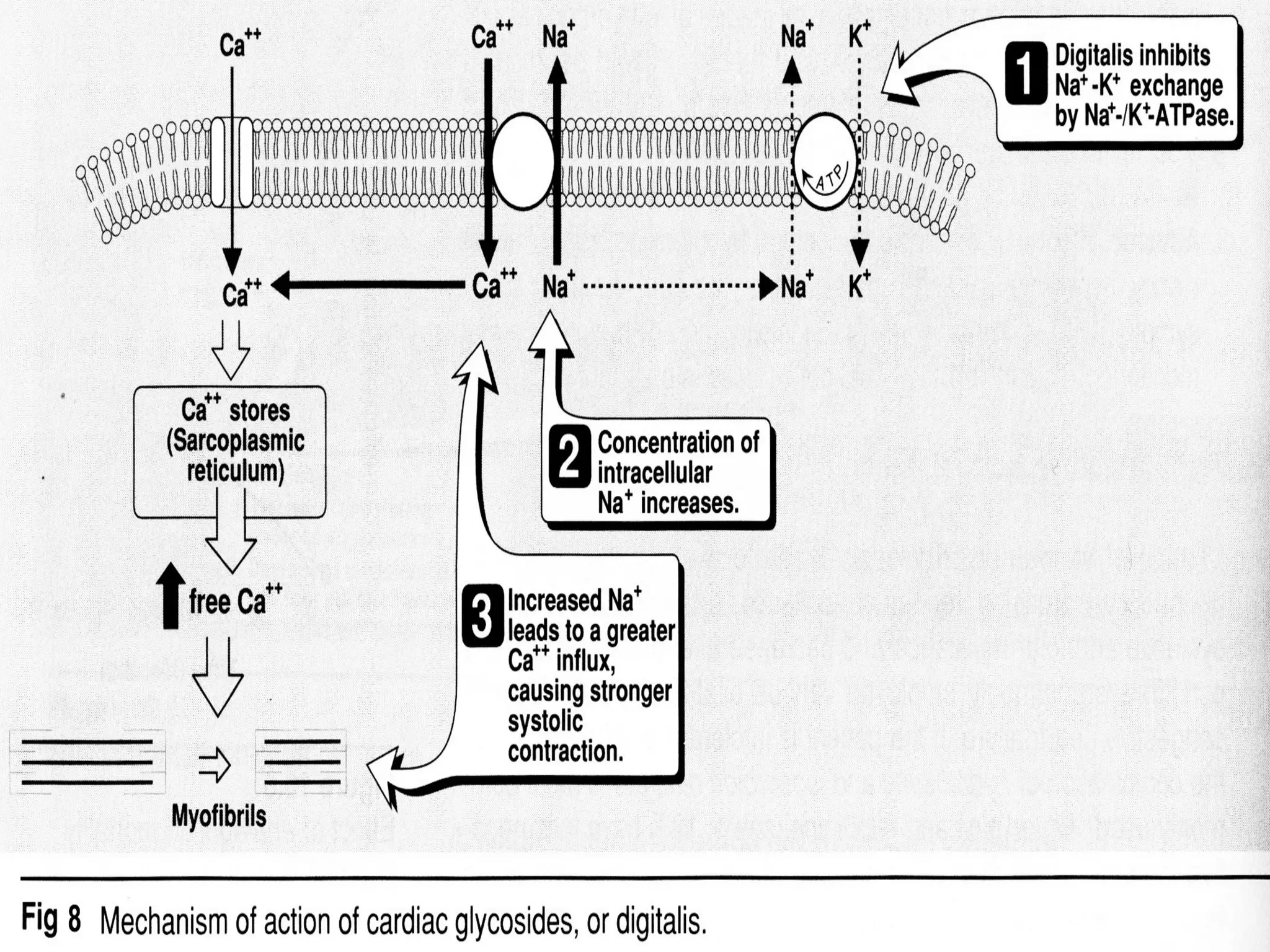
  • #4 NaK ATPase: This ATPase catalyses both an active influx of 2 K ions and an efflux of 3 Na ions against their respective concentration gradients, the energy being provided by the hydrolysis of ATP. 1.Binds to extracellular face of the Na+/K+ ATPase of heart muscles (alpha) and Inhibits this enzyme – progressively accumulation of intracellular Na+ while K+ accumulates outside the cell (leading to Hyperkalemia) 2. Normally, During depolarization (action potential) Ca++ channels open Ca++ ions enter into the cytosol via concentration gradient. Again this results in triggering release of Ca++ from sercoplasmic reticulum All these will result in increase conc. Of Ca++ in cytosol and contraction of cells 3. After contraction Ca++ falls and relaxation of Myocardial cells - concentration of Ca++ falls due to entering into the SR and partly by extrusion outside the cell 5. Driving out of cells occur by NCX antiprt mechanism – 3:1 Na++: Ca++ Now due to the Na+/K+ ATPase blockade by digitalis there is slight increase in Na++ inside the cell and therefore transmembrane gradient of Na++ is slightly changed to drive out excess Ca++ through NCX so that  increase in Free Ca++ conc  Inotropic Effect. Unfortunately, high internal concentrations of Ca activate a depolarizing (inward) current corresponding to the forward mode of the electrogenic Na –Ca exchanger (3Na/2Ca). This current generates delayed after-depolarizations that give rise to extra-systoles and sustained ventricular arrhythmias in vivo.
  • #8 Slight vasodilation is seen in heart failure. This effect is contrary to effects that should be seen as a result of increased intracellular calcium levels, but this occurs since digoxin improves hemodynamics, which leads to restored angiotensin levels and decreased sympathetic discharge, causing indirect vasodilation.
  • #9 Mainly via 2 actions – autonomic and direct action Direct action: At therapeutic doses Less Negative resting membrane potential Shortening of action potential – mainly platue phase Shortening of refractoriness of atria and ventricles , although refractory period increases in the sinoatrial and AV nodes though (leading to bradicardia) Net Effect: increased excitability At higher doses Extrasystoles – oscillatory afterpotentials appear following normal action potentials At further stage – after potentials themselves reach the threshold to elicit action potential (ectopic beat) coupled with preceding normal one
  • #13 Effects of a cardiac glycoside, ouabain, on isolated cardiac tissue. The top tracing shows action potentials evoked during the control period, early in the &amp;quot;therapeutic&amp;quot; phase, and later, when toxicity is present. The middle tracing shows the light (L) emitted by the calcium-detecting protein aequorin (relative to the maximum possible, Lmax) and is roughly proportionate to the free intracellular calcium concentration. The bottom tracing records the tension elicited by the action potentials. The early phase of ouabain action (A) shows a slight shortening of action potential and a marked increase in free intracellular calcium concentration and contractile tension. The toxic phase (B) is associated with depolarization of the resting potential, a marked shortening of the action potential, and the appearance of an oscillatory depolarization, calcium increment, and contraction (arrows)
  • #17 Although moderate Hyperkalemia is helpful in treating digoxin toxicity, we cannot forget that hyperkalemia at presentation is extremely worrisome, and based on a study of 1973, having digoxin toxiocity with a K+ &amp;gt; 5.5 mEq/L was related to 100% mortality while having &amp;lt; 5 mEq/L ideintified al patients who survived. This study, published by Bismuth and coworkers in Clinical Toxcology, predates the availability of specific FaB though. However, a more recent study by Manini and coworkers, published in 2011, confirmed the highly negative prognostic role of hyperkalemia, in this population, in spite of FAB availability. In chornic toxicity, then hypokalemia is more worrisome and having a combination of hypokalemia and hypercalcemia (as induced to concomitante use of loop diuretics) is an independent predictor of mortality in these patients
  • #19 In 80% of the toxic episodes observed, anorexia is an early symptom of toxicity that can be hidden by vomiting. High concentrations of digoxin also affect color vision, and between 25 and 67% of patients have neurological problems, mainly headache and dizziness (vertigo). The chemoreceptor trigger zone (CTZ) is an area of the medulla oblongata that receives inputs from blood-borne drugs or hormones, and communicates with the vomiting center to initiate vomiting. The CTZ is close to the area postrema on the floor of the fourth ventricle and is outside of the blood–brain barrier. The neurotransmitters implicated in the control of nausea and vomiting include acetylcholine, dopamine, histamine (H-1 receptor), substance P (NK-1 receptor), and serotonin (5-HT3 receptor).
  • #21 cardiac manifestations of toxicity caused by digoxin are characterized by ‘abnormal’ rhythms and alterations in conduction. The hallmark of cardiac toxicity is increased automaticity coupled with concomitant conduction delay. Atrial tachycardia with atrioventricular blockade immediately evoke the typical digitalis-induced arrhythmias. Ectopic rhythms as a result of re-entry and increases in automatism lead to atrial flutter, atrial fibrillation, ventricular premature beats and ventricular tachycardia. These phenomena are the results of increased excitability of fibers and diminished conduction velocity at the level of the Tawara node. Digoxin toxicity is clearly characterized when ventricular extra-systoles and atrioventricular block are associated symptoms. It is worthy of note that these manifestations are enhanced by pre-existing factors such as age, cardiomyopathies, plasma concentration of digitalis, and hyperkalemia (&amp;gt;6.5 mmol/L)
  • #22 Digoxin antibodies were first used in humans to treat digitalis toxicity in 1976 but did not become widely available until the mid-1980s
  • #23 Free serum digoxin concentrations drop to undetectable levels within minutes of administration, and cardiac manifestations of toxicity usually subside within 30 minutes. Hyperkalemia usually requires more time for redistribution and resolves within 2 to 6 hours. DSFab bound to digoxin is eliminated renally, with an elimination half-life of 15 to 20 hours. The presence of renal failure will prolong the elimination half-life. The binding of digoxin to DSFab is reversible, and dissociation occurs necessitating additional doses. It is important to recognize that conventional serum digoxin assays cannot differentiate between unbound digoxin and digoxin bound to DSFab and, therefore, can result in clinically misleading elevations in serum digoxin concentration unless free unbound digoxin concentration can be measured
  • #26 SDC: Serum Drug Concentration
  • #27 High doses of digoxin (maintenance doses 0.25 mg daily) for the purpose of rate control are not recommended Patients taking amiodarone therapy and have their maintenance dose of digoxin reduced when amiodarone is initiated and then carefully monitored for the possibility of adverse drug interactions. Adjustment in doses of these drugs and laboratory assessment of drug activity or serum concentration after initiation of amiodarone is recommended
  • #28 EHRA: European Heart Rhythm Association
  • #29 Ahead of DIG trials the 2 main (small) trials published showing reduction in hospitalization were the RADIANCE (NEJM 1993) and the PROVED trials (NEJM 1993): both trials tested the hypothesis that digoxin-withdrawal from background therapy would lead to clinical deterioration. Both studies enrolled stable ambulatory HF patients with an EF &amp;lt;35% and NYHA functional class II or III symptoms in normal sinus rhythm and randomized them to either continue digoxin therapy or switch to placebo in addition to background therapy for 12 weeks. In both trials, digoxin continuation led to a lower incidence of treatment failure (i.e. defined as subjective and objective evidence of worsening HF severe enough to require a therapeutic intervention), improved exercise tolerance, and increased left ventricular EF. The DIG trial evaluated mortality in patients in normal sinus rhythm who had reduced (EF 45%, DIG-Main) or preserved systolic function (EF 45%, DIG-Ancillary10). In all, 7788 patients were enrolled, 6800 of which had an EF &amp;lt; 45%. Patients received 4 different daily doses of digoxin or matching placebo (0.125 mg, 0.25 mg, 0.375 mg, 0.5 mg) based on age, sex, weight, and serum creatinine. Beta-blockers were not widely recommended for heart failure; most patients were treated with an ACE-Is and diuretics. The primary outcome was all-cause mortality. Secondary outcomes included cardiovascular death, death from congestive heart failure, and hospitalization due to heart failure. The authors concluded that digoxin use had no effect on mortality when compared with placebo, but did find a 6% reduction in hospitalization rates in patients with an EF &amp;lt; 45%. Although there was a significant trend toward reduction in heart failure–related deaths in the DIG trial, this was counterbalanced by an increase in non–heart failure cardiac deaths, including arrhythmic deaths. In the 988 patients with an EF &amp;gt; 45% included in the DIG-Ancillary trial, digoxin had no effect on mortality and all-cause or cardiovascular hospitalizations  Ahmed A, Rich MW, Fleg JL, et al. Effects of digoxin on morbidity and mortality in diastolic heart failure: Circulation. 2006;114:397– 403.
  • #30 Although straightforward in its design, there are a number of details concerning the DIG trial meriting further mention. First, the study population was ~5-10 years younger than an unselected population of ambulatory HF patients (42) and included few women (i.e. ~20%) and racial minorities (i.e. &amp;lt;15%), limiting its generalizability. Second, digoxin was stopped in ~50% of the patients randomized to placebo without a washout period and &amp;gt;20% of patients in the placebo group received open-label digoxin at some point during follow-up, which, respectively, would tend to bias the data to reject and accept the null hypothesis. In addition, digoxin levels were considered therapeutic if the SDC was between 0.5-2.0 ng/mL, while current guidelines recommend an SDC between 0.5-0.9 ng/mL. As a result, it is notable that the mean SDC was 0.86 ng/mL at the 1-month visit and 0.80 ng/mL at the 12-month visit, suggesting that nearly half the patients enrolled in the DIG trial had a supratherapeutic SDC by modern standards yet digoxin therapy did not adversely impact survival. Besides, it is important to note that real-world patients, including those in AFFIRM, are not routinely subject to the close follow-up and frequent monitoring of serum digoxin concentrations mandated in the DIG study. It is possible that such strict monitoring is required to ensure safety. Finally, although digoxin has been part of background therapy for most pivotal clinical trials, many modern medical (i.e. β-blockers and mineralocorticoid receptor antagonists) and device (i.e. implantable cardioverter-defibrillators and/or cardiac resynchronization therapy) therapies were not yet a part of background therapy when the DIG trial was conducted, potentially limiting the applicability of these data to contemporary clinical practice.
  • #31 post-hoc analysis of the DIG trial. This study found that HF hospitalizations were reduced in the digoxin arm compared to placebo irrespective of SDC, while low digoxin concentrations (0.6–0.9 nmol/L were associated with better survival and lower mortality. In contrast, patients with digoxin concentrations &amp;gt;1.5 nmol/L had worse outcomes, including 60% higher all-cause mortality (P 0.006), an increase in hospitalizations for suspected digoxin toxicity (P , 0.001), and an increase in arrhythmic mortality (15 vs. 13% in placebo, P ¼ 0.04).
  • #32 Rathore S et al., New Engl J Med 2002;347(18):1403–11.
  • #33 There has been a marked reduction in ambulatory digoxin use in the United States since 1997, with the largest declines in use observed from 1997 through 2001, and especially for patients with HF. Our study is limited by the lack of data prior to 1997, and there are a number of potential causes of the declines that we have illustrated. An increasing number of evidence-based therapies for HF, the perceived toxic effects and challenges of digoxin dosing, and the negative results of the DIG trial with respect to its primary end point of all-cause mortality, may all have contributed to reductions in digoxin use
  • #34 In the DIG trial,[6] digoxin toxicity was diagnosed in 11.9% patients receiving digoxin and in 7.9% of those receiving placebo; underscoring the sometimes difficult job of diagnosing digoxin toxicity. If one presumes that the incidence of falsely diagnosed digoxin toxicity was 7.9% (the incidence of digoxin toxicity in the placebo group), then the actual incidence of digoxin toxicity in the DIG trial was again about 4%.[6,30] In 1996, we analyzed the prescriptions for both 0.25 and 0.125 mg/day and the other two database of a large consortium of academic medical centers in the patients mistakenly took 0.25mg every day instead of every other and found that digoxin toxicity occurred in &amp;lt;0.1% of all. . Bronstein AC, Spyker DA, Cantilena LR Jr, et al. 2008 annual report of the American Association of Poison Control Centers’ National Poison Data System (NPDS): Clin Toxicol (Phila) 2009 Finally, data from the Centers for Disease Control (CDC) coordinated by the Emory U. Confirmed worrisome data: Authors determined nationally representative numbers and rates of emergency department (ED) visits for digoxin toxicity in the United States using 2005 to 2010 reports from the National Electronic Injury Surveillance and the National Ambulatory (and Hospital Ambulatory) Medical Care Surveys.
  • #35 One study revealed that 19% of nursing home residents were prescribed digoxin and 47% of those digoxin prescriptions were not necessary (Aronow W. Prevalence of appropriate and inappropriate indications for use of digoxin in older patients at the time of admission to a nursing home. J Am Geriatr Soc 1996;44(5):588–90) Patients with end stage renal disease are also vulnerable. One study looking at over 120,000 haemodialysis patients reported an increased mortality of 28% if the patient was taking digoxin. Low pre-dialysis potassium levels were seen to be a contributory factor, as hypokalaemia may enhance the toxicity of digoxin. Chan K, Lazarus J, Hakim R. Digoxin associates with mortality in ESRD. J Am Soc Nephrol 2010;21(9):1550–9. Finally, patient non compliance should not be underestimated. As pointed out by this well done meta-analysis for a group in Thailand who identified all english papers recently published on the argumet in a systematic fashion. Results are quite interesting, showing that around 33% of patients arbitrarily overdose prescribed digoxin
  • #37 This large, prospective, observational analysis showed that when treated with digitalis, patients with moderate-to-high risk AF had a hazard ratio of 1.58 for mortality, and this excess mortality persisted after multifactorial risk adjustment. The major weakness is that the study was not randomised for the use of digitalis. At baseline, digitalis users had significantly more risk factors than non-users. Even if we adjusted the results for the influence of a series of risk factors, those who were prescribed digitalis may have additional confounding risk factors not accounted for in our analysis. Finally, the data provide no insight into the pathophysiological mechanisms involved.
  • #38 Stockholm Cohort study of Atrial Fibrillation (SCAF). Interestingly, after propensity scores matching, there was NO reduction in hospitaliazations between patients with or without digoxin. Conslusion: Digoxin is mainly given to an elderly and frailer subset of patients with AF and is thus associated with an increased mortality When these and other differences in patient characteristics are accounted for, digoxin use appears to be neutral for the long-term mortality and major cardiovascular events in patients with AF.
  • #39 To assess the impact of digoxin therapy on outcomes in the current era of heart failure therapy, the authors analyzed data representing 5010 patients enrolled in the Valsartan Heart Failure Trial (Val-HeFT) to examine the relationship of baseline digoxin use and all-cause mortality, first morbid event, and heart failure hospitalizations. At baseline, 3374 patients (67%) were receiving digoxin therapy and 1636 (33%) were not. Patients receiving digoxin had features of worse heart failure with higher New York Heart Association class and lower blood pressure, ejection fraction, and b-blocker use (32.1% vs 40.8%). Digoxin use was associated with worse mortality (21.1 vs 15.0%, P&amp;lt;.001), first morbid event (34.6 vs 21.7, P&amp;lt;.001), and HF hospitalization rate (19.1 vs 10.1%, P&amp;lt;.001). After adjustment for baseline group differences including medical therapy and baseline rhythm, patients receiving digoxin remained at a higher risk for all-cause mortality (hazard ratio [HR], 1.28; 95% confidence interval [CI], 1.05–1.57), first morbid event (HR, 1.35; 95% CI, 1.15–1.59), and heart failure hospitalization (HR, 1.41; 95% CI, 1.12–1.78). These results remained materially unchanged with propensity matched analysis.
  • #41 Inthe article by Whitbecket al., digoxin use was assessed at randomization and during follow-up. The association of digoxin use with mortality was evaluated treating digoxin as a time-dependent covariate in a Cox proportional hazard model. By using digoxin as a time dependent covariate, patients changed from being in the ‘on-digoxin’ group to the ‘not on-digoxin’ group if their medication use changed over time in the study, and their associated time at risk for death contributed to each respective group.
  • #42 Gheorghiade analysis found no increase in all-cause mortality associated with digoxin (HR 1.06; 95% CI, 0.83–1.37; P ¼ 0.640) in a propensity-matched analysis (n = 1756). Based on these data, Gheorghiade et al. concluded that there was no association of digoxin use with mortality, in stark contrast to the conclusions of Whitbeck et al. How is it possible that two reports from the same trial can reach such divergent findings from what is seemingly a similar analysis of digoxin use? How digoxin use was defined differed greatly between the two studies. In the Gheorghiade manuscript, digoxin use was assessed at a fixed time point of initial therapy at randomization while in the Whitbeck manuscript digoxin was treated as a time-dependent covariate, accounting for changes in digoxin use over time in the study. While the latter may seem the preferred method as it provides more detailed use of digoxin, this type of approach is not always appropriate, such as when the change in treatment is related to worsening of the patients’ health. For example, consider a hypothetical patient who was not on digoxin as initial therapy at randomization but who developed heart failure during the trial and initiated digoxin as treatment for the new heart failure. If the patient subsequently dies, using digoxin as a time-dependent covariate would attribute the death to the digoxin treatment. However, it is possible that the mortality may be driven by the development of new heart failure (which is known to increase mortality) and not by the digoxin itself, which was only given in response to the development of heart failure. Since the Gheorghiade manuscript evaluated digoxin use as initial therapy at randomization, subjects could only be considered for inclusion if data were not missing at this single time all other patients had to be excluded from the analysis (n = 767 in the rhythm control group and n = 70 in the rate control group), missing data can lead to a selection bias, when data are not missing at random
  • #43 What happens in the actual population of patients with HF and reduced EF who are on ACE-I, MRA, and Beta-blockers when digoxin is added to the picture ?
  • #46 In conclusion, we know Digoxin is a potentially useful drug in patients with HF, is definitely dangerous when misused, and could or could not be related to increased mortality, specifically in patients with AFib. Unfortunately, no recently published study is conclusive, since digoxin use was not randomized, and this in spite of the large amount of covariates collected on huge samples of patients. The MRA: Mineralcorticoid Receptor Antagonist
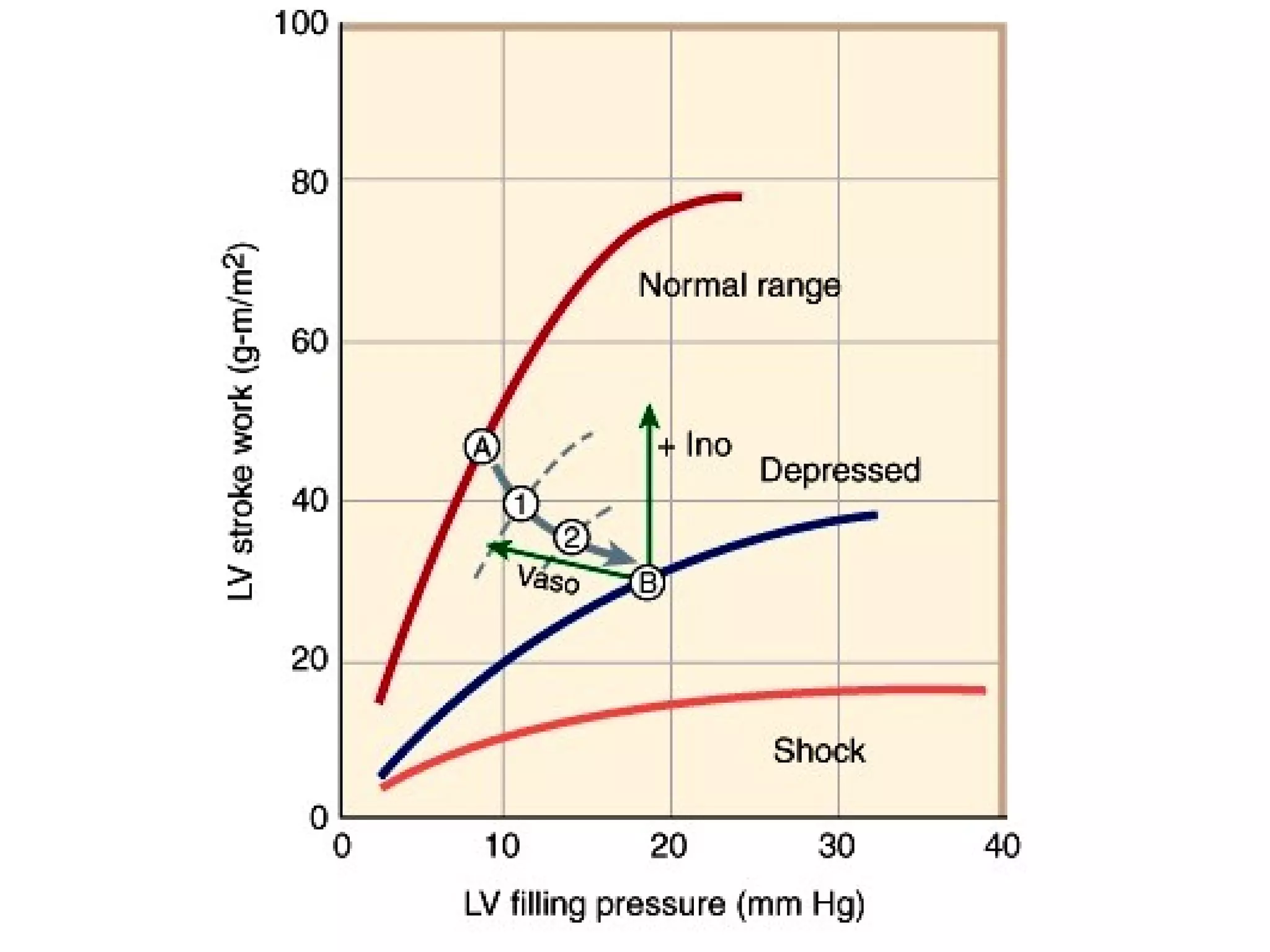
  • #48 Relation of left ventricular (LV) performance to filling pressure in patients with acute myocardial infarction, an important cause of heart failure. The upper line indicates the range for normal, healthy individuals. At a given level of exercise, the heart operates at a stable point, eg, point A. In heart failure, function is shifted down and to the right, through points 1 and 2, finally reaching point B. A &amp;quot;pure&amp;quot; positive inotropic drug (+ Ino) would move the operating point upward by increasing cardiac stroke work. A vasodilator (Vaso) would move the point leftward by reducing filling pressure. Successful therapy usually results in both effects.