Gandhinagar institute of technology
 Sub – Engineering Economics & Management
 Topic – Difference between micro & Macro Economics
 Guided by – Prof. Prashant Pandya
 Sem – 3rd
 Branch – Electrical (b3)
 Academic year – 2015&2016
Prepared by
 Shah Raj .S. (140120109054)
 Abhishek Chokshi(140120109005)
 Himal Desai (140120109008)
Difference Between Micro &
Macro Economics
Index
 Introduction
 Concerned
 Differences between micro & macro
 Similarities between micro & macro
Introduction
 Microeconomics is the study of particular markets, and
segments of the economy. It looks at issues such as
consumer behaviour, individual labour markets, and the
theory of firms.
 Macro economics is the study of the whole economy. It
looks at ‘aggregate’ variables, such as aggregate demand,
national output and inflation.
  
Concerned
-Microeconomics
 Micro economics is concerned with:
 Supply and demand in individual markets
 Individual consumer behaviour. e.g.
Consumer choice theory
 Individual labour markets – e.g. demand for labour,
wage determination
 Externalities arising from production and consumption.
Concerned-
Macroeconomics
 Macro economics is concerned with
 Monetary / fiscal policy. e.g. what effect does interest rates have on
whole economy?
 Reasons for inflation, and unemployment
 Economic Growth
 International trade and globalisation
 Reasons for differences in living standards and economic growth
between countries.
 Government borrowing
Moving from Micro to
Macro
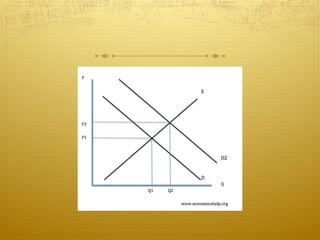
 If we look at a simple supply and demand diagram for
motor cars. Microeconomics is concerned with issues
such as the impact of an increase in demand for cars.
 This micro economic analysis shows that the increased
demand leads to higher price, and higher quantity.
Macro economic analysis
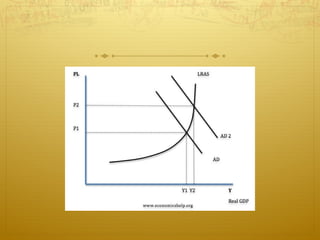
 This looks at all goods and services produced in the economy.
 The macro diagram is looking at Real GDP (which is the total
amount of output produced in the economy) instead of quantity.
 Instead of the price of a good, we are looking at the overall price
level (PL) for the economy. Inflation measures the annual % change
in the aggregate price level.
 Macro diagrams are based on the same principles as micro
diagrams, we just look at Real GDP rather than Quantity and
Inflation rather than Price Level (PL)
 We can also consider differences between micro and
macro economics. I will summarise the main differences
here:
 Small segment of economy vs whole aggregate economy.
 Microeconomics works on principle that markets soon
create equilibrium. In macro economics, the economy
may be in a state of disequilibrium (boom or recession)
for a longer period
 There is little debate about the basic principles of micro-
economics. Macro economics is more contentious. There
are different schools of macro economics offering
different explanations (e.g. Keynesian, Monetarist,
Austrian, Real Business cycle e.t.c).
 Macro economics places greater emphasis on empirical
data and trying to explain it. Micro economics tends to
work from theory
Differences Between
Microeconomic
andMacroeconomics
 The maindifference is that micro looks at small segments, and
macro looks at the whole economy. But, there are other differences.
 Equilibrium – Disequilibrium
 Classical economic analysis assumes that markets return to
equilibrium (S=D). If demand increases faster than supply, this
causes price to rise and firms respond by increasing supply. For a
long time, it was assumed that the macro economy behaved in the
same way as micro economic analysis. Before, the 1930s, there
wasn’t really a separate branch of economics called
macroeconomics
 Great Depression and Birth of Macroeconomics
 In the 1930s, economies were clearly not in equilibrium. There
was high unemployment, output was below capacity, and
there was a state of disequilbrium Classical economics
didn’t really have an explanation for this dis-equilibrium,
which from a micro perspective, shouldn’t occur.
 In 1936, J.M.Keynes produced his The General Theory of
Employment, Interest and Money, this examined why the
depression was lasting so long. It examined why we can be in
a state of disequilibrium in the macro economy`
 Keynes observed that we can have a negative output gap
(disequilibrium in the macroeconomy) for a prolonged time.
In other words, microeconomic principles of markets clearing,
didn’t necessarily apply to macro economics. Keynes wasn’t
the only economist to investigate this new branch of
economics.
 For example, Iriving Fisher examined the role of debt
deflation in explaining the great depression. But, Keynes’
theory was the most wide ranging explanation, and played a
large role in creating the new branch of macro-economics.
 Since 1936, macroeconomics developed as a separate
strand within economics. There have been competing
explanations for issues such as inflation, recessions and
economic growth.
Similarities between
Microeconomics and
Macroeconomics
 Although it is convenient to split up economics into two
branches – microeconomics and macroeconomics, it is to
some extent an artificial divide.
 Micro principles used in macro economics. If you study
impact of devaluation, you are likely to use same
economic principles, such as the elasticity of demand to
changes in price.
 Micro effects macro economics and vice versa. If we see a rise
in oil prices, this will have a significant impact on cost-push
inflation. If technology reduces costs, this enables faster
economic growth.
 Blurring of distinction. If house prices rise, this is a micro
economic effect for housing market. But, housing market is so
influential that it could also be considered a macro-economic
variable, and will influence monetary policy.
 There have been efforts to use computer models of household
behaviour to predict impact on macro economy.
THANK YOU

Difference between micro & Macro Economics

  • 1.
    Gandhinagar institute oftechnology  Sub – Engineering Economics & Management  Topic – Difference between micro & Macro Economics  Guided by – Prof. Prashant Pandya  Sem – 3rd  Branch – Electrical (b3)  Academic year – 2015&2016
  • 2.
    Prepared by  ShahRaj .S. (140120109054)  Abhishek Chokshi(140120109005)  Himal Desai (140120109008)
  • 3.
    Difference Between Micro& Macro Economics
  • 4.
    Index  Introduction  Concerned Differences between micro & macro  Similarities between micro & macro
  • 5.
    Introduction  Microeconomics isthe study of particular markets, and segments of the economy. It looks at issues such as consumer behaviour, individual labour markets, and the theory of firms.  Macro economics is the study of the whole economy. It looks at ‘aggregate’ variables, such as aggregate demand, national output and inflation.   
  • 6.
    Concerned -Microeconomics  Micro economicsis concerned with:  Supply and demand in individual markets  Individual consumer behaviour. e.g. Consumer choice theory  Individual labour markets – e.g. demand for labour, wage determination  Externalities arising from production and consumption.
  • 7.
    Concerned- Macroeconomics  Macro economicsis concerned with  Monetary / fiscal policy. e.g. what effect does interest rates have on whole economy?  Reasons for inflation, and unemployment  Economic Growth  International trade and globalisation  Reasons for differences in living standards and economic growth between countries.  Government borrowing
  • 8.
    Moving from Microto Macro  If we look at a simple supply and demand diagram for motor cars. Microeconomics is concerned with issues such as the impact of an increase in demand for cars.  This micro economic analysis shows that the increased demand leads to higher price, and higher quantity.
  • 10.
    Macro economic analysis This looks at all goods and services produced in the economy.  The macro diagram is looking at Real GDP (which is the total amount of output produced in the economy) instead of quantity.  Instead of the price of a good, we are looking at the overall price level (PL) for the economy. Inflation measures the annual % change in the aggregate price level.  Macro diagrams are based on the same principles as micro diagrams, we just look at Real GDP rather than Quantity and Inflation rather than Price Level (PL)
  • 12.
     We canalso consider differences between micro and macro economics. I will summarise the main differences here:  Small segment of economy vs whole aggregate economy.  Microeconomics works on principle that markets soon create equilibrium. In macro economics, the economy may be in a state of disequilibrium (boom or recession) for a longer period
  • 13.
     There islittle debate about the basic principles of micro- economics. Macro economics is more contentious. There are different schools of macro economics offering different explanations (e.g. Keynesian, Monetarist, Austrian, Real Business cycle e.t.c).  Macro economics places greater emphasis on empirical data and trying to explain it. Micro economics tends to work from theory
  • 14.
    Differences Between Microeconomic andMacroeconomics  Themaindifference is that micro looks at small segments, and macro looks at the whole economy. But, there are other differences.  Equilibrium – Disequilibrium  Classical economic analysis assumes that markets return to equilibrium (S=D). If demand increases faster than supply, this causes price to rise and firms respond by increasing supply. For a long time, it was assumed that the macro economy behaved in the same way as micro economic analysis. Before, the 1930s, there wasn’t really a separate branch of economics called macroeconomics
  • 15.
     Great Depressionand Birth of Macroeconomics  In the 1930s, economies were clearly not in equilibrium. There was high unemployment, output was below capacity, and there was a state of disequilbrium Classical economics didn’t really have an explanation for this dis-equilibrium, which from a micro perspective, shouldn’t occur.  In 1936, J.M.Keynes produced his The General Theory of Employment, Interest and Money, this examined why the depression was lasting so long. It examined why we can be in a state of disequilibrium in the macro economy`
  • 16.
     Keynes observedthat we can have a negative output gap (disequilibrium in the macroeconomy) for a prolonged time. In other words, microeconomic principles of markets clearing, didn’t necessarily apply to macro economics. Keynes wasn’t the only economist to investigate this new branch of economics.  For example, Iriving Fisher examined the role of debt deflation in explaining the great depression. But, Keynes’ theory was the most wide ranging explanation, and played a large role in creating the new branch of macro-economics.
  • 17.
     Since 1936,macroeconomics developed as a separate strand within economics. There have been competing explanations for issues such as inflation, recessions and economic growth.
  • 18.
    Similarities between Microeconomics and Macroeconomics Although it is convenient to split up economics into two branches – microeconomics and macroeconomics, it is to some extent an artificial divide.  Micro principles used in macro economics. If you study impact of devaluation, you are likely to use same economic principles, such as the elasticity of demand to changes in price.
  • 19.
     Micro effectsmacro economics and vice versa. If we see a rise in oil prices, this will have a significant impact on cost-push inflation. If technology reduces costs, this enables faster economic growth.  Blurring of distinction. If house prices rise, this is a micro economic effect for housing market. But, housing market is so influential that it could also be considered a macro-economic variable, and will influence monetary policy.  There have been efforts to use computer models of household behaviour to predict impact on macro economy.
  • 20.