DIAPHRAGMATIC HERNIA
SUDARSHAN PANDEY
INTERN , KUSMS
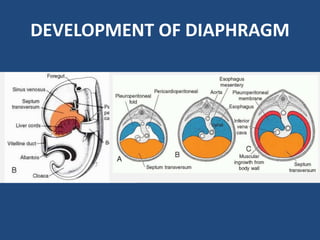
DEVELOPMENT OF DIAPHRAGM
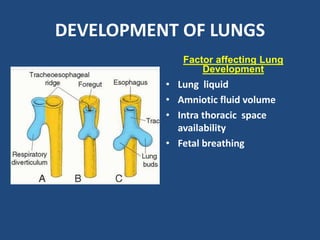
DEVELOPMENT OF LUNGS
Factor affecting Lung
Development
• Lung liquid
• Amniotic fluid volume
• Intra thoracic space
availability
• Fetal breathing
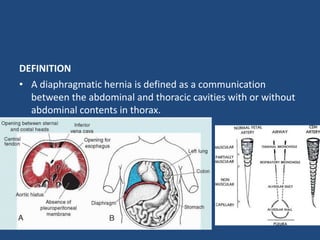
DEFINITION
• A diaphragmatic hernia is defined as a communication
between the abdominal and thoracic cavities with or without
abdominal contents in thorax.
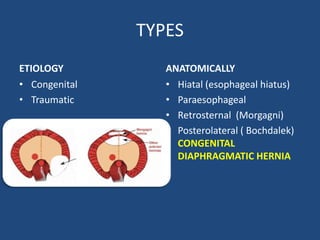
TYPES
ETIOLOGY
• Congenital
• Traumatic
ANATOMICALLY
• Hiatal (esophageal hiatus)
• Paraesophageal
• Retrosternal (Morgagni)
• Posterolateral ( Bochdalek)
CONGENITAL
DIAPHRAGMATIC HERNIA
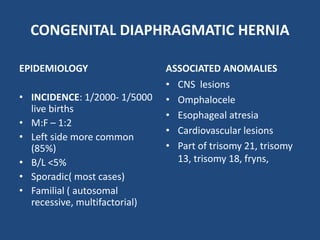
CONGENITAL DIAPHRAGMATIC HERNIA
EPIDEMIOLOGY
• INCIDENCE: 1/2000- 1/5000
live births
• M:F – 1:2
• Left side more common
(85%)
• B/L <5%
• Sporadic( most cases)
• Familial ( autosomal
recessive, multifactorial)
ASSOCIATED ANOMALIES
• CNS lesions
• Omphalocele
• Esophageal atresia
• Cardiovascular lesions
• Part of trisomy 21, trisomy
13, trisomy 18, fryns,
SIGNS AND SYMPTOMS
• Respiratory distress
(tachypnea, grunting, cyanosis,
use of accessory muscles –
cardinal sign
• Scaphoid abdomen
• Increased chest wall diameter
• Bowel sound heard in chest
with decreased/absent breath
sounds on side of hernia
• Shifting of apex beat
contralateral side of hernia
DELAYED PRESENTATION
• Often right side
• Regurgitation
• Vomiting( d/t intestinal
obstruction)
• Incarcination of intestine
• ischemia sepsis
and shock
DIAGNOSIS
• Prenatal USG at 16-24
WOG: polyhydramnios,
chest mass, mediastinal
shift, gastric bubble in
thoracic cavity
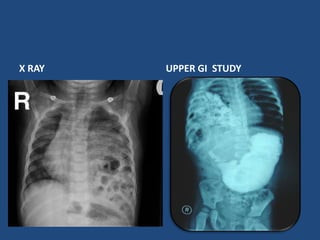
• After delivery: Chest X Ray
with nasogastric tube
• Barium study
• Echocardiography
• Amniocentesis
X RAY UPPER GI STUDY
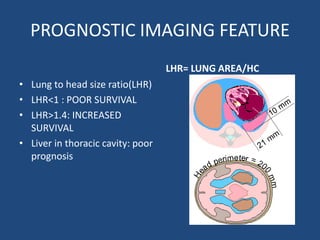
PROGNOSTIC IMAGING FEATURE
• Lung to head size ratio(LHR)
• LHR<1 : POOR SURVIVAL
• LHR>1.4: INCREASED
SURVIVAL
• Liver in thoracic cavity: poor
prognosis
LHR= LUNG AREA/HC
Differential Diagnosis
• Cystic lung lesion( pulmonary sequestration, cystic adenoid
malformation Pulmonary sequestration
• Eventration of Diaphragm
• Bronchogenic cyst
• Neurogenic Tumors
• Primary Lung Sarcoma
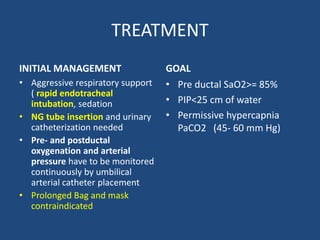
TREATMENT
INITIAL MANAGEMENT
• Aggressive respiratory support
( rapid endotracheal
intubation, sedation
• NG tube insertion and urinary
catheterization needed
• Pre- and postductal
oxygenation and arterial
pressure have to be monitored
continuously by umbilical
arterial catheter placement
• Prolonged Bag and mask
contraindicated
GOAL
• Pre ductal SaO2>= 85%
• PIP<25 cm of water
• Permissive hypercapnia
PaCO2 (45- 60 mm Hg)
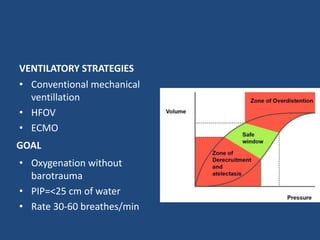
VENTILATORY STRATEGIES
• Conventional mechanical
ventillation
• HFOV
• ECMO
GOAL
• Oxygenation without
barotrauma
• PIP=<25 cm of water
• Rate 30-60 breathes/min
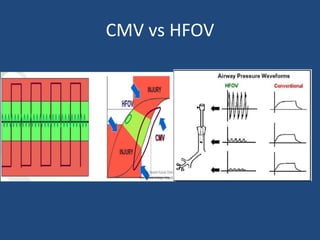
CMV vs HFOV
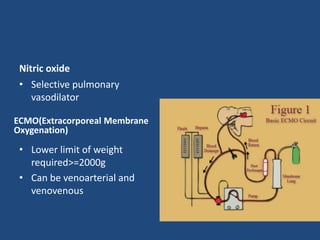
Nitric oxide
• Selective pulmonary
vasodilator
ECMO(Extracorporeal Membrane
Oxygenation)
• Lower limit of weight
required>=2000g
• Can be venoarterial and
venovenous
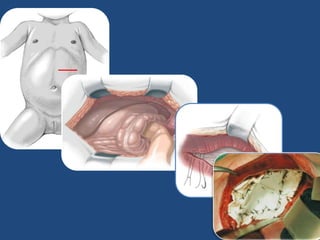
SURGICAL REPAIR
• Mostly after 48 hrs after
stabilization and resolution of
pulmonary hypertension
• Delayed in newborn on HFOV
• Most common approach :
subcostal approach
• Laparoscopic and
thoracoscopic repair
• Native tissue vs patch(GORE-
TEX, porous
polytetrafluroethylene patch)
Relative indicators for stability
• Requirement of
conventional ventilation
only
• Low PIP
• FiO2<50%
RECENT ADVANCES
• Liquid ventilation : Tracheal installation of
perfluorocarbon (PFC) to replace nitrogen as a
carriage for oxygen and carbon dioxide.
• Fetal surgery: Human Tracheal occlusion
(fetoscopic endoluminal tracheal occlusion,
FETO)
COMPLICATION
• GERD (50%)
• Intestinal Obstruction (20%)
• Recurrent diaphragmatic hernia (5-20%)
• Delayed growth in 1st 2 years of life
• Neurocognitive defect (more common in
infants requiring ECMO)
• Pectus excavatum
• Scoliosis
PROGNOSIS
POOR PROGNOSIS
• Overall survival of CDH 67%
• Spontaneous fetal demise: 7-10%
• Associated major anomalies
• Symptoms before 24 hrs of age
• Severe pulmonary hypoplasia
• Need for ECMO
REFERENCES
• Nelson- Text Book of Paediatrics-19th edition
• Langman’s Medical Embryology- 11th edition
THANK YOU

Diaphragmatic hernia

  • 1.
  • 2.
  • 3.
    DEVELOPMENT OF LUNGS Factoraffecting Lung Development • Lung liquid • Amniotic fluid volume • Intra thoracic space availability • Fetal breathing
  • 4.
    DEFINITION • A diaphragmatichernia is defined as a communication between the abdominal and thoracic cavities with or without abdominal contents in thorax.
  • 5.
    TYPES ETIOLOGY • Congenital • Traumatic ANATOMICALLY •Hiatal (esophageal hiatus) • Paraesophageal • Retrosternal (Morgagni) • Posterolateral ( Bochdalek) CONGENITAL DIAPHRAGMATIC HERNIA
  • 6.
    CONGENITAL DIAPHRAGMATIC HERNIA EPIDEMIOLOGY •INCIDENCE: 1/2000- 1/5000 live births • M:F – 1:2 • Left side more common (85%) • B/L <5% • Sporadic( most cases) • Familial ( autosomal recessive, multifactorial) ASSOCIATED ANOMALIES • CNS lesions • Omphalocele • Esophageal atresia • Cardiovascular lesions • Part of trisomy 21, trisomy 13, trisomy 18, fryns,
  • 7.
    SIGNS AND SYMPTOMS •Respiratory distress (tachypnea, grunting, cyanosis, use of accessory muscles – cardinal sign • Scaphoid abdomen • Increased chest wall diameter • Bowel sound heard in chest with decreased/absent breath sounds on side of hernia • Shifting of apex beat contralateral side of hernia DELAYED PRESENTATION • Often right side • Regurgitation • Vomiting( d/t intestinal obstruction) • Incarcination of intestine • ischemia sepsis and shock
  • 8.
    DIAGNOSIS • Prenatal USGat 16-24 WOG: polyhydramnios, chest mass, mediastinal shift, gastric bubble in thoracic cavity • After delivery: Chest X Ray with nasogastric tube • Barium study • Echocardiography • Amniocentesis
  • 9.
    X RAY UPPERGI STUDY
  • 10.
    PROGNOSTIC IMAGING FEATURE •Lung to head size ratio(LHR) • LHR<1 : POOR SURVIVAL • LHR>1.4: INCREASED SURVIVAL • Liver in thoracic cavity: poor prognosis LHR= LUNG AREA/HC
  • 11.
    Differential Diagnosis • Cysticlung lesion( pulmonary sequestration, cystic adenoid malformation Pulmonary sequestration • Eventration of Diaphragm • Bronchogenic cyst • Neurogenic Tumors • Primary Lung Sarcoma
  • 12.
    TREATMENT INITIAL MANAGEMENT • Aggressiverespiratory support ( rapid endotracheal intubation, sedation • NG tube insertion and urinary catheterization needed • Pre- and postductal oxygenation and arterial pressure have to be monitored continuously by umbilical arterial catheter placement • Prolonged Bag and mask contraindicated GOAL • Pre ductal SaO2>= 85% • PIP<25 cm of water • Permissive hypercapnia PaCO2 (45- 60 mm Hg)
  • 13.
    VENTILATORY STRATEGIES • Conventionalmechanical ventillation • HFOV • ECMO GOAL • Oxygenation without barotrauma • PIP=<25 cm of water • Rate 30-60 breathes/min
  • 14.
  • 15.
    Nitric oxide • Selectivepulmonary vasodilator ECMO(Extracorporeal Membrane Oxygenation) • Lower limit of weight required>=2000g • Can be venoarterial and venovenous
  • 16.
    SURGICAL REPAIR • Mostlyafter 48 hrs after stabilization and resolution of pulmonary hypertension • Delayed in newborn on HFOV • Most common approach : subcostal approach • Laparoscopic and thoracoscopic repair • Native tissue vs patch(GORE- TEX, porous polytetrafluroethylene patch) Relative indicators for stability • Requirement of conventional ventilation only • Low PIP • FiO2<50%
  • 18.
    RECENT ADVANCES • Liquidventilation : Tracheal installation of perfluorocarbon (PFC) to replace nitrogen as a carriage for oxygen and carbon dioxide. • Fetal surgery: Human Tracheal occlusion (fetoscopic endoluminal tracheal occlusion, FETO)
  • 19.
    COMPLICATION • GERD (50%) •Intestinal Obstruction (20%) • Recurrent diaphragmatic hernia (5-20%) • Delayed growth in 1st 2 years of life • Neurocognitive defect (more common in infants requiring ECMO) • Pectus excavatum • Scoliosis
  • 20.
    PROGNOSIS POOR PROGNOSIS • Overallsurvival of CDH 67% • Spontaneous fetal demise: 7-10% • Associated major anomalies • Symptoms before 24 hrs of age • Severe pulmonary hypoplasia • Need for ECMO
  • 21.
    REFERENCES • Nelson- TextBook of Paediatrics-19th edition • Langman’s Medical Embryology- 11th edition
  • 22.

Editor's Notes

  • #3 8-12 wks. From Four embryologic elements
  • #9 Identification of bowing of the umbilical segment of the portal vein or direct visualization of portal vessels in the thoracic cavity on Doppler imaging help to confirm liver