Congenital diaphragmatic
hernia
Presenter: Dr. Krishna Dhakal
Moderator :
Assist Prof. Dr Rupesh Yadav
Kanti Children’s Hospital
1
Objectives
• To define and classify Congenital diaphragmatic hernia
• To know pathophysiology of CDH
• To know Clinical presentation and diagnosis of CDH
• To discuss preoperative, intraoperative and post-operative anesthetic
concerns and management of a child of Congenital diaphragmatic
Hernia
2
Congenital diaphragmatic hernia
• Defect in the diaphragm that develops
early in gestation associated with
extrusion of intraabdominal organs into
the thoracic cavity
• Incidence: 1:2500-5000
• Male:Female: 2:1
• Left : Right : 5:1
3
Historical aspects of congenital diaphragmatic hernia
• 1679, Riverius recorded the first reported after postmortem
examination of a 24-year-old man
• In 1848, Bochdalek described congenital diaphragmatic hernia (CDH)
occurring through a posterolateral defect.
• Successful surgical treatment of CDH in an infant- first performed in
1902
• First neonate operated within 24 hours of life-reported in 1946.
4
5
Paudel et al. Coincidence of Congenital Diaphragmatic Hernia
and Arnold Chiari II Malformation: A Case Report
CDH is a key feature of syndromes such as
• Beckwith-Wiedemann;
• Coloboma, heart, atresia choanae,
retardation, genital, and ear (CHARGE);
• Cornelia de Lange’s; and Denys-Drash.
• Trisomies 13, 18, and 21 and 45
6
CDH is also associated with the following conditions:
• Varying degrees of bilateral lung hypoplasia
• Pulmonary hypertension
• Congenital anomalies
• Significant morbidity and mortality
7
• Associated anomalies
• Cardiovascular-(13-23)%-ASD, VSD, CoA, TOF
• CNS- (28%)- Spina bifida, hydrocephalus
• GIT- 20%- Malrotation, atresia
• GUT- 15%- Hypospadiasis
8
Classification
• Bochdalek’s hernia
Most common defect
 80%
 75% left sided.
Most common defect posterolateral
• Morgagni (anteromedial) – 2%
• Paraesophageal hernias- 15-20 %
• Eventrations make up the remainder
• Absent Diaphragm-very rare
9
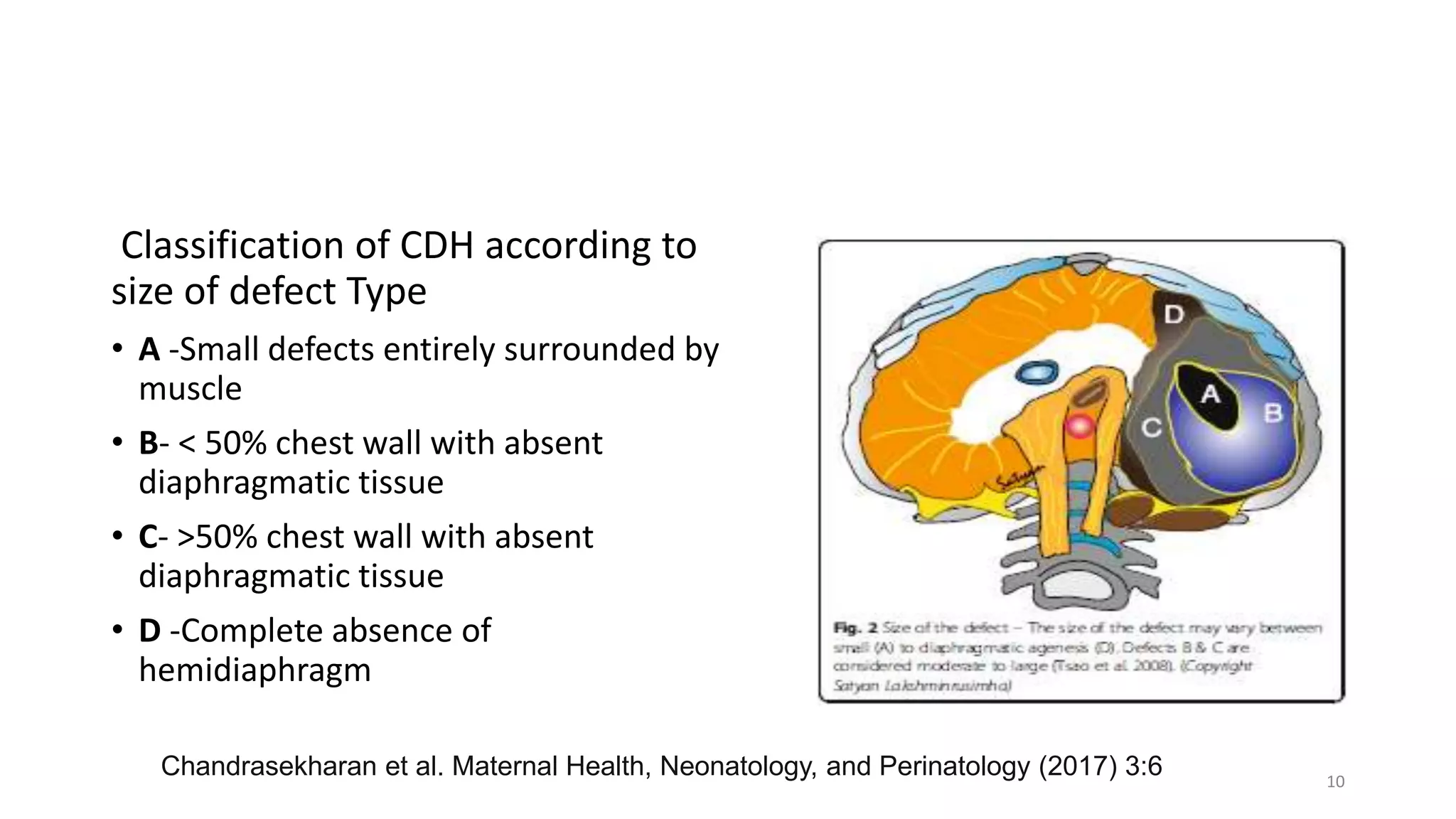
Classification of CDH according to
size of defect Type
• A -Small defects entirely surrounded by
muscle
• B- < 50% chest wall with absent
diaphragmatic tissue
• C- >50% chest wall with absent
diaphragmatic tissue
• D -Complete absence of
hemidiaphragm
10
Chandrasekharan et al. Maternal Health, Neonatology, and Perinatology (2017) 3:6
Embryology
• 1st month- single pleuroperitoneal cavity
• 4 wks - septum transversum & dorsal
mesentry of foregut meet in midline to
form central tendon of diaphragm
• Between 4 to 9 wks - pleuroperitoneal
membrane forms, thus completing the
formationn of diaphragm after body wall
and cervical myotomes’ (2,3,4)
contributions
• Also at 9 wks – developing gut returns
from yolk sac to peritoneal cavity
11Langman’s Essential Medical Embryology, 13th edition
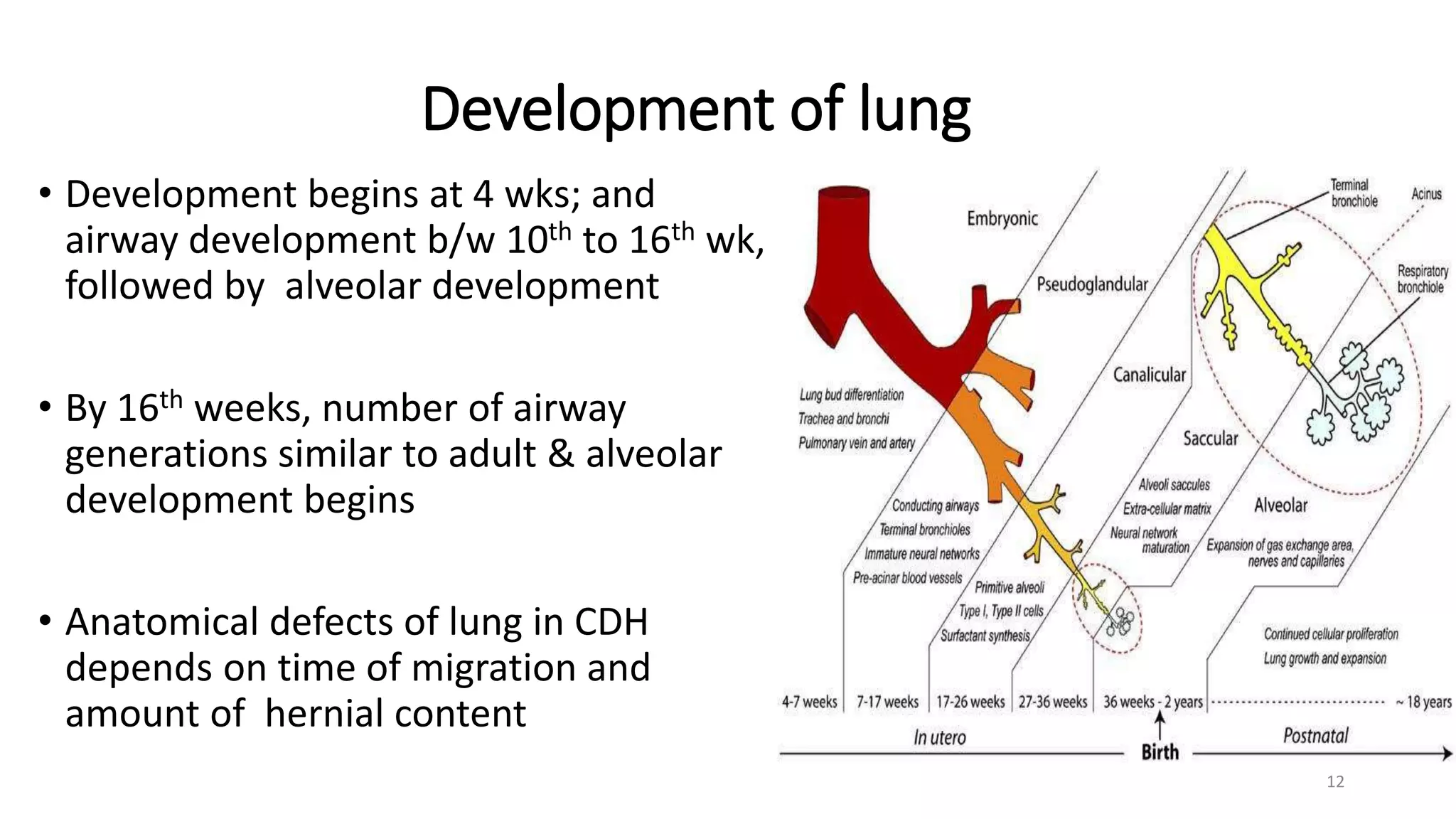
Development of lung
• Development begins at 4 wks; and
airway development b/w 10th to 16th wk,
followed by alveolar development
• By 16th weeks, number of airway
generations similar to adult & alveolar
development begins
• Anatomical defects of lung in CDH
depends on time of migration and
amount of hernial content
12
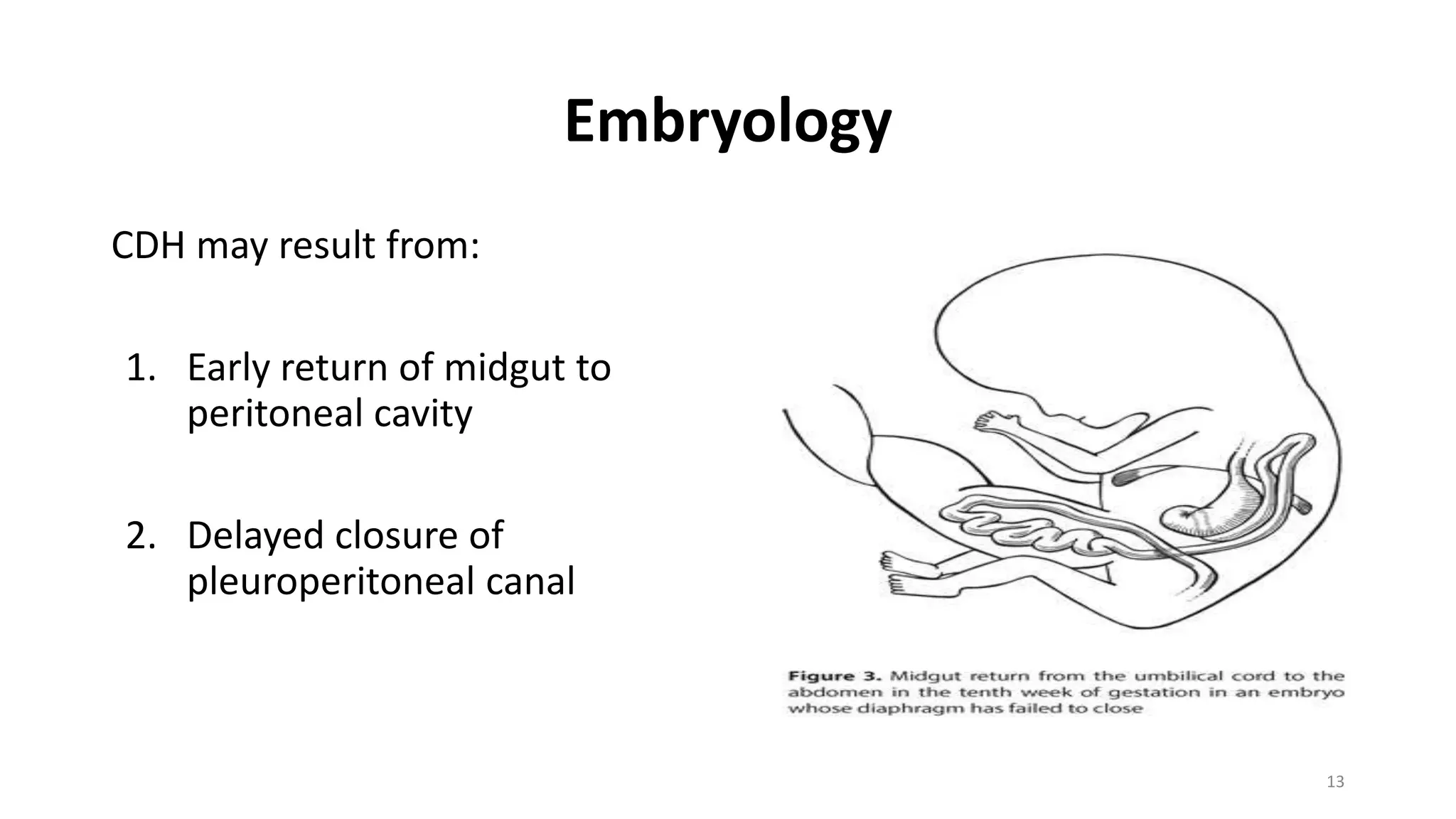
Embryology
CDH may result from:
1. Early return of midgut to
peritoneal cavity
2. Delayed closure of
pleuroperitoneal canal
13
14
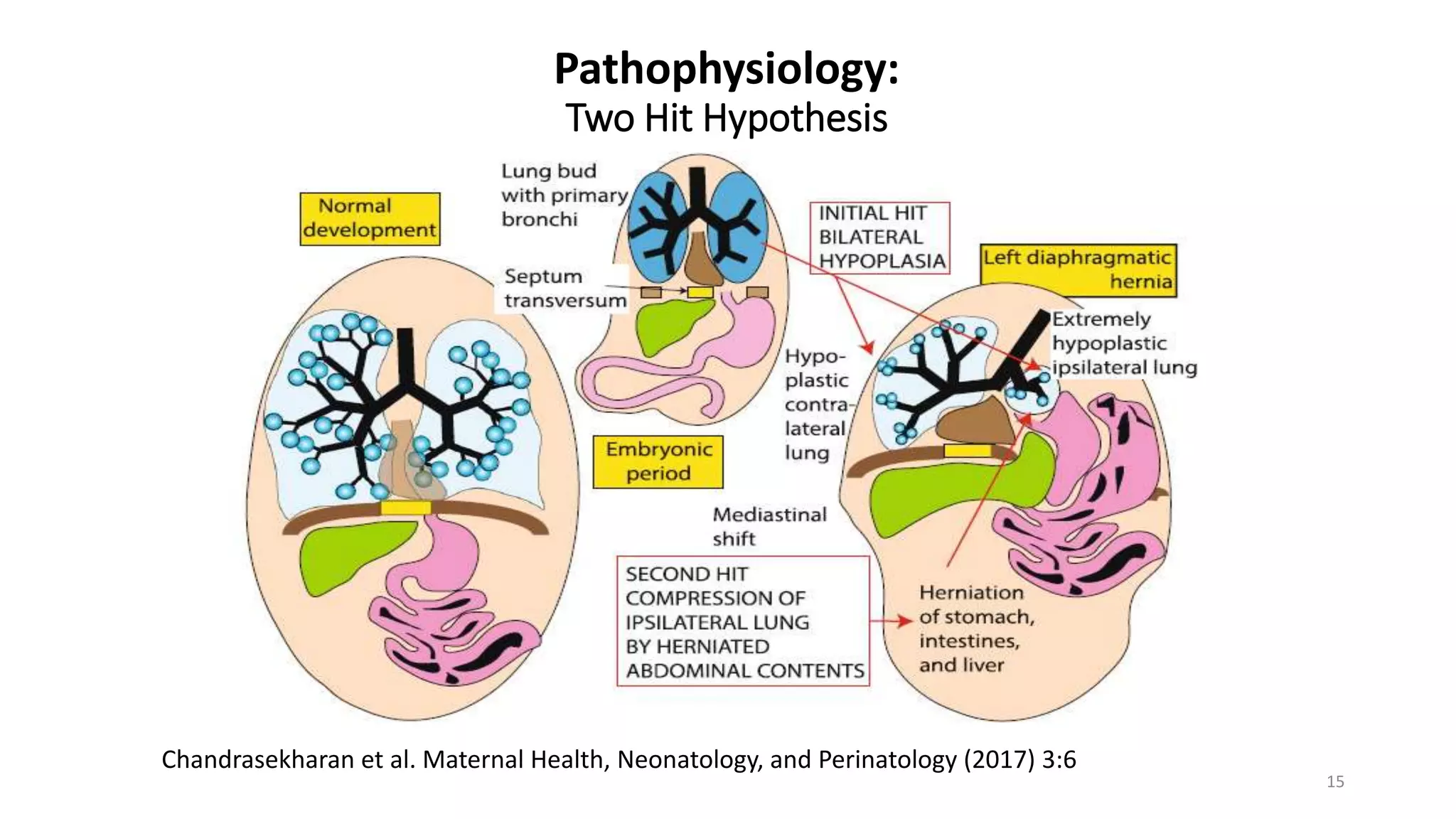
Pathophysiology:
Two Hit Hypothesis
15
Chandrasekharan et al. Maternal Health, Neonatology, and Perinatology (2017) 3:6
Pathophysiology
16Chandrasekharan et al. Maternal Health, Neonatology, and Perinatology (2017) 3:6
Vicious Cycle
17
Prenatal diagnosis
USG
• Prenatal USG-detects >50% of CDH cases at
a mean gestational age of 24 weeks
• Displacement of heart fluid filled bowel in
thorax
• Large defect ( dilated intrathoracic stomach
,herniated left lobe of liver )
18
• Fetal echocardiography –decrease
pulmonary vascular resistance
• Fetal magnetic resonance imaging
(MRI) - useful in detecting fetal
anomalies
19
Postnatal diagnosis
• Neonates exhibit symptoms immediately after birth
• Classical Triad – Cyanosis , Dyspnea and apparent dextrocardia
• Physical examination
• Cyanosis as soon as the cord is clamped or after several hours
• Scaphoid abdomen
• Bulging chest
• Decreased breath sound
• Distant right displaced heart sound
• Bowel sound in the chest
20
Radiological examination
• Bowel gas pattern in Chest
• Mediastinal shift
• Little lung tissue at the costophrenic
sulcus
21Chandrasekharan et al. Maternal Health, Neonatology, and Perinatology (2017) 3:6
Imaging Studies
Cardiac ultrasonography(Echo)
• To rule out congenital heart diseases.
Renal ultrasonography:
• To rule out genitourinary anomalies.
Cranial ultrasonograph
• If the infant is being considered for extracorporeal support.
• Ultrasonographic examination - focus on evaluation of intraventricular
bleeding and peripheral areas of hemorrhage or infarct or intracranial
anomalies.
22
Other Investigations
• Haemogram
• ABG- mixed respiratory and metabolic acidosis and severe hypoxemia,
hypercarbia
• Serum electrolytes- Na, K, Ca
• Blood sugar
• Cross matching
23
Concerns
• Pulmonary HTN
• Right to left shunt(through PDA & FO)
• Hypoxia and hypercarbia (hypo plastic lung)
• Mixed acidosis (respiratory & metabolic)
• Associated congenital malformations
• Systemic hypotension-kinking of major blood vessels esp Liver
• Pneumothorax of contralateral lungs during attempt at high pressure ventillation
24
Initial management
• First medical stabilization of the patient -improving respiratory and general status
>>>>>>proceeding for surgery after stabilization
Perioperative Goals
• Reverse persistent pulmonary HTN to decrease Right to left shunting
• Improvement in ventilation & oxygenation
• Correction of acidosis
• Correction of systemic hypotension
25
Pre-op management and stabilisation
1.Early placement of NG tube
2.Oxygenation by face mask/hood
3. Inhaled nitric oxide (iNO)
4. Ventillatory strategy
a) Conventional ventillation with permissive hypercapnia
b) HFOV
c) ECMO
5.Component of surfactant therapy
6.Correction of metabolic acidosis
26
Pre-op management and stabilisation
7.Control persistent pulmonary HTN
Multimodal treatment of pulmonary HTN- inhaled Nitric Oxide, Sildenafil,
milrinone, iloprost
8.Patients who fail medical management - candidates for ECMO which can be
started preoperatively in a neonate
9.Other preop preparations
• IV fluid administration through peripheral venous access
• Inotropes if required
• Hypothermia management
27
Intraoperative management
• Premedication
Atropine @ 0.02mg/kg iv
Induction & intubation
• Awake intubation
• Anesthesia - inhalational agents preferably sevoflurane/halothane
• Blunting of stress response providing analgesia with opiods (high dose)
• Bag & mask PPV avoided till intubation
• Nitrous oxide avoided
28
Intraoperative management
Maintainence of anaesthesia
• O2 ± air +inhalational agent (Sevofluorane/halothane) low concentration until chest
decompressed
• Opioids- fentanyl Dose 1-3 µg/kg
• Muscle relaxant after tracheal intubation with NDMRs
29
Intraoperative management
Monitoring
• Precordial/Esophageal stethoscope
• Continuos Ecg monitoring
• Pulse oximetry
• Capnography
• Inspiratory pressures
• Temperature monitoring
• Estimation of blood loss
• Blood Glucose
• Urine output
30
Intraoperative management
Mechanical ventilation
Goal
1. PaCO2 of 45-55 mm Hg (permissive hypercapnia)
2. Pre ductal spo2 >85 %
3. pH- > 7.2
4. Min FiO2 to target PaO2>150 mm hg
5. PIP < 25 cm H20
31
Fluid management
• Maintainence of constant circulating blood volume
Deficit : Isolyte P @ 4 ml/kg/hour x no of hrs
50% to be given in first hour
• 25% in next hour
• 25% in 3rd hour
• Maintenance with 10D in N/5 @4ml/kg/hr
• Third space losses: isotonic solution/colloid @8ml/kg/hr
32
Other intra operative concerns
PNEUMOTHORAX
Signs
• Sudden decrease in compliance &Spo2
• Hypotension
• Bradycardia
• Prevention -- low airway pressures to be kept
33
Post operative management
• Post op- intensive care unit
• Elective ventilation planned
I. Preoperative respiratory status,
II. Size of defect,
III. Tension on abdominal wall,
IV. Associated CHD
• High doses of opioids and adequate muscle relaxation if the patient is kept on
ventilator
34
Conventional vs HFOV??
35
VICI trial
36
Ann Surg. 2016 May;263(5):867-74.
VICI trial
37
Ann Surg. 2016 May;263(5):867-74.
Post operative management
• Monitor the patient for pH& electrolytes
• Treatment of acidosis, Pulmonary HTN
• ECMO may be required if PaO2 not maintained
• Care of nutrition-
• Fluids @ 2-4 ml/kg/hr
• Awake extubation - when patient is maintaining PaO2 on minimum FiO2 with
adequate respiratory efforts
38
• Sedation and analgesics
• As clinically indicated
• May consider use of scheduled IV PCM for pain control
• Utilize intermittent dosing of narcotics prior to initiating narcotic infusion
• Fentanyl infusion, versed PRN if indicated
• If infusions required pre-operative, increased doses as needed to control
postoperative pain
39
NICU Congenital Diaphragmatic Hernia (CDH) Care Guideline
Prognosis
Mortality & morbidity
• 30-60%
• Long term follow up required -up to 87% of surviving children will go on to experience
long-term morbidity related to their CDH.
(i) Respiratory
• Recurrent respiratory tract infections (34%)
• Chest deformity (40%)
(ii) Gastrointestinal
• Reflux (30%)
• Failure to thrive (20%)
(iii) Neurological
• Sensorineural hearing loss (50%)
• Cognitive impairment (up to 70%)
40
Factors determing morbidity and mortality:
1. Degree of pulmonary hypoplasia
2. Associated malformations
3. Inadequate preop management
4. Ineffective post op management
41
ECMO (Extra Corporeal Membrane oxygenator)
Indications
Failure of pressure-limited conventional ventilation
1. Severe hypoxemia,
2. Hypercarbia
3. Acidosis
4. Pulmonary HTN who do not respond to max conventional respiratory and
pharmacological intervention
42
ECMO
Advantages
• Eliminates Rt to L shunting by diversion of 80% of cardiac output
• Decreases Rt ventricular workload due to decrease PBF and pressure
• Decreases pulmonary vascular resistance as hypoxia and acidosis corrected
• Growth of hypoplastic lung
• Overall survival of ECMO treated infant - good
43
Contraindications
• Gestational age <approximately 34 weeks
• Weight <approximately 2 kg
• Bleeding disorders (ongoing bleeding or uncorrectable coagulopathy)
• Intraventricular haemorrhage (≥grade 2).
44
45
46
47https://epostersonline.com/ASRAWORLD18/node/2596
48
https://epostersonline.com/ASRAWORLD18/node/2596
Conclusion:
• A regional anesthesia based method for providing analgesia during CDH
effectively obviated the need for intraoperative opioids and resulted in early
extubation in the OR.
• This method of providing multimodal analgesia is a safe and effective option
for CDH repair.
• They hope to continue using this technique for providing analgesia for infants
without contraindications to regional anesthesia and examine if it results in
any differences in outcomes.
49
https://epostersonline.com/ASRAWORLD18/node/2596
Queries
50
Summary
• CDH - defect in the diaphragm -develops early in gestation with extrusion of
intraabdominal organs into the thoracic cavity
• Congenital anomalies (e.g., cardiac, gastrointestinal, genitourinary, skeletal, neural, and
trisomic) should be ruled out
• Usually associated with pulmonary hypoplasia and pulmonary hypertension.
• Surgical repair is only treatment- approach should be first medical stabilization of the
patient for improving respiratory and general status and then proceeding for surgery
after stabilization
• ECMO has improved the survival of CDH
• Long term follow up is necessary to detect complications.
51
References
• Smith’s anesthesia for infants and children-8th edition
• Miller’s Anesthesia, 7th edition
• Clinical Anesthesia; Barash, 8th edition
• Morgan’s clinical anesthesiology, 5th edition
• Management of congenital diaphragmatic hernia,Current Opinion in
Anaesthesiology 2008, 21:323–331
• Fun-Sun F. Yao. Anesthesiology. 7th edition
• Kumar, V.H.S. Indian J Surg (2015) 77: 313.
• Chandrasekharan et al. Maternal Health, Neonatology, and Perinatology (2017)
3:6
• NICU Congenital Diaphragmatic Hernia (CDH) Care Guideline 2017
• Internet : wikipedia.org , https://epostersonline.com/ASRAWORLD18/node/2596
52

Anesthesia For Congenital Diaphragmatic Hernia

  • 1.
    Congenital diaphragmatic hernia Presenter: Dr.Krishna Dhakal Moderator : Assist Prof. Dr Rupesh Yadav Kanti Children’s Hospital 1
  • 2.
    Objectives • To defineand classify Congenital diaphragmatic hernia • To know pathophysiology of CDH • To know Clinical presentation and diagnosis of CDH • To discuss preoperative, intraoperative and post-operative anesthetic concerns and management of a child of Congenital diaphragmatic Hernia 2
  • 3.
    Congenital diaphragmatic hernia •Defect in the diaphragm that develops early in gestation associated with extrusion of intraabdominal organs into the thoracic cavity • Incidence: 1:2500-5000 • Male:Female: 2:1 • Left : Right : 5:1 3
  • 4.
    Historical aspects ofcongenital diaphragmatic hernia • 1679, Riverius recorded the first reported after postmortem examination of a 24-year-old man • In 1848, Bochdalek described congenital diaphragmatic hernia (CDH) occurring through a posterolateral defect. • Successful surgical treatment of CDH in an infant- first performed in 1902 • First neonate operated within 24 hours of life-reported in 1946. 4
  • 5.
    5 Paudel et al.Coincidence of Congenital Diaphragmatic Hernia and Arnold Chiari II Malformation: A Case Report
  • 6.
    CDH is akey feature of syndromes such as • Beckwith-Wiedemann; • Coloboma, heart, atresia choanae, retardation, genital, and ear (CHARGE); • Cornelia de Lange’s; and Denys-Drash. • Trisomies 13, 18, and 21 and 45 6
  • 7.
    CDH is alsoassociated with the following conditions: • Varying degrees of bilateral lung hypoplasia • Pulmonary hypertension • Congenital anomalies • Significant morbidity and mortality 7
  • 8.
    • Associated anomalies •Cardiovascular-(13-23)%-ASD, VSD, CoA, TOF • CNS- (28%)- Spina bifida, hydrocephalus • GIT- 20%- Malrotation, atresia • GUT- 15%- Hypospadiasis 8
  • 9.
    Classification • Bochdalek’s hernia Mostcommon defect  80%  75% left sided. Most common defect posterolateral • Morgagni (anteromedial) – 2% • Paraesophageal hernias- 15-20 % • Eventrations make up the remainder • Absent Diaphragm-very rare 9
  • 10.
    Classification of CDHaccording to size of defect Type • A -Small defects entirely surrounded by muscle • B- < 50% chest wall with absent diaphragmatic tissue • C- >50% chest wall with absent diaphragmatic tissue • D -Complete absence of hemidiaphragm 10 Chandrasekharan et al. Maternal Health, Neonatology, and Perinatology (2017) 3:6
  • 11.
    Embryology • 1st month-single pleuroperitoneal cavity • 4 wks - septum transversum & dorsal mesentry of foregut meet in midline to form central tendon of diaphragm • Between 4 to 9 wks - pleuroperitoneal membrane forms, thus completing the formationn of diaphragm after body wall and cervical myotomes’ (2,3,4) contributions • Also at 9 wks – developing gut returns from yolk sac to peritoneal cavity 11Langman’s Essential Medical Embryology, 13th edition
  • 12.
    Development of lung •Development begins at 4 wks; and airway development b/w 10th to 16th wk, followed by alveolar development • By 16th weeks, number of airway generations similar to adult & alveolar development begins • Anatomical defects of lung in CDH depends on time of migration and amount of hernial content 12
  • 13.
    Embryology CDH may resultfrom: 1. Early return of midgut to peritoneal cavity 2. Delayed closure of pleuroperitoneal canal 13
  • 14.
  • 15.
    Pathophysiology: Two Hit Hypothesis 15 Chandrasekharanet al. Maternal Health, Neonatology, and Perinatology (2017) 3:6
  • 16.
    Pathophysiology 16Chandrasekharan et al.Maternal Health, Neonatology, and Perinatology (2017) 3:6
  • 17.
  • 18.
    Prenatal diagnosis USG • PrenatalUSG-detects >50% of CDH cases at a mean gestational age of 24 weeks • Displacement of heart fluid filled bowel in thorax • Large defect ( dilated intrathoracic stomach ,herniated left lobe of liver ) 18
  • 19.
    • Fetal echocardiography–decrease pulmonary vascular resistance • Fetal magnetic resonance imaging (MRI) - useful in detecting fetal anomalies 19
  • 20.
    Postnatal diagnosis • Neonatesexhibit symptoms immediately after birth • Classical Triad – Cyanosis , Dyspnea and apparent dextrocardia • Physical examination • Cyanosis as soon as the cord is clamped or after several hours • Scaphoid abdomen • Bulging chest • Decreased breath sound • Distant right displaced heart sound • Bowel sound in the chest 20
  • 21.
    Radiological examination • Bowelgas pattern in Chest • Mediastinal shift • Little lung tissue at the costophrenic sulcus 21Chandrasekharan et al. Maternal Health, Neonatology, and Perinatology (2017) 3:6
  • 22.
    Imaging Studies Cardiac ultrasonography(Echo) •To rule out congenital heart diseases. Renal ultrasonography: • To rule out genitourinary anomalies. Cranial ultrasonograph • If the infant is being considered for extracorporeal support. • Ultrasonographic examination - focus on evaluation of intraventricular bleeding and peripheral areas of hemorrhage or infarct or intracranial anomalies. 22
  • 23.
    Other Investigations • Haemogram •ABG- mixed respiratory and metabolic acidosis and severe hypoxemia, hypercarbia • Serum electrolytes- Na, K, Ca • Blood sugar • Cross matching 23
  • 24.
    Concerns • Pulmonary HTN •Right to left shunt(through PDA & FO) • Hypoxia and hypercarbia (hypo plastic lung) • Mixed acidosis (respiratory & metabolic) • Associated congenital malformations • Systemic hypotension-kinking of major blood vessels esp Liver • Pneumothorax of contralateral lungs during attempt at high pressure ventillation 24
  • 25.
    Initial management • Firstmedical stabilization of the patient -improving respiratory and general status >>>>>>proceeding for surgery after stabilization Perioperative Goals • Reverse persistent pulmonary HTN to decrease Right to left shunting • Improvement in ventilation & oxygenation • Correction of acidosis • Correction of systemic hypotension 25
  • 26.
    Pre-op management andstabilisation 1.Early placement of NG tube 2.Oxygenation by face mask/hood 3. Inhaled nitric oxide (iNO) 4. Ventillatory strategy a) Conventional ventillation with permissive hypercapnia b) HFOV c) ECMO 5.Component of surfactant therapy 6.Correction of metabolic acidosis 26
  • 27.
    Pre-op management andstabilisation 7.Control persistent pulmonary HTN Multimodal treatment of pulmonary HTN- inhaled Nitric Oxide, Sildenafil, milrinone, iloprost 8.Patients who fail medical management - candidates for ECMO which can be started preoperatively in a neonate 9.Other preop preparations • IV fluid administration through peripheral venous access • Inotropes if required • Hypothermia management 27
  • 28.
    Intraoperative management • Premedication Atropine@ 0.02mg/kg iv Induction & intubation • Awake intubation • Anesthesia - inhalational agents preferably sevoflurane/halothane • Blunting of stress response providing analgesia with opiods (high dose) • Bag & mask PPV avoided till intubation • Nitrous oxide avoided 28
  • 29.
    Intraoperative management Maintainence ofanaesthesia • O2 ± air +inhalational agent (Sevofluorane/halothane) low concentration until chest decompressed • Opioids- fentanyl Dose 1-3 µg/kg • Muscle relaxant after tracheal intubation with NDMRs 29
  • 30.
    Intraoperative management Monitoring • Precordial/Esophagealstethoscope • Continuos Ecg monitoring • Pulse oximetry • Capnography • Inspiratory pressures • Temperature monitoring • Estimation of blood loss • Blood Glucose • Urine output 30
  • 31.
    Intraoperative management Mechanical ventilation Goal 1.PaCO2 of 45-55 mm Hg (permissive hypercapnia) 2. Pre ductal spo2 >85 % 3. pH- > 7.2 4. Min FiO2 to target PaO2>150 mm hg 5. PIP < 25 cm H20 31
  • 32.
    Fluid management • Maintainenceof constant circulating blood volume Deficit : Isolyte P @ 4 ml/kg/hour x no of hrs 50% to be given in first hour • 25% in next hour • 25% in 3rd hour • Maintenance with 10D in N/5 @4ml/kg/hr • Third space losses: isotonic solution/colloid @8ml/kg/hr 32
  • 33.
    Other intra operativeconcerns PNEUMOTHORAX Signs • Sudden decrease in compliance &Spo2 • Hypotension • Bradycardia • Prevention -- low airway pressures to be kept 33
  • 34.
    Post operative management •Post op- intensive care unit • Elective ventilation planned I. Preoperative respiratory status, II. Size of defect, III. Tension on abdominal wall, IV. Associated CHD • High doses of opioids and adequate muscle relaxation if the patient is kept on ventilator 34
  • 35.
  • 36.
    VICI trial 36 Ann Surg.2016 May;263(5):867-74.
  • 37.
    VICI trial 37 Ann Surg.2016 May;263(5):867-74.
  • 38.
    Post operative management •Monitor the patient for pH& electrolytes • Treatment of acidosis, Pulmonary HTN • ECMO may be required if PaO2 not maintained • Care of nutrition- • Fluids @ 2-4 ml/kg/hr • Awake extubation - when patient is maintaining PaO2 on minimum FiO2 with adequate respiratory efforts 38
  • 39.
    • Sedation andanalgesics • As clinically indicated • May consider use of scheduled IV PCM for pain control • Utilize intermittent dosing of narcotics prior to initiating narcotic infusion • Fentanyl infusion, versed PRN if indicated • If infusions required pre-operative, increased doses as needed to control postoperative pain 39 NICU Congenital Diaphragmatic Hernia (CDH) Care Guideline
  • 40.
    Prognosis Mortality & morbidity •30-60% • Long term follow up required -up to 87% of surviving children will go on to experience long-term morbidity related to their CDH. (i) Respiratory • Recurrent respiratory tract infections (34%) • Chest deformity (40%) (ii) Gastrointestinal • Reflux (30%) • Failure to thrive (20%) (iii) Neurological • Sensorineural hearing loss (50%) • Cognitive impairment (up to 70%) 40
  • 41.
    Factors determing morbidityand mortality: 1. Degree of pulmonary hypoplasia 2. Associated malformations 3. Inadequate preop management 4. Ineffective post op management 41
  • 42.
    ECMO (Extra CorporealMembrane oxygenator) Indications Failure of pressure-limited conventional ventilation 1. Severe hypoxemia, 2. Hypercarbia 3. Acidosis 4. Pulmonary HTN who do not respond to max conventional respiratory and pharmacological intervention 42
  • 43.
    ECMO Advantages • Eliminates Rtto L shunting by diversion of 80% of cardiac output • Decreases Rt ventricular workload due to decrease PBF and pressure • Decreases pulmonary vascular resistance as hypoxia and acidosis corrected • Growth of hypoplastic lung • Overall survival of ECMO treated infant - good 43
  • 44.
    Contraindications • Gestational age<approximately 34 weeks • Weight <approximately 2 kg • Bleeding disorders (ongoing bleeding or uncorrectable coagulopathy) • Intraventricular haemorrhage (≥grade 2). 44
  • 45.
  • 46.
  • 47.
  • 48.
  • 49.
    Conclusion: • A regionalanesthesia based method for providing analgesia during CDH effectively obviated the need for intraoperative opioids and resulted in early extubation in the OR. • This method of providing multimodal analgesia is a safe and effective option for CDH repair. • They hope to continue using this technique for providing analgesia for infants without contraindications to regional anesthesia and examine if it results in any differences in outcomes. 49 https://epostersonline.com/ASRAWORLD18/node/2596
  • 50.
  • 51.
    Summary • CDH -defect in the diaphragm -develops early in gestation with extrusion of intraabdominal organs into the thoracic cavity • Congenital anomalies (e.g., cardiac, gastrointestinal, genitourinary, skeletal, neural, and trisomic) should be ruled out • Usually associated with pulmonary hypoplasia and pulmonary hypertension. • Surgical repair is only treatment- approach should be first medical stabilization of the patient for improving respiratory and general status and then proceeding for surgery after stabilization • ECMO has improved the survival of CDH • Long term follow up is necessary to detect complications. 51
  • 52.
    References • Smith’s anesthesiafor infants and children-8th edition • Miller’s Anesthesia, 7th edition • Clinical Anesthesia; Barash, 8th edition • Morgan’s clinical anesthesiology, 5th edition • Management of congenital diaphragmatic hernia,Current Opinion in Anaesthesiology 2008, 21:323–331 • Fun-Sun F. Yao. Anesthesiology. 7th edition • Kumar, V.H.S. Indian J Surg (2015) 77: 313. • Chandrasekharan et al. Maternal Health, Neonatology, and Perinatology (2017) 3:6 • NICU Congenital Diaphragmatic Hernia (CDH) Care Guideline 2017 • Internet : wikipedia.org , https://epostersonline.com/ASRAWORLD18/node/2596 52

Editor's Notes

  • #7 CDH may be an isolated lesion, or it may be associated with other anomalies. Although most cases are considered sporadic rather than part of a genetic syndrome, the nonisolated CDH has been linked to specific chromosomal anomalies including duplication of 1q24 to q31.2 and deletion of a portion of 6q, 8p23.1, and 15q26
  • #8 Severity of pulm hypoplasia-PAo2-Pao2 ratio(alveolar arterial o2 tension ) > 500mm hg when breathin 100 % 02- nonsurvival 400-predictive of survival 400-500a zone of uncertainty Cardiac catheterization and pulm angiogram define size and branching paatern of pulm artery
  • #10 “Eventration” of the diaphragm  incomplete muscularization of the diaphragm results in a hernial sac.  Sac is pushed up into the thorax secondary to raised intra-abdominal pressure  This is “eventration” of the diaphragm.  Eventration is additionally explained by incomplete innervation of the diaphragm by the phrenic nerve leaving behind atonic areas.
  • #12 1st month- single pleuroperitoneal cavity • 4 wks - septum transversum & dorsal mesentry of foregut meet in midline to form central tendon of diaphragm • B\w 4 to 9 wks - pleuroperitoneal membrane forms, thus completing the formn of diaphragm after body wall and cervical myotomes’ contributions • Also at 9 wks – developing gut returns from yolk sac to peritoneal cavity
  • #16 he pathology of CDH comprise of three elements: the diaphragmatic hernia, pulmonary hypoplasia, and herniation of the abdominal organs into the thorax This differential pathophysiology in the lung is thought to be due to a dual-hit hypothesis , with the initial insult occurring before the development of the diaphragm at 8–9 weeks from a genetic or environmental cause and the later insult from the physical compression of the lung by the abdominal contents in the thorax. Terminal bronchioles are decreased and alveolar septa are thickened with decreased complexity of respiratory acinus resulting in decreased surface area for gas exchange.
  • #17 Cardiovascular effects of CDH – Hypoplastic lungs secondary to herniation of abdominal viscera leads to concomitant hypoplasia of the pulmonary vessels. This results in reduced blood supply to the hypoplastic alveolar-capillary unit. Once the infant transitions from fetal circulation, this effect is more pronounced resulting in pulmonary hypertension which leads to right ventricular dysfunction. Secondary to pulmonary hypertension, there is shunting of blood from right to left across the patent foramen ovale and the patent ductus arteriosus. Left ventricular dysfunction along with left atrial dysfunction results in pulmonary venous hypertension and worsening of pulmonary arterial hypertension. This presents clinically in a wide spectrum of labile pre & postductal saturations to profound cyanosis
  • #19 There were no survivors with an LHR <0.6, whereas survival was 100 % if the LHR was >1.35 [11]. In another study, low lung-to-head ratio (<1.0) predicted increased incidence of extracorporeal membrane oxygenation (75 %) and lower survival (35 %)
  • #25 Hopxia- ateclactasis resulting from compression of dev lung, Pulm hypoplasia- decreased alveoli with bronchial generartions,PPH- causing rt to left shuntingthrough patent FO and PDA Degree of pulm hypoplasia related to timing of herniationo of abd content in pleural cavity pulm htn causes- increased PVR and pressure resulting from hypoplasia , pulm vasculature abnormal with decrease volume and mass increase in muscular mass of arteries , Rt to left shunting of 02 depleted venous blood at PDA and FO, shunts result hypoxemia,hypercarbia and acidosis causing High PVR
  • #26 In the past CDH was considered surgical emergency in the belief that herniatedcontents caused collapse of lung and resp failure . Compared to pulm htn and hyposplasia consensus to stabilize Time taken to stabilize varies from 24-48 hrs to 7-10 days, and upto 3 wks in some neonates • Repair of hernia in emergency when the contents are incarcerated
  • #27 Avoid bag and mask ventilation, nasal CPAP conventional ventilation-preductal art saturation >85 % using PIP< 25 cm h20 and allowing pco2 to rise to 45-55 mmhg ..ventillatorystrategy ensure ad oxygenation and avoid baro trauma HFOV can provide adequate gas exchange when using mean airway pressures no higher than 15 cm H2O. The technique has been used as both a rescue therapy when conventional ventilation fails and as the primary modality of ventilation use selective pulmonary vasodilator that has been shown to improve oxygenation in infants with persistent PHT of the newborn. However, a large randomized, controlled trial of iNO in infants with CDH showed no difference betweengroupsinneedforECMOorsurvivalrate.7 Nevertheless, infants with elevated right heart pressures may benefit from a therapeutic trial of iNO as it may improve the function of a failing rightventricle.However,itsuseshouldbewithdrawnifthereisnot a quantitative reduction in right ventricular pressures on subsequent echocardiographic examination. of ECMO 1980… NaHCO3 = BW X Deficit X 0.2
  • #28 by maintaining normoxia, hypocarbia, alkalosis Pulm Vasodilators - morphine, talazoline ,arachidonic acid metabolites, prednisolone, bradykinin, Ach, PGE1,PGI1,PGD2,CCB, NO(20-80ppm), etc art cannulation for frequent ABG • Central venous access for CVP monitoring (thru umbilical/ femoral vein)  At an oxygenation index of ≥20, iNO may be administered for at least an hour and the infant assessed for response to treatment (an increase in PaO2 by 10–20 mmHg or a 10 % response in SpO2) [26]. Serial echocardiography will help in assessing the response to therapy Milrinone, a PDE3 inhibitor, is a pulmonary vasodilator, is an inotrope, and improves ventricular systolic and diastolic function in low-cardiac output syndromes . In a small case series, it was associated with improvement in systolic and diastolic function of the right ventricle with corresponding improvement in clinical status in infants with CDHBecause of its inotropic (improved systolic function) and lusitropic (improved diastolic function) effects, it has been used in the presence of LV dysfunction in CDH (Fig. 4a). However, systemic hypotension and arrhythmias are a source of concern and it has to be used with caution in infants.  Sildenafil, a PDE5 inhibitor, improves both cardiovascular function and oxygenation in patients with CDH [31]. Moreover, sildenafil may increase the efficacy of iNO and may prevent rebound pulmonary hypertension during weaning of iNO and hence help in the management of chronic PH 
  • #29  Neonates do not require routine premed atropine-- reduce harmful vagal reflexes and to reduce secretions  N2O also avoided- to prevent bowel distension Bg and mask overdistension of stomach Trachea intubated without any muscle relaxant
  • #30 Hypothermia- decrease o2 consumption needed for thermogenesis. ABG: corrections if required
  • #31 Pulse oximetry both above and below nipple precordial steth-simple and effective in monitoring of HR heart rhythm strength of HS and BS ..esophageal steth more secure and lesss susceptible to external noise Hypoglycemia- decreased glycogen store and prone to hypo Hyperglycemia-IVH
  • #32 Hypercapnic acidosis attenuates key effectors of the inflammatory response and reduces lung neutrophil infiltration. At the genomic level, hypercapnic acidosis attenuates the activation of nuclear factor-kappaB, a key regulator of the expression of multiple genes involved in the inflammatory response Control of mech vent- to prevent sudden increase in pulm artery pressure Pulse oximetry helpful in diagnosing subclinical episodes of hypoxemia Fluid management-maintainence
  • #33 BP < HR UO CVP Hematocritand sodium and glucose levels monitored following glucose therapy
  • #34 Awareness for the development of barotrauma induced pneumothorax on the ipsilateral or contralateral side should be heightened If pneumo- immediate chest tube placement
  • #35 Ventilation & FiO2 adjusted to maintain- pH - 7.55 pao2- 80-100 mm Hg, paco2 - 25-30 With low TV & airway pressures & high RR The FiO2 is adjusted to maintain PaO2 over 150 mmHg till the infant is slowly weaned in 48-72 hrs
  • #36 HFV, either initially or when conventional ventilation proves ineffective, is an attractive approach to optimise alveolar recruitment and reduce barotrauma. Most experience is of oscillatory ventilation (HFOV). The rationale is that small tidal volumes and gas transport by augmented diffusion, results in lower shear stresses and less barotrauma.
  • #37 RESULTS: Ninety-one (53.2%) patients initially received conventional mechanical ventilation and 80 (46.8%) high-frequency oscillation. Forty-one patients (45.1%) randomized to conventional mechanical ventilation died/ had BPD compared with 43 patients (53.8%) in the high-frequency oscillation group. An odds ratio of 0.62 [95% confidence interval (95% CI) 0.25-1.55] (P = 0.31) for death/BPD for conventional mechanical ventilation vs high-frequency oscillation was demonstrated, after adjustment for center, head-lung ratio, side of the defect, and liver position. Patients initially ventilated by conventional mechanical ventilation were ventilated for fewer days (P = 0.03), less often needed extracorporeal membrane oxygenation support (P = 0.007), inhaled nitric oxide (P = 0.045), sildenafil (P = 0.004), had a shorter duration of vasoactive drugs (P = 0.02), and less often failed treatment (P = 0.01) as compared with infants initially ventilated by high-frequency oscillation.
  • #40 Infusion- stiff chest syndrome
  • #41 Associated malformation-congenital cardiovasc and CNS Inadequate preop- hypothermia,shock,acidosis and tension pneumothorax Post op – hmg,tension pneumo , inf venacava compression, persistent fetal circulation ,excessive suction on chest tube 10% incidence of delayed milestones
  • #42 The presence of liver herniation into the chest (liver up) is considered to be a poor prognostic indicator. In a recent systematic review which included 407 fetuses with liver up and 303 with the liver down infants, statistically worse survival was found in liver up infants (45.4 %) compared with liver down infants (73.9 %) [9
  • #43 – In CDH- employed in cases with severe lung hypoplasia with PaO2<50 at FiO2 100% mainly seen in children with MAS, CDH, pneumonia, sepsis,etc CDh 60
  • #45 Grade I: hemorrhage limited to the subependymal germinal matrix Grade II: hemorrhage in the subependymal germinal matrix with extension into the ventricular system but without lateral ventricular dilation Grade III: hemorrhage in the subependymal germinal matrix with extension into the ventricular system with lateral ventricular dilatation Grade IV: hemorrhage in the subependymal germinal matrix with extension into the brain tissue (i.e. intraparenchymal hemorrhage)
  • #46  Management of CDH – At birth infants with CDH or suspected CDH should have an orogastric/nasogastric tube with suction to attain bowel decompression. Bag-mask ventilation should be avoided. The majority of these infants (especially with prenatal diagnosis of CDH) require intubation in the delivery room. A pre-ductal pulse oximeter is placed on the right upper extremity as soon as possible. Oxygen saturation targets are based on NRP guidelines. Ventilation using a T-piece resuscitator is preferred to avoid high airway pressures. Ventilator parameters are as shown in the figure. Preductal blood gases and invasive blood pressure monitoring are preferred. Inhaled nitric oxide is often used for the management of PPHN. For blood pressure management, fluid boluses and vasopressor agents are used based on the parameters in the figure  Hypercapnic acidosis attenuates key effectors of the inflammatory response and reduces lung neutrophil infiltration. At the genomic level, hypercapnic acidosis attenuates the activation of nuclear factor-kappaB, a key regulator of the expression of multiple genes involved in the inflammatory response
  • #47  Hypercapnic acidosis attenuates key effectors of the inflammatory response and reduces lung neutrophil infiltration. At the genomic level, hypercapnic acidosis attenuates the activation of nuclear factor-kappaB, a key regulator of the expression of multiple genes involved in the inflammatory response . Permissive hypercapnia is a strategy designed to reduce lung injury from mechanical ventilation in infants. It has been shown to be a potentially superior method of ventilator management for patients with CDH. In 2001, the Divisions of Neonatology and Pediatric Surgery at the University of Virginia Children's Hospital established permissive hypercapnia as the management strategy for treatment of CDH. We hypothesized that permissive hypercapnia would be associated with improved outcomes in this patient population
  • #48 POSTER PRESENTER AUTHORSYiyi Liu, Meade Barlow, Aaron Lipskar, Natalie Barnett, John Hagen, Michelle Kars
  • #51 How you make diagnosis of Rt to left shunt in Pda or FO?? Preductal Pa02 is at least 15-25 mm hg higher than post ductal when pul pressure > systemic Rt to left shunt occurs resulting in higher pao2 in upper extremeties than lower